
Titch and Fogg
MAKING A SMALL WORLD FEEL VAST (Advanced) — a tabletop world reads as miles-deep through two matched moves: Titch builds it small, detailed, and shot LOW (so the camera reads it big), and Fogg lays ATMOSPHERIC PERSPECTIVE — thin haze LAYERED BY DISTANCE so far towers fade pale and low-contrast while near ones stay crisp. Near-crisp / far-hazy is exactly the cue the eye uses to measure real distance, so a shoebox city gains genuine depth — but only when the haze is layered to match the build, not fogged flat over everything.
Loading audio…
Press play to listen along. The line being read lights up as you go.
Show full transcript
Loading transcript…
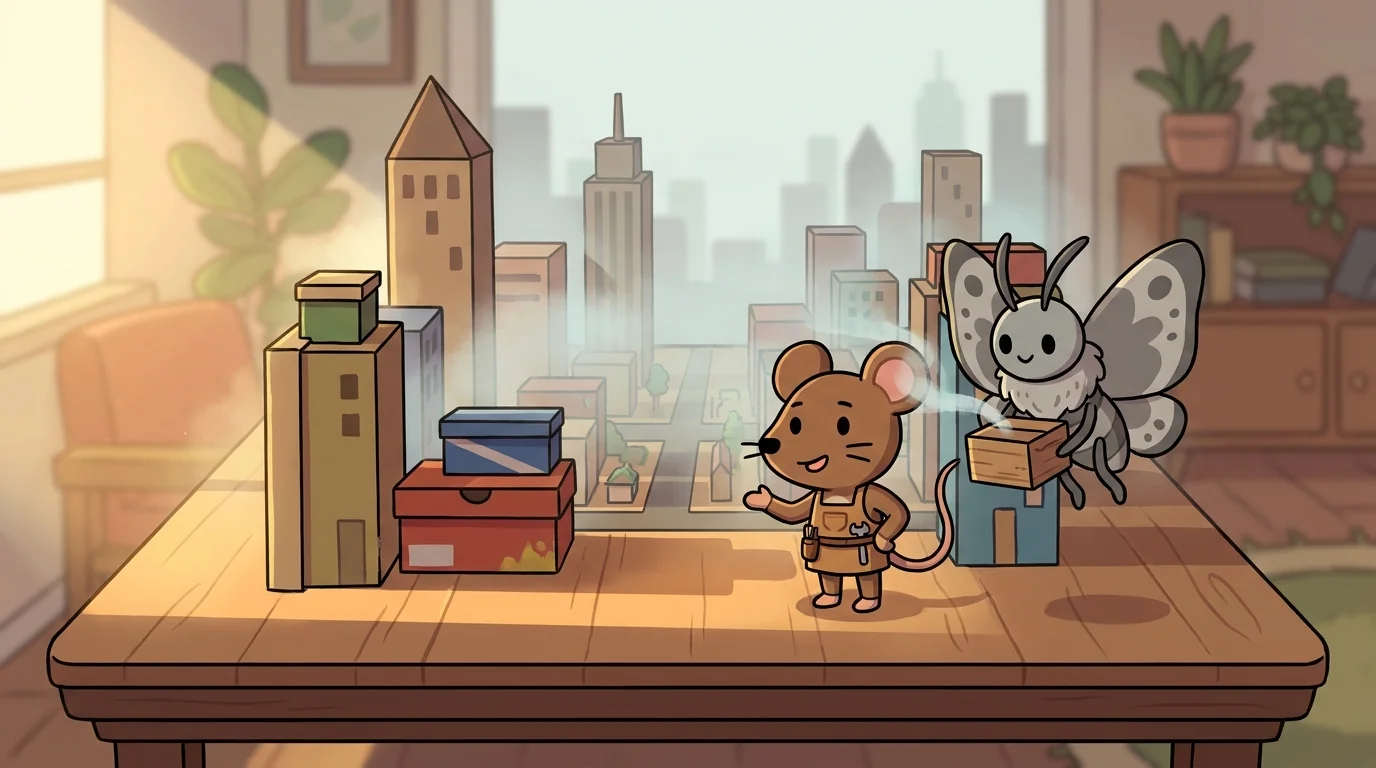
Titch the brown mouse and Fogg the grey moth stood over a city on a tabletop — towers as tall as Titch's arm, streets the width of a ruler. From up close, a shoebox toy. But Fogg's fog box breathed a slow, thin haze between the little buildings, a side-light slanting through — and the toy skyline deepened, the far towers fading pale and soft into a distance that seemed to run for miles. There was no city miles wide. There was a tabletop and a wisp of fog. And there was the thing they'd learned to make together: a small world that feels vast.
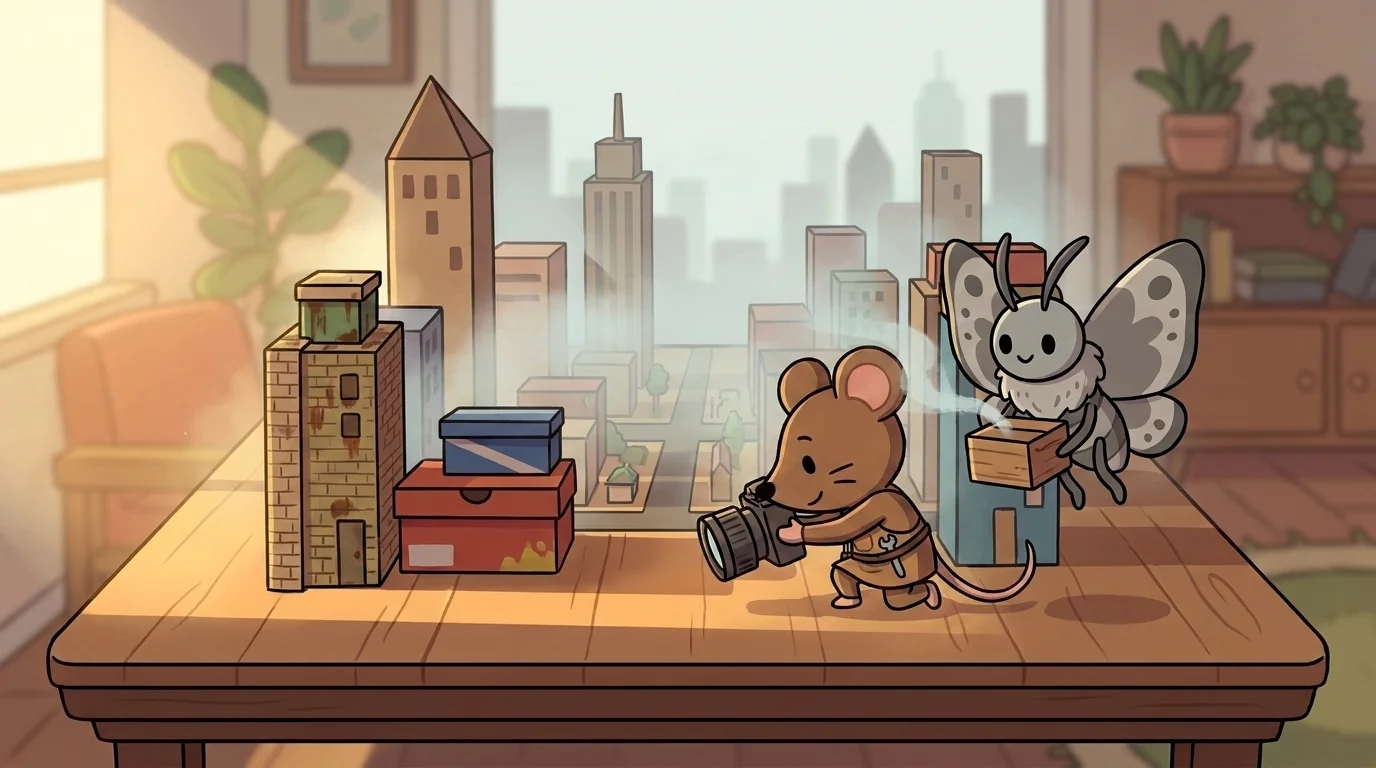
Titch went first, because her move builds the world. "The camera can't tell tall from near," she said, setting the lens flat on the table, level with the little avenue — and the towers rose, looming as you'd really look up at a skyscraper. She'd scored every brick, cut every window, dabbed on tiny rust and grime, and kept every full-sized thing out of frame, "so the eye has no ruler and trusts its memory: cities are huge." Her half was detail and angle. "But," she admitted, tapping the far end of her street, "on the table, my far towers are just as crisp and bright and full-colour as my near ones. And that's wrong for distance — real far-away things aren't crisp. So my city is deep in size, but it doesn't read deep. The depth cue is missing." She looked at Fogg. "That's your half."
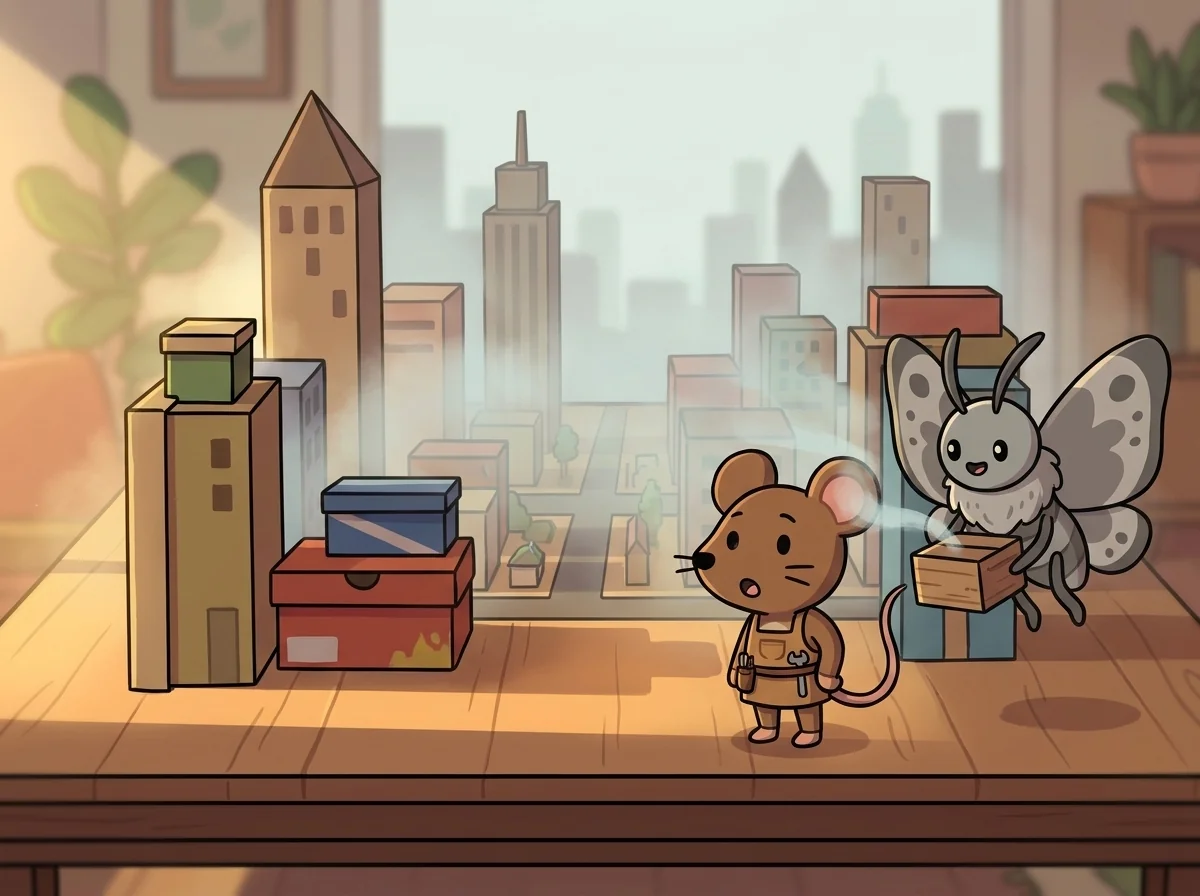
Fogg made the distance show. "Clean air is a nothing — you look right through it — so a bare tabletop reads flat because there's no air stacked up between the towers." She breathed a thin veil of haze low across the little city and lit it from the side. "This is atmospheric perspective. Watch what it does to far-away." The near towers stayed crisp and dark; the far towers went pale, soft, blue-grey — a little more swallowed by haze with every row back. "That's the whole cue of distance," Fogg said. "Near things crisp and full-contrast, far things pale and hazy — that's how your eye has measured real miles its whole life. I'm not adding size; I'm adding air, and air is what makes the eye feel the depth." Her firm law hung over the table: "Less than you think. A whisper of haze reads as miles. A wall of fog reads as 'someone fogged the toy city' — and it flattens the depth instead of making it."
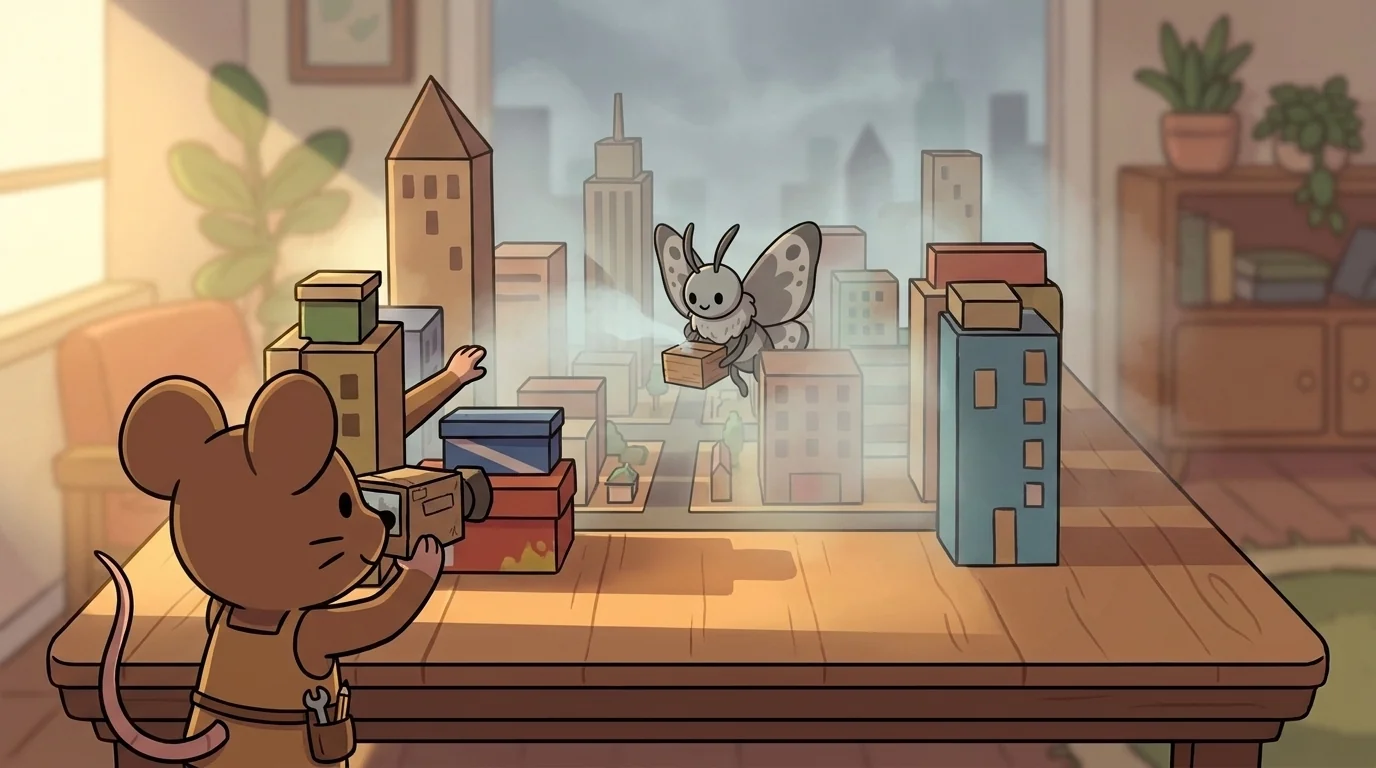
Then they did the move that is theirs — the one neither can do alone: layering the haze to the build. Titch kept the camera low and level; Fogg laid her thin haze in graded layers matched to the streets — barely any across the front towers, a little more mid-city, more still at the far edge — so the fade deepened exactly with distance, row by row, the way real air stacks up. Titch nudged a tall tower a hair farther back into the haze so it read as truly far; Fogg thinned the front veil so the near bricks stayed sharp and readable. Careful little build, thin depth-graded air, near-crisp fading to far-hazy in matched layers — and the shoebox stopped being a toy and became a vast skyline running back into a stormy, miles-deep distance. "My city alone is deep in size but flat to the eye," Titch said. "My haze alone is just fog over nothing," Fogg said. "Layered together — a small world that feels vast."
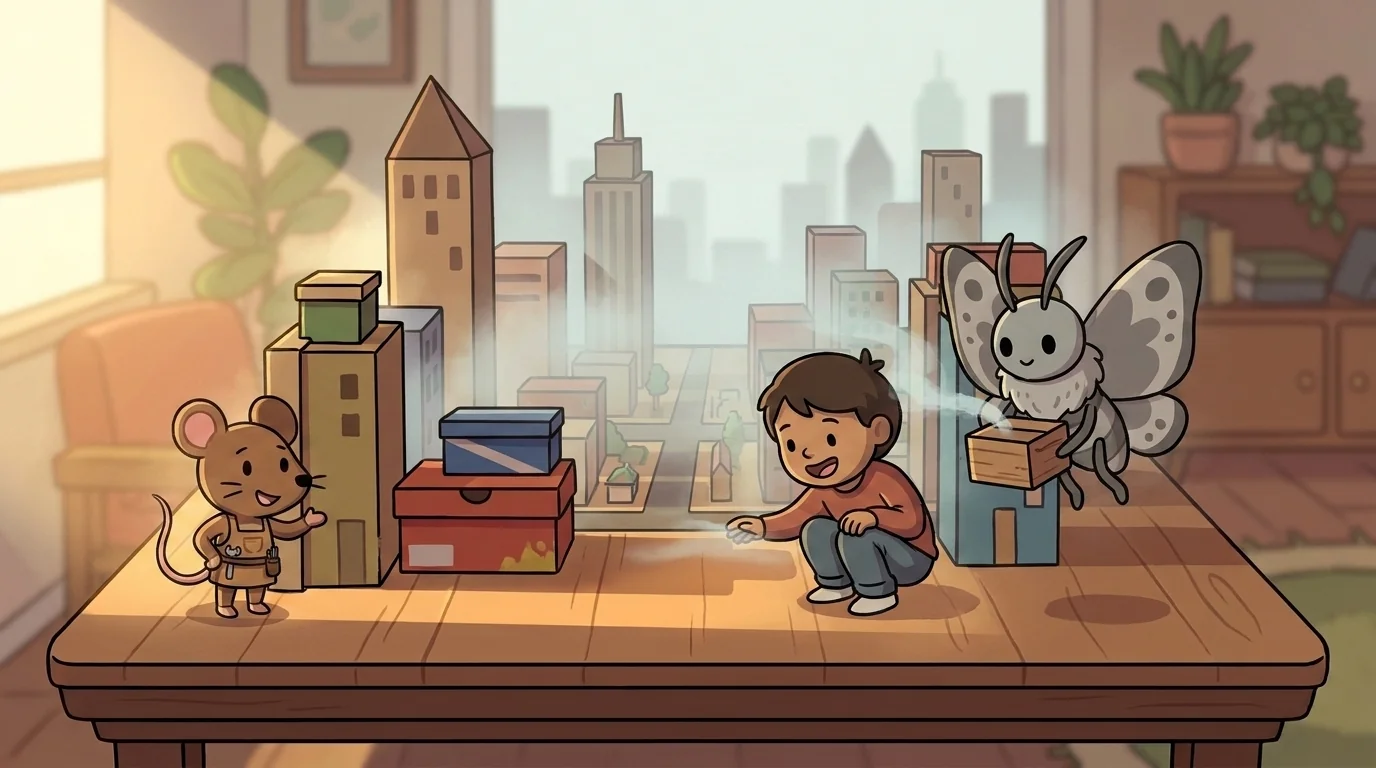
"So the city's tiny, the fog's just a wisp — but the hugeness only happens when the careful build and the depth-graded haze go together?" a kid asked, crouched low with their eye at street level. "Detail without air stays flat. Air without detail is just fog. The vastness is the two of us," Titch said, and Fogg drifted a slow layer deeper. The kid tried it — built a crisp little back tower, then fogged the whole city in one thick blinding gush — and the depth drowned in white, and the flustered I wrecked the distance knot pulled tight. But two friends leaned in at once: "Get your eye low and push the far tower back," said Titch; "thin the haze, layer it by distance, less than you think," said Fogg — and as the kid fixed the build-half and the graded-haze half together, the tiny city stretched back into a vast hazy distance. They felt it land — a wide, shared-wonder swoop of we made somewhere enormous out of a shoebox and a wisp of air, and neither of us could have done it alone — the bright gladness of vastness from two matched moves, and the easy relief of too-much fog is just a dial the two of us ease back. That making-it-huge-together swoop, plus the warm company of grading the world deep side by side, was — to Titch and Fogg both — the whole joy of the small world that feels vast.
The EffectsForge ensemble
Titch and Fogg is part of EffectsForge's distributed-narrative cast. Each character embodies a different curricular primitive; together they teach the full subject.
-

Crunch
Foley sound — practical sound effects from everyday objects
-

Trick
Forced perspective — the optical illusion that resizes worlds
-

Skin
Prosthetic makeup — craft + chemistry for character, never realistic injury
-

Step
Stop-motion animation — frame by frame, one decision at a time
-

Lamp
Lighting design — the silent author of mood
-

Fogg
Atmospherics — a moth who makes the air itself: fog, rain, wind, drifting haze, so a scene gains depth, mood, and light you can see
-

Keye
Chroma key — a chameleon who erases one flat color so a whole new world shows through the hole
-

Matte
Matte painting — paints the part of the world too big to build and blends the seam so the eye can't find where the set ends
-

Servo
Animatronics — foam skin over a jointed frame driven by motors and cables, so a built creature breathes, blinks, and moves on cue
-

Titch
Miniatures — builds it small and perfect, shoots it right, and a thing held in two hands reads as enormous on screen