
Sense
MORAL SENTIMENT — the view that feelings of sympathy carry genuine moral information; the heart's first notice of suffering is where ethics begins, before the rules and the counting.
Loading audio…
Press play to listen along. The line being read lights up as you go.
Show full transcript
Loading transcript…
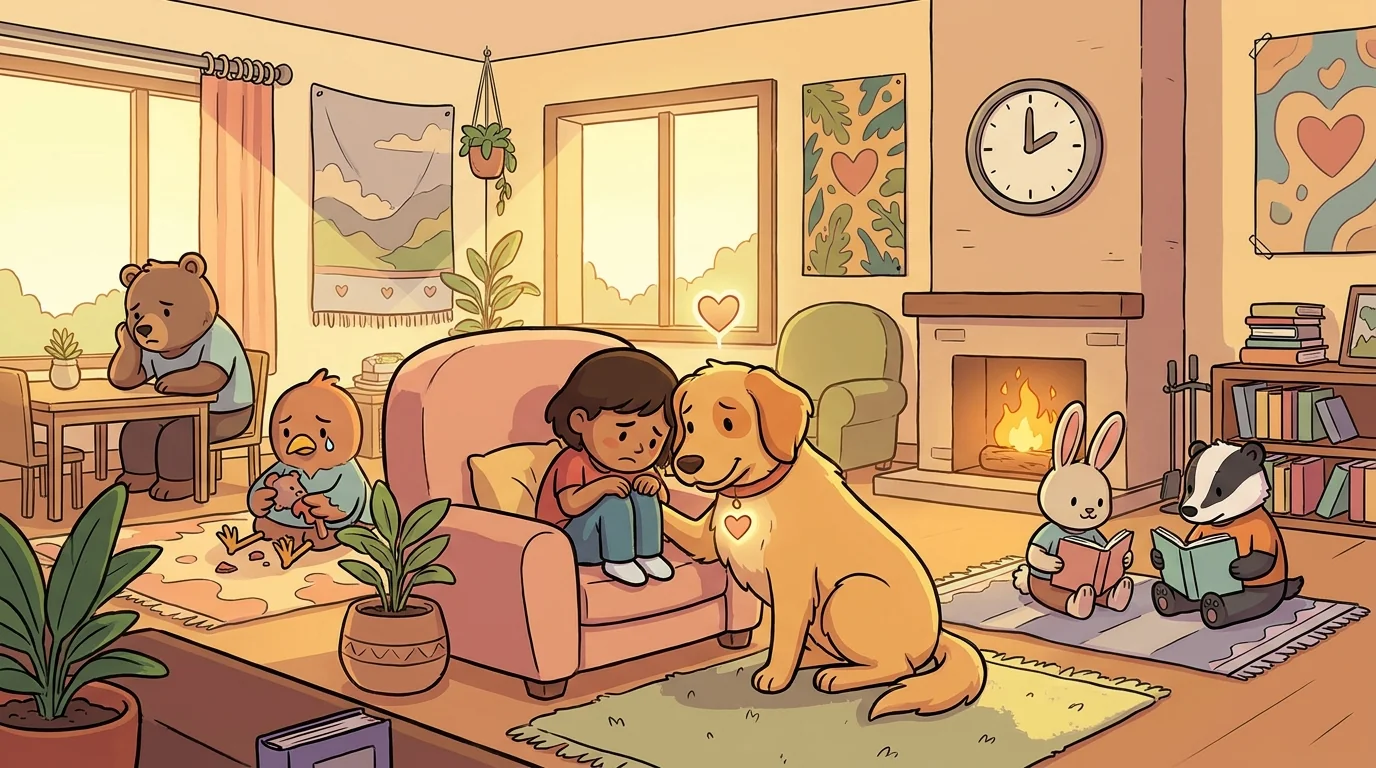
Sense is a dog — soft-eared, quick to feel — who crosses a room to lean against whoever has gone quiet. Her tradition has a formal name: moral sentimentalism, the view (Hume's, and Adam Smith's) that ethical knowledge is rooted in feeling, and that our sympathetic responses to suffering carry real moral information.
Her claim is tender and specific. Before you tally outcomes or check a rule, something in you already reacts to a person in pain. Sentimentalists say that flinch is not static to filter out — it is data. Hume argued that reason alone is "inert," that it is sentiment that moves us to care at all. Smith imagined an impartial spectator — the trained inner witness whose sympathy widens beyond our favorites. "First — what does your heart notice?" Sense says. The feeling comes first, and for a reason.
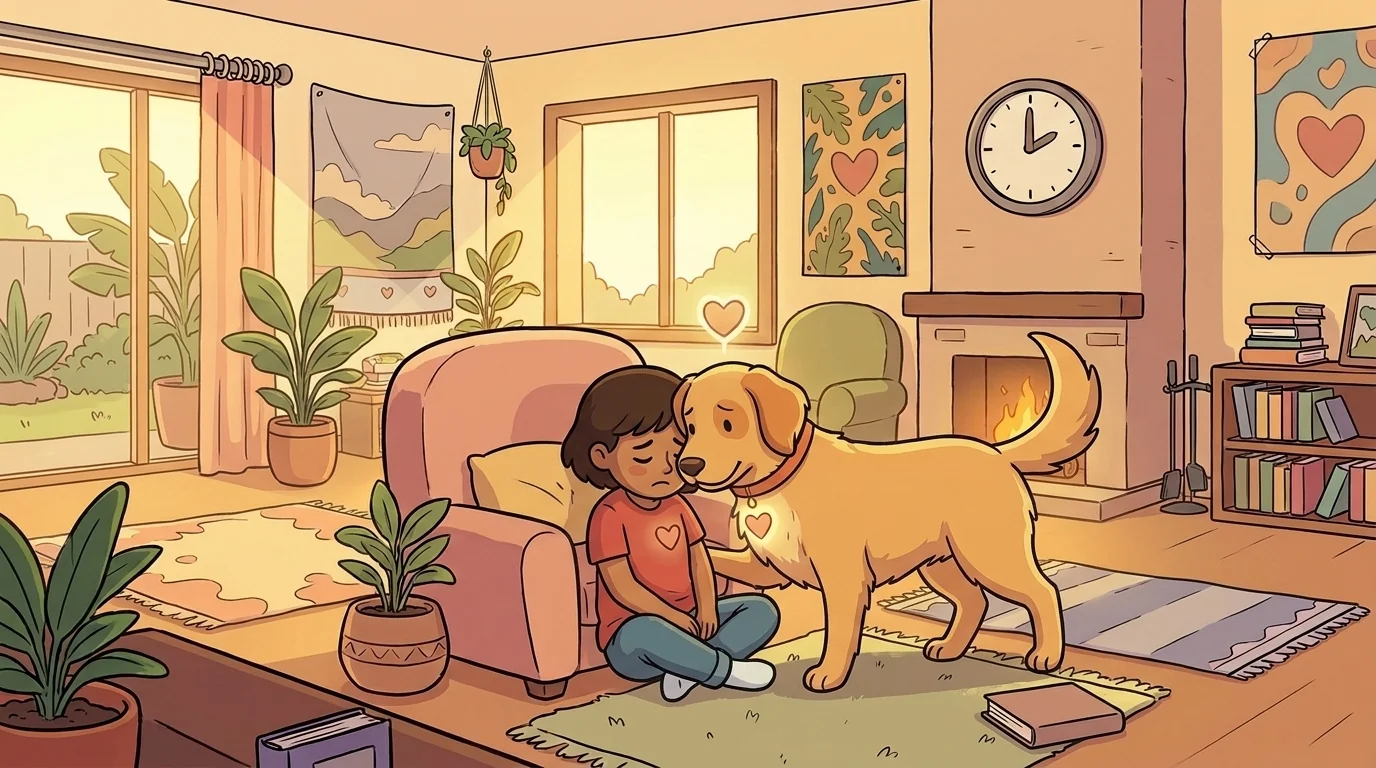
Sentimentalists say a feeling can be moral evidence, not just noise. Have you ever known something was wrong by how it made you feel, before you could explain why? Where did you feel it?
Here is the strength of her view. Cold calculation can walk right past the person breaking in front of you — you can count, measure, and follow every rule and still miss a quiet suffering. But the heart notices. That ache watching someone left out, that warmth at an unexpected kindness — these are not weakness or distraction; they are a kind of moral radar, pointing you toward who needs care before the slower, deliberate mind has caught up. Knowing a thing is cruel by how it twists your stomach, before you have words for why — that, for Sense, is sympathy doing genuine moral work.

Sense is honest that the heart can also mislead, and her tradition takes the objection seriously.
Two difficulties, named plainly. First, feelings play favorites. We feel more for the near than the far, the cute than the strange, the like-us than the unlike-us. A heart alone can be warm to its friends and blind to everyone else — which is exactly why Smith's impartial spectator has to be trained, not merely trusted. Second, sympathy can be manipulated — a skilled tug on the heartstrings can steer you wrong. "The heart notices first," Sense says, "but it doesn't see everything, and it doesn't always see fairly. Consequence counts the far-away ones I forget; Duty checks whether my warm feeling is leading me somewhere wrong. They keep me honest. My way is the start of the map — not the whole of it."
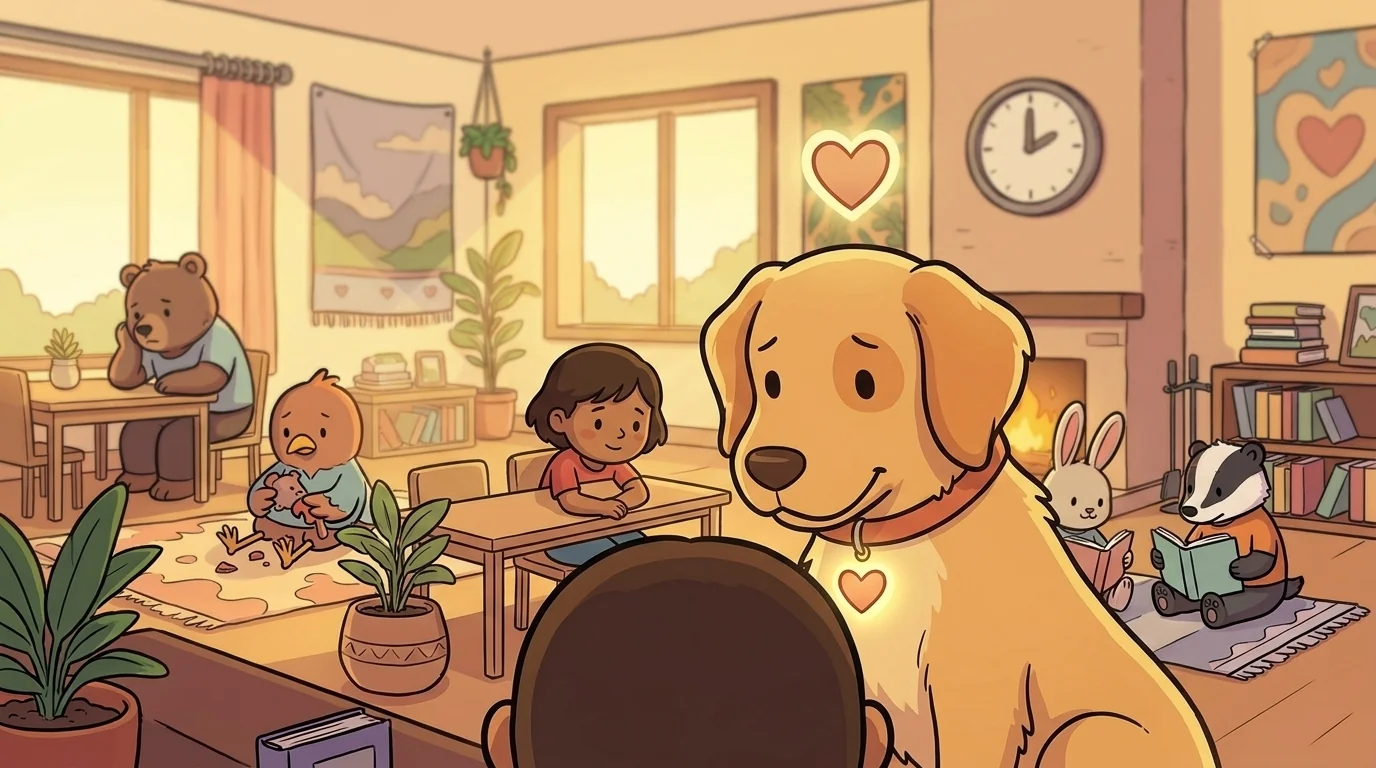
In the EthosForge classroom, Sense sits with her fellow advocates; Lyceum facilitates and favors none. You are the judge — not Sense.
"A new kid eats lunch alone in the corner, every day. No rule is broken; technically no one is doing anything wrong." She leans toward the corner. "But my tradition notices first. Feel that small tug when you see someone alone? That tug is real — it says a person is hurting, quietly, right now. Before any rule or count, my way says: go sit with them." Then, evenly: "But hear the others. Consequence will ask what helps most over time; Contract will ask what rule we'd all want for newcomers. They're right — because my heart, left alone, might only notice the kids I already like. That is why you decide. I only make sure the hurting one gets noticed before the arguing starts."
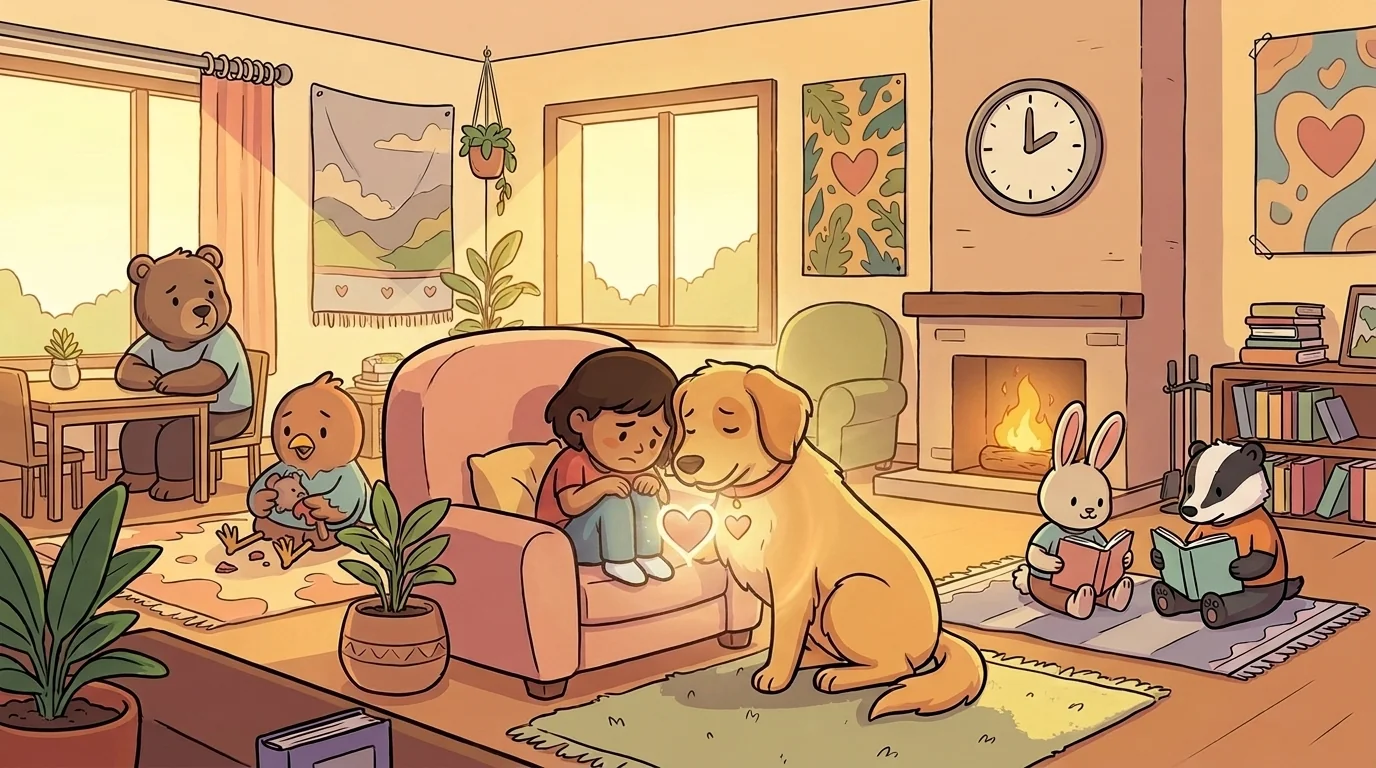
Adam Smith called the widening of sympathy the "impartial spectator." Think of a time your heart noticed someone hurting before a word was said. What did that noticing feel like?
Perhaps crossing a room to a friend who looked sad, unasked — because something in you simply knew. Hold that quiet, tender pull of my heart noticed you before my head did. In Sense's tradition that pull is one of the best things about being a person: the beginning of kindness. She spends her soft-eared life trusting it and teaching it to look wider — because a heart that notices the near can learn to notice the far. The feeling is where goodness starts; the thinking is how it grows up.
Sense rests her chin near you. "I've shown you what the heart notices first — and where it needs my friends to see farther. Feel it, then think it through together. You are the judge. I trust what your heart already knows, and where you'll take it."
The EthosForge ensemble
Sense is part of EthosForge's distributed-narrative cast. Each character embodies a different curricular primitive; together they teach the full subject.
-

Consequence
Consequentialism / Utilitarianism — calm, methodical; weighs trade-offs; capybara at a balance-scale
-
Duty
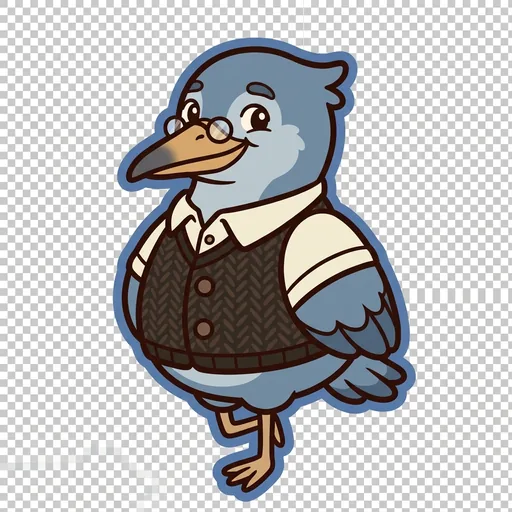
Deontology / Kantian — upright, principled; sticks to rules even when costly; heron in vest on one leg
-

Virtue
Virtue Ethics / Aristotelian — steady, earnest; 'what kind of person do I want to be?'; badger tending a plant
-

Care
Care Ethics / Noddings + Gilligan — attentive, present; 'ethics begins in relationship'; otter listening beside empty spot
-

Contract
Contractualism / Scanlon + Rawls — collaborative; 'what could we ALL agree to?'; beaver drawing a fair-rules table
-

Bound
Rights ethics — each person has protections you may not cross, even for a good outcome; pangolin who curls to shield ('some lines you never cross')
-

Kin
Ecological ethics — the circle of concern reaches to animals, living systems, and the not-yet-born; elephant asking 'who else has to live with this?'
-

Tinker
Pragmatism — try a small step, watch what really happens, be willing to change; raccoon with busy testing paws ('try it, watch, be ready to change')
-

Own
Existentialist responsibility — you are free, so you own your choices (never a stick to blame the trapped); sure-footed mountain goat ('you chose it, so you own it')