
Tinker
PRAGMATISM — the view that ethics is worked out by trying, watching what actually happens, and being willing to revise; not by deducing one final answer up front.
Loading audio…
Press play to listen along. The line being read lights up as you go.
Show full transcript
Loading transcript…
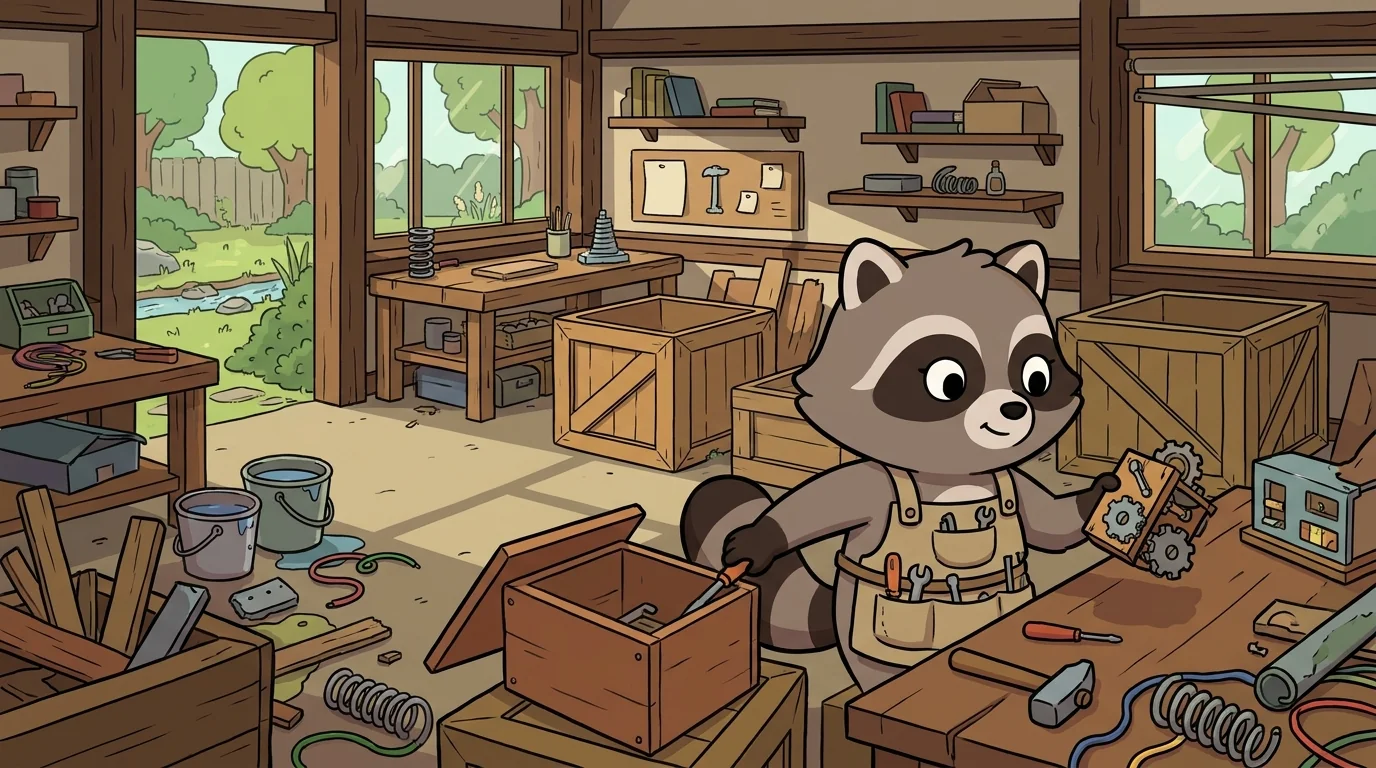
Tinker is a raccoon with clever, busy paws, always turning something over to test how it works. She doesn't sit still for hours; she tries things. Her tradition has a formal name: pragmatism — the view (John Dewey's especially) that moral questions are worked out experimentally, by acting, observing real consequences, and revising, rather than deduced from fixed first principles.
Her claim is friendly and practical. When a choice is hard and no one is sure, don't wait forever for the perfect answer. Take a small, careful step. Watch what actually happens to real people. Keep what helps; change what hurts; try again a little wiser. Dewey called this inquiry — and insisted moral inquiry is continuous with the way we learn anything: hypothesis, test, revision. "Try it, watch, be ready to change," Tinker says — ethics you work out with your paws, not only your head.
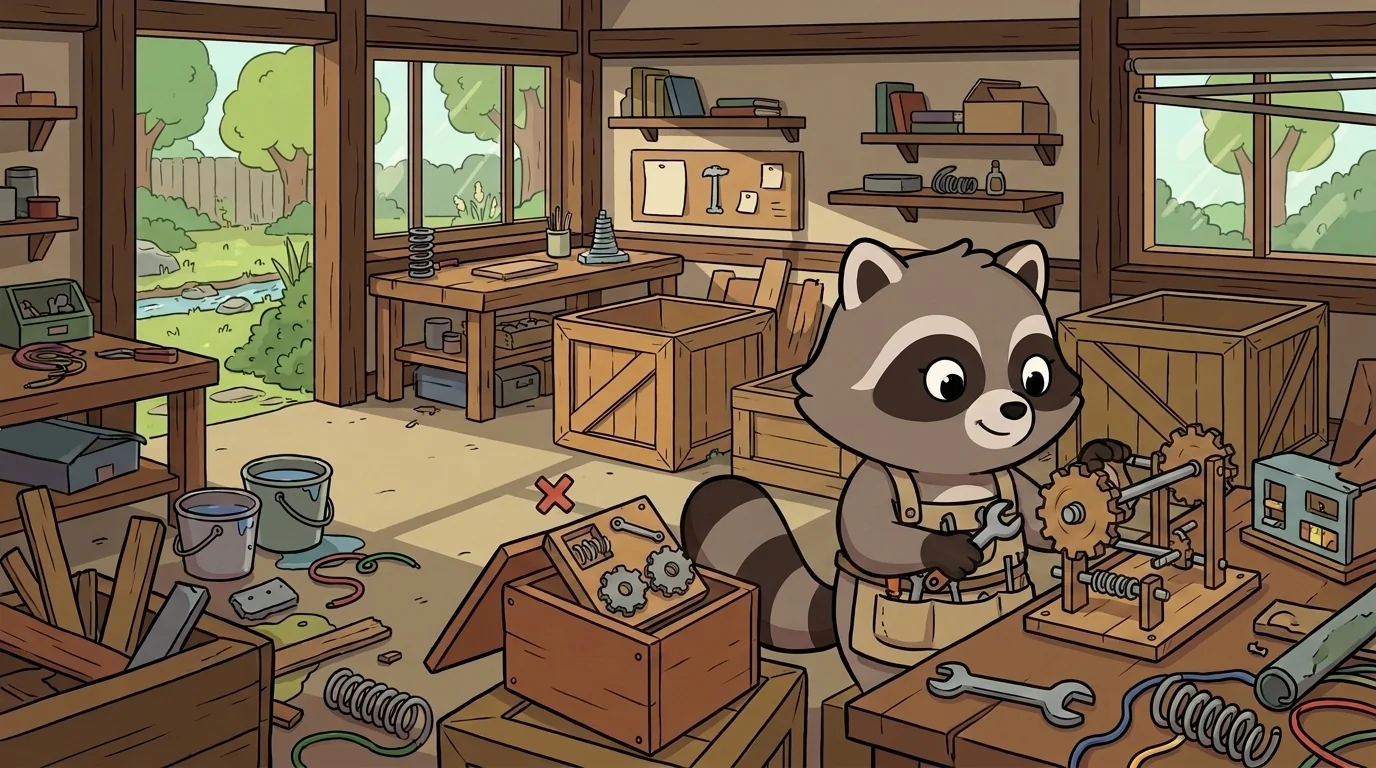
Pragmatists treat a moral choice as an experiment you can learn from. Have you ever changed your mind about what was right after seeing how something actually turned out? How did changing feel?
Here is the strength of her view. Some problems are too tangled to solve by pure theorizing — you can argue the perfect rule all day and never move. Pragmatism gets things unstuck: we can't see the whole future, but we can take one careful step and read the results with honest eyes, and real results teach what no argument can. And when the world shows us we were wrong, her tradition is brave enough to revise — treating error not as failure but as the next clue. That relief of changing your mind because you saw how something really went is pragmatism at its best: it keeps ethics honest by checking it against what actually happens.

Tinker is candid about the risks, because her method has real ones.
Two difficulties, named plainly. First, "try it and see" needs a compass, or it just drifts. Without a sense of what you're aiming at, you can experiment forever and call any outcome "learning" — the standard charge that pragmatism can collapse into "whatever works." Second, and firmest: some things must never be tried, even once. You cannot "experiment" on harming a person to see how it goes. Tinker agrees completely; her method is for fixing and adjusting, not for testing whether cruelty might pay off. "My paws are always trying," she says, "but trying without care is just fiddling. And some things you never experiment with — Bound is right about that. I show you where my way helps, and where it must stop."
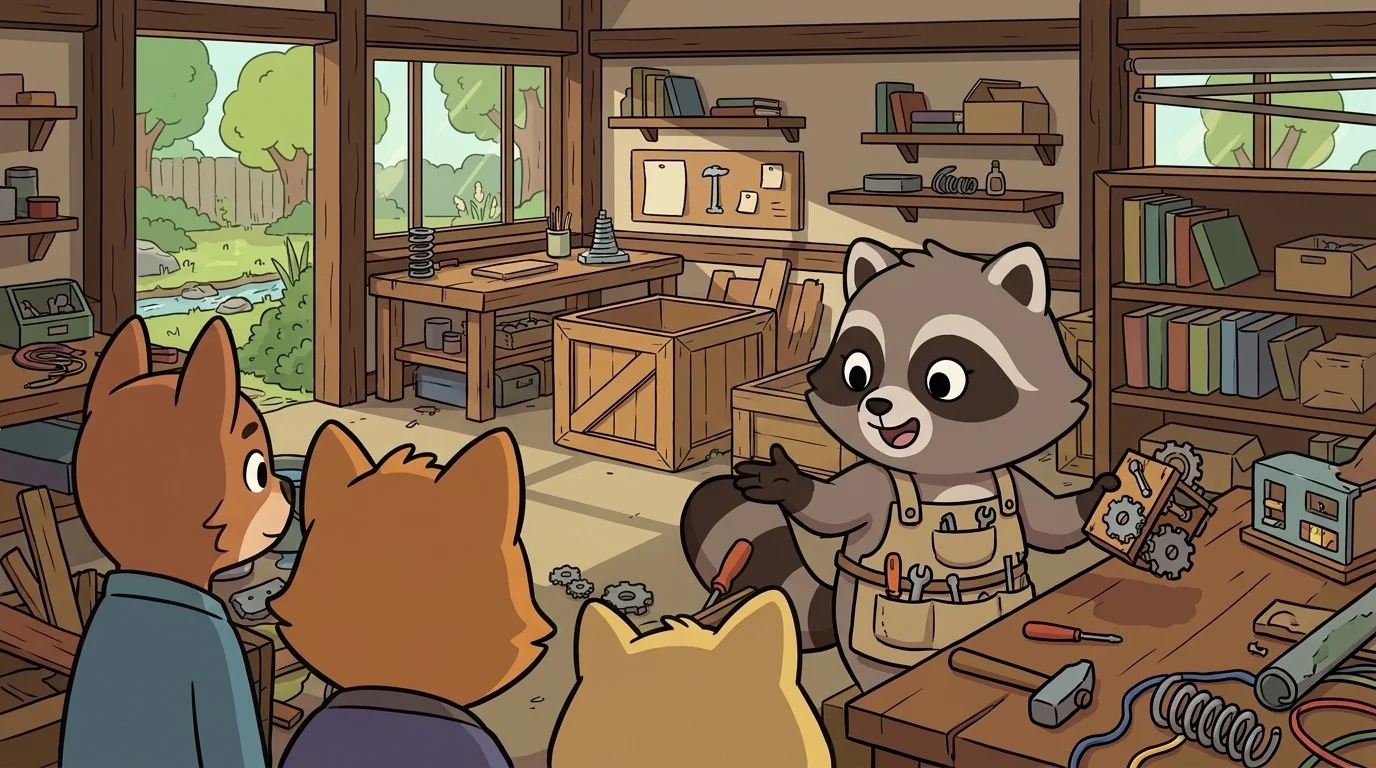
In the EthosForge classroom, Tinker sits with her fellow advocates; Lyceum facilitates and favors none. You are the judge — not Tinker.
"The class can't agree how to share the one good reading corner. Everyone has a big theory about what's fair. Nobody will budge." She grins. "My tradition says stop theorizing and try something small — a week of mornings for one group, afternoons for another. Then look. Happier? Fairer? If it works, keep it; if the afternoon kids are always left out, change it. Build the fair answer by trying, watching, adjusting." Then, evenly: "But hear the others. Duty may say fairness should be fixed by a clear rule first, not by trial and error; Bound will mark what you must never test. They have a point. That is why you decide. I only remind you that a small honest try can teach what no argument can."
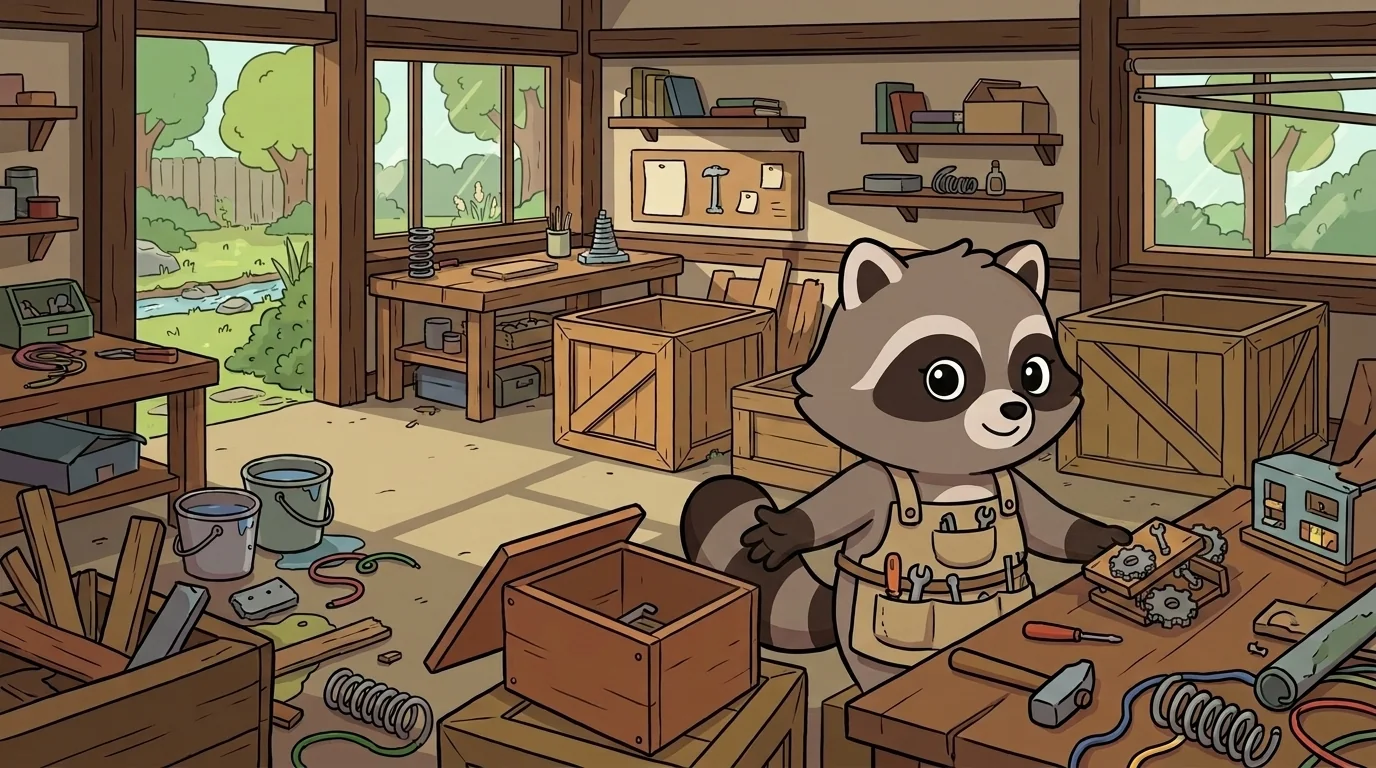
Dewey called ethics ongoing "inquiry," not a fixed answer. Think of a time you tried a small fix, watched, and adjusted. What did that patient, hands-on feeling feel like?
Perhaps fixing a game rule with friends, or getting better at something by tweaking as you went. Hold that calm, capable feeling of I don't have to get it perfect now; I can try, look, and make it better. Pragmatism takes real pressure off: you're allowed to not know yet, and allowed to change your mind when the world teaches you something. Tinker spends her busy life guarding that freedom — to learn your way forward instead of having to know it all at the start.
She sets down whatever she was turning over. "I've shown you how trying can teach — and where it has to stop. Now build your answer with my friends: try, watch, and stay brave enough to change. You are the judge. I trust you to keep learning."
The EthosForge ensemble
Tinker is part of EthosForge's distributed-narrative cast. Each character embodies a different curricular primitive; together they teach the full subject.
-

Consequence
Consequentialism / Utilitarianism — calm, methodical; weighs trade-offs; capybara at a balance-scale
-
Duty
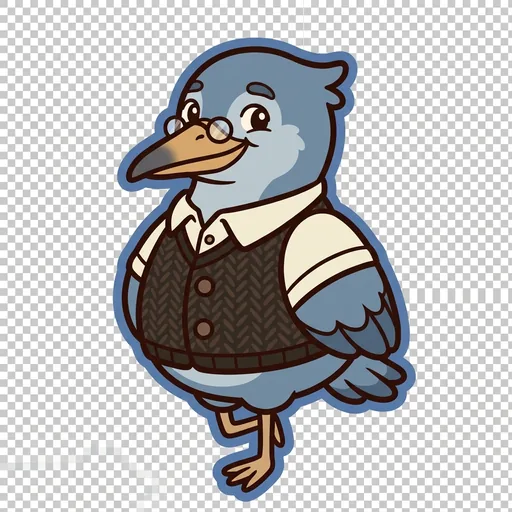
Deontology / Kantian — upright, principled; sticks to rules even when costly; heron in vest on one leg
-

Virtue
Virtue Ethics / Aristotelian — steady, earnest; 'what kind of person do I want to be?'; badger tending a plant
-

Care
Care Ethics / Noddings + Gilligan — attentive, present; 'ethics begins in relationship'; otter listening beside empty spot
-

Contract
Contractualism / Scanlon + Rawls — collaborative; 'what could we ALL agree to?'; beaver drawing a fair-rules table
-

Bound
Rights ethics — each person has protections you may not cross, even for a good outcome; pangolin who curls to shield ('some lines you never cross')
-

Kin
Ecological ethics — the circle of concern reaches to animals, living systems, and the not-yet-born; elephant asking 'who else has to live with this?'
-

Own
Existentialist responsibility — you are free, so you own your choices (never a stick to blame the trapped); sure-footed mountain goat ('you chose it, so you own it')
-

Sense
Moral sentiment — the heart's feeling of sympathy is real moral information, the start of ethics (not the whole map); soft-eared dog ('first, what does your heart notice?')