Modifier Madge
ADJECTIVE
Loading audio…
Press play to listen along. The line being read lights up as you go.
Show full transcript
Loading transcript…
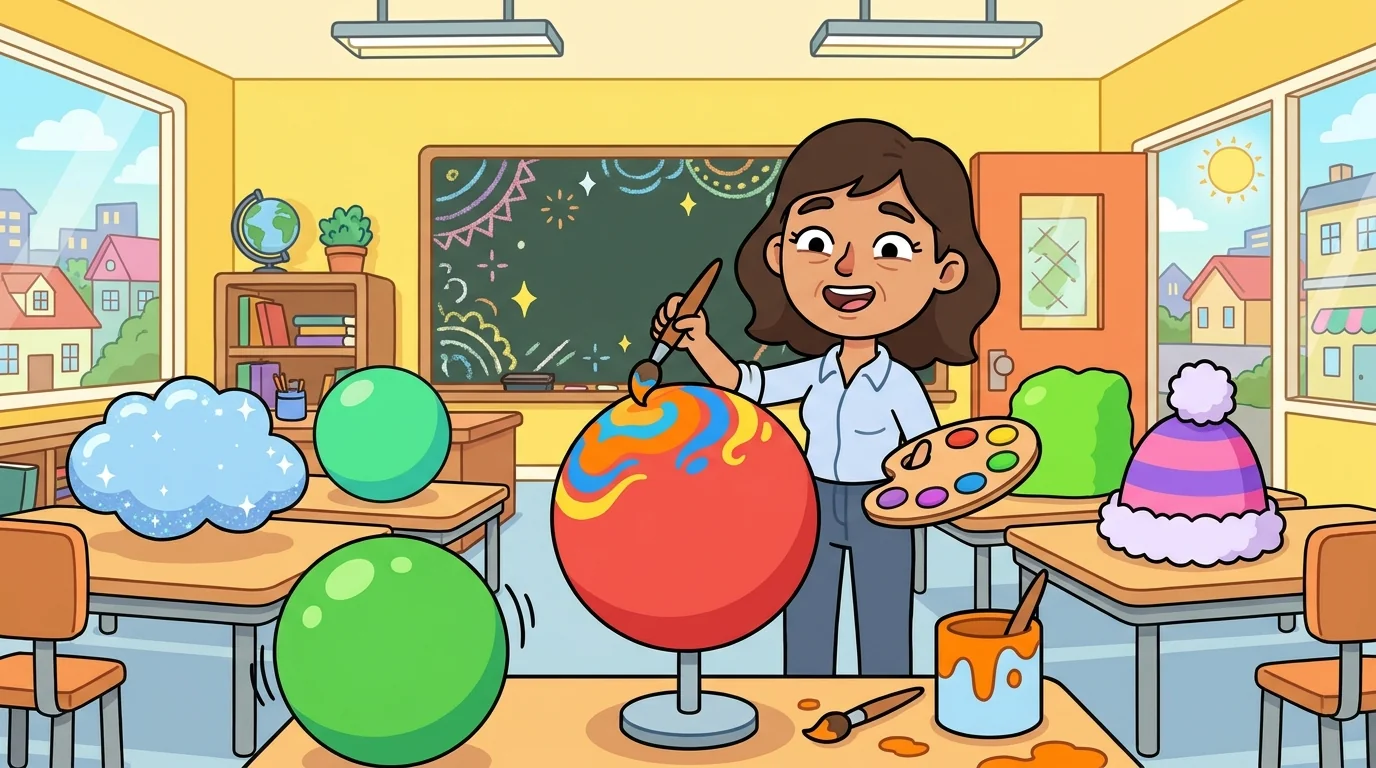
If a noun in Sentence-Town felt plain, it went to see Modifier Madge. She was the town's official noun-decorator, the person you consulted when your house needed to be a cozy little house, or your dog needed to be a shaggy, loyal dog.
She and Modifier Mike were a team. He handled the action words, the verbs. Madge took care of the nouns—the people, places, and things. Mike made sure the running was fast. Madge made sure the runner was the fast one. Between them, nothing in a sentence had to go out looking drab.
It was funny they worked so well together, because they’d grown up as rivals. Or at least, their families had. Both grew up in the capital city, in families that specialized in decoration. Mike’s parents sold furniture and heavy curtains. Madge’s parents, two blocks away, sold paint, wallpaper, and fabric. One shop sold the bones of a room; the other sold the skin. For years, they competed for every decorating job in the city.
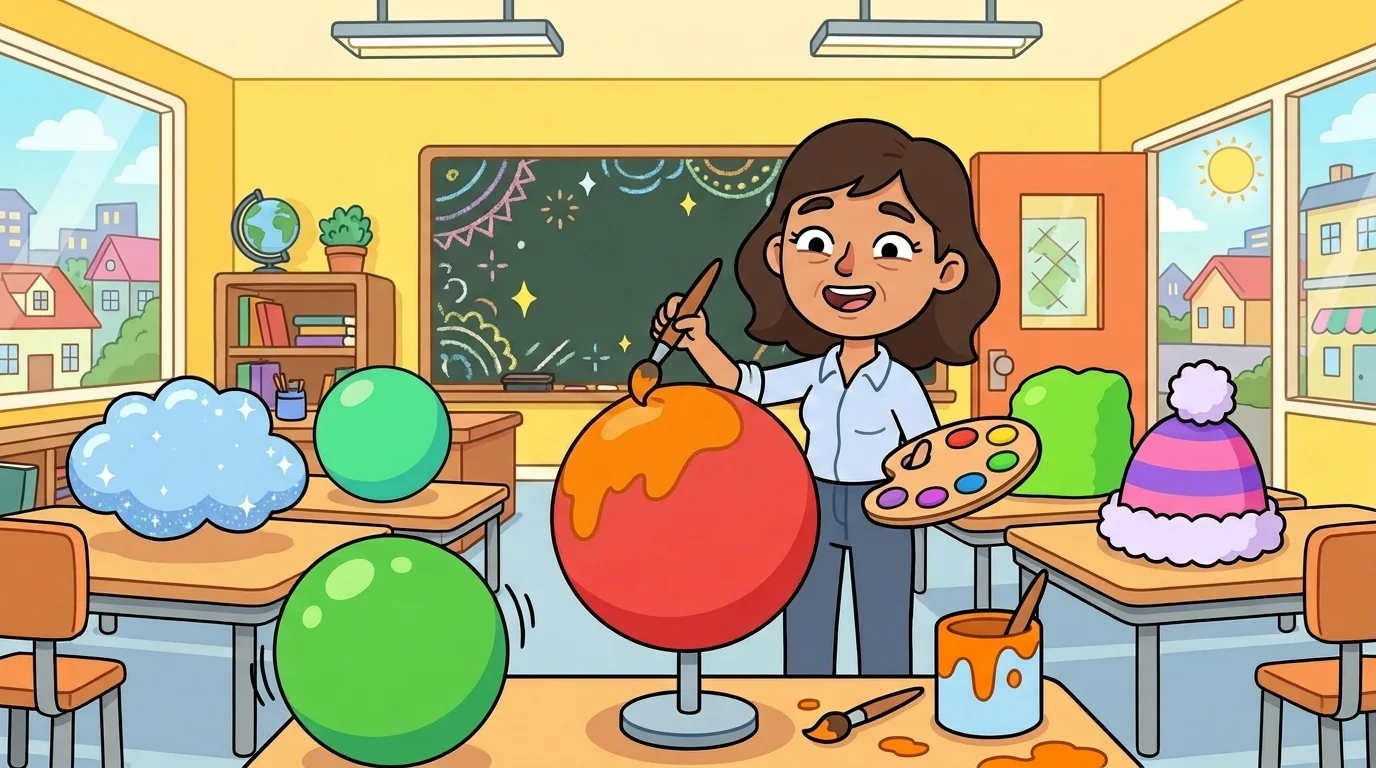
Madge and Mike knew of each other as kids but never really spoke. They were too busy learning their family trades. Mike learned how a single armchair could change the feeling of a room. Madge learned how a wall wasn't just a wall. It could be a calm, blue wall. It could be a wall with cheerful, yellow stripes. Each choice added a layer of character. It made things more exact.
When they both arrived at the GrammarForge academy at twenty-one, the academy master, Clause, saw the connection instantly. He put their offices side-by-side. He assigned them to teach classes together. "You two come from the same kind of family," he'd said, his eyes twinkling. "You will recognize each other's vocabulary. The students will learn the decoration-pair as a unit."
At first, they were shy. But the shyness didn't last. They started talking over lunch, discovering they both thought about the world in layers of detail. By the end of that first year, they were friends. Seventeen years later, they still were. Good, solid friends who shared an office, ate lunch together, and visited each other’s families for the holidays.
Their parents had even called a truce. The four of them now had dinner together once a season. They never talked about whose window displays used to be better. The rivalry was a ghost, replaced by a quiet, comfortable friendship.

In her classroom, Madge began every term the same way. On her desk sat a small wooden ball, smooth and white, about the size of a tennis ball. She would place it in the center of her desk. "This is a ball," she’d say to the new students. "It is a ball. It does what a ball does."
Then she’d uncap a bright red paint-pen. With a steady hand, she’d press the tip to the wood, leaving a single, perfect circle of red.
"Now," she’d say, holding it up for the class to see. "It is a ball with red. Or, to be more exact, it’s a red ball. The word red is an adjective. It modifies, or decorates, the noun ball."
She’d turn to the board and write: The ball. Then, underneath it: The red ball.
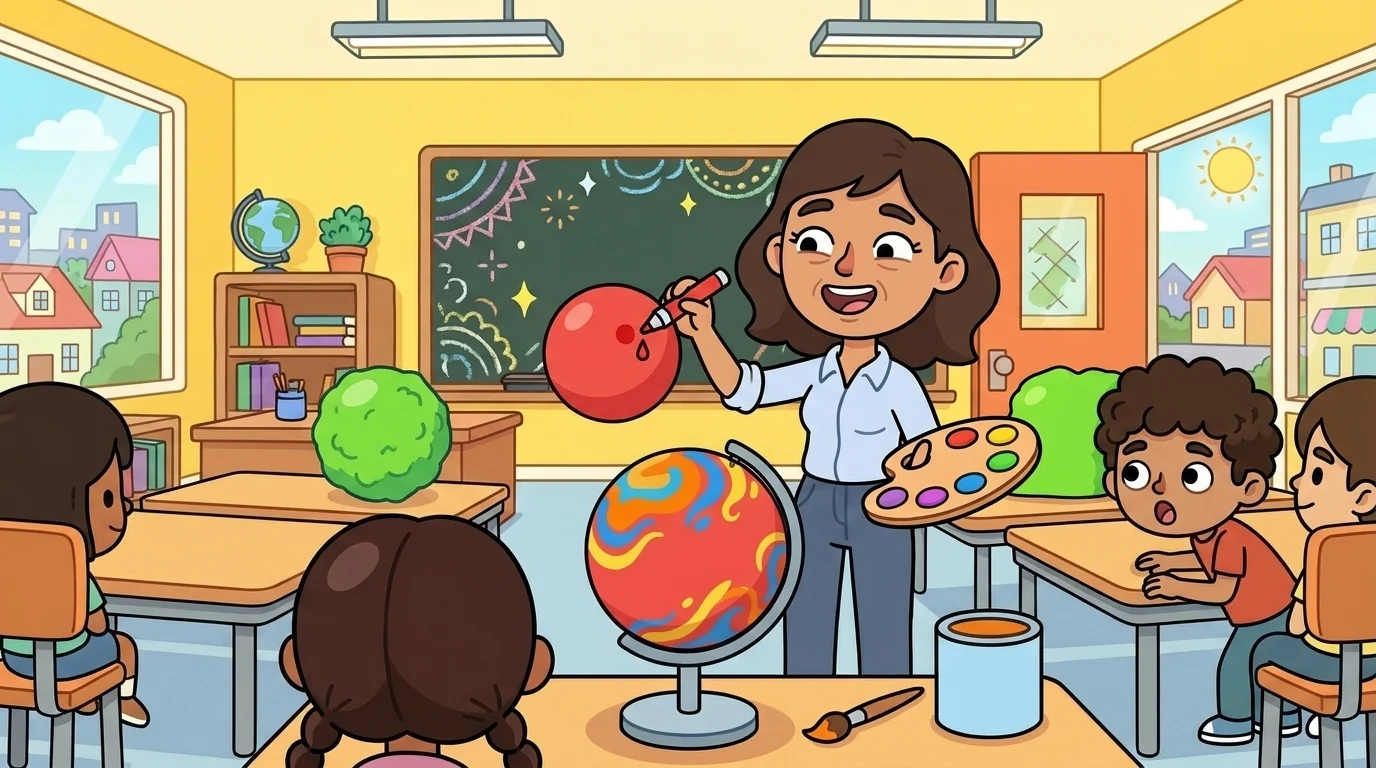
"The ball is still a ball," she’d explain. "Its ball-ness hasn't changed. But it’s become more specific. The word red tells us what kind of ball it is."
She’d add another word to the sentence on the board. The big red ball. "Big tells us what size," she’d say. The big bouncy red ball. "Bouncy tells us its texture, what kind of ball it is again."
She’d pause, letting them take it in. "The noun is just acquiring layers. We're getting a clearer picture in our heads."
Then she’d add one last part. The big bouncy red ball that the dog chased. "This last bit," she’d say with a smile, "that the dog chased... that’s a whole other story. It’s a special clause that acts like an adjective. It answers the question which one? Clause-Chief Carla will tell you all about those. For now, just see how it helps us point to exactly the ball we mean."
She had a simple rule for her students, a tool for finding these decorators in the wild. "Adjectives answer three kinds of questions," she’d say, tapping the board. "Which one, what kind, and how many. If a word answers one of those questions about a noun, you've found an adjective."
Sometimes a student would ask if they were hard to spot. Madge always shook her head.
"Not hard at all. They're just answers. Find the noun. Ask the questions. Which ball? That one. What kind of ball? The red one. How many balls? Three. The answers are your adjectives."
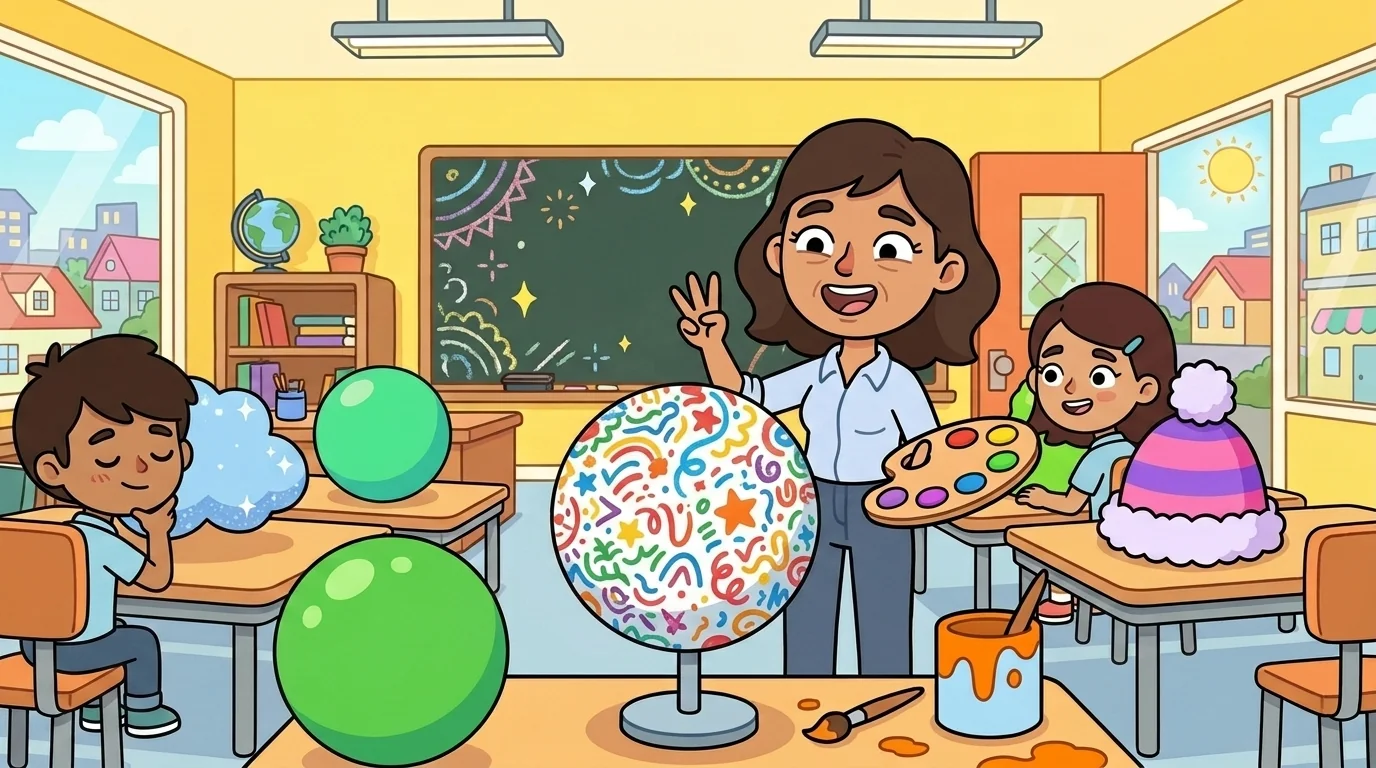
The little wooden ball still sat on her desk, year after year. The first red dot was now lost among hundreds of other marks. Students from each class would ask if they could add their own color, and Madge always let them. She kept a small pot of paints just for this purpose. After seventeen years, the ball was a galaxy of tiny, overlapping dots, strokes, and smudges. And whenever Madge cupped it in her hands, her heart went soft and glad — because every little mark was a child who had once felt the quiet joy of adding their own bright detail to the world.
Hear it as an audio drama
A short play starring Modifier Madge, from GrammarForge. Different voices, same idea. Listen any time after you read.
Loading audio…
Read the drama script
- Narrator: From Spark and Anvil and GrammarForge — this is Modifier Madge, in chapter 1 of the GrammarForge cast.
- Narrator: This drama uses an AI-generated voice. Voiced via Gemini 2.5.
- Narrator: Modifier Madge is Sentence-Town's noun-decorator. She carries a palette of colorful, descriptive words.
- Narrator: She works with nouns, adding details that make them specific and clear. She makes them sing.
- Modifier Madge: I am Modifier Madge. I attach to nouns. I am an adjective. That is what I do.
- Narrator: An adjective modifies a noun. It tells you which one, what kind, or how many.
- Modifier Madge: A plain noun is just an idea. *The ball.* But *the big, red, bouncy ball*—now that’s a picture!
- Modifier Madge: I don't change the noun. The ball is still a ball. I just make it clearer. I specify.
- Narrator: Madge grew up in a family of sign-painters. They knew a single word of color could change everything.
- Modifier Madge: By age seven, I understood the lesson. The right detail makes the meaning pop. It makes the noun special.
- Narrator: At her academy interview, the final question was simple. What is an adjective?
- Modifier Madge: I am the specifier. I add color, size, and texture. I make a noun known.
- Narrator: She was appointed on the spot.
- Modifier Madge: I am the quiet power. The decorator. The word that makes a thing *that* thing.
- Narrator: A specifying word. A clarifying detail. That's the whole job. That's what makes an adjective an adjective.
- Narrator: You've been listening to a Spark and Anvil chapter, written by the Spark and Anvil writing team for ages 9 to 14.
- Narrator: Apps stay free forever.
- Narrator: Curriculum aligned to Common Core English Language Arts.
- Narrator: Released under Creative Commons BY-NC-SA 4.0 for educational reuse. Visit Spark and Anvil for the full transcript.
The GrammarForge ensemble
Modifier Madge is one of the friends in GrammarForge. Each friend shows you one idea by how they act; meet them all and you have the whole subject.
-

Mayor Subject
Subject (noun/pronoun performing the action)
-

Verb Verity
Verb (action / state of being)
-

Object Otto
Direct / indirect object (receiver of the verb's action)
-

Modifier Mike
Adverb (modifies verb / adjective / other adverb)
-

Connector Chen
Conjunction (coordinating / subordinating — *and*, *but*, *because*, *although*)
-

Pronoun Perry
Pronoun (substitute for noun — *he*, *she*, *they*, *it*, *who*)
-

Article Anne
Article (*a*, *an*, *the* — definite vs. indefinite)
-

Preposition Pat
Preposition (spatial / temporal relations — *on*, *under*, *between*, *before*)
-

Clause-Chief Carla
Clause-types (independent / dependent / subordinate / relative)
-

Punctuator Polly
Punctuation guardian (commas, semicolons, apostrophes, colons, dashes)
-

Agreement Ada
Subject-verb agreement (singular subject → singular verb; plural subject → plural verb; tricky cases — collective nouns, *either/or*, indefinite pronouns)