
Ache
SEVENTH CHORDS (Advanced) — add a fourth note a seventh above the root onto a triad, and the chord gains a sweet, forward-leaning tension. The seventh is a DISSONANCE that wants to resolve, but a GENTLE one — it leans rather than clashes. Its exact flavour depends on which seventh: a dominant seventh pulls hard home, a major seventh glows, a minor seventh softens. It's the engine of jazz and love-song harmony — the sound of *and then...*
Loading audio…
Press play to listen along. The line being read lights up as you go.
Show full transcript
Loading transcript…
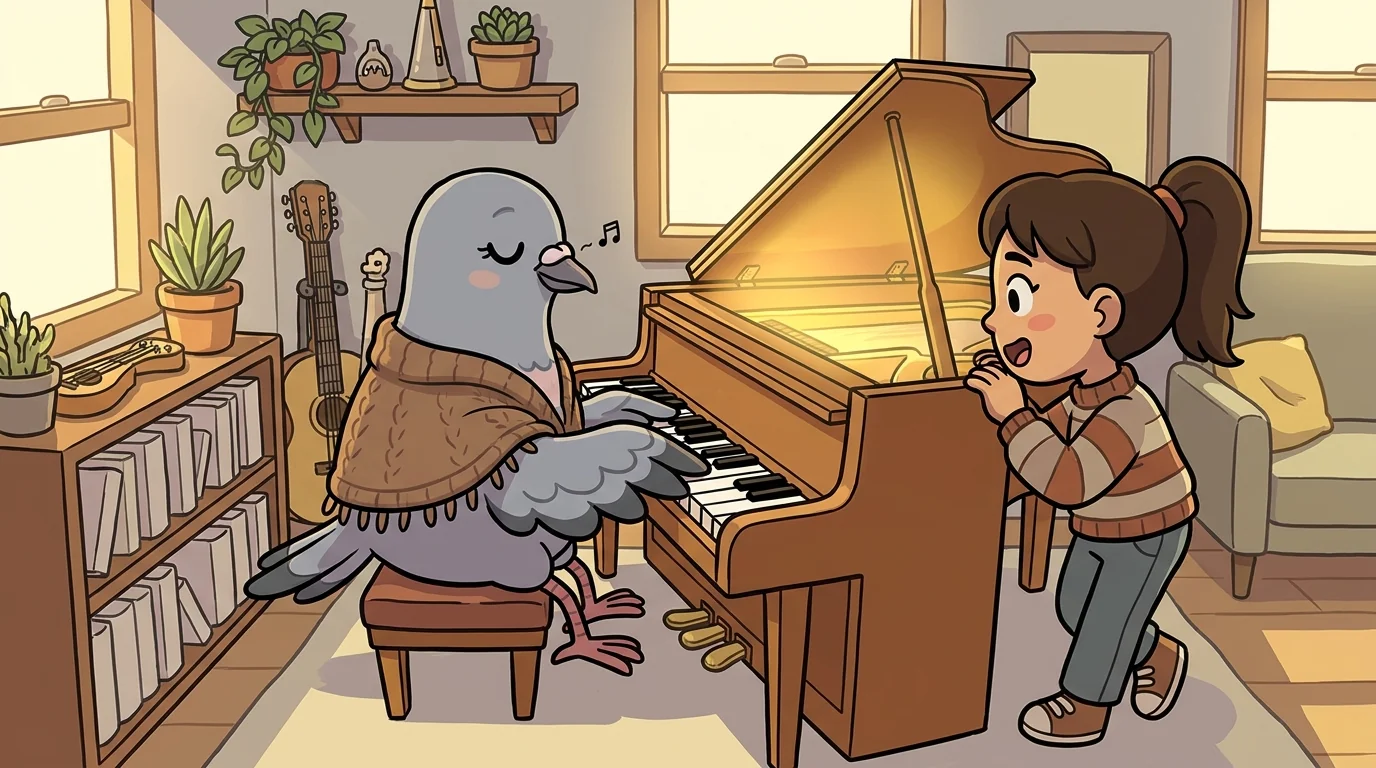
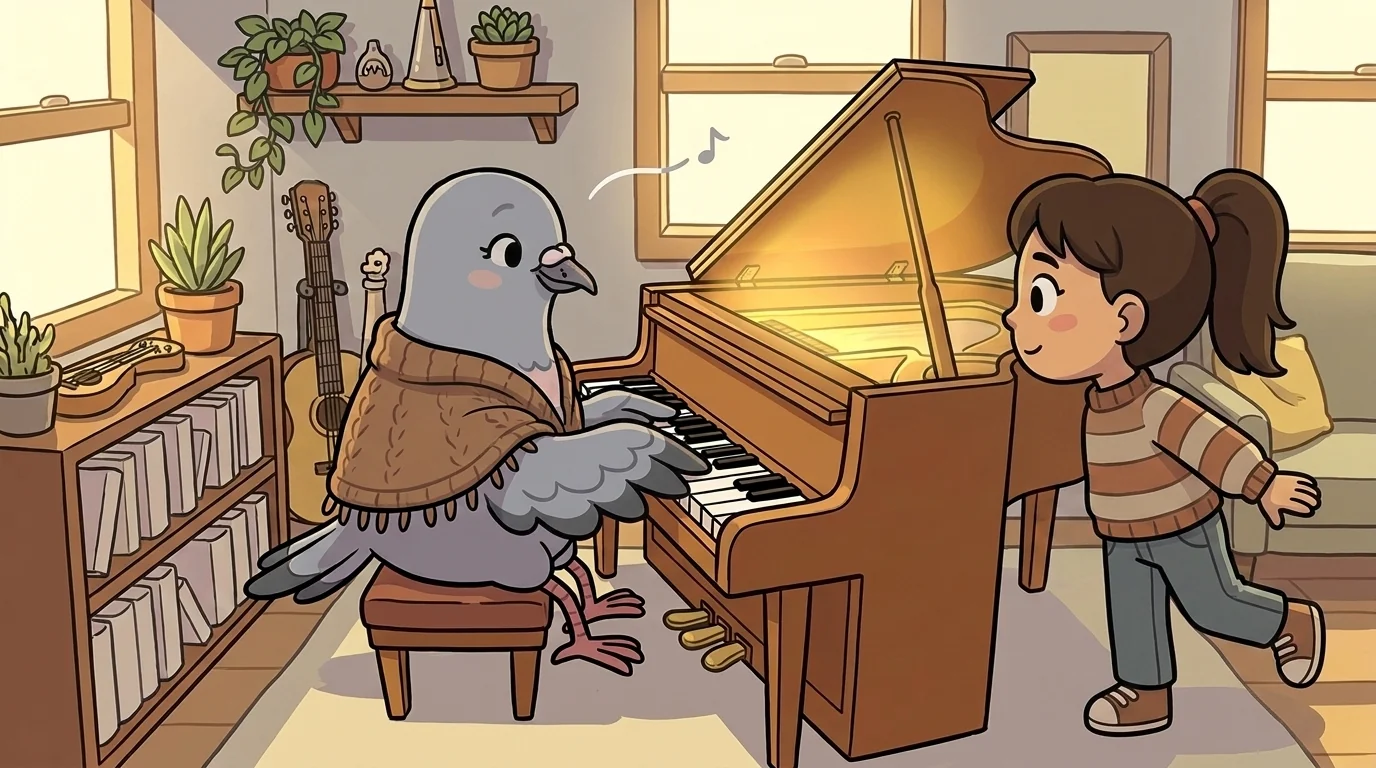
Ache played a plain three-note triad, sturdy and settled, the kind of chord that sounds like a door clicking shut. Then she smiled her small, secret smile and floated one more note high on top. The whole chord changed — from finished to almost, richer and warmer and faintly unfinished, as if it had stood up and begun to lean forward.
"Feel that lean?" she said softly. She was a mourning dove the gentle grey of morning fog, a voice that seemed to hum even when she spoke. The Advanced version, she said, is knowing what that fourth note is and why it leans. "A triad is three notes — root, third, fifth. The note I added is a seventh — it sits a seventh above the root, right below the root's own octave. Add it and you have a seventh chord: four notes instead of three." She let it ring. "And here's the mechanism. That seventh is a mild dissonance — a note that doesn't fully blend, that wants to move. But it's a gentle dissonance. It doesn't clash and demand to be fixed right now, the way Pull's sharp tensions do. It leans. It tips the chord forward so the music wants to flow onward."
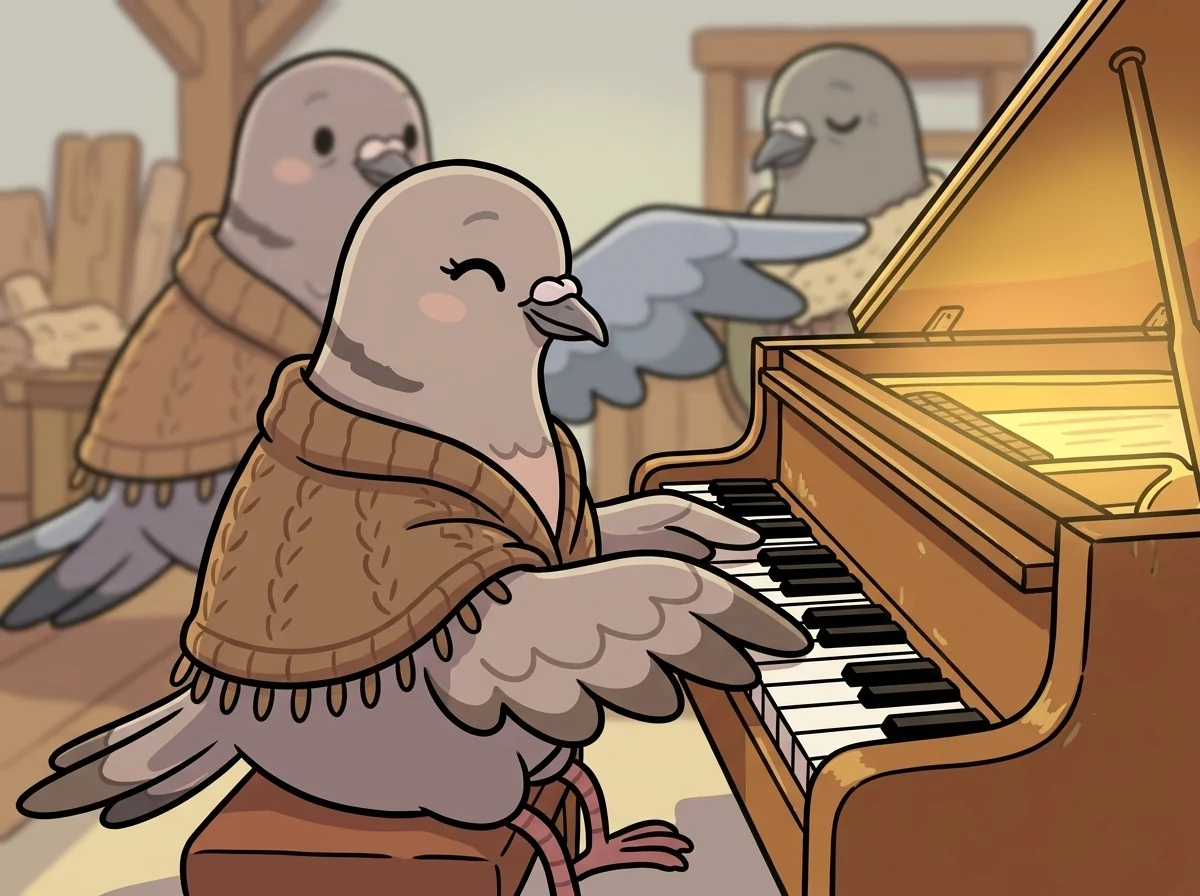
"There isn't just one seventh, either," she went on. "The kind of seventh sets the whole flavour. A dominant seventh — the classic one, built on the fifth of a key — leans the hardest; it aches to fall home to the chord a fourth above it, and that pull is the engine that drives most songs to their ending. A major seventh — the seventh only a half-step below the octave — doesn't ache so much as glow; it's the dreamy, floating, jazzy-warm sound. A minor seventh softens a minor chord, rounding its edges. Same idea every time — a fourth voice, a seventh up — but each one leans its own way."
Ache had always understood the beauty of almost. She grew up in an eave under a roof where her family were the morning-callers, doves whose soft coo drifted out just before dawn — and she'd noticed their call never quite finished. It ended a hair open, a little unresolved, so you kept listening, leaning toward the coming day. "Why doesn't the morning call end?" she'd asked her mother. "Because a hang makes you hope," her mother said. "A call that finishes lets you stop listening. A call that leaves a little ache — a little open door — keeps you leaning toward what's next. The unfinished part is where the wanting lives, and the wanting pulls the whole morning forward." Ache carried that always: a touch of unfinished isn't a flaw, it's an invitation.

At HarmonyForge, Refrain her mentor waited. "Triad built the three-note chord. Pull showed you tension. What did you come to add?" Ache played a settled triad, then floated a seventh on top. "A gentler pull," she said. "Not a clash that must fix itself now — a lean. Add a seventh above the three, and the chord goes rich and longing. A dominant seventh pulls home; a major seventh glows; a minor seventh softens. It makes a plain chord feel like it has a whole story still ahead of it." Refrain let the leaning chord hang, unfinished on purpose. "You'll be teaching the ones who think a chord has to be finished to be beautiful. Come in."
In her workshop she had students play a closed triad, then reach up and add the seventh, and the room filled with that leaning, longing warmth, three-note chords blooming into four. "The seventh doesn't replace anything — the triad stays," she said. "It adds a voice up top that leans, and because the chord's leaning forward, it pulls you along to the next chord so smoothly you barely feel the move. That's the sound of jazz, of old love songs, of anything rich and a little bittersweet. Plain triads say here we are. Seventh chords say and then... and then..." A boy played a triad, added the seventh, took it away, added it — feeling the chord sit, then lean, sit, then lean.
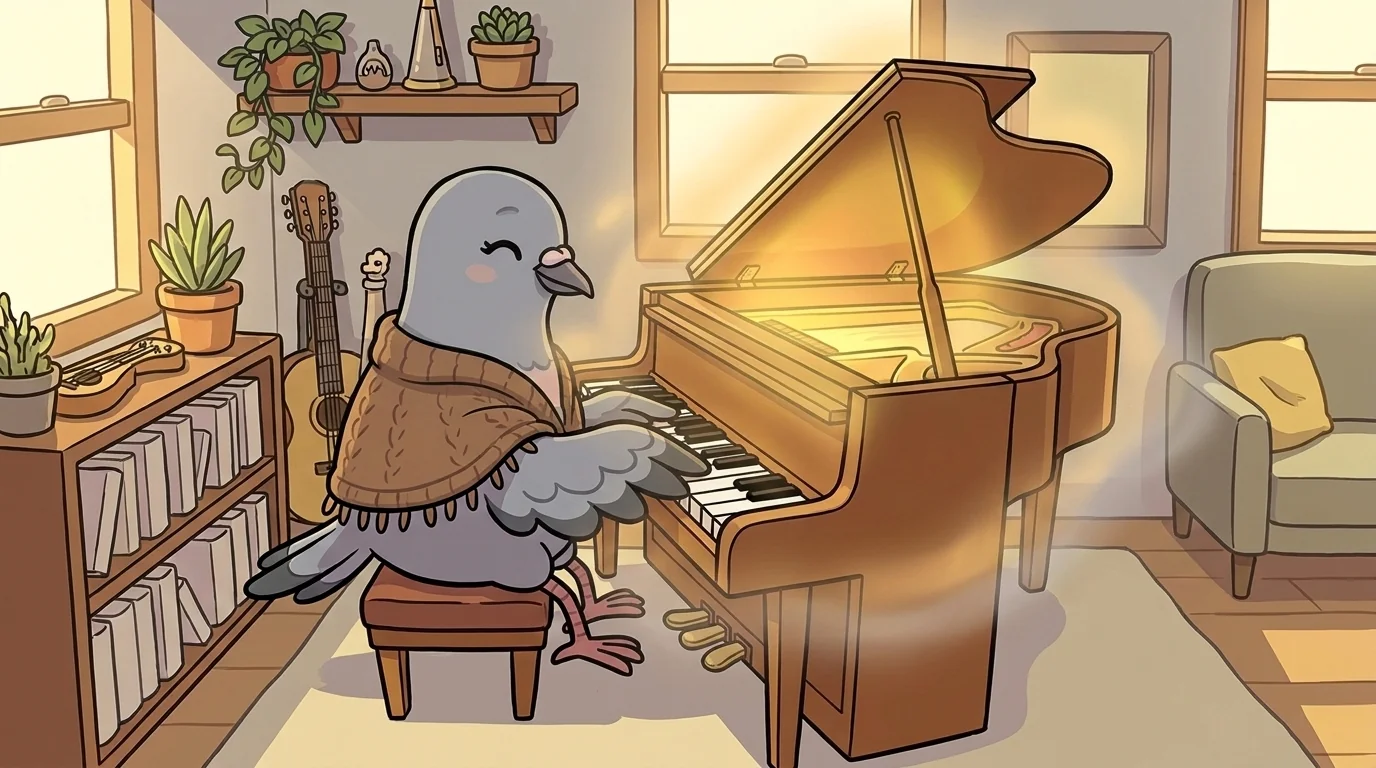
"It sounds kind of sad, in a nice way," he said. "Why do I like the sad-nice one better?" Ache's grey feathers settled, and she thought of the morning-call that never ended. "Because it's not really sad — it's hoping," she said. "A plain triad is content; it's arrived. A seventh chord is still on its way to something, and being-on-your-way is a sweeter feeling than being done. That little ache is the chord wanting — and the dominant seventh wants the most, which is exactly why it's the one that drives a song home." She played it once more and, gently, left it hanging. "The most beautiful chords are often the unfinished ones. That's not a flaw. That's the chord holding a door open for you."
And Ache felt it hum soft through her, grey and gentle and full — that tender, brimming, the almost is its own kind of beautiful gladness she'd carried since a morning-call taught her that a little ache is really an open door. The sweetest sound in music isn't the end. It's and then.
The HarmonyForge ensemble
Ache is part of HarmonyForge's distributed-narrative cast. Each character embodies a different curricular primitive; together they teach the full subject.
-

Triad
Chord-stacking — three tones in vertical alignment (root + third + fifth = the foundation of harmony)
-

Lean
Voice-leading — smooth stepwise motion between chord tones (the smallest possible movements between consecutive chords)
-
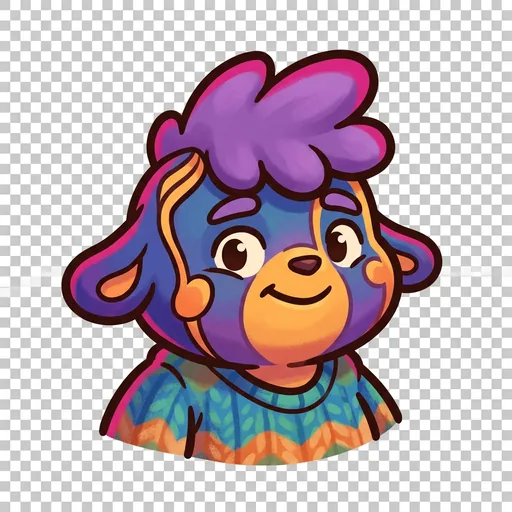
Pull
Tension — dissonant intervals (the leading-tone, the suspended 4th, the diminished chord) that *want* to resolve
-

Land
Resolution — the consonant arrival when tension releases (root return; cadence; the V→I gesture)
-

Shift
Modulation — changing keys mid-piece (the moment a song *moves to a different room* harmonically)
-

Octave
Octave — a seal who sings the same note a whole floor up; eight steps from a note back to its own echo
-

Rill
Arpeggio — an otter who un-stacks a chord into a walk; the same tower played one stone at a time, flowing
-

Tumble
Chord inversion — a red panda who re-stacks the same three notes; a different one on the bottom changes the chord's face
-
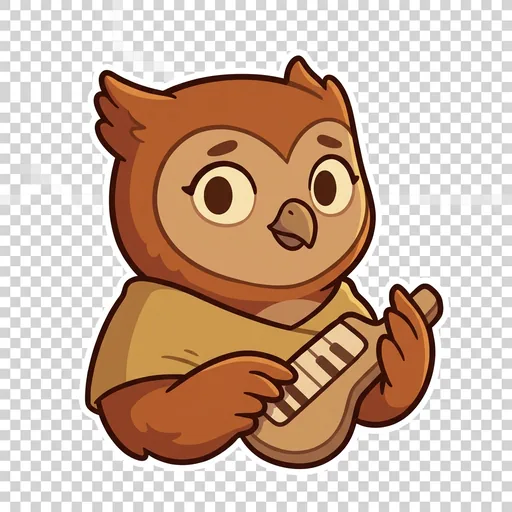
Umber
Major/minor third — an owl who lowers the middle tone one step; that note decides if a chord sounds bright or dark