Umber
UMBER — *one note lower and the whole color turns. the middle tone decides if a chord smiles or aches.*
Loading audio…
Press play to listen along. The line being read lights up as you go.
Show full transcript
Loading transcript…
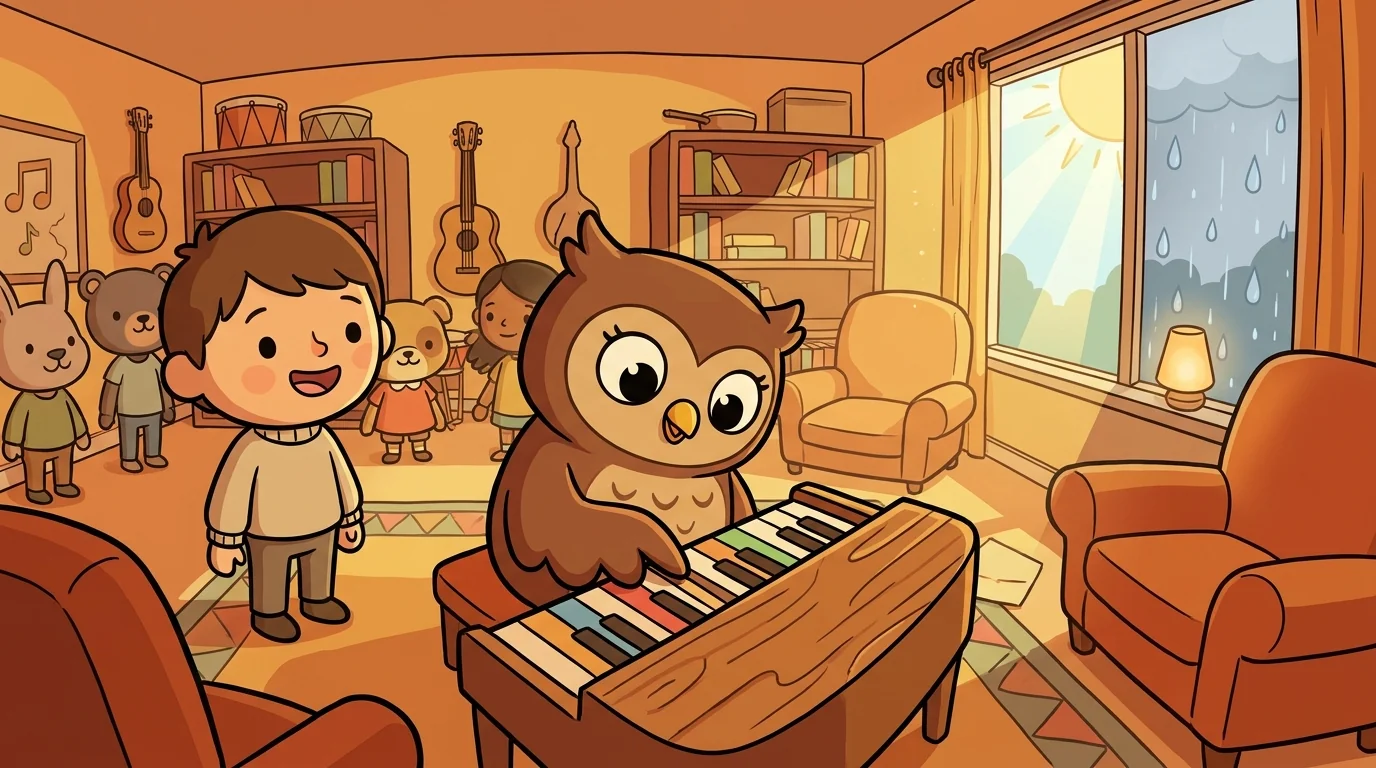
Umber struck a chord on the little practice keys and let it ring — bright, open, sunny, the kind of sound that makes you want to skip.
"That's a happy one," she said. She was a small owl the warm brown of an autumn leaf, with round eyes and a beak she tilted when she listened. "Feels like sunshine, right? Like yes." A boy in the front nodded, already smiling at it. Umber's round eyes glinted. "Now watch. I'm going to change one note. Just the middle one. Just a little."
She played it again — but nudged the middle tone down a single step.
The whole chord went soft and shadowed, wistful, the sound of a window on a rainy afternoon. The boy's smile faded into something quieter and a little wonderful.
"Same two outside notes," Umber said gently. "Only the middle one moved, only a hair. And the whole color turned — from sunshine to shade. From yes to oh." She let it hum. "That middle note is the one that decides. It's the smallest change in the whole chord, and it changes everything."
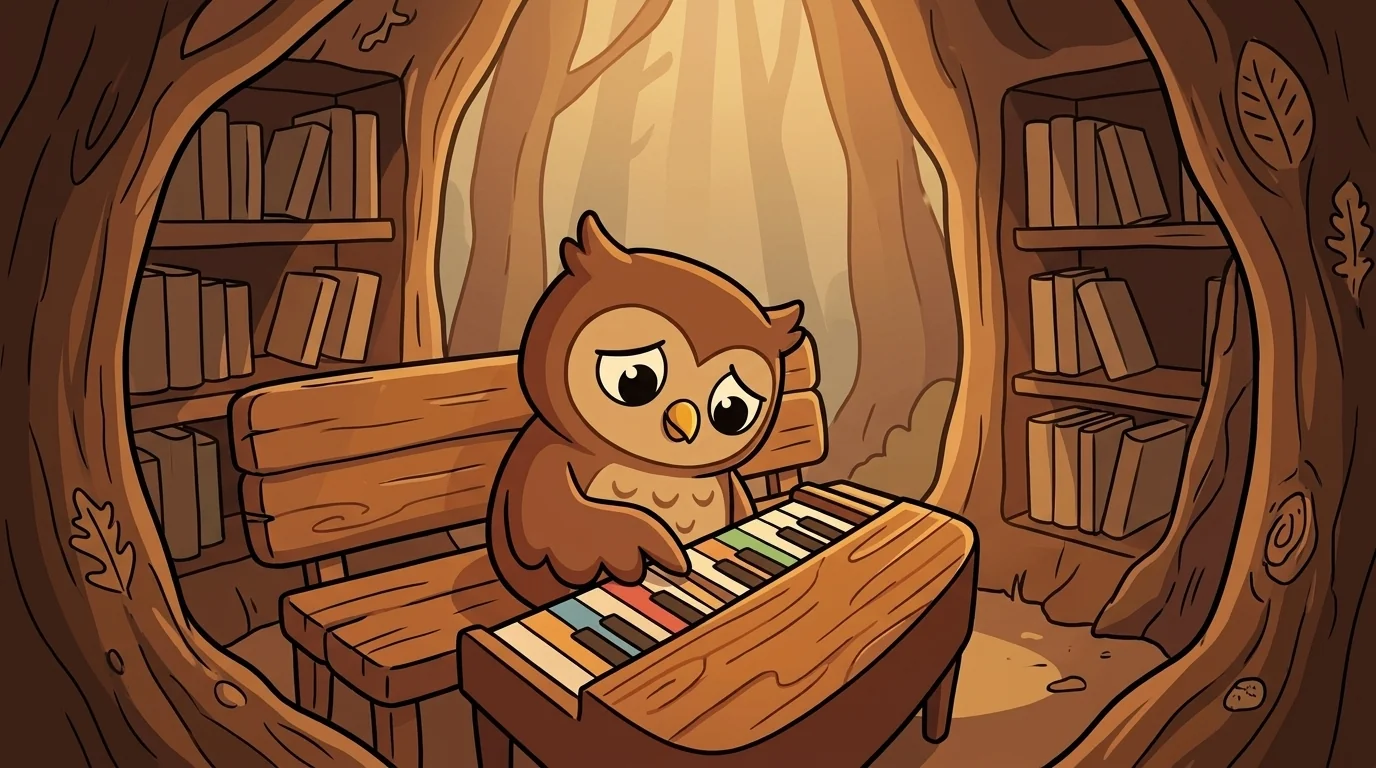
Umber had always been the one who noticed the middle of things.
She grew up in a hollow tree where her family were dusk-singers, the ones who sang the sun down each evening. And Umber had noticed, very young, that the same song could be sung two ways — one that felt like a celebration, and one that felt like a goodbye — and that the difference was so small she couldn't name it.
"Why does tonight's song feel sad?" she asked her grandfather once. "It's the same song as yesterday."
"Almost the same," he said, blinking his slow owl blink. "One note in the middle went down a step. That's all. But that one step is where the feeling lives, little one. Move it up, the song smiles. Move it down, the song aches." He'd tucked a wing around her. "The edges hold the shape. The middle holds the mood."
Umber never forgot it. The most important note was almost never the loudest or the highest. It was the quiet one in the middle, doing the deciding.
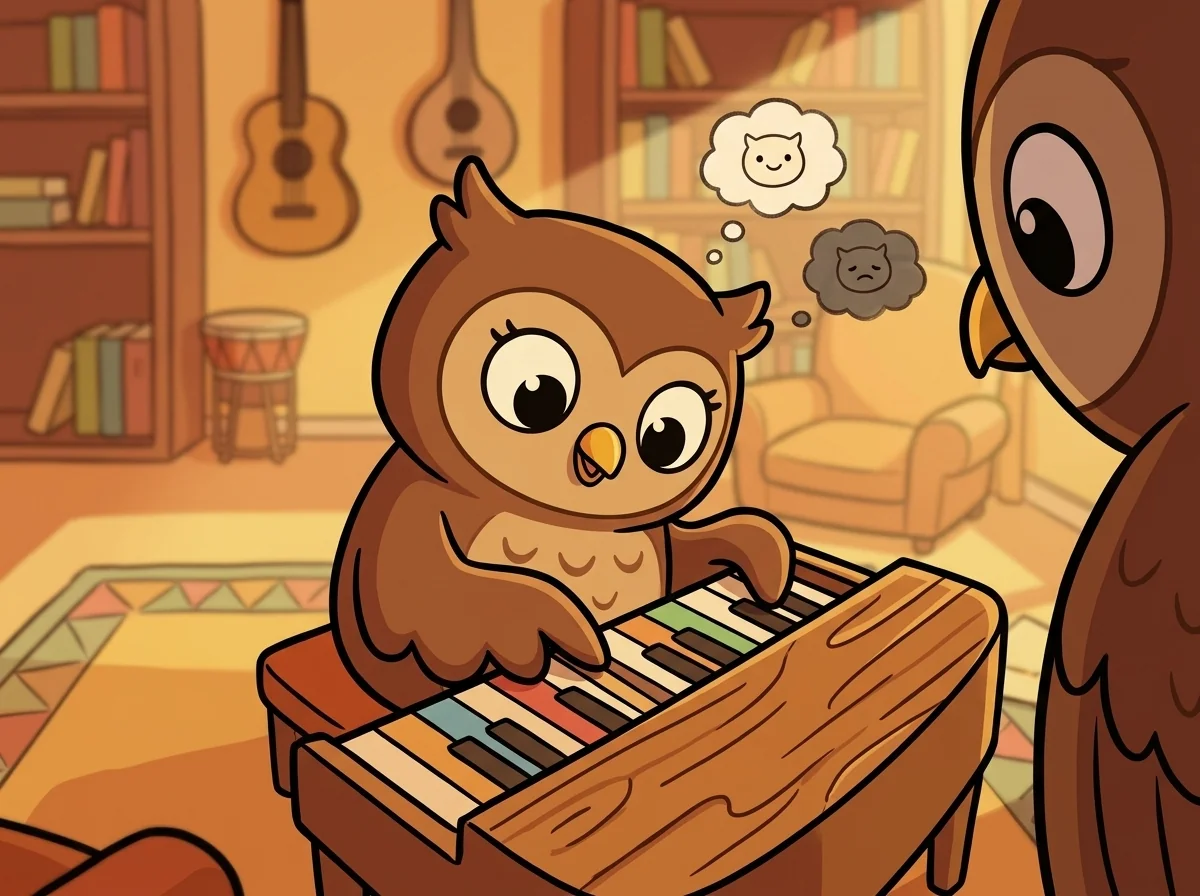
When Umber was twelve she carried her practice keys down the path to HarmonyForge. Refrain, her mentor, was waiting.
"Triad taught you to stack three notes," Refrain said. "Root, third, fifth. What did you come to add?"
Umber pressed a bright chord, then moved one note and pressed the sad twin of it. "The feeling," she said. "Same three-note stack — but the middle tone, the third, picks the color. High third, it's major, it smiles. Lower third, it's minor, it aches. One note. Whole different heart."
Refrain listened to both, and her feathers settled on the second one, the shadowed one.
"You'll be teaching the ones who think a chord can only sound one way," Refrain said. "Come in."
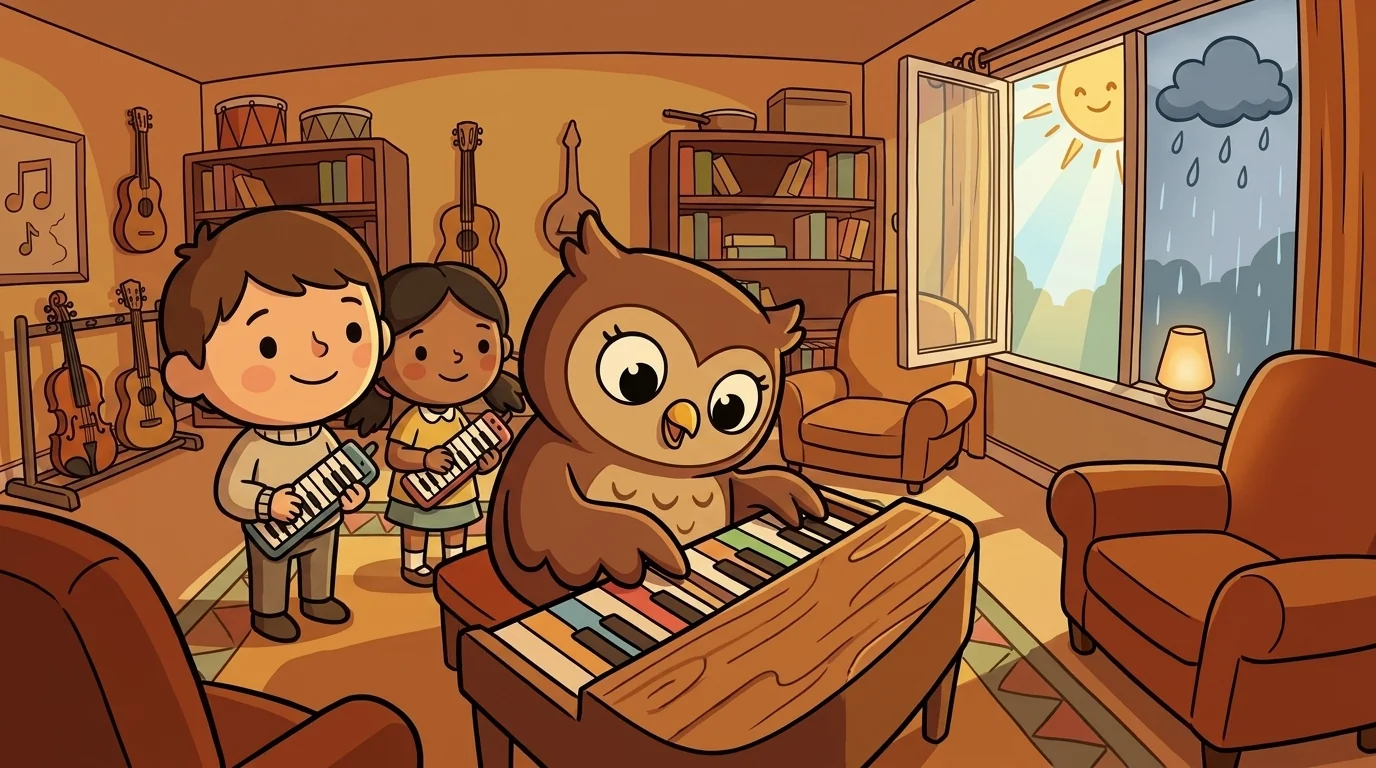
In the workshop, Umber sat two students down at the keys and had them each hold a chord — same root, same top note.
"You take the bright middle," she told the first. "You take the low one," she told the second. "Now play together, then switch."
The room filled with the bright chord, then the shadowed one, then bright, then shadowed, the mood flipping back and forth on the strength of one small note.
"Hear that?" Umber said. "It's not a happy chord and a different sad chord. It's the same chord, wearing two faces. The outside notes never moved. Only the middle. Major smiles. Minor aches. And the aching one isn't broken or wrong — a whole world of the most beautiful music lives right there in the shade." She tilted her head. "Some of my favorite songs never smile once. That's not a mistake. Sometimes the ache is the point."
A girl played the minor chord over and over, quietly, like she was learning the shape of a feeling.
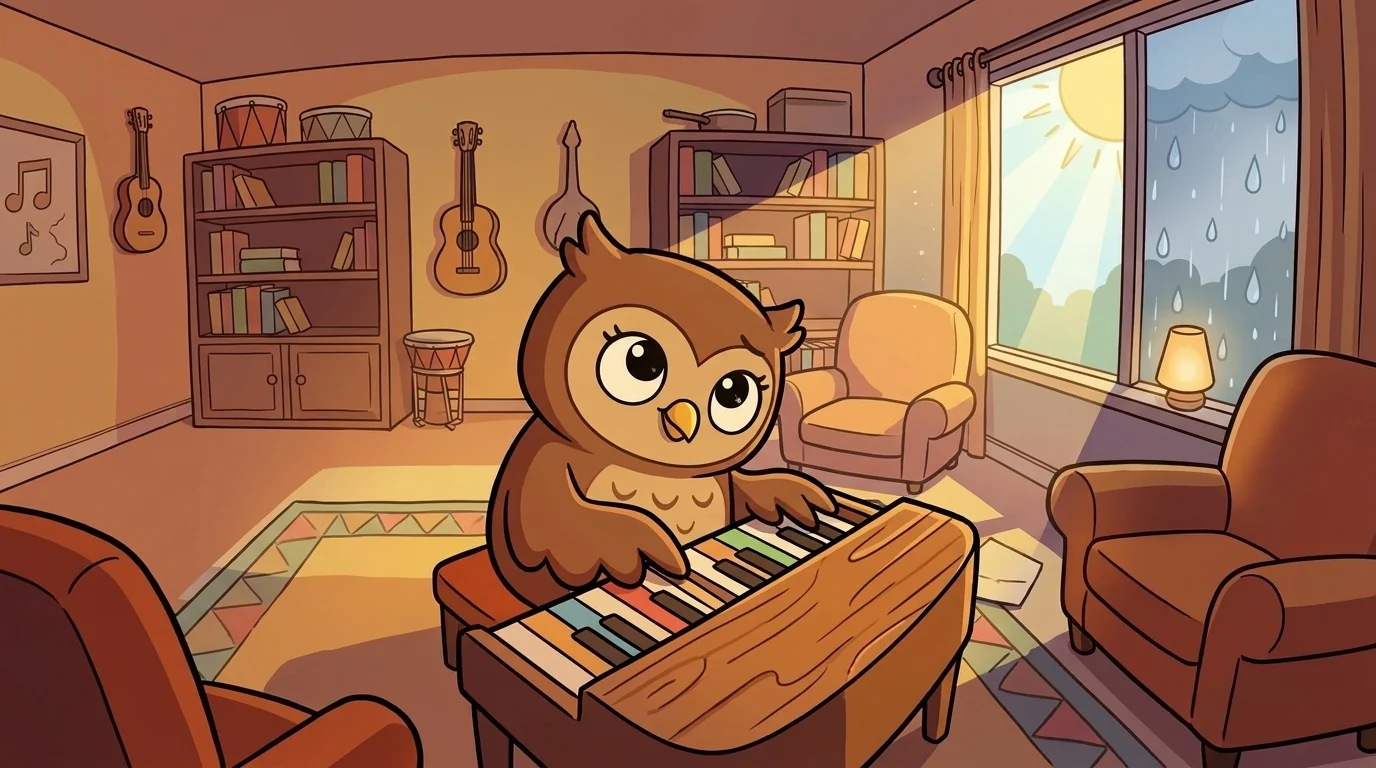
The girl looked up. "I keep playing the sad one," she admitted. "Is that weird? It sounds nicer to me."
Umber's round eyes went soft, and she thought of the dusk-songs, and her grandfather, and the goodbye that was somehow the most beautiful song of the evening.
"Not weird at all," she said. "The shadowed chords aren't the bad ones. They're the ones that understand you on a rainy day. Bright chords are wonderful when you feel bright. But the aching ones — the minor ones — they sit with you when you don't. A lot of us love those best." She played the minor chord one more time, warm and slow. "That's the secret nobody tells you: the note that turns a chord sad is the same tiny note that makes it feel like something. Move it a hair up or a hair down, and you've changed the whole color of the moment. One little middle note, holding the whole mood."
The girl nodded slowly, playing the shadowed chord again, letting it ring.
And Umber felt it settle warm and low in her feathered chest — that quiet, brimming, the small quiet thing holds the whole feeling gladness she'd carried since a dusk-song taught her where a mood really lives. She loved the bright chords. But she loved, even more, being the one who showed a kid that the shade could be beautiful too. One note. One tiny middle note. Everything.
The HarmonyForge ensemble
Umber is part of HarmonyForge's distributed-narrative cast. Each character embodies a different curricular primitive; together they teach the full subject.
-
Triad
Chord-stacking — three tones in vertical alignment (root + third + fifth = the foundation of harmony)
-
Lean
Voice-leading — smooth stepwise motion between chord tones (the smallest possible movements between consecutive chords)
-
Pull
Tension — dissonant intervals (the leading-tone, the suspended 4th, the diminished chord) that *want* to resolve
-
Land
Resolution — the consonant arrival when tension releases (root return; cadence; the V→I gesture)
-

Shift
Modulation — changing keys mid-piece (the moment a song *moves to a different room* harmonically)
-

Ache
Seventh chords — a dove whose coo adds a fourth voice on top; a sweet, unfinished ache that leans the chord forward
-

Octave
Octave — a seal who sings the same note a whole floor up; eight steps from a note back to its own echo
-

Rill
Arpeggio — an otter who un-stacks a chord into a walk; the same tower played one stone at a time, flowing
-

Tumble
Chord inversion — a red panda who re-stacks the same three notes; a different one on the bottom changes the chord's face