
Rill
ARPEGGIO (Advanced) — the same chord un-stacked into a line: instead of striking all notes at once (a BLOCK chord), you play them one at a time (a BROKEN chord / arpeggio), spreading the harmony across TIME. The notes never change — only *when* each arrives — but the texture turns from a wall into a flowing stream, and the harmony is now IMPLIED over time rather than stated all at once (Alberti bass, guitar fingerpicking, a harp's shimmer).
Loading audio…
Press play to listen along. The line being read lights up as you go.
Show full transcript
Loading transcript…
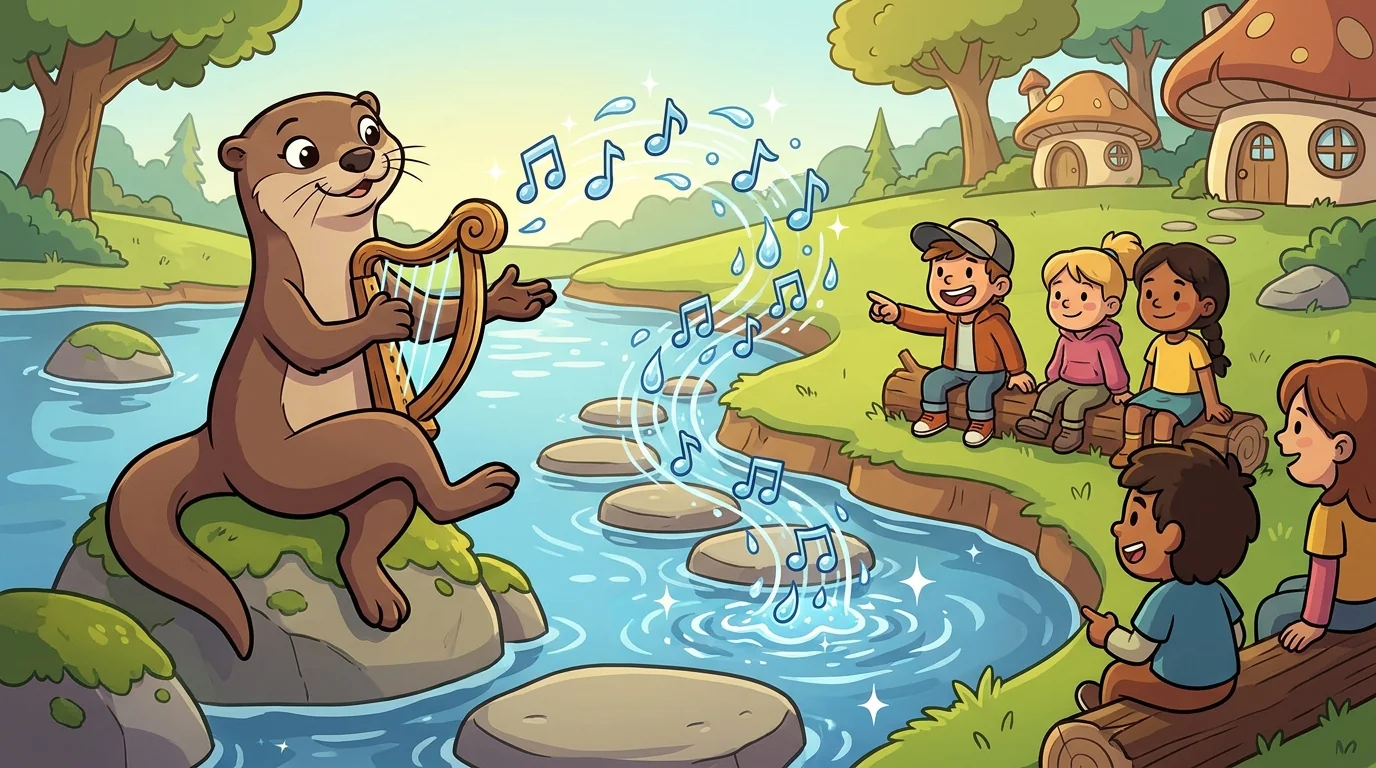

Rill played a chord the usual way first — all three notes struck at once, a solid, standing hum. Then she tilted her head and played the very same three notes one at a time, low to high, quick and light, and they came out sounding like water going over stones.
"Same chord," she said, "but instead of a wall of sound, now it's a little stream." She was an otter, sleek and river-brown, forever in gentle motion. The Advanced version, she said, is a real word for the two ways: block and broken. "Strike all the notes together and that's a block chord — a wall, stated all at once. Play the same notes one after another and that's a broken chord, an arpeggio — the exact same harmony un-stacked into a line." She rolled through it again, sparkling. "Nobody's missing, nobody's new — it's the tower Triad stacks. I just spread it across time instead of stacking it in one instant."

"And that changes the texture — the feel of the sound — without changing a single note," she went on. "Here's the deeper part. A block chord states the harmony: bang, there it is. An arpeggio implies it — your ear gathers the notes as they arrive, one at a time, and assembles the chord in your memory. Same harmony, but now it's spread thin across the bar, leaving room for the melody to breathe on top." She smiled. "That's why it turns up everywhere gentle. An Alberti bass — low, high, middle, high, rolling under a tune — is just a broken chord keeping the harmony going while barely getting in the way. A guitar fingerpicks its chord instead of strumming it. A harp shimmers. All of them: the same chord, un-stacked, flowing over time."
Rill had grown up in the water, so she understood flow before anything else. Her family were the stream-singers, otters who lived where a brook rilled over the rocks, and its sound was always in her ears — not one crash but a thousand tiny sounds, one after another, forever flowing. She'd noticed young that the same amount of water could pour down all at once in a splash or ripple over stones one drop at a time, and the second way was the one that sounded like peace. "Why does the ripple sound so much nicer than the splash? It's the same water." "Because the ripple takes its time," her grandmother said. "A splash is everything at once — loud, done. A ripple lets each little sound have its own moment. Same water, spread out over time. And things that take their time, they flow." Rill loved that: spread the same thing out gently and a splash becomes a song.
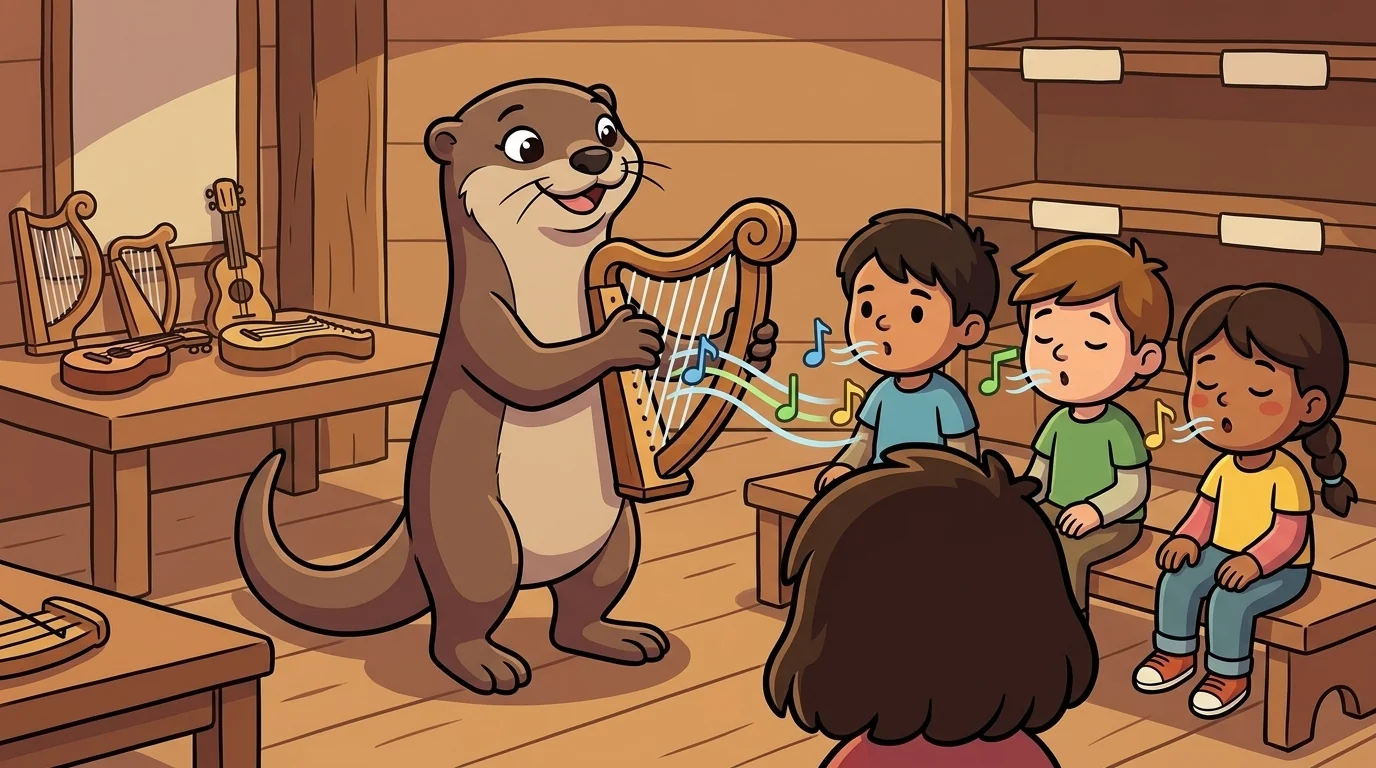
At HarmonyForge, Refrain waited. "Triad stacks a chord. Octave lifts it. What did you come to add?" Rill played a block chord, then rolled the same three notes one at a time, sparkling. "Motion," she said. "You don't have to hit a chord all at once like a wall. Un-stack it — a broken chord, an arpeggio — and the same harmony flows like a stream. It fills the time with something gentle instead of one big block, and it implies the chord over time instead of stating it." Refrain settled at the peace of the rippling notes. "You'll be teaching the ones who think a chord can only stand still. Come in."
In her workshop she had three students take root, third, and fifth and hum not together but in turn, one after another, around and around — and the room filled with a flowing, rippling, round-and-round sound, the same chord endlessly walking. "Struck all at once, that chord is a statement — here I am, done. Rolled one note at a time, it's a journey — it flows, fills the space, feels like water. Same three notes. Completely different texture, just from spreading them across time. This is how a lullaby is gentle, how a guitar picks instead of strums, how a harp shimmers — a chord that stopped standing and started strolling." A girl rolled a chord slowly, then quickly, and heard it turn from a calm stream into a sparkling rush without ever changing which notes it was.
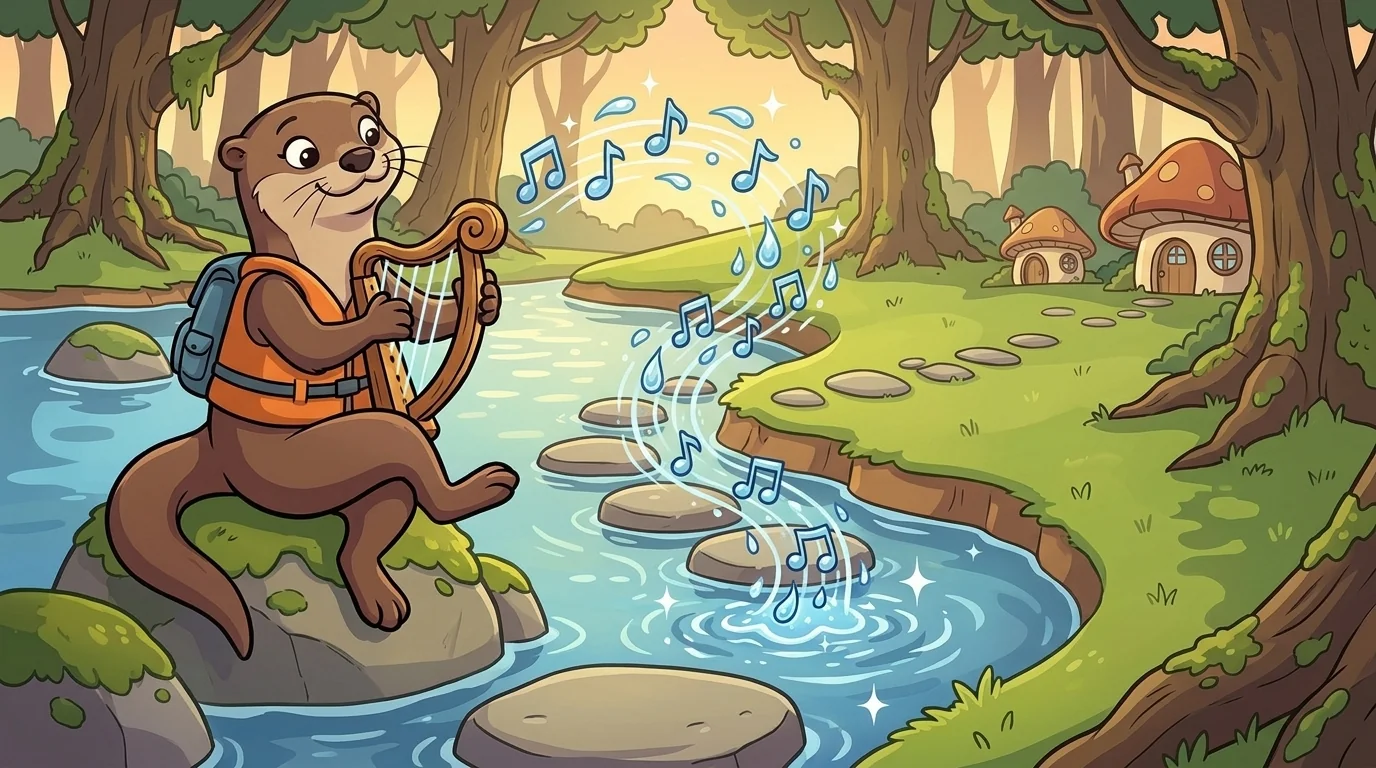
"So it's still just the chord? It feels so much softer, though — like it calmed down." Rill did a happy little otter-roll. "It's the exact same chord — it just took its time. A block chord is a wall. The same chord spread out, one note at a time, is a stream. Nothing about the notes changed. Only when each one arrives. And letting each little piece have its own moment turns a splash into a song." She rolled through it one last time, slow and shimmering, letting the last note ring on. "Same notes. Same tower. I just let it go for a walk. And walking, it turned into water."
And Rill felt it ripple warm and easy through her sleek river-brown self — that flowing, unhurried, spread it out and a splash becomes a song gladness she'd carried since a brook taught her that taking your time is its own kind of music.
The HarmonyForge ensemble
Rill is part of HarmonyForge's distributed-narrative cast. Each character embodies a different curricular primitive; together they teach the full subject.
-

Triad
Chord-stacking — three tones in vertical alignment (root + third + fifth = the foundation of harmony)
-
Lean
Voice-leading — smooth stepwise motion between chord tones (the smallest possible movements between consecutive chords)
-
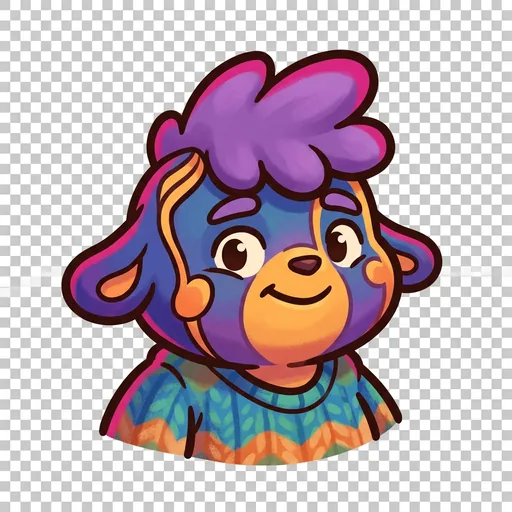
Pull
Tension — dissonant intervals (the leading-tone, the suspended 4th, the diminished chord) that *want* to resolve
-

Land
Resolution — the consonant arrival when tension releases (root return; cadence; the V→I gesture)
-

Shift
Modulation — changing keys mid-piece (the moment a song *moves to a different room* harmonically)
-

Ache
Seventh chords — a dove whose coo adds a fourth voice on top; a sweet, unfinished ache that leans the chord forward
-

Octave
Octave — a seal who sings the same note a whole floor up; eight steps from a note back to its own echo
-

Tumble
Chord inversion — a red panda who re-stacks the same three notes; a different one on the bottom changes the chord's face
-
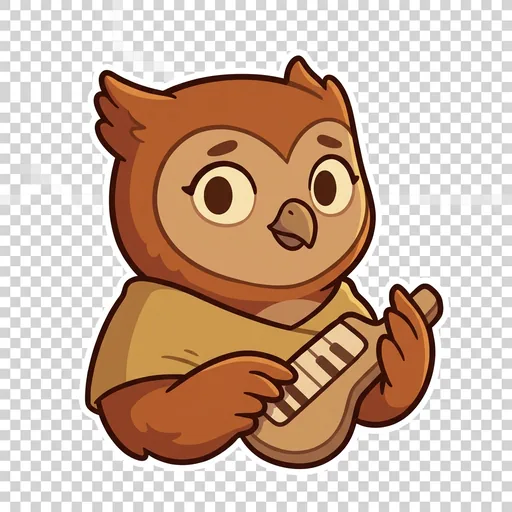
Umber
Major/minor third — an owl who lowers the middle tone one step; that note decides if a chord sounds bright or dark