
Tumble
CHORD INVERSION (Advanced) — the same three notes re-stacked so a different one sits in the bass. Root position (root on the bottom), first inversion (third on the bottom), second inversion (fifth on the bottom): same pitch content, new face. Its real power is VOICE-LEADING — choose the inversion that shares notes with the next chord so the parts move the least, and the music flows smoothly instead of leaping.
Loading audio…
Press play to listen along. The line being read lights up as you go.
Show full transcript
Loading transcript…
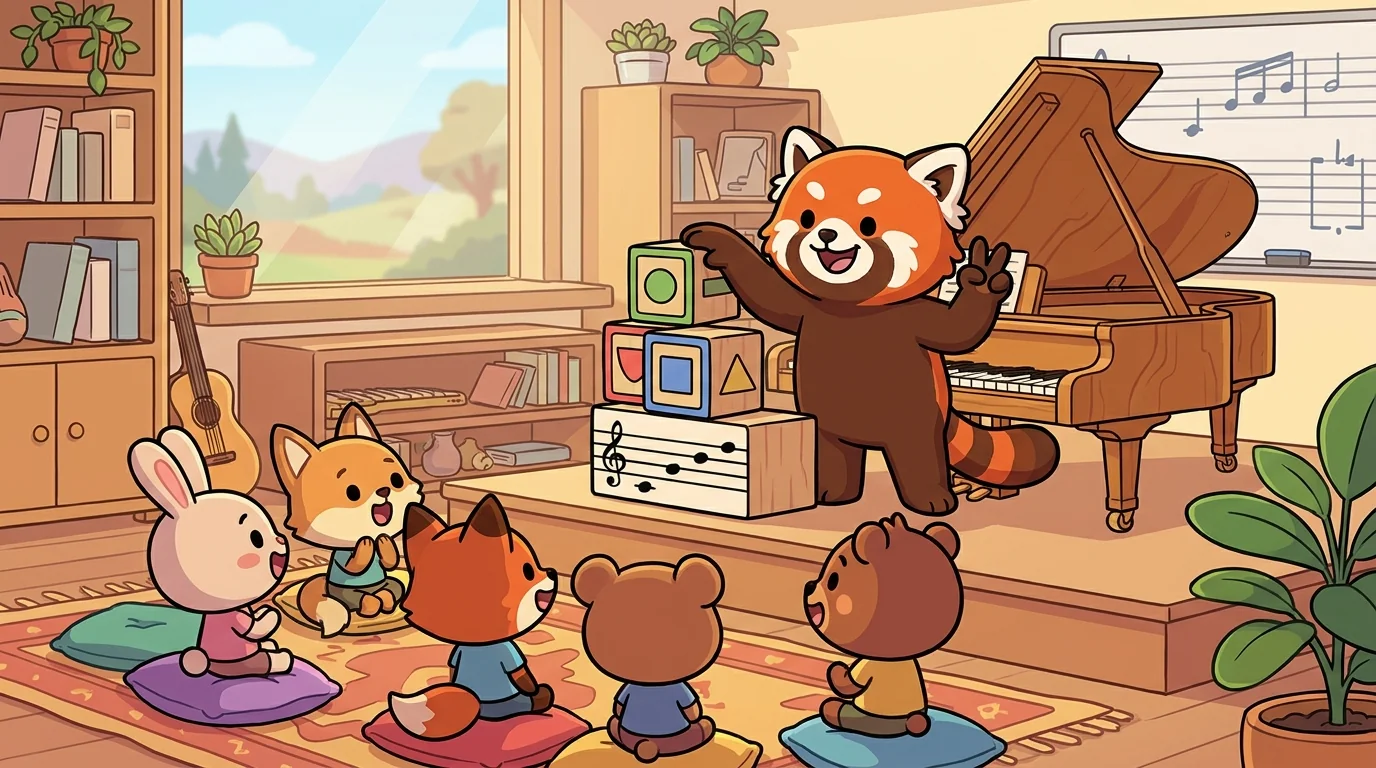
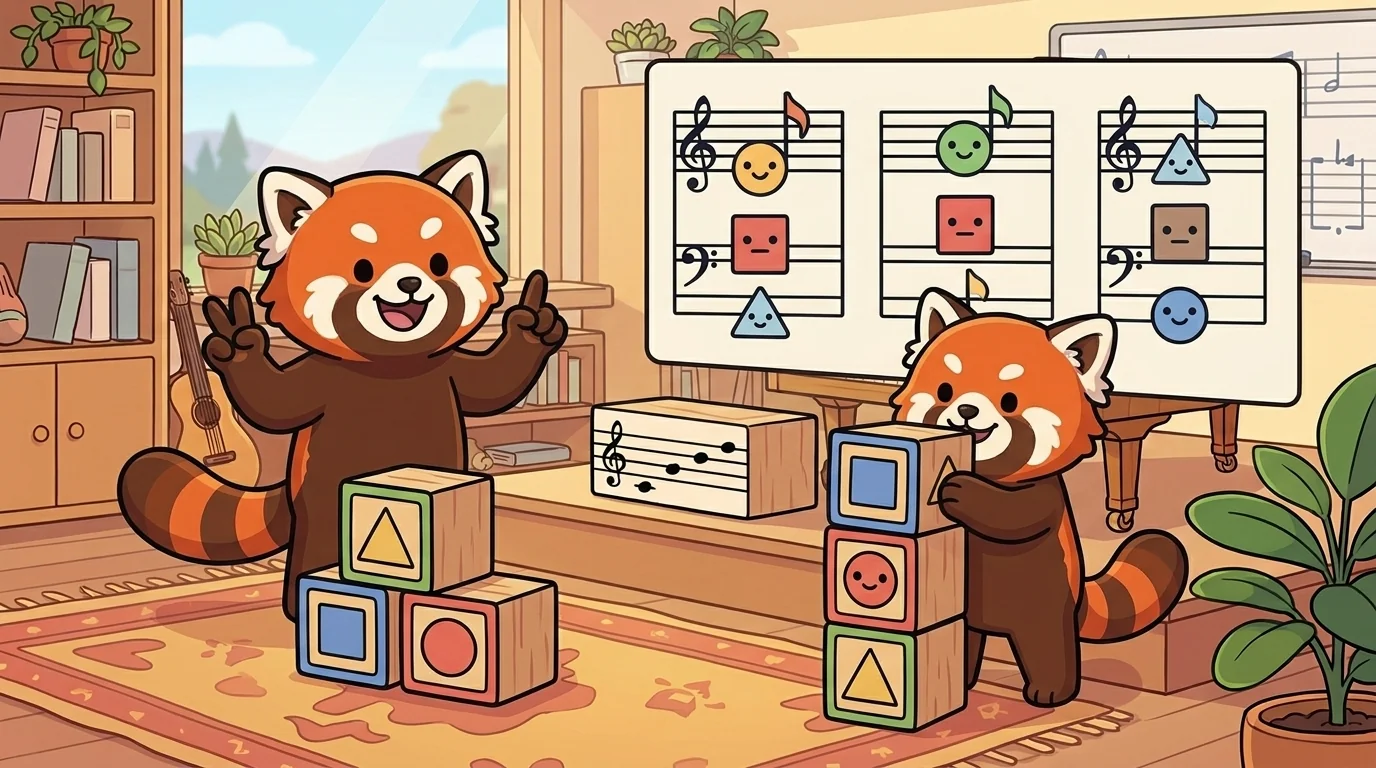
Tumble played a plain, sturdy chord — root on the bottom, the way you first learn it — then grinned and did something that made the students sit up: he kept the exact same three notes and just moved the bottom one up to the top. The chord that came out sounded different — lighter, floatier, like the same room seen from a higher window — but it was, undeniably, the same chord.
"Whoa. What did you do?" "Nothing," Tumble said, delighted. He was a red panda the size of a backpack, fluffy and ring-tailed. The Advanced version, he said, has real names. "Same three notes — root, third, fifth — every one still here. The only question is which one sits in the bass, on the bottom. Root on the bottom is root position. Move the root up so the third is on the bottom — that's first inversion. Move again so the fifth is on the bottom — second inversion. Three positions, one chord. The bass note names the inversion." He played all three, low-and-grounded, then floaty, then open. "It's not a new chord. It's the same chord inverted — same three friends, standing in a different order."
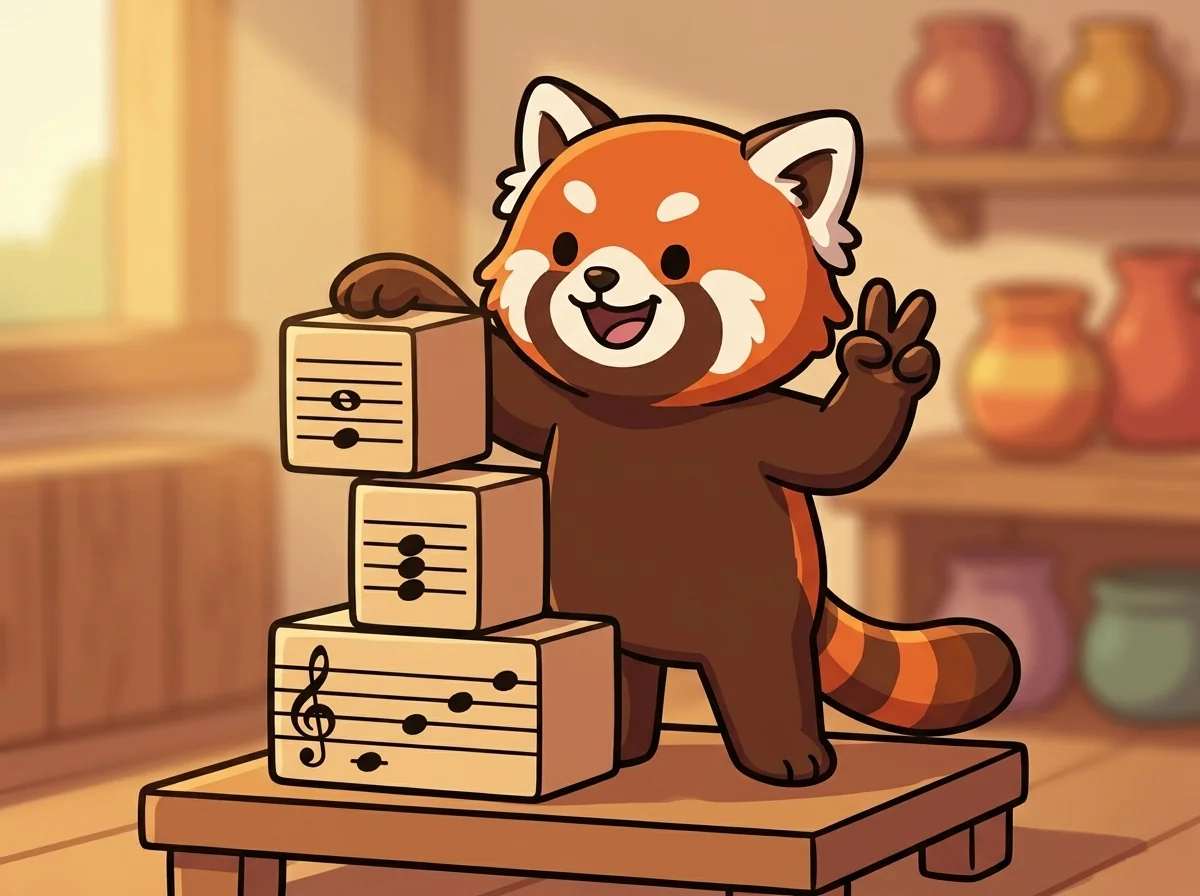
"And here's why it's not just a party trick," he went on. "It's the secret to voice-leading — making chords flow into each other smoothly. Watch." He walked two chords the clumsy way first, both in root position, and his paws leapt across the keys. Then he did it again, but chose an inversion of the second chord that sat right next to the first — sharing a note or two, barely moving. "Hear how much smoother? When you go from one chord to the next, pick the inversion that's closest — the one that shares the most notes and moves the parts the least. Common tones stay put; the rest tiptoe to the nearest note. Same chords, smarter order, and suddenly the music glides instead of jumping around." He chuffed. "Composers have marked which inversion they mean for centuries — little numbers under the bass. But the idea is what matters: the bass note you choose decides the face, and the smartest face is the one nearest the last one."
Tumble had learned about rearranging long before a keyboard. He grew up in a big tumbling family of red pandas in a tangle of branches, forever climbing over and under one another to fit the same tree — and he'd noticed the family could pile up a hundred ways and it was always, somehow, the same family, the same warm heap, just arranged new. "Why does the pile feel different when I'm on top?" "Because the shape changes," his father said, ring-tail draped over a branch, "but not the who. Same family, whoever's on the bottom. You can stack us a dozen ways and we're never a different us — just a new view of the same warm thing." Tumble loved that: you could look completely new and be completely yourself at once; rearranging wasn't replacing.
At HarmonyForge, Refrain waited. "Triad stacked you three notes. Umber coloured their mood. What did you come to add?" Tumble played a chord in root position, then floated its root to the top. "Their position," he said. "Same three notes — but you don't have to leave the root on the bottom. Put the third in the bass for first inversion, the fifth for second. New face, same chord. And it's how you get a smooth path from one chord to the next: choose the inversion closest to where you already are." Refrain listened to one warm chord wear three faces. "You'll be teaching the ones who think a chord has only one shape. Come in."
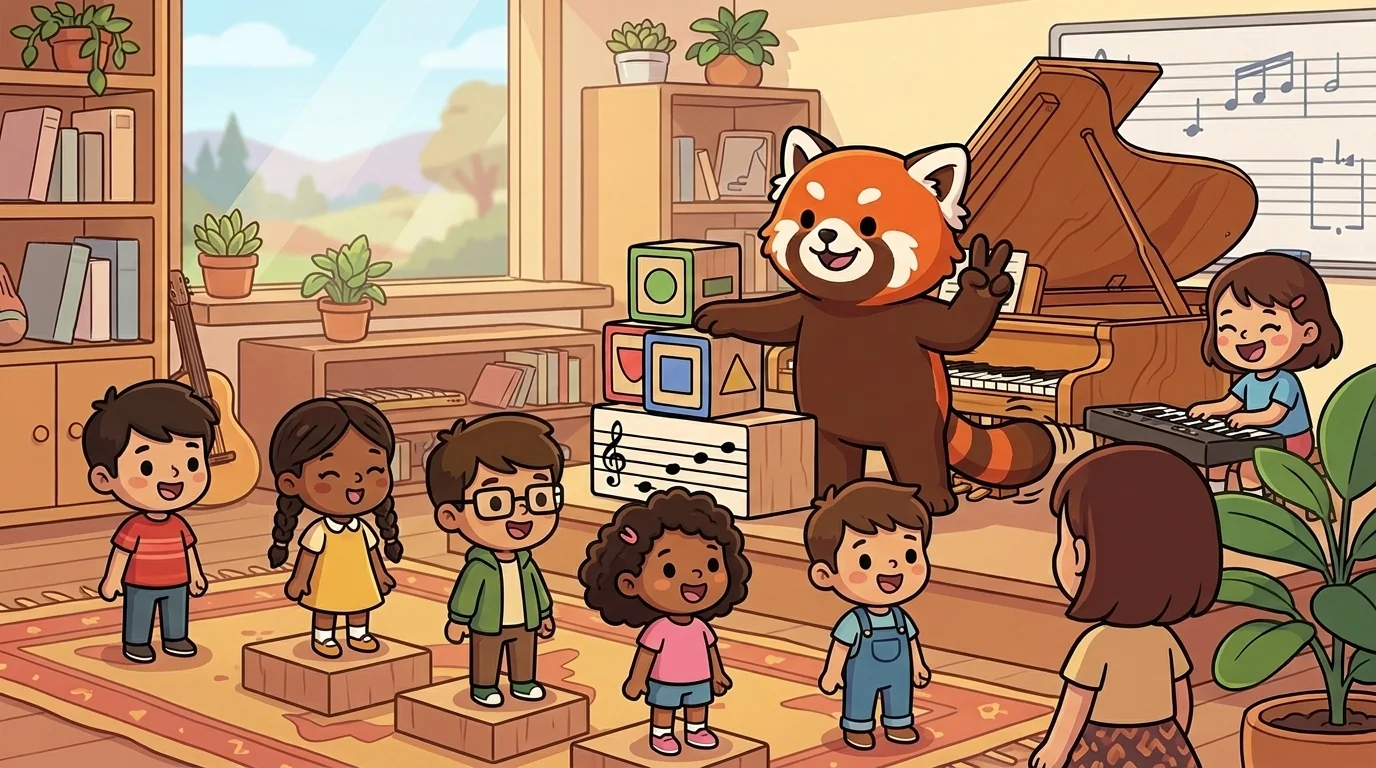
In his workshop he handed three students a note each — root, third, fifth — had them line up and hum, then "switch places: root, go to the top; everybody shuffle down." Same three notes, new order, new sound. "Nobody left. Nobody new joined. You changed who's in the bass. That's an inversion." Then he walked two chords, choosing a tumbled version of the second that barely moved from the first. "This is voice-leading — same chords, smarter order, so your hands barely move and the music flows smooth instead of leaping." A girl tried it — a chord, then its neighbour in root position (a big leap), then the same neighbour inverted to sit right next door (a tiny step) — and her face lit at how much smoother the second way sounded.
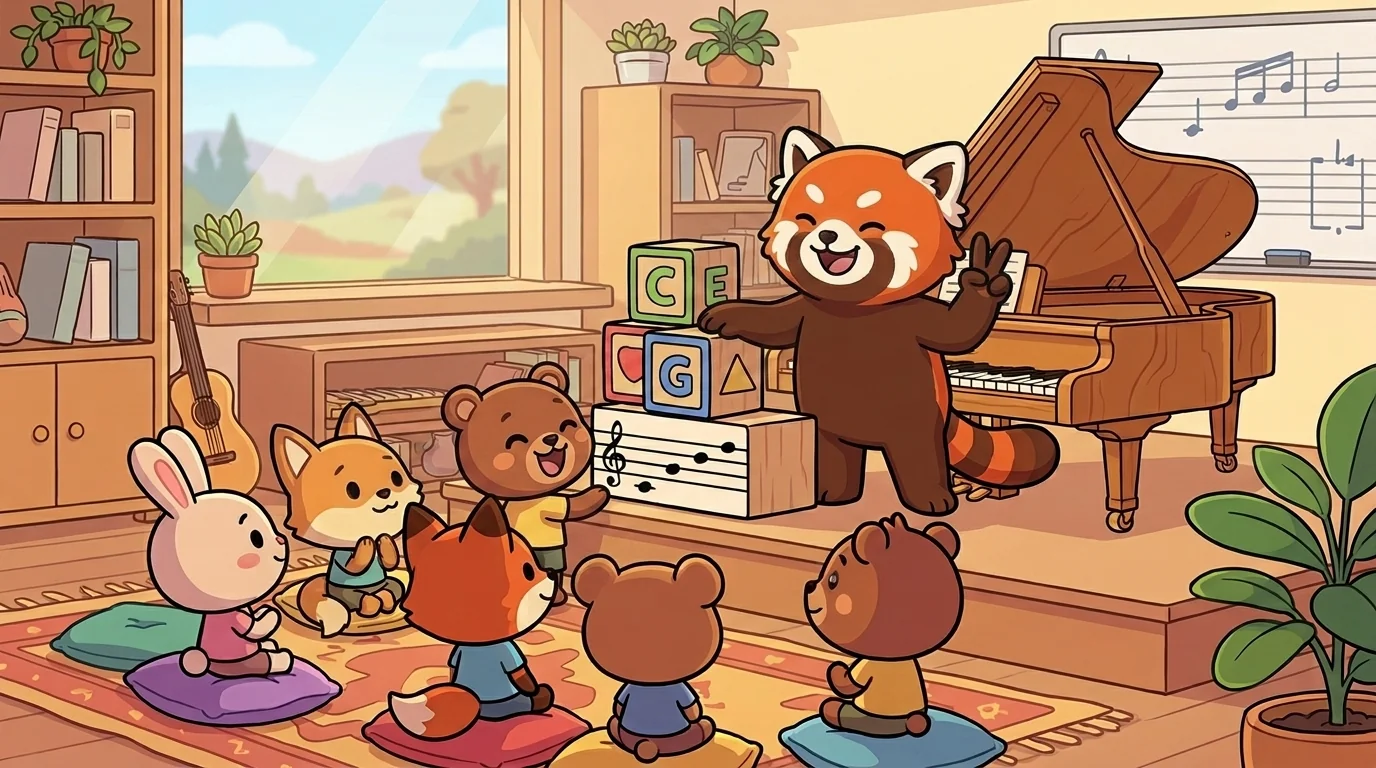
"So it's really the same chord? It sounds so different that calling it the same feels like cheating." Tumble laughed his warm, chuffing laugh. "Not cheating — that's the magic. It sounds new because the order's new, but count the notes: root, third, fifth every time, no matter who's in the bass. You didn't get a new chord — you unlocked three faces of the one you had, for free, just by shuffling. And picking the right face is how chords hold hands instead of jumping." He inverted the chord one last time, top to bottom. "You don't always need more notes. Sometimes you just stand the ones you've got in a smarter order."
And Tumble felt it roll warm and fluffy through him — that easy, delighted, rearranging is its own kind of new gladness he'd carried since a family pile taught him you can look completely different and stay completely yourself. Same three notes. Endless faces. All of them home.
The HarmonyForge ensemble
Tumble is part of HarmonyForge's distributed-narrative cast. Each character embodies a different curricular primitive; together they teach the full subject.
-
Triad
Chord-stacking — three tones in vertical alignment (root + third + fifth = the foundation of harmony)
-
Lean
Voice-leading — smooth stepwise motion between chord tones (the smallest possible movements between consecutive chords)
-
Pull
Tension — dissonant intervals (the leading-tone, the suspended 4th, the diminished chord) that *want* to resolve
-
Land
Resolution — the consonant arrival when tension releases (root return; cadence; the V→I gesture)
-

Shift
Modulation — changing keys mid-piece (the moment a song *moves to a different room* harmonically)
-
Ache
Seventh chords — a dove whose coo adds a fourth voice on top; a sweet, unfinished ache that leans the chord forward
-

Octave
Octave — a seal who sings the same note a whole floor up; eight steps from a note back to its own echo
-

Rill
Arpeggio — an otter who un-stacks a chord into a walk; the same tower played one stone at a time, flowing
-
Umber
Major/minor third — an owl who lowers the middle tone one step; that note decides if a chord sounds bright or dark