Teeter
BISTABLE FIGURE
Loading audio…
Press play to listen along. The line being read lights up as you go.
Show full transcript
Loading transcript…
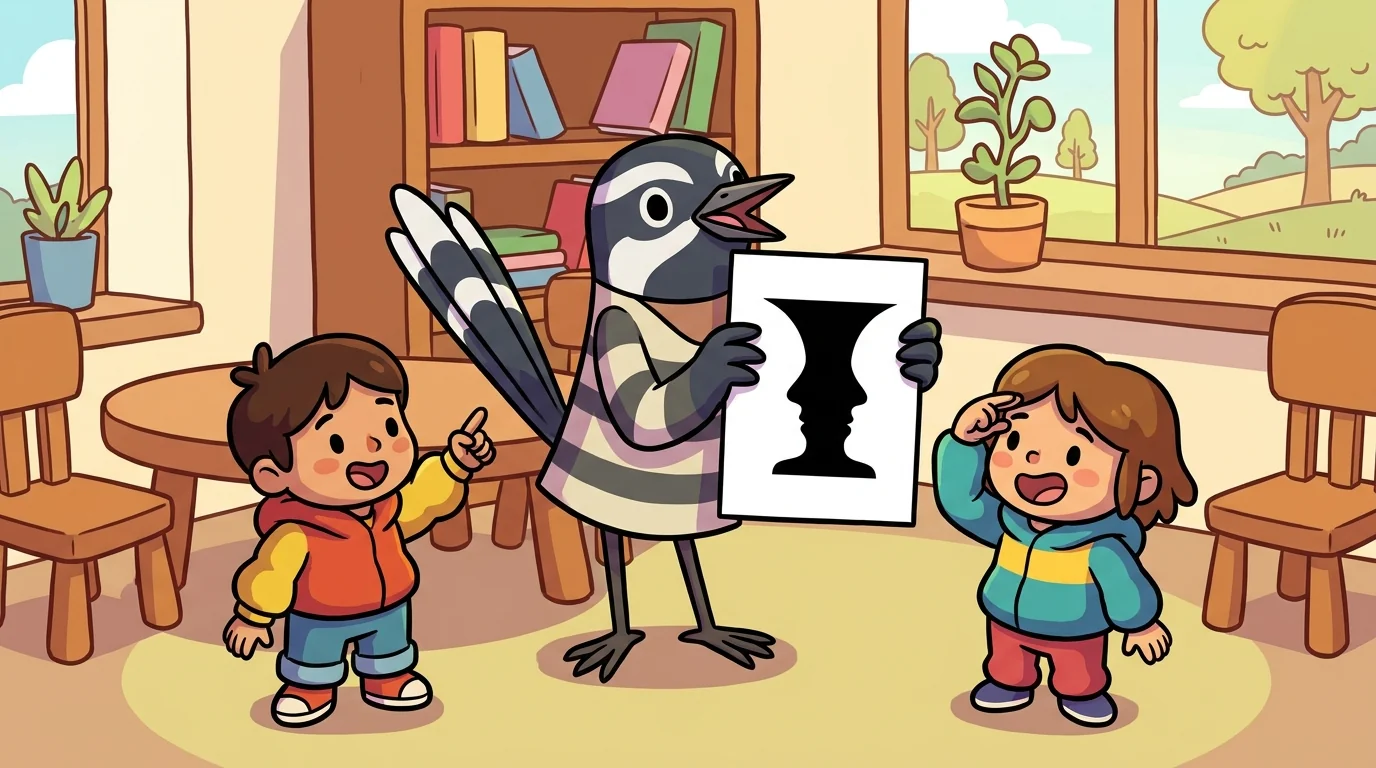
Teeter held up a simple black shape on a white card, and the two younger ones started arguing about it immediately.
"It's a vase," said one. "A fat black vase."
"It's two faces," said the other. "Two people about to boop noses. See the noses?"
"Vase!"
"Faces!"
Teeter — a wagtail-tween who bobbed her long tail up and down, up and down, unable to stay still — just watched them, delighted. "You're both right," she said. "That's the whole thing. It is a vase. And it is two faces. The very same shape, both at once." She tail-bobbed. "But here's the strange part — try to see them both at the same time. Go on. Vase and faces, together, held in your head at once."
They tried. They couldn't. It was a vase, then it flipped and it was faces, then it flipped back — but never, ever both.
"That's it exactly," Teeter said. "One picture, two true answers. And your brain will only ever show you one at a time. It teeters — flip, flip, flip — but it can't hold both. It has to decide, even when there's no right decision to make."
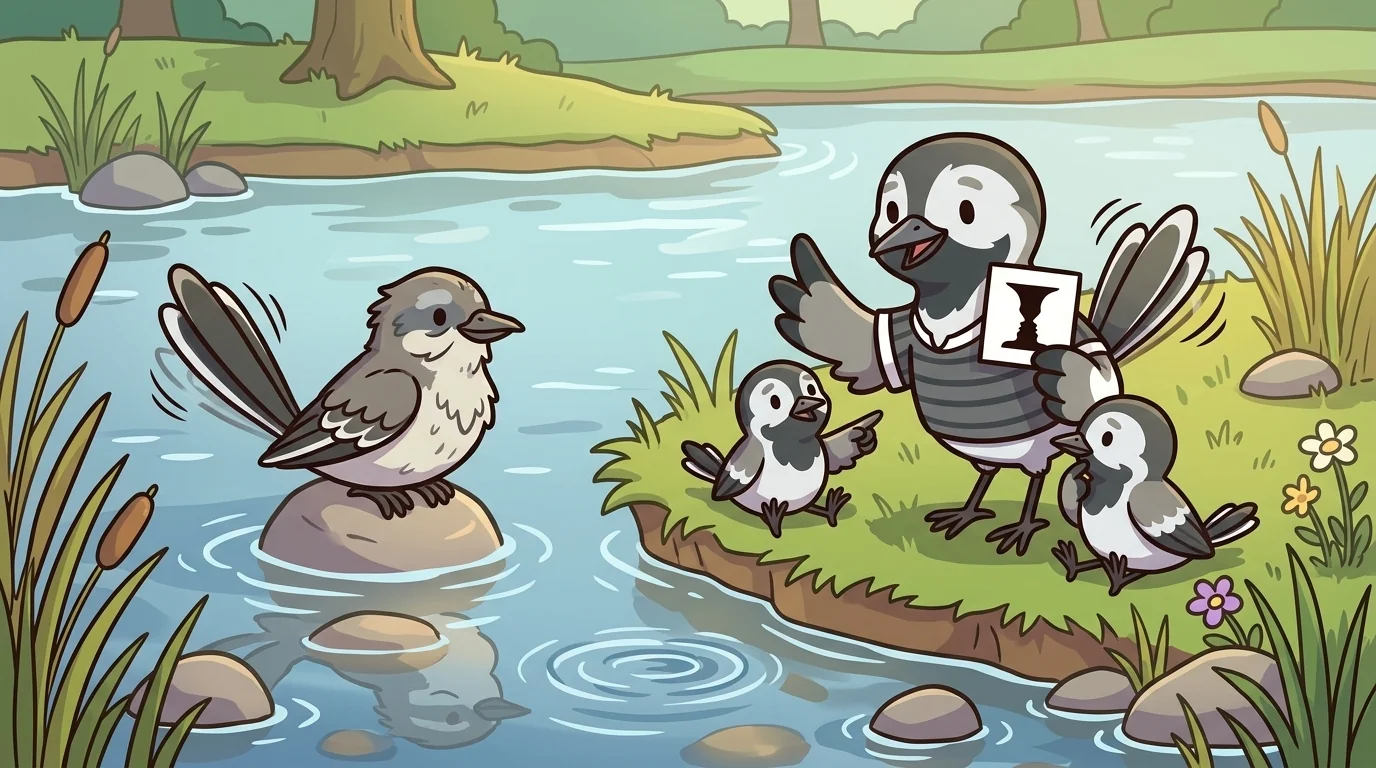
Teeter had always been the one who couldn't quite settle.
Her family were the riverbank-bobbers, wagtails whose tails never stopped tipping up and down, up and down, at the water's edge. And little Teeter had felt embarrassed by her own indecision — where other creatures picked a thing and stuck to it, she was forever flipping, seeing a situation one way, then the exact opposite way, unable to land.
Her grandfather, an old wagtail whose tail still bobbed after all his years, settled beside her at the water. He didn't tell her to make up her mind.
"You think flipping between two ways of seeing is a weakness," he said. "It's a gift most creatures don't have. Watch the water." He looked at a ripple. "Is that a shadow moving on the stones, or the stones showing through moving water? Both. It's honestly both. Most eyes pick one and never notice the other. Yours sees the flip." He bobbed his tail. "The world is full of things that are truly two ways at once. Your kind of mind — the one that can't quite settle, that teeters between the readings — is the one that notices. That's not indecision, little one. That's seeing more."
And Teeter had stopped being ashamed of her bobbing. Her flipping wasn't a failure to decide. It was a refusal to pretend the other answer wasn't there.
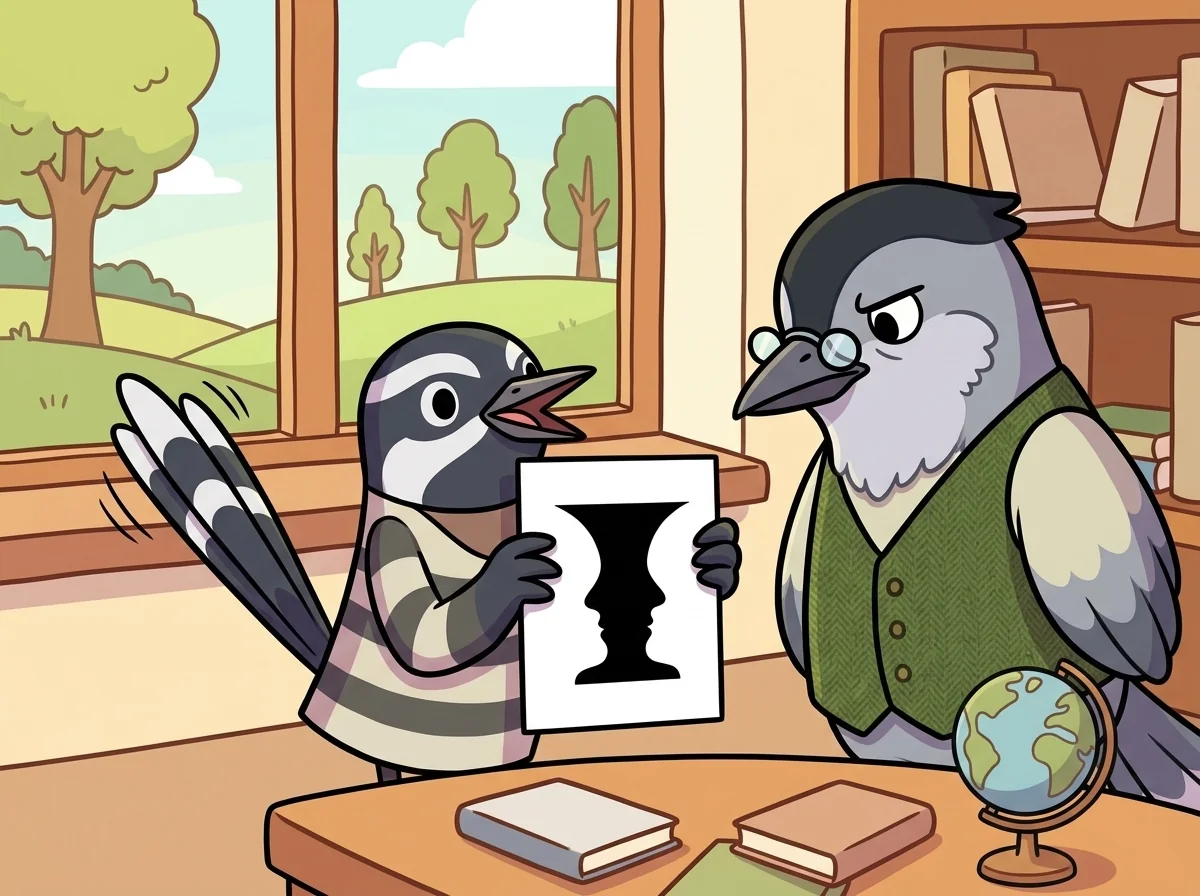
She bobbed her way to IllusionForge at twelve, because a place that studied how eyes get fooled ought to understand a picture that fooled you both ways.
Veil, the mentor who ran the studios, met her at the door and asked one question. "Show me a picture with two right answers."
Teeter set down the vase-or-faces card. "Vase," she said, and Veil saw a vase. "Faces," she said, and Veil's view flipped, and there were two faces where the vase had been, the black and white trading places — which was foreground, which was background, teetering back and forth. "Both true," Teeter said. "Neither more real than the other. Your eye just can't show you both at once, so it picks, and then it changes its mind, forever."
Veil stared at the card, watching it flip — vase, faces, vase, faces — helpless to freeze it or to hold them together.
"You belong here," Veil said.
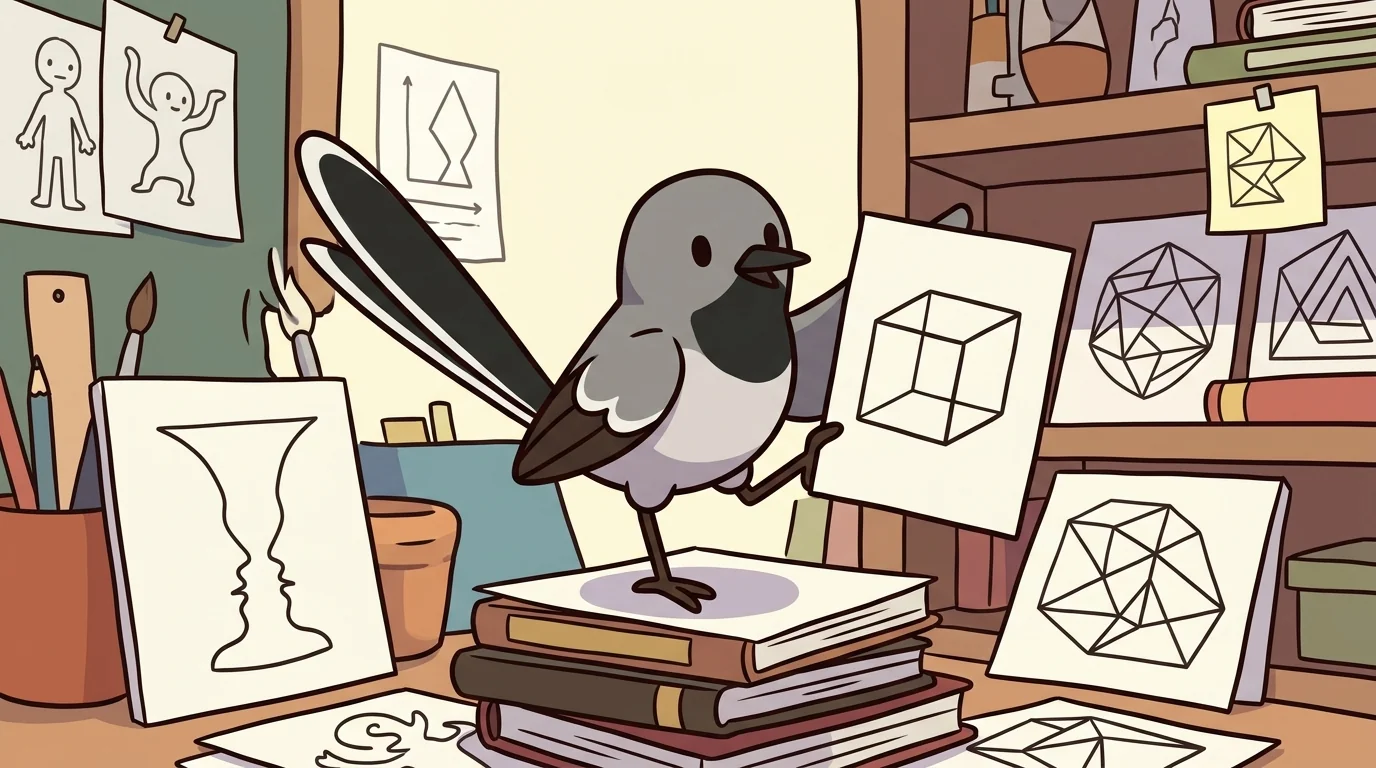
Teeter's studio was full of pictures that couldn't make up their minds.
A boy came in one afternoon, frustrated, holding a drawing of a wire cube. "This cube is broken," he said. "I stare at it and the front face is the front — and then it just jumps, and the back is the front, and then it jumps back. It won't hold still. Did I draw it wrong?"
Teeter knew that jump. She'd felt her whole mind do it a thousand times at the riverbank.
"You drew it perfectly," she said. "That's a cube your brain can read two ways — this corner near, or that corner near. Both are correct; the flat drawing doesn't say which. So your brain picks one, shows it to you as solid and sure — and then, after a bit, it doubts, and flips to the other reading, just as solid, just as sure." She tail-bobbed. "It's not broken. It's honest. A drawing that could mean two things, and a brain too truthful to pretend it means only one. So it teeters." She grinned. "The magic isn't a glitch. The magic is that your brain refuses to lie to you — it keeps offering you both true answers, one at a time, because it can't quite bring itself to throw the other one away."
The boy watched the cube flip, near-corner, far-corner, near again. "So which one's right?"
"Both. That's the point that's hard to hold," Teeter said. "Your brain wants one answer — it hates a tie. But some things really are a tie. Two true readings of one honest picture. The discomfort you feel when it flips? That's your mind bumping into the fact that reality doesn't always come with a single answer."
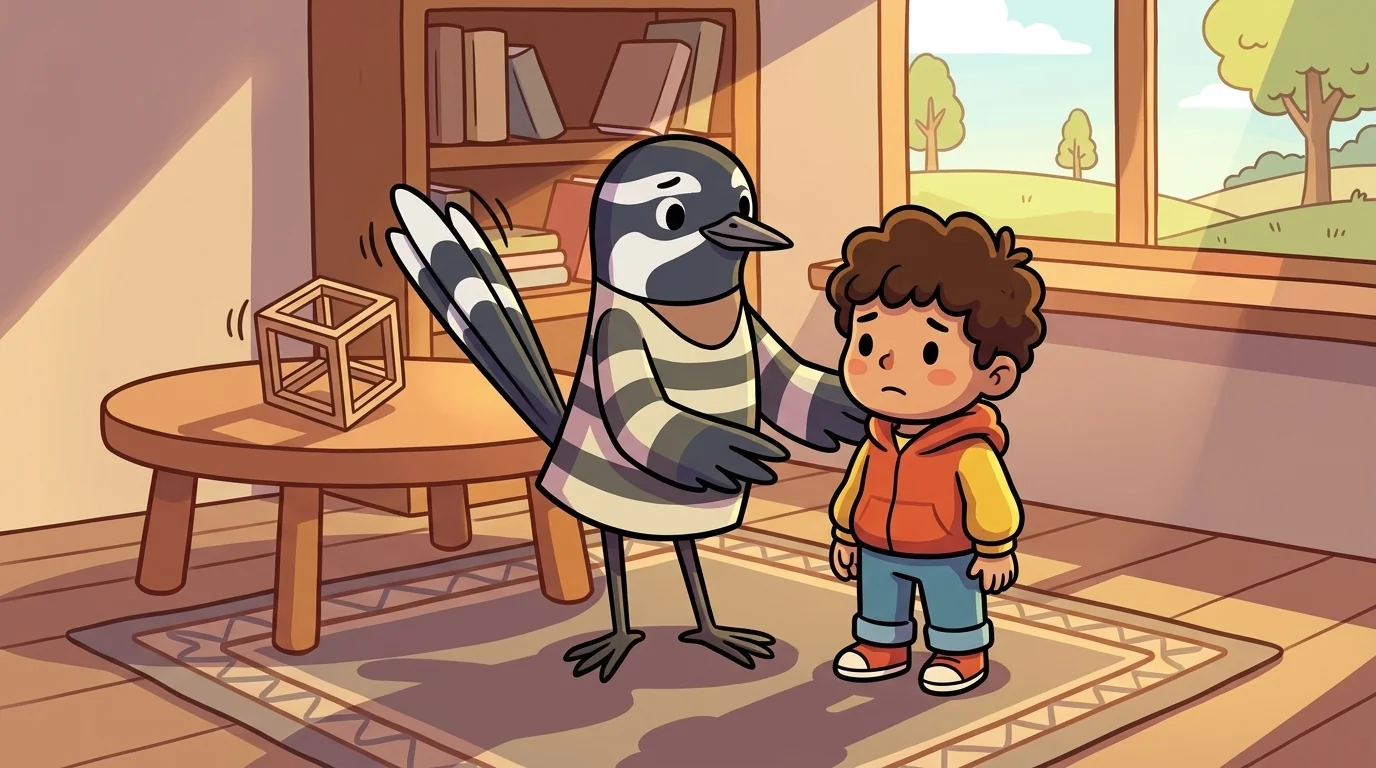
Later, when the studio had emptied, the boy came back, quieter now.
"It kind of bothers me," he admitted. "Not being able to just decide. Why does my brain hate it so much when there are two answers?"
Teeter thought about the riverbank, and her grandfather, and the ripple that was shadow and stone at once.
"Because a brain's whole job is to give you one clear world to move around in," she said. "One vase, one cube, one answer, so you can act. It's very good at deciding — usually there is a best reading, and it finds it fast and hands it to you, done. That's a gift; you'd be paralyzed without it." She tail-bobbed, gentle. "But every so often it meets a thing that's honestly two ways at once — a picture, a person, a situation — and its 'give one answer' habit runs headlong into a real tie. So it flips. And the flip feels bad, because you're used to certainty." She looked at the cube, teetering. "But you can learn to love the flip. It's your mind being truthful about a thing that's genuinely double. Most eyes see one answer and never know there was another. Yours gets to see both — one at a time, forever teetering — and know that both are real." She smiled. "That's not confusion. That's a fuller kind of seeing. The trick isn't to make the cube hold still. It's to enjoy that it won't — and to remember, when a person or a choice teeters like that, that two true answers at once isn't a mistake. It's just how some real things are."
The boy watched the cube flip one more time, and this time, instead of trying to freeze it, he let it teeter, and grinned.
And Teeter felt it settle, warm and easy and glad, her tail bobbing at the river of her own restless mind — a quiet gladness loosening her chest that her flipping had never been indecision. It was seeing the second answer nobody else would look at: one picture, two truths, and a brain honest enough to keep offering both.
The IllusionForge ensemble
Teeter is one of the friends in IllusionForge. Each friend shows you one idea by how they act; meet them all and you have the whole subject.
-
Skim
Attention; inattentional and change blindness
-
Vanish
The blind spot and perceptual filling-in
-
Fringe
Color constancy / simultaneous contrast; context changes what you see
-

Fade
The afterimage / persistence-of-vision — the visual trace left after a stimulus is removed (the foundation of animation, film, and many magic tricks)
-
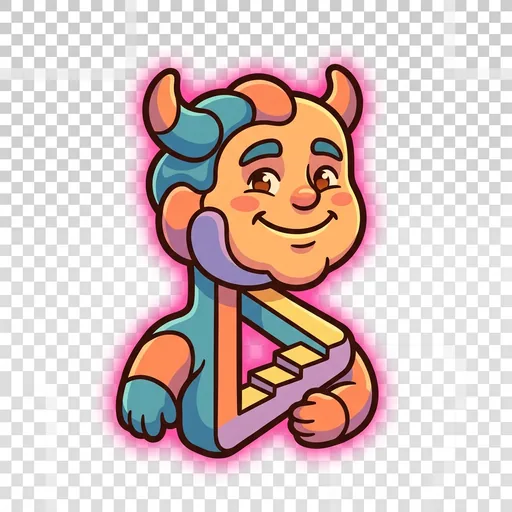
Notch
The impossible figure — the figure that locally reads as coherent but globally cannot exist (Penrose triangle, Escher staircase, blivet)
-
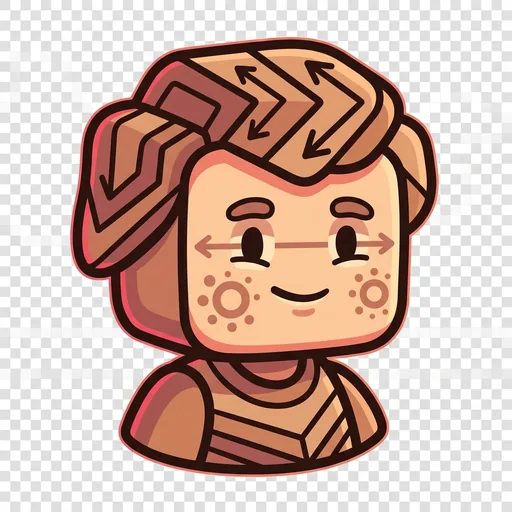
Stack
The perspective trap — the geometric arrangement that misleads size and depth judgments (Müller-Lyer, Ponzo, Ebbinghaus, vanishing-point depth cues)
-

Loop
The perceptual loop — the recursive / endless / barber-pole motion illusion (the mechanism that makes the brain see motion that can't end)
-
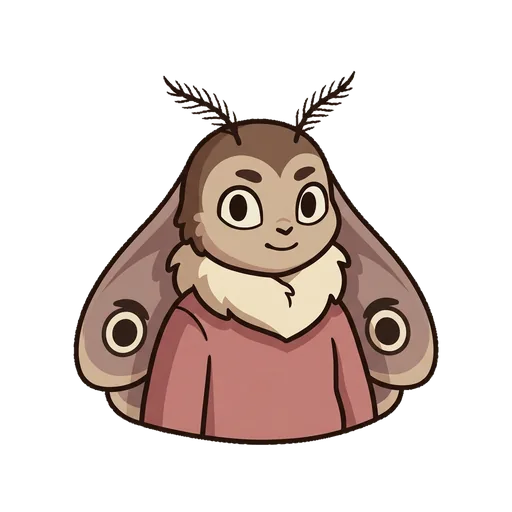
Notion
Pareidolia; the brain finds faces and patterns that aren't there
-

Cue
The auditory illusion — the sound-perception mechanism (Shepard tones, McGurk effect, phantom-melody, missing-fundamental)