
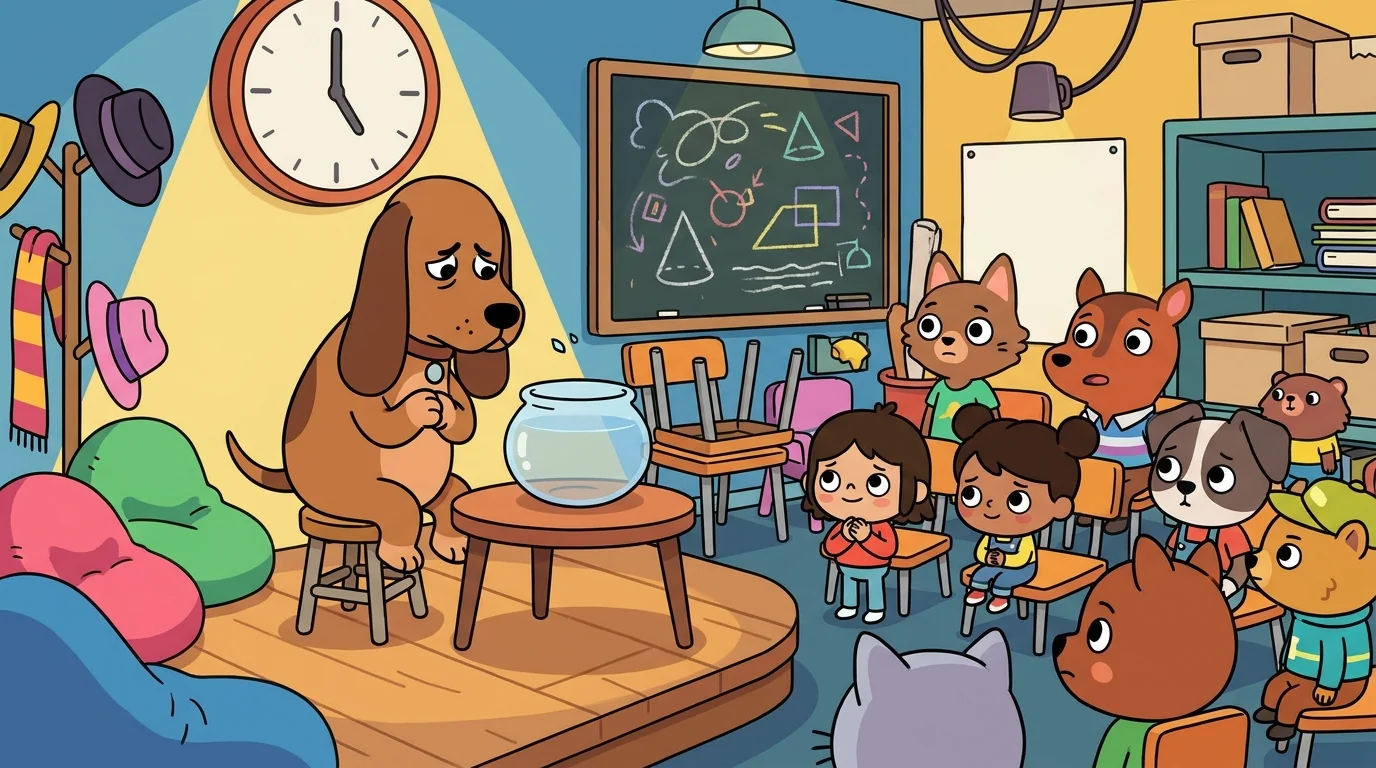
Ache
EMOTIONAL TRUTH — react to what happens in a scene with a real, honest feeling instead of reaching for a joke, so the audience believes and cares.
Listen along — Ache
Loading audio…
Press play to listen along. The line being read lights up as you go.
Show full transcript
Loading transcript…
Chapter 1 — Ache and the Craft of the True Reaction
On the little stage in the corner of the ImprovQuest workshop, Ache — a soft-eared hound with a gift for stillness — gathered the older players to unpack the thing he was famous for: the moment a whole room cared about a goldfish that didn’t exist. “You saw me do it,” he said. “Today I’ll show you the craft underneath it, because emotional truth isn’t a talent you’re born with. It’s a discipline, and you can practice it.”
He set the scene the way it had happened: his imaginary goldfish, in the story, had run away to join a circus — a silly offer, the kind a player usually swats away with a pun. “The reflex is to reach for the joke,” Ache said, “because a joke is safe. If they laugh, you win; if they don’t, well, you were only kidding. A joke lets you stand outside the feeling and comment on it. But standing outside is exactly what kills a scene. The audience can’t care about a feeling you’re not willing to have.”
A lanky pup named Scout frowned. “But it’s not real. It’s a pretend fish.”
“That’s the secret,” Ache said gently. “Emotional truth doesn’t mean the situation is real. It means your reaction is. The fish is invented. The little ache of losing something you loved — that you can actually feel, and the moment you let yourself feel it honestly, the audience feels it with you. They don’t believe in the fish. They believe in you. That belief is the thing every laugh afterward is built on. Care first; the room will laugh warmer, because now they’ve got something to laugh with.”
He walked them through what it actually takes, and named it plainly. “First, stop and let the offer land — most players race past the feeling to the next bit; you have to give it a breath. Second, name the feeling to yourself, small and specific — not ‘I’m sad,’ but ‘the quiet, embarrassing ache of missing something I pretended not to care about.’ The specific one is the true one. Third — and this is the brave part — let your body show it before you’re sure it’s safe. Ears down. Voice smaller. A pause you don’t rush to fill. That willingness to be seen having a real feeling is called vulnerability, and it is the whole engine of the craft. The players who won’t be vulnerable stay clever and cold; the ones who will, break your heart and then make you laugh.”
Ache had learned it the way most performers do — by hiding for years behind the joke. He told them so. Early on, every time a scene got near a real feeling, he’d reached for a gag, terrified that letting the feeling show would look foolish or weak. His scenes got chuckles and forgot themselves the moment they ended. It was an old teacher who finally said the thing that turned him: “You keep making them laugh so they won’t see you. Try letting them see you. That’s not weaker than the joke — it’s the thing the joke is scared of.” The first time Ache let a small true sadness sit on his face without covering it, the room went quiet in a way no gag had ever earned, and the covering-up, keep-them-out feeling eased into something warmer: I can be seen, and it’s safe here.
“So here’s why it’s worth practicing, even when it’s scary,” Ache finished, his soft ears settling. “A scene is a small, safe place to rehearse real feelings — to feel a loss, a fear, a longing, and discover that having it out loud didn’t break you, and that people came closer instead of turning away. That’s not only good improv. It’s good practice for being a person. Reach for the true reaction, not the clever one. Let it land, name it, let it show. True beats clever almost every time — because true is the only thing an audience can actually care about.”
The ImprovQuest ensemble
Ache is part of ImprovQuest's distributed-narrative cast. Each character embodies a different curricular primitive; together they teach the full subject.
-

Give
Yes-and / offer-acceptance — make-your-partner-look-good cooperative posture (the gift-orb metaphor)
-

Hark
Listening — receiving-before-responding discipline (the answer is in what your partner just said)
-

Don
Character work + physicality — body-finds-voice, find-ONE-thing approach
-
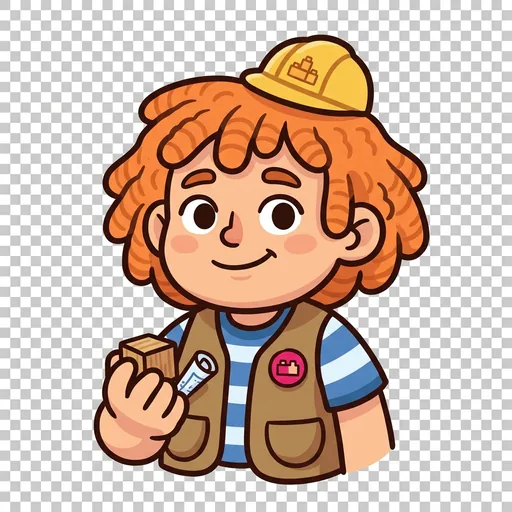
Lay
Scene-building + narrative — patient platform-before-plot foundation-laying (who/where/what/why)
-

Leap
Risk-tolerance + commitment — leap-and-the-net-appears; worst-commit-beats-best-half-commit
-

Ground
Justification (giving every choice a reason the audience believes)
-

Mime
Object and space work (making an invisible object real through consistent handling)
-

Poise
Status (how high or low a character carries themselves shapes the scene)
-

Steep
Heightening (raising the stakes of the one unusual thing, step by step)