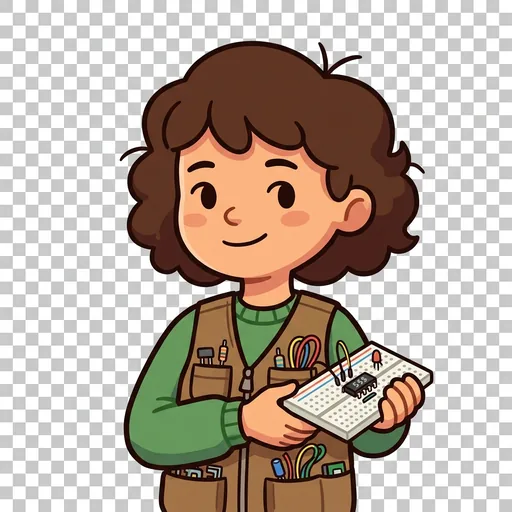
Mime
OBJECT WORK — making an invisible object real by keeping it exactly consistent; the same size, weight, and place every time you touch it, so the audience sees what isn't there.
Loading audio…
Press play to listen along. The line being read lights up as you go.
Show full transcript
Loading transcript…
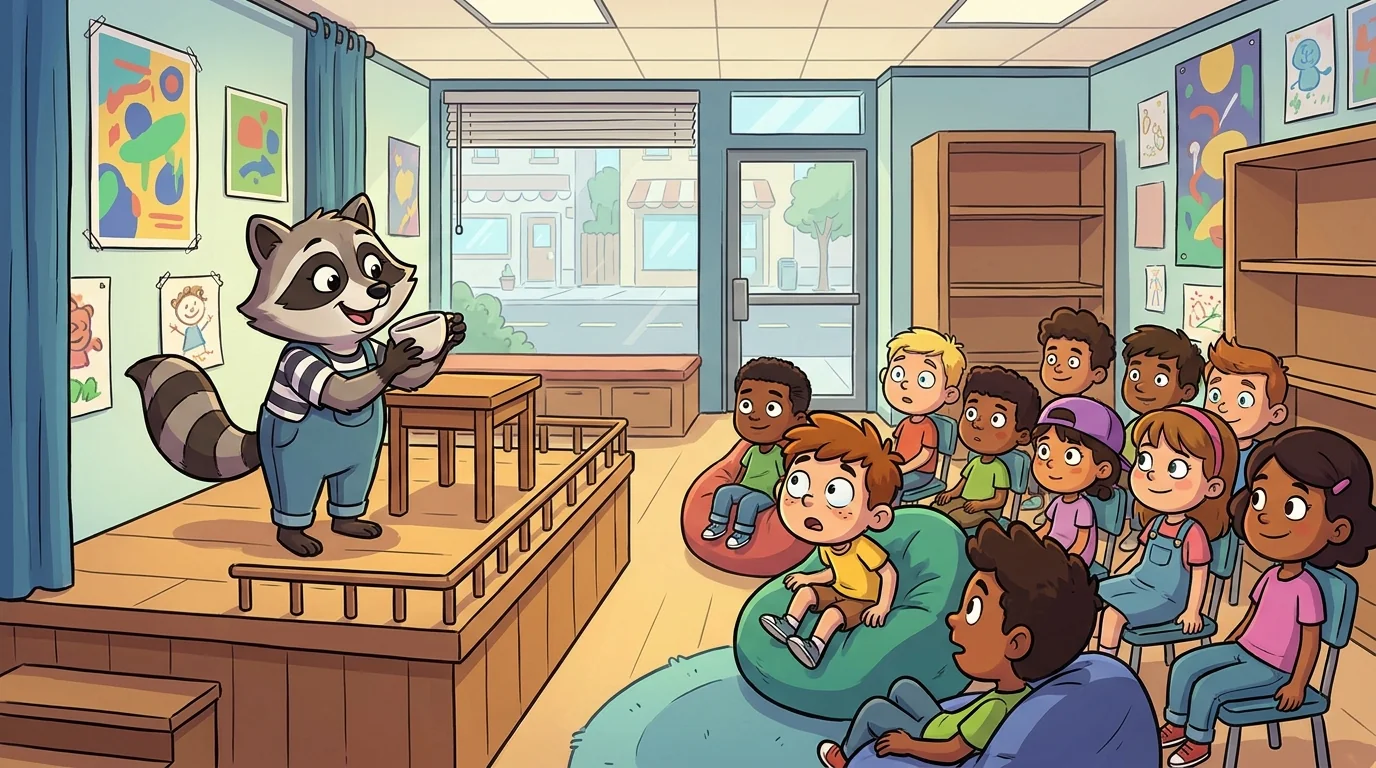
On the little stage in the corner of the ImprovQuest workshop, a nimble-pawed raccoon named Mime picked up a cup of tea that did not exist — and every kid in the room saw it.
There was nothing in her paws. But she held them a certain fixed distance apart, curved just so, as if around a real mug. She lifted it with the small care of someone who knows it's full and hot. She blew across the top. She took a sip — tilting it exactly as far as a nearly-full cup needs tilting — and set it back down on the table, in the same spot, with a tiny pause as its base met the wood.
A kid in the front row leaned in, forgetting himself. "Don't spill it," he said — and then blinked, because there was nothing to spill.
"You saw it," said Mime, delighted, keeping her paws curved around the invisible cup. "There's nothing here. But you saw it — because I've been careful. It's the same size every second. It's heavy because it's full. It stays on the table where I set it. I don't wave my paws through it by accident. The magic isn't in my paws being clever. It's in my paws being consistent."
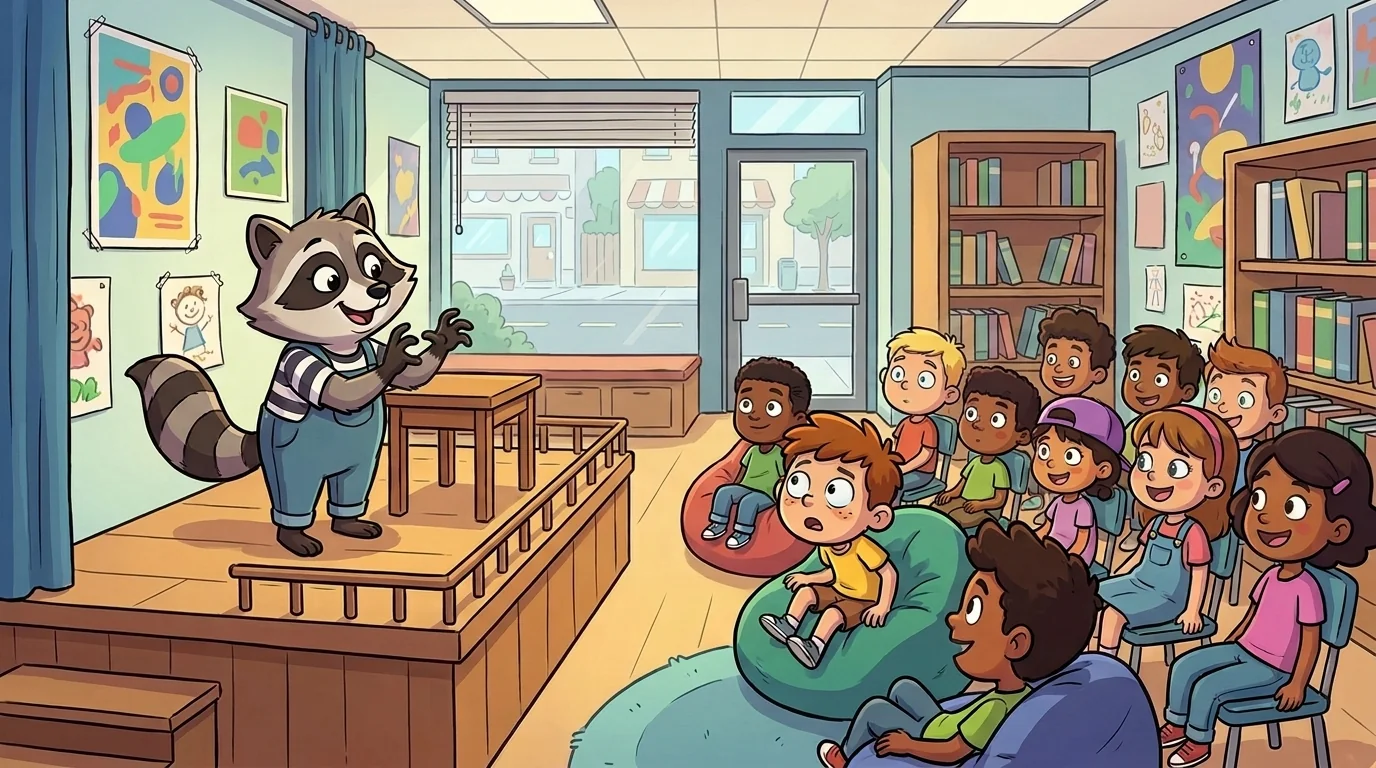
Mime had learned it, of all places, keeping house for a big untidy family.
She was a raccoon, and raccoons have wonderful hands, and as a young thing she had loved the small exact rituals of setting a table — this cup here, that spoon there, everything in its steady place. She noticed that when things kept their places, the whole room felt real and calm; and when things drifted — a cup left in three different spots, a chair that was never where you reached for it — the room felt untrustworthy, dreamlike, wrong. Her family teased her for it, but she couldn't help it: she needed the invisible map of where-everything-was to stay put.
One rainy afternoon, playing pretend with the smallest child, she had handed over an invisible sandwich — and kept it exactly the right size, and heavy with invisible filling, and taken it back with a bite gone — and the child had believed the sandwich, utterly, and asked for another. Mime remembered the warm, surprising jolt of it: that she could make a nothing into a something, purely by treating it as real and never once letting it slip. It felt like a kind of honesty. People believe what you treat as true.
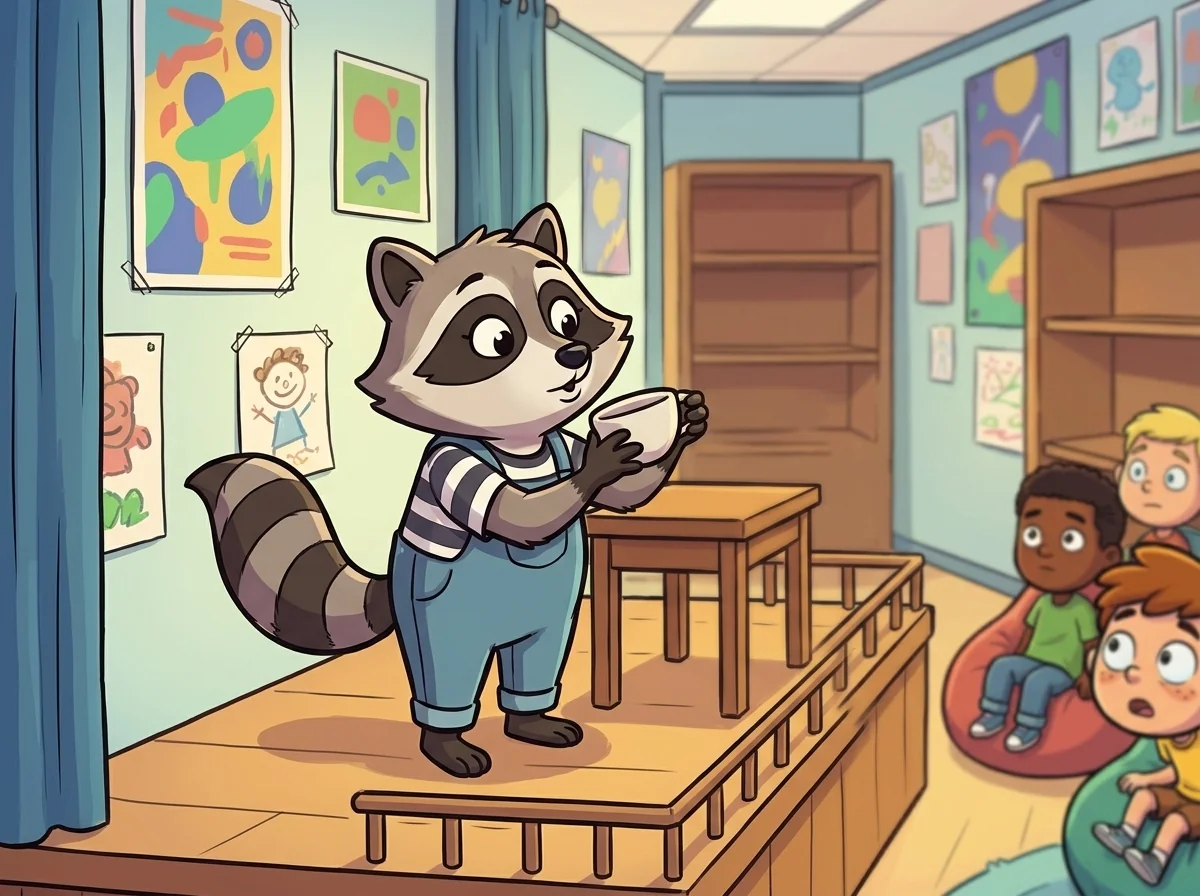
When she was older, Mime carried her careful paws to the ImprovQuest workshop, where they had been looking for someone who could make the empty stage full.
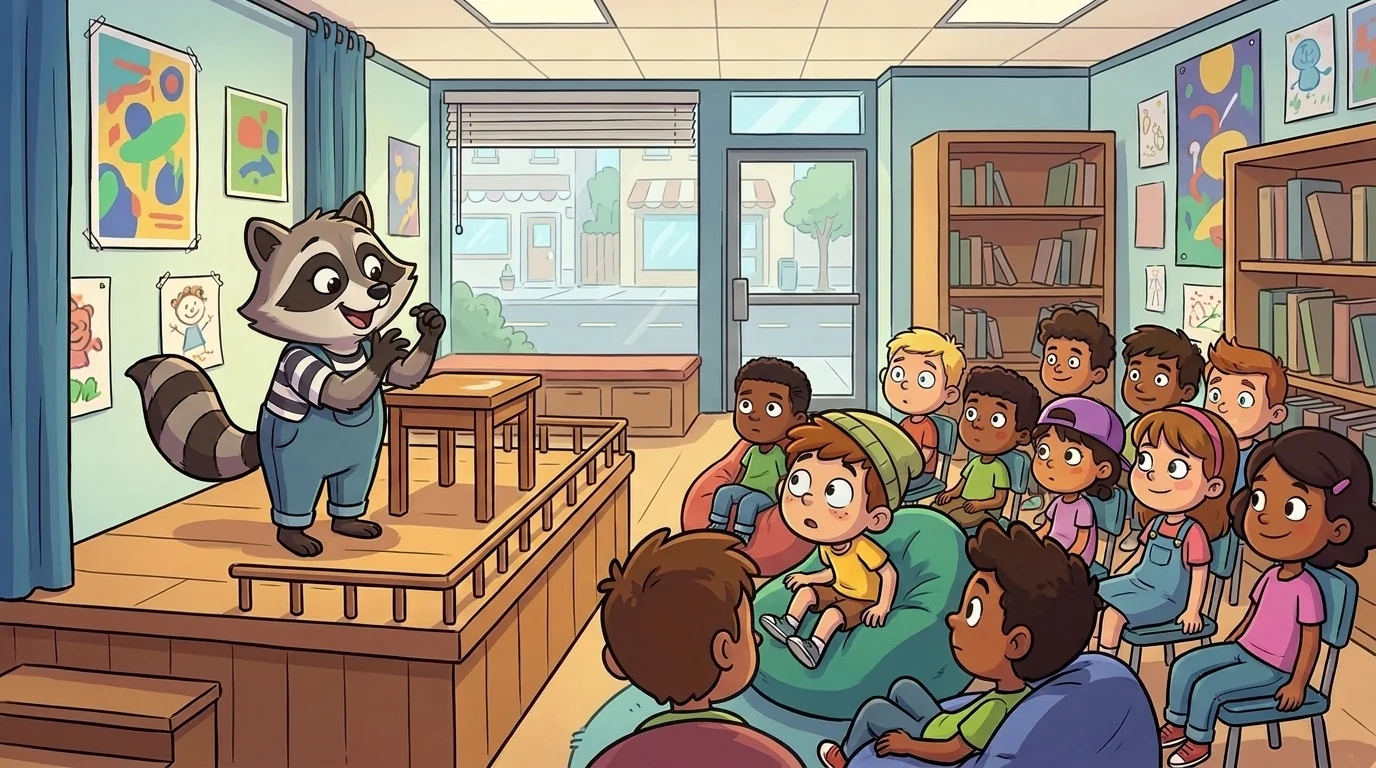
She taught the young players to build a world out of nothing but consistency.
"There are no props here," she said, gesturing at the bare stage. "So we make them — and we make them real by keeping them the same." She mimed opening a heavy door: paw to the handle at a fixed height, a pull with real effort, a step through, and then — the important part — she reached back and closed it, at the same height, in the same place. "See? The door is where I left it. If I walked through the wall beside it, you'd stop believing the room."
She handed a boy an invisible box. "Now you. Feel its size — keep your hands that far apart. Feel its weight — is it heavy?" He staggered a little under it, grinning. "Good. Now set it down. Right there. And whatever you do — don't step through where you just put it." He edged carefully around the invisible box, and the watching kids tracked the empty air where it sat, seeing it plainly.
"That's object work," said Mime. "Same size, same weight, same place, every time you touch it. You're not fooling them with fast paws. You're earning their belief by being careful. Treat the nothing as real, steadily, and they'll see the something."
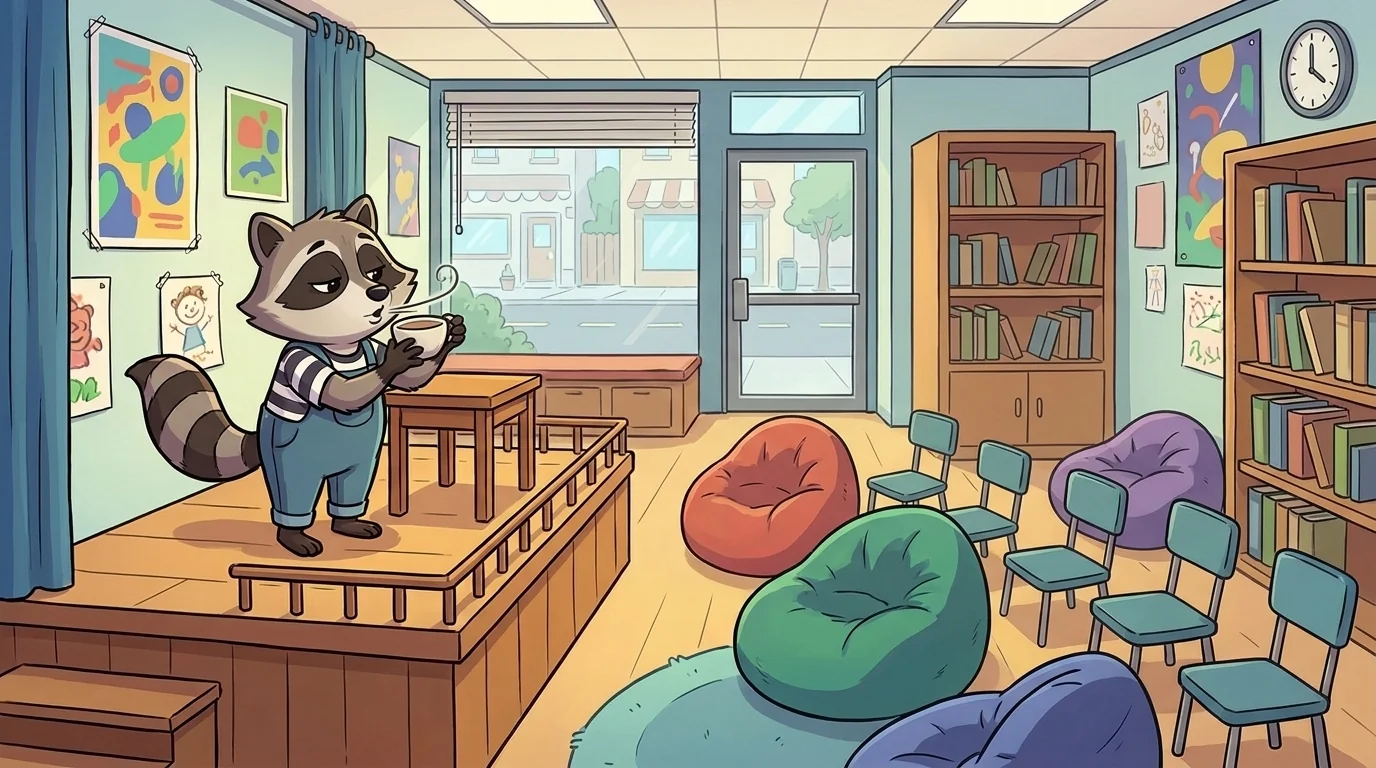
She still sets the workshop's imaginary table before every session, out of habit, and still knows exactly where every unseen cup sits.
The thing Mime hopes the young players carry is that care makes things real — that whether it's an invisible cup or a made-up world or a promise, people come to believe what you treat, consistently and honestly, as true. The magic was never in cleverness. It was always in not letting the thing slip.
"Keep it steady," she tells them, curving her paws around a cup that isn't there. "Same size, same weight, same place. Treat the nothing as real, and they'll see it too."
When the workshop empties, Mime lifts her invisible cup of tea one last time, blows across the top out of pure fondness, and feels the settled, careful gladness she first felt setting tables as a small raccoon: that a world held steady, with love, becomes real to everyone who watches you hold it.
The ImprovQuest ensemble
Mime is part of ImprovQuest's distributed-narrative cast. Each character embodies a different curricular primitive; together they teach the full subject.
-

Give
Yes-and / offer-acceptance — make-your-partner-look-good cooperative posture (the gift-orb metaphor)
-

Hark
Listening — receiving-before-responding discipline (the answer is in what your partner just said)
-

Don
Character work + physicality — body-finds-voice, find-ONE-thing approach
-
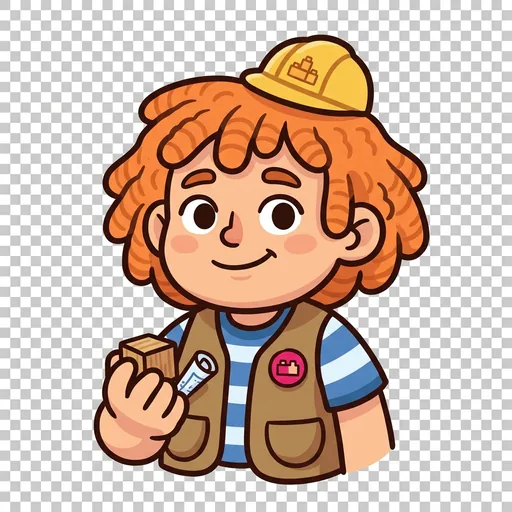
Lay
Scene-building + narrative — patient platform-before-plot foundation-laying (who/where/what/why)
-

Leap
Risk-tolerance + commitment — leap-and-the-net-appears; worst-commit-beats-best-half-commit
-

Ache
Emotional truth (playing a real feeling so the scene lands)
-

Ground
Justification (giving every choice a reason the audience believes)
-
Poise
Status (how high or low a character carries themselves shapes the scene)
-

Steep
Heightening (raising the stakes of the one unusual thing, step by step)