
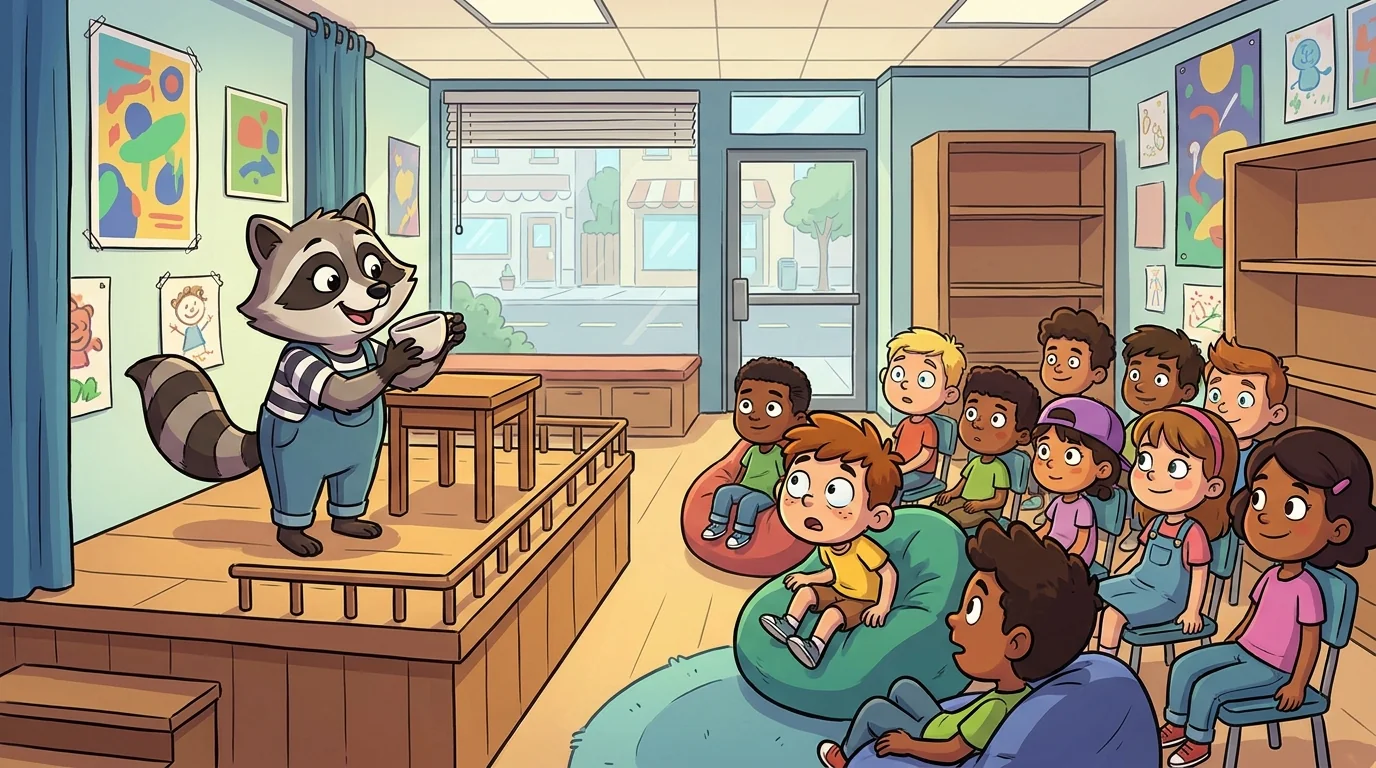
Mime
OBJECT WORK — make an invisible object real by keeping it exactly consistent: the same size, weight, and place every time you touch it, so the audience sees what isn't there.
Listen along — Mime
Loading audio…
Press play to listen along. The line being read lights up as you go.
Show full transcript
Loading transcript…
Chapter 1 — Mime and the Craft of the Consistent Object
On the little stage in the corner of the ImprovQuest workshop, Mime — a nimble-pawed raccoon with unnervingly precise hands — gathered the older players around a bare table to teach the trick that made every kid in the room see a cup of tea that did not exist. “You saw it,” she said, delighted, her paws already curving around the empty air as if around a warm mug. “Now I’ll show you why you saw it, because object work isn’t magic. It’s consistency, practiced until it looks like magic.”
She lifted the invisible cup and held it, exactly, in the air. “Here’s the thing the audience is actually doing: they imagine the cup. Not me — them. My job is smaller and stranger. My only job is to never contradict the cup they’re imagining. The moment my hands say it’s a small cup and then, two seconds later, a big one — the moment I set it on the table and then walk my hand straight through where it should be — the picture in their heads shatters, and I can’t rebuild it. So object work is really a discipline of never breaking your own promise.”
A restless young ferret named Skip fidgeted. “But how do you remember all that? It’s just air.”
“You give the air rules, and then you obey them,” Mime said. “Improvisers call it object permanence — the object keeps existing, with the same properties, even when you’re not touching it. Three promises hold it up. First, size: my hands stay exactly the same distance apart every single time — a cup doesn’t grow. Second, weight: I lift it like it’s full and hot, so my wrist and shoulder do the small honest work a full cup asks; if I forget the weight, it turns to a paper prop in everyone’s mind. Third — the one beginners always drop — place: when I set it down there, it stays there. I don’t reach back through the space it’s sitting in. I walk around it. Ten minutes later I can pick it up from exactly there, and the audience gasps, because I kept a promise they forgot they were watching me keep.”
She showed them the wider craft too. “The stage is empty, so you build the room — this is space work. Where’s the door? Once you open it there, it lives there; you don’t stroll through the wall beside it. How tall is the shelf? Once you reach up that high, it’s that high forever. Consistency turns an empty stage into a real kitchen, a real ship, a real cave — and the audience furnishes it for free, as long as you never move a wall on them.”
Mime had learned it, of all places, keeping house for a big untidy family — a house where nothing stayed where you put it, and she’d longed for a world that kept its promises. She told the players so. Early on stage, her invisible objects had drifted and morphed, and scenes had turned to confusing soup, and she’d been sure she just wasn’t precise enough to be any good. It was an old performer who reframed it: “You think this is about talent. It’s about keeping faith with your own choices. Decide where the cup is — then be loyal to it.” The first time Mime treated her invisible cup like a real promise, the room believed, and the not-precise-enough feeling settled into a calm, careful pride.
“So object work is a small lesson in a large thing,” Mime finished, setting the invisible cup down — there — and leaving it. “Decide what’s true, then be perfectly consistent with it, and people will trust what they can’t even see. Same size, same weight, same place, every time. The audience does the believing. You just never, ever break the promise.”
The ImprovQuest ensemble
Mime is part of ImprovQuest's distributed-narrative cast. Each character embodies a different curricular primitive; together they teach the full subject.
-

Give
Yes-and / offer-acceptance — make-your-partner-look-good cooperative posture (the gift-orb metaphor)
-

Hark
Listening — receiving-before-responding discipline (the answer is in what your partner just said)
-

Don
Character work + physicality — body-finds-voice, find-ONE-thing approach
-
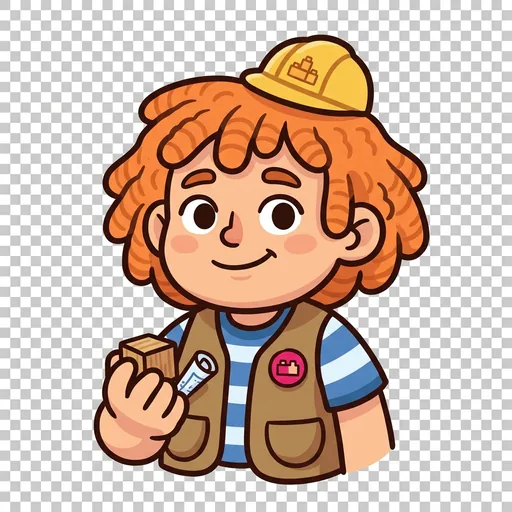
Lay
Scene-building + narrative — patient platform-before-plot foundation-laying (who/where/what/why)
-

Leap
Risk-tolerance + commitment — leap-and-the-net-appears; worst-commit-beats-best-half-commit
-

Ache
Emotional truth (playing a real feeling so the scene lands)
-

Ground
Justification (giving every choice a reason the audience believes)
-

Poise
Status (how high or low a character carries themselves shapes the scene)
-

Steep
Heightening (raising the stakes of the one unusual thing, step by step)