
Abide and Bolster
ABIDE & BOLSTER — *the person facing the barrier is the authority on two things at once: what is hard (believe them), and what would help (follow their lead). trust the account, then trust the plan — you never get to be sure you know better on either.*
Loading audio…
Press play to listen along. The line being read lights up as you go.
Show full transcript
Loading transcript…

A young helper came to the academy frustrated and confused. "I don't get it," they said. "I did everything right. My friend told me a place was hard for them — too loud, too crowded — and I believed them, I really did. So I went and fixed it. I found them a whole quiet room, set it all up, so proud of myself. And they were... upset. After I believed them and helped. What did I do wrong?"
Abide and Bolster looked at each other — the one who believes the problem, the one who follows the lead on the fix — and each saw half of what had gone wrong, and knew the halves were really one.
"You did believe them," said Abide gently. "That part was real."
"And then you fixed it your own way," said Bolster. "Which undid half of what believing them was even for."
"Both of us," said Abide. "You've got to trust them the whole way — not just about what's hard, but about what would help. Let us show you where the two halves meet."

Abide went first, because believing is where respect begins.
"The first half, you got right," Abide said, leaning in. "Your friend told you a place was hard for them, and you didn't argue, didn't ask them to prove it, didn't measure it against your own comfort. You believed them — the first time. That's the whole foundation." She tilted her head. "Because they're the authority on their own experience. You've never been inside their head; you don't feel what the crowd and the noise do to them. So when they name what's hard, the only respectful move is to take their word as true and act on it." She looked at the young helper. "And you did. You believed the problem. If you'd stopped at doubting them — are you sure it's really that bad? — you'd have failed at the very start." She glanced at Bolster. "But believing what's hard is only the first thing they're the authority on. There's a second thing — and that's where it went sideways. Because you believed their problem, and then you stopped trusting them. That's his half."

Bolster took over, gentle for all his strength, because following the lead is where respect finishes.
"Here's where the wheels came off," Bolster said. "You believed the problem — good. But then, to fix it, you decided by yourself what would help. A whole quiet room, set up your way, without asking. You treated them as the authority on what's hard — and then as a bystander to what's good for them." He shook his head. "But they're the authority on both. Maybe they didn't want to be sent off alone to a separate room — maybe that made them feel excluded, singled out, tucked away. Maybe what they actually wanted was to stay with everyone, just with the music turned down, or a spot near the door, or a friend beside them. You never asked. You grabbed the beam." He squared his shoulders. "Believing someone about their problem and then fixing it your own way is like holding a ladder for two seconds and then climbing it for them. You started with respect and finished by taking over. The person who lives with the barrier knows not just that it's hard — they know, far better than you, what would actually help."
The young helper's face fell. "So I was supposed to... ask them what would help. And do that. Even if I had a better idea."
"Especially then," said Bolster and Abide together.

And then, together, they showed the young helper the whole shape of trusting someone.
"Think of it as two authorities in one person," said Abide. "They're the authority on what's hard — so you believe them, no proof required. That's my half." She spread her hands. "And they're the authority on what would help — so you follow their lead, you don't override it. That's his."
"And separately, each half fails," said Bolster. "Believe the problem but fix it your way —"
"— and you've told them I trust you about your pain, but not about your own life," said Abide. "Which stings almost as much as not being believed at all."
"Follow someone's lead but secretly doubt the problem was ever real —"
"— and your 'help' is hollow, done grudgingly, ready to quit the moment it's inconvenient," said Abide. "You can feel the doubt underneath it."
"But together," said Bolster, "believe and follow — trust the account and trust the plan — and you've done the whole thing. You've said, with your actions: I trust you completely. About what's hard, and about what would help. You're the authority on your own life, start to finish, and I'm here to put my strength behind your direction — not to correct you, not to rescue you, but to back you the whole way." He looked at the helper, kind. "You did the first half beautifully. You just have to not let go of the trust halfway through. Believe them — then ask, and follow, even when you think you know a better way. You almost never do."
The young helper sat with it. "So next time," they said slowly, "I believe them about the loud room — and I ask them what would actually help, and I do their version, not mine."
"Now you've got the whole of it," said Abide, warm.

"But that's kind of humbling," the helper admitted. "Not getting to be the one with the good idea. Just... believing and following."
Abide and Bolster traded a look, gentle now.
"It is humbling," Abide agreed. "It asks you to give up being sure you know best — twice. Once about the problem, once about the fix. And I won't pretend that's always easy for a helper who means well and has ideas." She thought a moment. "But think about what it gives. When someone is believed about what's hard and trusted about what would help — when the help that arrives is their help, in their shape, backed by your strength instead of replaced by it — that's the difference between being managed and being respected. Between being a problem someone solved and being a person someone trusted."
"Your job was never to be the smart one," Bolster added, warm. "It was to be the believing ear and the steady ladder. Trust the whole way through. That's the entire art."
The young helper looked from the patient listener to the steady, strong one — the one who believes the problem, the one who follows the lead — and understood that they'd done half of respect and called it the whole, and that the missing half was simply not letting go of the trust when it came time to act.
And Abide and Bolster felt it settle warm and shared between them — that clicked-together, trust the whole person, the whole way gladness that comes when believing and following reveal themselves as one respect in two motions. Abide loved the believing. Bolster loved the following. But what they loved most was this: showing a well-meaning helper that respect doesn't stop at I believe your pain — that it only becomes complete at and I'll help the way you tell me, and that a person trusted from their problem all the way through their fix is a person, at last, wholly respected.
The InclusionForge ensemble
Abide and Bolster is part of InclusionForge's distributed-narrative cast. Each character embodies a different curricular primitive; together they teach the full subject.
-

Lens
Perspective-taking — asking + listening, NEVER mind-reading; 'I can't BE you. But I can ASK what it's like.'
-

Notice
Barrier-identification — barriers as PROPERTIES OF SPACES never PROPERTIES OF PEOPLE; 'It's not the wheel. It's the stair.'
-

Ask
Ask-don't-assume + amplify — makes SPACE for voices, never replaces them; 'What would feel right TO YOU? I'll listen.'
-

Design
Universal Design — multi-modal solutions; never one-size-fits-most; 'Three doors. Different doors. All doors.'
-

Repair
Repair-and-reflect — mistakes as PART OF the work; never self-flagellating (renamed from Mend — MendMates mentor collision)
-

Abide
Believe / take-it-seriously — takes someone at their word about their own experience, no proof required; 'You weren't supposed to know. You were supposed to believe.'
-
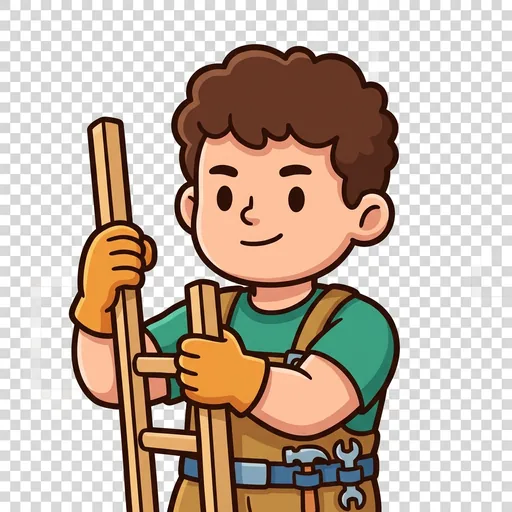
Bolster
With-not-for — follows the lead of those most affected, backs their plan instead of taking over; 'Hold the ladder; don't grab the beam.'
-

Rally
Upstander — steps in when exclusion happens, joining beside not rescuing; 'I didn't have to fix the whole world. I just had to not stand there.'
-

Uphold
Follow-through — keeps access working after it's built; 'Belonging isn't a thing you finish. It's a promise you keep.'
-

Uplift
Asset-not-deficit — celebrates what someone brings, not only what's in their way; 'Belonging isn't only the absence of walls. It's the presence of glad.'