
Bolster
WITH-NOT-FOR — the ally-move of *doing the work alongside the people it's for, following their lead* — supporting, backing, and strengthening their direction rather than taking over, deciding for them, or fixing things your own way. nothing about them, without them.
Loading audio…
Press play to listen along. The line being read lights up as you go.
Show full transcript
Loading transcript…
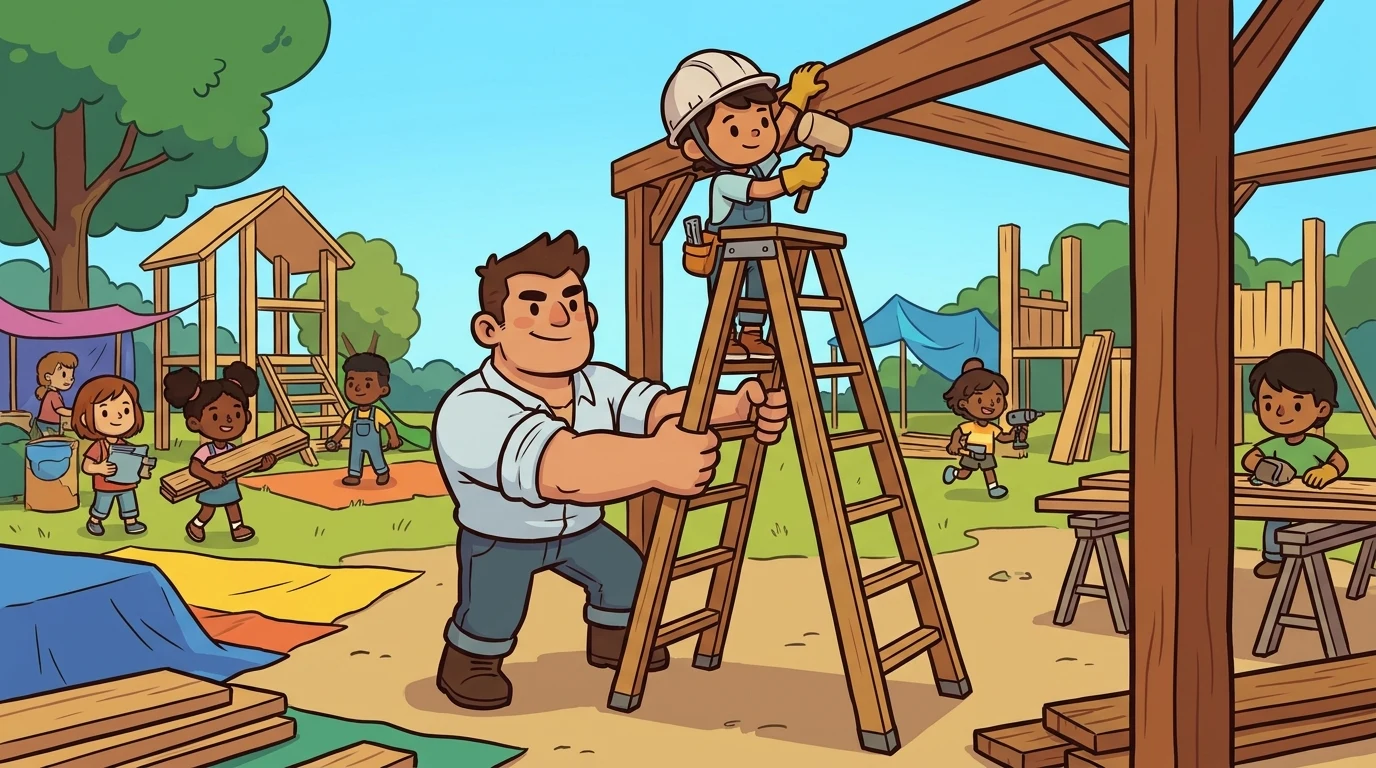
Bolster was strong — really strong, the strongest kid anyone knew — and the hardest lesson of his life was learning when not to lift.
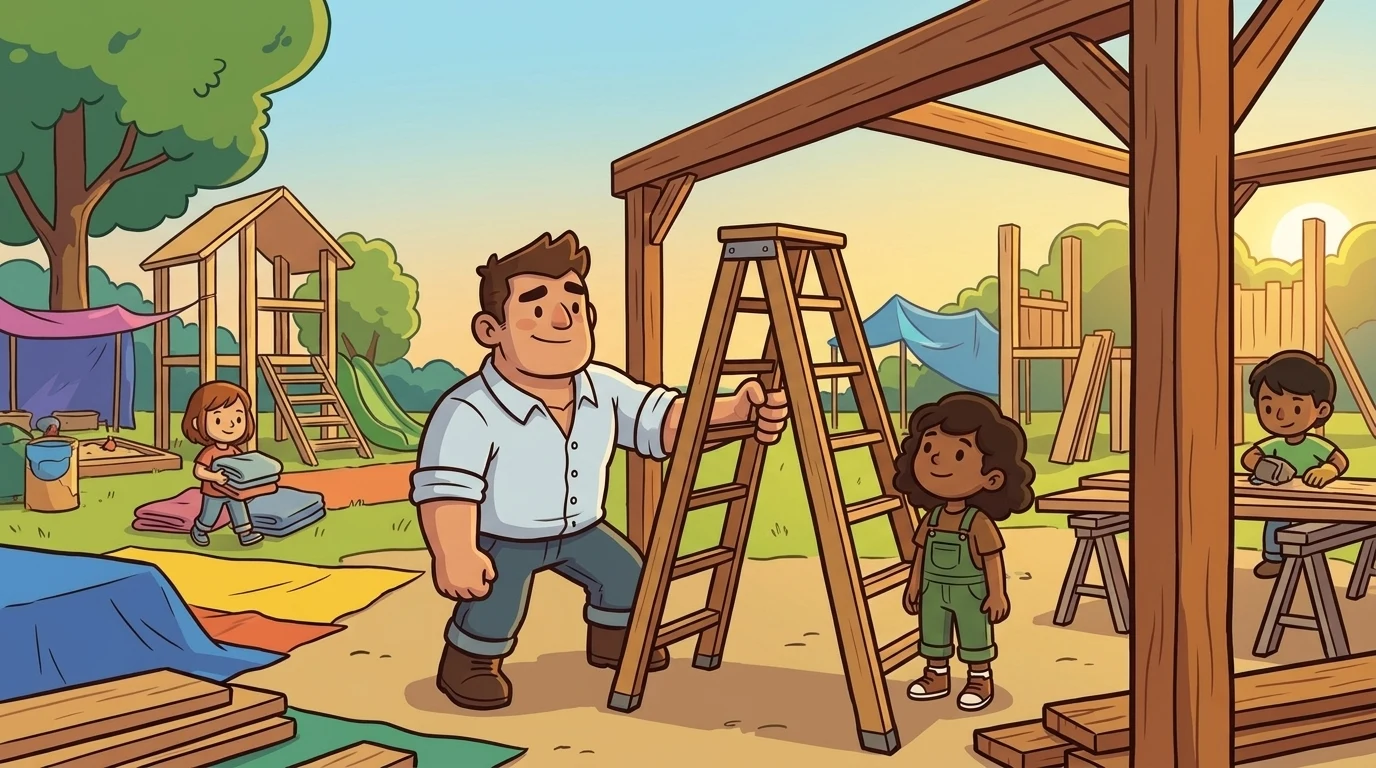
He was helping at a build day when he saw it: a smaller kid trying to fit a beam into a high joint, working out the angle, clearly having a plan. And Bolster, who could have lifted that beam with one arm, felt the old urge surge up — let me just do it, I'm stronger, it'll be faster. His whole body wanted to take the beam and finish the job himself.
Instead — and this was the practice, the one he'd worked years to build — he stopped, and asked, "What do you need from me?"
The smaller kid looked down, surprised. "Could you hold the ladder steady? And hand me beams when I call for them? I've got the fit — I just need it not to wobble."
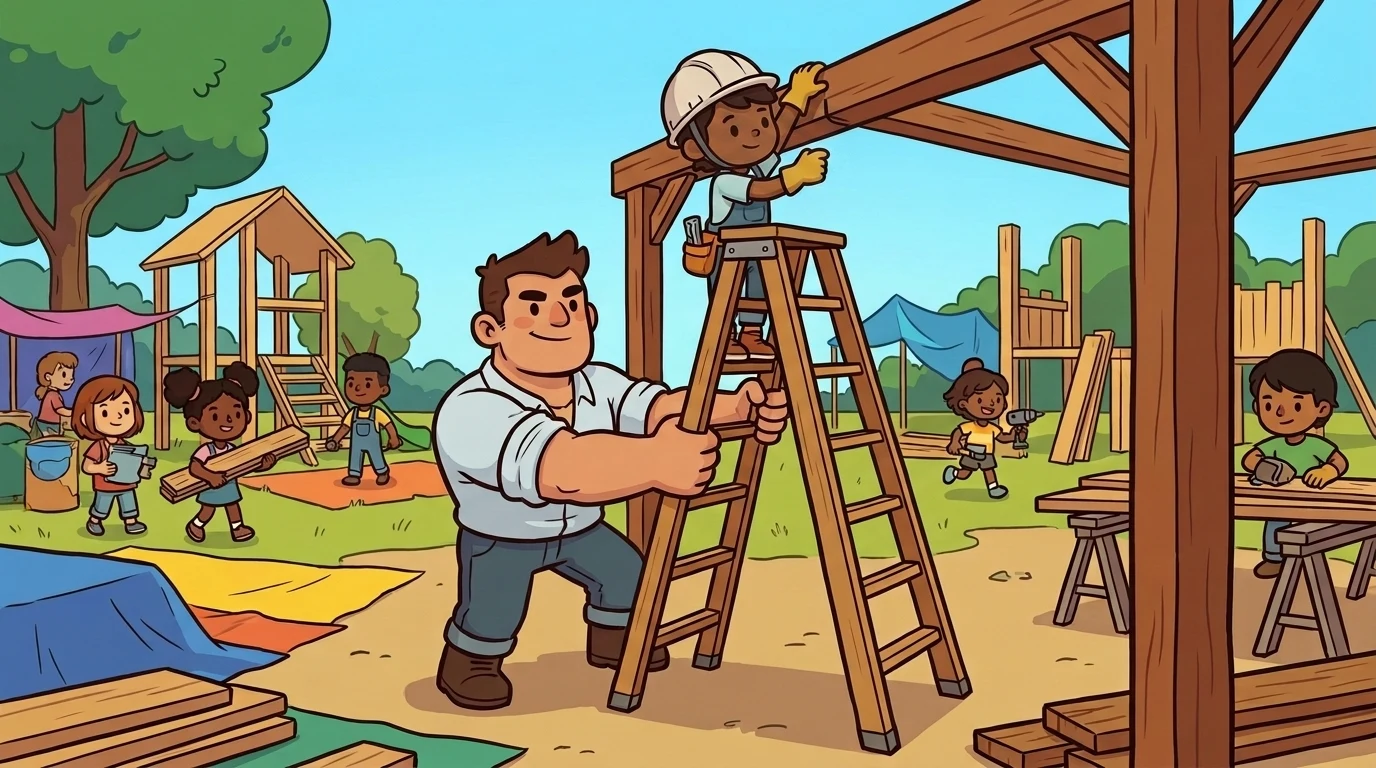
So Bolster held the ladder. He handed up beams when asked. He put his whole strength into steadying, not taking over — and the smaller kid set the beam perfectly, their own way, their own plan, and stood back proud of a thing they had built.
Someone passing frowned. "You could've had that beam in place in two seconds. Why'd you just stand there holding a ladder?"
"Because it wasn't my beam," Bolster said. "It was theirs. If I'd 'helped' by grabbing it, I'd have finished the job and stolen the doing. Strong isn't always lifting. Sometimes the strongest thing I can do is hold steady while someone does it themselves."
Bolster grew up in a family of movers — the ones the whole street called when something too heavy to budge had to be shifted, and who were praised, always, for being the strongest around.
And young Bolster had loved that praise so much that he'd become a bit of a menace with it. He helped everyone, constantly, whether they'd asked or not — nudging a kid's cart into place, finishing a neighbor's task, lifting things out of hands that were managing fine. He couldn't understand why some of them looked less grateful than he expected.
His grandfather, gone gray and slow but still broad in the shoulders, finally sat him down. "You keep 'helping' folks who didn't ask," he said. "And you think you're being kind. But listen, big one — when you take over a thing someone was doing for themselves, you're not just moving a load. You're telling them, without meaning to, I don't think you can. You're strong enough to lift almost anything. That's exactly why you have to be careful — a strong hand that reaches in uninvited can crush the very thing it means to help." He'd looked at Bolster steadily. "The question is never can I do this for them. You almost always can. The question is do they want me to, and how. Ask first. Follow their lead. Then put your strength behind their plan, not yours."
It stung, because it was true. And slowly Bolster learned the harder discipline: to hold all that power in reserve, and offer it, and let the other person decide how it got used.
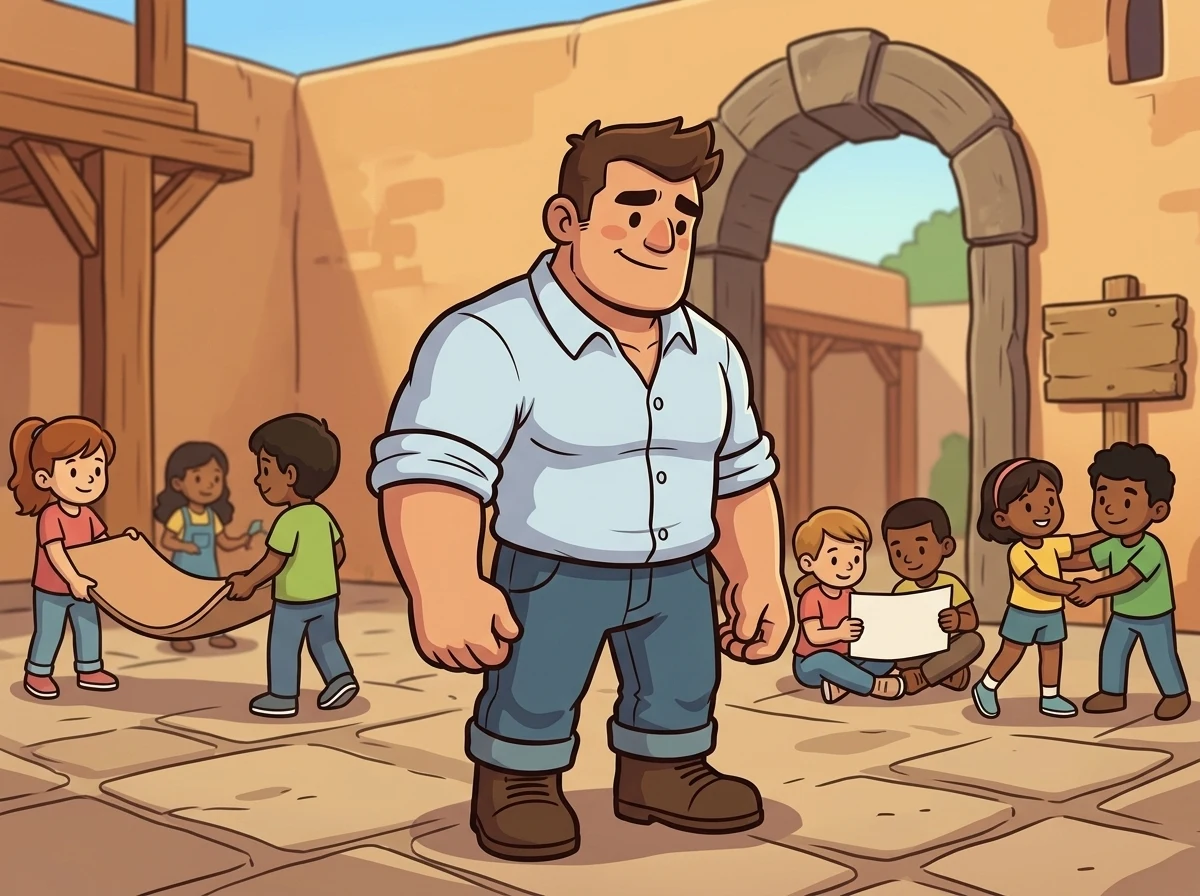
Bolster was grown the day he walked to the InclusionForge academy, careful now with his own strength.
Beacon, the academy's mentor, met him at the courtyard and asked, "Tell me — what is the with-not-for move?"
Bolster thought about the build day, and the ladder, and his grandfather's steady eyes.
"It's helping alongside people instead of over them," he said. "Following their lead instead of taking charge. When you want to help someone the world puts up walls against, the tempting thing is to swoop in and fix it your way — you can see the problem, you've got the strength, why wait?" He shook his head. "But the ones facing the wall know it better than you ever will. They've got a plan, or the start of one, and it's theirs. So the move is: ask what they need, follow how they want it done, and put your strength behind their direction. Support the plan; don't replace it. Hold the ladder; don't grab the beam. Nothing about them, without them."
Beacon was quiet the way people are quiet when they've heard something true. "Then this work is yours," Beacon said.
Bolster felt something in his chest ease — the relief of someone strong who'd finally learned where to put the strength.
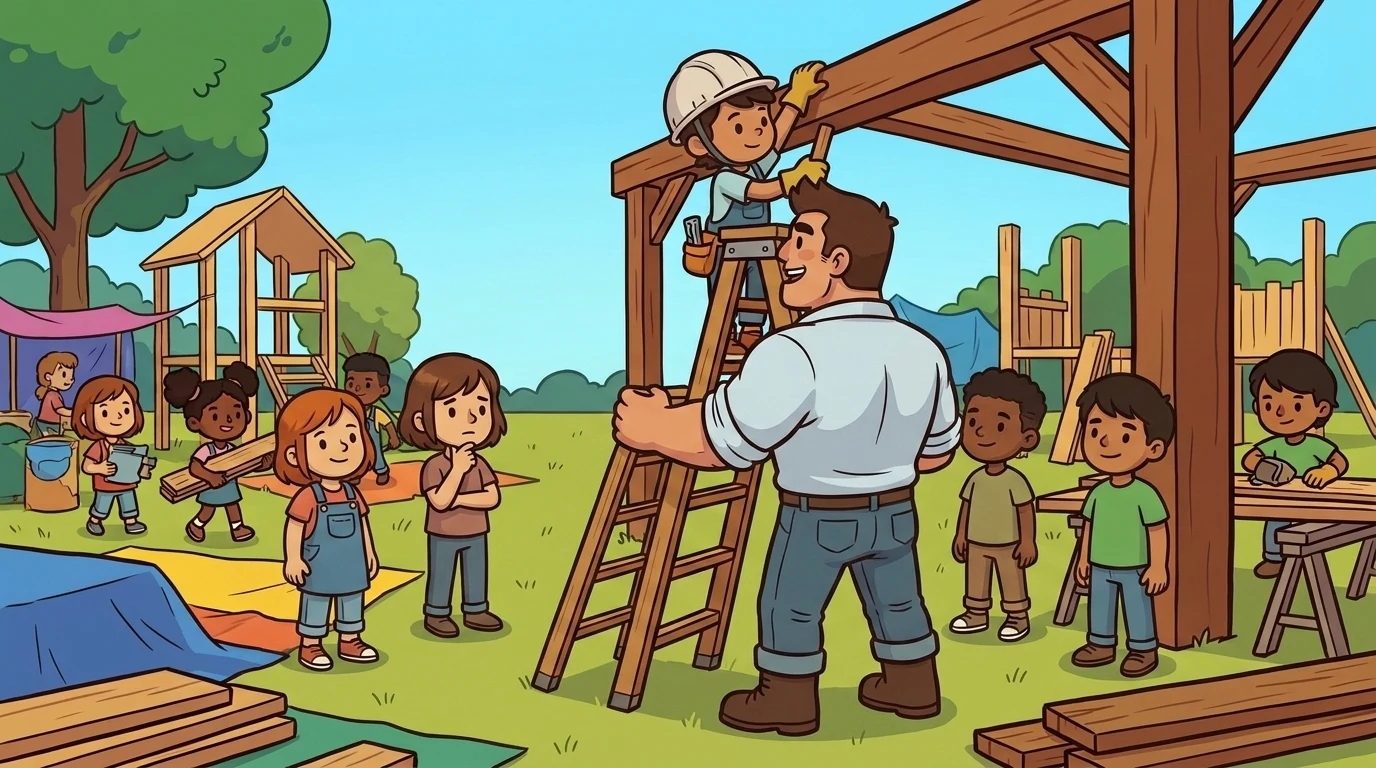
On his first day, Bolster's students expected the strongest teacher in the academy to show them how to do things for people. Instead he taught them how to hold a ladder.
"You're going to want to fix things for folks," he said, slowly. "Especially the things you can see plain and they've lived with forever. It'll feel like kindness. Sometimes it will be kindness. But watch the trap." He mimed reaching in and grabbing. "The moment you take over a person's own thing — decide for them, fix it your way, speak for them because it's faster — you've stopped helping them and started replacing them. Even with the best heart in the world. Especially if you're the strong one, the loud one, the one who's used to being listened to."
A quiet student named Fen asked, "But what if they're doing it a way that seems... harder? Or slower than how I'd do it?"
"Then it's still theirs," Bolster said simply. "It's their beam. Maybe their slower way works better for them than your faster way ever would — you don't live in their body or their life, so you don't actually know. Your job isn't to run the plan. It's to bolster it — ask what they need, hand up the beams they call for, hold the thing steady. If you truly think there's a snag they can't see, you ask, gently — would it help if I...? — and you take the answer, even when it's no." He squared his shoulders. "The strong helper's whole art is restraint. Offer your strength. Then let them aim it."
Fen nodded slowly, something clicking into place.
At the end of the day, Fen caught up to him. "Isn't it hard?" she asked. "Holding back, when you could just do it? Doesn't it feel like you're not helping enough?"
Bolster considered it honestly.
"It's the hardest part," he admitted. "Every time, there's a pull to just take the load — I'm strong, it's right there, it'd be so fast. And I won't pretend holding back always feels like enough in the moment." He looked toward the half-built frame. "But then I remember the face of someone who set their own beam, their own way, and stood back proud of a thing they built — because I held the ladder instead of grabbing it. That look never comes when you do it for them. It only comes when you do it with them." He said it warm. "Strength that takes over makes people smaller. Strength that steadies makes them taller. I'd rather be the ladder somebody climbs than the one who climbed it for them and left them on the ground. Holding steady while someone rises — that's the strongest, and the gentlest, thing these arms ever learned to do."
Fen looked up at him, this big kid who'd learned to hold back, and stood a little taller herself.
Bolster headed home at his slow, easy pace. There'd be another chance to grab a beam that wasn't his tomorrow; there always was. But he wasn't troubled. He felt, instead, that steady, rooted gladness he got whenever he'd bolstered instead of taken over: the warm certainty that somewhere, someone had risen on a ladder he'd held — and that the finest use of all his strength was, so often, simply to keep it in reserve until they asked.
The InclusionForge ensemble
Bolster is part of InclusionForge's distributed-narrative cast. Each character embodies a different curricular primitive; together they teach the full subject.
-

Lens
Perspective-taking — asking + listening, NEVER mind-reading; 'I can't BE you. But I can ASK what it's like.'
-

Notice
Barrier-identification — barriers as PROPERTIES OF SPACES never PROPERTIES OF PEOPLE; 'It's not the wheel. It's the stair.'
-

Ask
Ask-don't-assume + amplify — makes SPACE for voices, never replaces them; 'What would feel right TO YOU? I'll listen.'
-

Design
Universal Design — multi-modal solutions; never one-size-fits-most; 'Three doors. Different doors. All doors.'
-

Repair
Repair-and-reflect — mistakes as PART OF the work; never self-flagellating (renamed from Mend — MendMates mentor collision)
-

Abide
Believe / take-it-seriously — takes someone at their word about their own experience, no proof required; 'You weren't supposed to know. You were supposed to believe.'
-

Rally
Upstander — steps in when exclusion happens, joining beside not rescuing; 'I didn't have to fix the whole world. I just had to not stand there.'
-
Uphold
Follow-through — keeps access working after it's built; 'Belonging isn't a thing you finish. It's a promise you keep.'
-

Uplift
Asset-not-deficit — celebrates what someone brings, not only what's in their way; 'Belonging isn't only the absence of walls. It's the presence of glad.'