
Aloft
PUNCHING UP, NOT DOWN — the ethics of the comic TARGET. A joke's direction is set by the POWER DIFFERENTIAL between the comic and the target: aim at yourself or at the powerful (who can absorb it) and the room laughs together; aim at someone smaller, sadder, or unable-to-laugh-back and you split the room. Same words, opposite effect — the target, not the wording, decides whether comedy unites or wounds.
Loading audio…
Press play to listen along. The line being read lights up as you go.
Show full transcript
Loading transcript…
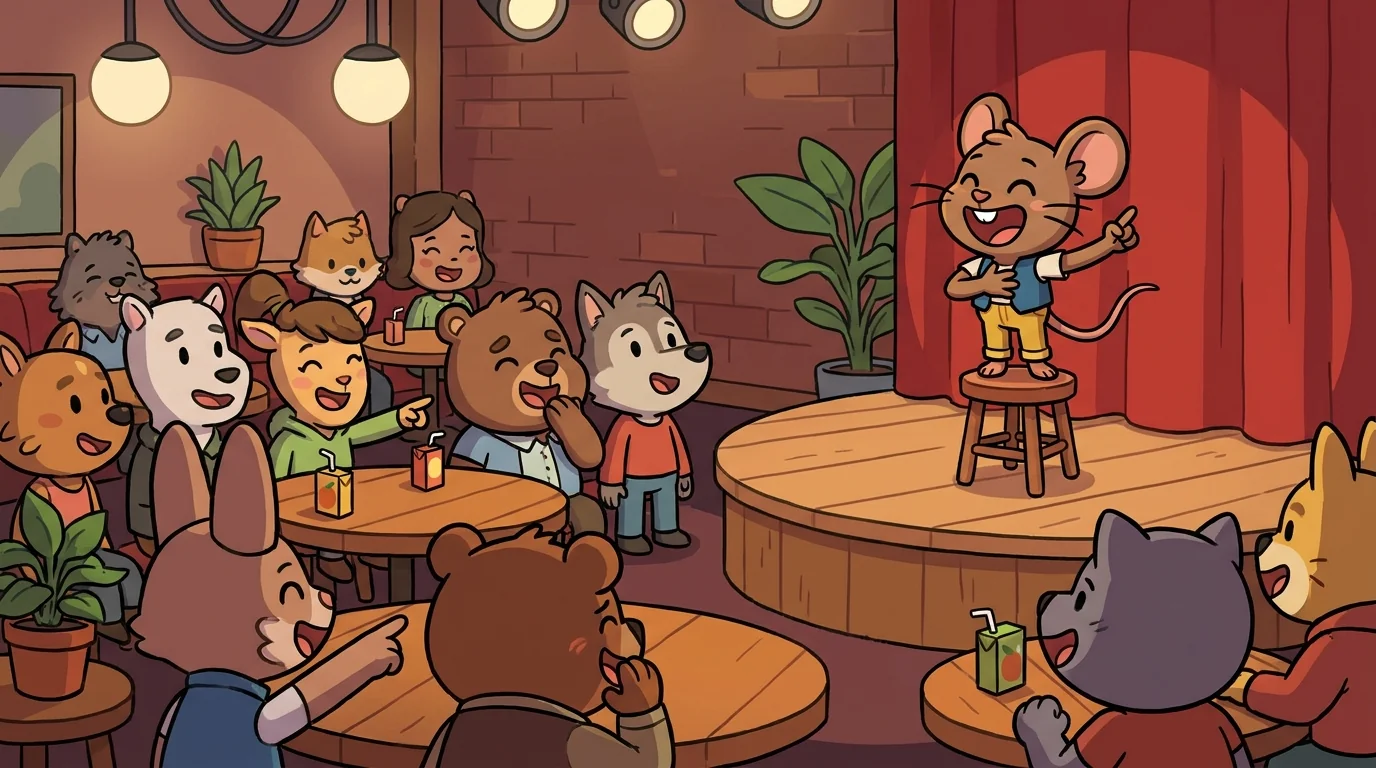
Aloft is a tiny, quick-whiskered mouse-tween with an enormous laugh — and because she is the smallest one at the comedy club, she understands better than anyone which way a joke should point.
She teaches punching up, not down. "Every joke is aimed at somebody," she says, standing on a stool so the club can see her. "And here's the mechanism nobody names: the direction that matters isn't left or right — it's power. Aim at yourself, or at someone big and powerful who can absorb it, and you're punching up: the whole room laughs together, because the target can take it. Aim at someone smaller or weaker or already-hurting, someone who can't laugh back, and you're punching down: half the room laughs while one person shrinks. Same joke, opposite feeling — and the thing that flipped it wasn't the words. It was the power gap between you and your target."
She demonstrates, patting her own small chest. "Here's me: I'm so short that last week a butterfly asked me for directions, assumed I was a signpost, and left disappointed." The club laughs warmly — because she aimed it at herself, the person with the least power in the room. "Now imagine I'd said that about the shyest kid in the front row." The laughter dies. "See? The words are identical. The direction relative to power decides whether it's kind."
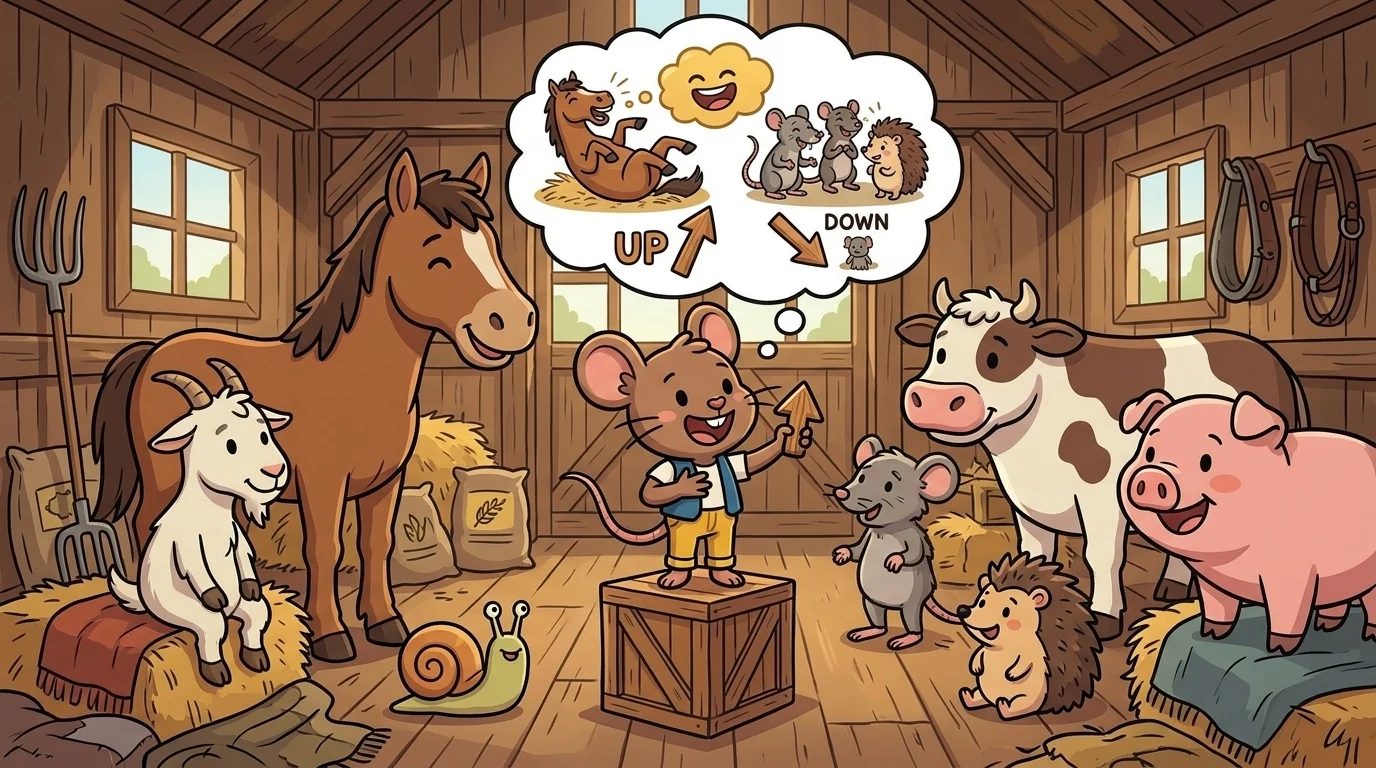
Aloft grew up the littlest in a family of mice, in a barn of much bigger animals, and she learned early how a joke feels from underneath — which is exactly the vantage that teaches the power-gap rule.
She noticed two kinds of laughter. The warm kind, when the big carthorse laughed at his own clumsiness and the whole barn laughed with him — a powerful creature aiming down at himself, which reads as up. And the cold kind, when older rats mocked a nervous young hedgehog who couldn't laugh back — the strong aiming at the weak, and the barn felt meaner after.
She got it wrong once. Desperate for a laugh as a young mouse, she made a joke at a slow old snail's expense, got the laugh — then saw the snail's face, and felt the laugh curdle. She never forgot it. A laugh bought by making someone smaller is a laugh you'll wish you could give back. So she made the rule and kept it: measure the power gap first; aim up, or at yourself; never down.
When she was older, Aloft scurried into the JestForge comedy club, which had clever comics aplenty and needed one who understood kind ones.
She teaches the young comics the single variable that decides whether comedy heals or harms. "You're going to be funny," she tells them. "That's real power, and like any power, what matters is where you point it. Before you aim, ask one question: who has more power here — me, or my target?" She sets a kid up. "Joking about someone bossy and powerful — a grumpy king, a strict rule, yourself on a bad day? Aim away. They can absorb it, or it's you. That's up. The room laughs together, nobody's hurt."
"But if the funniest thing you can reach for is about a kid already having a hard time, or anyone who can't laugh back — stop. That's down. You'll get a laugh and split the room, and you'll feel it later." She stands tall, all four inches of her. "The best comics who ever lived made themselves the target first. That's not weakness. Aiming the joke where the power isn't is the whole heart of it."
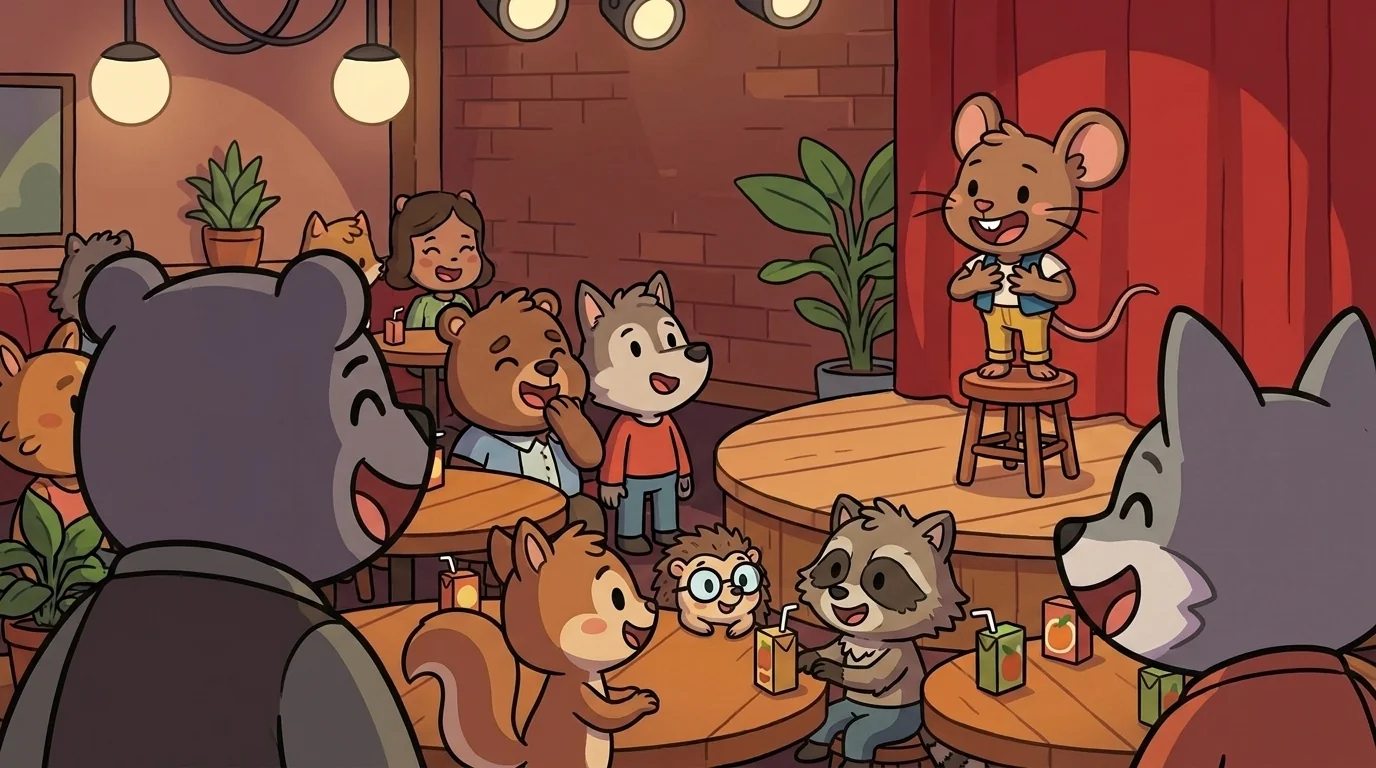
A sharp young comic pushed back — "so I can never joke about another person?" — and it drew the fine line.
"You can," Aloft said. "The rule isn't 'never aim at a person.' It's 'mind the power gap.' Tease a friend who's your equal, who's in on it, who can fire right back — that's sideways, and sideways is fine, it's play between equals. What breaks is aiming down an unequal gap at someone who can't answer — the new kid, the anxious one, anyone the room already outnumbers." She tilted her head. "And when you're not sure which way a gap runs, aim at yourself. Self-aimed is always safe, because the one target guaranteed able to take it is you. That's why it's the comic's home base."
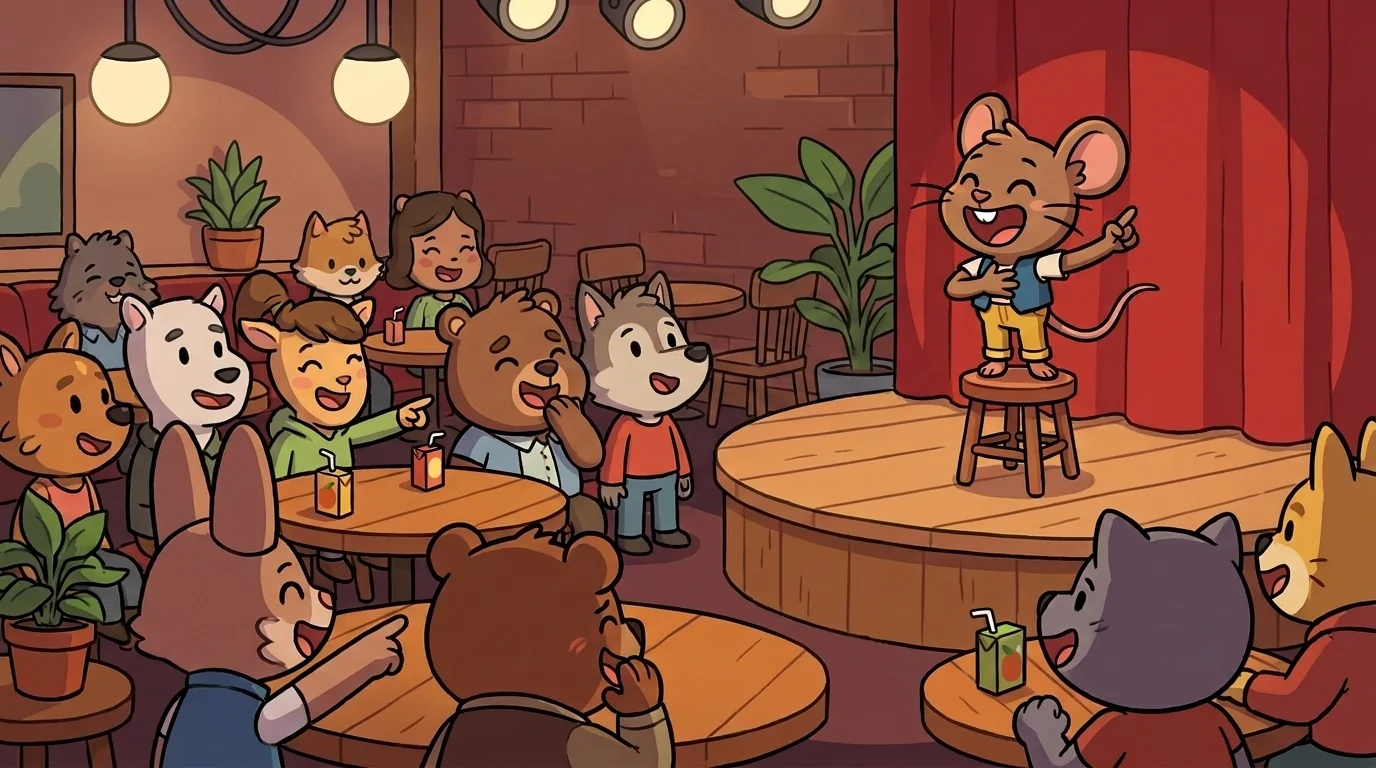
She still aims every joke up or at herself, at the club and off it, and has never once regretted a laugh earned that way.
The thing Aloft hopes the young comics carry off the stage is that being funny is a strength, and strength has a direction — that the same wit can lift a whole room together or leave one person hurting, and the only difference is which way, along the power gap, you choose to point it.
"Measure the gap, then aim up, or at yourself," she tells them, from the top of her stool. "Never down at someone who can't laugh back. Make the room laugh together — that's the only laugh worth keeping."
When the club empties, Aloft hops down, brushes off her whiskers, and feels the warm, clean gladness she first felt the day she made her rule: that the funniest she has ever been is also the kindest, and that she has never had to hurt anyone to fill a room with laughter.
The JestForge ensemble
Aloft is part of JestForge's distributed-narrative cast. Each character embodies a different curricular primitive; together they teach the full subject.
-

Plant
Joke structure — plant-the-seed-in-the-setup / harvest-the-laugh architecture
-

Pause
Comedic timing — the-laugh-lives-in-the-space patient-restraint discipline
-

Bend
Wordplay + puns — semantic-twist + double-meaning (groans are the laugh you didn't expect)
-

Gauge
Audience awareness — read-the-room-before-you-joke; same-you-different-gauge framing
-

Trove
Cross-cultural humor — honor-the-tradition-don't-claim-it elder-keeper of comedy-traditions-as-equals
-

Balloon
Exaggeration (blowing one true detail up until it's funny)
-
Glean
Observational humour (finding the funny in everyday things everyone notices)
-

Thrice
The rule of three (two beats set a pattern, the third breaks it)
-

Zag
Misdirection (leading the audience one way, then cutting the other)