Glean
OBSERVATIONAL HUMOUR — finding the funny in small, true, everyday things everyone has noticed but nobody has said out loud; the laugh of recognition.
Loading audio…
Press play to listen along. The line being read lights up as you go.
Show full transcript
Loading transcript…
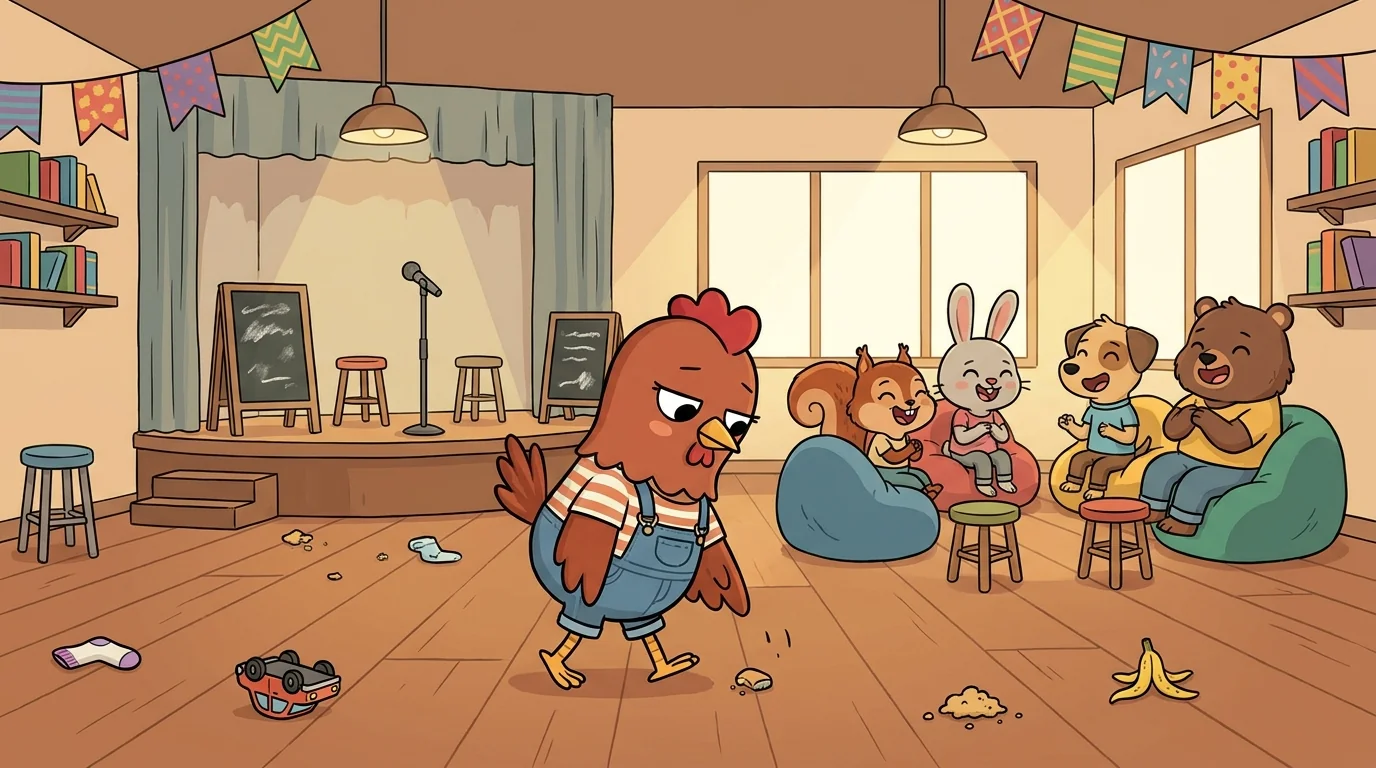
Glean is a calm, sharp-eyed hen-tween who spends her days pecking slowly across the ordinary ground — and picking up, one true little grain at a time, all the funny things everyone else walks straight past.
She teaches observational humour. "You don't have to invent funny things," she says, tilting her head the way hens do. "They're already everywhere — in the small, ordinary, true stuff we all do and never mention. My whole job is to notice it, and then say it out loud, exactly right, so everyone goes: 'that's so true, why do we DO that?' That laugh — the laugh of recognition — is the warmest one there is. It means: you saw me. You saw all of us."
She demonstrates, unhurried. "Have you noticed," she says, "that when a grown-up drops food, they check if anyone saw before they check if it's ruined? Every single time. The looking-around comes first." The club laughs — the recognition laugh, the that's-so-true laugh. "See? I didn't make that up. I just watched. It was there the whole time, waiting for someone to notice."
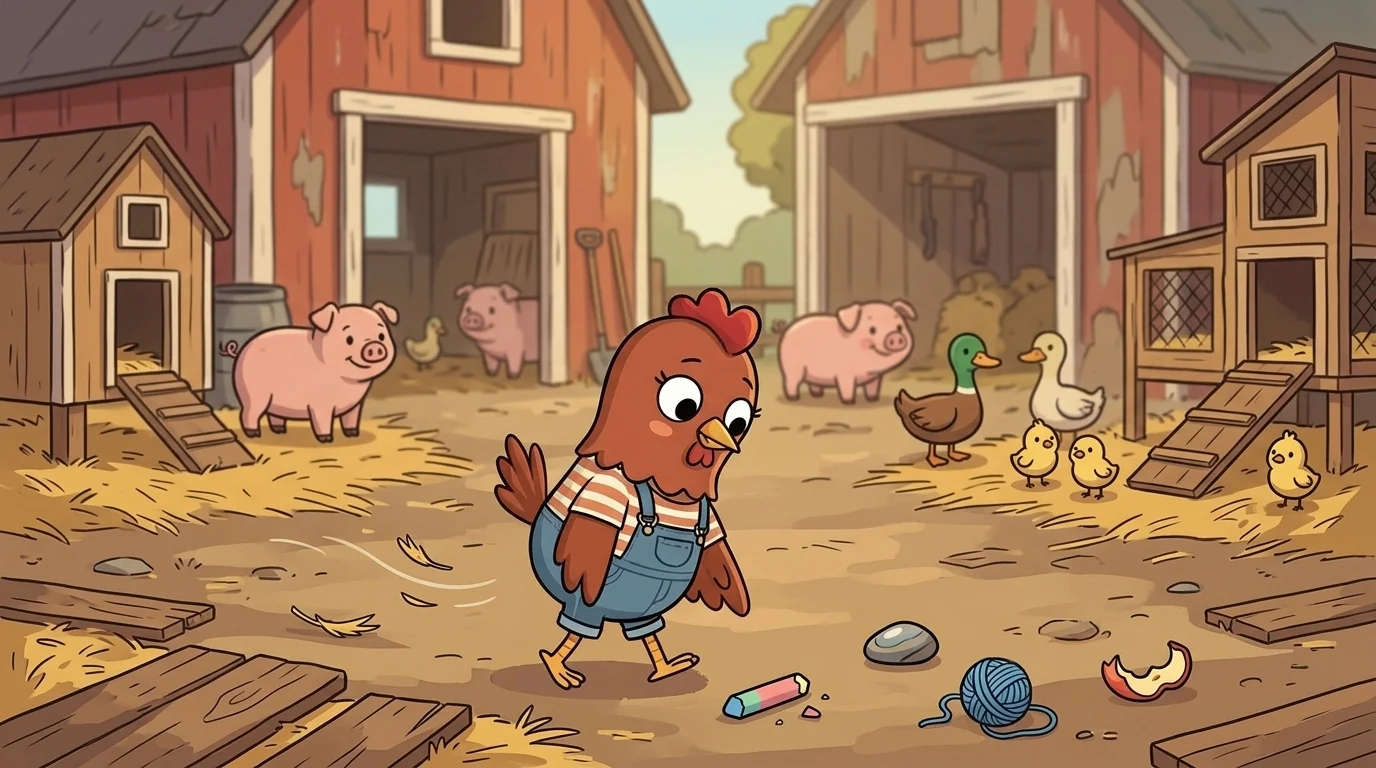
Glean grew up in a busy farmyard, the quietest of a loud brood, and being quiet meant she watched.
While the other chicks squabbled and rushed, Glean stood a little apart and noticed things — how the old rooster always cleared his throat twice before any announcement, how the ducks pretended not to want the bread and then wanted the bread enormously, how everyone said "I should get going" a full ten minutes before they got going. She never rushed to speak. And when she finally did say one of the small true things she'd noticed — out loud, plainly — the whole farmyard would laugh in a startled, delighted way, because she'd named something they'd all felt and never put into words.
A brash young peacock once told her that "just describing normal life isn't comedy — real comedy is clever." It stung. But the old hen who'd raised her set it right. "Noticing is the cleverness, little one. Everyone looks; almost no one sees. To slow down enough to catch the tiny true thing, and then say it so exactly that a whole room recognises itself — that's one of the hardest crafts there is. The peacock can't do it because he's too busy being looked at to look." Glean never doubted her patient watching again.
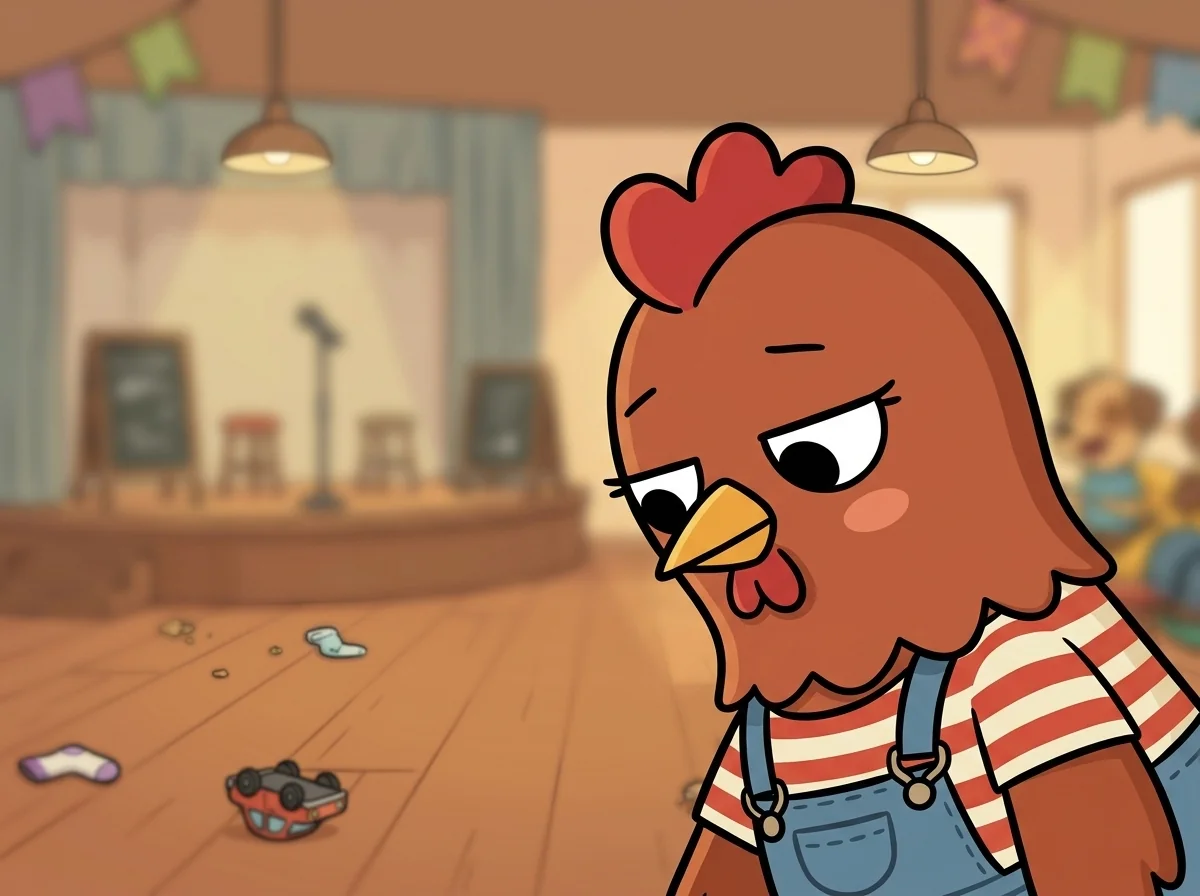
When she was older, Glean strolled, unhurried, into the JestForge comedy club, which had plenty of loud comics and badly needed a watchful one.
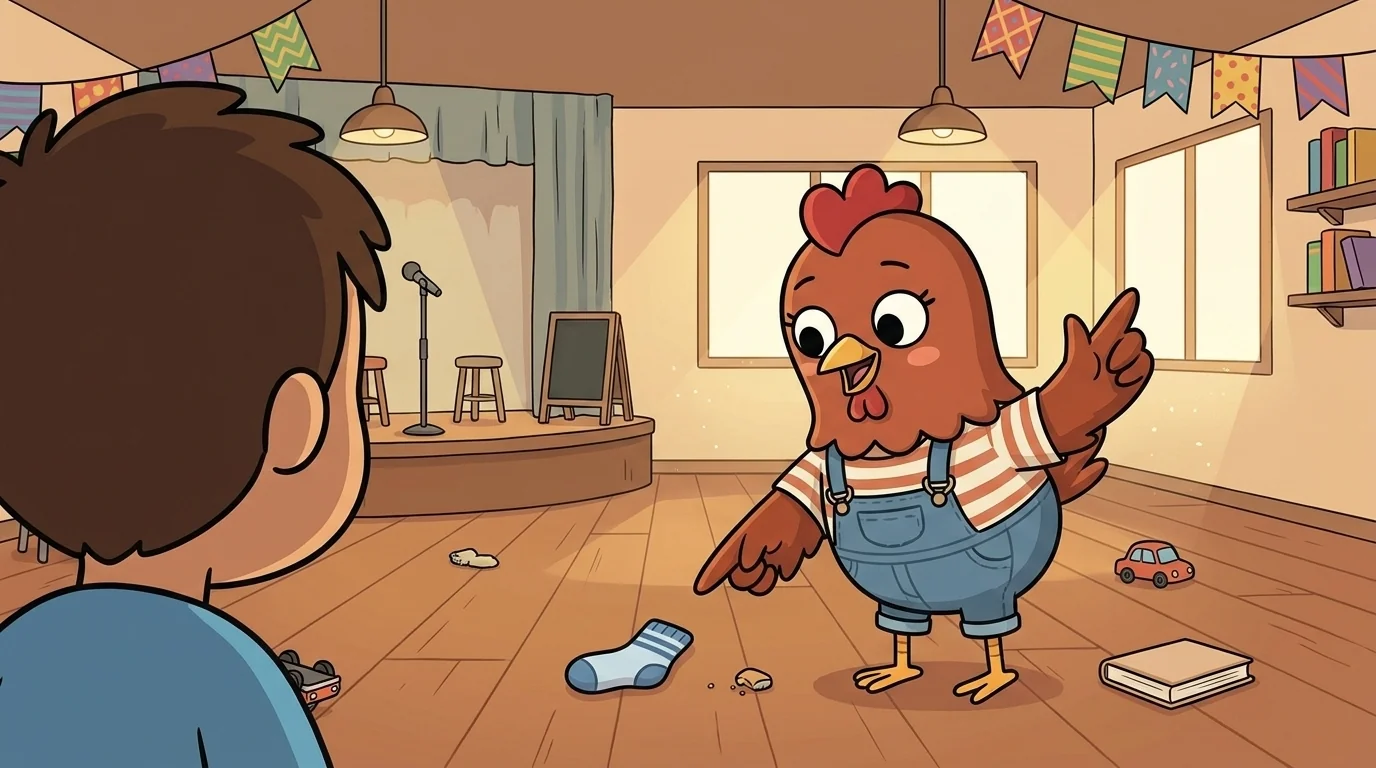
She teaches the young comics to gather the funny that's already lying around.
"Most beginners think they have to make something up," she says. "You don't. The best material is the ordinary life you're already living — you just have to notice it." She sets a kid going. "Think of something everyone does but no one talks about. Something small and true."
The kid thinks. "Everyone... pretends to look for something in the fridge when they're actually just cold and bored?"
"There it is!" says Glean, delighted. "You've gleaned one. It was true, it was tiny, everyone's done it — and the second you said it, the whole room recognised itself. That's the laugh of being seen." She tilts her head. "So slow down. Watch the plain, ordinary day. The funniest things aren't the invented ones — they're the true ones nobody's said out loud yet."
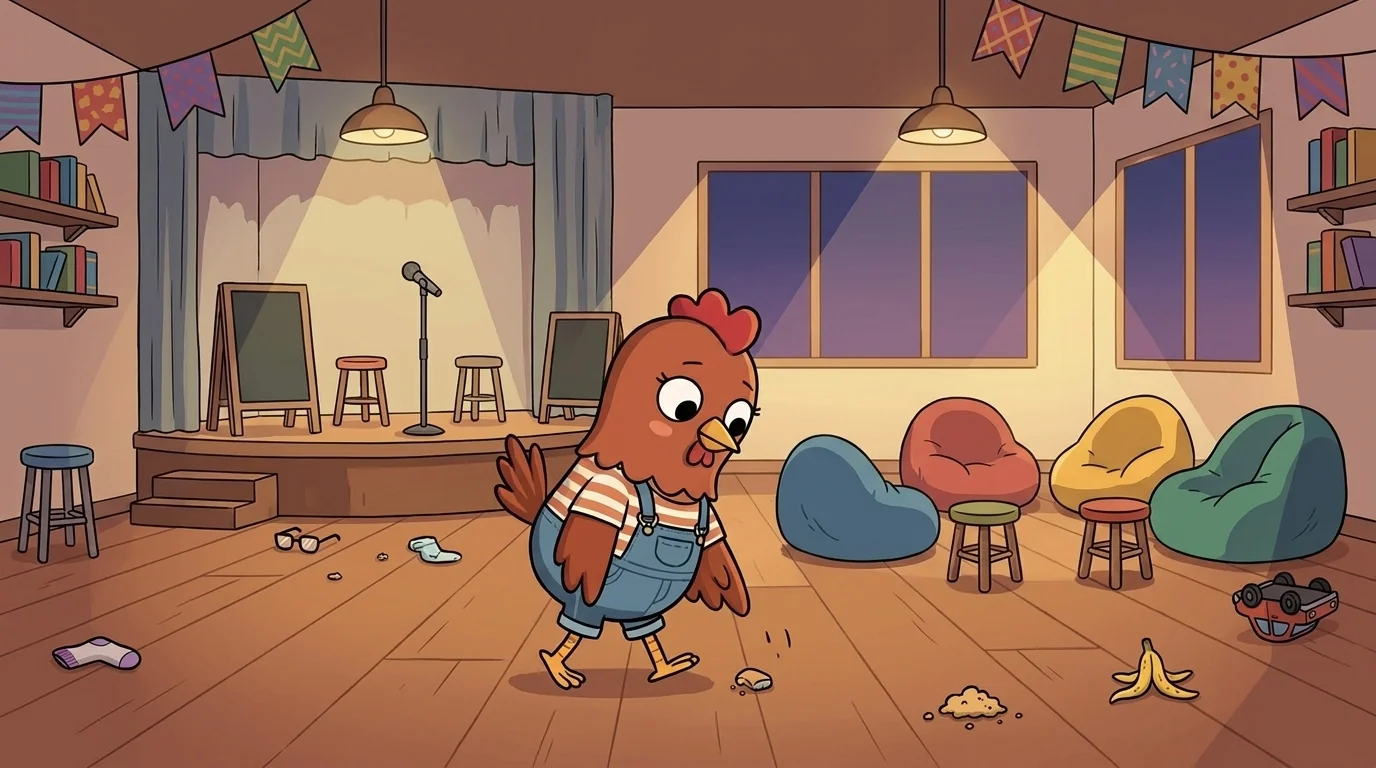
She still watches more than she speaks, at the club and off it, and still picks up true little grains everywhere she goes.
The thing Glean hopes the young comics carry is that the funniest material in the world is already all around them — that they don't have to invent, only to notice, and that naming a small true thing so exactly that a whole room recognises itself is one of the kindest, warmest things a joke can do.
"Slow down and watch," she tells them. "The funny is already there, in the plain true stuff nobody's said. Gather it, say it exactly, and let the whole room feel seen."
When the club empties, Glean pecks thoughtfully across the quiet floor, gathering a few last true little grains of the evening, and feels the calm, watchful gladness she first felt in the farmyard: that the whole ordinary world is quietly full of funny, waiting for someone patient enough to notice it and generous enough to say it out loud.
The JestForge ensemble
Glean is part of JestForge's distributed-narrative cast. Each character embodies a different curricular primitive; together they teach the full subject.
-

Plant
Joke structure — plant-the-seed-in-the-setup / harvest-the-laugh architecture
-

Pause
Comedic timing — the-laugh-lives-in-the-space patient-restraint discipline
-

Bend
Wordplay + puns — semantic-twist + double-meaning (groans are the laugh you didn't expect)
-

Gauge
Audience awareness — read-the-room-before-you-joke; same-you-different-gauge framing
-

Trove
Cross-cultural humor — honor-the-tradition-don't-claim-it elder-keeper of comedy-traditions-as-equals
-
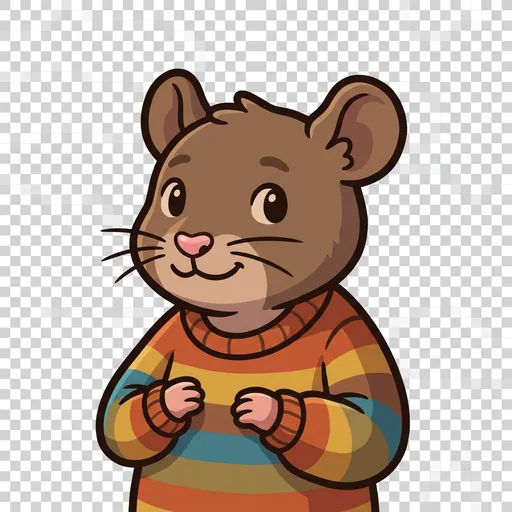
Aloft
Punching up, not down (comedy aimed at the powerful, never the vulnerable)
-

Balloon
Exaggeration (blowing one true detail up until it's funny)
-

Thrice
The rule of three (two beats set a pattern, the third breaks it)
-

Zag
Misdirection (leading the audience one way, then cutting the other)