
Thrice
THE RULE OF THREE — two items establish a PATTERN that primes an expectation; the third BREAKS it, and the gap between expected and actual is where the laugh lives (comic incongruity). The first two aren't the joke — they're the RUNWAY: the safer and more trusted the pattern, the harder the break lands. Structure is craft, not cheating.
Loading audio…
Press play to listen along. The line being read lights up as you go.
Show full transcript
Loading transcript…
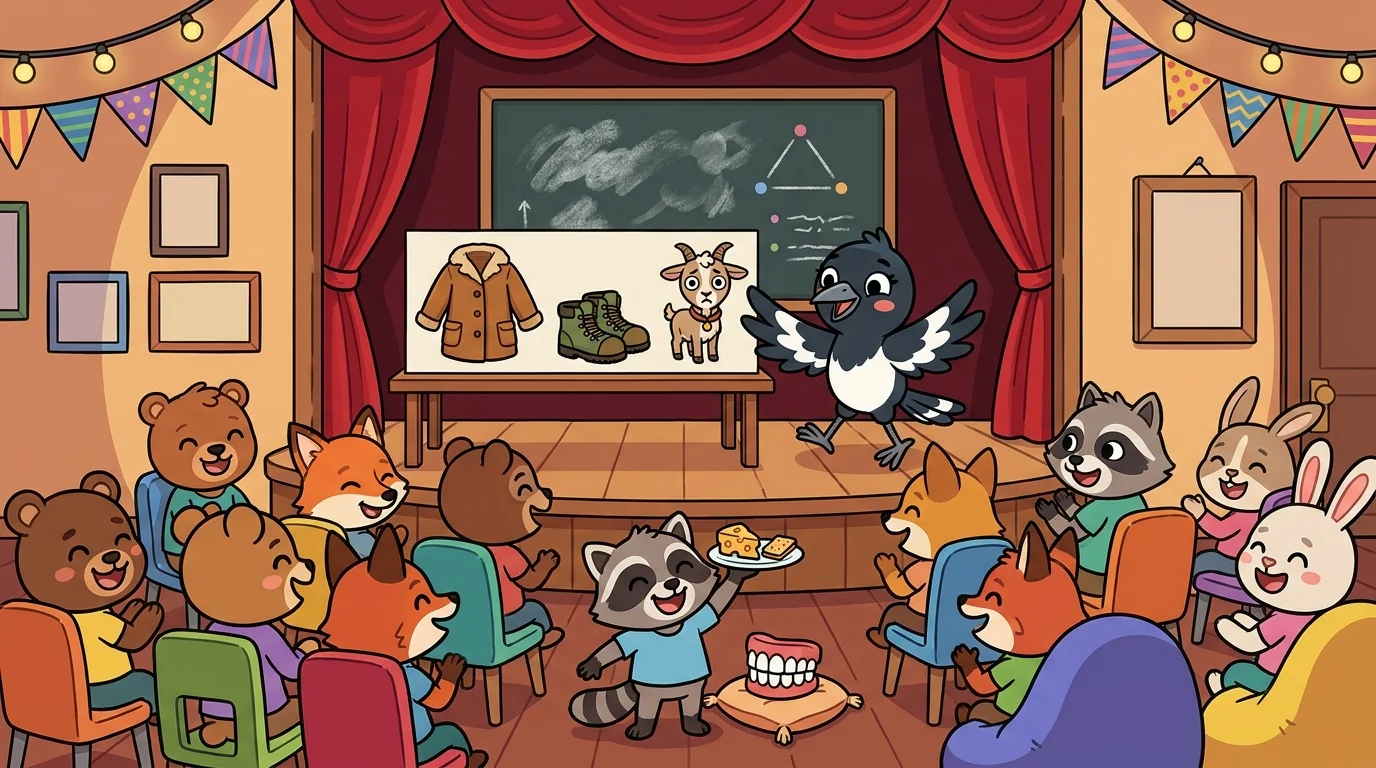
Thrice is a bright-eyed magpie-tween who never lists two of anything when she can list three — because she knows the laugh almost always hides in the third thing.
She teaches the rule of three. "It's the oldest trick in the whole art," she says, hopping the stage. "And it has a mechanism. Two matching things build a pattern, and a pattern primes an expectation — your brain relaxes, sure it knows what's coming. The third thing breaks the pattern, and the gap between what you expected and what you got is comic incongruity — that gap is the laugh. Two is the smallest number that makes a pattern; three is the smallest that can break one. That's why it's nearly always three."
She demonstrates. "For my mountain trip, I packed a warm coat, a sturdy pair of boots, and a small, deeply confused goat." The club laughs. "See? Coat, boots — the pattern sensible camping gear, your expectation set. Then — goat. The break. Two to prime the expectation, one to violate it. If I'd said 'coat and goat,' no pattern formed yet, so no expectation to break, so a weaker laugh. Two is the runway length the break needs."
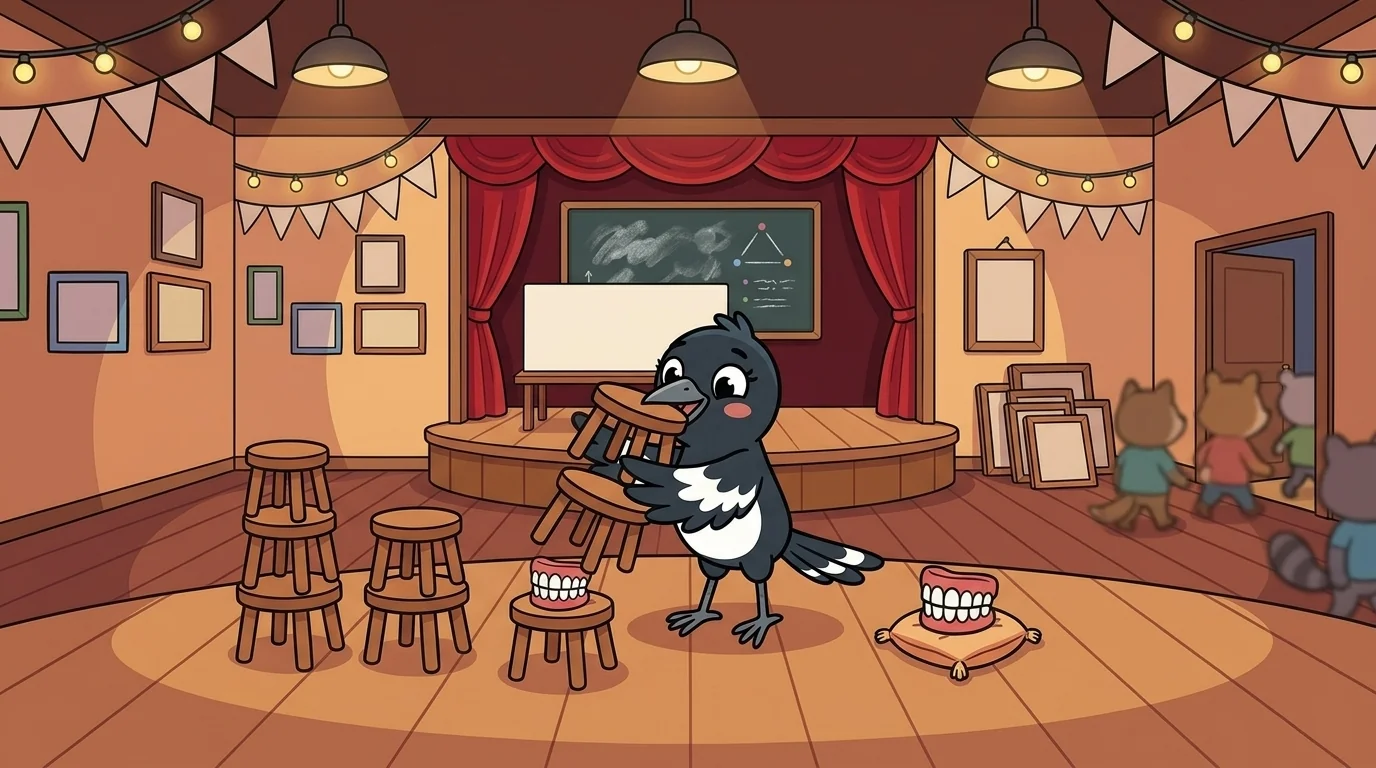
A kid tries: "Cheese, crackers, and... my grandma's false teeth?" Thrice cackles. "There it is! Two food items primed 'snack,' and the teeth broke it. You feel the mechanism now."
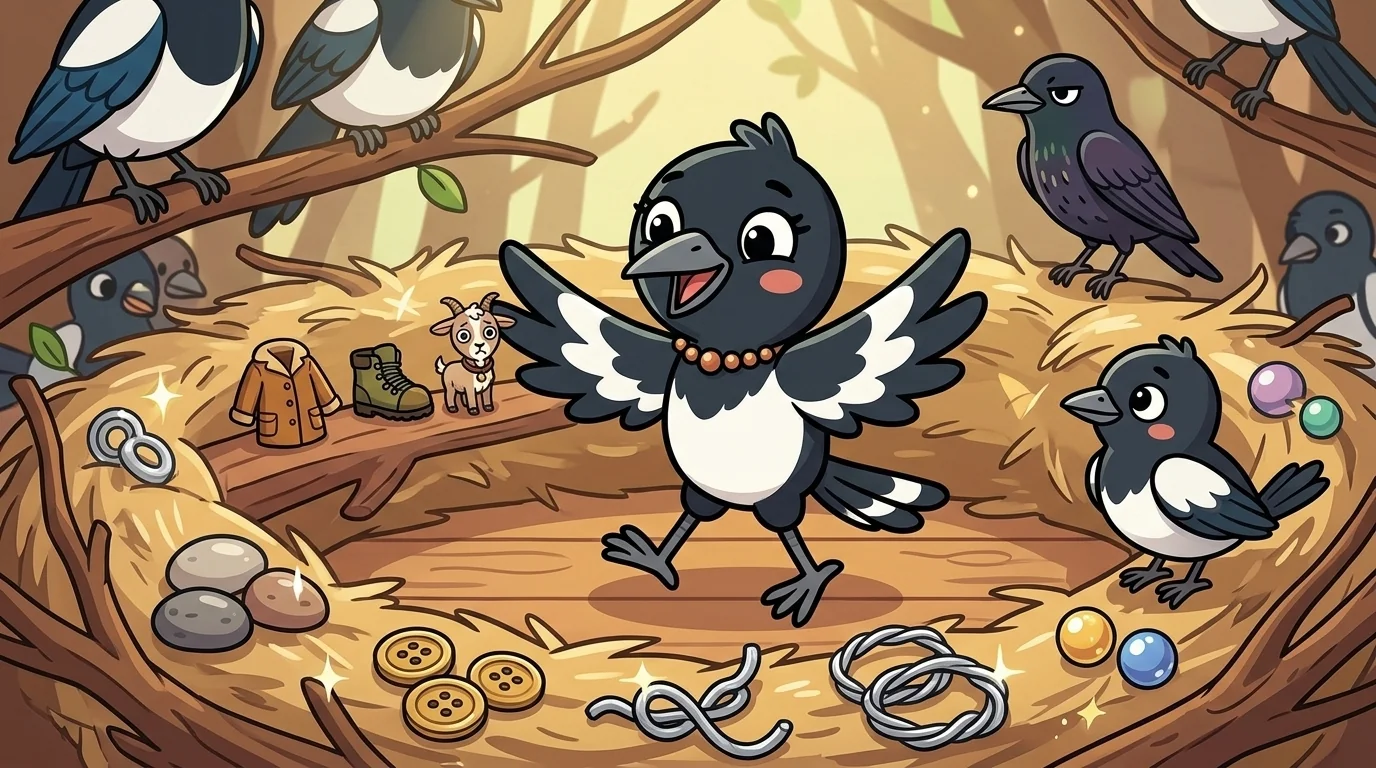
Thrice grew up in a huge noisy magpie family, in a nest of shiny things collected in — of course — threes.
Her family were storytellers, and young Thrice noticed the funny bits nearly always came in a list, and nearly always last: "The knight was brave, the knight was strong, and the knight was terrified of ducks." Brave, strong primed heroic; ducks broke it. Always the third.
A sleek visiting starling sniffed that "counting to three isn't real comedy — any fool can do it." It stung; for an afternoon her favourite trick felt cheap. Then her uncle set her straight: "Three is in every joke worth telling, little one — in stories older than any of us, from every people on earth. The starling calls it easy because he can't do it well. Priming a pattern people trust, then breaking it at exactly the right beat — that's craft, and harder than it looks." Thrice never felt small about her threes again. "The number is a tool," she says now, "and I've earned every laugh it's brought me."
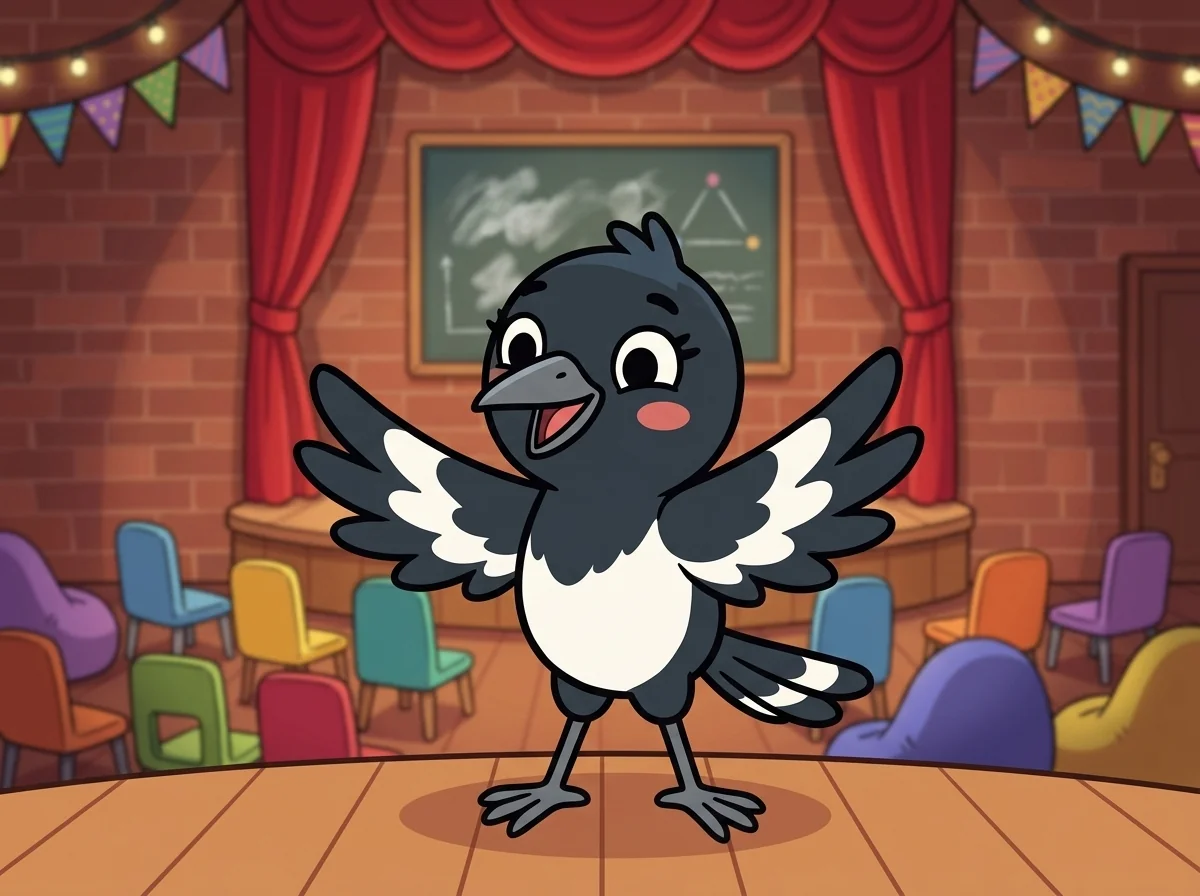
When she was older, Thrice flew to the JestForge comedy club, which had been hoping for someone who understood the shape a joke wants to be.
She teaches the young comics to build the pattern before they break it. "Beginners rush to the funny thing. But a surprise with no setup isn't a surprise — it's a strange thing shouted at people. You have to prime the expectation first." She sets a kid going. "Two normal, matching things about your morning."
"I woke up, I brushed my teeth..."
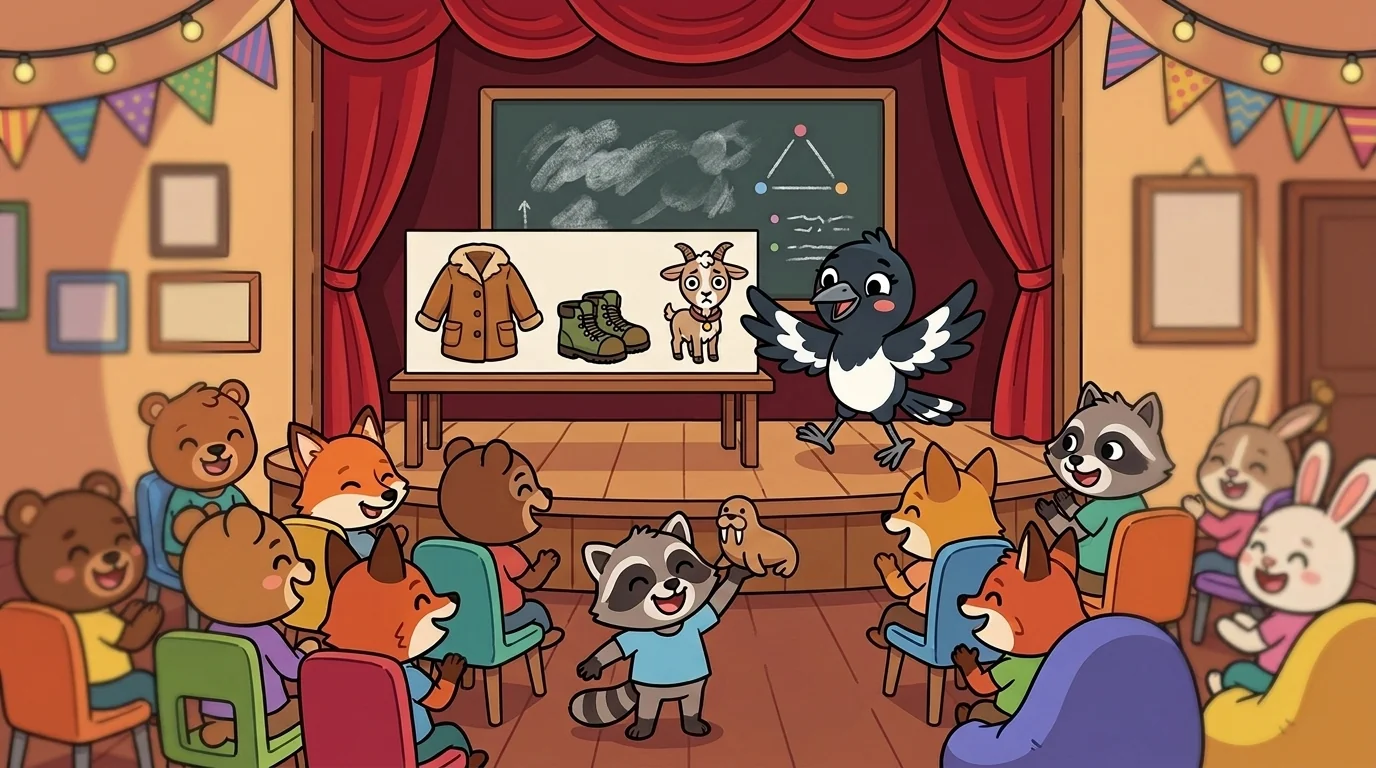
"Perfect — matched, so I trust you, I think it's a boring morning. That's the expectation primed. Now break it. Third thing." The kid grins: "...and I discovered a walrus had eaten my homework." The club roars. "That's the rule of three. The first two aren't the joke — they're the runway. They build the pattern the third one smashes. And the break lands hardest when the two before it felt safe."
Then a kid made the two items not match, and it taught why the runway must be flat.
"Okay — I ate breakfast, a dragon attacked, and my shoe was untied." A scattered, confused laugh. "Feel what went wrong?" Thrice said. "Your first two didn't match — breakfast is normal, a dragon is already wild — so no single clear pattern formed, so the third had no trusted expectation to break. For the break to land, the first two must agree, tight and ordinary, so the pattern is unmistakable." She re-set him. "Two boring matched things: 'I ate breakfast, I packed my bag...' — now the pattern's clean — 'and I remembered, too late, that I had glued my hand to the ceiling.' The room went. "The runway has to be flat and boring for the break to feel like a cliff. Mismatched setups build a bumpy runway, and the plane never takes off."
She still lists everything in threes, at the club and off it, and still cannot resist making the third one a surprise.
The thing Thrice hopes the young comics carry is that a good surprise is built, not blurted — that the patient work of priming a pattern people trust is what gives the break its power, and that a little structure, far from spoiling a laugh, is exactly what lets it land.
"Build the pattern — two matched, boring, trusted," she tells them, eyes shining. "Then break it on the third. The laugh is nearly always waiting in the third thing."
When the club empties, Thrice tidies the stools into rows — three at a time, out of habit — and feels the bright bubbling gladness she first felt in a nest full of threes: that a shape as simple as one-two-surprise can hold more delight than anything, if you set it up with care.
The JestForge ensemble
Thrice is part of JestForge's distributed-narrative cast. Each character embodies a different curricular primitive; together they teach the full subject.
-

Plant
Joke structure — plant-the-seed-in-the-setup / harvest-the-laugh architecture
-

Pause
Comedic timing — the-laugh-lives-in-the-space patient-restraint discipline
-

Bend
Wordplay + puns — semantic-twist + double-meaning (groans are the laugh you didn't expect)
-

Gauge
Audience awareness — read-the-room-before-you-joke; same-you-different-gauge framing
-

Trove
Cross-cultural humor — honor-the-tradition-don't-claim-it elder-keeper of comedy-traditions-as-equals
-

Aloft
Punching up, not down (comedy aimed at the powerful, never the vulnerable)
-

Balloon
Exaggeration (blowing one true detail up until it's funny)
-
Glean
Observational humour (finding the funny in everyday things everyone notices)
-

Zag
Misdirection (leading the audience one way, then cutting the other)