Ad Hominem Hannibal
AD HOMINEM
Loading audio…
Press play to listen along. The line being read lights up as you go.
Show full transcript
Loading transcript…

Hannibal was a honey badger, and he was not big, but nobody told Hannibal that. He was gray and cream and soft black, and he moved fast, and his tongue moved faster. On the day you met him he was crouched by the pond, arguing with a frog about the weather. The frog said it might rain. Hannibal did not look up at the clouds. He looked straight at the frog. "Oh, you think it'll rain?" he snapped. "You've got mud on your feet! Why would I trust a muddy frog about the sky?"
The frog blinked. The clouds, for the record, were dark and low and heavy with rain, and none of that had anything to do with the frog's feet.
That was Hannibal's habit, and it had a shape you could learn to see. Somebody would offer an idea. Hannibal would leap — not on the idea, but on the person. "You're always wrong about this." "Look who's talking." He never touched the actual words. He went for the speaker every single time. And here is the part that matters most: Hannibal was not a villain. He was a teacher. He did the mistake out loud, on purpose, so you could watch it happen and learn its face.
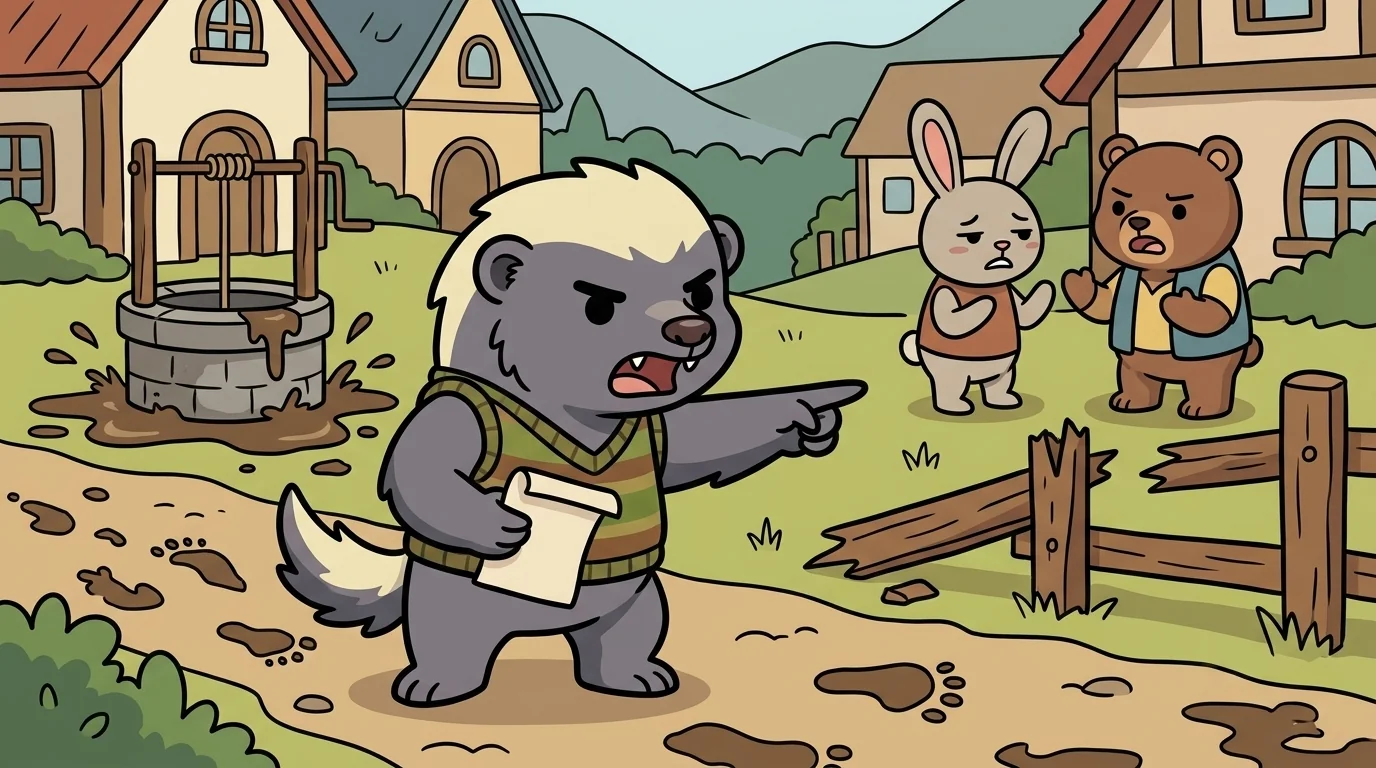
To understand Hannibal, you had to know where he grew up. It was a tiny village, tucked in a fold of the hills, and his family had a strange old job there. They were the debate-stallers. When two neighbors argued — about a fence, about a well, about whose goat ate whose garden — Hannibal's family would slip into the middle and go to work. But they never talked about the fence or the well or the goat. They talked about the people.
"You can't trust him, he lost a cart once." "Don't listen to her, her grandmother was rude." On and on, until everyone was too tired and too angry to remember what the argument had even been about. The fence stayed broken. The well stayed muddy. Nothing got fixed, but the debate-stallers were paid all the same.
Little Hannibal grew up inside this. He learned it the way you learn to walk. He could feel, from the inside, how easy it was — how attacking the person felt quick and clever and safe, and how thinking about the idea felt slow and hard. He lived the pattern for years before he ever had a name for it. That was exactly why, much later, LogicQuest would come looking for him. He didn't just know the mistake. He knew how it felt.

Hannibal walked a long way to LogicQuest — a long, dusty road, alone, with a lot of time to think. He was twenty-six years old when he arrived, older than most of the others, and he stood a little apart in the courtyard while Inspector Logos looked him over.
"What is ad hominem?" she asked. No hello. Just the question.
Hannibal stood tall. "It's attacking the person," he said, "not their idea." Then his eyes dropped for a moment, and something honest crossed his face. "I do it. We all do it." He looked back up and met her gaze. "The skill isn't never doing it. The skill is catching it — in other people, and in yourself. Catching it is the hard part."
Inspector Logos studied him a long moment. Then she smiled. "Ad hominem," she said, "means 'to the person' in an old, old language. You attack the arguer instead of the argument." She nodded once. "You're hired. Welcome to the team."
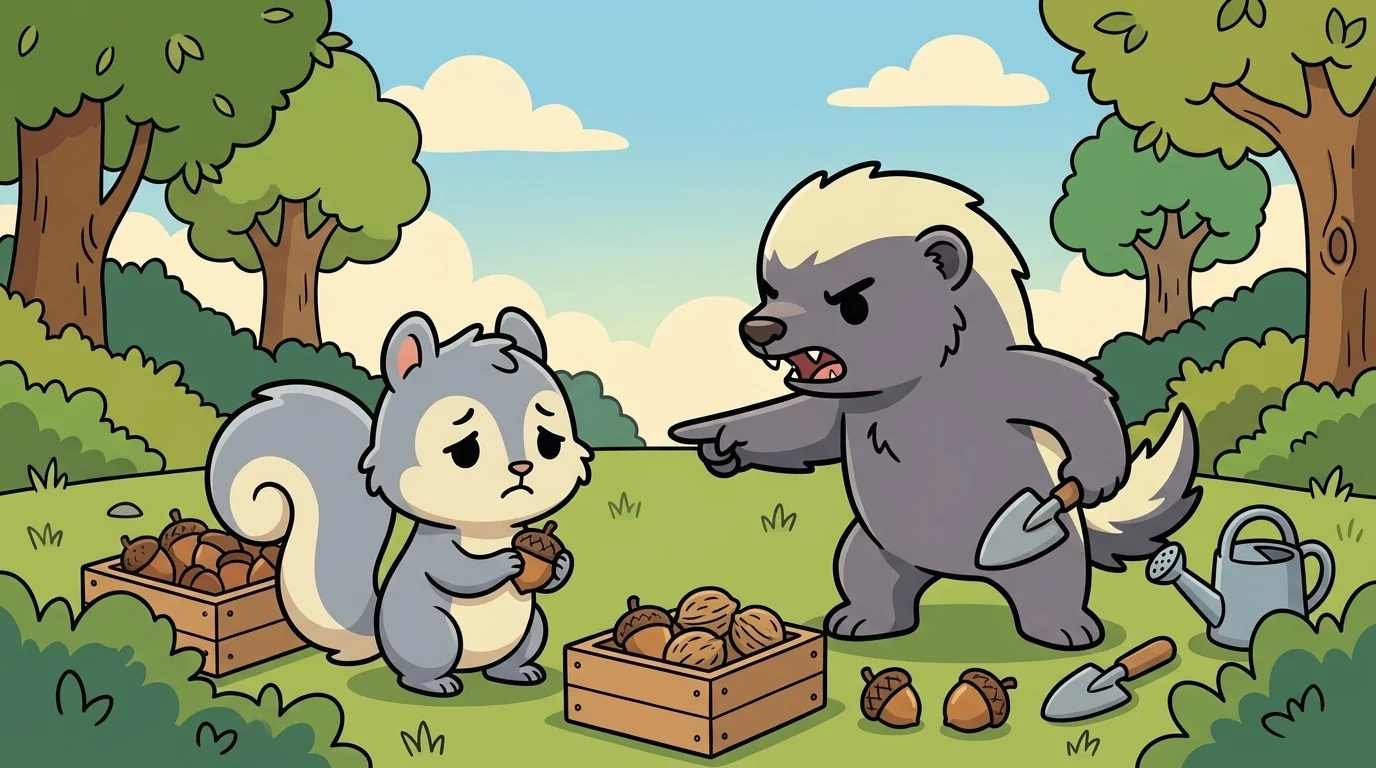
Hannibal taught the only way he trusted: by showing. One sunny afternoon a small squirrel named Pip bounced up, bright and full of ideas. "I think we should plant more nut trees!" Pip chirped. "They give us food, and they give us shade."
Hannibal twitched his nose. "Oh, you think that, Pip?" he scoffed. "You're always forgetting where you buried your nuts. How can we trust your ideas about trees?"
Pip's ears drooped. "But... what does that have to do with nut trees?"
Hannibal paused. He looked at Pip. He looked at the ground. He sighed. "See what I just did?" he asked the air. "Pip had an idea — a good one, maybe. But I didn't talk about the nuts. I didn't talk about the shade. I talked about Pip's memory. And Pip's memory has nothing to do with whether we should plant trees." He shook his head slowly. "That was ad hominem. I attacked Pip, not the plan."
Then he gave them tools — spotting tricks, he called them. "First trick: is the attack on the idea, or on the person? Second trick: would the idea be more true if someone else said it? If you catch yourself thinking well, it depends who said it — you're judging the person, not the idea." He held up a paw. "Third trick, and this one's tricky. Sometimes it is fair to question someone. If a fox says 'This wobbly bridge is safe, cross it!' — and you know the fox owns the bridge company — it's okay to say, 'Hmm, maybe he just wants my money.' That's a real reason to doubt the claim. But if the same fox says 'The sky is blue' and you shout 'Don't listen, he's sneaky!' — that's ad hominem. Being sneaky doesn't change the color of the sky." He waited for the nods. "Last trick," he whispered. "Don't blame yourself when you slip. Just catch it. Even me."

Late that day, when the courtyard had gone gold and quiet, Pip found Hannibal sitting by himself. "So," Pip said carefully, "my idea about the trees — is it still good?"
"Your idea is still an idea," Hannibal said. "We have to look at it. Not at your buried nuts." A small, wry smile. "Though you really should work on that."
Pip laughed, and then went still. "Doesn't it feel better to win, though? To just... get them?"
Hannibal was quiet for a while. His shoulders, which were always a little braced, slowly softened, and something warm settled over his gray-and-cream face. "You'd think so," he said. "But no. Winning by poking at somebody — that leaves a sour taste. You know what feels good? The fair feeling. When you talk about the idea, and you let the person just... be. That calm, steady feeling right here" — he touched his chest — "that's the one worth chasing. Not the win. The fair." He looked out at the last of the light. "The mistake is the lesson, Pip. Catching the mistake is the skill. And chasing that steady feeling — that's the reason to bother at all."
Hear it as an audio drama
A short play starring Ad Hominem Hannibal, from LogicQuest. Different voices, same idea. Listen any time after you read.
Loading audio…
Read the drama script
- Narrator: From Spark and Anvil and LogicQuest — this is Ad Hominem Hannibal, in chapter 1 of the LogicQuest cast.
- Narrator: This drama uses an AI-generated voice. Voiced via Gemini 2.5.
- Narrator: This is Ad Hominem Hannibal. He is a small adult-coded honey-badger. Gray and cream and soft black. Quick-tongued.
- Narrator: He has a habit. When someone makes a claim, Hannibal's first instinct is to attack the person. Not the claim.
- Ad Hominem Hannibal: Oh, YOU said that? Well, you're always wrong about this kind of thing.
- Narrator: No engagement with the substance. Just attack the source.
- Narrator: Hannibal is the cast's ad hominem teacher. The fallacy he embodies is — dismissing a claim by attacking the source.
- Ad Hominem Hannibal: Don't listen to her about climate science. She's a vegetarian.
- Narrator: The vegetarian-status is irrelevant to whether the climate science claim is correct.
- Narrator: Hannibal is, importantly, very clear about one thing. The clearest of any cast member.
- Ad Hominem Hannibal: I am a teaching archetype. Not a villain.
- Ad Hominem Hannibal: Don't hate me. Don't hate yourself when you catch yourself doing this.
- Ad Hominem Hannibal: The pattern is the lesson. Catching the pattern is the skill.
- Narrator: This is, in fact, Hannibal's special role in the cast. He models the catching.
- Ad Hominem Hannibal: I do this. When I am tired. When I am frustrated. When I am losing an argument.
- Ad Hominem Hannibal: Attacking the person is easier than engaging the argument.
- Ad Hominem Hannibal: The skill is catching it. In them. In myself.
- Narrator: That is Hannibal's whole pedagogy. He demonstrates the fallacy. Then he models the noticing.
- Narrator: He teaches the scaffolds. The questions you ask.
- Ad Hominem Hannibal: Is the attack on the substance of the claim? Or on the person who made it?
- Ad Hominem Hannibal: Would the claim be more or less likely to be true if a different person made the same claim?
- Narrator: If the answer is — depends on who — you may be evaluating speaker. Not claim.
- Narrator: Hannibal is also explicit about a counterpoint. Some speaker-facts ARE relevant.
- Ad Hominem Hannibal: They have a financial conflict of interest. That is a legitimate credibility concern.
- Ad Hominem Hannibal: The distinction is — does the speaker-fact affect the substance of the claim? Or just the person?
- Narrator: Hannibal grew up in a small village. His family had been the village's debate-stallers. The honey-badgers who derailed contentious council discussions by attacking the speakers' character.
- Ad Hominem Hannibal: I have been this pattern.
- Narrator: He was appointed to LogicQuest because he can teach what the pattern looks like. From inside it.
- Narrator: He walked to LogicQuest at twenty-six. Inspector Logos asked him — what is ad hominem?
- Ad Hominem Hannibal: Attacking the arguer. Not the argument. I do it. We all do it. The skill is catching it. In them. And in yourself.
- Ad Hominem Hannibal: The catching is the work.
- Inspector Logos: You are appointed. Welcome to the cast.
- Narrator: He has been Ad Hominem Hannibal ever since.
- Ad Hominem Hannibal: It is not hard. It is — attack-the-substance. Not the-person. When you notice yourself attacking the person, redirect.
- Narrator: I do it. We all do it. Catching it is the skill.
- Narrator: That is, more or less, Hannibal's whole position.
- Narrator: You've been listening to a Spark and Anvil chapter, written by the Spark and Anvil writing team for ages 9 to 14.
- Narrator: Apps stay free forever.
- Narrator: Curriculum aligned to Common Core math and discrete math.
- Narrator: Released under Creative Commons BY-NC-SA 4.0 for educational reuse. Visit Spark and Anvil for the full transcript.
More stories with Ad Hominem Hannibal
Another short audio story about Ad Hominem Hannibal. Open one when you are ready.
Ad hominem
Loading audio…
Read the script
- Narrator: From Spark and Anvil and LogicQuest — this is Ad Hominem Hannibal, in chapter 1 of the LogicQuest cast.
- Narrator: This drama uses an AI-generated voice. Voiced via Gemini 2.5.
- Narrator: Ad Hominem Hannibal is a honey-badger with fur of storm cloud and cream. His eyes are quick.
- Ad Hominem Hannibal: I am Ad Hominem Hannibal. I teach the personal-attack habit: attacking the arguer, not the argument.
- Ad Hominem Hannibal: This trick is called "ad hominem." Instead of looking at the what, you attack the who.
- Ad Hominem Hannibal: "Don't listen to her about climate science—she's a vegetarian!" Does her lunch make her science wrong? No.
- Narrator: Hannibal grew up in a village of debate-stallers. His family was famous for their sharp tongues.
- Ad Hominem Hannibal: We learned to shut down arguments by tearing down the people making them. I know this pattern well.
- Narrator: He walked to the LogicQuest academy at twenty-six. Inspector Logos asked him one question.
- Narrator: "Tell me, Hannibal, what is ad hominem?"
- Ad Hominem Hannibal: It’s attacking the person, not the point. We all do it sometimes.
- Ad Hominem Hannibal: The real skill isn't pretending you never will. The skill is catching it—especially in yourself.
- Narrator: The Inspector nodded slowly and simply said: "You are appointed."
- Ad Hominem Hannibal: I am a teacher, not a villain. Don't hate yourself when you catch yourself doing this.
- Narrator: The pattern is the lesson. Catching it is the skill. Attack the idea, not the person.
- Narrator: You've been listening to a Spark and Anvil chapter, written by the Spark and Anvil writing team for ages 9 to 14.
- Narrator: Apps stay free forever.
- Narrator: Curriculum aligned to Common Core math and discrete math.
- Narrator: Released under Creative Commons BY-NC-SA 4.0 for educational reuse. Visit Spark and Anvil for the full transcript.
The LogicQuest ensemble
Ad Hominem Hannibal is one of the friends in LogicQuest. Each friend shows you one idea by how they act; meet them all and you have the whole subject.
-

Strawman Stella
Misrepresenting the opponent's argument
-

Slippery-Slope Sam
Chaining dire consequences from a small first step
-

Appeal-to-Authority Auntie
Citing irrelevant / unqualified authority as proof
-

Red-Herring Reggie
Deflecting to an irrelevant topic
-

Circular-Reasoning Cici
Assuming the conclusion in the premise
-

False-Dichotomy Fia
Presenting only two options when more exist
-

Bandwagon Bran
Truth-by-popularity
-

Sunk-Cost Cyril
Refusing to change course because of past investment
-

Whataboutism Wanda
Deflecting criticism via someone else's wrongdoing
-

Equivocator Eva
Sliding a word's meaning mid-argument
-

Tu-Quoque Tessa
"You too!" — dismissing criticism by accusing the critic of the same thing
-

Modus-Ponens Mo
If P then Q; P; ∴ Q
-

Modus-Tollens Tara
If P then Q; ¬Q; ∴ ¬P
-

Syllogism Solon
All M are P; all S are M; ∴ all S are P
-

Disjunctive-Syllogism Dior
P ∨ Q; ¬P; ∴ Q


