Mo, Tara and Dior
THE THREE TRUE STEPS
A story read by Mo, Tara and Dior
Loading audio…
Press play to listen along. The line being read lights up as you go.
Show full transcript
Loading transcript…
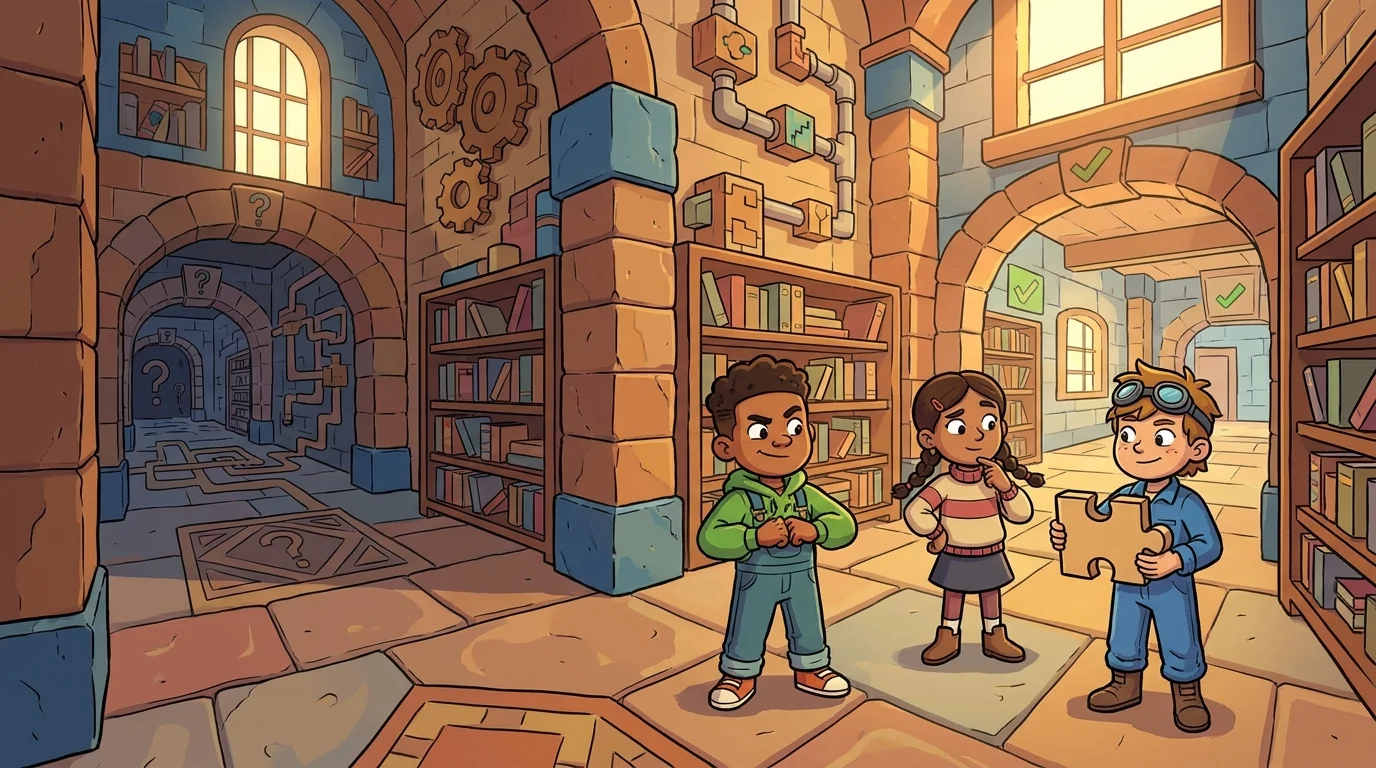
Down one hall of the great Logic Hall lived the tricksters — the ones who sounded clever and led you nowhere. But up the other hall lived three friends who did something rarer and better: they reached answers you could actually stand on.
Mo went forward. Tara went backward. And Dior crossed things off until only the truth was left. They were not flashy. They did not shout. But when something genuinely needed to be known — known for sure, not just argued about — it was these three who were sent for.
"Puzzle came in," said Dior one morning, holding it up. "A real one."
Mo cracked his knuckles. "Then let's do it properly."
"Forward, backward, and cross-off," said Tara. "Same as always."
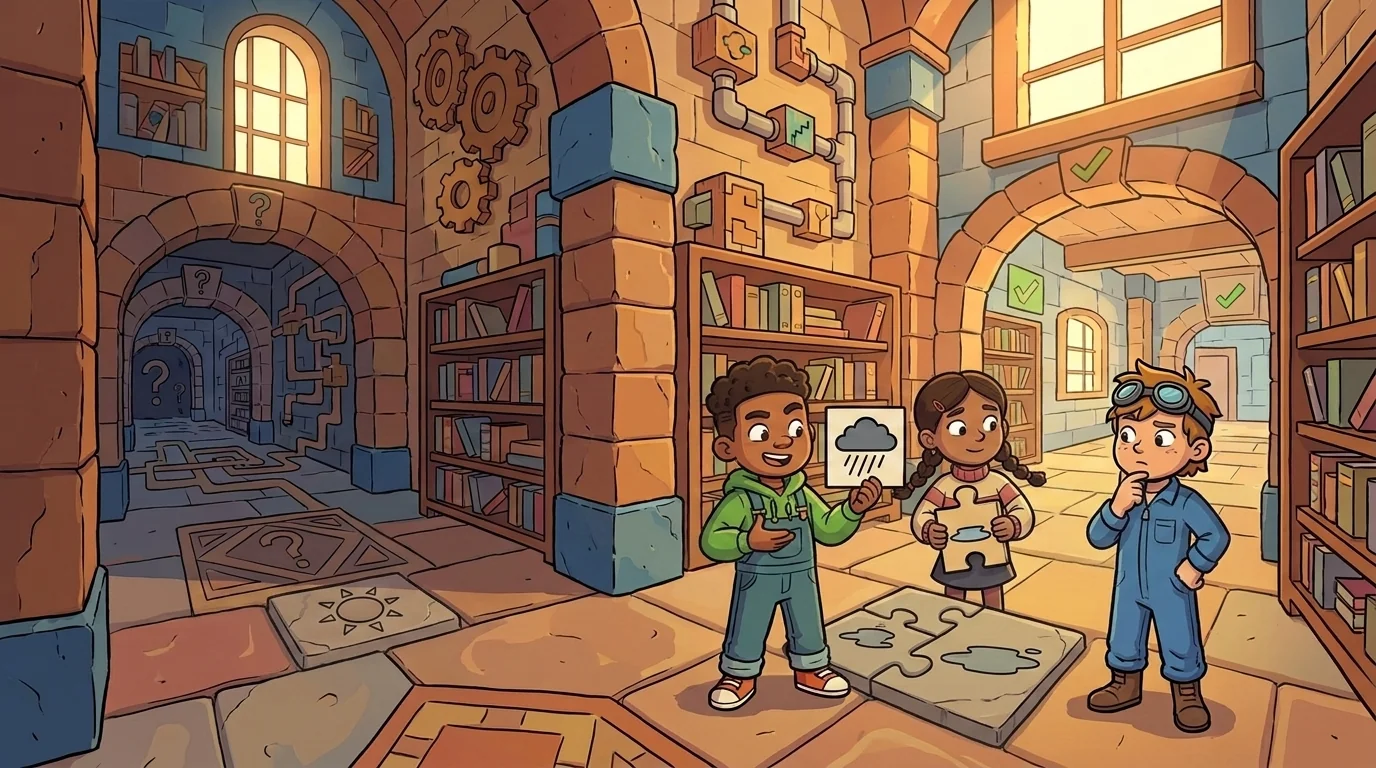
Mo went first, because Mo's step was the simplest and the most foundational of them all: run the rule forward.
Mo held up a rule everyone agreed on. "If it rains, the ground gets wet." Then Mo held up a fact. "It is raining." And then Mo took the one honest step forward, and it landed on solid stone. "Therefore — the ground is wet."
That was it. That was the whole move. "People think it's too simple to matter," Mo said. "But watch how sturdy it is. If the rule really holds — if it rains, the ground gets wet — and the start is really true — it is raining — then the ending cannot be false. It's forced. The ground must be wet. I'm not guessing. I'm just walking the rule forward one honest step, and the ground catches me every time."
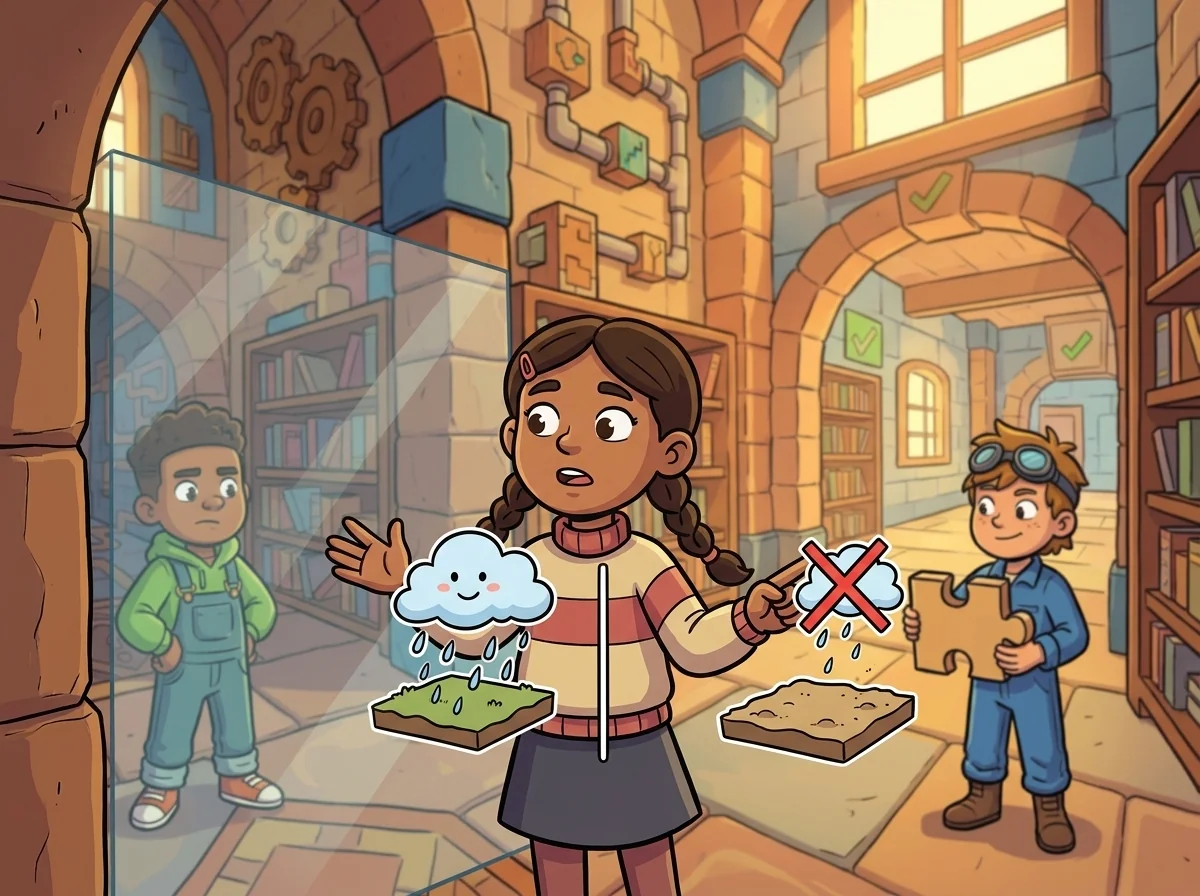
Then Tara stepped up, and did the same rule the other direction — the move that surprises people.
"Same rule," said Tara. "If it rains, the ground gets wet." But this time Tara didn't start at the beginning. Tara started at the end, with a fact about the ending: "The ground is not wet." And then Tara walked the rule backward. "If rain always makes the ground wet — then a dry ground means it cannot have rained. Therefore — it did not rain."
"This one feels like magic the first time," Tara admitted, "but it isn't. It's just the same rule, read backward. If the rule promises that P leads to Q, then no Q means there was no P — because if there had been, Q would have happened. The dry ground proves it didn't rain. I don't need to have seen the sky. The rule and the ending tell me for certain."
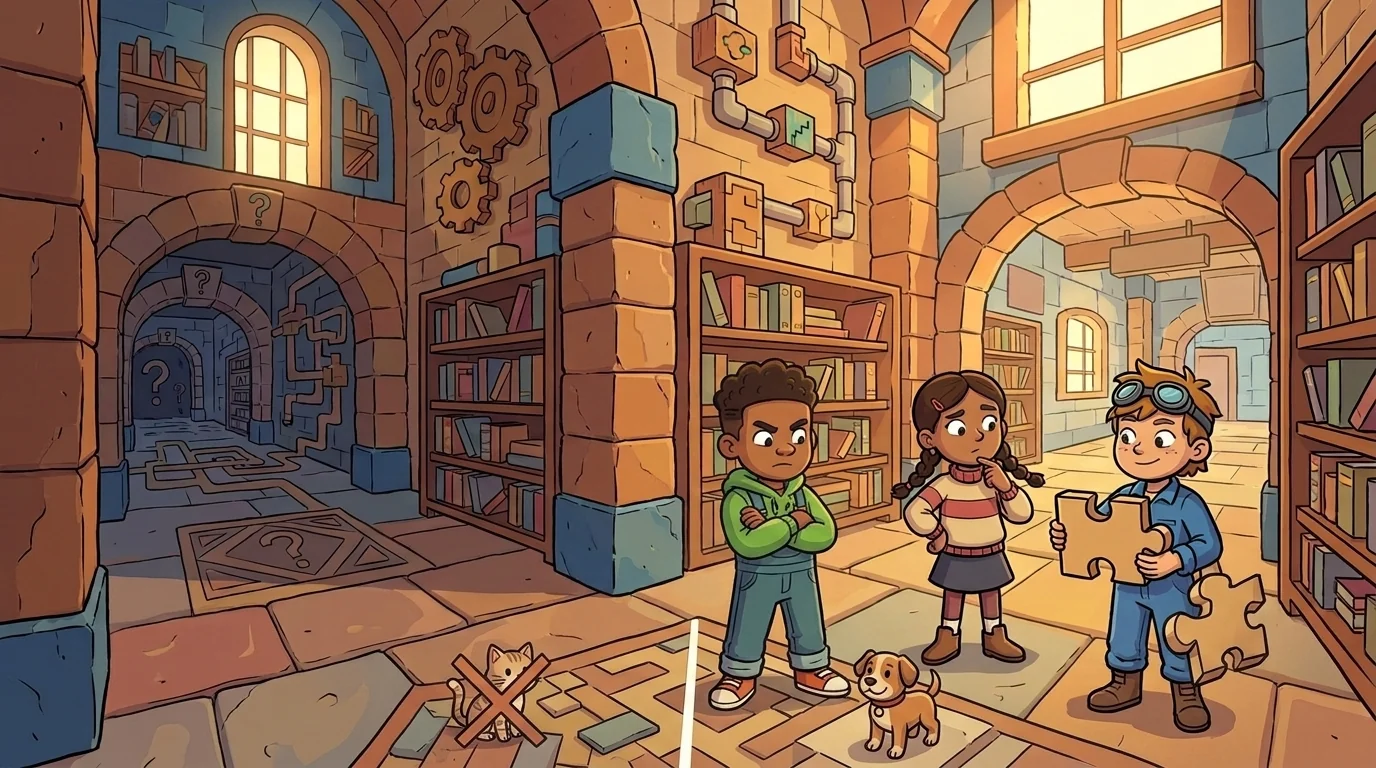
And then came Dior, whose step worked when you didn't have a rule at all — just a list, and a way to shrink it.
"The vase got knocked over," said Dior, laying out the puzzle. "Either the cat did it, or the dog did it." Two possibilities. Then Dior found one honest fact: "The cat was shut outside all afternoon. It was not the cat." And Dior crossed it off — and with the cat gone, only one branch remained, and it had to be true. "Therefore — it was the dog."
"Cross off what it isn't," said Dior, "and whatever's left standing has to be it. That's my whole move. I don't have to catch the dog in the act. I just have to be sure of the list — either the cat or the dog — and sure of one thing it isn't. Take away the false one, and the true one is all that's left. The answer was hiding in the list the whole time. I just cleared away everything it couldn't be."
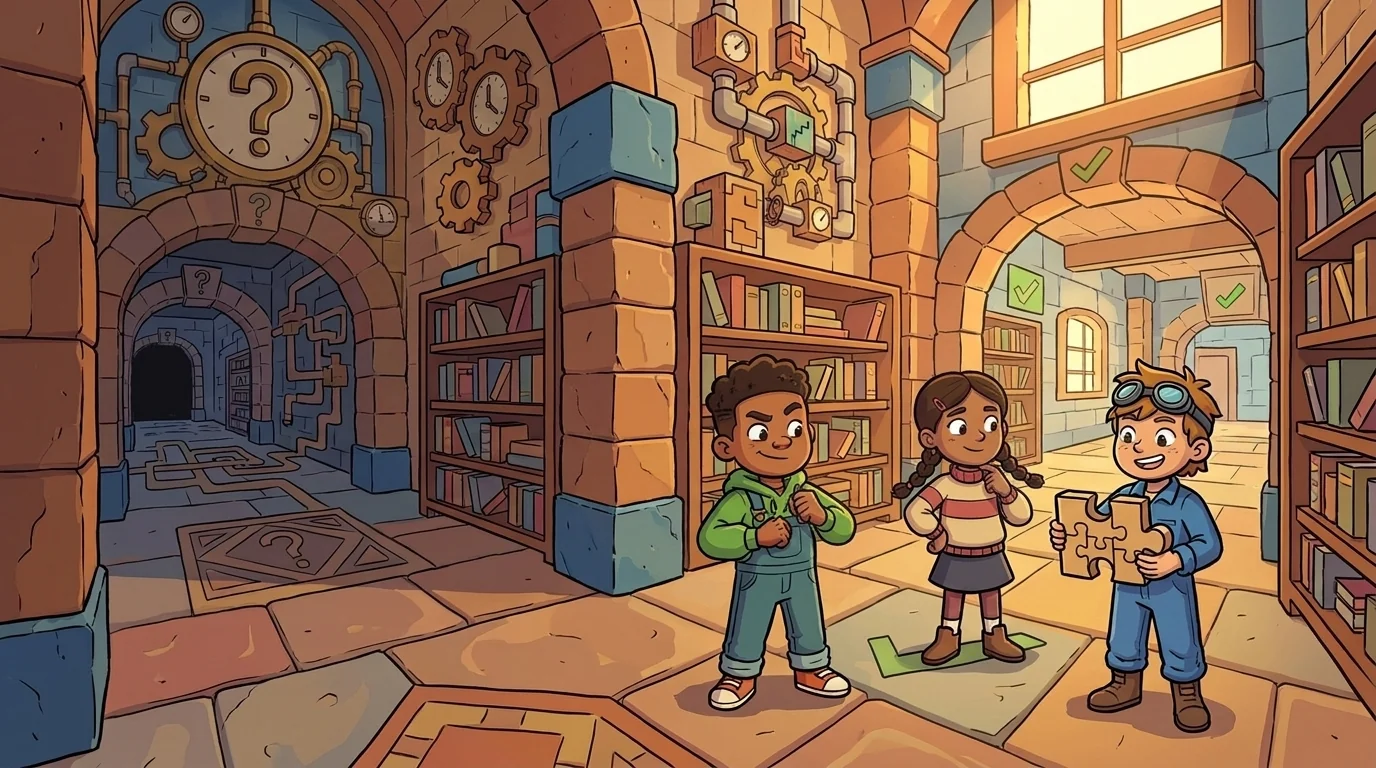
By afternoon the three of them had cracked the whole puzzle — walking rules forward with Mo, backward with Tara, and crossing off dead ends with Dior — and every step of it held. Not one lucky guess. Not one clever-sounding dodge. Just three honest moves, laid end to end, each one landing on solid ground.
"Good forward," said Tara.
"Good backward," said Dior.
"Good cross-off," said Mo.
There is a particular, steadying confidence in reasoning you can actually stand on — the feeling of ground under your feet instead of clever fog around your head. The tricksters down the other hall could always make an argument sound good. But these three could make an answer be true, one honest step at a time — and knowing the difference, and knowing how to build the solid kind, is one of the quietly powerful things a person can carry into any argument, any puzzle, any hard question, for the rest of their life.
Hear it as an audio drama
A short play starring Mo, Tara and Dior, from LogicQuest. Different voices, same idea. Listen any time after you read.
Loading audio…
Read the drama script
- Narrator: From Spark and Anvil and LogicQuest — this is Dior, in chapter 1 of the LogicQuest cast.
- Narrator: This drama uses an AI-generated voice. Voiced via Gemini 2.5.
- Narrator: Down one hall of the Logic Hall lived the tricksters, who sounded clever and led you nowhere. But up the other hall lived three friends who did something rarer and better: they reached answers you could actually stand on.
- Narrator: Mo went forward. Tara went backward. And Dior crossed things off until only the truth was left. Not flashy. But when something needed to be known for sure, these three were sent for.
- Dior: Puzzle came in this morning. A real one.
- Mo: Then let's do it properly. Forward, backward, and cross-off — same as always.
- Narrator: Mo went first, because Mo's step was the simplest and most foundational: run the rule forward.
- Mo: Here's a rule everyone agrees on: if it rains, the ground gets wet. And here's a fact: it is raining. So I take one honest step forward — therefore, the ground is wet.
- Mo: People think it's too simple to matter. But watch how sturdy it is. If the rule holds and the start is really true, the ending cannot be false. It's forced. I'm not guessing — I'm walking the rule forward, and the ground catches me every time.
- Narrator: Then Tara stepped up, and did the same rule the other direction — the move that surprises people.
- Tara: Same rule: if it rains, the ground gets wet. But I don't start at the beginning. I start at the end, with a fact about the ending — the ground is not wet. And I walk the rule backward.
- Tara: If rain always makes the ground wet, then a dry ground means it cannot have rained. Therefore — it did not rain. It feels like magic the first time, but it isn't. No wet, so no rain. The dry ground proves it. I didn't even need to see the sky.
- Narrator: And then came Dior, whose step worked when you didn't have a rule at all — just a list, and a way to shrink it.
- Dior: The vase got knocked over. Either the cat did it, or the dog did it. Two possibilities. Then I found one honest fact: the cat was shut outside all afternoon. It was not the cat.
- Dior: So I cross it off — and with the cat gone, only one branch remains, and it has to be true. Therefore, it was the dog. Cross off what it isn't, and whatever's left standing has to be it. The answer was hiding in the list the whole time.
- Narrator: By afternoon the three of them had cracked the whole puzzle — forward with Mo, backward with Tara, crossing off dead ends with Dior — and every step held. Not one lucky guess. Not one clever-sounding dodge.
- Tara: Good forward.
- Dior: Good backward.
- Mo: Good cross-off.
- Narrator: There is a particular, steadying confidence in reasoning you can actually stand on — ground under your feet instead of clever fog around your head. The tricksters could make an argument sound good. But these three could make an answer be true, one honest step at a time — and knowing how to build the solid kind is one of the quietly powerful things a person can carry for the rest of their life.
- Narrator: You've been listening to a Spark and Anvil chapter, written by the Spark and Anvil writing team for ages 9 to 14.
- Narrator: Apps stay free forever.
- Narrator: Curriculum aligned to Common Core math and discrete math.
- Narrator: Released under Creative Commons BY-NC-SA 4.0 for educational reuse. Visit Spark and Anvil for the full transcript.
The LogicQuest ensemble
Mo, Tara and Dior is one of the friends in LogicQuest. Each friend shows you one idea by how they act; meet them all and you have the whole subject.
-

Ad Hominem Hannibal
Attacking the arguer, not the argument
-

Strawman Stella
Misrepresenting the opponent's argument
-

Slippery-Slope Sam
Chaining dire consequences from a small first step
-

Appeal-to-Authority Auntie
Citing irrelevant / unqualified authority as proof
-

Red-Herring Reggie
Deflecting to an irrelevant topic
-

Circular-Reasoning Cici
Assuming the conclusion in the premise
-

False-Dichotomy Fia
Presenting only two options when more exist
-

Bandwagon Bran
Truth-by-popularity
-

Sunk-Cost Cyril
Refusing to change course because of past investment
-

Whataboutism Wanda
Deflecting criticism via someone else's wrongdoing
-

Equivocator Eva
Sliding a word's meaning mid-argument
-

Tu-Quoque Tessa
"You too!" — dismissing criticism by accusing the critic of the same thing
-

Modus-Ponens Mo
If P then Q; P; ∴ Q
-

Modus-Tollens Tara
If P then Q; ¬Q; ∴ ¬P
-

Syllogism Solon
All M are P; all S are M; ∴ all S are P
-

Disjunctive-Syllogism Dior
P ∨ Q; ¬P; ∴ Q