Tu-Quoque Tessa
TU QUOQUE
A story read by Tu-Quoque Tessa
Loading audio…
Press play to listen along. The line being read lights up as you go.
Show full transcript
Loading transcript…
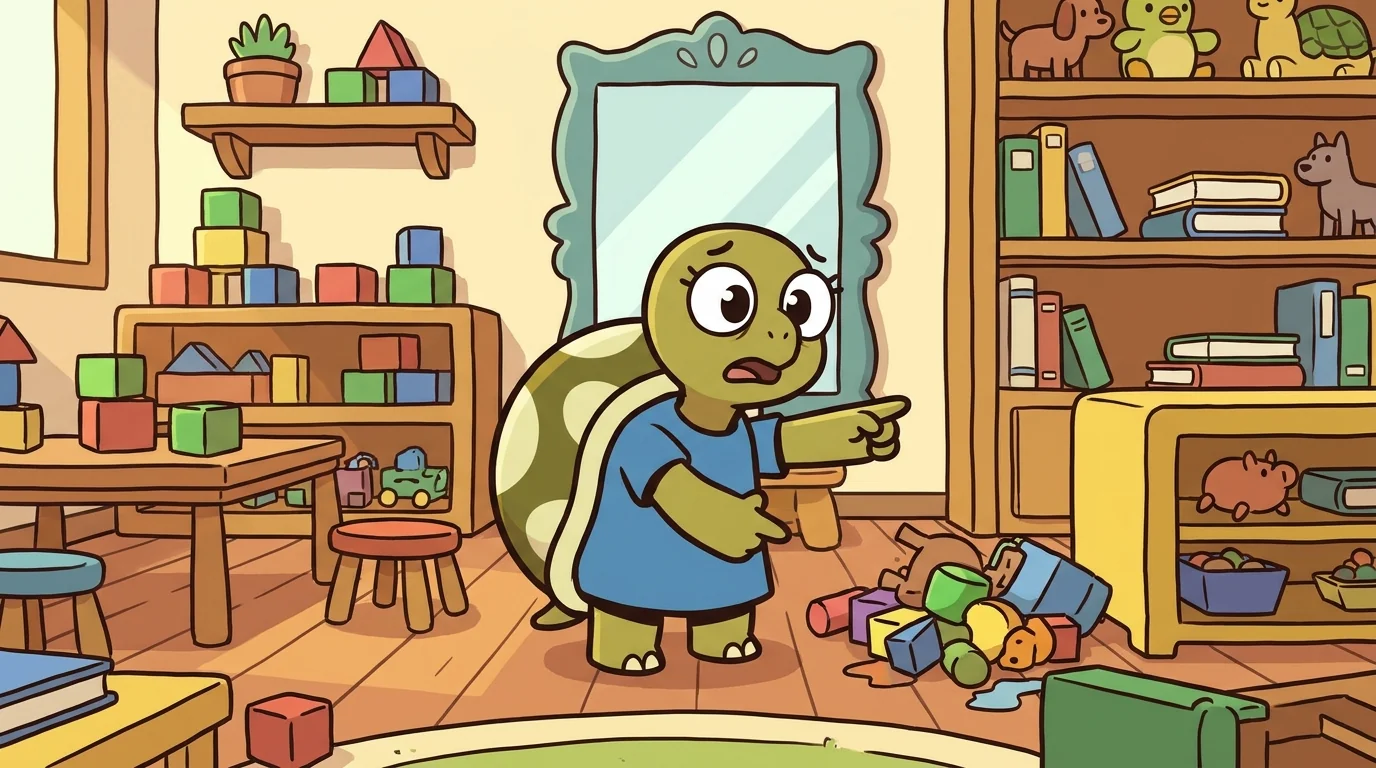
Tessa was a small tortoise, her shell a warm mix of olive and cream, with quick eyes that watched everything. She had one lightning-fast habit: the moment anyone told her she'd done something wrong, she'd fire back, "But YOU do the same thing!"
It was like a mirror. Point out a mess Tessa made, and she'd instantly point at a mess you made last week — and the first problem would just hang there, unsolved, while everyone argued about the second. She wasn't a villain. She was a teacher, flashing that you-too reflex right out in the open, so you could feel the sting that triggers it — and learn to fix the real problem instead of aiming the mirror.
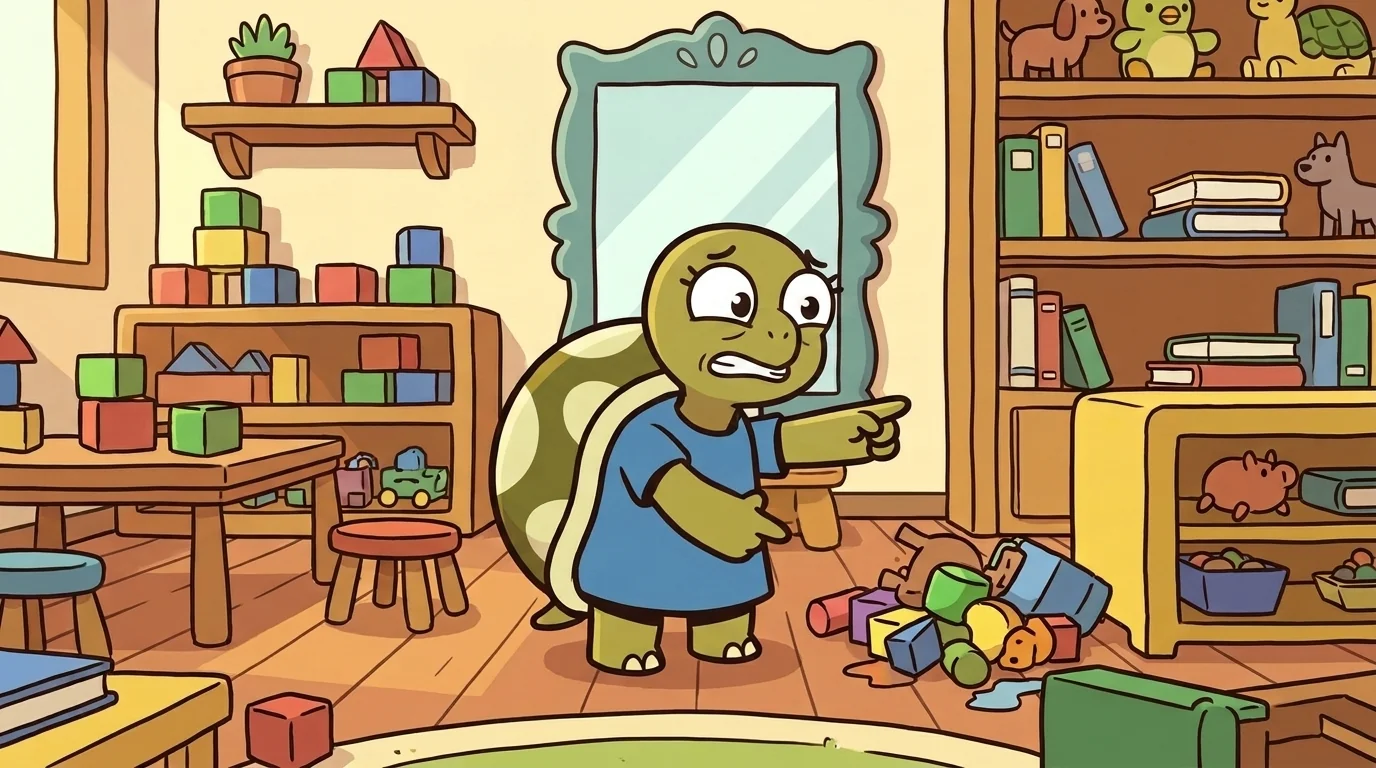
Tessa's reflex was born from a sting. Being told you're wrong hurts — a hot little flare of embarrassment — and young Tessa had discovered that the fastest way to make the hurt stop was to fling it right back. "Oh yeah? Well you did it too!" For one sweet second, the spotlight swung off her and onto someone else, and the sting eased.
But the eased feeling never lasted, because the actual problem was always still sitting there. Her spilled milk didn't un-spill just because her brother had spilled his yesterday. Pointing back felt like winning, but nothing ever got cleaned up, fixed, or better. Tessa slowly realized her mirror only moved the blame around the room — it never solved a single thing. She decided to teach people to catch the reflex before it fired.
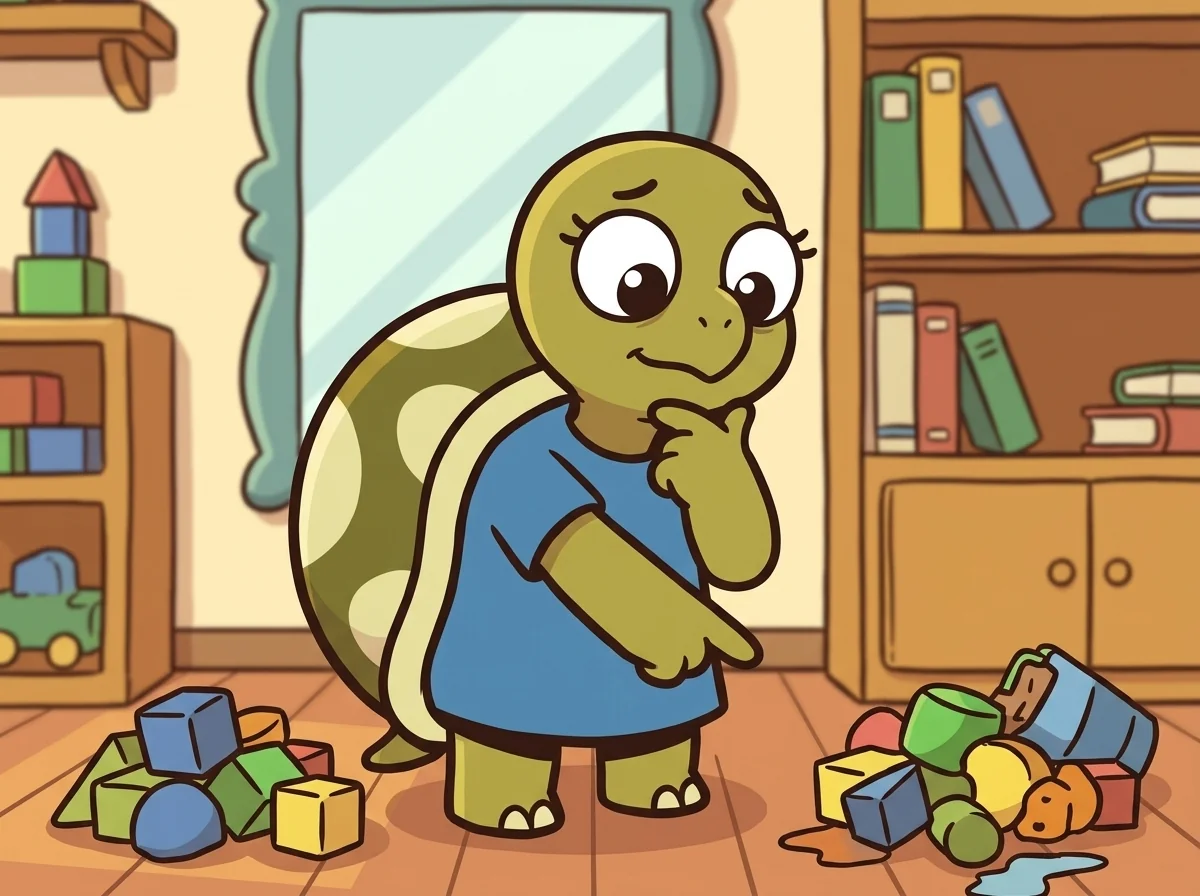
Tessa came to LogicQuest last of all — the twelfth and final fallacy-archetype — and stood before Inspector Logos.
"What is tu quoque?"
"It's dodging a criticism by saying the critic does the same thing," Tessa said. "'You too!' And maybe they do — but that's beside the point. Whether I was wrong doesn't change just because someone else is wrong too." Her shell warmed a little. "I do it because being criticized stings, and firing it back makes the sting stop for a second. The skill is noticing the blame-bounce, and going back to fix the first problem anyway."
Inspector Logos nodded. "Someone else's fault never cancels your own — two messes are just two messes. Catching that is the job." She smiled. "Appointed. You complete the cast."
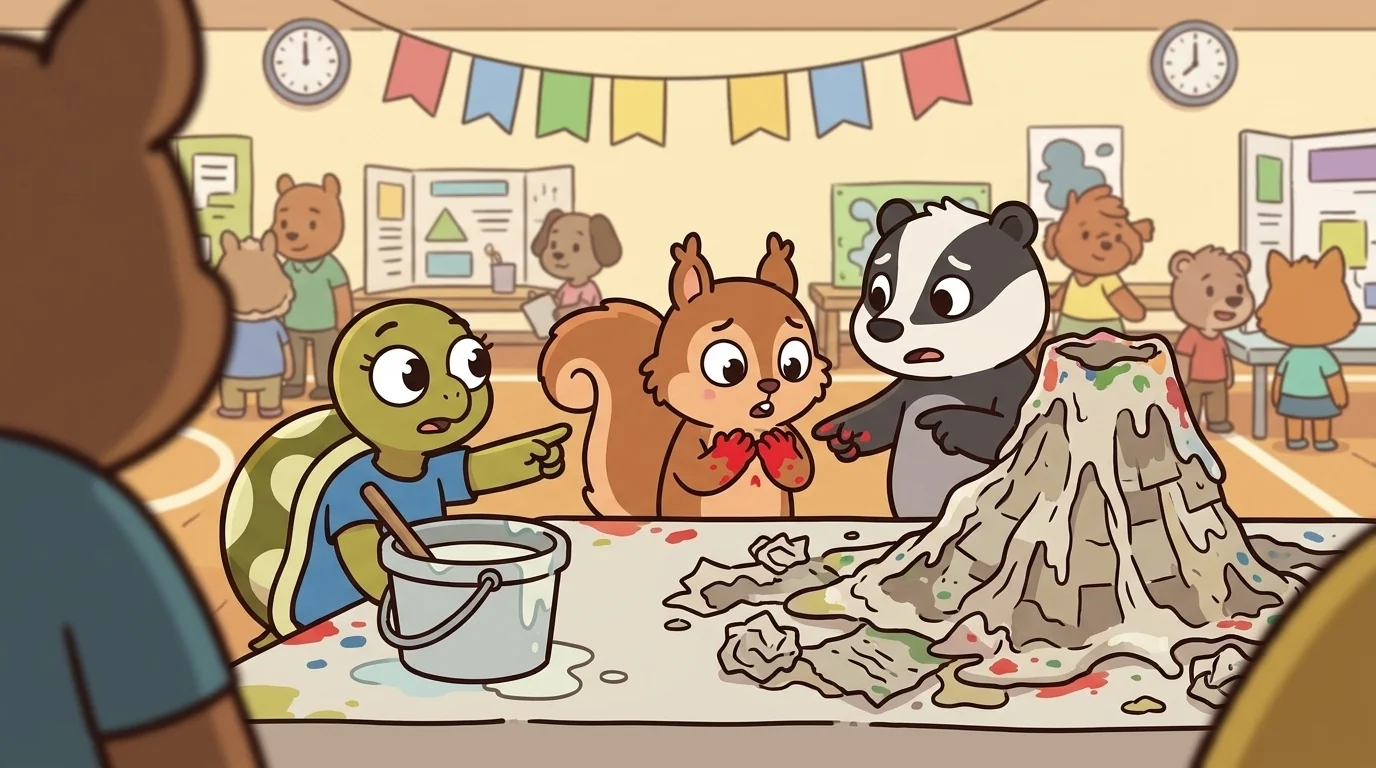
Tessa's lesson came at the school science fair, where she, Pip the squirrel, and Barnaby the badger were building a giant paper-mâché volcano. Tessa was mixing the paste.
"Tessa," Pip said, "your paste is too watery — the paper's sliding right off!"
Tessa's shell went warm, and — snap — the reflex fired. She spotted a fleck of red paint on Pip's paws. "Well, YOU got paint on the floor yesterday! A big red smudge by the door!"
"That was one tiny drop! And it's not about that — the volcano's going soggy!"
Barnaby, calm as ever, pointed at the sagging, melting paper. And Tessa — this was the whole lesson — caught herself mid-mirror, and set the stick down. "Okay. Freeze. Look what I just did. Pip pointed at my watery paste, and I pointed at his old paint smudge — and meanwhile the volcano is still melting." She looked around at the others. "So here's how you catch it. First, feel the sting — that's the trigger; the you-too reflex fires right after it. Second, ask two questions: Has the first problem been fixed? and Does it actually matter that the other person did it too? Third — almost always the answer is: no, it's not fixed, and no, it doesn't matter. The old mess doesn't fix the new mess." She grabbed the flour. "The watery paste is still watery, even if Pip spilled paint. So — more flour, and fix the actual thing." She stirred; the paste thickened; the volcano held.
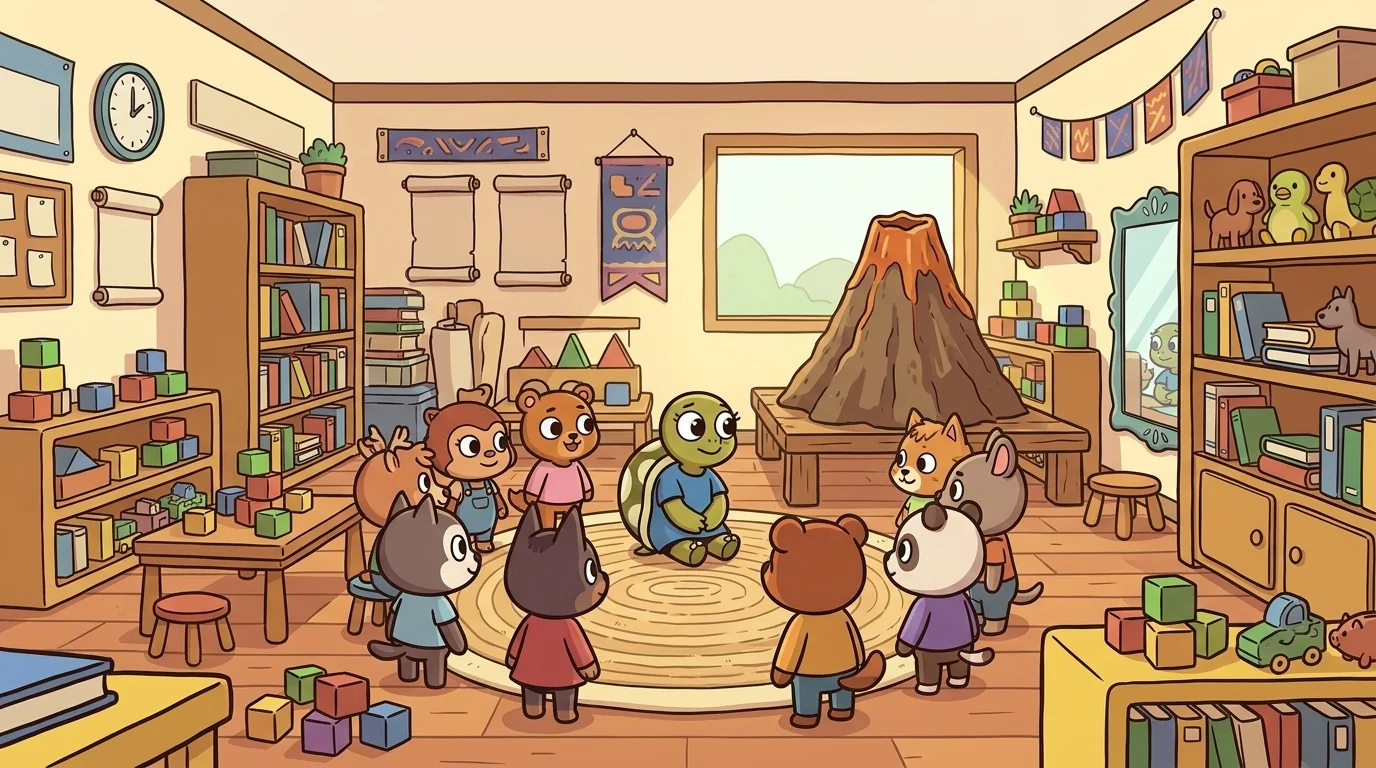
Later, with the volcano standing tall, Tessa wiped paste off her shell and sat with her friends. "That sting," she admitted, "when someone tells you you're wrong — it's so easy to just point back and make it their problem instead."
"Yeah," said Pip. "It's like saying, 'You're not perfect either!'"
"Right. But feel what actually happened today. When I stopped pointing back and just... fixed the paste." Tessa's quick eyes went soft. "The sting faded on its own, and there was this good feeling — better than the quick relief of blaming back. The real thing was handled. The volcano stood up. That settled, problem-actually-solved feeling? That's the one worth chasing — not the flinch that flings the blame away." She looked around at everyone. "And that's all twelve of us, now — Hannibal, Stella, Sam, Auntie, Reggie, Cici, Fia, Bran, Cyril, Wanda, Eva, and me. We're not bad guys. We're lessons — the common mistakes everyone's mind makes. Meet us all once, and you'll recognize us anywhere: in other people's arguments, and, if you're honest, in your own. Noticing the pattern is the skill. That calm, cleared-up, real-problem-solved feeling is the reward."
Hear it as an audio drama
A short play starring Tu-Quoque Tessa, from LogicQuest. Different voices, same idea. Listen any time after you read.
Loading audio…
Read the drama script
- Narrator: From Spark and Anvil and LogicQuest — this is Tu Quoque Tessa, in chapter 1 of the LogicQuest cast.
- Narrator: This drama uses an AI-generated voice. Voiced via Gemini 2.5.
- Narrator: This is Tu Quoque Tessa. She is a small adult-coded tortoise. Warm olive and cream. Quick-eyed. Quick-mirroring.
- Narrator: She has a habit. When criticized, Tessa's first response is —
- Tu Quoque Tessa: But YOU do the same thing!
- Narrator: The original criticism is deflected. Mirrored back. Never addressed.
- Narrator: Tessa is the cast's tu quoque teacher. The Latin means — you too. The fallacy is — responding to criticism by accusing the critic of the same behavior.
- Narrator: Even if the critic IS guilty of the same thing. That does not make the original criticism wrong.
- Tu Quoque Tessa: Hypocrisy is a different problem. From being wrong.
- Narrator: This is the cast's key distinction. Tessa is, importantly, not a villain. She is what every cast member in LogicQuest is. A teaching archetype.
- Tu Quoque Tessa: I am a teaching archetype. Not a villain.
- Tu Quoque Tessa: I do this when criticism stings.
- Tu Quoque Tessa: Pointing back feels easier than addressing it.
- Tu Quoque Tessa: We all do this sometimes.
- Tu Quoque Tessa: The skill is — recognizing the deflection. And addressing the original criticism on its merits.
- Narrator: Tessa teaches the scaffolds. The questions you ask when you suspect deflection.
- Tu Quoque Tessa: Has the original criticism been addressed? Or just deflected?
- Tu Quoque Tessa: Is the you-too accusation even true? Often it is not.
- Tu Quoque Tessa: Even if the critic does the same thing — does that affect whether the original behavior is wrong?
- Tu Quoque Tessa: Usually no.
- Tu Quoque Tessa: Return. Let's address the original criticism on its merits.
- Narrator: Tessa has a special role in LogicQuest. She closes out the cast.
- Tu Quoque Tessa: I am the last of the twelve fallacy-archetypes in LogicQuest.
- Tu Quoque Tessa: All twelve of us — Hannibal. Stella. Sam. Auntie. Reggie. Cici. Fia. Bran. Cyril. Wanda. Eva. Me.
- Tu Quoque Tessa: All of us are teaching archetypes. Not villains.
- Tu Quoque Tessa: We embody common reasoning mistakes everyone makes sometimes.
- Tu Quoque Tessa: The skill is spotting the pattern. In others' arguments. And in your own.
- Narrator: That is the architecture of the cast.
- Tu Quoque Tessa: Meeting all of us once means you can recognize all of us. When you encounter the patterns later.
- Narrator: Tessa walked to LogicQuest. Inspector Logos asked her — what is tu quoque?
- Tu Quoque Tessa: Responding to criticism by accusing the critic of the same behavior. The criticism is never addressed. The skill is — recognize the deflection and address the original on its merits.
- Inspector Logos: You are appointed.
- Narrator: She has been Tu Quoque Tessa ever since.
- Tu Quoque Tessa: It is not hard. It is — recognize the deflection. Address the original criticism on its merits.
- Narrator: All twelve fallacy-archetypes are teaching archetypes. Not villains. The skill is the pattern-spotting.
- Narrator: That is, more or less, the whole architecture of LogicQuest's cast.
- Narrator: And — we all do this sometimes. Catching it is the skill.
- Narrator: You've been listening to a Spark and Anvil chapter, written by the Spark and Anvil writing team for ages 9 to 14.
- Narrator: Apps stay free forever.
- Narrator: Curriculum aligned to Common Core math and discrete math.
- Narrator: Released under Creative Commons BY-NC-SA 4.0 for educational reuse. Visit Spark and Anvil for the full transcript.
More stories with Tu-Quoque Tessa
Another short audio story about Tu-Quoque Tessa. Open one when you are ready.
Tu quoque
Loading audio…
Read the script
- Narrator: From Spark and Anvil and LogicQuest — this is Tu-Quoque Tessa, in chapter 1 of the LogicQuest cast.
- Narrator: This drama uses an AI-generated voice. Voiced via Gemini 2.5.
- Narrator: Tu-Quoque Tessa is a small tortoise. Her eyes are quick, always reflecting the world right back at you.
- Tu-Quoque Tessa: I am Tessa. When someone points a finger at me, I just point it right back at them.
- Narrator: This is the Tu Quoque fallacy, Latin for "you too." It dismisses criticism by accusing the critic of the very same thing.
- Tu-Quoque Tessa: Someone says I did something wrong? I just find a time they did it too. It's simple.
- Narrator: When her friend Tara told Tessa she'd interrupted, Tessa's head shot forward.
- Tu-Quoque Tessa: But *you* do the same thing! You interrupted Mo yesterday when he was explaining the rules!
- Narrator: The original point gets lost. It's deflected, like a rubber ball hitting a wall and bouncing away.
- Narrator: But even if the critic is a hypocrite, that doesn't change the original point. Two wrongs don't make a right.
- Tu-Quoque Tessa: It just seems fair. If you did it, you can't complain when I do it. That's my rule.
- Narrator: Tessa shows us how we avoid our own mistakes by pointing fingers. The skill is to see the pattern.
- Tu-Quoque Tessa: I am the last of the twelve fallacy archetypes. We aren't villains, just patterns of thinking that can go wrong.
- Narrator: The "you too" reflex. It deflects, but it doesn't resolve. The original point still stands.
- Narrator: You've been listening to a Spark and Anvil chapter, written by the Spark and Anvil writing team for ages 9 to 14.
- Narrator: Apps stay free forever.
- Narrator: Curriculum aligned to Common Core math and discrete math.
- Narrator: Released under Creative Commons BY-NC-SA 4.0 for educational reuse. Visit Spark and Anvil for the full transcript.
The LogicQuest ensemble
Tu-Quoque Tessa is one of the friends in LogicQuest. Each friend shows you one idea by how they act; meet them all and you have the whole subject.
-

Ad Hominem Hannibal
Attacking the arguer, not the argument
-

Strawman Stella
Misrepresenting the opponent's argument
-

Slippery-Slope Sam
Chaining dire consequences from a small first step
-

Appeal-to-Authority Auntie
Citing irrelevant / unqualified authority as proof
-

Red-Herring Reggie
Deflecting to an irrelevant topic
-

Circular-Reasoning Cici
Assuming the conclusion in the premise
-

False-Dichotomy Fia
Presenting only two options when more exist
-

Bandwagon Bran
Truth-by-popularity
-

Sunk-Cost Cyril
Refusing to change course because of past investment
-

Whataboutism Wanda
Deflecting criticism via someone else's wrongdoing
-

Equivocator Eva
Sliding a word's meaning mid-argument
-

Modus-Ponens Mo
If P then Q; P; ∴ Q
-

Modus-Tollens Tara
If P then Q; ¬Q; ∴ ¬P
-

Syllogism Solon
All M are P; all S are M; ∴ all S are P
-

Disjunctive-Syllogism Dior
P ∨ Q; ¬P; ∴ Q