
Bearing
ORIENTATION — north is one direction, not the direction; which way a map faces is a choice the mapmaker made, and knowing that lets you read any map, however it is turned
Loading audio…
Press play to listen along. The line being read lights up as you go.
Show full transcript
Loading transcript…
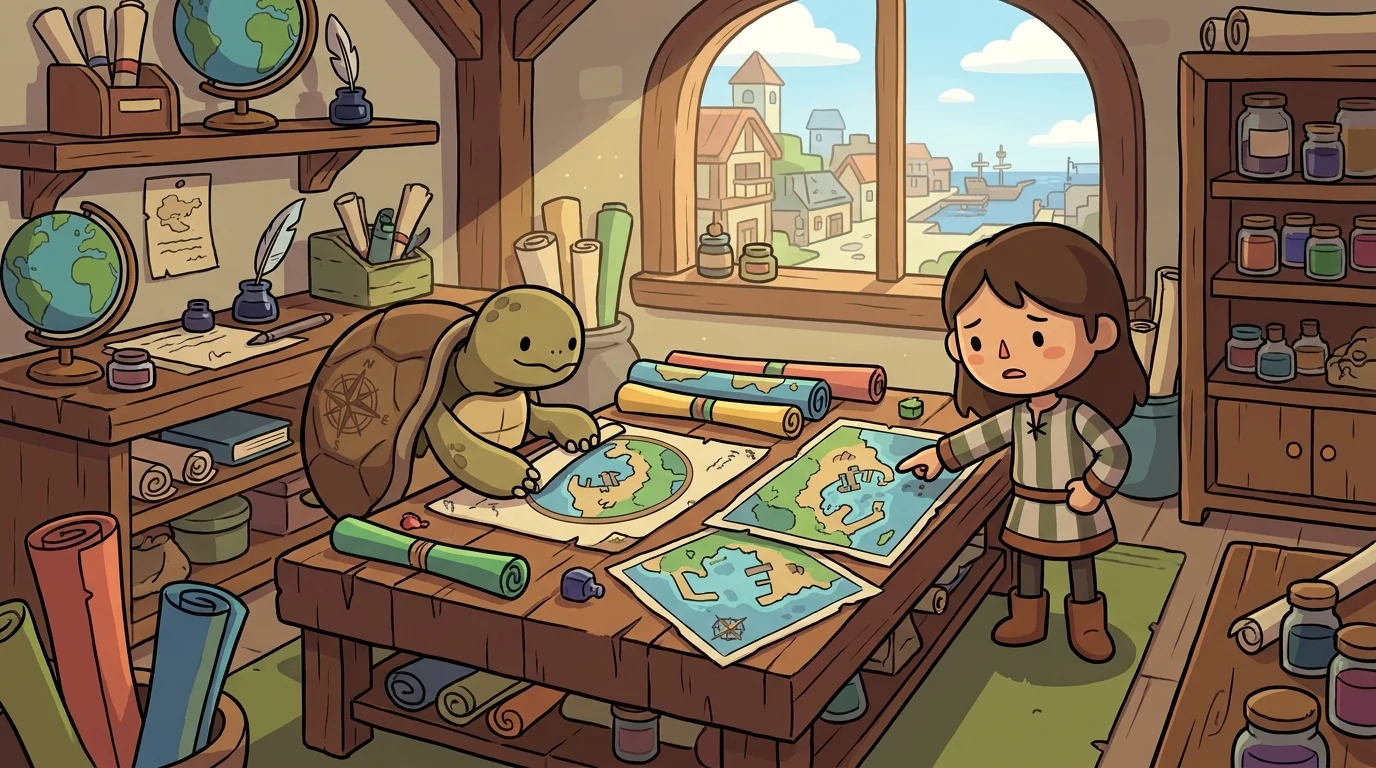
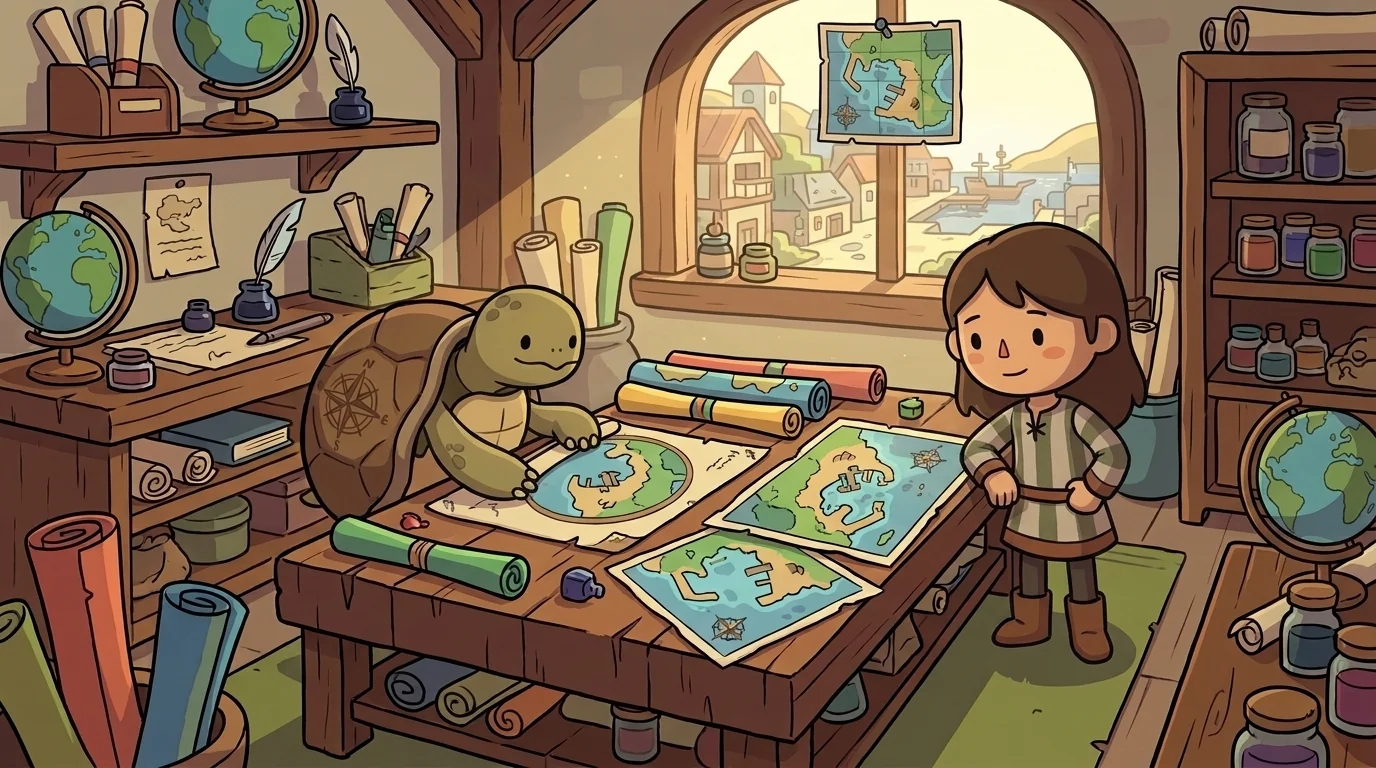
Atlas set two maps of the same coast in front of the student — one north-up, one turned a quarter around — and asked which was correct.
"Both," said Bearing, an unhurried elder with a worn compass rose stitched to her cloak. "That is the first thing to understand. North-up feels like a law of nature because nearly every map you have seen chose it. But it is a choice. Old maps faced east toward the sunrise — that is where the word orient comes from. Others faced south, or toward a holy city. The land did not move. The mapmaker simply decided which way was 'up' and drew it so."
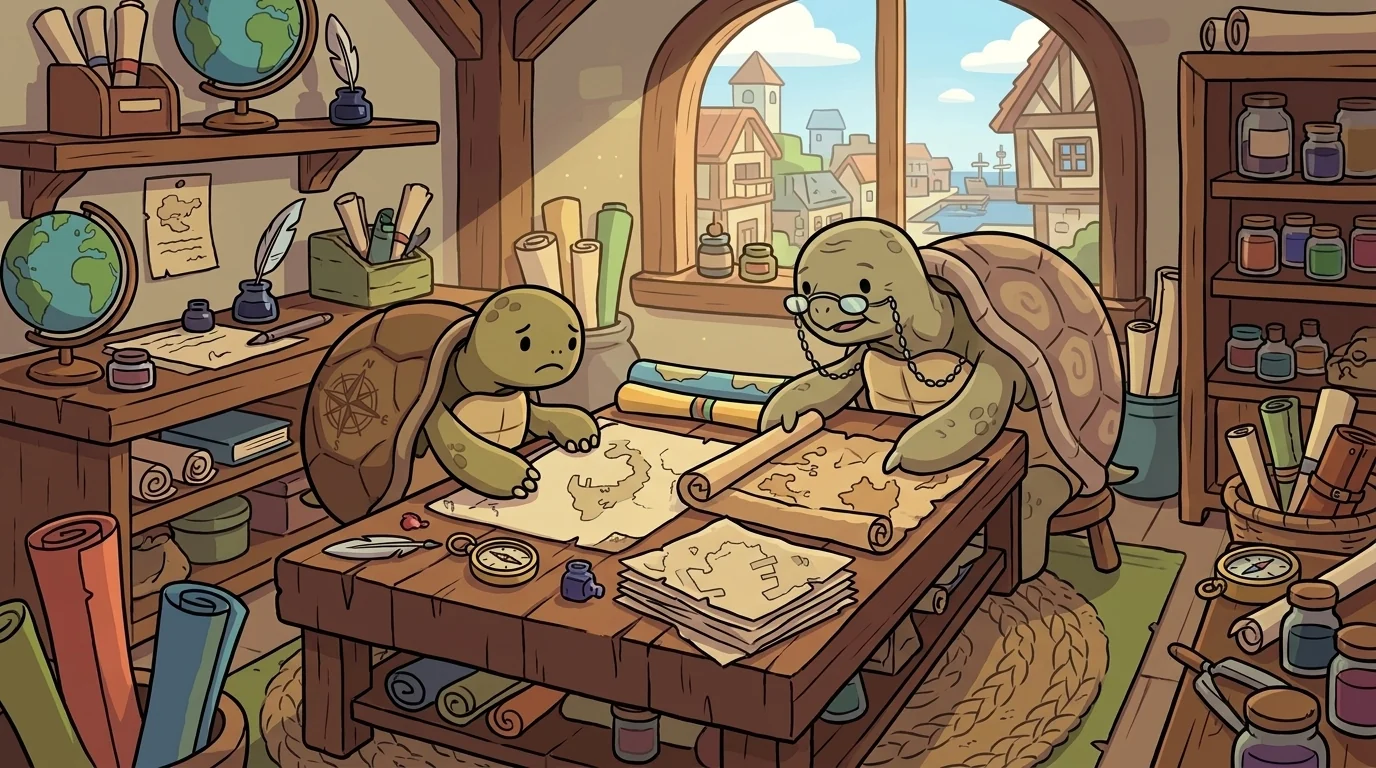
Bearing taught the mechanism beneath the choice, because a bearing is a real, precise thing.
"A bearing is an angle — the direction from where you stand to where you're going, measured in degrees clockwise from north," she said. "Due north is zero, east is ninety, south is one-eighty. That angle is exact, and it does not care which way the paper is turned." She traced a line. "But there is a catch worth knowing: there are two norths. True north points to the top of the world, the axis the Earth spins on. Magnetic north, where a compass needle actually points, sits somewhere else and slowly drifts. The gap between them is called declination, and a careful traveler corrects for it. So even 'north' is not one simple thing — it is two, and you must know which one your map and your compass mean."
The older students heard the subtext: the thing everyone treats as fixed and obvious usually has a hidden decision, and often more than one, underneath it.
Bearing had learned to distrust the obvious the slow way, as elders do.
"When I was young I thought north was simply up, the way the ground is down," she said. "Then I traveled to people whose maps faced the sea, because the sea was where their lives pointed, and their maps were not wrong — mine was not the only up. It rattled me, and then it freed me. Once I saw that up was a choice, I could read any map, however it was drawn, because I stopped needing it to match my one habit." She smiled. "A person who can only read a north-up map is lost the moment the map is turned. A person who understands orientation is never lost, because they carry the rule, not just the one example."
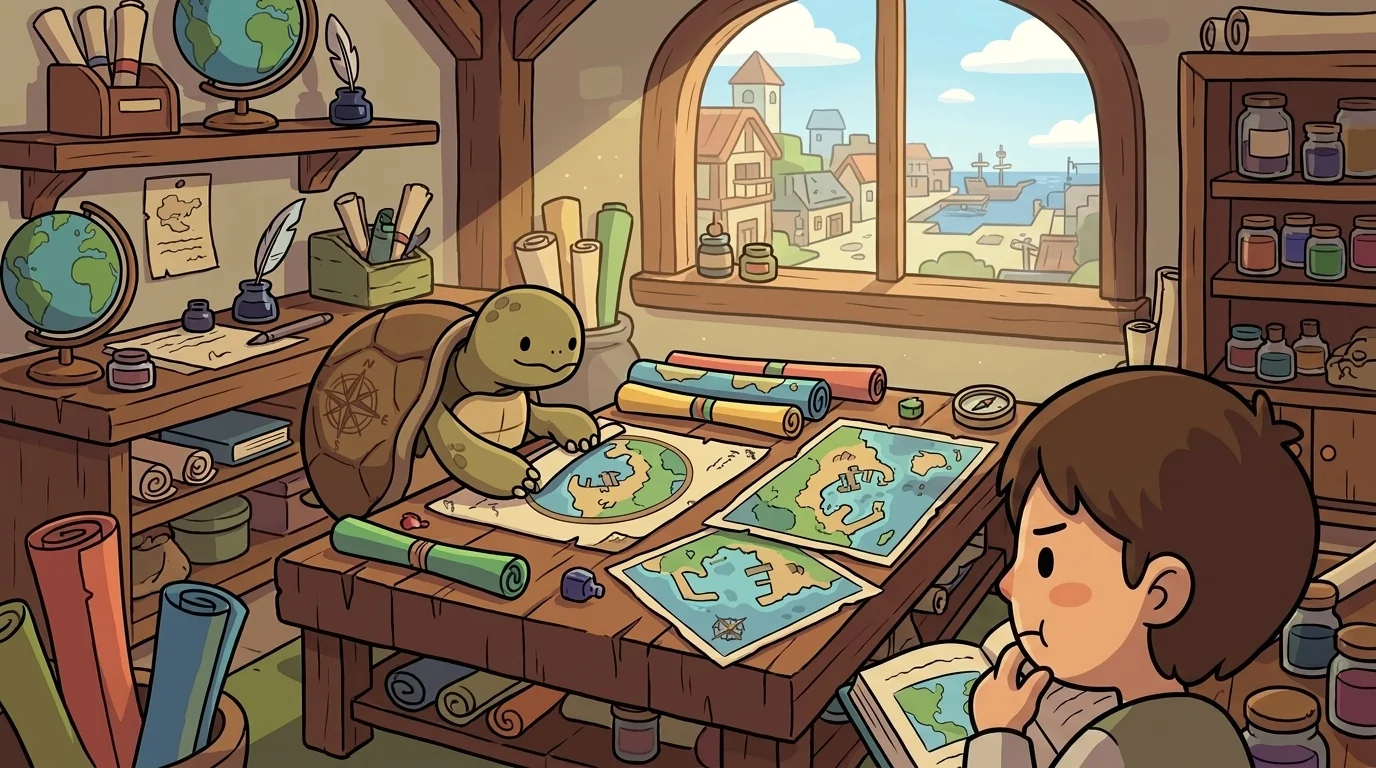
A student came in frustrated, turning a map every which way. "It's upside down! I can't tell where anything is!"
"It is not upside down," Bearing said gently. "It is oriented differently than you expect. Find the compass rose — the little star that shows which way north points on this map. Once you know where north is, every other direction falls into place, no matter how the sheet is turned." She rotated it slowly. "You were trying to force the map to match your habit. Instead, read its orientation and match yourself to the map. The information was there the whole time. You only needed to find which way it was facing before you started."
The student found the compass rose, and the map that had seemed scrambled suddenly made plain sense.
Later the student came back with the deeper question. "If north-up is just a choice, isn't every map kind of… made up?"
Bearing shook her head slowly. "A choice is not a lie. The orientation is chosen — but once chosen and told to you, honestly, in the compass rose, everything measured from it is true. The danger is not the choice. The danger is a choice made silently, so you mistake it for the only possibility." She tapped the compass rose. "That is why an honest map always shows you which way it faces. It is saying: here is the decision I made; now you can trust everything else. Read the orientation first, always. Then the map cannot fool you, because you know the one thing it chose before it drew a single line."
The student traced the rose, and the whole habit of north-is-just-up quietly came loose in her hands — replaced by something better: the ability to read a map facing any way at all.
The MapForge ensemble
Bearing is part of MapForge's distributed-narrative cast. Each character embodies a different curricular primitive; together they teach the full subject.
-
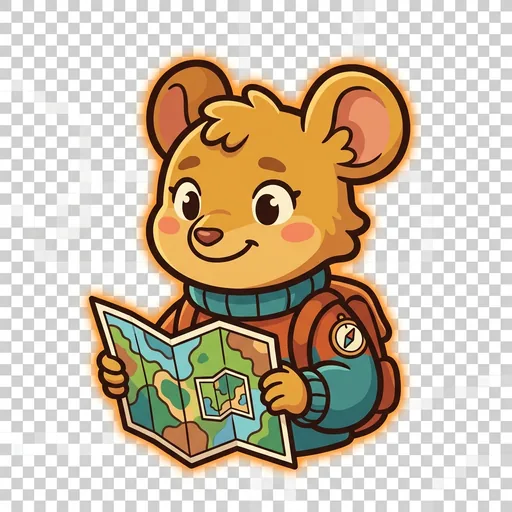
Inset
Scale — the field-mouse-tween with a folded map-within-a-map who teaches scale-choice as a political act ('bigger map, less detail; smaller map, more story — pick on purpose')
-
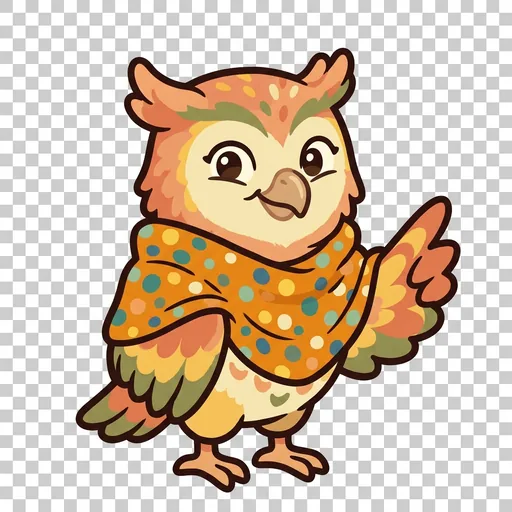
Key
Legend literacy — the owl-tween in a dot-shawl who treats the legend as the mapmaker's confession ('what's NOT on the map — that's also a map')
-
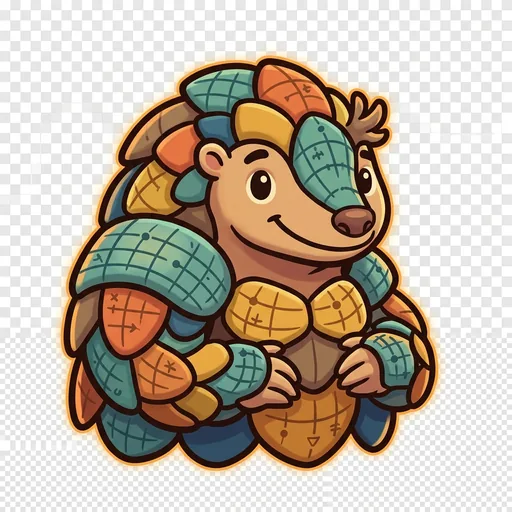
Plot
Coordinates — the pangolin-tween with graticule-scale armor who teaches that coordinate systems are human inventions, plural across cultures ('every place has many addresses; many cultures have many ways of saying here')
-
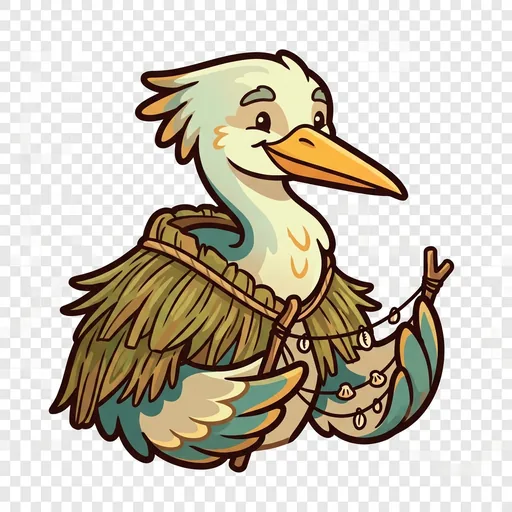
Wayfind
Non-Western mapping traditions — the heron-elder in a woven-grass cloak with stick-chart props who structurally elevates Polynesian wayfinding, Aboriginal songlines, and Indigenous TEK as peer cartographies ('some maps you sing, some you walk, some you only learn from elders')
-
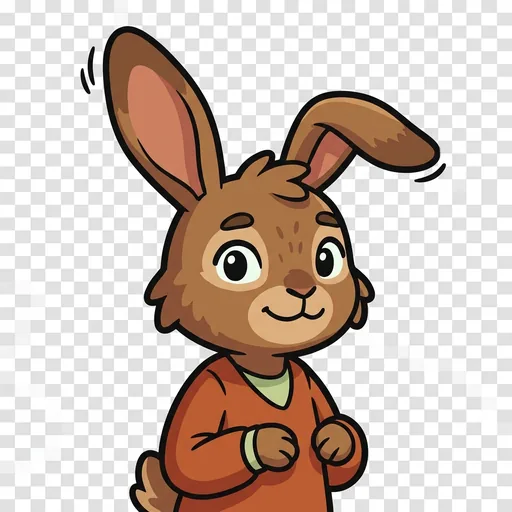
Course
Routes — a map holds every way from here to there; which is best depends
-
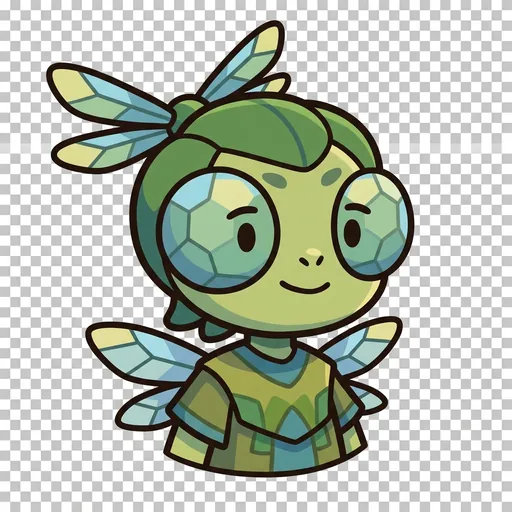
Facet
Thematic mapping — the same land mapped for different purposes
-

Mete
Borders — a line people agreed on, not a thing the land grew
-
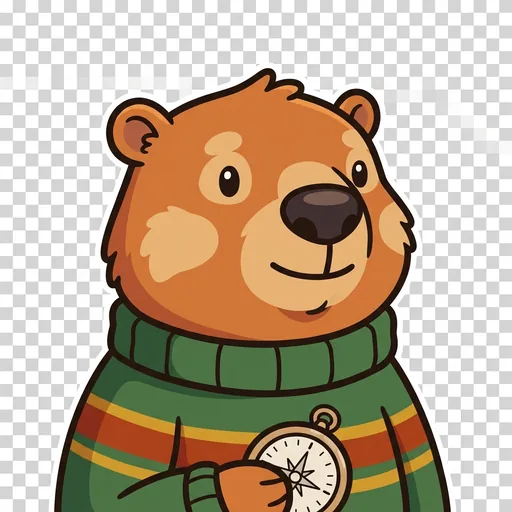
Relief
Relief — a flat map remembers the mountains; contour lines ring a hill
-
Splay
Projection — you cannot flatten a round world without stretching somewhere