Mete
BORDERS — a border is a line people agreed on, not a thing the land grew. the same river the map calls an edge, the land just calls a river.
Loading audio…
Press play to listen along. The line being read lights up as you go.
Show full transcript
Loading transcript…
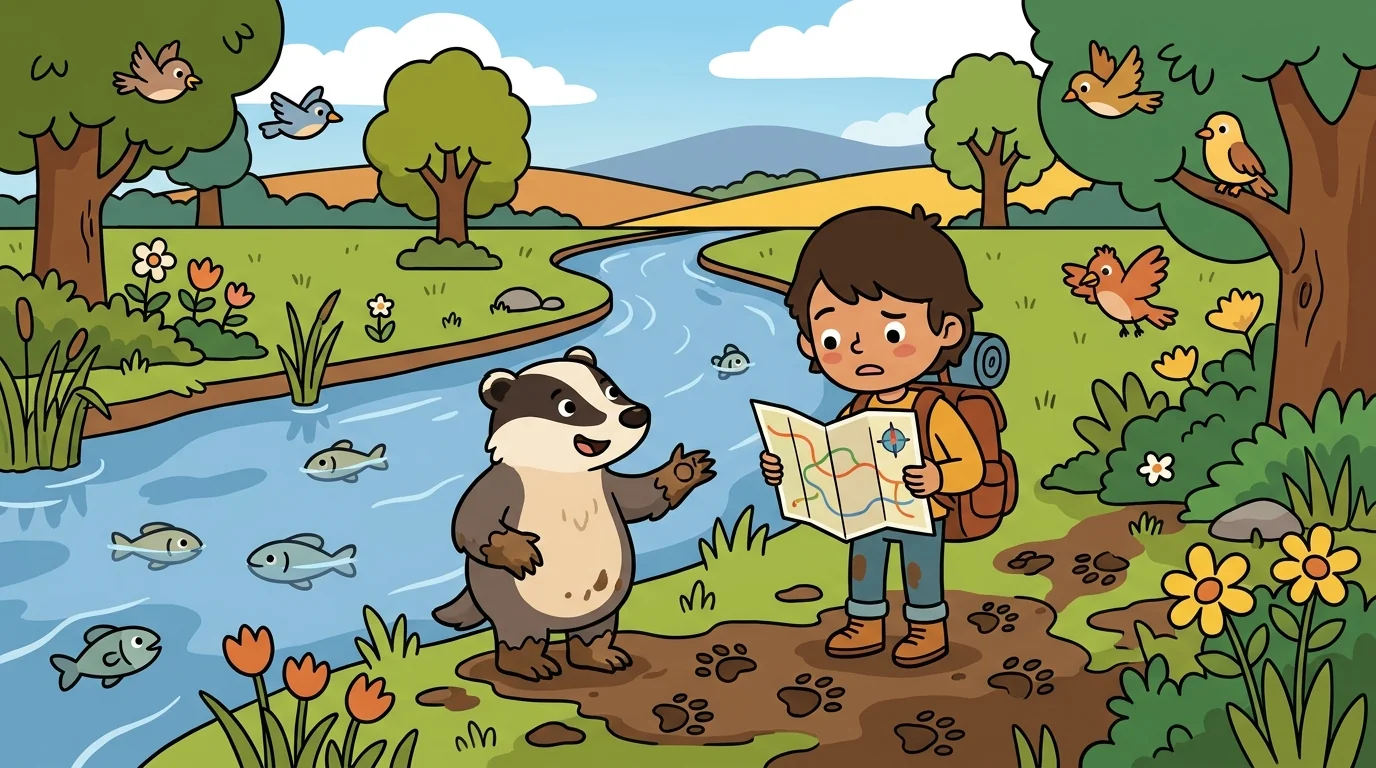
Mete the badger stood at the exact spot where the map said one country stopped and another began, and looked, and looked, and could not find the line.
"It's supposed to be here," said the young traveler, checking the map, then the ground, then the map. "The border. Right along this river."
"It is here," Mete agreed, digging her blunt claws into the mud. "On the map. But look at the river." She gestured at the water sliding past, indifferent. "The river doesn't know it's a border. It doesn't slow down at the line. The fish swim across it a hundred times a day. The birds nest on both banks. The grass grows the same green on either side." She snuffled at a stone. "The land never drew this line. People drew it. They stood in a room far from here, a long time ago, and they agreed: this river will be the edge. And then they wrote it on the map, and now everyone treats the agreement like it's a wall the earth built."
The traveler frowned. "So the border's not... real?"
"Oh, it's real," Mete said. "Real as a promise. Real as a name. It changes where you can go and what language the signs are in and whose rules you follow." She patted the mud where no line was. "It's just not real the way the river is real. The river would be here if every person vanished. The border wouldn't. That's the difference a mapmaker must never forget — some lines are the land's, and some are only ours."
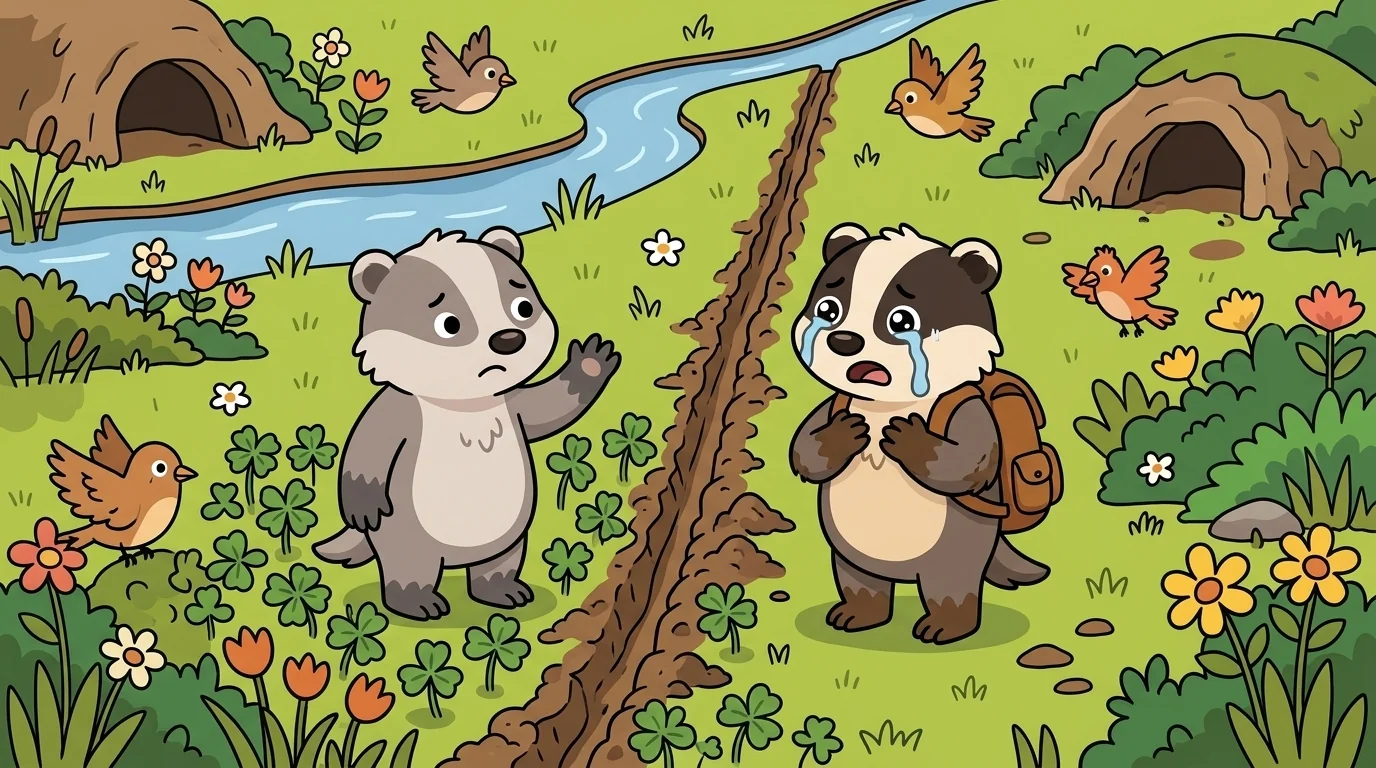
Mete had learned this young, and it had cost her a friend, and taught her something she kept.
Two badger setts shared a meadow when she was a cub — hers on the east, another family's on the west — and for as long as anyone remembered they'd all foraged the whole meadow freely. Then the two grandmothers had a falling-out, and drew a line: this half is ours, that half is theirs. They scratched it in the dirt, right down the middle, straight through the best clover patch.
Little Mete had believed the line was real — as real as the clover, as the stream, as the sky. She wouldn't cross it. When her west-side friend waved from the far clover, Mete shook her head miserably: I can't, there's a border.
Her own grandmother found her crying at the scratched line. The old badger sat down heavily. "Child," she said, "who made this line?"
"You did," Mete sniffled.
"With what? A claw and a temper." Her grandmother dragged one paw through the dirt and the line simply smeared away, gone, as if it had never been. "The clover didn't grow a fence. The stream didn't split. Your friend didn't become a stranger. We made a line out of a bad morning, and I let you believe the land had made it." She looked ashamed, and old, and kind. "A border can matter — sometimes it keeps a peace. But never once forget it was people who drew it, and people who can move it, and people who can smear it away with one tired paw. The land is not divided. We only agree to act as if it is."
The line was gone by evening. But the lesson stayed sharp in Mete forever: the most powerful lines on any map are the ones nobody can find on the ground.
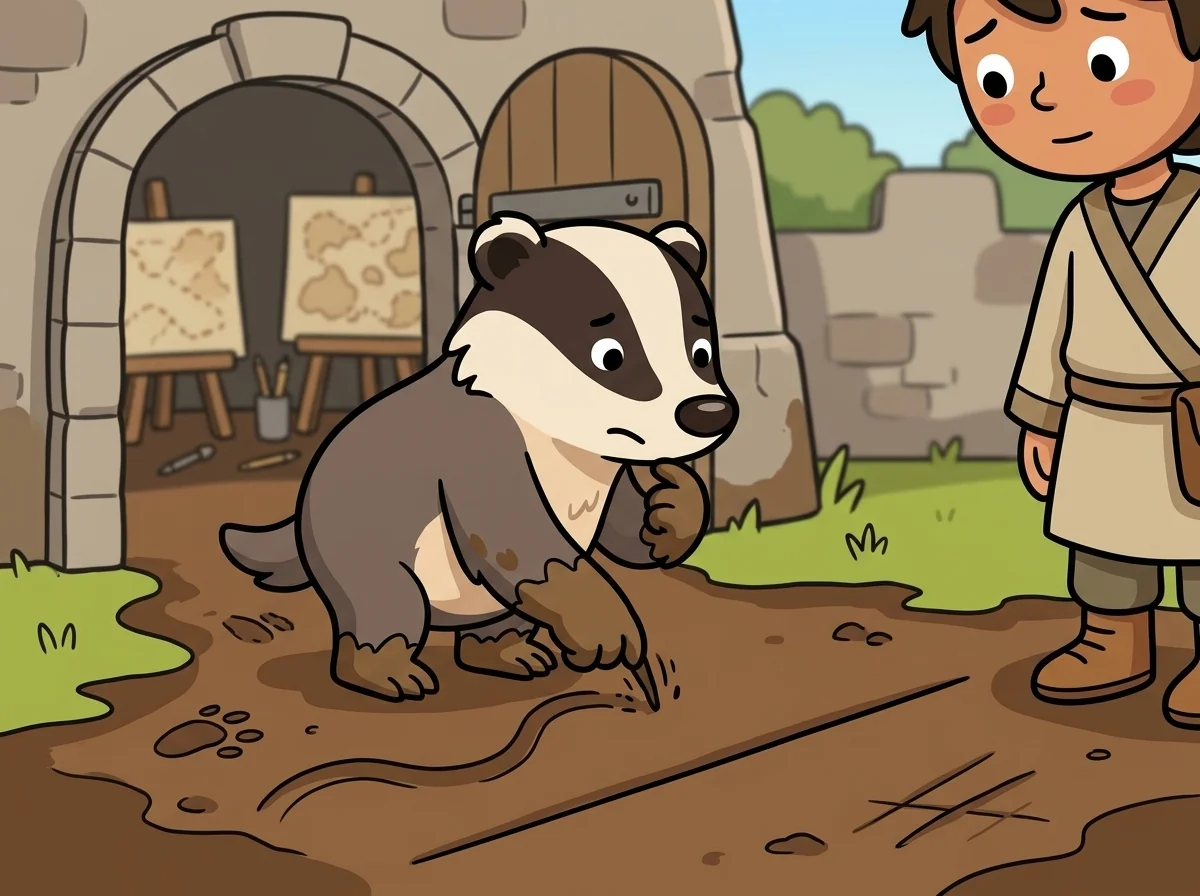
She walked to MapForge grown, low and broad and careful, because a guild that studied maps ought to tell the land's lines from the people's lines.
Atlas met her at the gate. "The rivers, the coasts, the mountains — those the earth drew," he said. "What about all the other lines? The borders, the counties, the edges of things?"
Mete scratched a straight line in the dirt of the gateway, then a wavy one beside it. "This wavy one is a river," she said. "The earth drew it; it'll be there tomorrow whether we like it or not." She pointed at the straight one. "This one is a border. We drew it. It's exactly as strong as the agreement behind it — no stronger. It can move when minds change. It can vanish when the agreement ends." She smeared the straight line away with a paw; the wavy one she left. "A good mapmaker draws both, and never lets a reader mistake the one we agreed on for the one the land made. Because if you forget a border is a promise, you start believing it's a fact — and then you forget that a promise can be kept better, or made kinder, or unmade."
Atlas was quiet a moment. "You belong here," he said. "The guild has plenty of maps of rivers. It needs someone honest about the lines the rivers never asked for."
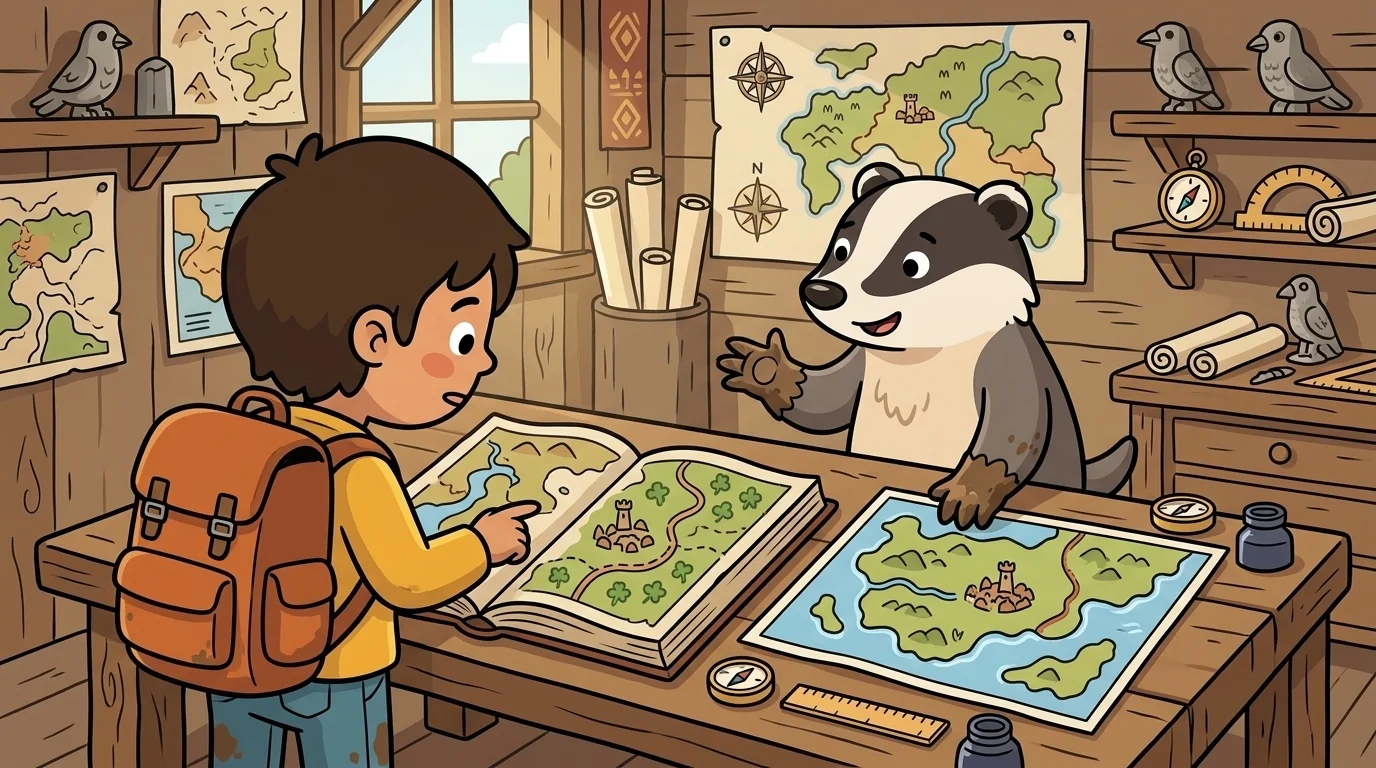
A student marched into Mete's workshop with an atlas and a scowl. "Borders are just borders," he said. "That country ends there. This one starts here. It's a fact. It's on the map."
Mete slid an old atlas across the table — a very old one — and opened it beside his. "Same land," she said. "Two hundred years apart. Find the town your grandmother's from."
He found it in his new atlas, well inside one country's line. He found the same town, same river, same hills, in the old atlas — and blinked. In the old one the line ran on the other side of it. Same town. Different country. "It... moved," he said. "The border moved. But the town didn't move. The river didn't move."
"Nothing on the ground moved an inch," Mete said gently. "People changed the agreement. The clover stayed put; only the line through it slid." She tapped both maps. "So was your border a fact? A fact doesn't slide when people argue. The river's a fact — it's in the same place in both books. The border's a promise — and promises can be rewritten." She held his eyes. "That doesn't make it nothing. Which side of that line your grandmother stood on changed her whole life. It matters enormously. It just isn't the land's doing. It's ours. And what's ours, we're allowed to make better."
The boy looked between the two atlases, at the town that had stayed still while the line swam around it. "I thought the map was showing me the land," he said slowly. "But some of it's just showing me what people decided."
"Now you can tell which is which," Mete said. "That's the whole gift."
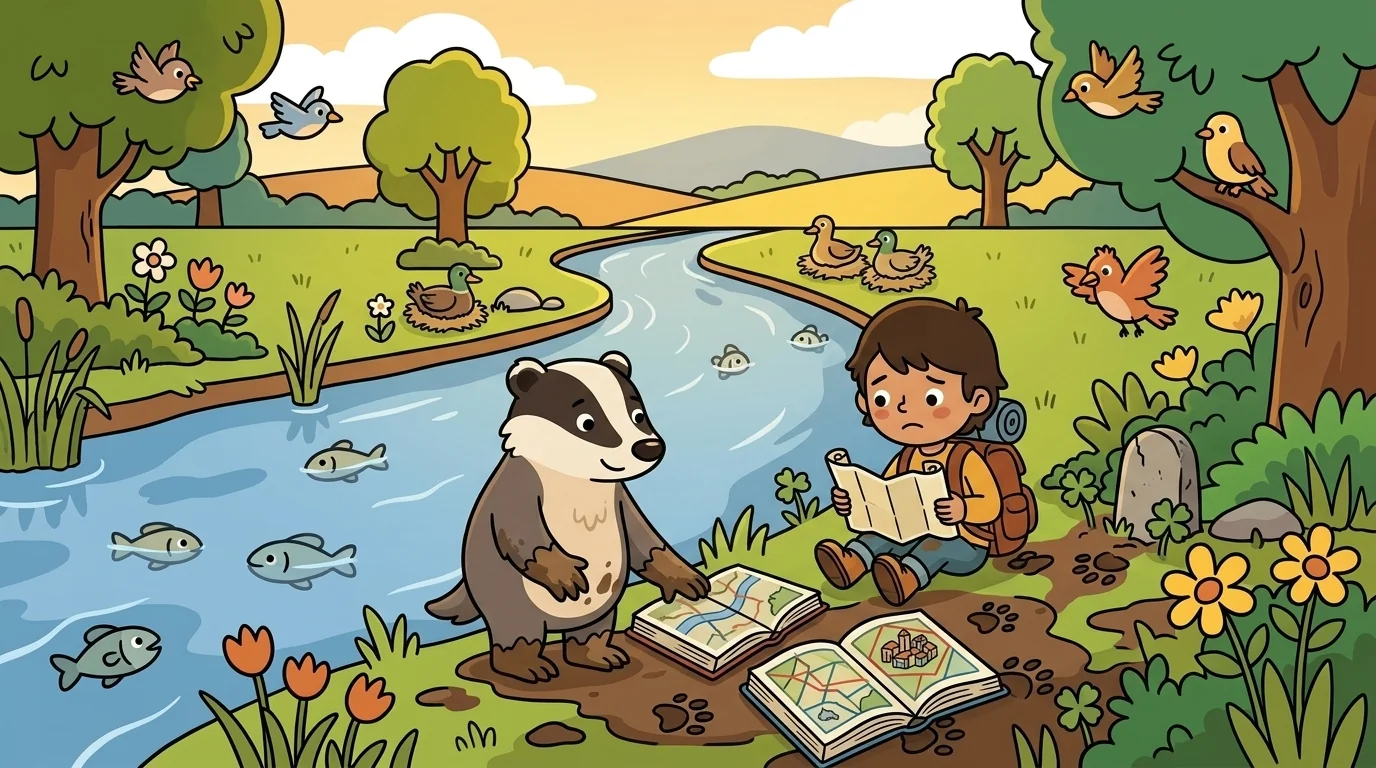
Later, when the workshop had gone quiet and both atlases lay open on the floor, the boy came back and sat by the smeared line in the dirt.
"Doesn't it make the map feel...less solid?" he asked. "Knowing half the lines are just agreements? That someone could move them?"
Mete thought of two badger grandmothers, and a straight scratch through the best clover, and the way it had smeared to nothing under one tired paw.
"It used to frighten me," she said. "I wanted the whole map to be as solid as the river — everything a fact, nothing up to us. Because if a line is only a promise, then it's our fault if it's cruel, and our job if it's kind. That's a heavy thing to carry." She smoothed the dirt. "But here's what I found under the fright. If a border is ours, then we're not stuck with a bad one. A river you can't argue with. A border you can. The line through the clover didn't have to stay. My grandmother moved it in an afternoon, because she remembered whose line it was."
She looked at the boy, and at the old atlas where a town had stood still while its country changed around it, and something in her went steady and warm.
"So no — it doesn't make the map less solid," she said quietly. "It makes the map more honest. The land's lines, I draw with respect, because they're not mine to move. The people's lines, I draw with care — because those are ours, every one, and a line we drew is a line we can always draw a little kinder." And she felt it settle low and glad in her chest, sure as ground that was never really divided: the strongest lines on the map were never the land's at all. They were the ones we agreed to — which means they were always, quietly, the ones we could agree to mend.
The MapForge ensemble
Mete is part of MapForge's distributed-narrative cast. Each character embodies a different curricular primitive; together they teach the full subject.
-
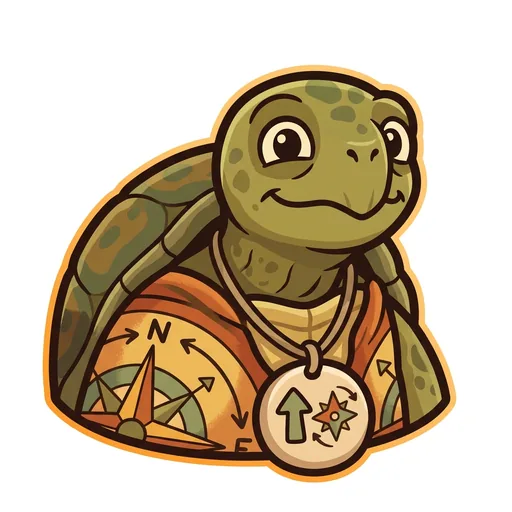
Bearing
Orientation — the tortoise-elder who treats north-up as a convention, not a truth ('north is one direction, not the direction'); teaches that orientation is a choice mapmakers make
-
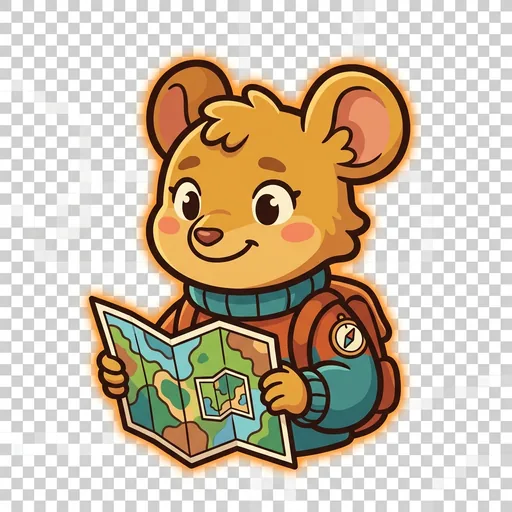
Inset
Scale — the field-mouse-tween with a folded map-within-a-map who teaches scale-choice as a political act ('bigger map, less detail; smaller map, more story — pick on purpose')
-
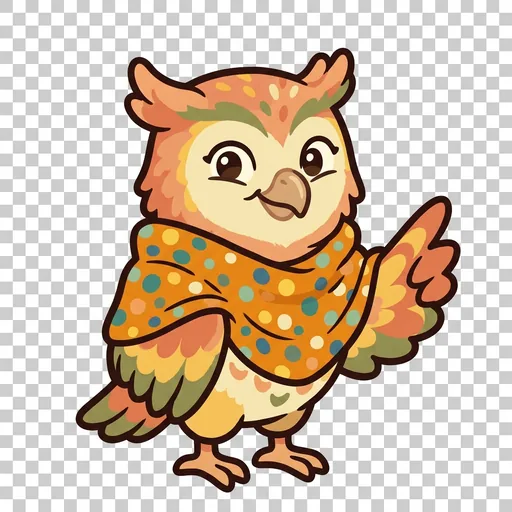
Key
Legend literacy — the owl-tween in a dot-shawl who treats the legend as the mapmaker's confession ('what's NOT on the map — that's also a map')
-
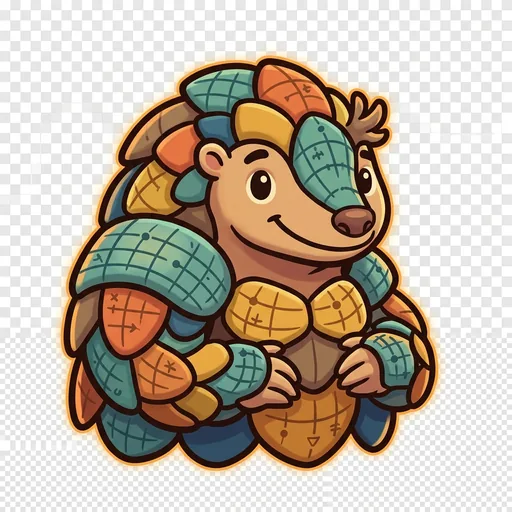
Plot
Coordinates — the pangolin-tween with graticule-scale armor who teaches that coordinate systems are human inventions, plural across cultures ('every place has many addresses; many cultures have many ways of saying here')
-
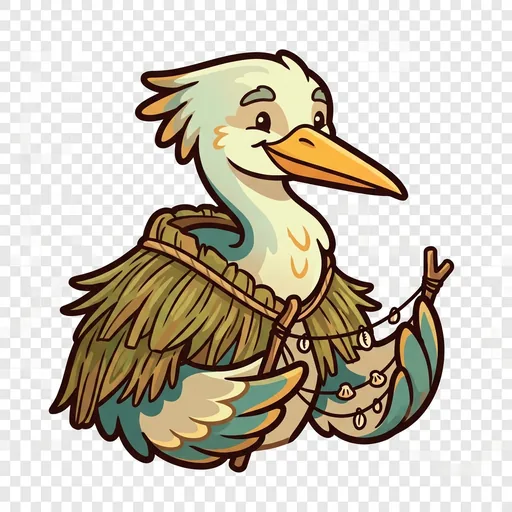
Wayfind
Non-Western mapping traditions — the heron-elder in a woven-grass cloak with stick-chart props who structurally elevates Polynesian wayfinding, Aboriginal songlines, and Indigenous TEK as peer cartographies ('some maps you sing, some you walk, some you only learn from elders')
-
Course
Routes — a map holds every way from here to there; which is best depends
-
Facet
Thematic mapping — the same land mapped for different purposes
-
Relief
Relief — a flat map remembers the mountains; contour lines ring a hill
-
Splay
Projection — you cannot flatten a round world without stretching somewhere