
Key
LEGEND LITERACY — the legend is the mapmaker's confession of what every symbol means and, by omission, what was left off; reading the legend first tells you what the map chose to show and what it quietly hid
Loading audio…
Press play to listen along. The line being read lights up as you go.
Show full transcript
Loading transcript…
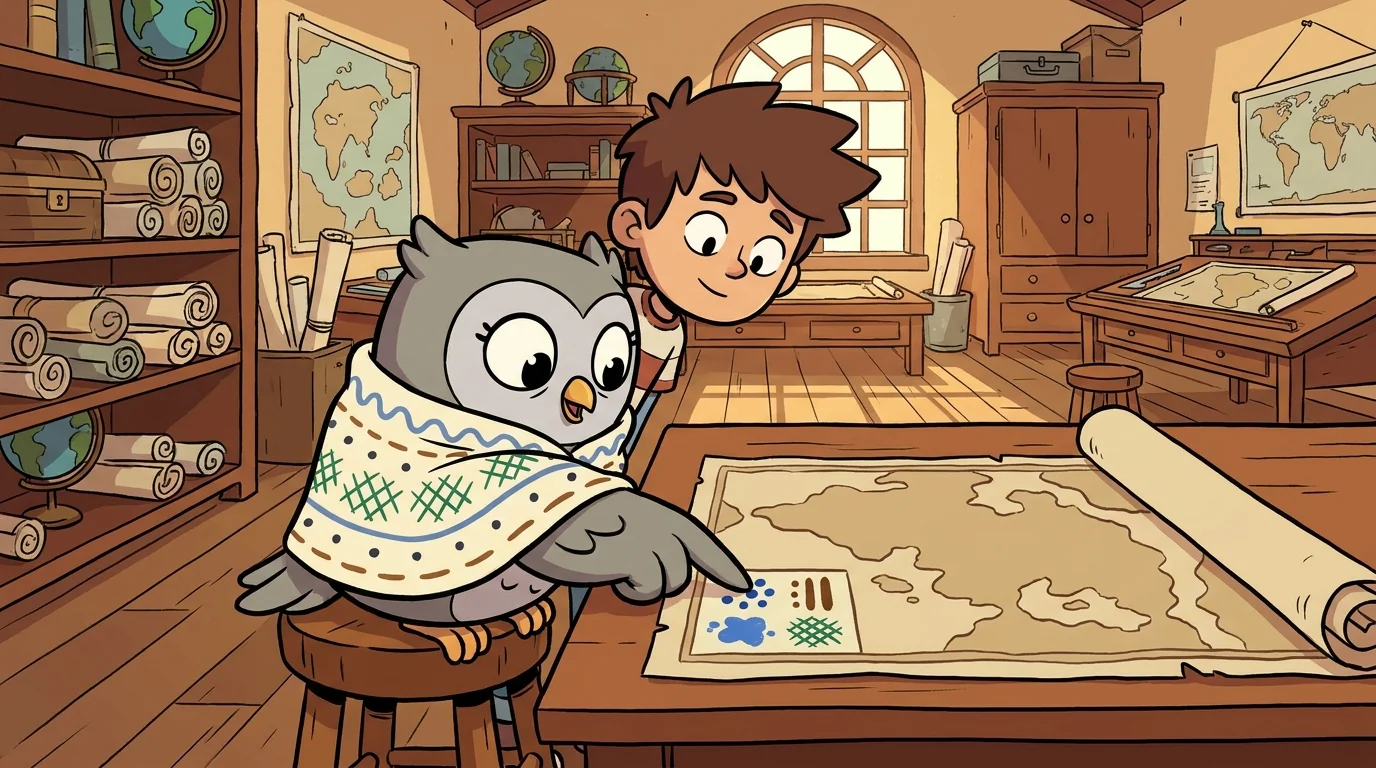
Atlas handed Key a beautiful, detailed map and asked what the first thing to read on it was.
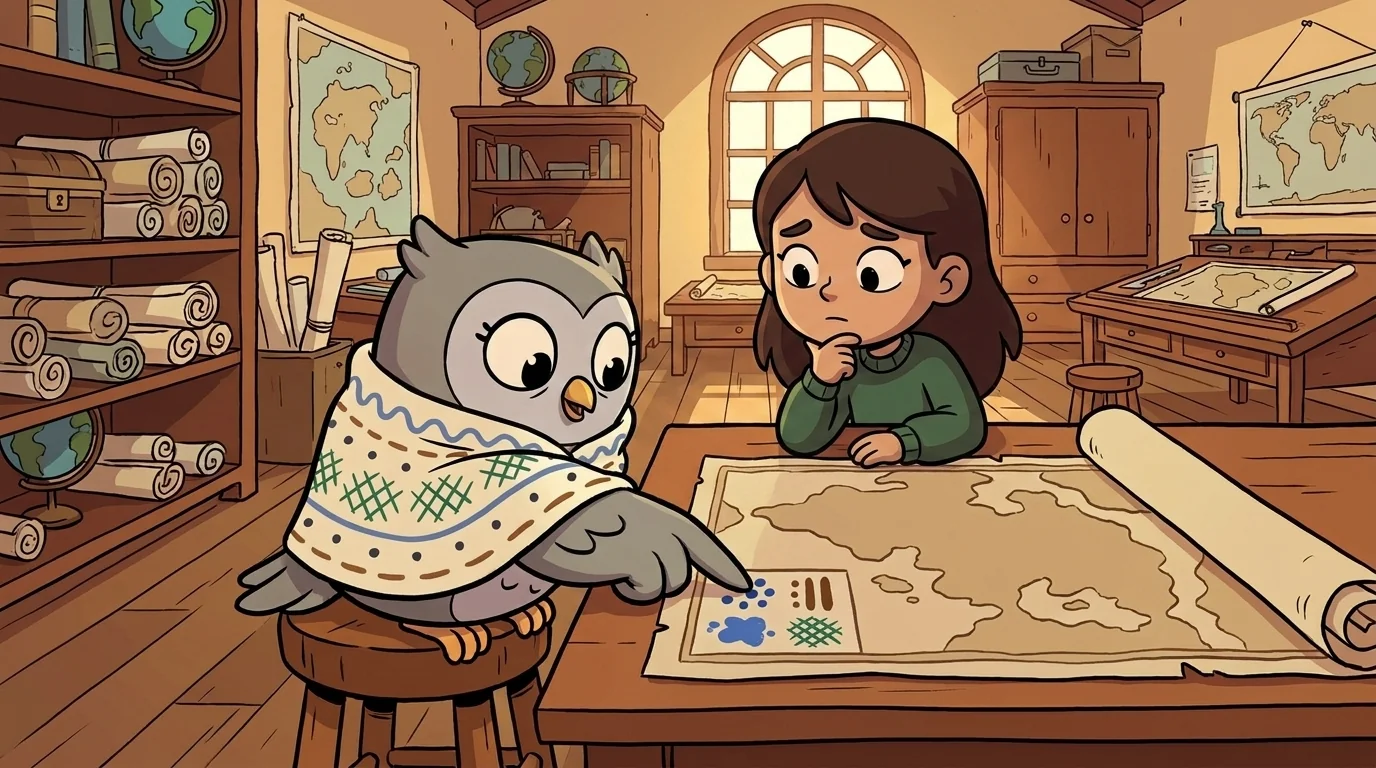
"Not the map," said Key at once — a sharp-eyed figure who always read the corners first. "The legend. This little box in the corner where every symbol is explained: this line is a road, this dashed line a trail, this blue a river, this star a capital. People dive into the pretty part and skip the legend, and then they misread everything. The legend is where the mapmaker confesses what each mark means. Read it first, and the whole map turns from decoration into information."
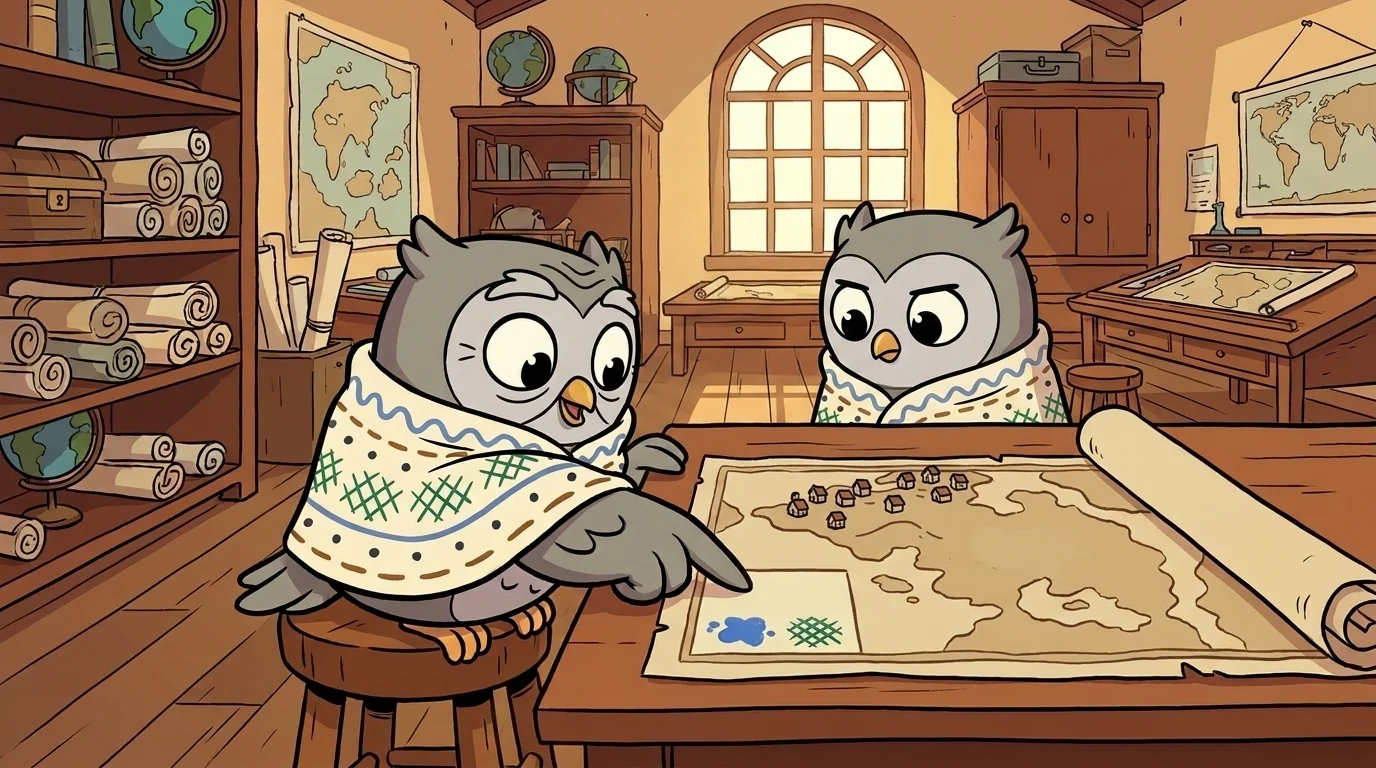
Key taught that a legend does two jobs, and the second is the one people miss.
"The obvious job is telling you what the symbols mean — the color of a road by its size, the icon for a school, the shading for a forest," Key said. "But the deeper job is telling you what the mapmaker chose to include — and therefore, by its silence, what they left out. A legend with roads and shops but no rivers is a map that decided rivers don't matter for its purpose. That absence is information too." He tapped the box. "So I read a legend twice. Once for what's here — what do these marks mean? And once for what's missing — what did they choose not to show me? The second reading is where you catch a map that's steering you. What's not on the map is also a map — of the mapmaker's priorities."
The older students heard the subtext: to understand any account of something, you read not only what it says but the shape of what it leaves unsaid.
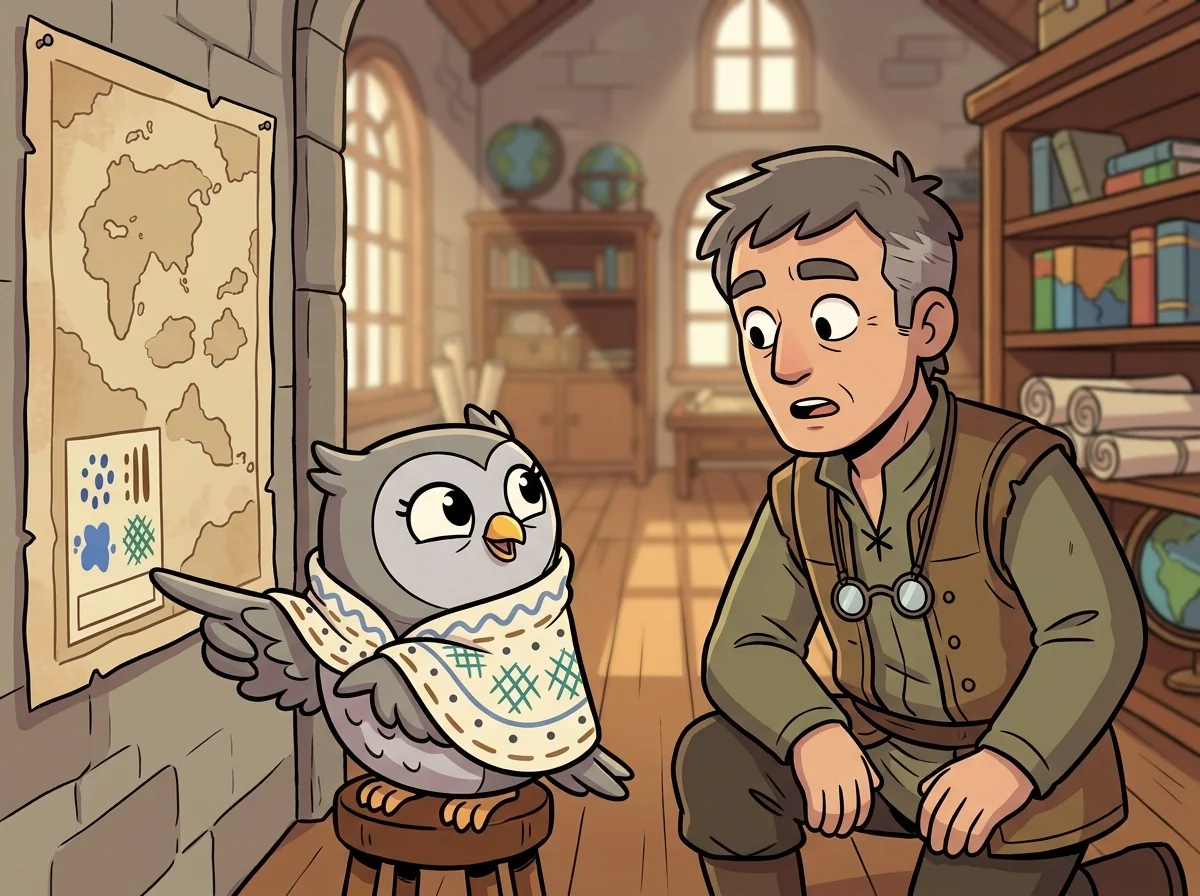
Key had learned the cost of a skipped legend the hard way.
"Once I followed a trail marked with a thin dashed line, assuming dashed meant a nice footpath," he said. "I hadn't read the legend. On that map, the dashed line meant disputed or unmaintained — and I ended up on a washed-out track going nowhere. The symbol was honest. The legend explained it perfectly. I just hadn't looked." He shrugged. "Same symbol means different things on different maps — dashed can be a trail here and a boundary there. There is no universal code. That's exactly why the legend exists, and exactly why skipping it is how you get lost while holding a perfectly good map."
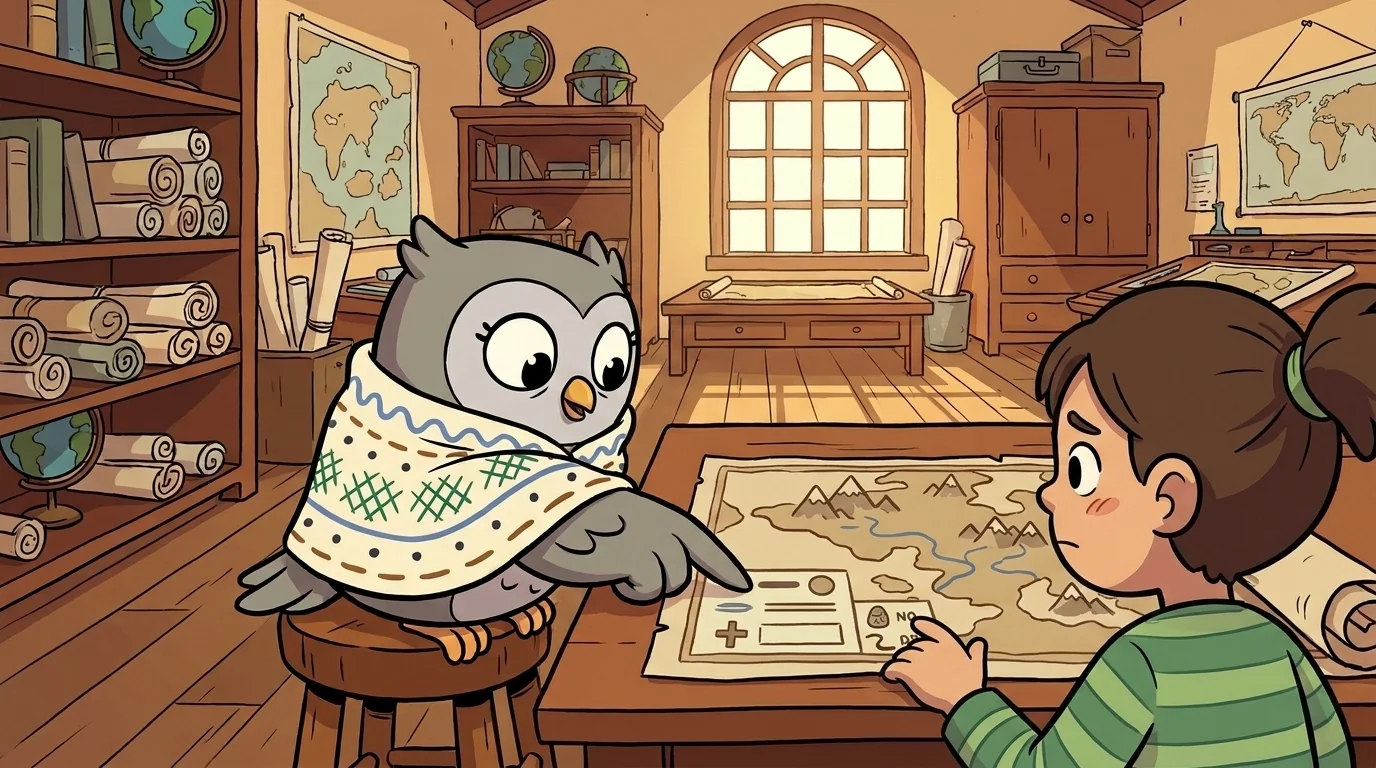
A student asked whether a really good map even needs a legend — shouldn't the symbols be obvious?
"'Obvious' is a trap," Key said. "A blue line seems obviously a river until it turns out to mean a highway on a transit map. A green patch seems obviously a forest until it means a park, or protected land, or somewhere you're not allowed to go. Symbols are a language, and a language only works if both people agree on the words." He drew a small key in the margin. "The best maps make the legend generous and plain — every symbol, every shade, the scale, the orientation, the source of the data. The worst maps leave it thin or missing, so you think you understand and quietly don't. A missing legend isn't cleaner. It's a map asking you to guess."
Later the student came back with the real question. "How do I make a map someone can actually trust?"
"Confess everything in the legend," Key said. "Every symbol's meaning. The scale and the orientation. Where your data came from and when. And — the mark of a truly honest map — a note about what you left out and why." He smiled. "A legend isn't the boring bit you add at the end. It's the mapmaker looking the reader in the eye and saying: here is exactly what I meant by every mark, and here is what I chose not to draw. Read one first, always, and no map can fool you. Write one honestly, always, and your map will never need to."
The student went back and, before drawing another line, started with the legend — and the map that followed was suddenly one a stranger could trust.
The MapForge ensemble
Key is part of MapForge's distributed-narrative cast. Each character embodies a different curricular primitive; together they teach the full subject.
-
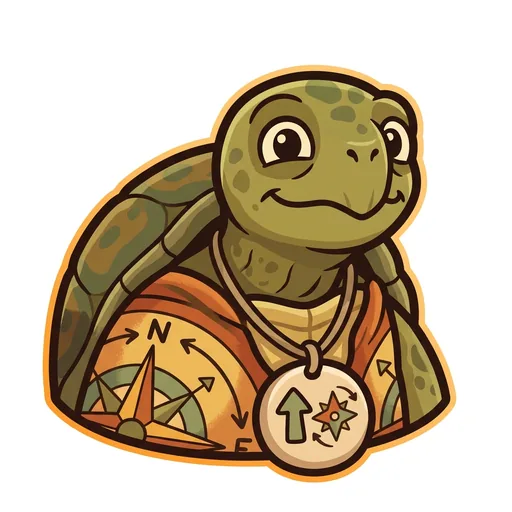
Bearing
Orientation — the tortoise-elder who treats north-up as a convention, not a truth ('north is one direction, not the direction'); teaches that orientation is a choice mapmakers make
-
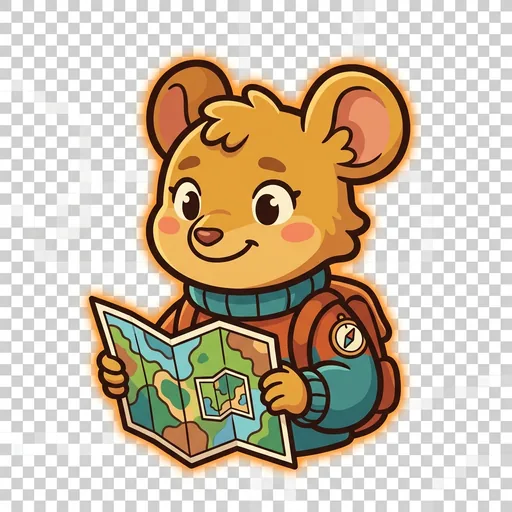
Inset
Scale — the field-mouse-tween with a folded map-within-a-map who teaches scale-choice as a political act ('bigger map, less detail; smaller map, more story — pick on purpose')
-
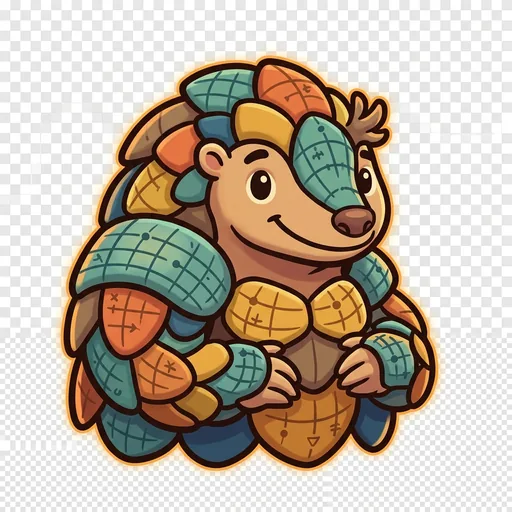
Plot
Coordinates — the pangolin-tween with graticule-scale armor who teaches that coordinate systems are human inventions, plural across cultures ('every place has many addresses; many cultures have many ways of saying here')
-
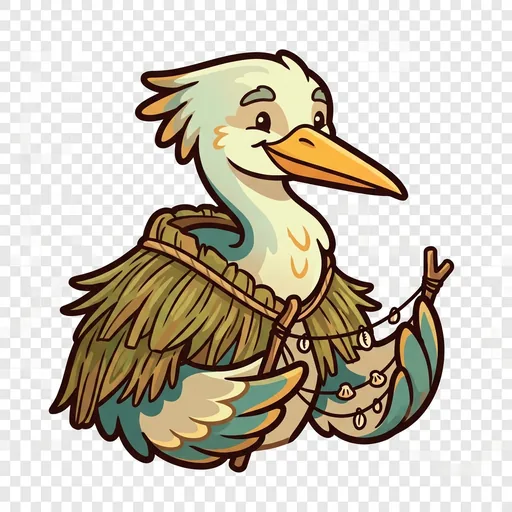
Wayfind
Non-Western mapping traditions — the heron-elder in a woven-grass cloak with stick-chart props who structurally elevates Polynesian wayfinding, Aboriginal songlines, and Indigenous TEK as peer cartographies ('some maps you sing, some you walk, some you only learn from elders')
-
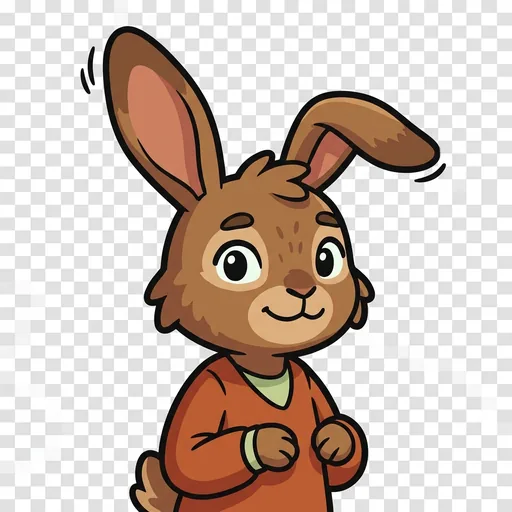
Course
Routes — a map holds every way from here to there; which is best depends
-

Facet
Thematic mapping — the same land mapped for different purposes
-

Mete
Borders — a line people agreed on, not a thing the land grew
-

Relief
Relief — a flat map remembers the mountains; contour lines ring a hill
-
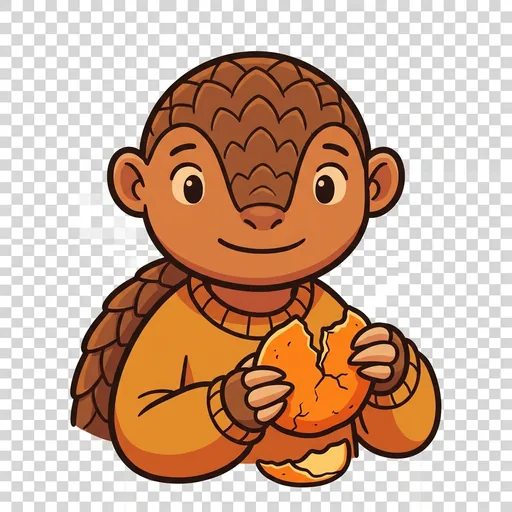
Splay
Projection — you cannot flatten a round world without stretching somewhere