
Splay
PROJECTION — you cannot flatten a round world onto flat paper without stretching it somewhere; every projection is a deliberate choice about what to keep true (shape, area, distance, or direction) and what to let go crooked
Loading audio…
Press play to listen along. The line being read lights up as you go.
Show full transcript
Loading transcript…
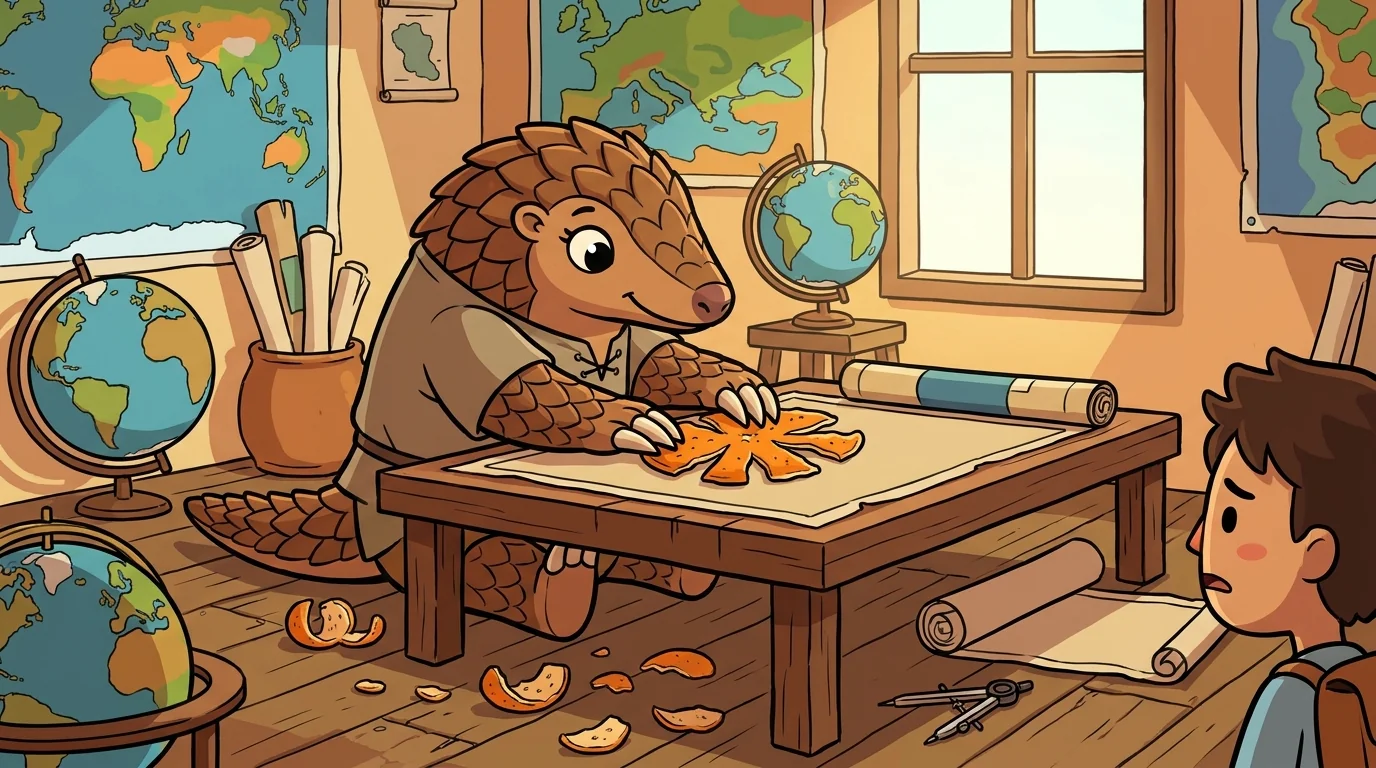
Atlas handed Splay an orange and a sheet of paper and asked her to lay the peel flat without tearing or stretching it.
"Can't be done — and that's the entire lesson," said Splay, peeling the orange, holding up the curved skin. "This peel is round. That paper is flat. There is no way to press one onto the other without either tearing it or stretching it. The Earth is the orange. Every flat map is this peel, forced flat somehow. So every world map you have ever seen is stretched somewhere, on purpose, because it had no other choice. The only question a mapmaker gets to answer is: stretched where, and how much, and in exchange for keeping what true?"
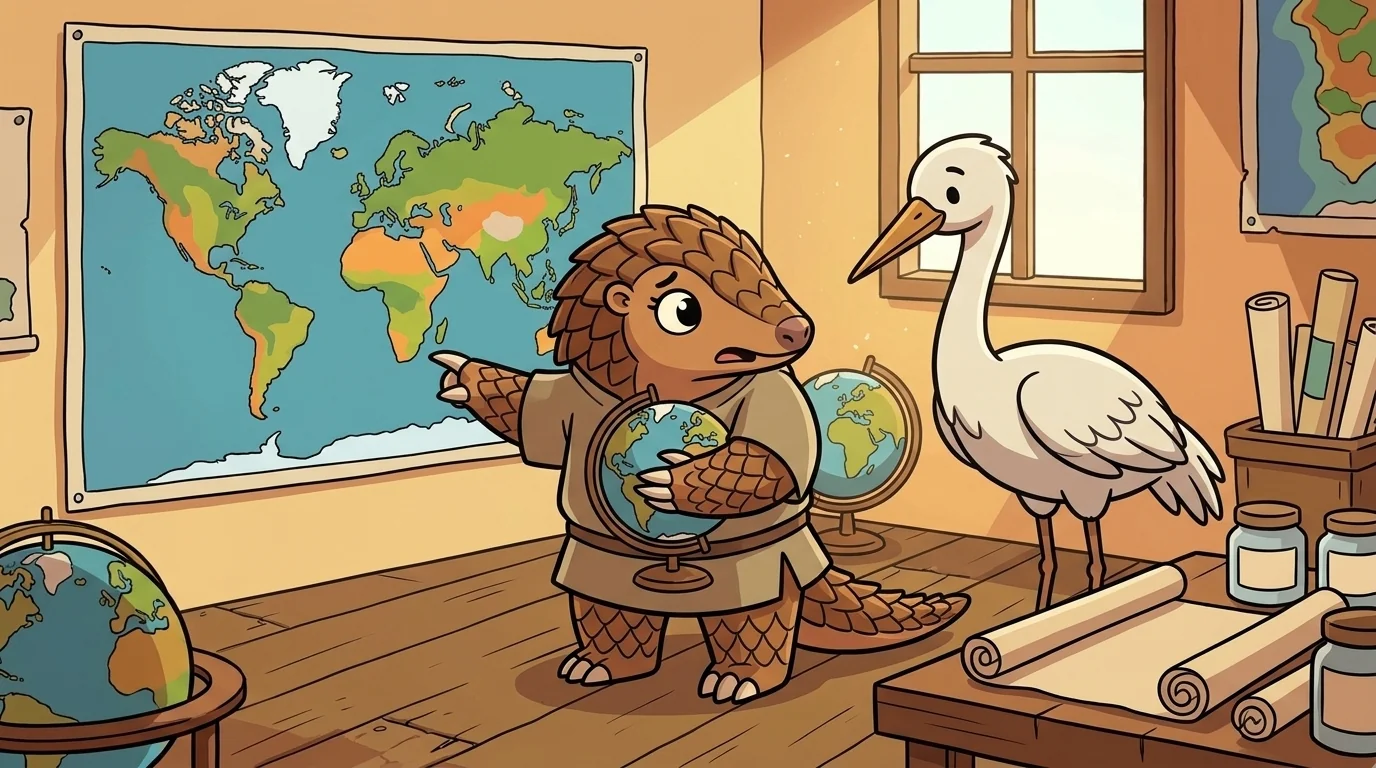
Splay taught the trade precisely, because the trade is the whole art of projection.
"Flattening the round Earth is called projection, and every projection keeps some things true by letting others go crooked," she said. "You can keep shapes locally correct — but then far-north and far-south places balloon enormously, so sizes lie. You can keep areas honest, every country the right size relative to the others — but then shapes squash and stretch. You can keep distances true from one point, or directions true for navigation — but never all of them at once." She laid the peel down, cracking. "There is no perfect flat map. It is mathematically impossible. So a projection isn't a mistake to fix — it's a choice to make: which single truth matters most for this map's job, knowing you must bend the others to keep it."
The older students heard the subtext: when no option is perfect and the imperfection can't be removed, wisdom isn't finding the flawless choice — it's choosing which flaw you can live with, on purpose, out loud.
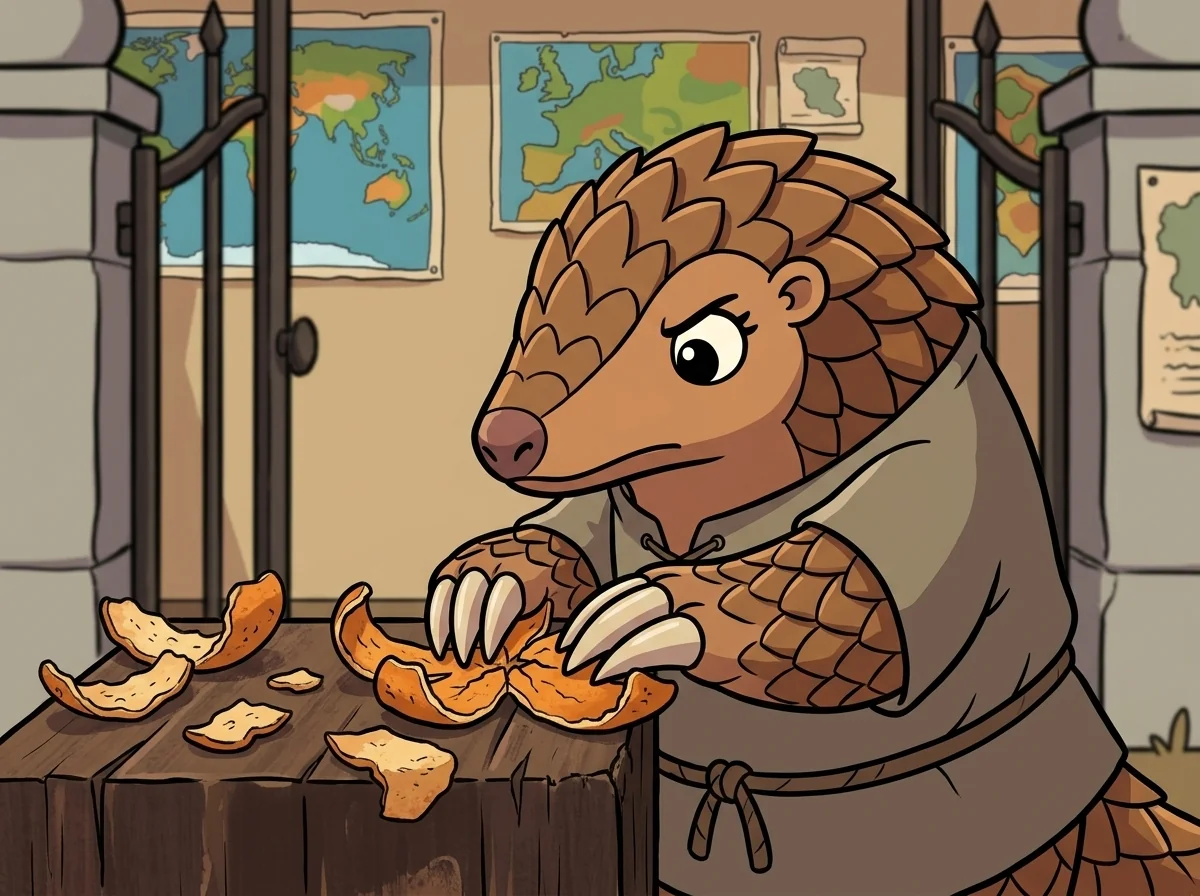
Splay had learned it by trusting the wrong map young.
"When I was small I learned the world from one popular map — the kind that keeps shapes and directions handy for sailing — and I grew up thinking the far-north lands were gigantic, because on that map they are," she said. "They aren't. That map keeps shapes true and pays for it by ballooning everything near the poles. My whole sense of how big places were had been quietly bent by a projection I didn't know I was reading." She turned the peel. "It wasn't a lie exactly — the map did its job honestly. But nobody had told me which truth it kept and which it traded. That's the danger: not the distortion, but the distortion you don't know is there."
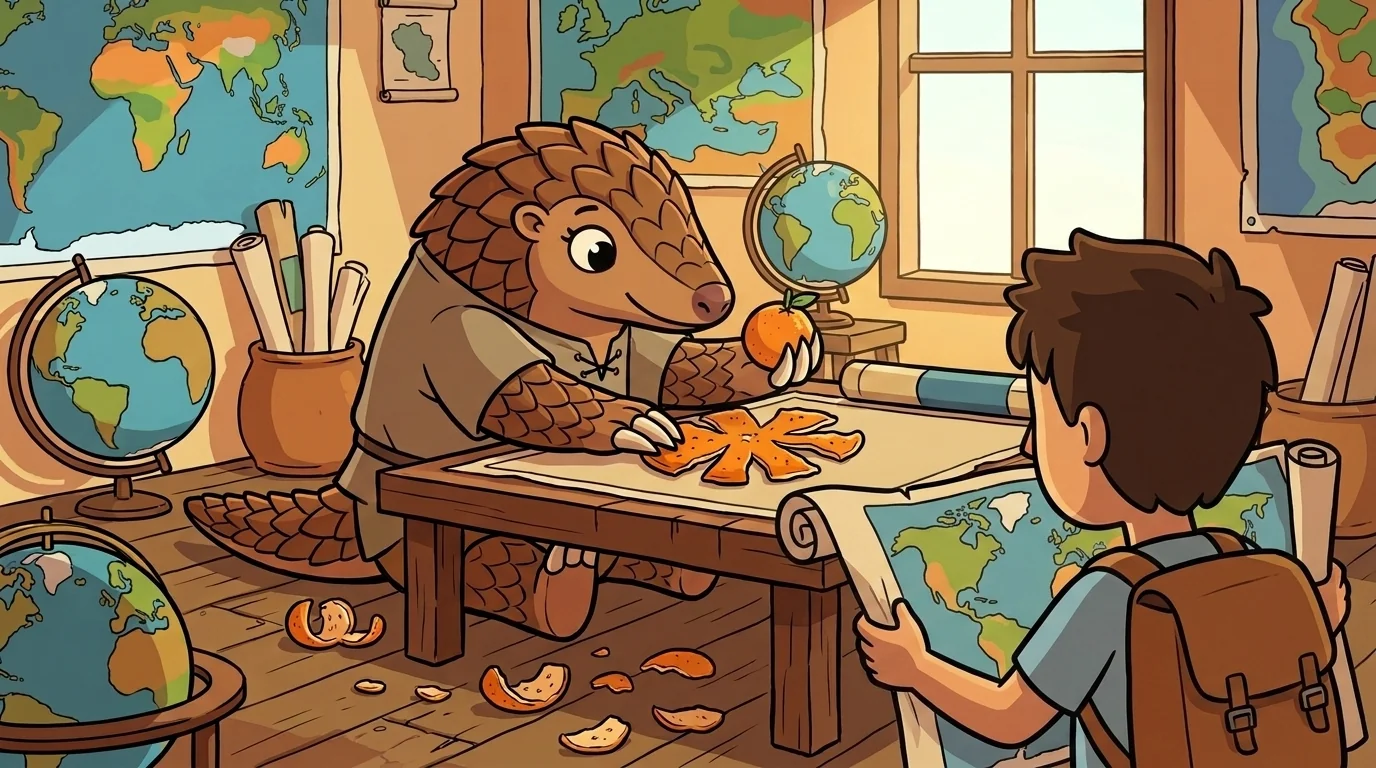
A student asked, exasperated, which projection is simply the right one, then.
"Wrong question — and asking it is how you get fooled," Splay said, gently. "There is no right one, only the right one for a purpose. Sailing across an ocean on a steady heading? Use the projection that keeps directions true, and forgive the swollen sizes. Comparing how much land countries actually have? Use the equal-area one, and forgive the squashed shapes. Showing distances from a single city? A third choice. The map isn't right or wrong — it's fit or unfit for what you're doing." She tapped the peel. "And the honest mapmaker names the projection, so you know which truth was kept and which was traded. Then the distortion can't fool you, because you chose it knowingly."
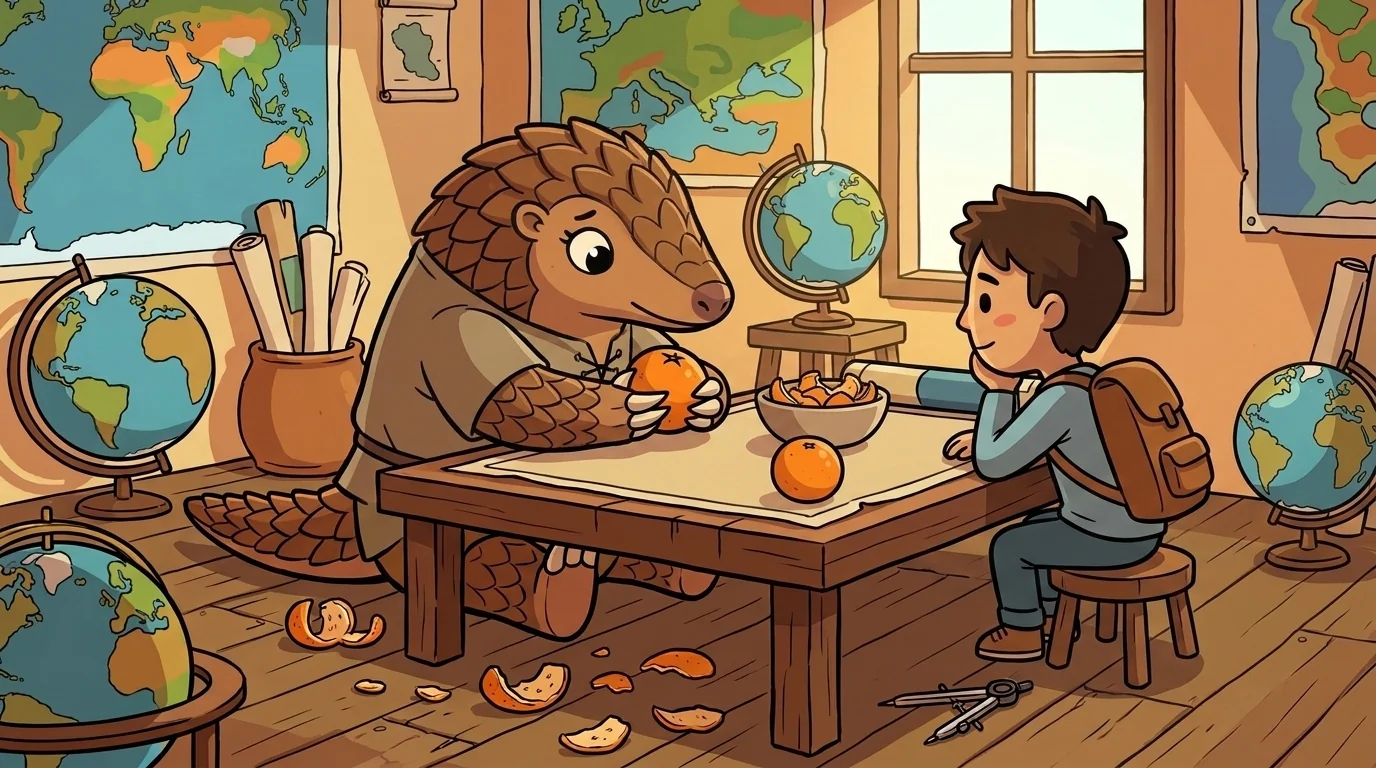
Later the student came back with the real one. "So how do I not get tricked by a world map again?"
"Ask two questions of every flat world map," Splay said. "Which projection is this? and what did it keep true at the cost of what? Once you can answer those, the map stops being a picture of the world and becomes a decision about the world — one you can weigh." She pressed the flattened peel into his hands, cracked and imperfect and honest. "You cannot flatten a round world without giving something up. Anyone who hands you a flat map that pretends otherwise is hiding the trade. The good ones make the trade out loud — and now that you know to look for it, you'll always see the stretch, and never mistake it for the world."
The student looked at the familiar world map on the wall and, for the first time, saw not the world but a choice about it.
The MapForge ensemble
Splay is part of MapForge's distributed-narrative cast. Each character embodies a different curricular primitive; together they teach the full subject.
-
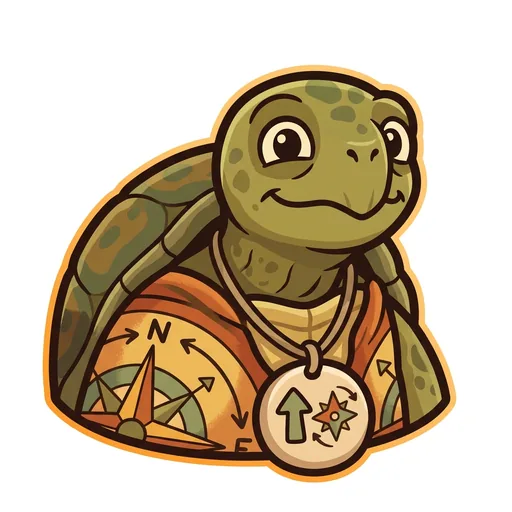
Bearing
Orientation — the tortoise-elder who treats north-up as a convention, not a truth ('north is one direction, not the direction'); teaches that orientation is a choice mapmakers make
-
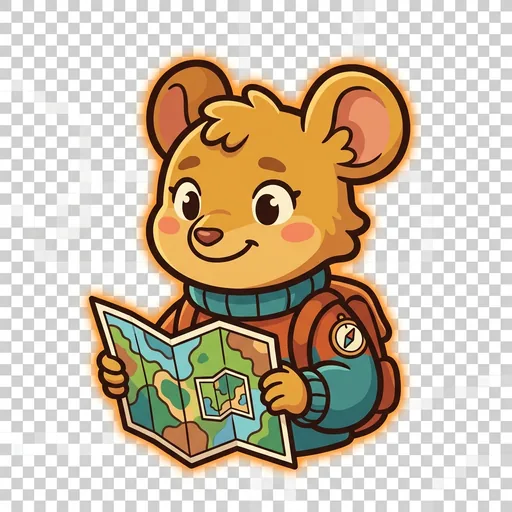
Inset
Scale — the field-mouse-tween with a folded map-within-a-map who teaches scale-choice as a political act ('bigger map, less detail; smaller map, more story — pick on purpose')
-
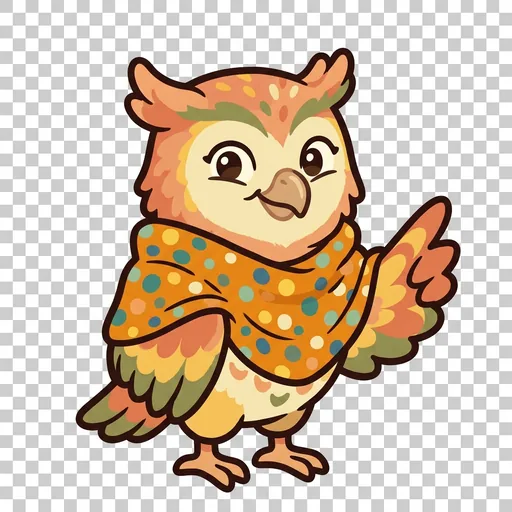
Key
Legend literacy — the owl-tween in a dot-shawl who treats the legend as the mapmaker's confession ('what's NOT on the map — that's also a map')
-
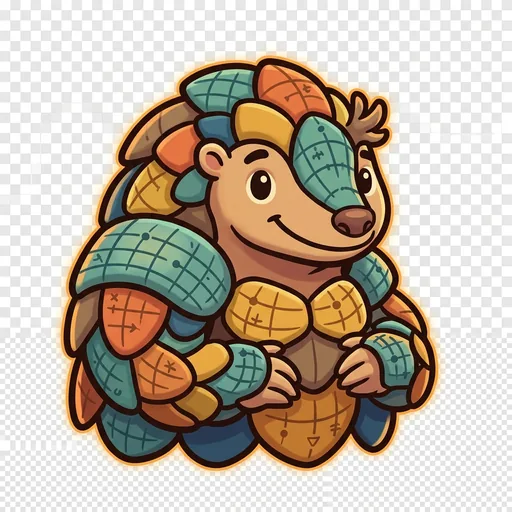
Plot
Coordinates — the pangolin-tween with graticule-scale armor who teaches that coordinate systems are human inventions, plural across cultures ('every place has many addresses; many cultures have many ways of saying here')
-
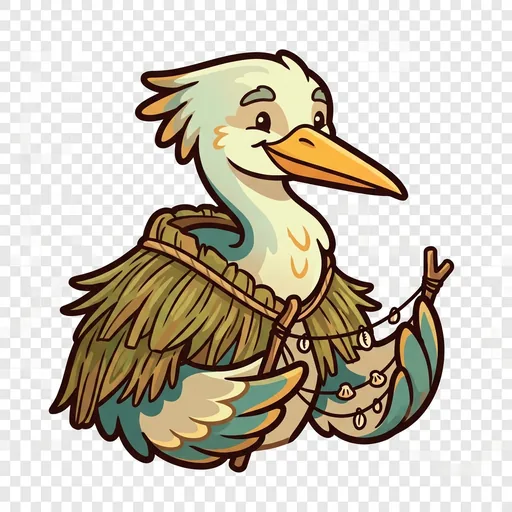
Wayfind
Non-Western mapping traditions — the heron-elder in a woven-grass cloak with stick-chart props who structurally elevates Polynesian wayfinding, Aboriginal songlines, and Indigenous TEK as peer cartographies ('some maps you sing, some you walk, some you only learn from elders')
-

Course
Routes — a map holds every way from here to there; which is best depends
-

Facet
Thematic mapping — the same land mapped for different purposes
-

Mete
Borders — a line people agreed on, not a thing the land grew
-

Relief
Relief — a flat map remembers the mountains; contour lines ring a hill