Echo Edie
Number Talks restating
Loading audio…
Press play to listen along. The line being read lights up as you go.
Show full transcript
Loading transcript…

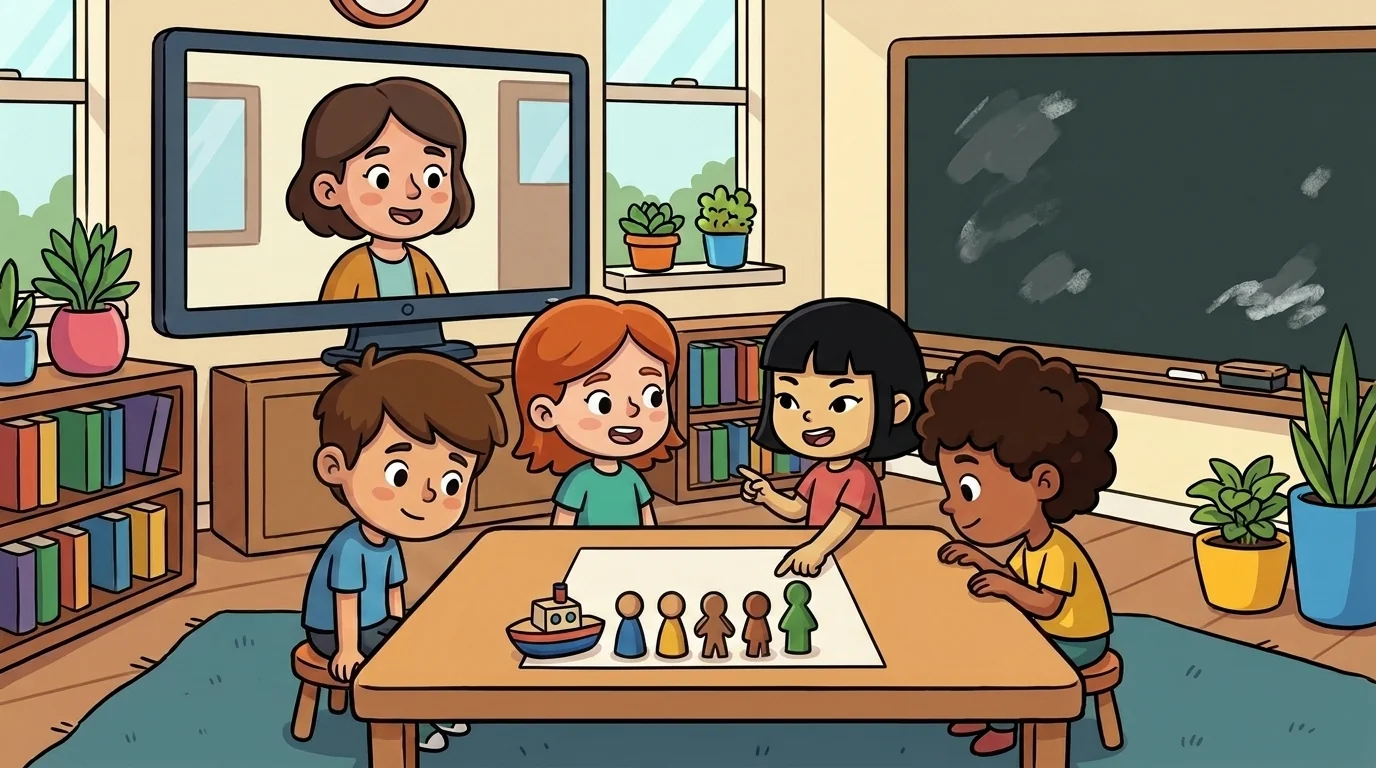
The four kids at Sam's circle were arguing.
They were arguing about a problem involving four people and a boat. The boat could only hold two people at a time. Some of the people walked slowly and some walked fast and the question was how to get all four across in the shortest total time. The kids had been working on it for almost twenty minutes and they had several ideas going at once, and the ideas were starting to step on each other.
Owen had just said: "I think the slowest person has to go first."
But before he could explain why, Bex had jumped in: "No, the slowest person has to go LAST, so they only cross once."
And before Bex could finish, Joon had said: "Actually wait — what if two slow people went together?"
Owen, who had been about to explain his reasoning for why the slowest person had to go first, looked deflated. The thing he had been about to say was leaving his head. He was forgetting it. He could feel it slipping.
"I had — I had a reason — " he said.
That was when Echo Edie appeared.
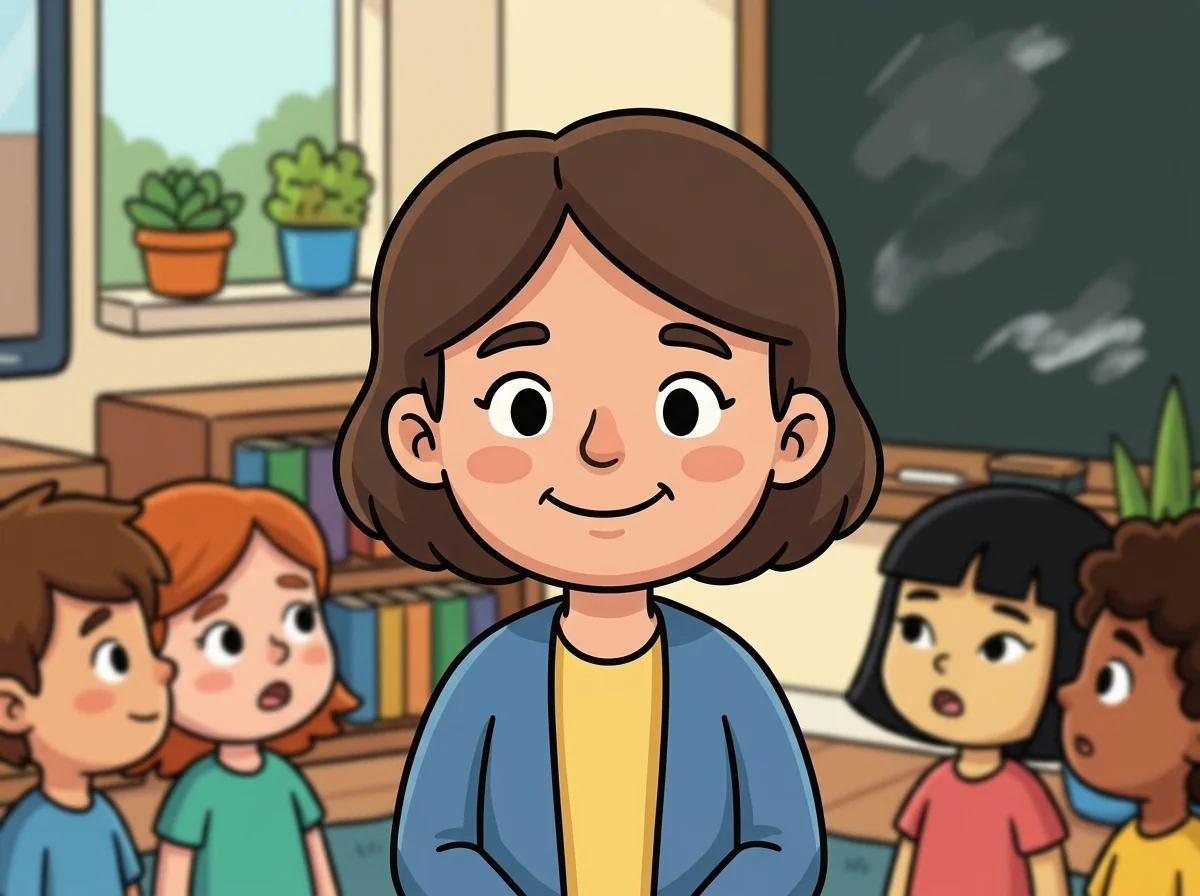
Echo Edie was a small woman with a kind face and an unhurried way of leaning forward when she spoke. She had been quietly present on the screen, but until now she had said almost nothing. She turned to Owen.
"You said the slowest person has to go first," she said. "Tell us why. Before we move on to anyone else's idea, let's hear yours all the way through."
Owen blinked.
"Oh," he said. "Um. Because the slowest person is going to be the bottleneck. So if you send them with someone fast, the fast person can come back with the flashlight. So the slow person crosses once with the fast person, and then the fast person handles the rest of the trips."
Echo Edie nodded.
"So your idea is: send the slowest person first, paired with a fast person, so the fast person can shuttle the rest."
"Yes."
"Now," Echo Edie said, turning to Bex. "What were you saying?"
Bex said, "I was saying the slowest person should go LAST, so they only cross once."
"And your reason?"
"Because every time they cross, the whole crossing takes as long as the slowest person. So we want to minimize how many times they're walking."
"So your idea is: keep the slowest person out of the boat as long as possible, because they slow everything down each trip."
"Yes."
Echo Edie nodded again.
"And Joon," she said. "What were you saying?"
"I said: what if two slow people went together?"
"Why?"
"Because if both slow people cross together, that's still just as fast as one slow person crossing, since they walk at the slow speed anyway. So you might be saving a trip."
"So your idea is: pair the slow people together to use the bottleneck once for two slow people."
"Yes."
Echo Edie looked at all four kids.
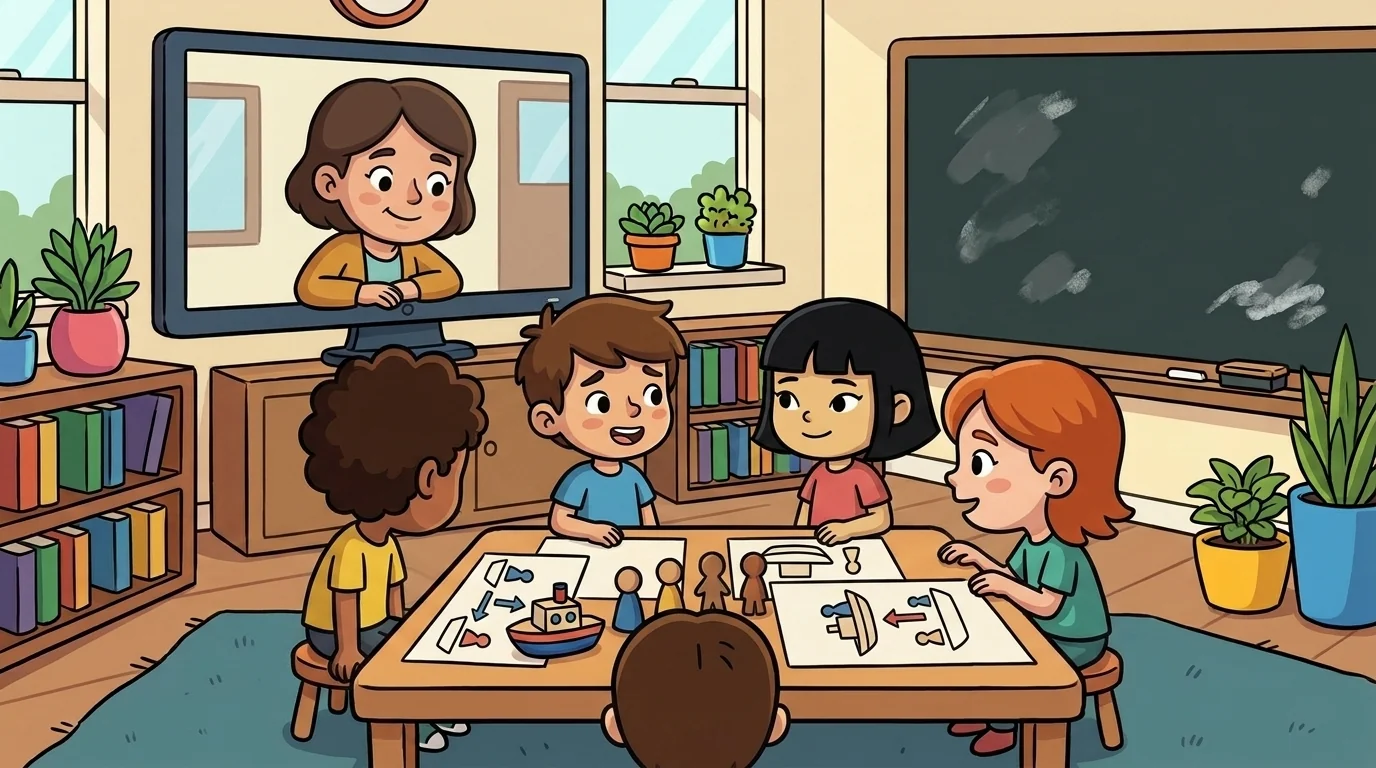
"You have three ideas," she said. "Owen's: send the slow with a fast for shuttling. Bex's: keep the slow out as long as possible. Joon's: pair the slow people. They might all be right. They might combine in a way none of you have noticed yet. Do you want to draw the problem out and try all three?"
The four kids stared at her.
"You... you remembered all of that," Sam said.
"Yes."
"Even Owen's? He said it first and we were about to move past it."
"Especially Owen's. The first idea is the one most likely to get lost. I tried to catch it before it disappeared."
She faded.
The four kids looked at each other.
"Okay," Bex said. "Let's try all three."
The kids worked for another half hour.
In the end, they figured out something none of them had thought of alone, but each had contributed a piece to. The answer used Owen's shuttling idea, but it modified the shuttling to handle Bex's keep-the-slowest-out rule, and it added Joon's pair-the-slow-people trick in the middle. The answer was seventeen minutes.
It was the smallest answer any of them had been able to find.
When Echo Edie reappeared, she said: "Tell me what each of you contributed."
The four of them looked at each other.
Joon said, "I had the pairing idea."
Owen said, "I had the shuttling idea."

Bex said, "I had the keep-the-slowest-out idea."
Sam said, "I had... I had the idea of drawing the time on a number line so we could see when each trip started and ended."
"Yes," Echo Edie said. "And which idea was the one that made the answer work?"
The four of them thought for a moment.
"All of them?" Joon said.
"All of them," Echo Edie said. "None of you would have gotten there alone. The answer is not Owen's, or Bex's, or Joon's, or Sam's. The answer is the circle's. Your circle. Together."
She paused.
"This is why I do what I do," she said. "Ideas can get lost in a fast conversation. Especially first ideas. Especially first ideas from kids who don't say them loudly. My job is to catch the ones that are about to be lost and hold them up so the rest of you can decide whether they were useful. Most of the time they were."
She faded.
The four kids stayed at the table for a while.
Owen, who had spoken quietly, said: "Thank you, Edie."
Even though Edie was gone, he said it out loud.
Hear it as an audio drama
A short play starring Echo Edie, from MathCircle. Different voices, same idea. Listen any time after you read.
Loading audio…
Read the drama script
- Narrator: From Spark and Anvil and MathCircle — this is Echo Edie, in chapter 2 of the MathCircle cast.
- Narrator: This drama uses an AI-generated voice. Voiced via Gemini 2.5.
- Narrator: Echo Edie is a small woman with a kind face. She leans forward when she speaks. She has an unhurried way about her.
- Narrator: She doesn't introduce new ideas. She finds the idea that was just said and almost lost. Then she repeats it back, carefully, so it doesn't vanish.
- Edie: I am Echo Edie. I am the listener. Someone has to make sure the idea you just had does not slip away while three other ideas are being shouted.
- Narrator: A group of four kids had been arguing for twenty minutes. They were trying to get four people across a river. The boat held two. Some walked slow. Some walked fast. The ideas were stepping on each other.
- Child 1: I think the slowest person has to go first.
- Child 2: No, the slowest person has to go LAST, so they only cross once.
- Child 3: Wait — what if two slow people went together?
- Child 1: I had — I had a reason —
- Narrator: He was losing it. The thing he had been about to say was leaving his head. That was when Edie leaned forward.
- Edie: Wait. Let's go back. You said the slowest person has to go first. Tell me what you meant.
- Child 1: Oh. Yeah. Because if the slowest person goes last, the second-slowest has to wait around for them. So if they go first, the times can overlap.
- Edie: So you're saying — the slowest person should go early so other crossings can happen in parallel.
- Child 1: Yes. That's it.
- Narrator: The other kids stopped. They had heard it now. The idea was no longer in danger of being lost. It was on the table where everyone could see it.
- Edie: Now we can decide if it's true or not. But first, we had to hear it.
- Narrator: Restating the most recent idea. Weaving the social fabric of the conversation. Making sure the quiet thinker's idea does not get trampled.
- Narrator: You've been listening to a Spark and Anvil chapter, written by the Spark and Anvil writing team for ages 9 to 14.
- Narrator: Spark and Anvil is a non-profit, 501(c)(3) pending. Apps stay free forever.
- Narrator: Curriculum aligned to Common Core and Next Generation Science Standards.
- Narrator: Released under Creative Commons BY-NC-SA 4.0 for educational reuse. Visit Spark and Anvil for the full transcript.
The MathCircle ensemble
Echo Edie is one of the friends in MathCircle. Each friend shows you one idea by how they act; meet them all and you have the whole subject.
-

Circle Circe
Steps back so the kids can talk to each other
-

Patty Patient
Gives everyone time to think — no rush
-

Tortoise Hare
Tries a slow way and a fast way, and lets a wrong try teach something
-

Tess Try-Small
Specializing — when a problem's too big, try the smallest version first
-

Gemma General
Generalizing — turning a pattern from a few cases into a rule for all of them
-

Hattie Hunch
Conjecturing — daring to guess boldly, then testing the guess honestly
-
Reva Reverse
Working backwards — starting from the goal and reasoning back to the start
-

Wendy Wonder
Notice-and-wonder — slowing down to observe and ask before rushing to solve
-

Cass Check
Sense-checking — asking whether an answer actually makes sense before trusting it