
Dozen
NUMBER BASES — counting is bundling, and the size of your bundle is your base; ten from our fingers, twenty from the Maya, sixty from Babylon (still in our minutes and degrees), two inside every computer. The base is a choice, not a law of nature.
Loading audio…
Press play to listen along. The line being read lights up as you go.
Show full transcript
Loading transcript…
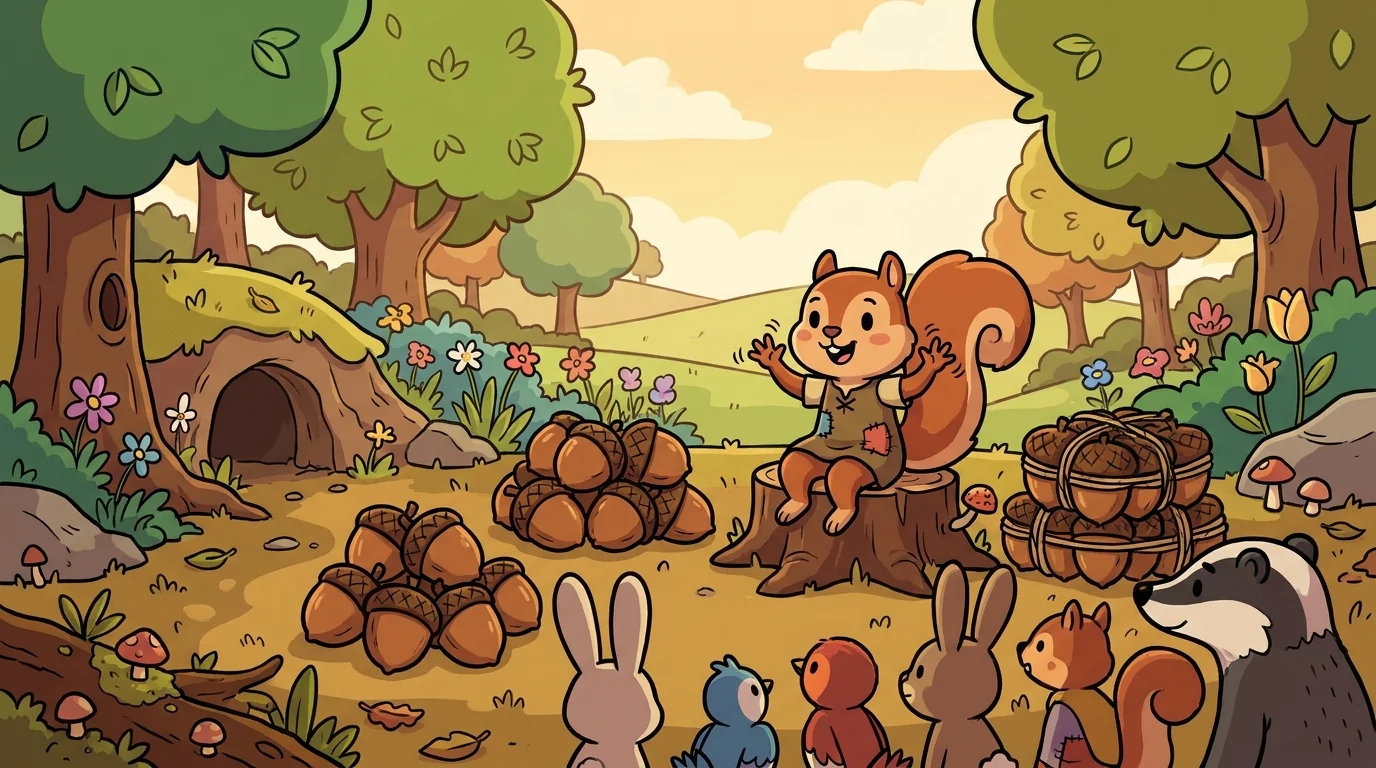
Dozen was a busy squirrel-tween who never counted acorns one at a time when she could count them in bundles, and by now she could tell you exactly what a bundle was. "Counting big," she said, tipping a heap of acorns into tens, "is bundling, then bundling the bundles. But the real question — the one most people never think to ask — is how big is your bundle? That number has a name. It's your base."
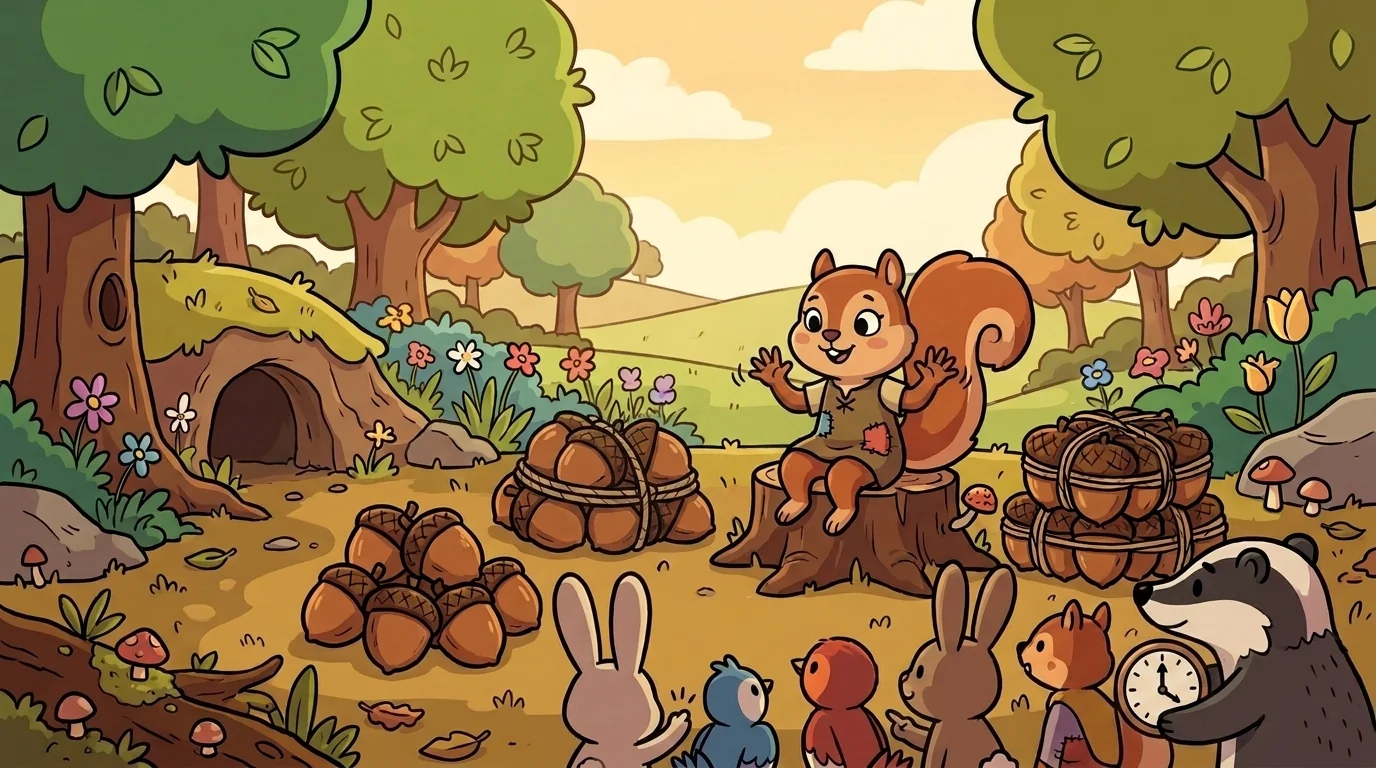
She lined up ten acorns, then a bundle of ten, then a bundle of ten bundles. "We bundle by ten, so ten ones make a ten, ten tens make a hundred, and each column to the left is worth ten times the one on its right. That's a positional system — a mark's value depends on which column it sits in. And why ten?" She spread her paws and wiggled her fingers. "Because we counted on these. Base ten isn't a law of the universe. It's the number of fingers on two hands, made permanent."
"But hands aren't the only counters people used," she went on, and this was her favourite part. "The Maya bundled by twenty — base twenty, fingers and toes together — and built a place-value system so powerful their astronomers tracked the years across centuries. That's vigesimal." She drew a fresh set of columns. "And in Babylon they bundled by sixty — base sixty, sexagesimal — which sounds enormous until you notice you still use it every single day. Sixty seconds in a minute. Sixty minutes in an hour. Three hundred sixty degrees in a circle. That's Babylon, four thousand years old, still ticking on your wrist."
A young rabbit frowned. "So the base is just... made up?"
"Chosen," Dozen corrected gently, "not made up — and every choice has to obey the same clever rule: each column is worth the base times the column before it, and you need exactly base-many digits to fill one column before it rolls over into the next. Ten digits for base ten, zero through nine. Twenty for the Maya. Sixty for Babylon. Change the bundle and the whole system reshapes around it — but the deep idea, bundling into place-value columns, stays exactly the same underneath."
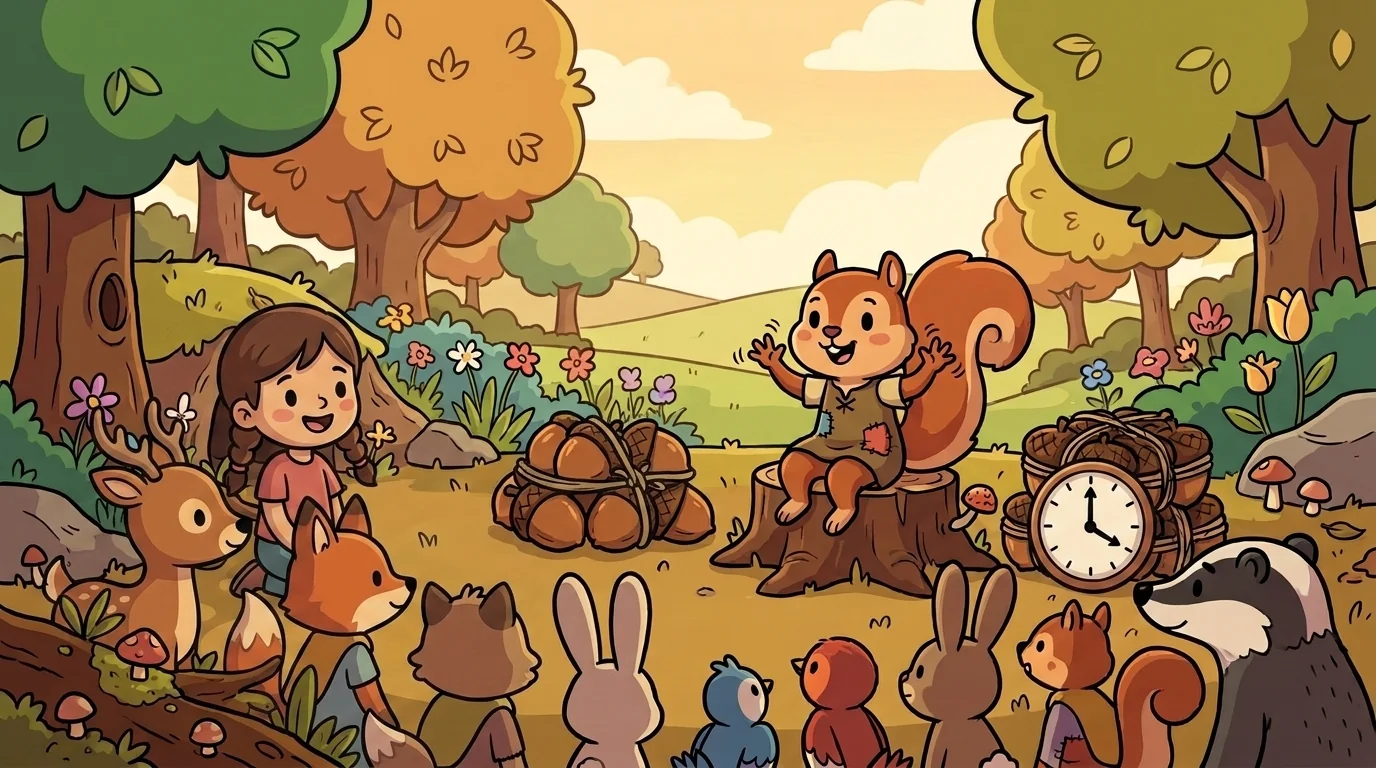
She learned this without a book, the way she learned most things — by watching. Traders from far roads counted in bundles that weren't hers, and at first she thought them wrong, until she matched their answers to her own and found the same amount arriving by a different-sized road. "That was the lesson," she said. "Not that ten is right and twenty is wrong. That the amount is real, and the base is a costume we dress it in. A dozen eggs, a score of years, an hour of sixty minutes — three different bundles, all just counting."
The rabbit turned it over. "So even the computers—"
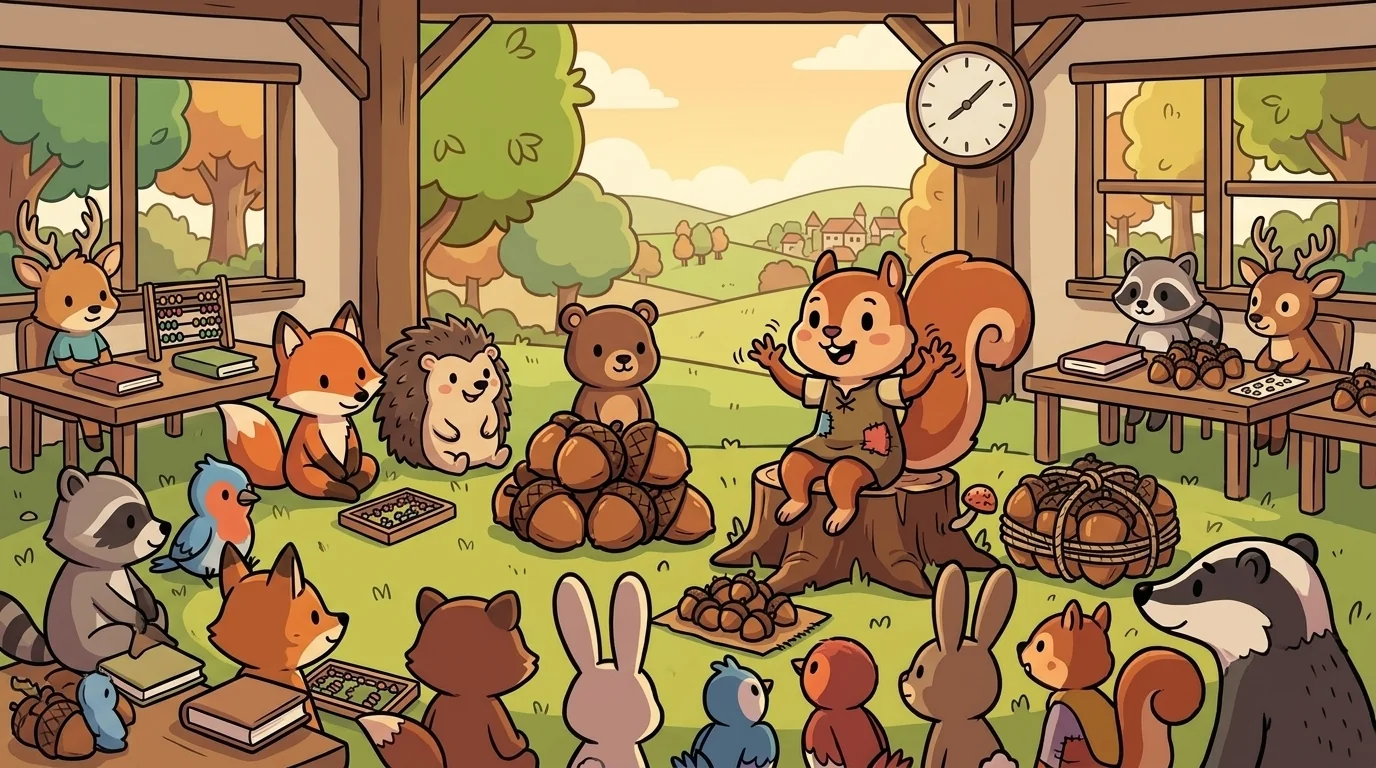
"—bundle by two," Dozen finished, delighted he'd reached for it. "Base two. Binary. On and off, the smallest bundle there is — because a wire is either carrying current or it isn't, and two states are all a machine needs. Every number you've ever seen on a screen was first bundled into twos and unbundled again." She swept her acorns into a single satisfied heap. "Ten from our fingers, twenty and sixty from peoples who counted the sky, two from a machine's two hands of on and off. Different bundles, one idea. That's the whole secret of counting big."
A slow, warm gladness settled in her as it always did here — the plain delight of watching the only way quietly become one way among many, and the world get roomier for it.
"How big is your bundle," she murmured, tapping the heap. "Ask that, and every number system in history opens like a door."
The MathLore ensemble
Dozen is part of MathLore's distributed-narrative cast. Each character embodies a different curricular primitive; together they teach the full subject.
-

Heap
Counting-as-first-story — every people figured out their own way to count
-

Spire
Pattern-as-discovery — patterns are everywhere when you slow down enough to see them
-
Vouch
Proof-as-shared-knowledge — show me why; if your why holds up, I'll build on it
-

Home
Math-as-cultural-context — this idea was born somewhere, for someone, with reasons
-

Carry
Cultural-transmission — the idea traveled; every place it visited, it grew
-
Etch
The invention of notation (writing math down so ideas can travel across time)
-

Frontier
Mathematics is unfinished (there are still open questions no one has answered)
-

Naught
The invention of zero (a symbol for nothing that changed everything)
-
Warp
Math in everyday craft (the geometry hidden in weaving, building, and making)