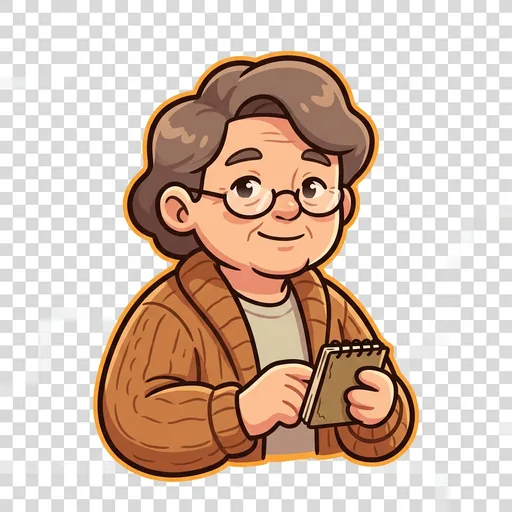
Carry
CULTURAL-TRANSMISSION
Loading audio…
Press play to listen along. The line being read lights up as you go.
Show full transcript
Loading transcript…
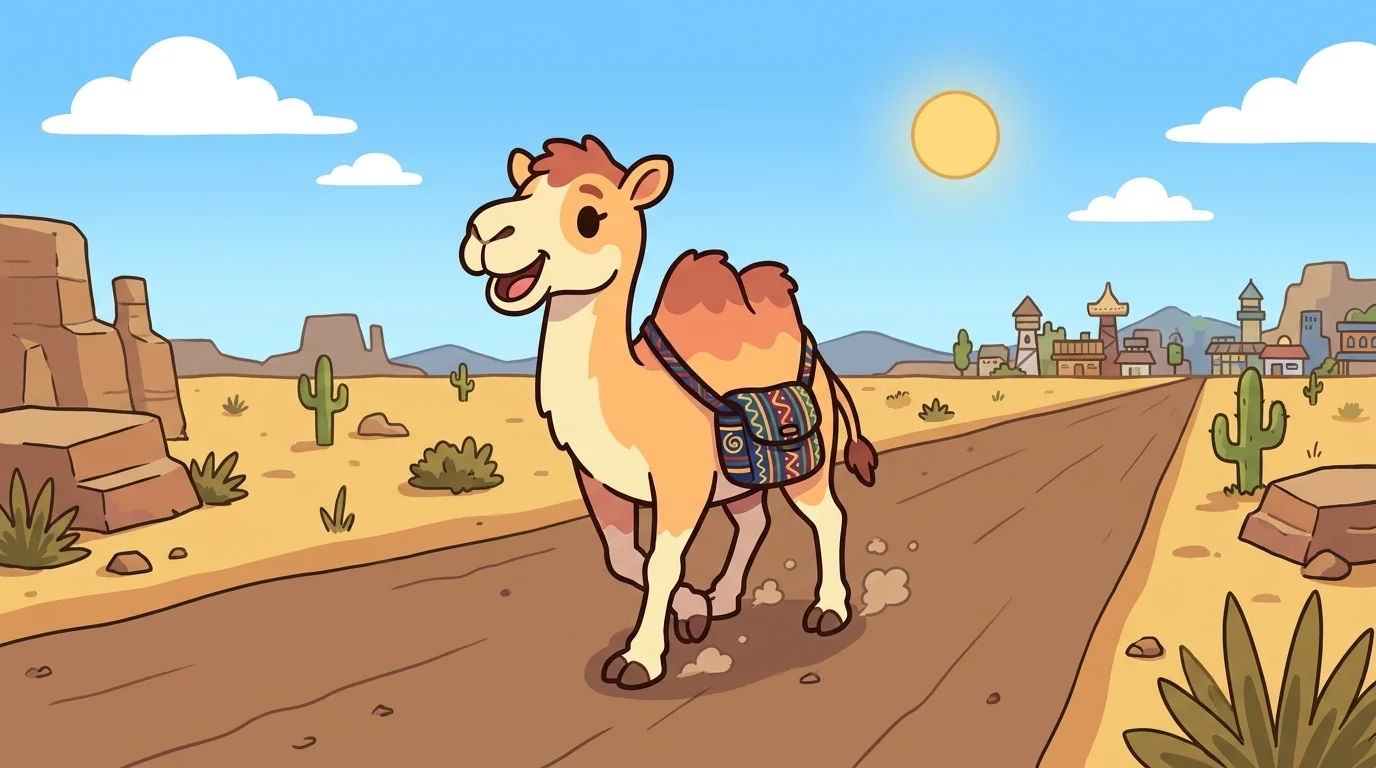
Carry's hooves made soft thumps on the dusty path. She was a camel-tween, not too big, not too small. Just right. Her fur was a mix of warm cream and soft russet. It looked like a sunset. She hummed a quiet, traveling tune.
Carry loved roads. Any road, really. Long ones, short ones, bumpy ones, smooth ones. They all led somewhere new. A small woven travel-pack bounced gently on her shoulder. It was her most prized possession. The pack had patterns woven into it. Swirls and lines and zigzags. They didn't belong to just one place. They seemed to come from everywhere. This pack was for carrying things. Not just objects, but ideas. Big, important ideas.
Carry knew a secret. Math ideas didn't just stay put. They traveled! Like a message in a bottle. Or a seed carried by the wind. They went from one land to another. And they changed along the way.
Take numbers, for example. The ones we use every day: 1, 2, 3. They're called Hindu-Arabic numerals. They started far away, in a place called India. Then they traveled to the Islamic world. Later, a smart guy named Fibonacci brought them to Europe. Before that, Europeans used Roman numerals. Imagine trying to do big math problems with X's and V's! It was a mess.
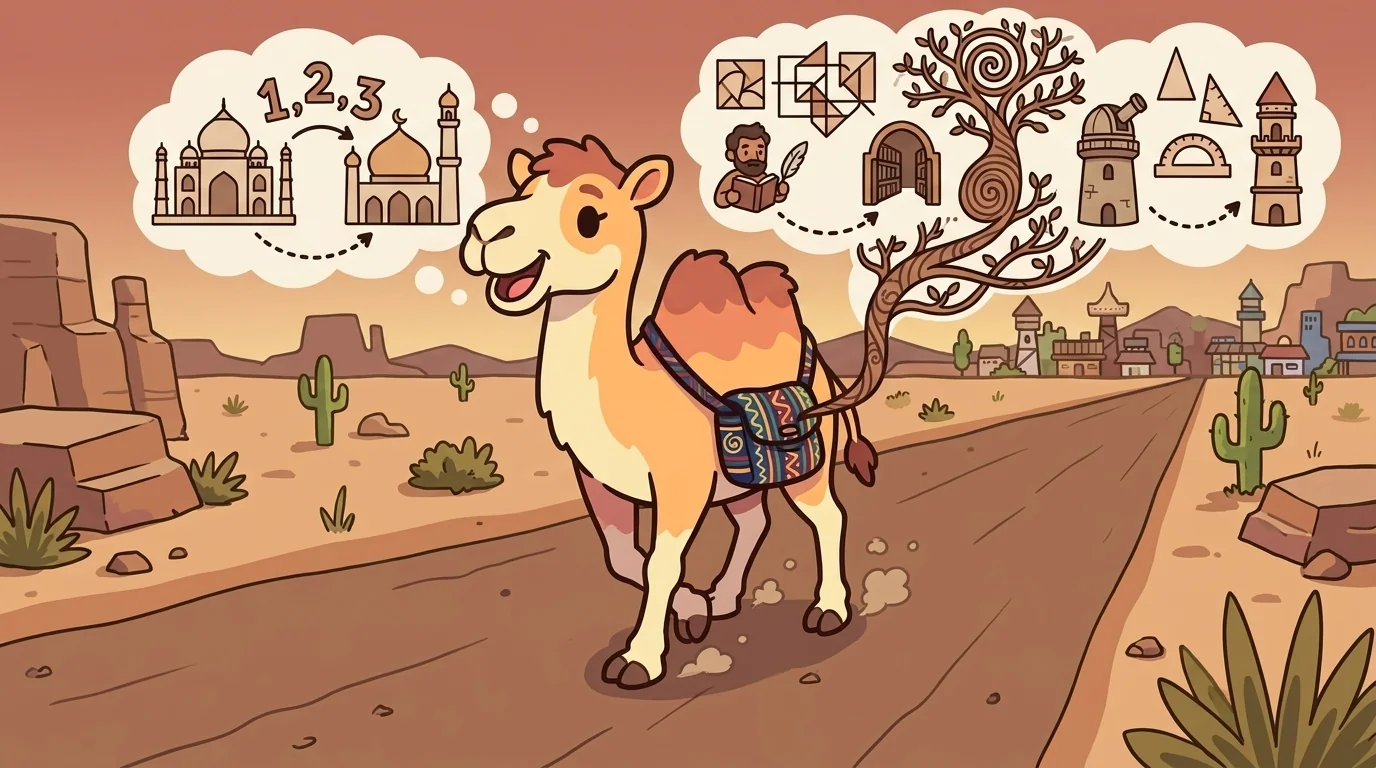
Algebra also took a long trip. It started in India and the Islamic world too. The word 'algorithm' even comes from an old math wizard named al-Khwārizmī. He wrote a book about it.
And trigonometry? That's about triangles and angles. It traveled from India, through the Islamic world, and then to Europe.
Even the number zero went on a journey. It was a big deal. Zero helps us know if a '1' means ten or one hundred. It came from places like India and the Mayans. Then it traveled. People in Europe didn't get it at first. They thought zero was silly. But it was super important!
Every time an idea traveled, it changed a little. It picked up new meanings. Or it lost some old ones. Like a story told by many different people.
Carry always said one thing very clearly. "Ideas don't just go one way," she'd explain. "They travel. And every place it visited, it grew." She'd tap her travel-pack. "Sometimes it got new meaning. Sometimes it left old meanings behind."
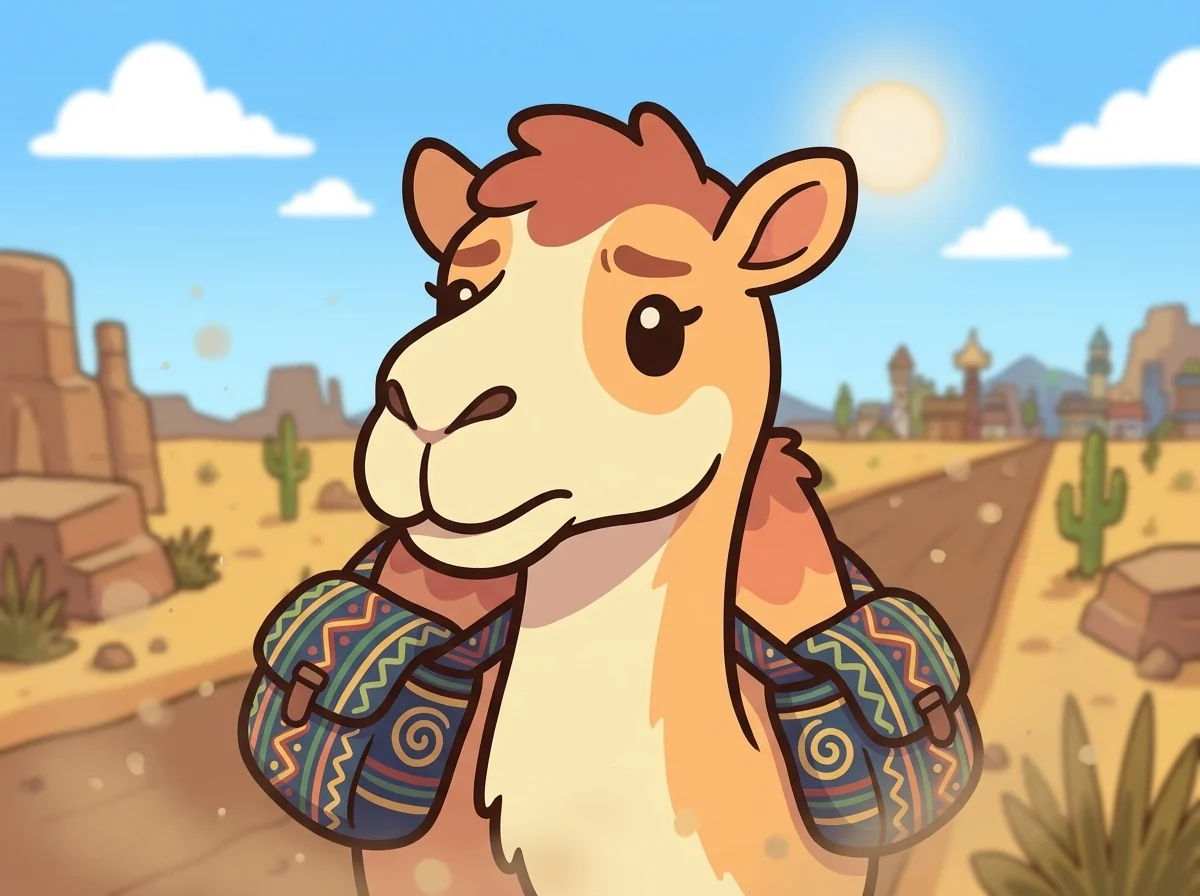
She hated when people said, "Oh, that culture stole that idea!" Or, "That culture just gave away their idea!"
"No, no, no!" Carry would shake her head. "It's not stealing. It's not a gift. It's carriage."
She'd pause, looking thoughtful. "It's like carrying a precious box across a bumpy road. The box gets a few dents. Maybe a new sticker. The journey itself changes what's inside. The carriage shapes the cargo."
Carry believed in honoring everyone. "You have to honor where the idea started," she'd say. "That's important."
Then she'd add, "And you have to honor the journey it took. The long roads. The dusty paths. The ships on the sea."
"But most of all," she'd finish, "you must honor the carriers. The people who moved the ideas. The traders, the scholars, the monks. The students who copied books by hand. They did the real work. They made sure the ideas kept moving."
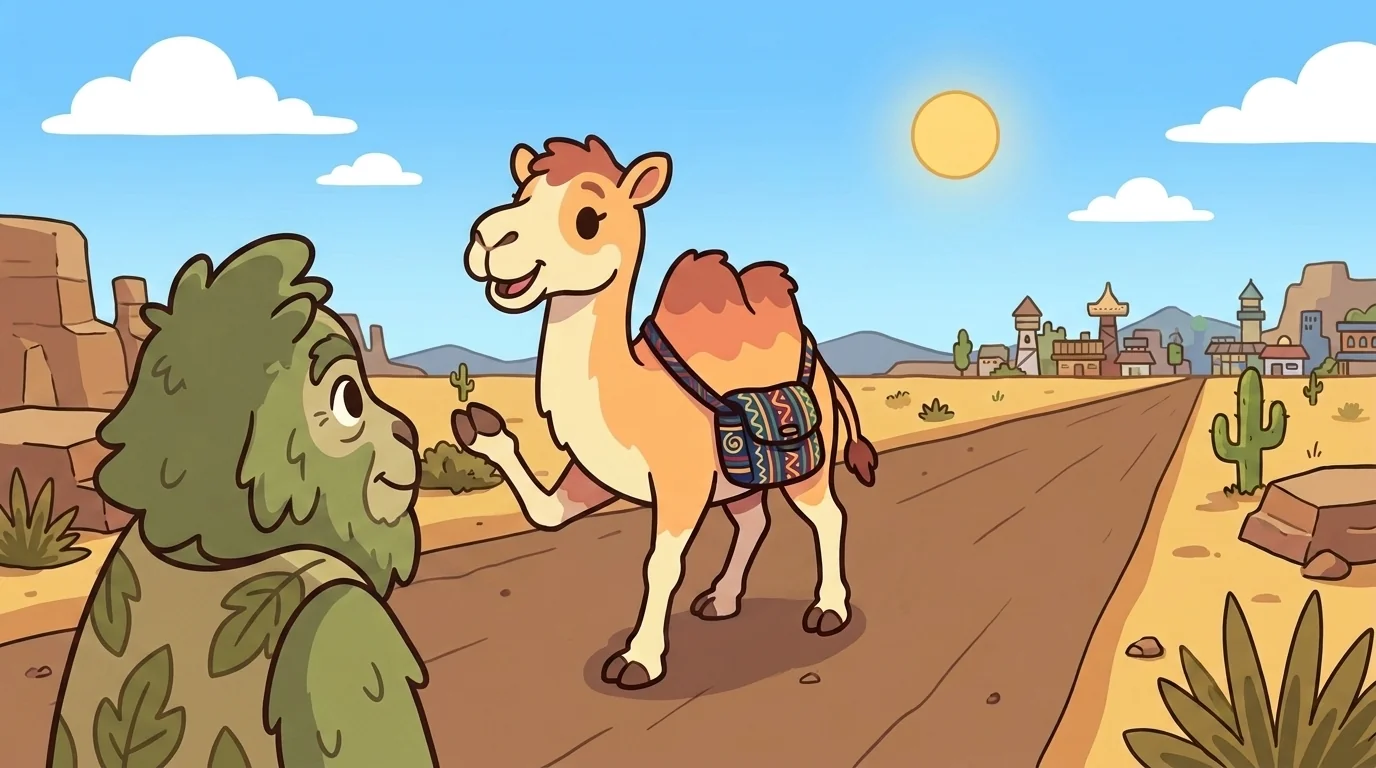
Carry's family had always been travelers. They lived along busy trade routes. Her parents carried all sorts of things. Objects, yes. But also ideas. They taught Carry to respect where things came from. And to respect the long trip they took.
One day, Carry walked all the way to MathLore. She was twenty-two years old then. A wise old creature named Lore met her.
"Tell me, Carry," Lore said, her voice like rustling leaves. "What is cultural-transmission?"
Carry straightened her shoulders. She looked at her woven pack. "It's simple, Lore," she began. "The idea traveled. Every place it visited, it grew."
She explained it clearly. "It's like carrying something precious. The journey changes it. The carriage shapes the cargo."
"I carry the big picture," Carry added. "The way ideas move. The special stories about how they moved, those are for other rooms here at MathLore."
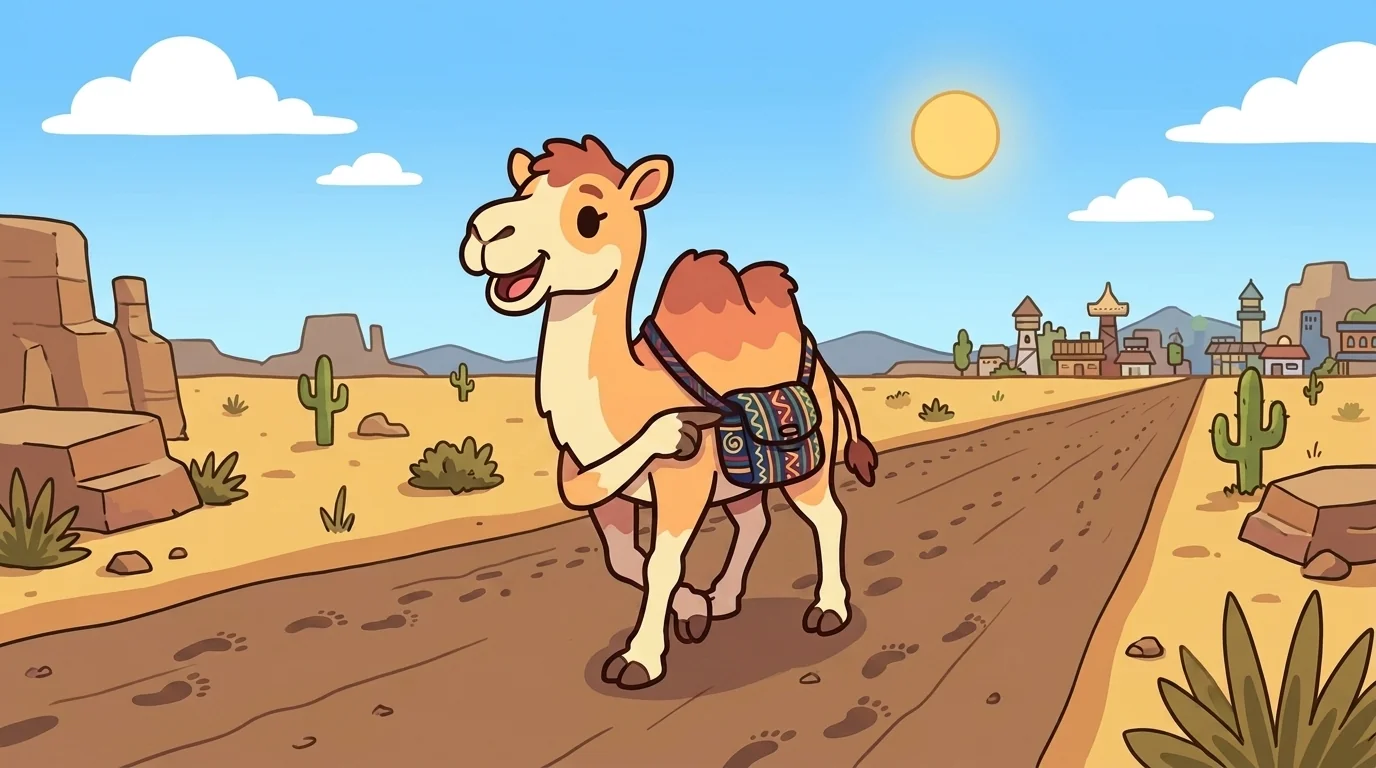
Lore smiled. "You understand," she said. "You are appointed."
Carry often pointed to her travel-pack. "Look at these patterns," she'd say. "They don't show one story. They show all stories of ideas traveling."
"The special tales," she'd explain, "like Fibonacci bringing numbers to Europe, or al-Khwārizmī's algebra going to new lands. Or Madhava's early calculus ideas from India reaching Europe. Those are in other parts of MathLore. My job is to show the main idea."
She'd tap her pack again. "Ideas travel. And travel changes them. It's not hard, really. It's just this: transmission is carriage + carriage shapes cargo."
"Always remember," she'd say, "Honor the origin. Honor the journey. Honor the carriers."
And her woven travel-pack? It was never empty. It always held the next big idea, ready for its own journey down the road. Carry rested a hoof on it and felt something warm and steady settle in her chest — the quiet, happy feeling of being one small, proud link in a very long chain of people, all handing something precious down the road to each other.
Hear it as an audio drama
A short play starring Carry, from MathLore. Different voices, same idea. Listen any time after you read.
Loading audio…
Read the drama script
- Narrator: From Spark and Anvil and MathLore — this is Carry, in chapter 1 of the MathLore cast.
- Narrator: This drama uses an AI-generated voice. Voiced via Gemini 2.5.
- Narrator: Carry is a small camel tween. Stylized in chunky-cartoon form. Tween-sized, not realistically large. Warm cream and soft russet. She walks steadily. She is patient. She is fond of roads and trade routes.
- Narrator: A small hand-woven travel-pack rests against her shoulder. The pack carries abstract patterns. Not specifically Silk Road. Not specifically Trans-Saharan. Not specifically Maritime route. The pack suggests, simply — this carries ideas, across distance, across time. The patterns are deliberately generic. The carriage is the point.
- Carry: The idea traveled. Every place it visited, it grew.
- Narrator: Carry is all about cultural transmission. Mathematical ideas travel. They are not made in one place and finished. They are made in many places. Each place adds. Each place changes. Each transmission is shaped by the carriage.
- Carry: I am Carry. What I teach is cultural transmission. The move is — the idea traveled. Every place it visited, it grew. Transmission is not theft. Transmission is not gift. Transmission is carriage across distance and time. The carriage shapes the cargo.
- Narrator: At the MathLore academy, a young scholar is at the work table. They have been studying the history of mathematics. They have read about Euclid, Archimedes, Newton, Euler. Most of the names they have read are European. They have started to wonder if mathematics was made only in Europe. They have come to Carry with this question.
- Student: I have been reading about math history. Most of the famous mathematicians are European. Was math made in Europe?
- Carry: No. Math was made in many places. Hindu-Arabic numerals — the digits zero through nine that we write today — were developed in India between the fifth and seventh centuries of the common era. They traveled through the Islamic world, where scholars refined them and developed algebra. The word algorithm comes from al-Khwarizmi, an Islamic mathematician who wrote a book on equation-solving in 825 of the common era. His book's title used the word al-jabr — meaning the reunion of broken parts. We get the word algebra from his title.
- Student: I had not heard those origins.
- Carry: Many learners hear only the European part. The ideas entered Europe through translation — much later. Fibonacci brought Hindu-Arabic numerals to Europe in his Liber Abaci in 1202. European mathematics used Roman numerals before that. The new digits were resisted for centuries. They displaced Roman numerals gradually, over hundreds of years.
- Student: So the digits I write — they came from India, through the Islamic world, to Europe.
- Carry: Yes. And not just the digits. The number zero was treated as a positional placeholder in India and given full mathematical citizenship there. The Maya civilization, on the other side of the world, independently developed the concept of zero too. Both traditions worked with zero as a number, not just a placeholder. European mathematics had no zero for a long time. The concept came in through Islamic transmission and was resisted, then accepted, then taken for granted.
- Student: Were these ideas changed when they traveled?
- Carry: Yes. Sometimes they gained new context. Sometimes they lost old context. Indian mathematics included spiritual and cosmological framings that did not always travel with the bare mathematical content. Islamic mathematics added rigor and notation. European mathematics added formalization and proof structure. Each waypoint added something. Each waypoint also lost something. The cargo arrived shaped by every road it had traveled.
- Student: So the math I learn in school — is the version that arrived in Europe and then traveled to other parts of the world.
- Carry: One version. The version that traveled through Europe and arrived shaped by European notation and proof traditions. Other versions exist. The Indian tradition still teaches mathematics with some of the framings that did not travel with the European version. The Islamic tradition has commentaries on al-Khwarizmi that contain proofs the European tradition lost. Mayan mathematics is being recovered from codices and inscriptions. The full history is wider than any single curriculum.
- Student: What is the right way to tell this history?
- Carry: There is no single right way. There are better and worse ways. A better way credits the places ideas were made. Names the people who made them when names exist. Acknowledges that transmission shapes the cargo. She treats other traditions as real mathematics, never as early steps toward ours. A worse way leaves out the origins. Treats European mathematics as the only mathematics. Frames non-European traditions as quaint or incomplete.
- Student: Peer transmission.
- Carry: Peer transmission. Mathematics is not a European invention that other cultures sometimes contributed to. Mathematics is a human activity that many cultures have practiced. The European tradition is one tradition among many. Its accomplishments are real. Its centrality in modern curricula is a historical fact, not a measure of comparative worth.
- Student: And the carriage shapes the cargo.
- Carry: The carriage shapes the cargo. Every translation. Every commentary. Every new notation. Every time an idea moves from a teacher in one language to a student in another — the idea changes a little. Mathematics is not a fixed object that travels unchanged. Mathematics is a body of practices that grows and shifts as it moves. Each waypoint contributes. Each waypoint also lets some things go.
- Carry: The idea traveled. Every place it visited, it grew. Treat the travel as part of the math. Treat the waypoints with respect. The cargo you receive was shaped by many hands across many centuries. The full history is honor.
- Narrator: The student looks at Carry's woven travel-pack. The patterns are abstract. The pack itself has been mended in places — small careful repairs, in different threads, made at different times by different hands. The pack is the history. The carriage is the lesson. The student starts a new section in their notebook. Origins. Transmissions. Peer traditions. The history widens.
- Narrator: You've been listening to a Spark and Anvil chapter, written by the Spark and Anvil writing team for ages 9 to 14.
- Narrator: Apps stay free forever.
- Narrator: Curriculum aligned to Common Core math.
- Narrator: Released under Creative Commons BY-NC-SA 4.0 for educational reuse. Visit Spark and Anvil for the full transcript.
More stories with Carry
Another short audio story about Carry. Open one when you are ready.
Cultural transmission
Loading audio…
Read the script
- Narrator: From Spark and Anvil and MathLore — this is Carry, in chapter 1 of the MathLore cast.
- Narrator: This drama uses an AI-generated voice. Voiced via Gemini 2.5.
- Narrator: Carry is a small camel-tween with a patient, journeying bearing, and a hand-woven travel-pack slung from her shoulder.
- Narrator: Her pack's abstract patterns are a map of many journeys, carrying not just objects, but ideas across vast distances and time.
- Carry: I am Carry. I teach that mathematical ideas don't just appear in one place. They travel.
- Carry: The idea traveled. Every place it visited, it grew. Sometimes it gained new context. Sometimes it lost old context.
- Narrator: Like our numbers, which journeyed from India through the Islamic world to Europe, making calculation easier for everyone.
- Carry: Transmission is not theft, and transmission is not a gift. It is carriage across distance and time.
- Narrator: Carry grew up along trade routes. Her family were carriers, moving both objects and ideas across long distances.
- Carry: From them, I learned to honor the origin of everything, and to honor the journey it took.
- Narrator: She arrived at MathLore at twenty-two, where the keeper asked her one question: "What is cultural-transmission?"
- Carry: It is carriage, and the carriage shapes the cargo. I carry the meta-pattern of these journeys.
- Narrator: The keeper looked at her with ancient eyes and said, "You are appointed."
- Carry: Honor the origin. Honor the journey. Honor the carriers. The carriage always shapes the cargo.
- Narrator: The woven pack hums with quiet energy, as if it holds the next idea-on-the-road, waiting for its journey to begin.
- Narrator: You've been listening to a Spark and Anvil chapter, written by the Spark and Anvil writing team for ages 9 to 14.
- Narrator: Apps stay free forever.
- Narrator: Curriculum aligned to Common Core math.
- Narrator: Released under Creative Commons BY-NC-SA 4.0 for educational reuse. Visit Spark and Anvil for the full transcript.
The MathLore ensemble
Carry is one of the friends in MathLore. Each friend shows you one idea by how they act; meet them all and you have the whole subject.
-

Heap
Counting-as-first-story — every people figured out their own way to count
-

Spire
Pattern-as-discovery — patterns are everywhere when you slow down enough to see them
-

Vouch
Proof-as-shared-knowledge — show me why; if your why holds up, I'll build on it
-

Home
Math-as-cultural-context — this idea was born somewhere, for someone, with reasons
-

Dozen
Number bases (counting in twelves, tens, or twos — the base is a choice)
-
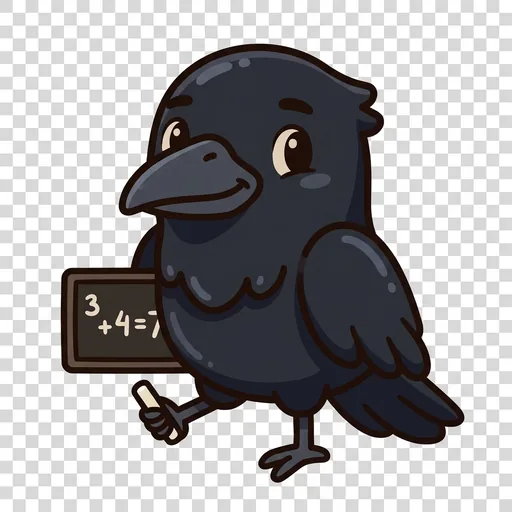
Etch
The invention of notation (writing math down so ideas can travel across time)
-

Frontier
Mathematics is unfinished (there are still open questions no one has answered)
-

Naught
The invention of zero (a symbol for nothing that changed everything)
-
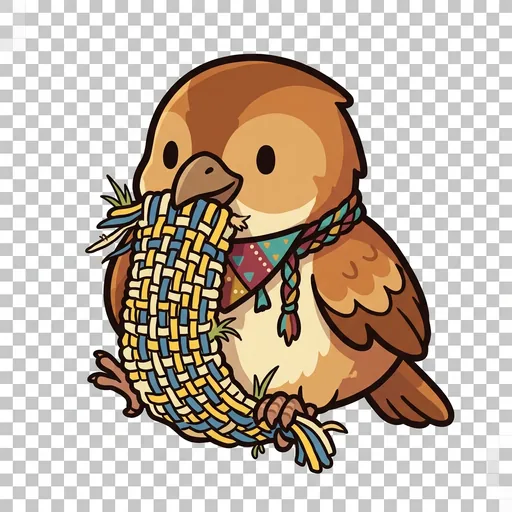
Warp
Math in everyday craft (the geometry hidden in weaving, building, and making)