
Etch
THE INVENTION OF NOTATION — math was once written in long sentences; the compact symbols (+, −, =, x) were invented by many people over centuries, and good notation doesn't just record thinking, it lets you think thoughts too big to hold in words.
Loading audio…
Press play to listen along. The line being read lights up as you go.
Show full transcript
Loading transcript…
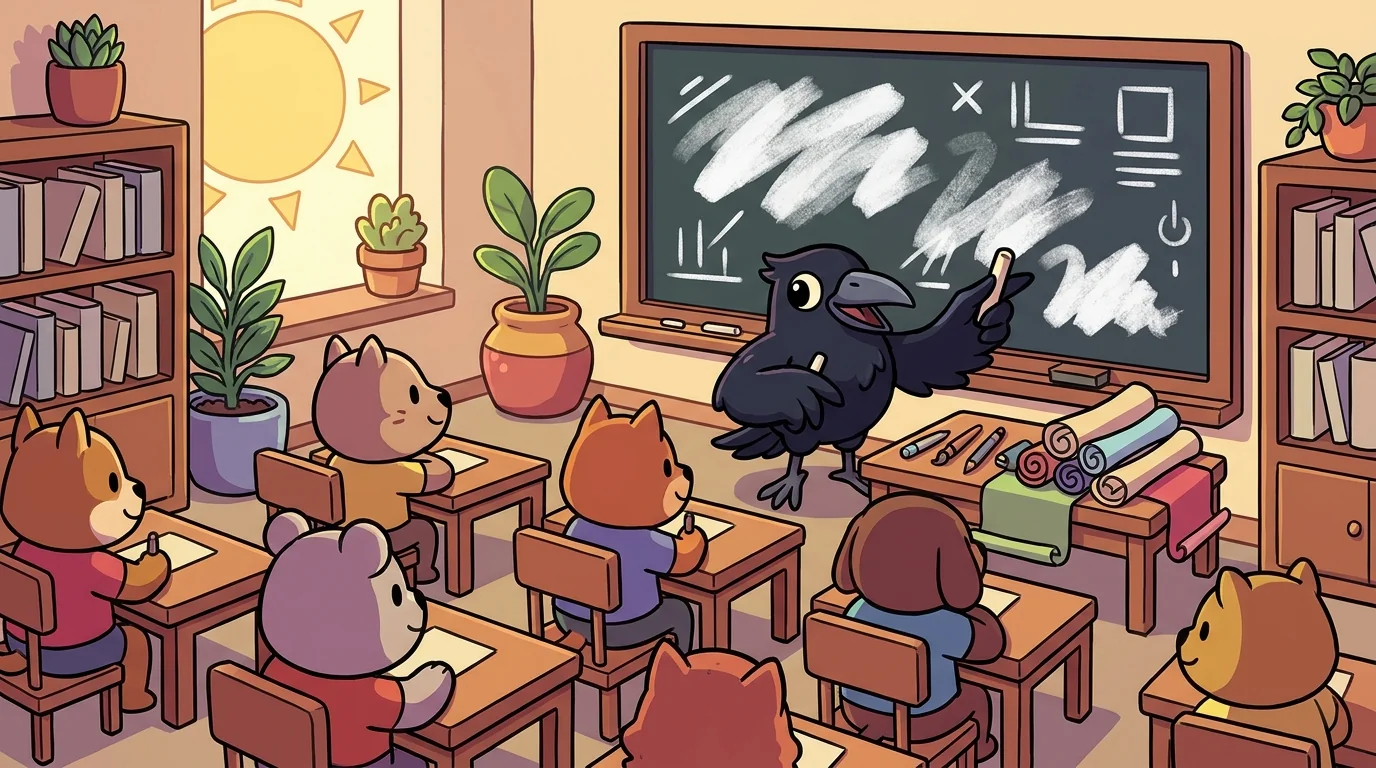
Etch was a glossy black raven who loved to make marks — not scratches, but meaningful marks, little shapes that carried big ideas — and the Advanced tier of her craft came down to a claim most people find surprising. "Notation isn't just shorthand," she said, scratching at her board. "The right symbol doesn't only record a thought. It lets you have one you couldn't have held any other way."
She read aloud in a plodding voice, the way math once was written: "'The number three, when it is added unto the number four, is found equal unto the number seven.'" The children groaned. "Exactly. That's rhetorical algebra — math done entirely in words. For most of history, that's how it was written, and it was slow, and worse than slow: it hit a ceiling. You cannot juggle a paragraph in your head. You can juggle 3 + 4 = 7." She tapped the marks. "The symbols are small enough to move around, so your mind is freed to work on the idea instead of wrestling the sentence."
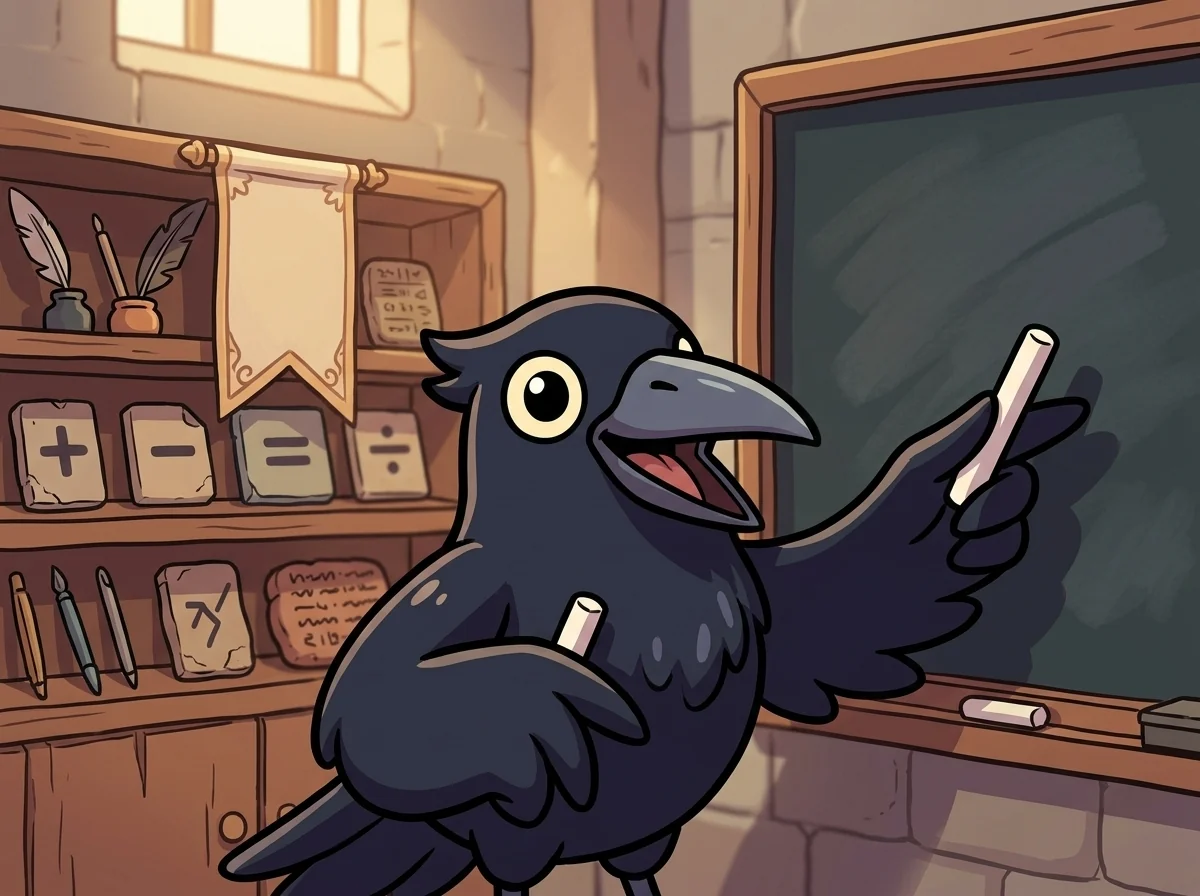
"And here's what people forget," she went on. "No single genius invented this language. It was assembled, mark by mark, across centuries and cultures. The place-value digits and the methods of algebra travelled from Indian and Arabic mathematicians into the wider world — the very word algebra comes from al-Khwarizmi's Arabic. The plus and minus signs appeared in Europe. The equals sign was one person's small idea — two parallel lines, because, he said, no two things can be more equal than a pair of parallels. Each mark was somebody's invention, kept because it worked, until a whole shared language existed that no one of them could have built alone."
A young mouse asked why it mattered who wrote it in words or symbols, if the math was the same.
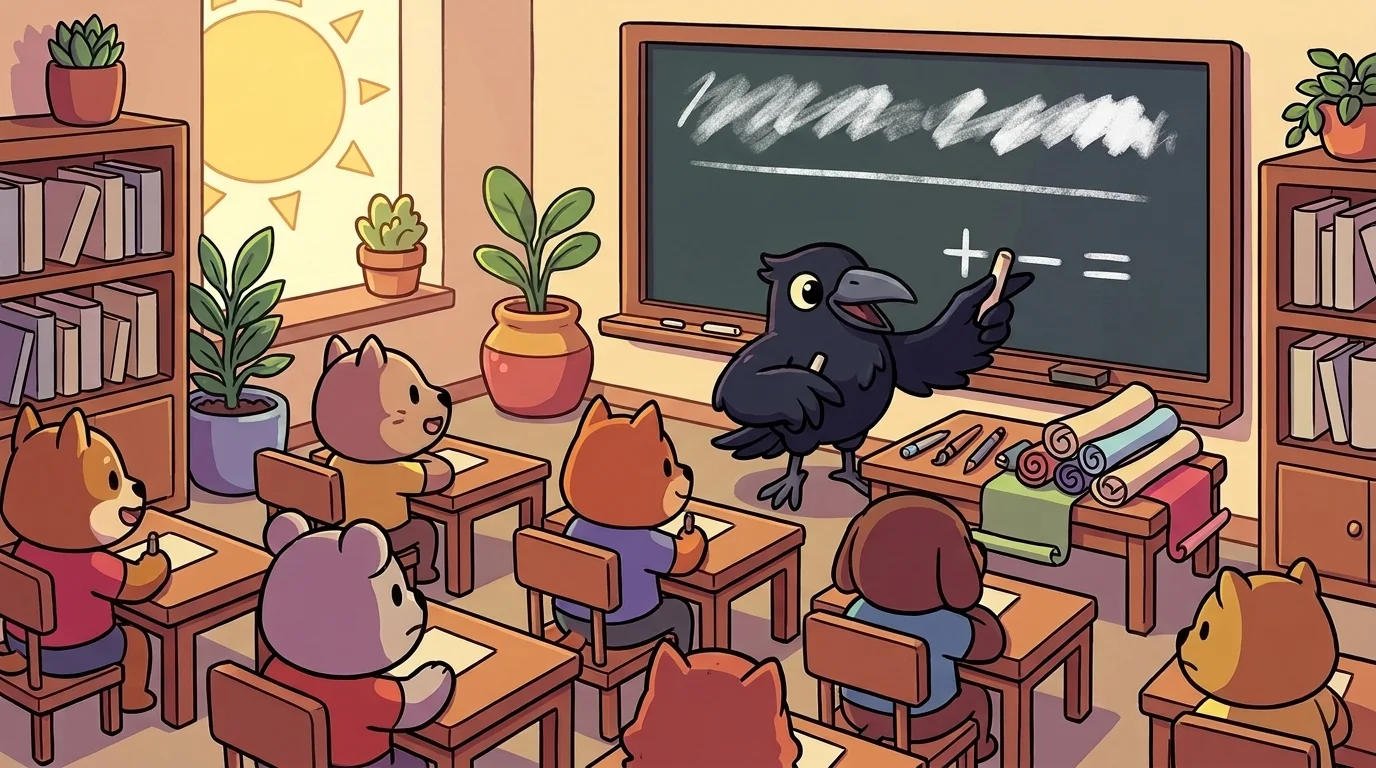
"Because the notation changes what's thinkable," Etch said. "Watch." She wrote a long rule out in a sentence — take a number, multiply by itself, add three, and so on — and the mouse's eyes glazed. Then she wrote the same rule as a short symbolic expression. "Now I can see its shape. I can substitute, rearrange, spot a pattern — because it's small enough to hold. Good notation is compression: it packs a big idea into a mark. And it's generality: one little letter can stand for any number, so I can say something true about all of them at once. Words can't do that cleanly. Symbols can."
She learned it as a fledgling, filling pages with words until her wing ached, then discovering she could shrink a whole paragraph into a handful of strokes and suddenly see what she'd been describing. "That was the moment," she said. "Not that the marks were tidier. That the marks let me think a bigger thought. The sentence was a wall. The symbol was a window."
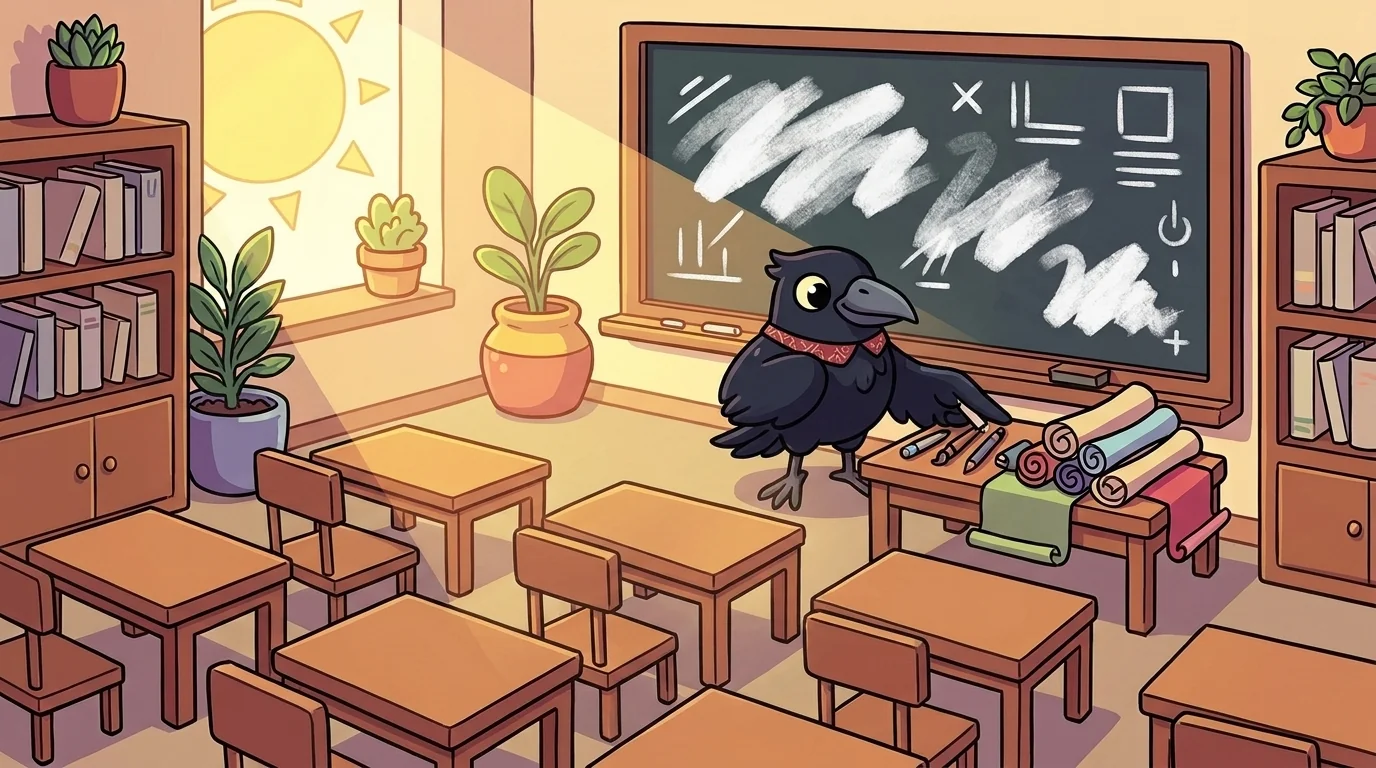
The mouse looked at the short expression and, for the first time, saw its shape.
Etch felt the small warm gladness of it — the pleasure of a slow sentence collapsing into a mark that anyone, anywhere, could pick up and think with. "A good symbol," she murmured, "isn't a shortcut around thinking. It's a tool for thinking. Invent the right mark, and you can think what couldn't be thought before."
The MathLore ensemble
Etch is part of MathLore's distributed-narrative cast. Each character embodies a different curricular primitive; together they teach the full subject.
-

Heap
Counting-as-first-story — every people figured out their own way to count
-
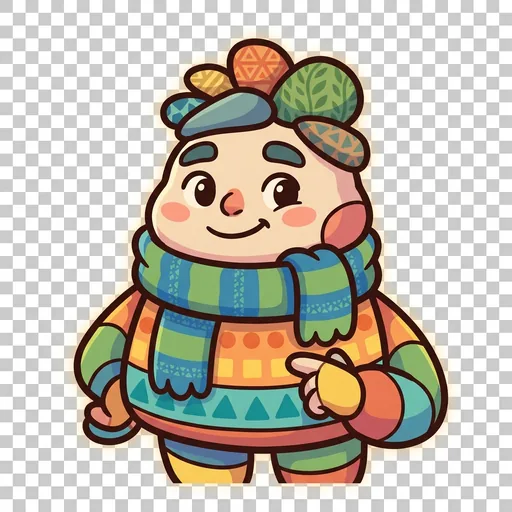
Spire
Pattern-as-discovery — patterns are everywhere when you slow down enough to see them
-
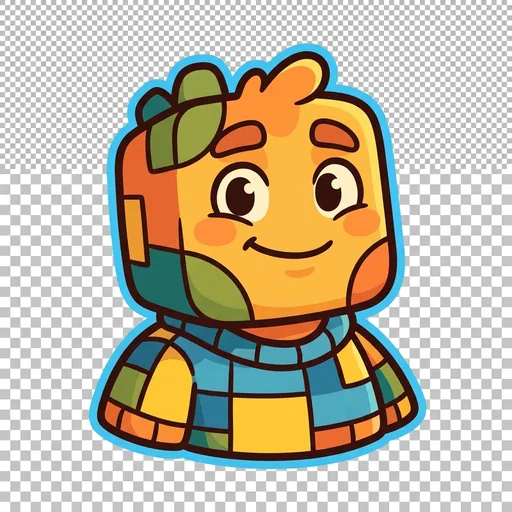
Vouch
Proof-as-shared-knowledge — show me why; if your why holds up, I'll build on it
-
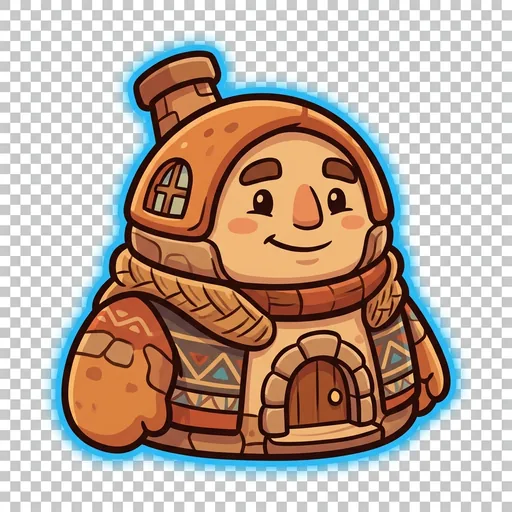
Home
Math-as-cultural-context — this idea was born somewhere, for someone, with reasons
-
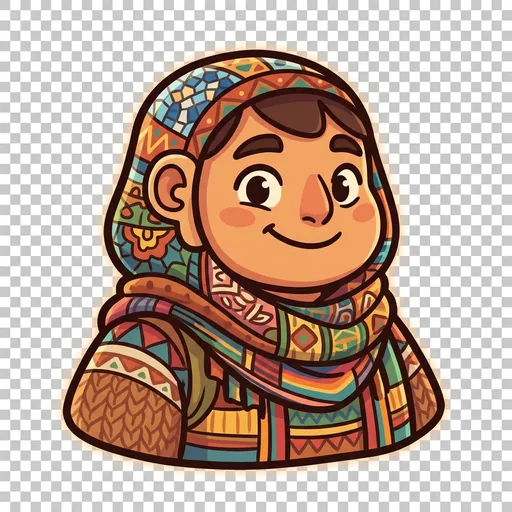
Carry
Cultural-transmission — the idea traveled; every place it visited, it grew
-
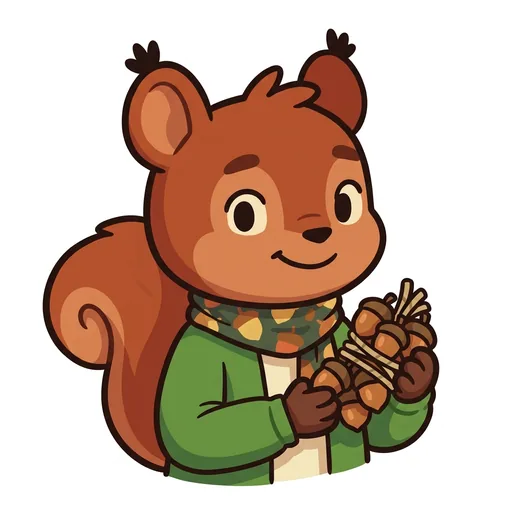
Dozen
Number bases (counting in twelves, tens, or twos — the base is a choice)
-
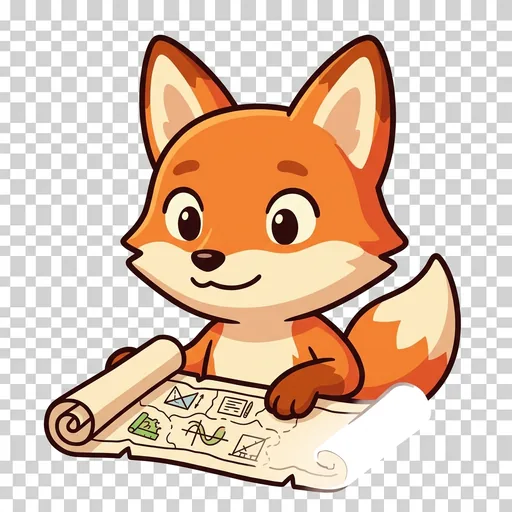
Frontier
Mathematics is unfinished (there are still open questions no one has answered)
-
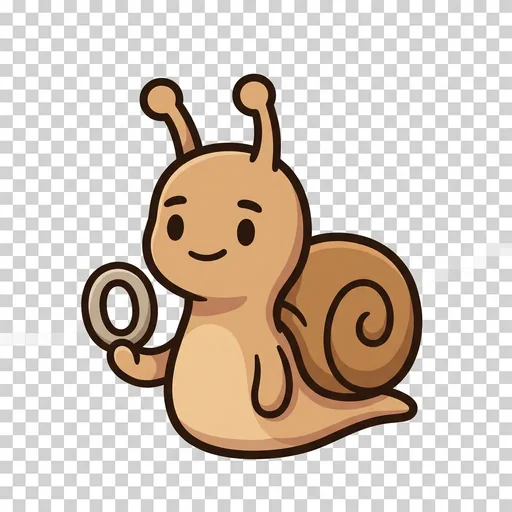
Naught
The invention of zero (a symbol for nothing that changed everything)
-
Warp
Math in everyday craft (the geometry hidden in weaving, building, and making)