
Naught
THE INVENTION OF ZERO — giving nothing a name and a number was a bold, hard-won idea, reached as a full number in India and independently by the Maya; zero holds the empty place so a positional system can work, and it turns nothing into something you can compute with.
Loading audio…
Press play to listen along. The line being read lights up as you go.
Show full transcript
Loading transcript…
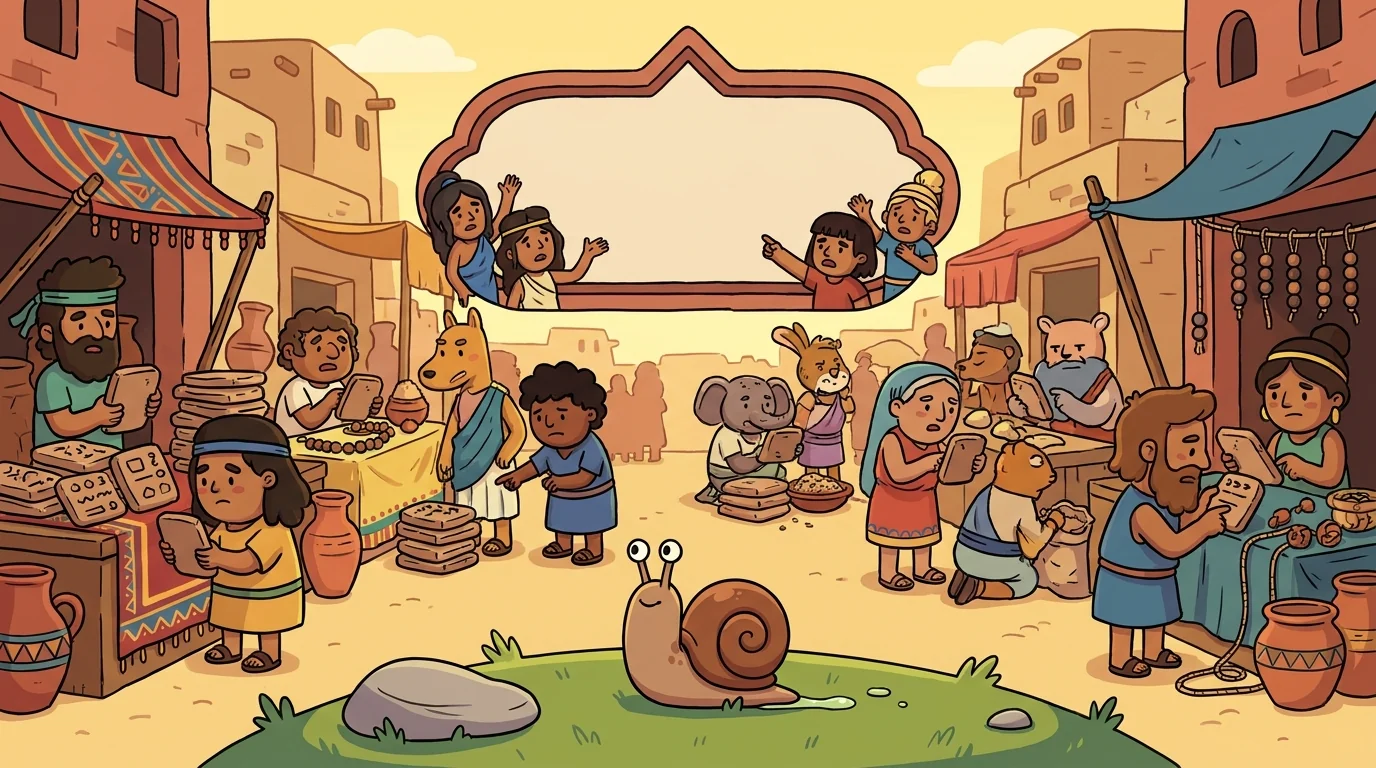
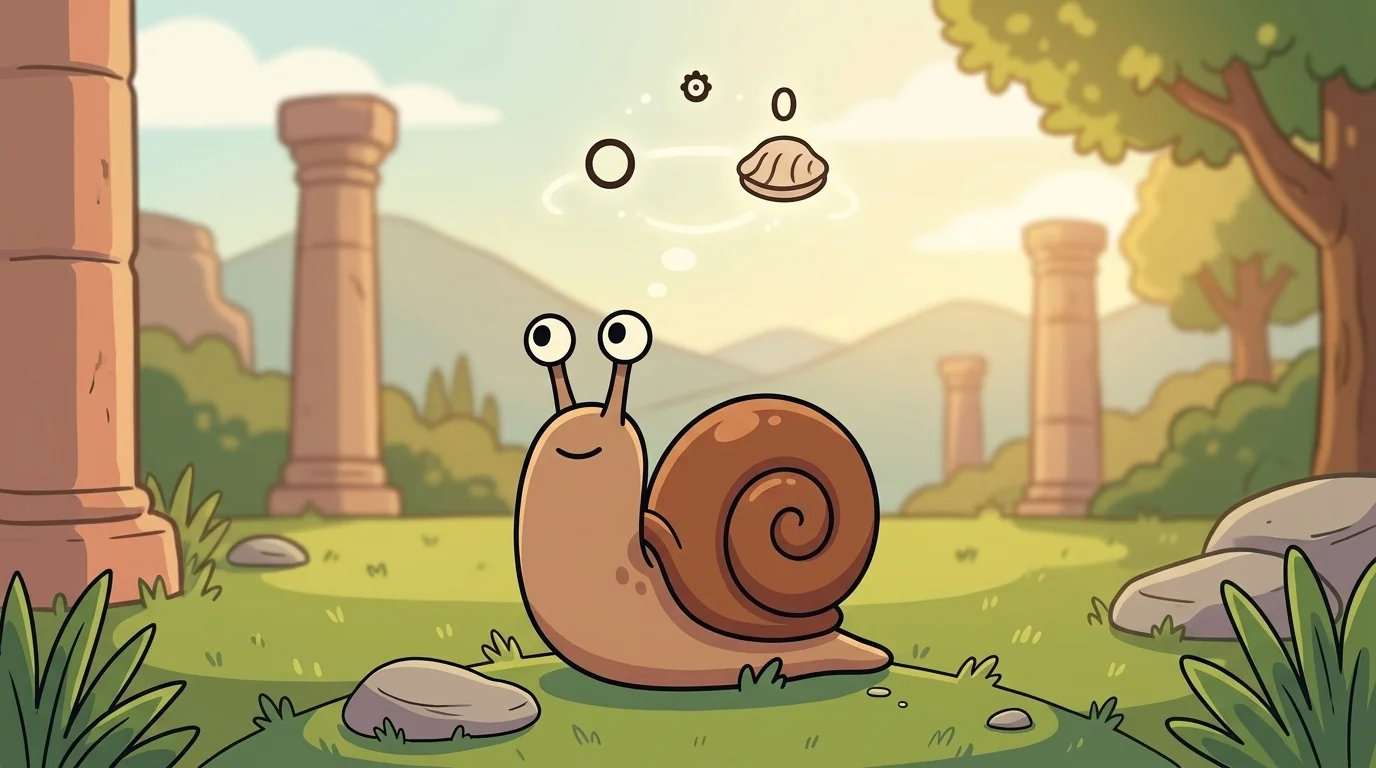
Naught was a small, quiet snail whom people walked right past — "there's nothing there," they'd say, and step over the space where he sat — and for a long time he believed them. Then he learned the most surprising thing in all of math, and the Advanced tier of it comes in two parts. "First," he said, "nothing is a something. And second — this is the part that took the world thousands of years — nothing is a number you can do arithmetic with."
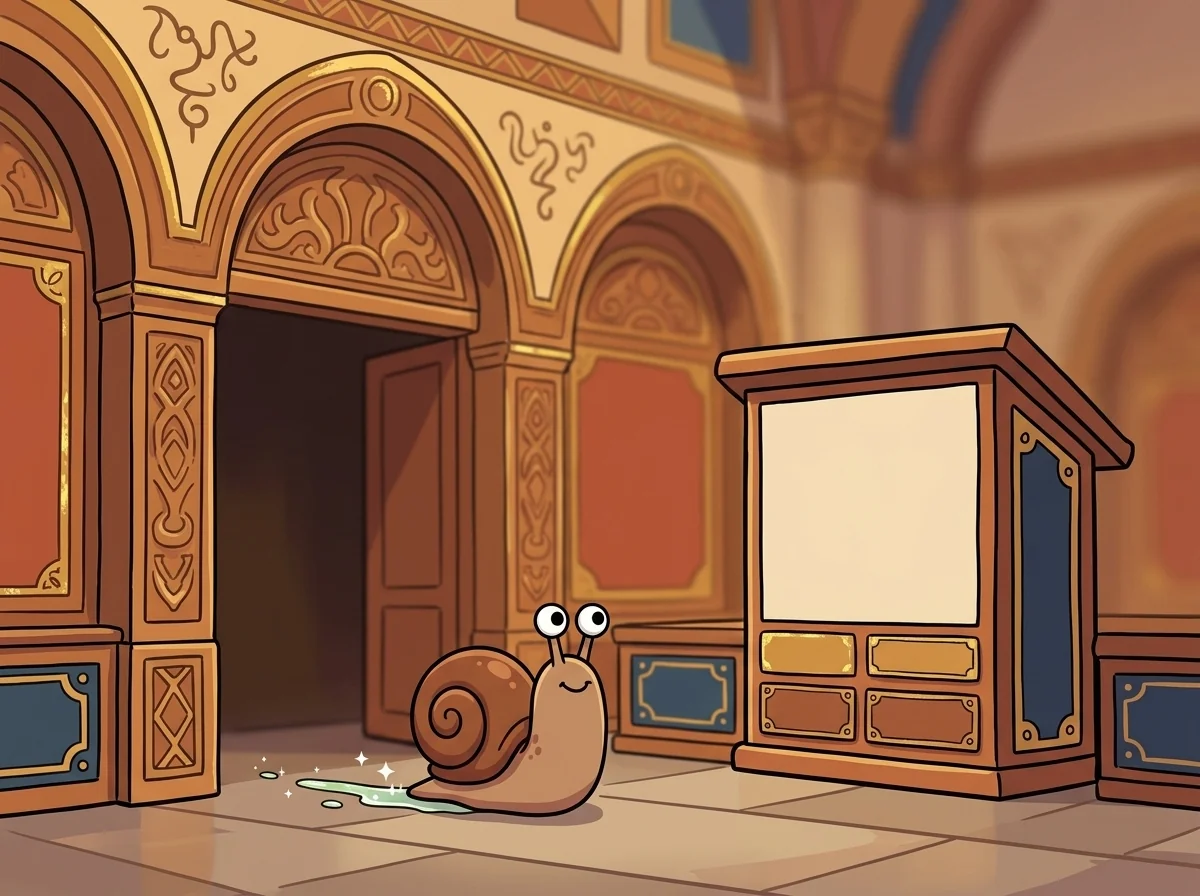
He showed the first part the way he always did. "Watch someone write 'one hundred and five.' A 1 for the hundred, a 5 for the five — but the tens place has nothing in it. Write nothing at all and you get '15.' Fifteen! Completely wrong. In a positional system, where a digit's value depends on its column, an empty column has to be marked, or the columns collapse and 105 becomes 15 becomes 150 — you can't tell them apart." He set a small round mark in the gap. "That's zero as a placeholder. It holds the empty seat so the other digits keep their places. Several peoples reached at least this much — even a gap or a dot to say 'nothing here.'"
"But here's the leap most stopped short of," he went on, and his quiet voice went quieter with respect. "Treating zero not just as a gap but as a number in its own right — something you can add, subtract, and reason about. That full idea was worked out in India, where scholars gave zero its own rules and its own name, and — with no contact whatsoever, across an ocean — independently among the Maya, whose calendar needed a true zero to count from. Two peoples, far apart, both bold enough to look at emptiness and say: this deserves a number."
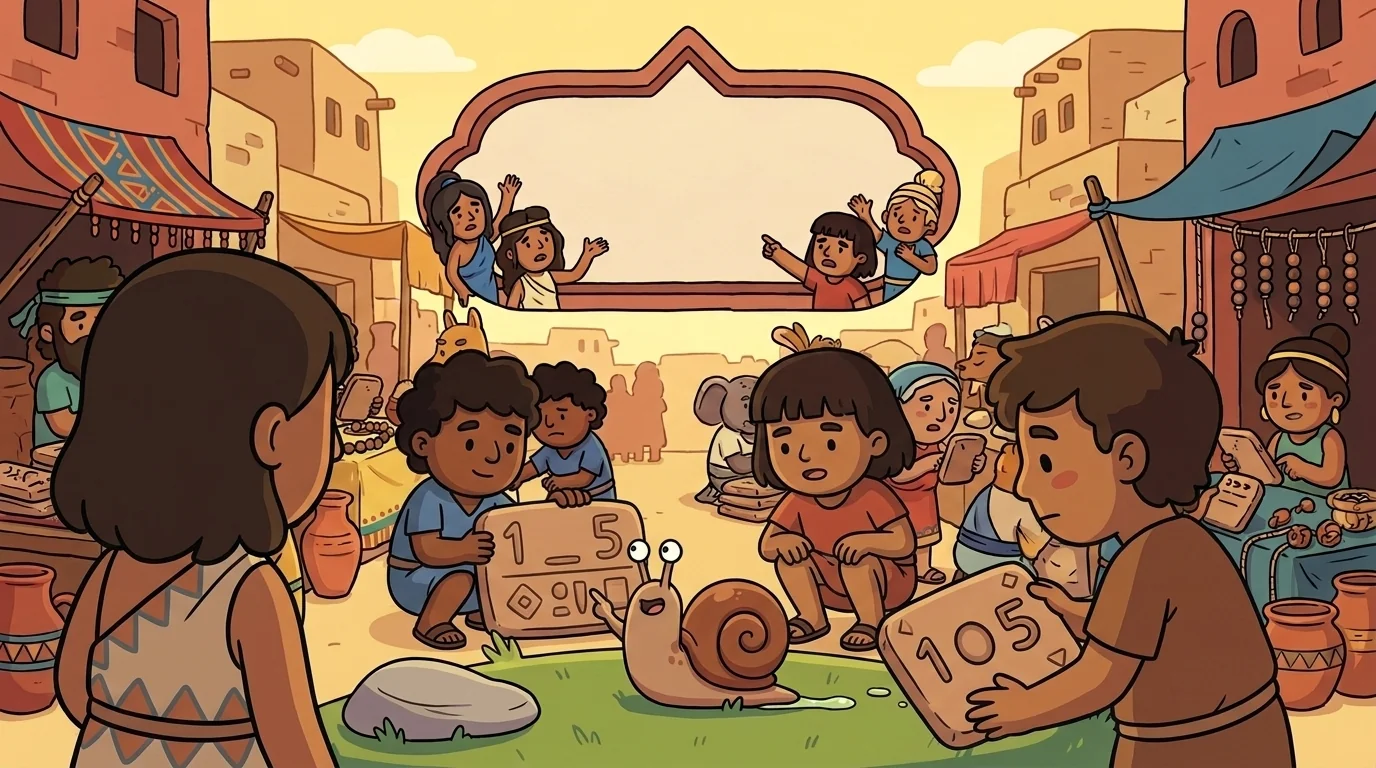
A young vole was puzzled. "Why was that hard? Nothing is... easy. It's nothing."
"That's exactly why it was hard," Naught said gently. "Every other number counts things you can point to — three acorns, five stones. Zero counts the absence of them. To give a name to what isn't there, to write a symbol for 'none,' and then to calculate with it — five minus five is a something called zero — asks you to treat emptiness as real. Many brilliant peoples counted for millennia and never took that step, not because they weren't clever, but because it is a genuinely strange and daring thing to do." He left his little round mark sitting in the sum. "Once you do take it, big numbers become easy, place value clicks into place, and arithmetic opens all the way up. Nothing, named, unlocked everything."
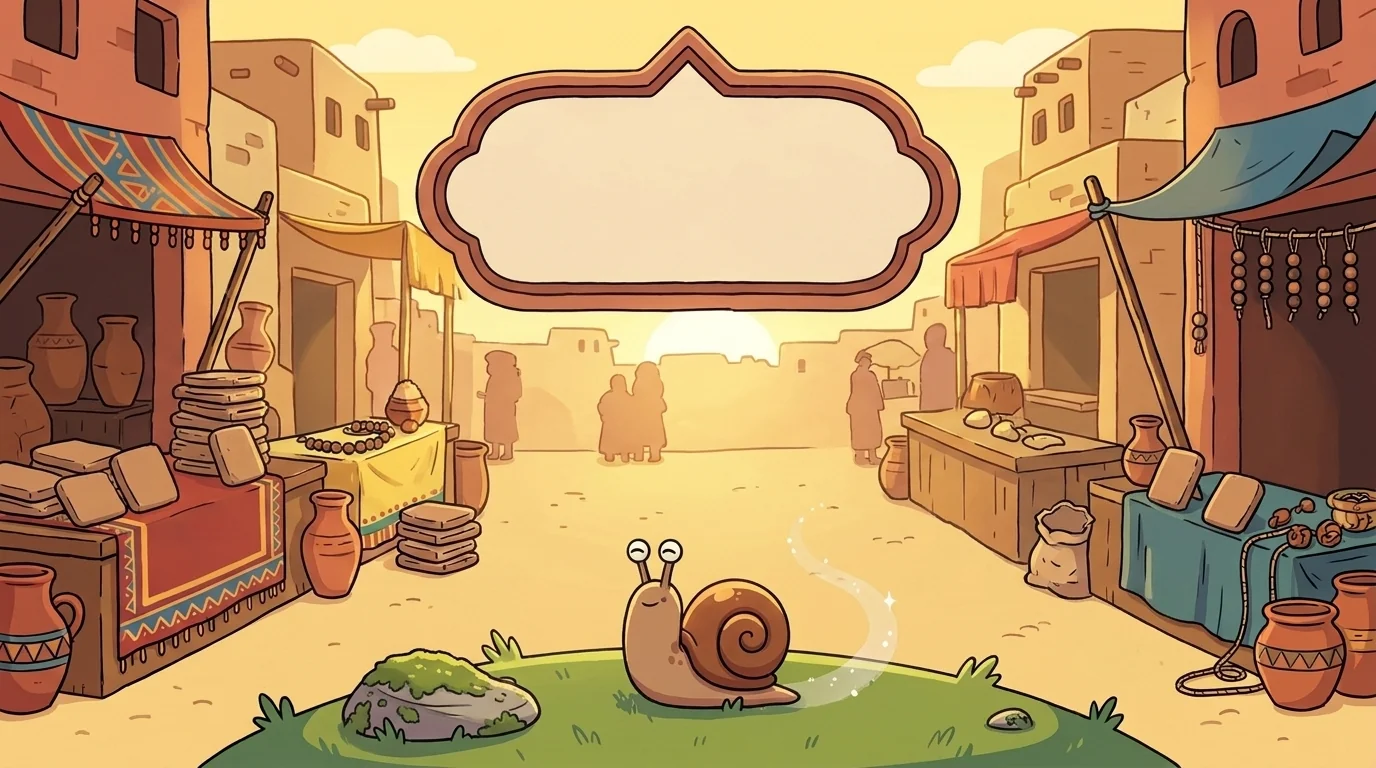
He learned it as the smallest creature in the hall, forever told he didn't count. "That was the turn," he said. "The day I saw that the empty place isn't a nobody. It's the thing that lets every other number keep its meaning. Leave it out and the whole system falls apart. Nothing turned out to be the keystone."
A slow, steady pride rose in him, the quiet warmth of a thing long dismissed finally being given its name. "Give nothing a number," he murmured, "and you don't get nothing. You get everything else, holding together."
The MathLore ensemble
Naught is part of MathLore's distributed-narrative cast. Each character embodies a different curricular primitive; together they teach the full subject.
-

Heap
Counting-as-first-story — every people figured out their own way to count
-

Spire
Pattern-as-discovery — patterns are everywhere when you slow down enough to see them
-
Vouch
Proof-as-shared-knowledge — show me why; if your why holds up, I'll build on it
-

Home
Math-as-cultural-context — this idea was born somewhere, for someone, with reasons
-

Carry
Cultural-transmission — the idea traveled; every place it visited, it grew
-
Dozen
Number bases (counting in twelves, tens, or twos — the base is a choice)
-
Etch
The invention of notation (writing math down so ideas can travel across time)
-

Frontier
Mathematics is unfinished (there are still open questions no one has answered)
-
Warp
Math in everyday craft (the geometry hidden in weaving, building, and making)