
Warp
MATH IN CRAFT — deep mathematics lives in the everyday craft of peoples worldwide, often long before any book named it: symmetry in a woven pattern, counting in a knot, geometry in a tiling, ratio in a recipe. The math was already there, made by hands.
Loading audio…
Press play to listen along. The line being read lights up as you go.
Show full transcript
Loading transcript…
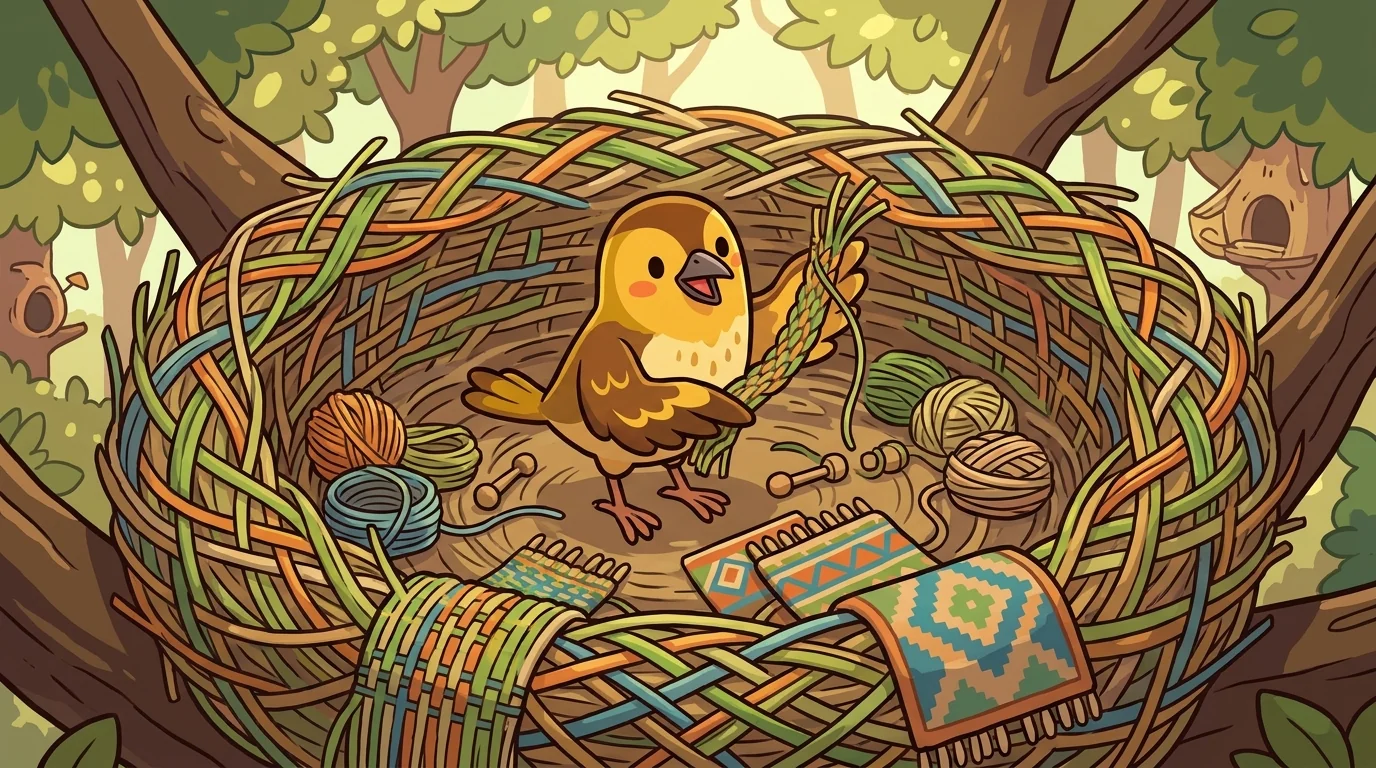
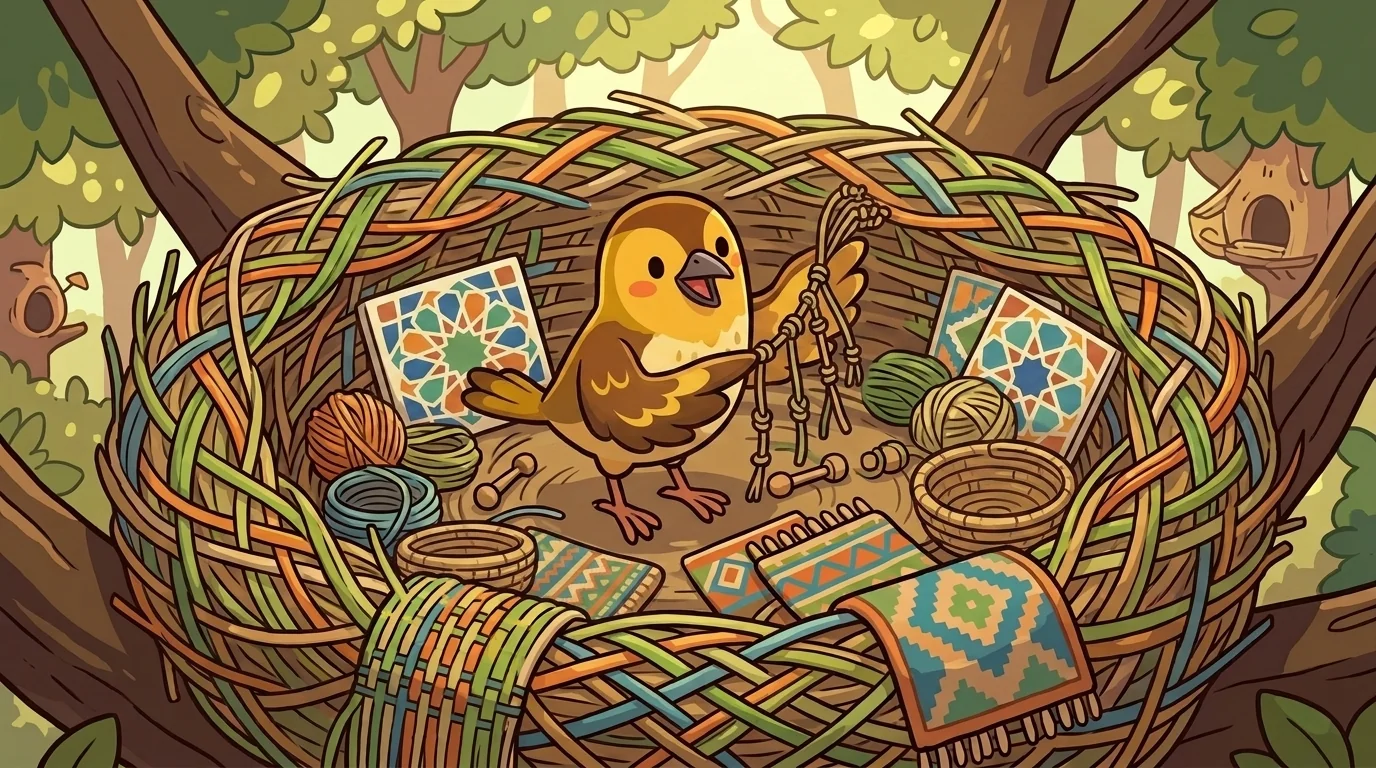
Warp was a small, tidy weaver-bird who built her nest by crossing threads over and under, over and under, in a careful repeating pattern — and one day, looking at her own work, she saw something that stopped her cold. There was math in it. Real math. She had not read it in a book; she had woven it with her own beak and feet. "And once you can see it," she said, holding up a strip of weaving, "you find it everywhere hands have made anything."
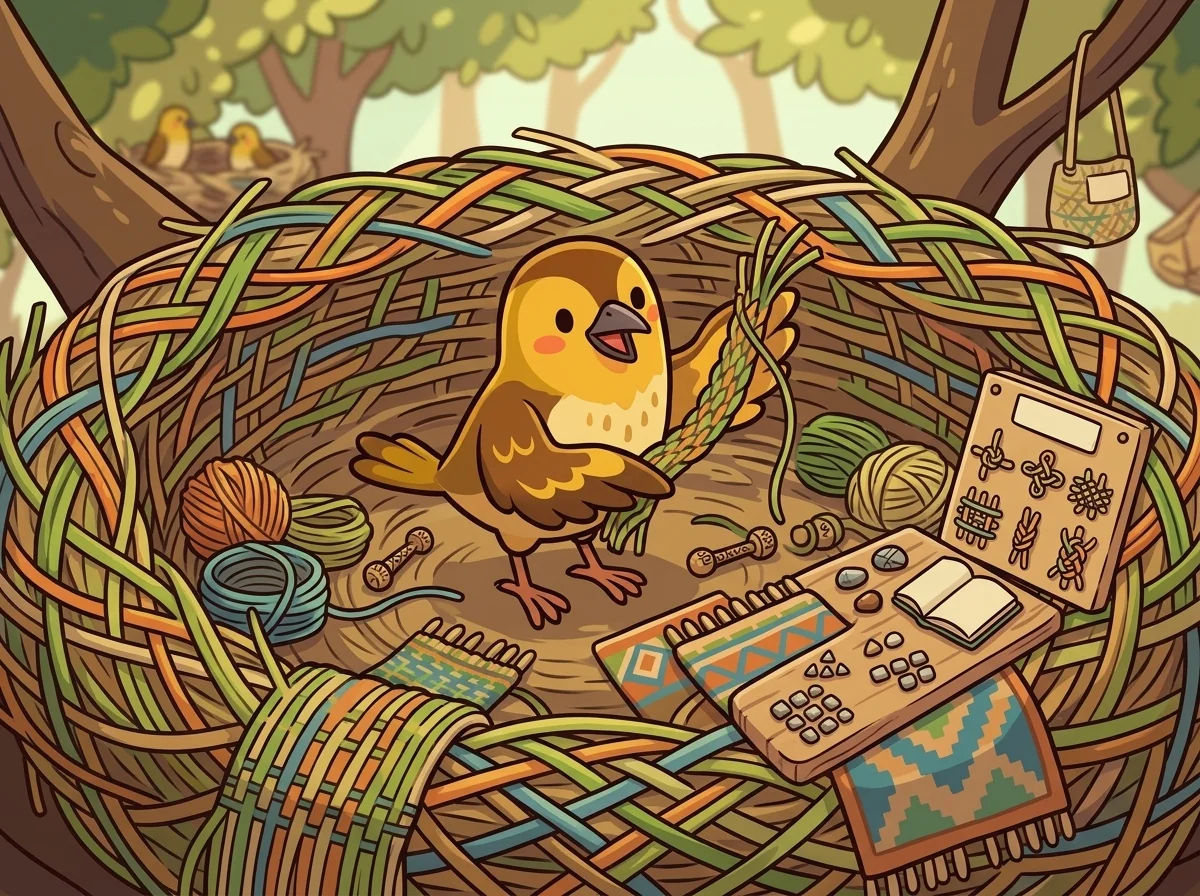
"Watch what's actually in this," she said, turning the strip. "Over, under, over, under — a pattern that repeats on a fixed period, and I have to count to keep it even. That's modular counting: every fourth thread I do the same move, so I track the remainder, not the whole. If I want the two halves to match, I need symmetry — the left a mirror of the right — and there are only so many ways a pattern can repeat and reflect and turn. Mathematicians later named those the symmetry groups. I wasn't naming them. I was using them, because a pattern that breaks symmetry looks wrong to the eye and the hand both."
A young sparrow was doubtful. "But that's just... crafting. It's not real maths, is it?"
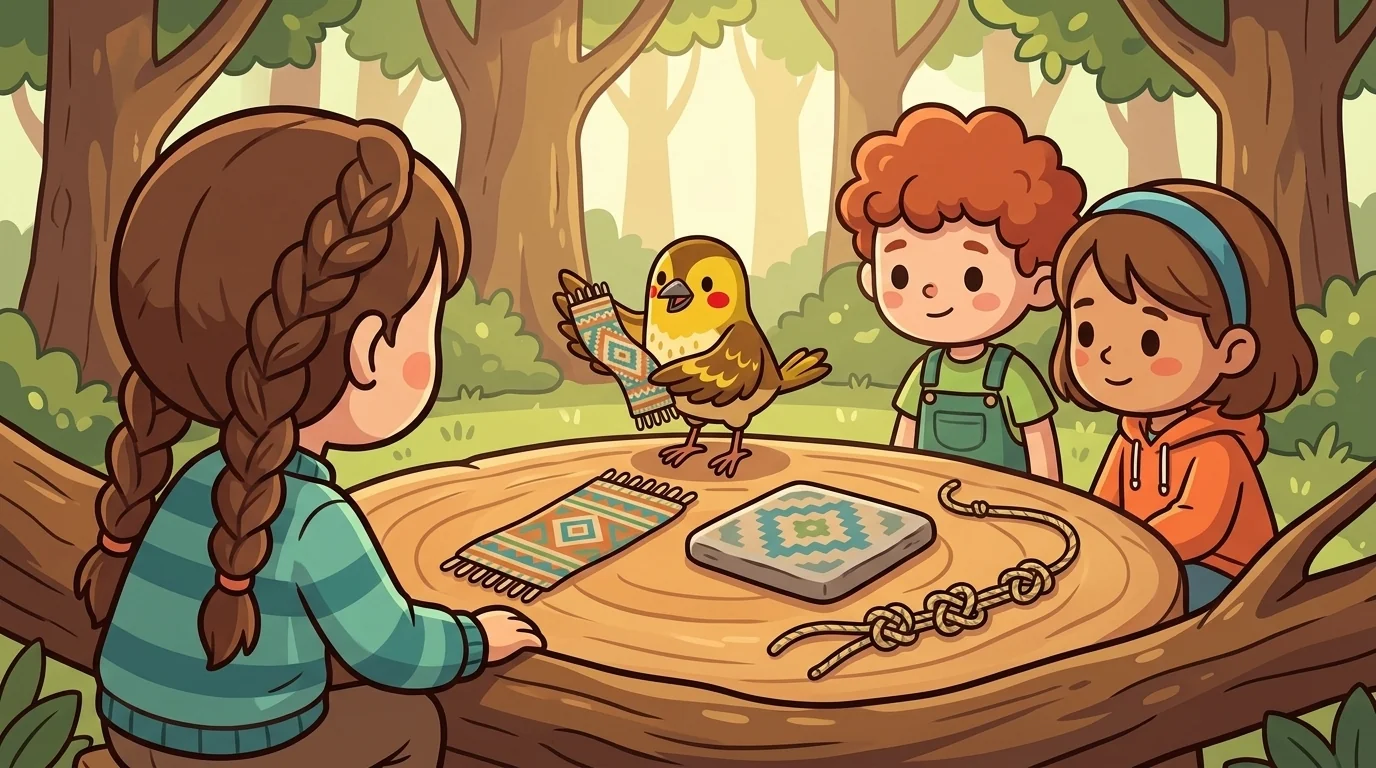
Warp set the weaving down, and her voice went gently firm. "That is exactly the mistake, and it's an old and unfair one. For a long time people called what scholars wrote in books 'real mathematics,' and what makers did with their hands 'just craft' — and the second was quietly treated as lesser. But look closely. A tiling that covers a courtyard with no gaps and no overlaps is tessellation — a deep geometry of which shapes fit the plane and which cannot. The proportions a builder holds to keep a structure standing are ratio. The counted repeats in a woven band, a knotted record, a beaded row are arithmetic and pattern. Peoples all over the world worked this mathematics into cloth and clay and stone and knot, often centuries before anyone wrote it down — and it is not one bit less real for having no equation beside it."
"There's even a name now," she added, "for the study of the mathematics inside these traditions — ethnomathematics — which is really just scholars catching up to what the makers knew. The knot-record that stored numbers, the tiling whose symmetry a book took a thousand years to classify, the weave whose pattern is a counted, mirrored, modular structure: all of it is mathematics, done by hands that were never called mathematicians."
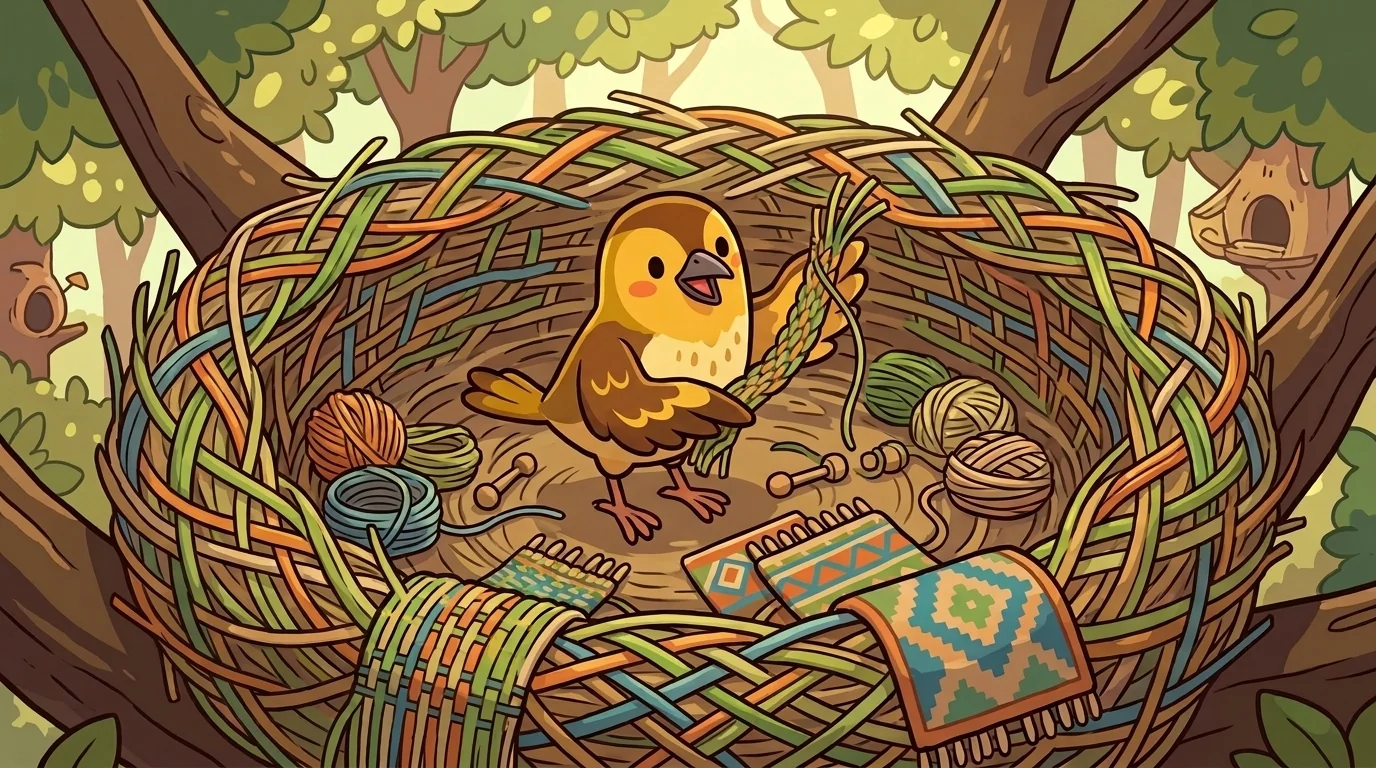
She learned it, of course, from her own nest — from the shock of finding symmetry and counting and measure in a thing she'd made purely by feel. "That was the turn," she said. "Not that craft is like math. That craft is math — one of the oldest, most widespread, most human ways it has ever been done."
A warm, steady pride settled in her, the gladness of seeing making-hands recognised as thinking-hands. "The math was already in the weave," she murmured, smoothing the strip. "It always was. Someone just had to look with the right eyes and finally call it what it is."
The MathLore ensemble
Warp is part of MathLore's distributed-narrative cast. Each character embodies a different curricular primitive; together they teach the full subject.
-
Heap
Counting-as-first-story — every people figured out their own way to count
-
Spire
Pattern-as-discovery — patterns are everywhere when you slow down enough to see them
-
Vouch
Proof-as-shared-knowledge — show me why; if your why holds up, I'll build on it
-
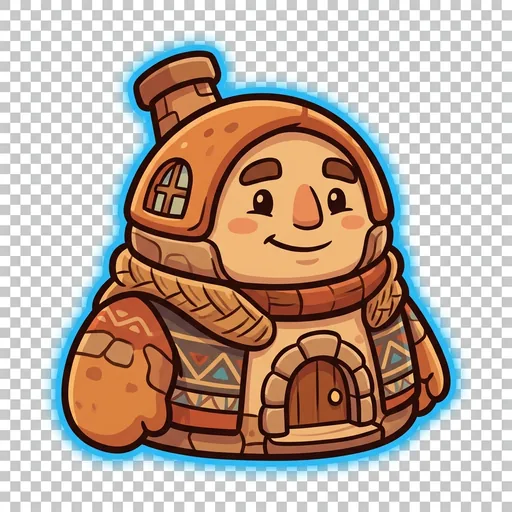
Home
Math-as-cultural-context — this idea was born somewhere, for someone, with reasons
-
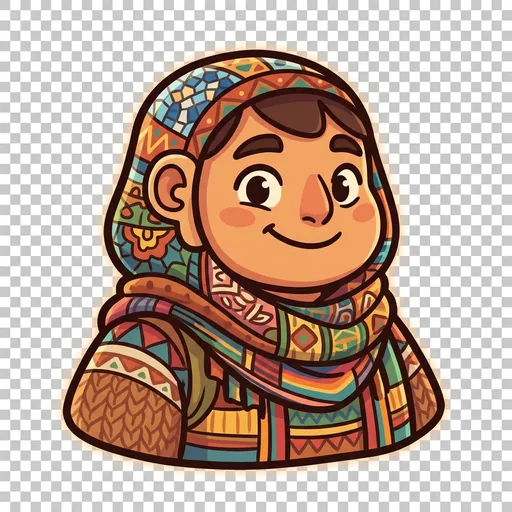
Carry
Cultural-transmission — the idea traveled; every place it visited, it grew
-
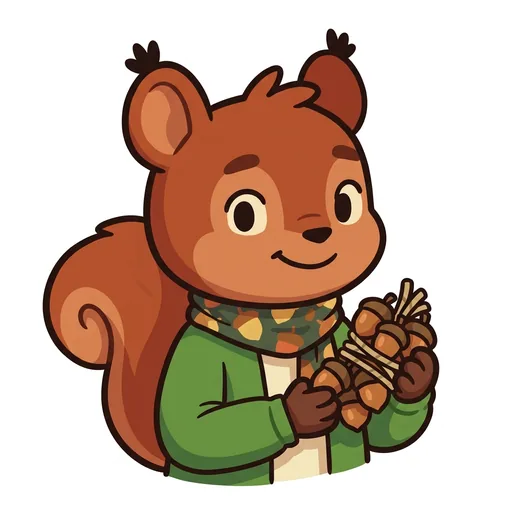
Dozen
Number bases (counting in twelves, tens, or twos — the base is a choice)
-
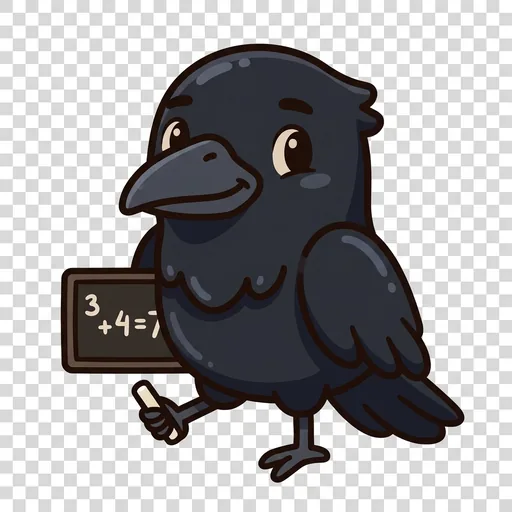
Etch
The invention of notation (writing math down so ideas can travel across time)
-
Frontier
Mathematics is unfinished (there are still open questions no one has answered)
-
Naught
The invention of zero (a symbol for nothing that changed everything)