Earn
EARN (Advanced)
Loading audio…
Press play to listen along. The line being read lights up as you go.
Show full transcript
Loading transcript…
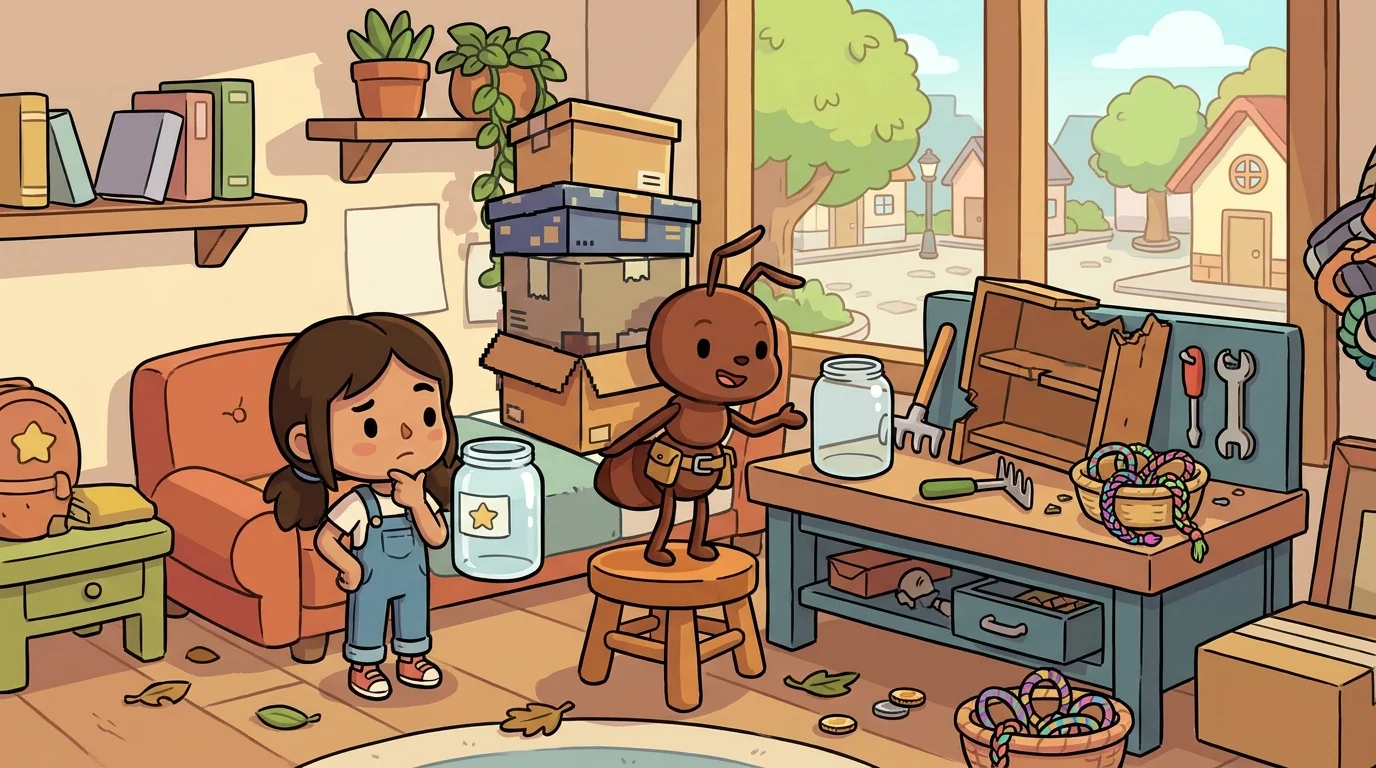
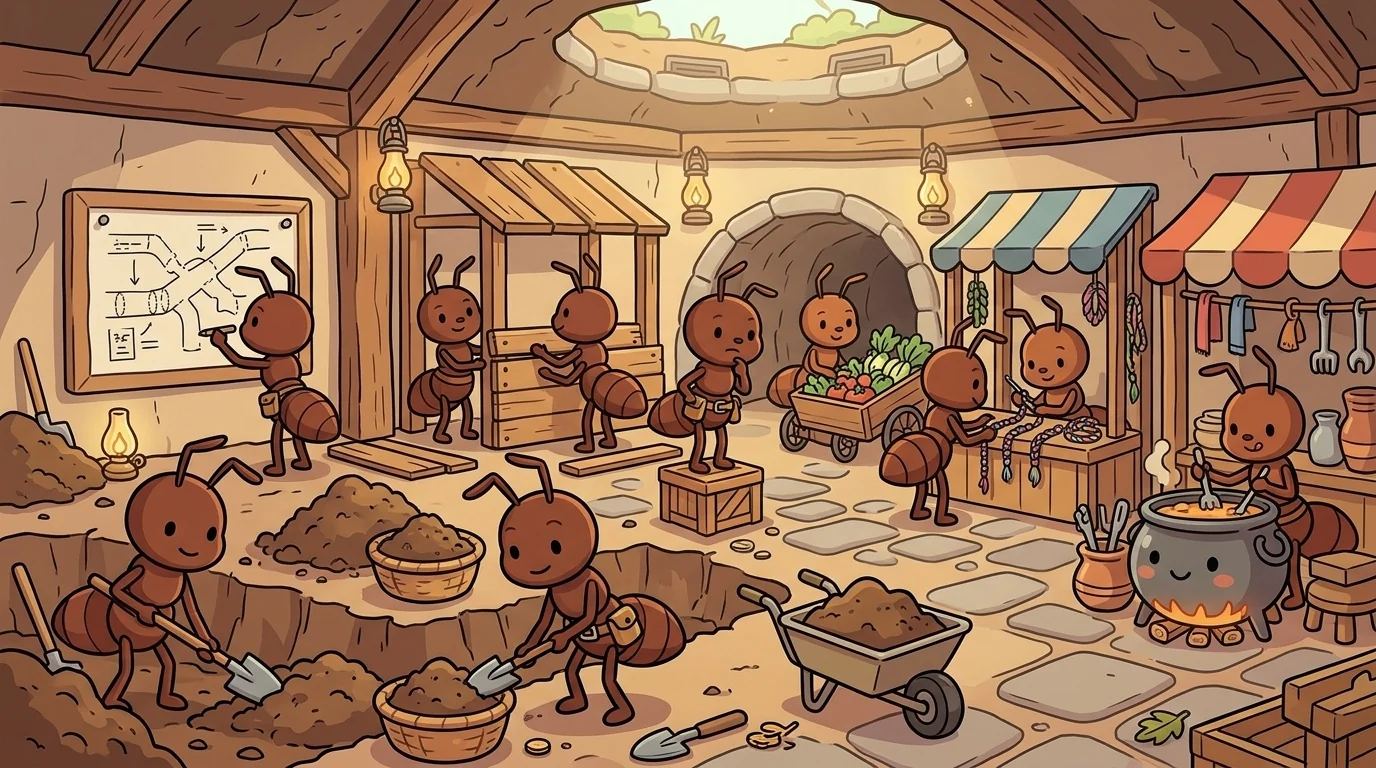
Earn was an ant-tween, small and tireless, forever carrying something twice her size, and she had a deep, unwavering respect for every kind of honest work. When the young ones asked her where money came from, she didn't just say "a job." She set down her load and named the whole machine. "Money mostly comes to you when you do something USEFUL for someone else," she said. "Work, a made thing, a solved problem. Income is a trade: you give your time and effort and skill, and you get value back. That's the engine underneath every wage — you earn by creating value for another person."

"But 'a job' isn't just one shape," she went on, because the Advanced version knows the forms. "Some work pays wages — money by the hour, so more hours means more pay. Some pays a salary — a set amount for the year, steady whether the week is busy or slow. And some people are self-employed — they don't get paid by a boss at all; they make a thing or offer a service and are paid by whoever buys it. Different shapes, same engine underneath: in every one, someone is handing you value because you handed them something useful first."
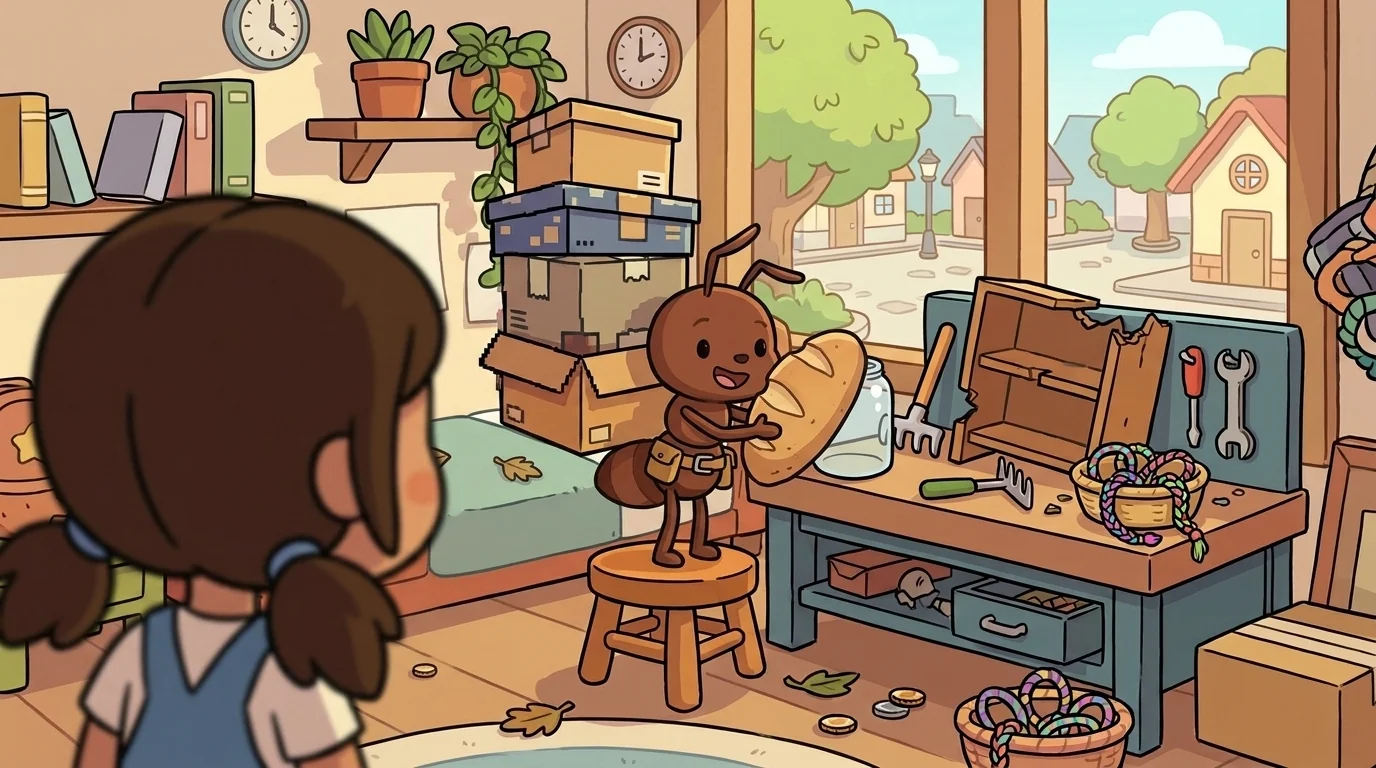
Then Earn taught the lesson she guarded most carefully, because it's where money gets tangled up with shame. "Here is a thing you must keep straight your whole life," she said, setting down her crumb. "How much a job pays and how much the worker is worth are two completely different measurements. Pay is set by the market — by how many people can do the work, how much others will spend on it, how rare the skill is. Worth — a person's dignity — isn't set by any market at all. A nurse, a farmer, someone who cares for children or cleans a hospital at night does work of enormous value, and the wage doesn't always show it. Never read a paycheck as a scoreboard of a person. The number measures the trade. It does not measure the human."

And she named the quiet lever that most young people miss — the one that changes what your time can trade for over years. "Here's the hopeful part," Earn said, brightening. "The value you can offer isn't fixed. When you get better at something — learn a skill, practise a craft, understand a problem more deeply — you're building what grown-ups call your human capital. And as your skill grows, your same hour of time can trade for more, because you can now create more value in it. It compounds, slowly and quietly, the same way saved money does. Every lesson you actually learn, every skill you actually build, is you raising the value of your own future hours."
She picked her load back up, because an ant is never still for long, and left them with the whole of it braided together. Income is trading usefulness for value; it comes in wages, in salaries, in the earnings of a made thing; the price the market pays never measures the worth of the person doing the work; and the one thing fully in your hands is to keep getting better, because skill is the lever that lifts what your time is worth. "Every honest job has dignity," Earn said, "the well-paid and the barely-paid alike — and every skill you build is a gift to the person you'll be. Now — help me carry this. It's useful work, and useful work is where money begins."
Hear it as an audio drama
A short play starring Earn, from MintForge. Different voices, same idea. Listen any time after you read.
Loading audio…
Read the drama script
- Narrator: From Spark and Anvil and MintForge — this is Earn, in chapter 1 of the MintForge cast.
- Narrator: This drama uses an AI-generated voice. Voiced via Gemini 2.5.
- Narrator: Earn is an ant-tween, small and tireless, forever carrying something twice her size.
- Earn: Money mostly comes to you when you do something useful for someone else. Income is a trade: your time and skill, for value.
- Earn: That's the engine under every wage — you earn by creating value for another person.
- Earn: And "a job" isn't one shape. Wages pay by the hour. A salary pays a set amount by the year.
- Earn: And self-employed people aren't paid by a boss at all — they make a thing, and whoever buys it pays them.
- Narrator: Different shapes, same engine: someone hands you value because you handed them something useful.
- Earn: Now keep this straight your whole life. How much a job pays, and how much the worker is worth, are two different measurements.
- Earn: Pay is set by the market. Worth — a person's dignity — isn't set by any market at all.
- Earn: A nurse, a farmer, someone who cleans a hospital at night — huge value, and the wage doesn't always show it.
- Earn: Here's the hopeful part: get better at something, and your same hour trades for more. That's human capital.
- Earn: Skill compounds, quietly, the way saved money does. Every lesson you truly learn raises the value of your future hours.
- Narrator: Every honest job has dignity — and every skill you build is a gift to the person you'll be.
- Narrator: Trade usefulness for value, keep getting better, never read a paycheck as a scoreboard of a person. That's Earn.
- Narrator: You've been listening to a Spark and Anvil chapter, written by the Spark and Anvil writing team for ages 9 to 14.
- Narrator: Apps stay free forever.
- Narrator: Curriculum aligned to Jump$tart personal finance standards.
- Narrator: Released under Creative Commons BY-NC-SA 4.0 for educational reuse. Visit Spark and Anvil for the full transcript.
The MintForge ensemble
Earn is one of the friends in MintForge. Each friend shows you one idea by how they act; meet them all and you have the whole subject.
-

Coin
Currency + exchange — what money is, what it does, what it can't measure
-

Tag
Percentage + markup — the transparent math of how prices are built
-

Grow
Compound interest — patient math of money over time
-

Plan
Budget allocation + opportunity cost — the math of choosing with limited resources
-

Tilt
Risk + variability — the math of uncertain outcomes, distributions over destinies
-

Due
Borrowing and debt — money owed carries a cost; what does it really cost to borrow?
-

Give
Generosity — giving is part of a budget; deciding what to share
-

Nest
Saving — setting money aside toward a goal, a little at a time
-

Wary
Money safety — spotting scams and keeping your money safe