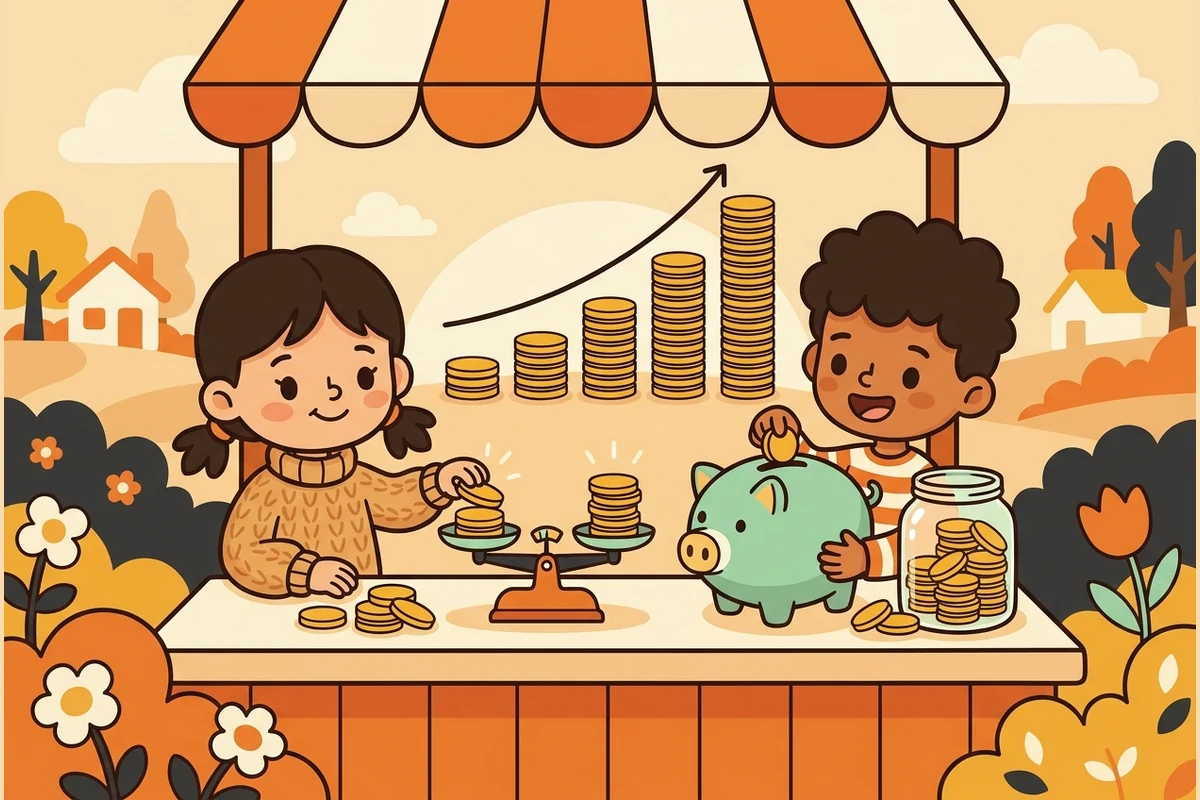
Start here
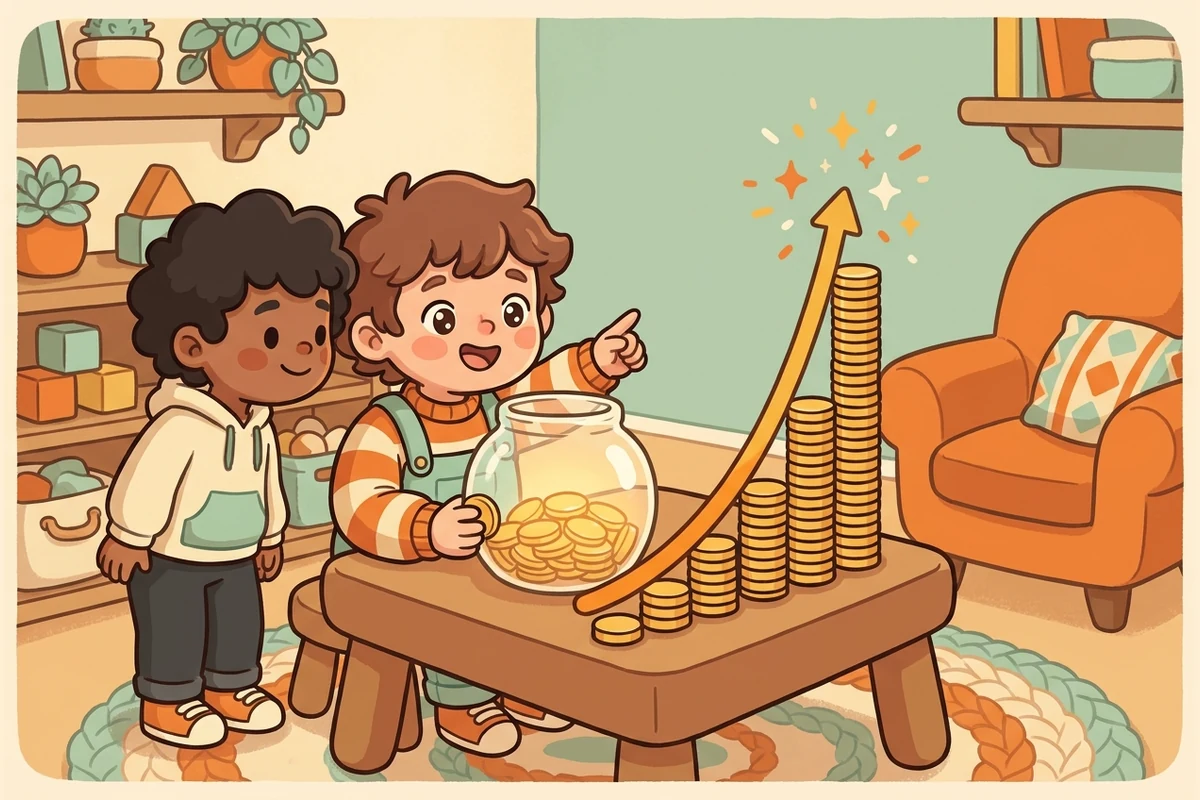 Money-Math Lab Figure a markup, work interest on a loan, predict how savings grow — then watch the balance climb and see why compound interest surprises everyone.
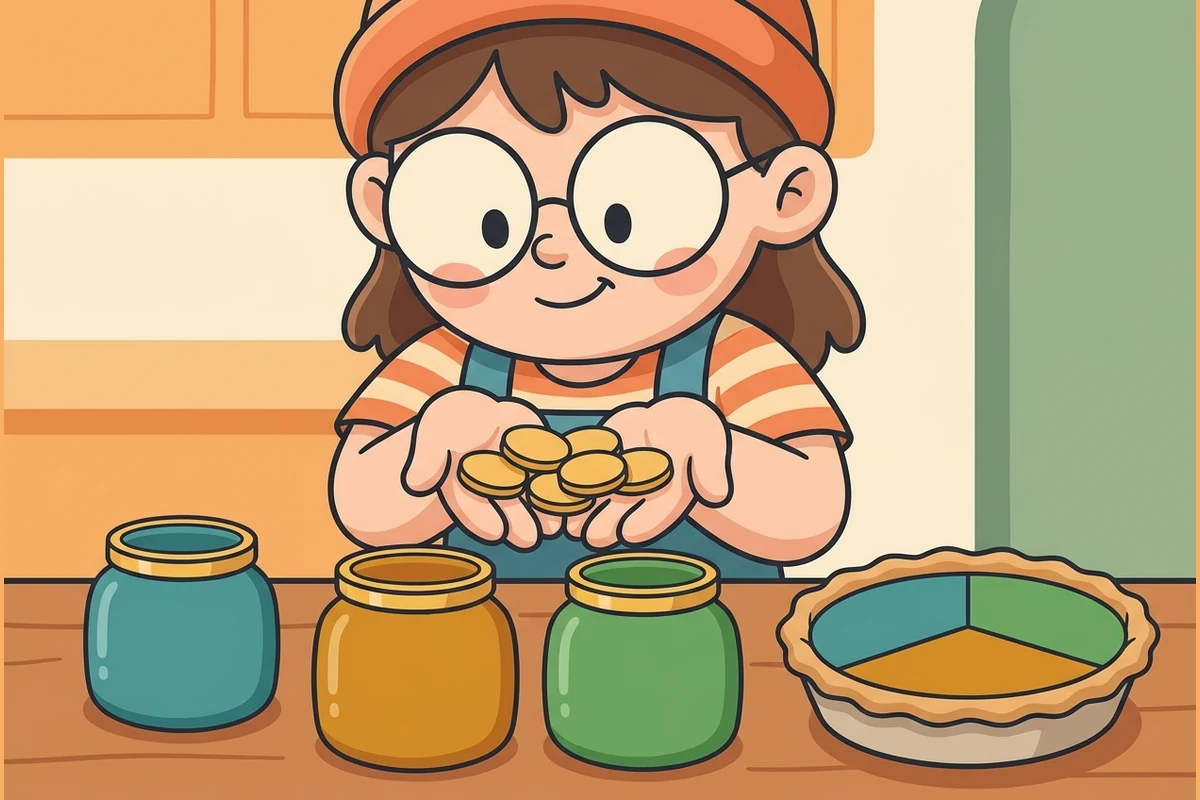 Budget Balancer Split a month’s money into needs, wants, and savings to hit 50/30/20 — then a surprise cost hits and you rebalance.
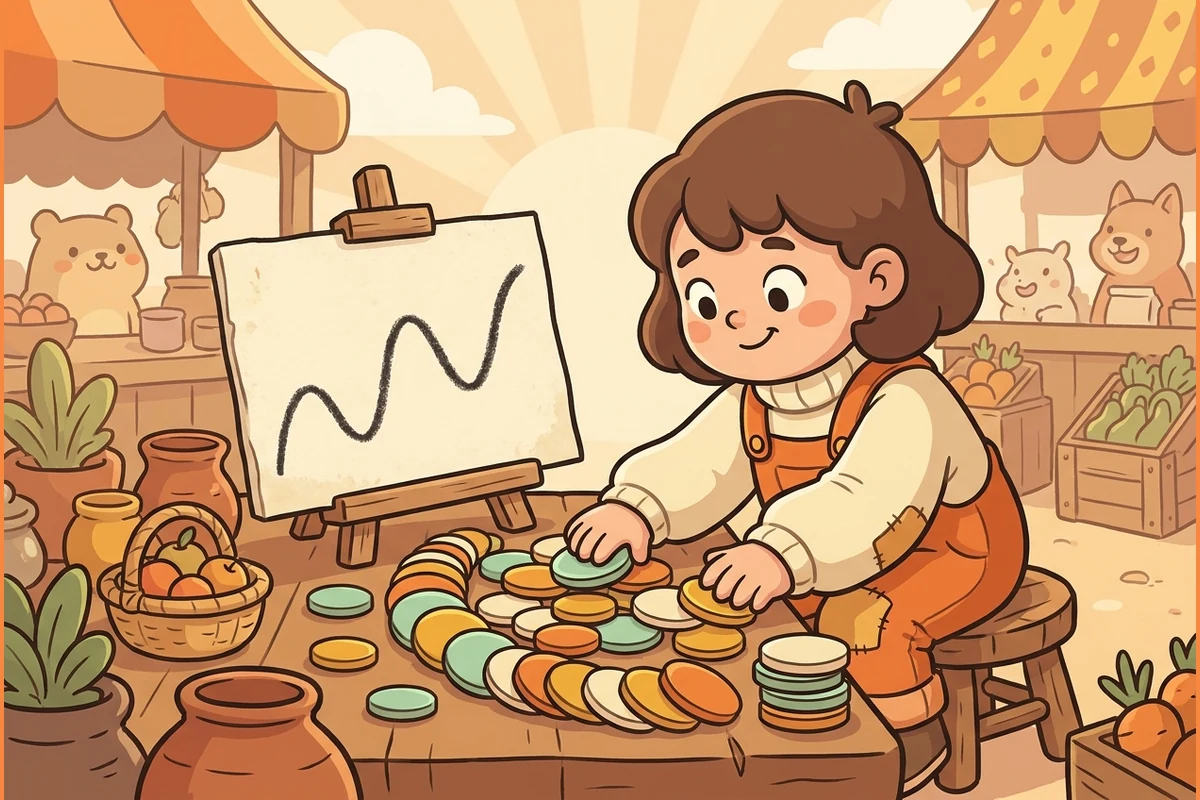 Market Sim See how stocks swing and why spreading money softens the ups and downs. A learning simulation — no real money.
 Money Duel A head-to-head kit round for 2–4 players — one device or an online room by code. Highest first-try score wins.
How are you feeling?
All activities
Practice & play
Practice the concepts
All 16 kits
For grown-ups — progress report →
Cast, stories & more
More ways to play
😄 Brain break
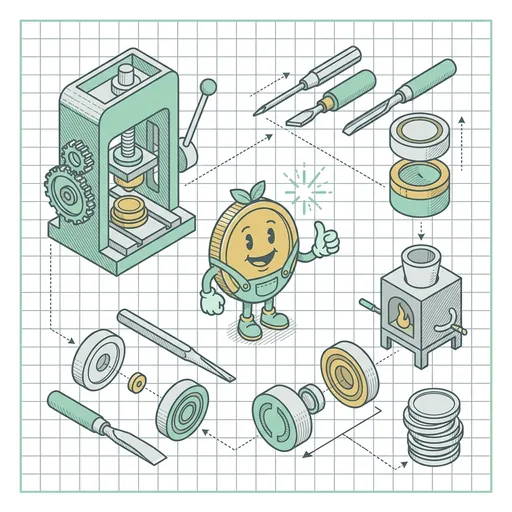
Meet the cast — the characters who teach this
-
 Coin Currency + exchange
-
 Tag Percentage + markup
-
 Grow Compound interest
-
 Plan Budget allocation + opportunity cost
-
 Tilt Risk + variability
-
 Due Borrowing and debt
-
 Earn Income
-
 Give Generosity
-
 Nest Saving
-
 Wary Money safety
Ensemble stories — the cast together
What next? Pick a door
- More like this EquationQuest What keeps both sides balanced? RatioRealm Which mix is stronger? ChanceForge What happens after a thousand flips?
- A bit harder DataForge What story does this data tell? SwarmQuest Can a whole room guess better than one? FermiForge Can you guess it within ten times?
- Something different ClaimCraft How strong is your argument, really? ScreenForge What screen will this code make? JestForge Why does this joke land?
📚 Books for MintForge
Browse all books →Where this idea comes from· Herodotus (about 430 BCE) · Livy; OED · OED · OED
The first coins
The oldest coins we know were made in Lydia, in what is now western Turkey, in the 600s BCE, from electrum, a natural mix of gold and silver. The Greek historian Herodotus wrote that the Lydians were the first people to use coins of gold and silver.
One thing to hold: A small lump of electrum stamped with a lion’s head, struck between two dies with a hammer.
Why it matters: A stamp from a trusted maker meant nobody had to weigh the metal at every sale. A mint is the place that strikes coins, and the stamp is its promise.
What we don’t know: Nobody is sure who first had the idea, or whether the first coins were used for shopping or for paying soldiers and taxes.
Money and Juno Moneta
In ancient Rome, coins came to be struck near the temple of Juno Moneta on the Capitoline Hill. Her name, Moneta, came to mean the mint, and then the coins themselves. Through Latin moneta, English got two words: “money” (by way of French) and “mint” (by way of Old English).
One thing to hold: A Roman silver denarius, a coin about the size of a fingernail.
Why it matters: The two words are one word that took two roads, one for the coins and one for the place that makes them.
What we don’t know: Why Juno was called Moneta is not certain. Roman writers linked it to monere, “to warn”, but that may be a later story.
Bank: a bench
In Italian towns of the Middle Ages, money changers and lenders did their business at a table or bench in the street or market, a banco or banca. English took “bank” from these words.
One thing to hold: A wooden bench or counting table, with coins of many cities on it to weigh and change.
Why it matters: A bank began as a place you could see: a person you trusted, at a table, keeping a record of who owed whom.
What we don’t know: People often say “bankrupt” comes from a failed banker’s bench being broken (banca rotta). The words are real, but there is little evidence that benches were actually broken.
Budget: a little bag
The word comes from old French bougette, a small leather bag. In English a “budget” was first a pouch or wallet. In Britain the minister in charge of money was said to “open the budget” when he set out the year’s plans, and by the 1700s the word meant the plan itself.
One thing to hold: A small leather bag with a drawstring, the kind a traveller hung from a belt.
Why it matters: A budget is still a bag with a limit: what goes in one part cannot go in another.