Due
DUE — borrowing money means promising to pay it back, usually with a little extra (interest) for the wait. borrowing now costs more later. it isn't bad or shameful — it's a serious promise, and the trick is borrowing on purpose, not by accident.
Loading audio…
Press play to listen along. The line being read lights up as you go.
Show full transcript
Loading transcript…
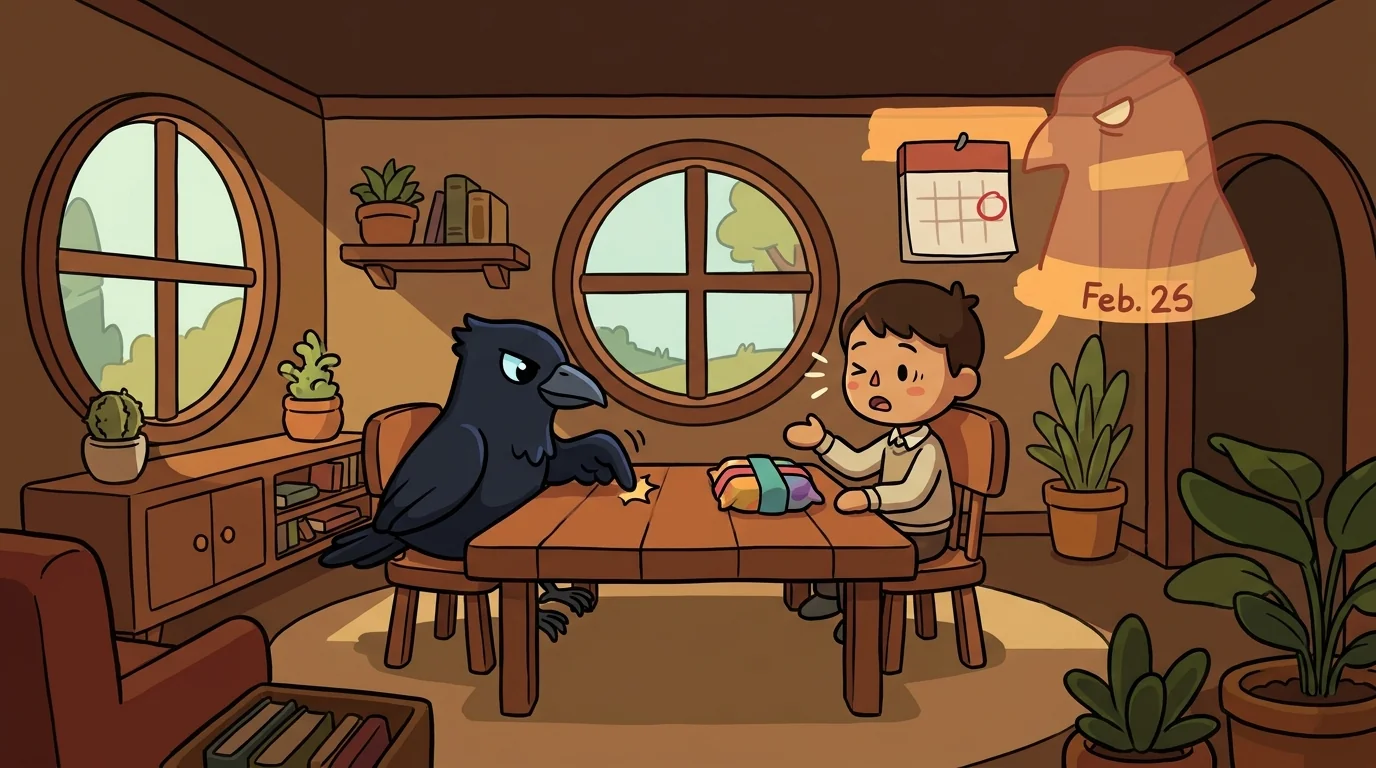
A student wanted a thing today that she couldn't afford until next week, and thought she'd found a clever trick.
"My friend'll lend me the money," she said breezily. "So I get the thing now, and I pay her back later. Free thing, basically!"
"Not free," said Due, in the low, remembering voice of a crow who never forgets a single thing. She was glossy black, sharp-eyed, and she tapped a claw on the table. "Borrowing isn't free money. It's future money, spent early — and it usually comes with a little extra tacked on, called interest, as a thank-you for the wait." She fixed the student with a bright eye. "So you don't pay back what you borrowed. You pay back what you borrowed plus a bit more. Borrow now, and you owe a little more later than you took. The thing today costs you extra tomorrow."
The student blinked. "Extra? How much extra?"
"Depends on the deal — and that's exactly what people forget to ask," Due said. "Here's the danger of borrowing: the thing you want is right in front of you, exciting, now. The paying-back is invisible, far away, later. So it's easy to borrow without really feeling the cost — and then 'later' arrives, all at once, bigger than you remembered, and you wonder where the heavy feeling came from." She tapped her claw again. "Borrowing isn't bad. Sometimes it's the sensible thing. But it's a serious promise, and the trick is to make it on purpose, with your eyes open — never by accident."
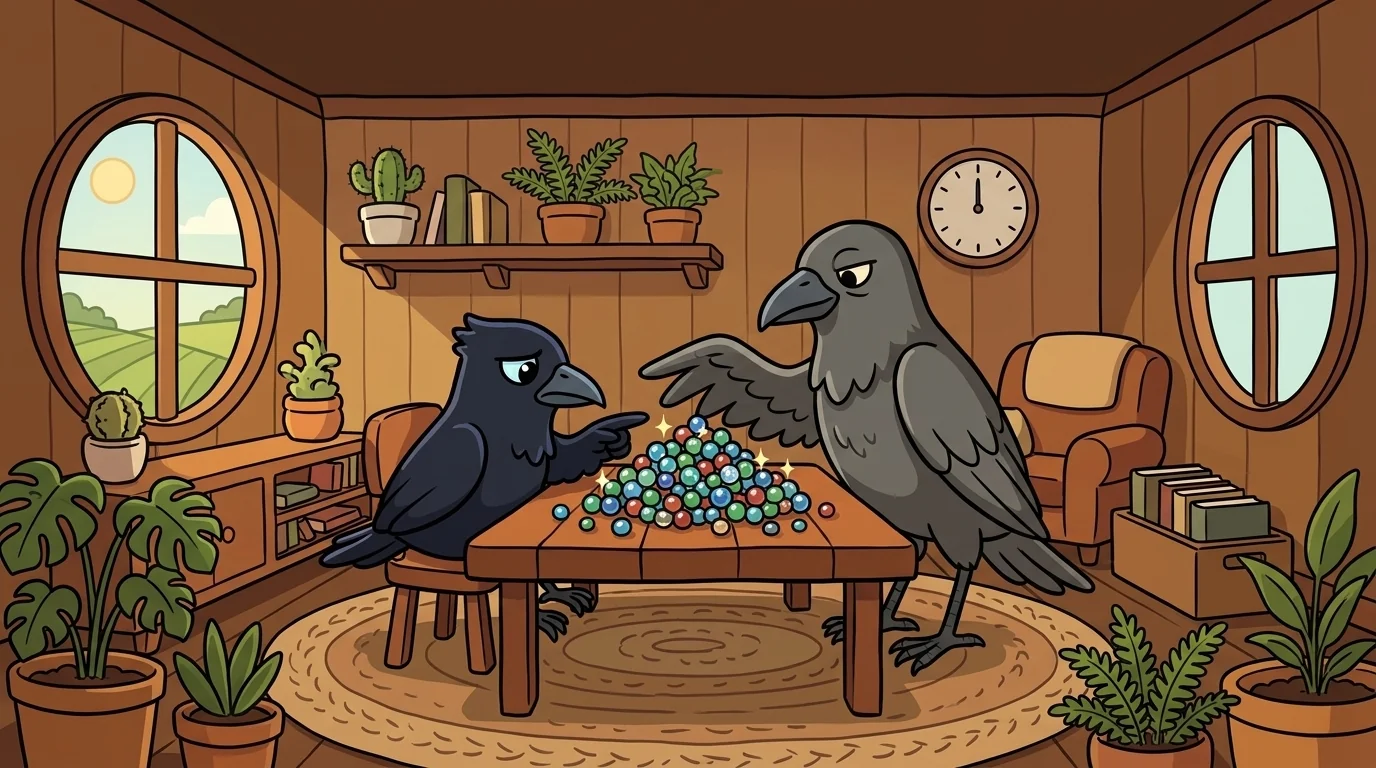
Due had learned the weight of a promise young, in the way crows keep accounts.
Her murder — that's what a group of crows is called — remembered everything: who shared, who took, who paid back and who didn't. Small Due once borrowed a shiny bead from a nest-mate and, in the fun of the day, simply forgot. She borrowed another. And another. Until the nest-mate quietly asked for them all back at once, and Due had a sick, heavy realization: she owed far more than she'd ever noticed borrowing, one careless bead at a time.
Old Penny, the mentor, found her fretting over the pile she owed. "Each bead felt like nothing when you took it," Penny said, not unkindly. "That's the trap. Borrowing feels light going in and heavy coming due — because the fun is now and the bill is later. A wise borrower feels the weight at the moment of borrowing, not the moment of paying." Penny helped her count what she owed, honestly, and pay it back. "Owing isn't shameful. Forgetting what you owe is where the trouble lives. Keep the count. Feel the promise as you make it." Small Due held that: a debt grows quiet in the dark; the honest borrower keeps a light on it.
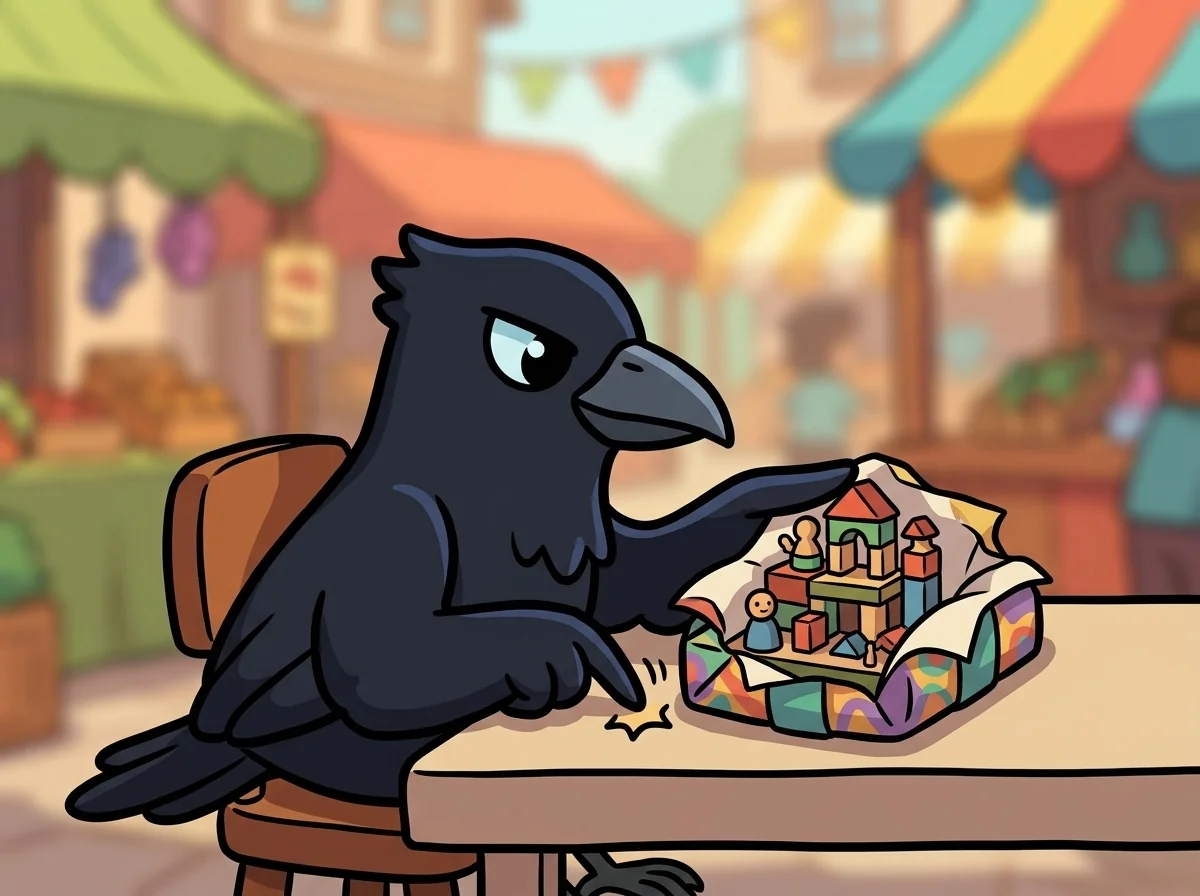
She flew into MintForge grown, keeping careful accounts, and Penny met her at the market gate.
Instead of a quiz, Penny set out a shiny toy the student couldn't yet afford and asked, "When is it wise to borrow, and when is it a trap?"
Due didn't rush. She turned the toy over. "If I borrow for this and pay it back next week — knowing exactly how much extra, and sure I can pay — that can be a fine, honest choice." Then she set it down. "But if I borrow because I want it right now and haven't worked out how much I'll owe or whether I can even pay — that's the trap. Same borrowing. The difference is whether I did it on purpose, with my eyes open, or by accident, chasing a now-feeling."
Penny nodded slowly. "Most young ones think borrowing is free, or think it's shameful," she said. "You understood it's neither — it's a serious promise with a cost, wise sometimes and a trap other times, and the whole game is doing it awake. Stay. You've got the honesty for it."
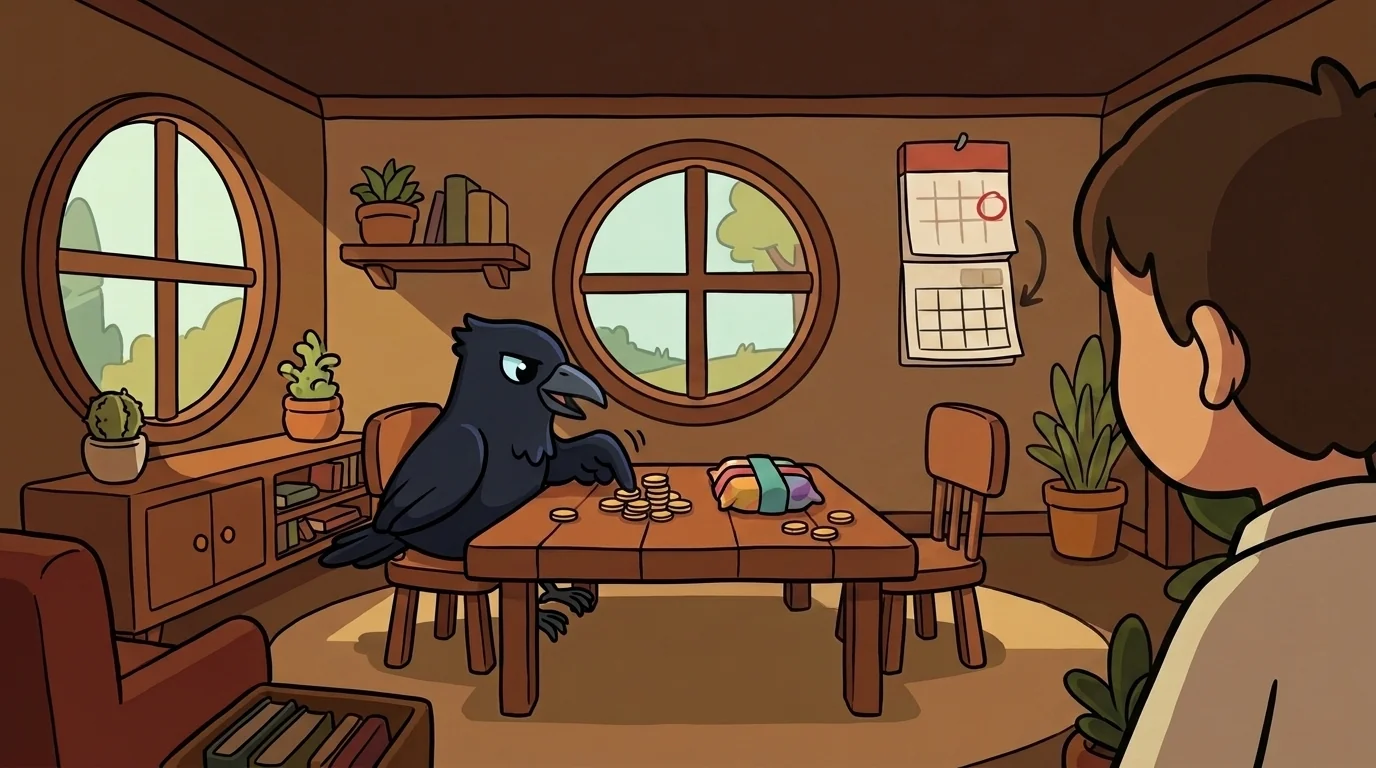
Weeks later, that same student stood eyeing the shiny thing, her friend's offer to lend still open.
"Watch how you borrow awake," Due said, tapping her claw. "First — how much would I owe back, and by when? Ask before, out loud, every time. 'I'll pay you back three coins next allowance' — say the exact promise, so it's real and not a fog." She fixed her bright eye on the student. "Second — am I sure I can pay it? Because a promise I can't keep isn't a clever trick, it's a hole I'm digging. Third — is the thing worth paying extra for, to have it a week early? Sometimes yes. Often, honestly, no — often it's better to wait and save than to borrow and owe."
The student looked at the shiny thing, then at the calendar. "So if I borrow, I owe more than I take, and I have to be sure I can pay, and I should ask if it's even worth the extra?"
"That's borrowing with your eyes open," Due said. "And here's the freeing part — you're allowed to say no to a loan, even a friendly one. 'Thanks, but I'll save up for it instead' is a strong, smart answer, never a rude one." She grew gentle. "Borrowing isn't a shame. Owing isn't a shame. But an unwatched debt, growing quiet in the dark while you weren't looking — that's the thing to keep a light on."
The student thought about the extra, and the promise, and decided. "I'll wait and save. I don't want to owe more than the thing's worth."
"Now you've got it," Due said, satisfied. "Borrow on purpose or not at all — and always keep the count."
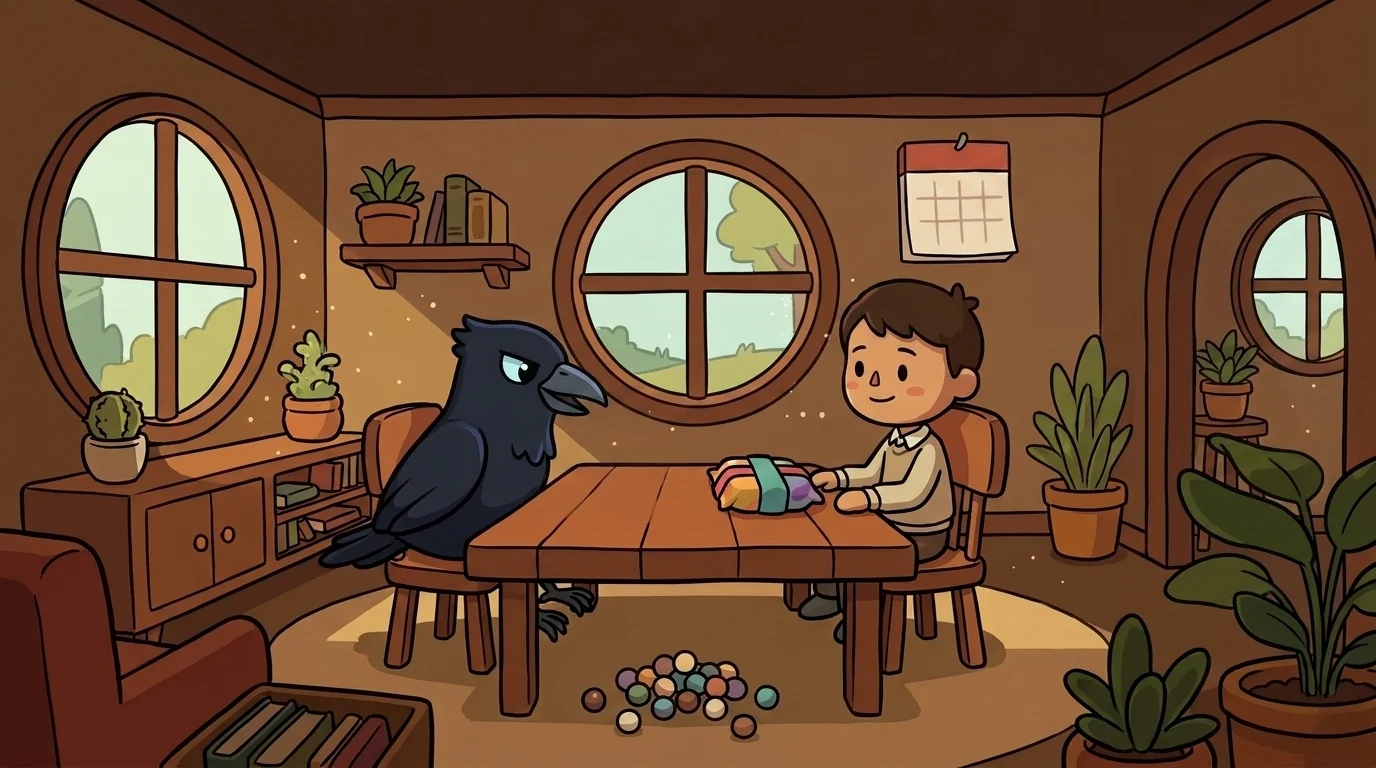
The student passed on the loan, saved a couple more weeks, and bought the thing outright — owing nobody, extra to no one. There was a small settled feeling in her chest: the clean, light feeling of owning a thing free and clear.
Due tucked her glossy wings and gave a low, satisfied caw — the ease of a creature who'd spent her life keeping a light on every promise. Somewhere in the memory of it, a pile of forgotten borrowed beads got counted, honestly, and paid.
"A debt grows quiet in the dark; keep a light on it," she said softly, and something in her went light and easy — the clean, unburdened calm of a promise fully kept and a slate wiped clear. "Borrow awake, or wait and save. Owing's no shame — forgetting what you owe is the trap. That's the honest part. That's the part worth keeping the count of."
The MintForge ensemble
Due is part of MintForge's distributed-narrative cast. Each character embodies a different curricular primitive; together they teach the full subject.
-

Coin
Currency + exchange — what money is, what it does, what it can't measure
-

Tag
Percentage + markup — the transparent math of how prices are built
-

Grow
Compound interest — patient math of money over time
-

Plan
Budget allocation + opportunity cost — the math of choosing with limited resources
-

Tilt
Risk + variability — the math of uncertain outcomes, distributions over destinies
-
Earn
Income — money comes from the value of work; earning before spending
-

Give
Generosity — giving is part of a budget; deciding what to share
-

Nest
Saving — setting money aside toward a goal, a little at a time
-

Wary
Money safety — spotting scams and keeping your money safe