Nest
NEST (Advanced)
Loading audio…
Press play to listen along. The line being read lights up as you go.
Show full transcript
Loading transcript…
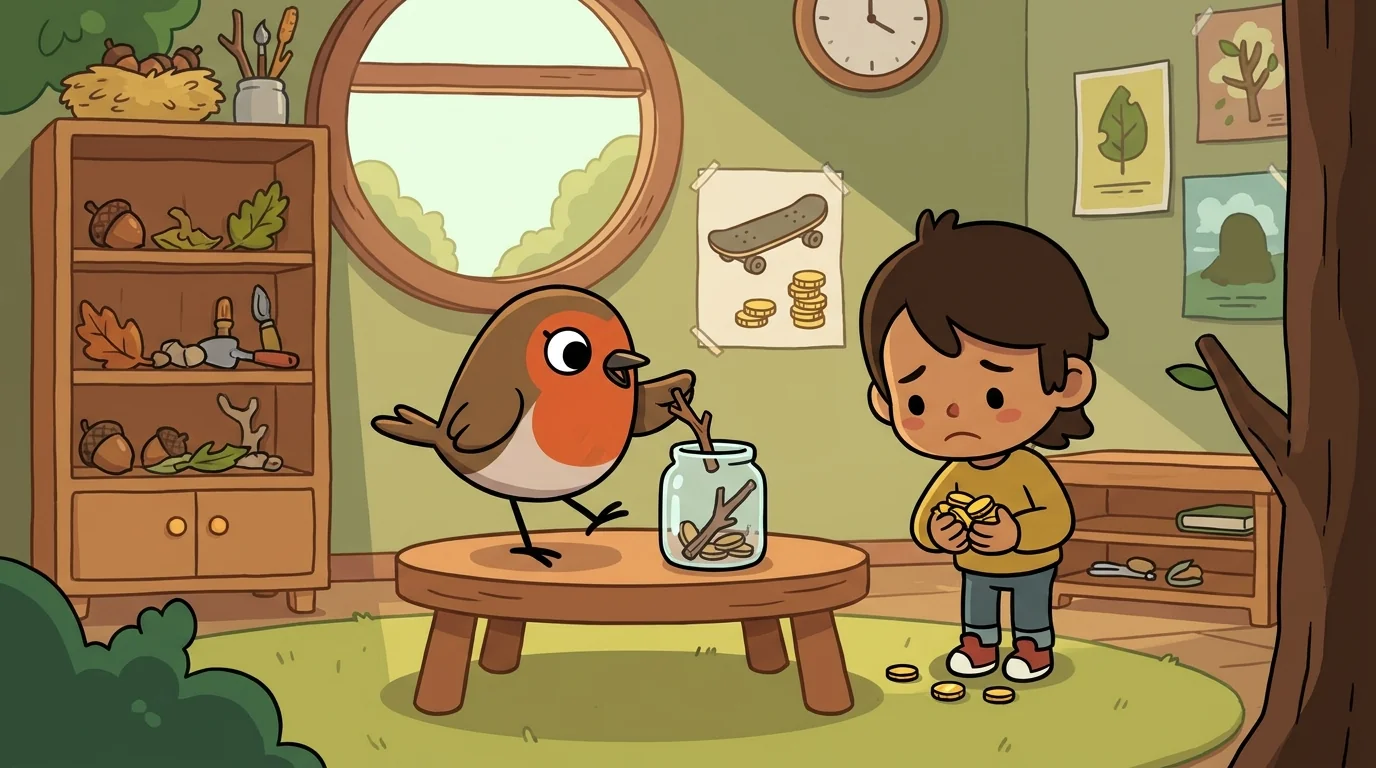
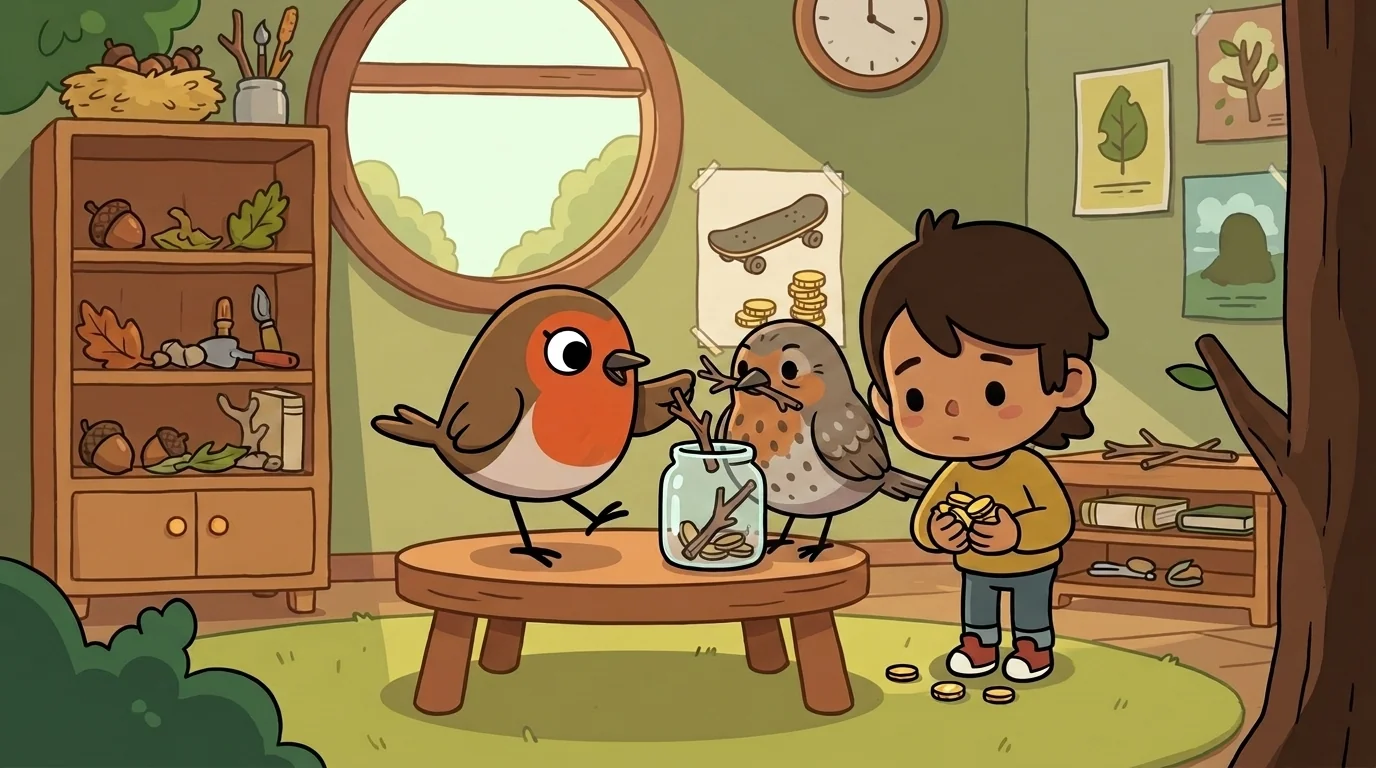
Nest was a robin-tween, small and round and bright-eyed, forever tucking things carefully away where she'd find them later, and she taught the quiet art of saving without ever once making anyone feel bad for wanting nice things now. "Saving," she said, patting a tucked-away seed, "is just choosing your future self over your right-now self — a little at a time. Grown-ups have a fancy name for it: deferred consumption. It means not spending something today so you can have something bigger, or safer, tomorrow. It isn't about denying yourself. It's about sending a small gift forward in time to the person you'll become."
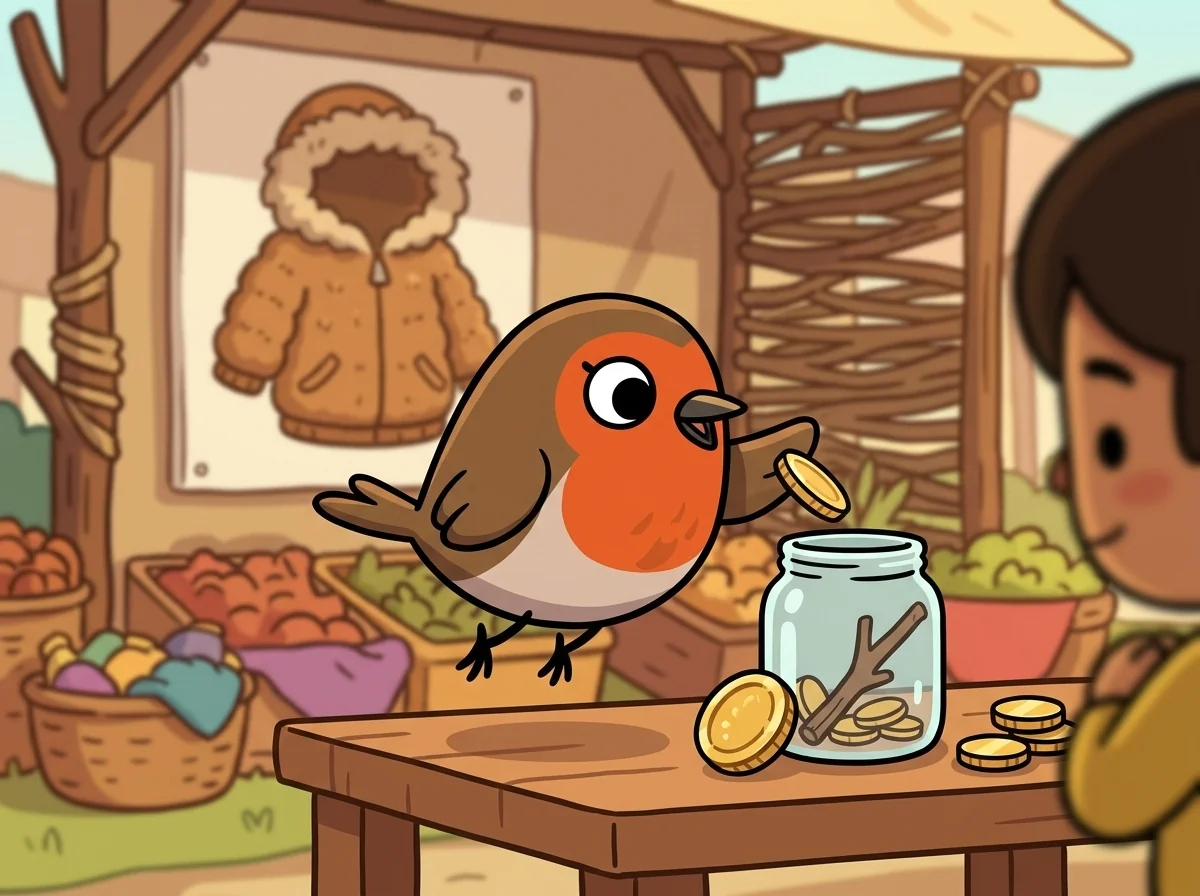
Then she named the trick that separates people who mean to save from people who actually do. "Most people try to save from the leftovers," Nest said. "They spend all week and hope a little is left at the end — and almost nothing ever is; the leftovers get eaten. So here's the rule: pay yourself first. The moment money comes in, set a little aside before you spend a single coin — a small, fixed amount, off the top, tucked away where it's a bit of a bother to reach. What's left after that is your spending money, and you spend it with a clear heart. You don't save what's left over. You keep what you saved, and spend what's left over. That one flip is the whole difference."
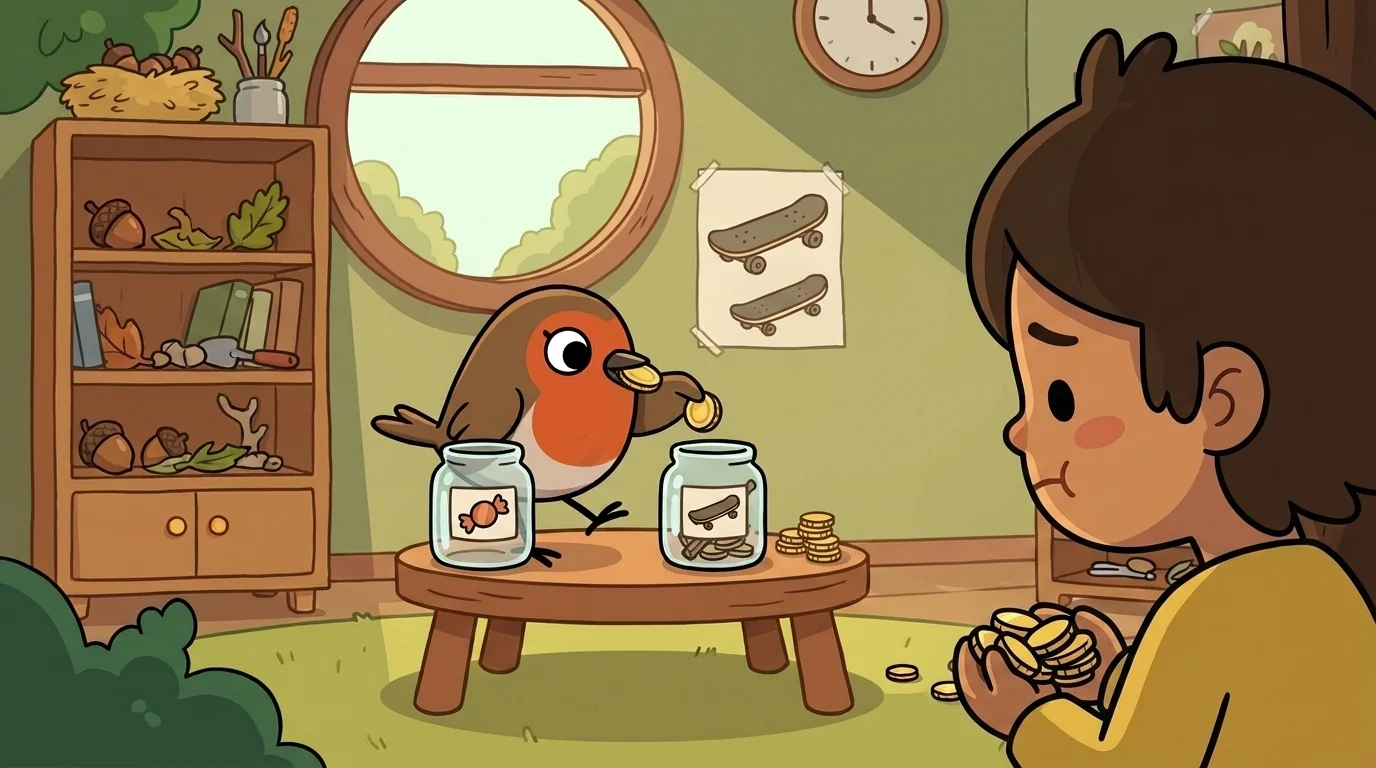
She hopped to her pictured goal — a drawing pinned where she'd see it every day — because saving into a fog is hard, and saving toward a picture is easy. "This is goal-based saving," she said. "A vague wish — 'I should save money' — has no shape, so nothing pulls you toward it. But a pictured goal — a specific thing, with a price on it — turns the vague wish into arithmetic you can actually do. If it costs a certain amount, and you tuck away a steady little each week, you can count exactly how many weeks until it's yours. The picture does the pulling. The steady little does the walking. And watching the pile climb toward the picture is its own small daily gladness."
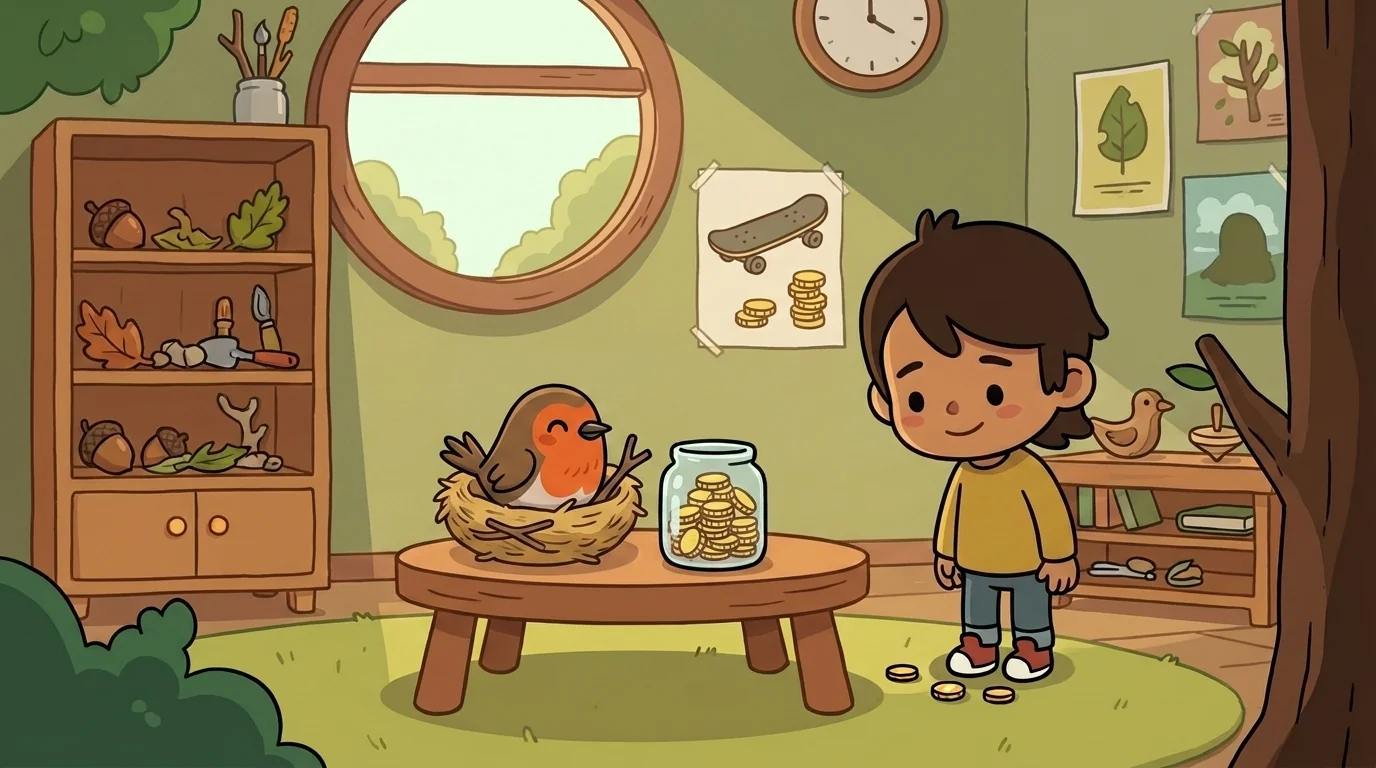
And then Nest leaned in for the part that feels almost like a secret, because it's where saving stops being just storing and starts being growing. "Here's the wonder," she said. "Money you set aside can be put somewhere it earns a little on its own. So it isn't only the coins you deposit that grow the pile — the pile itself starts adding to itself, a little bit at a time, on top of what you put in. A steady trickle plus time becomes more than the sum of every deposit you ever made. The earlier you start, the more time gets to do that quiet work — which is why a small amount saved young can outrun a big amount saved late. Time is the ingredient you can never buy back, so the best moment to start a nest is always as early as you can."
She tucked one more seed away and smiled her round-eyed smile, careful as ever not to leave a sting behind. "And hear this plainly," Nest said, "because it matters as much as the math: saving is not about never having fun, and spending on something you love is not a failure. I will never shame you for buying joy. I ask only for a steady little — set aside first, kept out of easy reach, and left alone long enough for time to work on it. Choose your future self a little, today. She's counting on the you that's here right now — and she remembers every seed you tuck away for her."
Hear it as an audio drama
A short play starring Nest, from MintForge. Different voices, same idea. Listen any time after you read.
Loading audio…
Read the drama script
- Narrator: From Spark and Anvil and MintForge — this is Nest, in chapter 1 of the MintForge cast.
- Narrator: This drama uses an AI-generated voice. Voiced via Gemini 2.5.
- Narrator: Nest is a robin-tween, small and round, forever tucking things carefully away.
- Nest: Saving is choosing your future self over your right-now self — a little at a time. Grown-ups call it deferred consumption.
- Nest: It isn't denying yourself. It's sending a small gift forward in time to the person you'll become.
- Nest: Here's the trick that separates people who mean to save from people who do: pay yourself first.
- Nest: The moment money comes in, set a little aside before you spend a single coin. Don't save what's left over — keep what you saved, and spend what's left.
- Nest: And picture your goal. A vague wish has no shape. A pictured goal, with a price, turns the wish into arithmetic you can count.
- Nest: Then the wonder: money set aside can earn a little on its own. And that little starts earning too.
- Nest: A steady trickle plus time becomes more than every deposit you ever made. The pile curves upward.
- Nest: The earlier you start, the more time does that quiet work. A little saved young can outrun a lot saved late.
- Nest: And hear this plainly: saving is not about never having fun. I will never shame you for buying joy.
- Nest: I ask only for a steady little — set aside first, left alone, given time to grow.
- Narrator: Pay yourself first, picture the goal, start early, let time work.
- Narrator: Choose your future self a little today. She remembers every seed you tuck away. That's Nest.
- Narrator: You've been listening to a Spark and Anvil chapter, written by the Spark and Anvil writing team for ages 9 to 14.
- Narrator: Apps stay free forever.
- Narrator: Curriculum aligned to Jump$tart personal finance standards.
- Narrator: Released under Creative Commons BY-NC-SA 4.0 for educational reuse. Visit Spark and Anvil for the full transcript.
The MintForge ensemble
Nest is one of the friends in MintForge. Each friend shows you one idea by how they act; meet them all and you have the whole subject.
-

Coin
Currency + exchange — what money is, what it does, what it can't measure
-

Tag
Percentage + markup — the transparent math of how prices are built
-

Grow
Compound interest — patient math of money over time
-

Plan
Budget allocation + opportunity cost — the math of choosing with limited resources
-

Tilt
Risk + variability — the math of uncertain outcomes, distributions over destinies
-

Due
Borrowing and debt — money owed carries a cost; what does it really cost to borrow?
-

Earn
Income — money comes from the value of work; earning before spending
-

Give
Generosity — giving is part of a budget; deciding what to share
-

Wary
Money safety — spotting scams and keeping your money safe