
Odds and Verge
CONFIDENCE + THRESHOLD — *an honest number of how-sure, and a line it has to cross: together they are the moment a guess becomes a decision — and the line must be weighed against what each mistake would cost.*
Loading audio…
Press play to listen along. The line being read lights up as you go.
Show full transcript
Loading transcript…
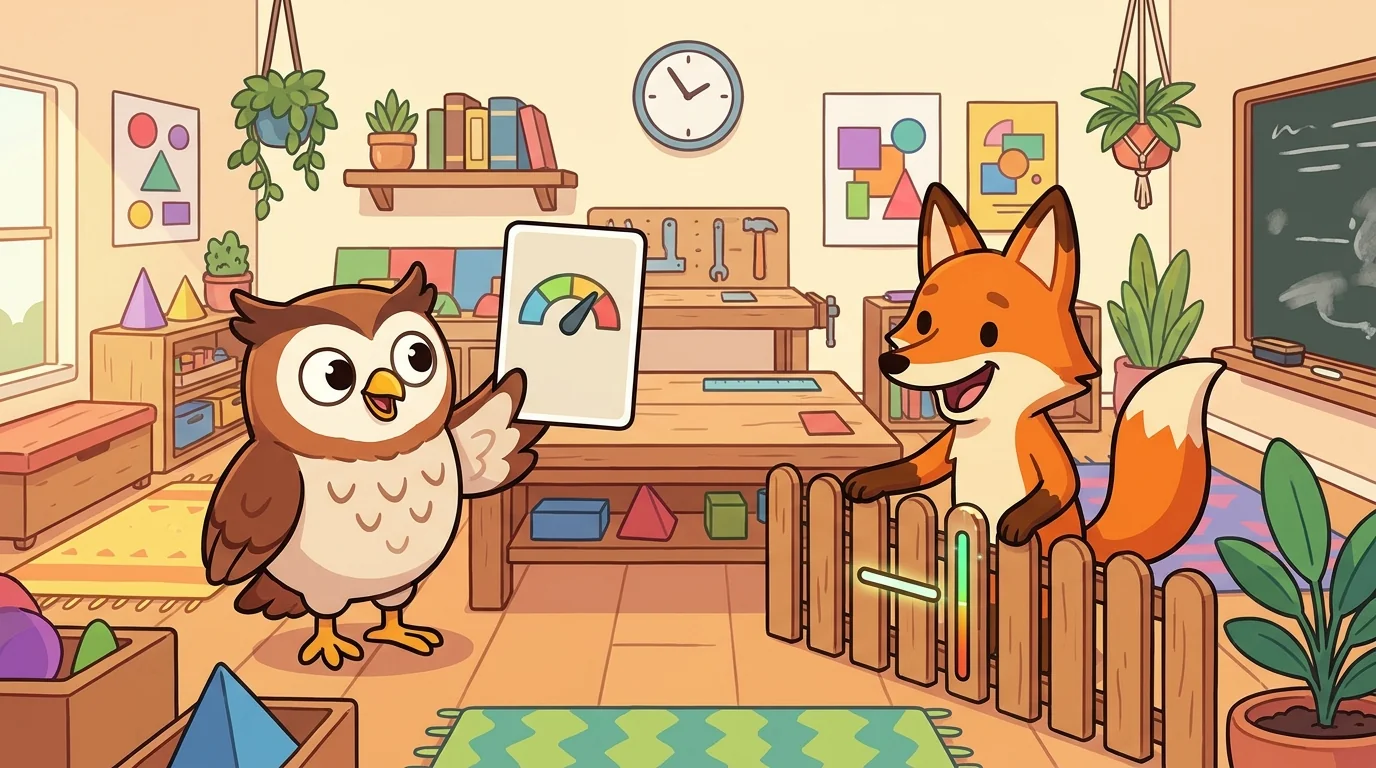
Odds the owl and Verge the fox share a workbench in the middle of the learning center, and they are forever passing one half-made thing back and forth across it: a decision. Odds holds up a card with a number on it. Verge walks his little fence and decides whether that number crosses his line. Between the two of them — and only between the two of them — a guess turns into a real, out-loud yes or not-yet.
"I can tell you how sure the machine is," Odds says, tapping her dial. "Seventy-one percent — and I've tested it, so seventy-one really means seventy-one." "And an honest seventy-one," Verge says, "still isn't a decision until I say whether it's enough." He nudges his fence. "That part's mine." They grin at each other. Neither can finish the job alone — and that, they'll tell you, is the whole point.
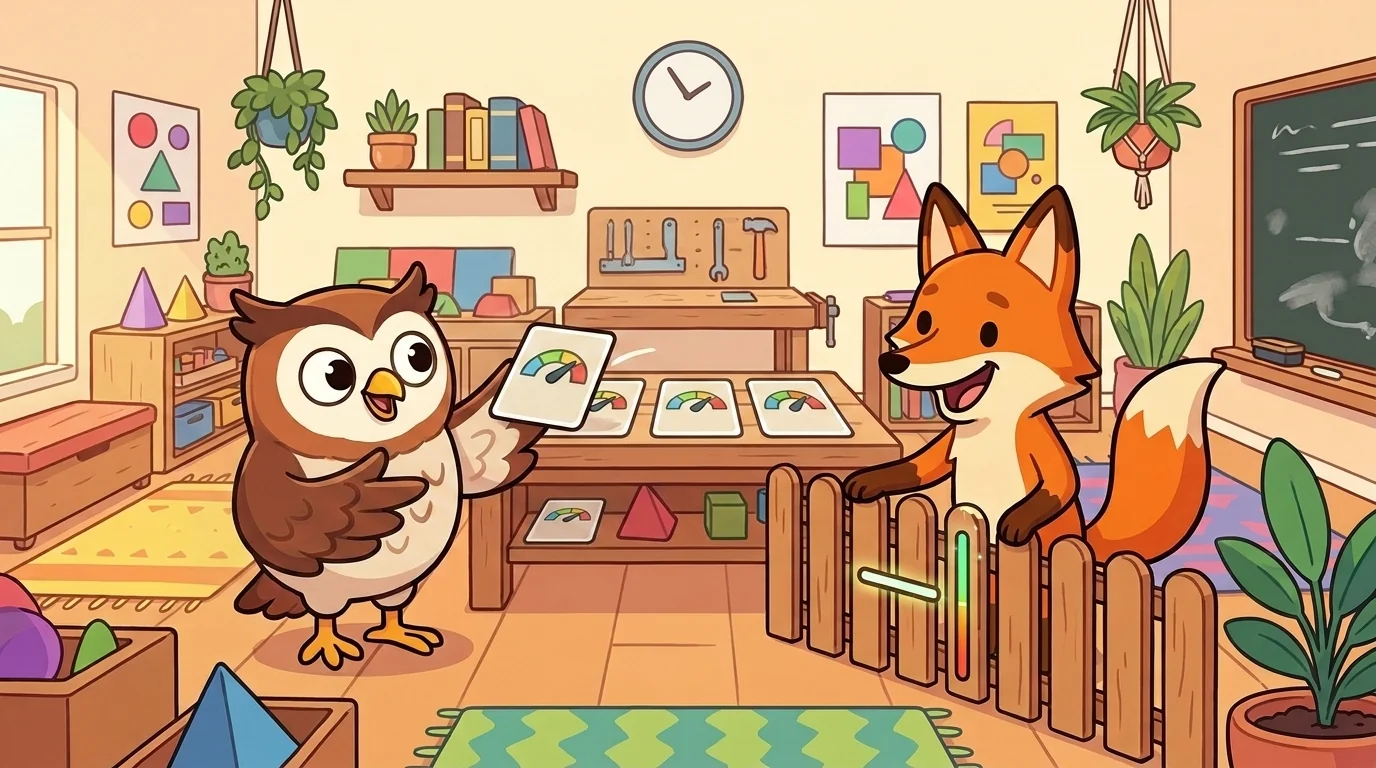
Odds does the how-sure, and she does it honestly. All morning she turns vague machine-feelings into numbers that have earned their size: not "probably," but 71; not "pretty likely," but 92; not "eh, maybe," but a middling, uneasy 54 — each one tested against how often that kind of guess actually comes true. "My number is the truth about the doubt," she says. "It never rounds up to look braver, and it's been checked against the world, so it doesn't lie about its own sureness." She lays three cards on the bench — 71, 92, 54. "There. That's everything the machine actually thinks, told straight. But notice — I haven't decided anything. A number, all by itself, just sits there being honest. Somebody still has to act on it." She slides the cards across the bench. "That somebody is Verge — and he can only be as fair as my number is honest."
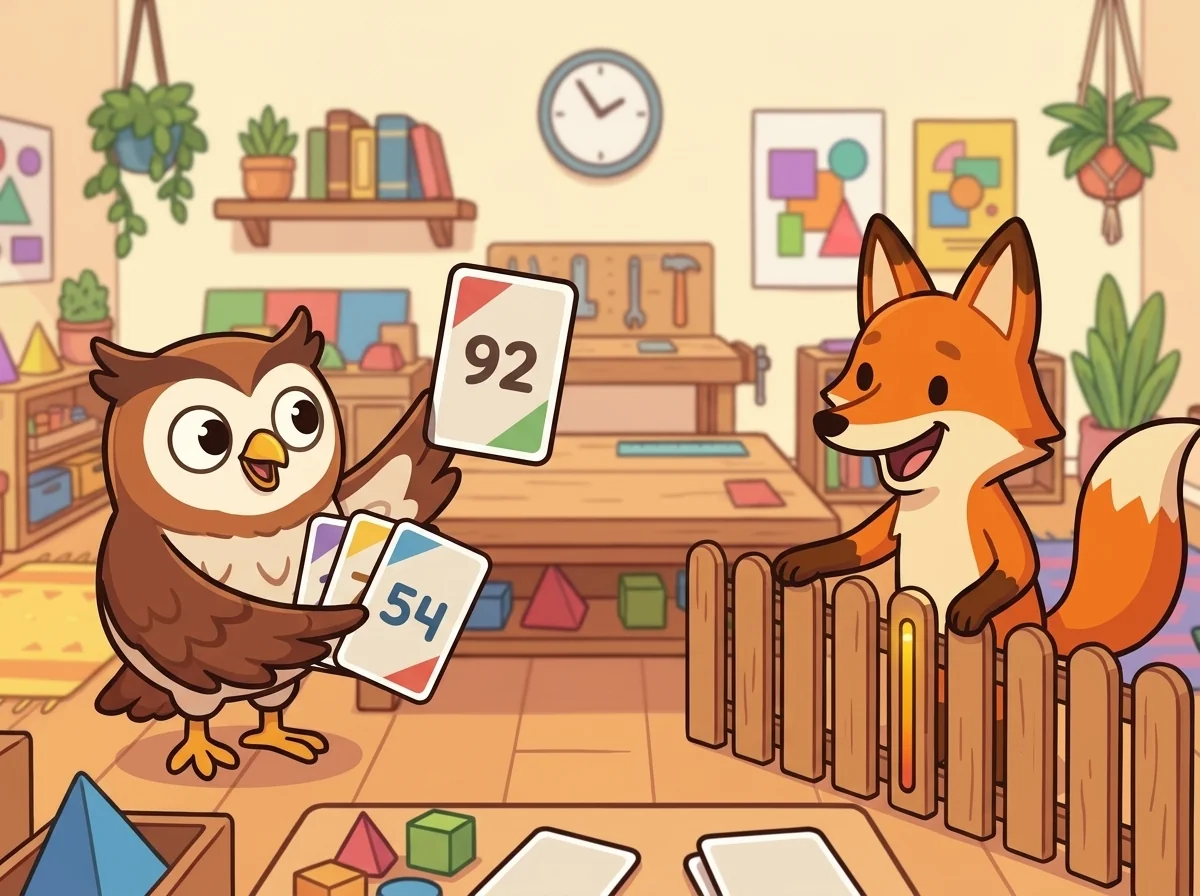
Verge does the how-sure-is-sure-enough, and he does it by weighing costs. He takes Odds's three cards to his fence, one at a time. "This is a spam filter, and I'd rather miss a little spam than lose one real letter — so my line sits high, at 90." He holds each card to the line. "Ninety-two? Crosses — YES, spam. Seventy-one? Doesn't cross — NOT-YET, let it through, just in case it's real. Fifty-four? Not close — through it goes." He sets them down. "Same three honest numbers Odds handed me. But where I put the line is what turned one of them into a yes — and I put it there on purpose, because of what the mistakes cost here." He taps the fence. "Make it a smoke alarm instead and I drop the line way down — now a miss is a catastrophe and a false alarm is just burnt-toast annoyance. Her number stays honest. My line does the choosing, weighed against the cost."
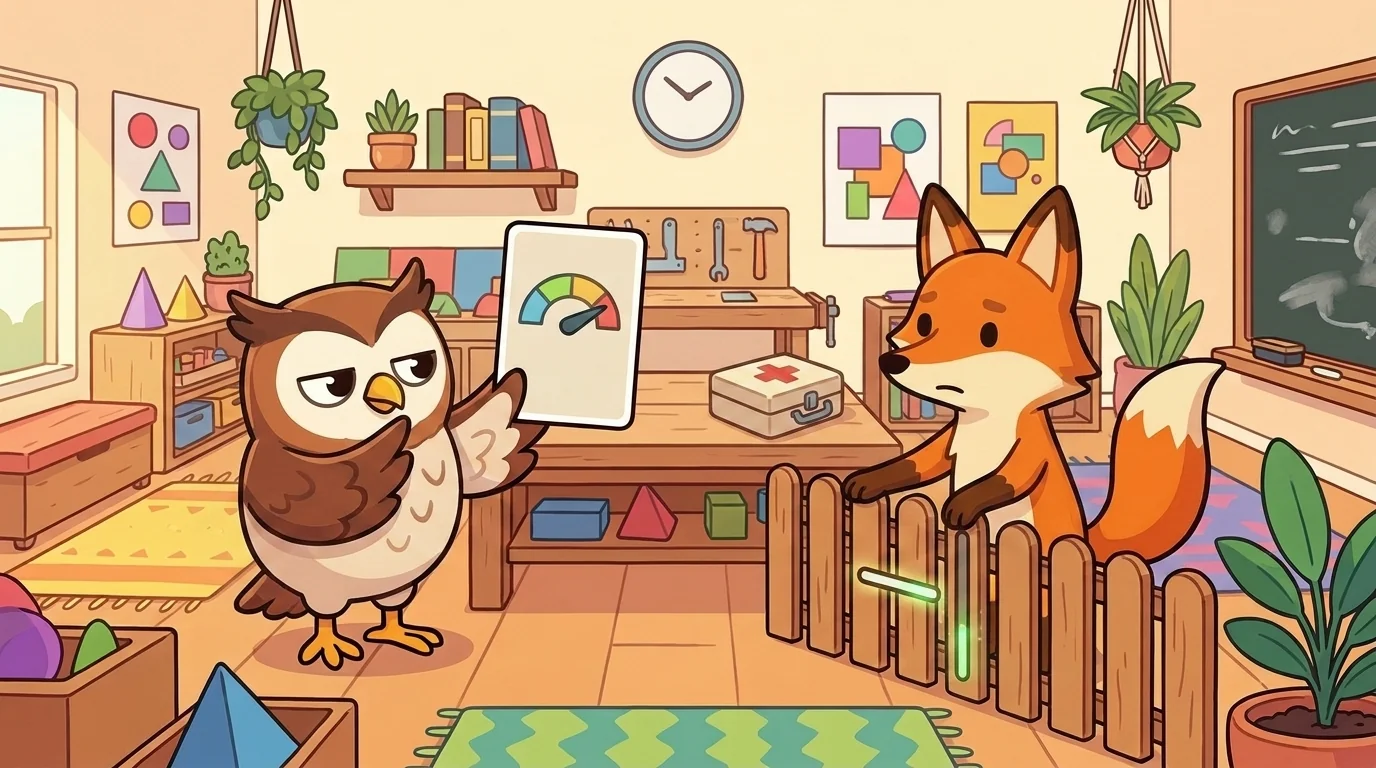
Then a hard case landed on the bench, and it took both of them, working together, to do it right. A hospital tool had looked at a scan, and Odds read its confidence, tested and true: 80% sure something was wrong. "Eighty," she said. "High-ish, not certain — twenty out of a hundred like this turn out fine. And that's a real eighty; I've checked its eightys come true about eighty times in a hundred." Verge frowned at his fence. "So where does the line go? Set it low and we frighten a lot of healthy people. Set it high and we miss some genuinely sick ones." They looked at each other and did the thing neither could do alone: they laid Odds's honest 80 against the cost of each mistake, out loud. "A missed sickness here is far worse than a scary extra check-up," Verge said slowly. "So the line goes low — 60 — and 80 crosses it: check again." Odds nodded. "And because it's 80 and not 99, we say check again, not you're sick — the number's honesty decides the words, your line decides the action." The tested confidence gave the true weight; the cost-weighed line made the true choice; and only the two of them together turned a machine's cautious 80 into a kind, careful, honest human decision — one that neither an honest number nor a well-placed line could ever have made alone.
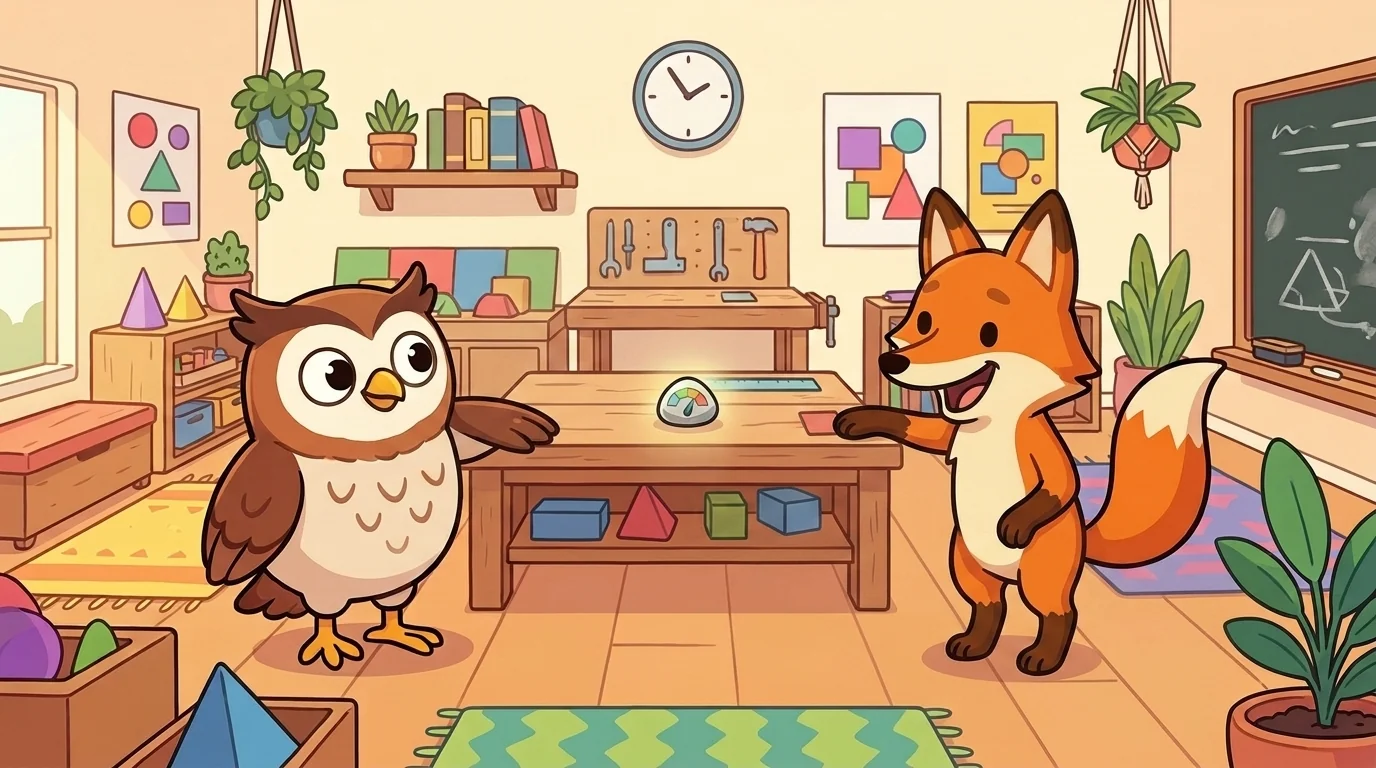
"So the number and the line are like two hands," the kid said, watching. "One holds how sure, honestly, the other holds how sure is enough, given what a mistake costs — and a real decision needs both to close?"
"That's it exactly," Odds said, and Verge nodded so hard his ears flopped. They passed the last card between them one more time — her tested number, his cost-weighed line — and set the finished decision down together, gently, in the middle of the bench. Under the quiet, both of them felt the same steadiness settle in — not the wobble of an honest number with no one to act on it, not the recklessness of a line drawn with no honest number to cross it, but a warm, paired, well-met calm. It was the particular ease of two who each did only their own true half — one keeping the number honest, one weighing the line against the cost — and trusted the other completely, so that between them a hard call came out honest and kind. That met-in-the-middle, better-together feeling, steadier than either the number or the line could ever be alone, was to Odds and Verge exactly why they shared a bench at all.
The NeuralQuest ensemble
Odds and Verge is part of NeuralQuest's distributed-narrative cast. Each character embodies a different curricular primitive; together they teach the full subject.
-

Tag
Labeling — the cheerful labeler who treats every label as a human choice and meaning-making act ('every label is a choice — and you're the one making it')
-

Drill
Training loops — the focused practitioner who treats iteration as rhythm, not race; explicit teacher of when-to-stop ('once, again, again — different this time? Then again')
-
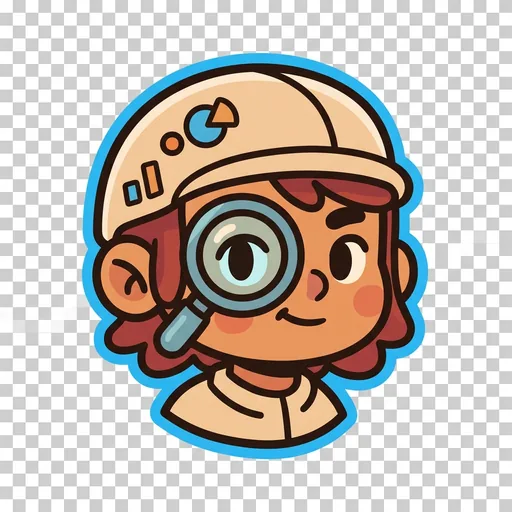
Skew
Bias + data fairness — the bias-vigilance anchor who always asks 'whose data is in here, whose is missing, who decided'; appears in every kit from kit 5 onward
-

Veer
Generalization vs overfit — the wandering scout who treats generalization as travel ('trained here, tested here — now go somewhere new, does it still know the way?')
-
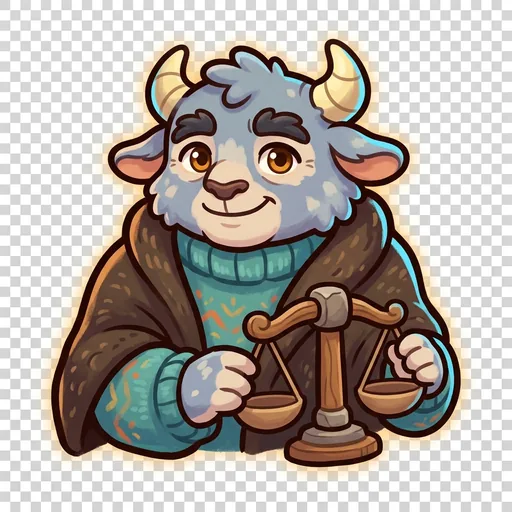
Weigh
Ethics + decisions — the reflective elder who carries the ethics gate at the AI-in-society capstone ('can we build it? Yes. Should we? That's a different question')
-
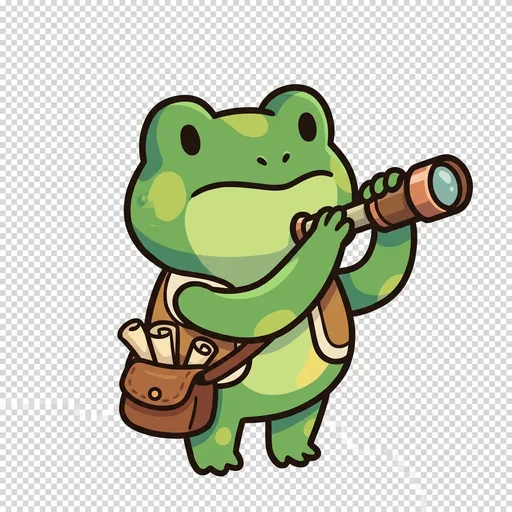
Foretell
Prediction — the model learned on the past; now it guesses about something it's never seen (the leap is the whole point and the whole risk)
-
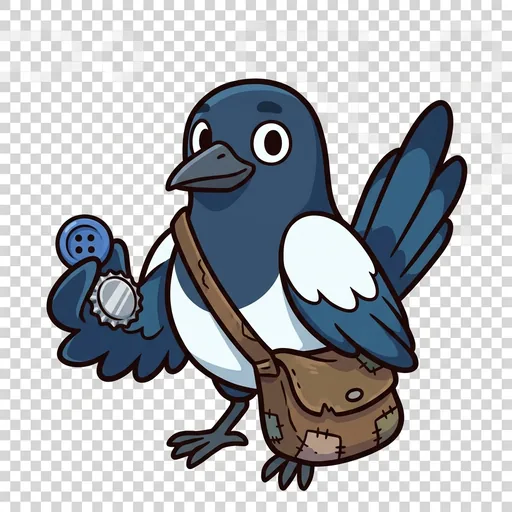
Glean
Feature selection — a computer can't look at everything; what you let it look at is what it learns from, so choose the clues on purpose
-
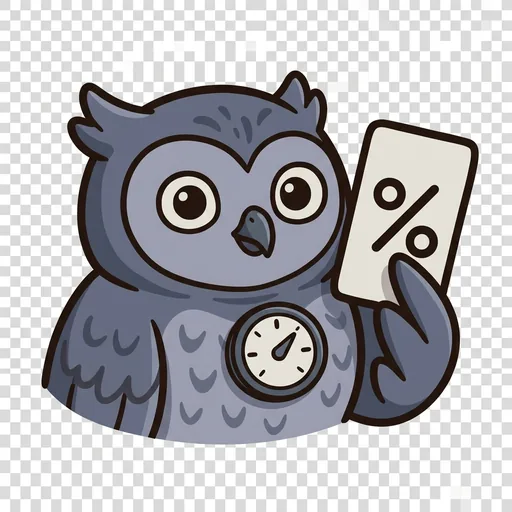
Odds
Confidence — I'm not sure, I'm 80% sure; those are different, and the difference is the whole point
-
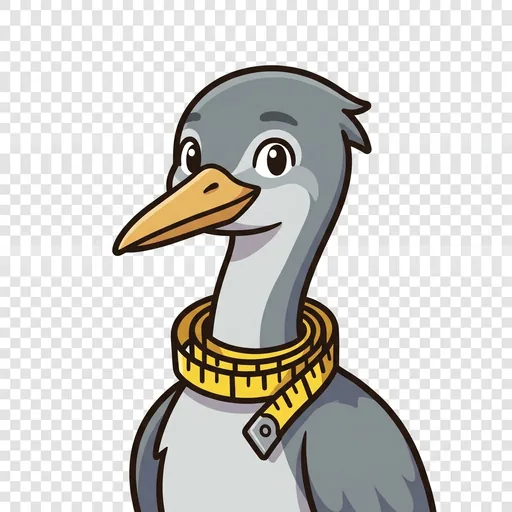
Rue
Loss — how far off was that guess? the exact size of the miss tells the model which way to change
-
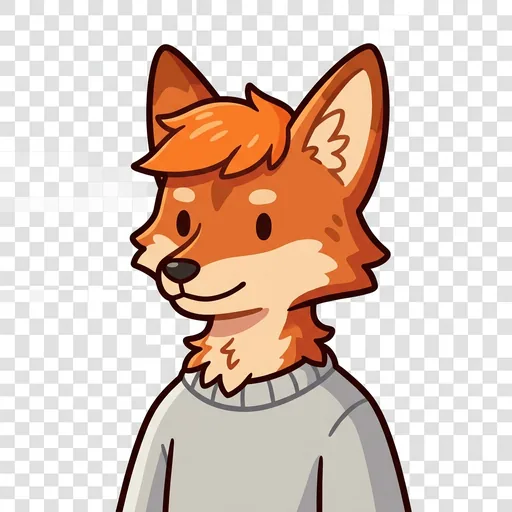
Verge
Decision threshold — the model gives a number, I draw the line; move the line and you choose what you'd rather be wrong about