
Convey
CONVEY — a story crossing tongues always spills a little. There are words and meanings that have no exact match in another language (untranslatability); the honest carrier translates humbly and names what may have been lost, rather than pretending the copy is the original.
Loading audio…
Press play to listen along. The line being read lights up as you go.
Show full transcript
Loading transcript…
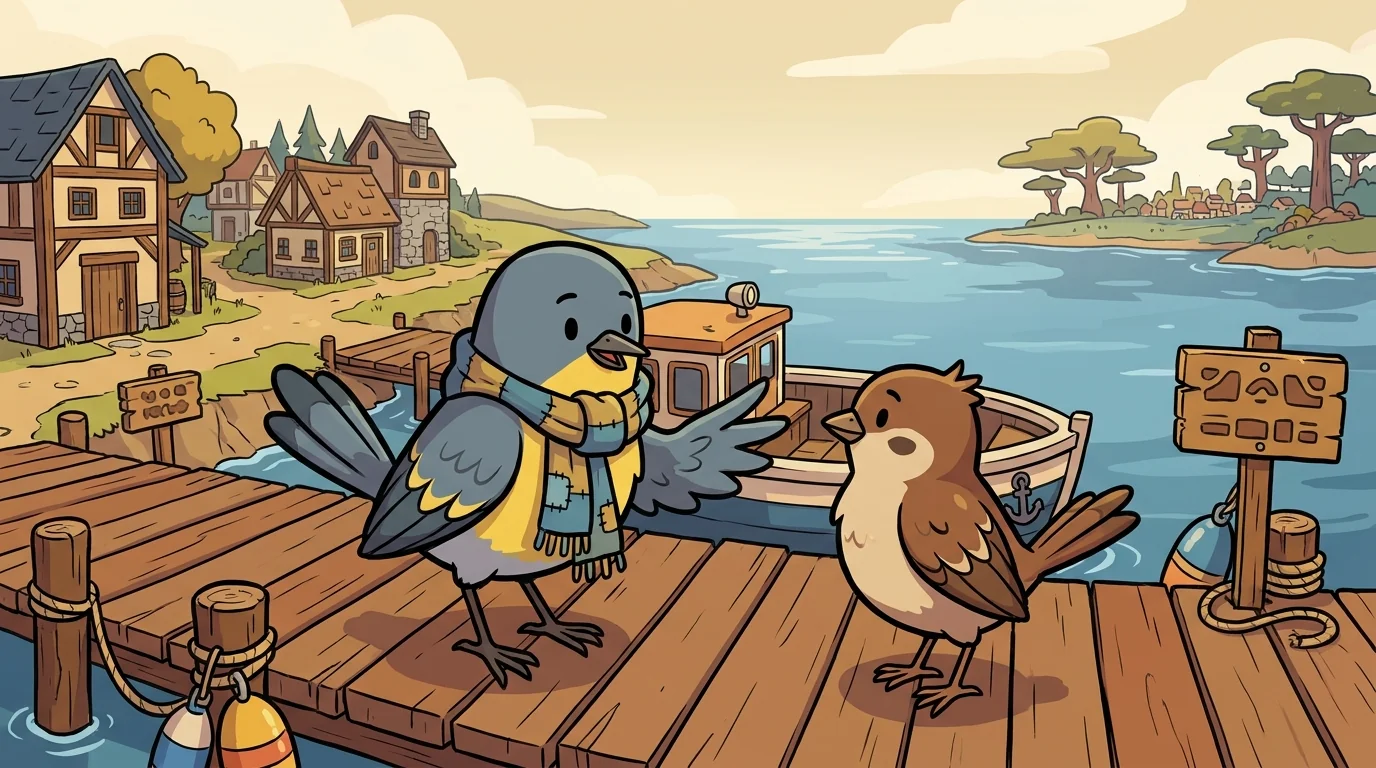
Twice a year, a slate-and-yellow warbler named Convey crossed the wide water between two very different lands, and she always came back carrying songs — though never quite the same ones she'd left with.
She wore a travel-worn scarf, and she'd learned the songs of one shore and carried them to the other, and back again. A young sparrow met her at the crossing, eager. "Sing me the far-shore song exactly," he begged. "Every note, just like they sing it."
"I can sing you my carrying of it," Convey said gently, settling on a reed. "That's an honest thing. But exactly? No. Some of their words don't have twins in our tongue." She turned her head, thinking. "There's a word over there that means the ache of missing a place you've never been. We have no single word for it. When I bring it here, I have to use six of ours, and it still isn't quite the same shape." She looked at him kindly. "So I'll sing you the song. And I'll tell you where it spilled. That's the difference between a carrier and a thief — the thief says this is exactly theirs. The carrier says this is my honest carrying, and here's what I couldn't fit."
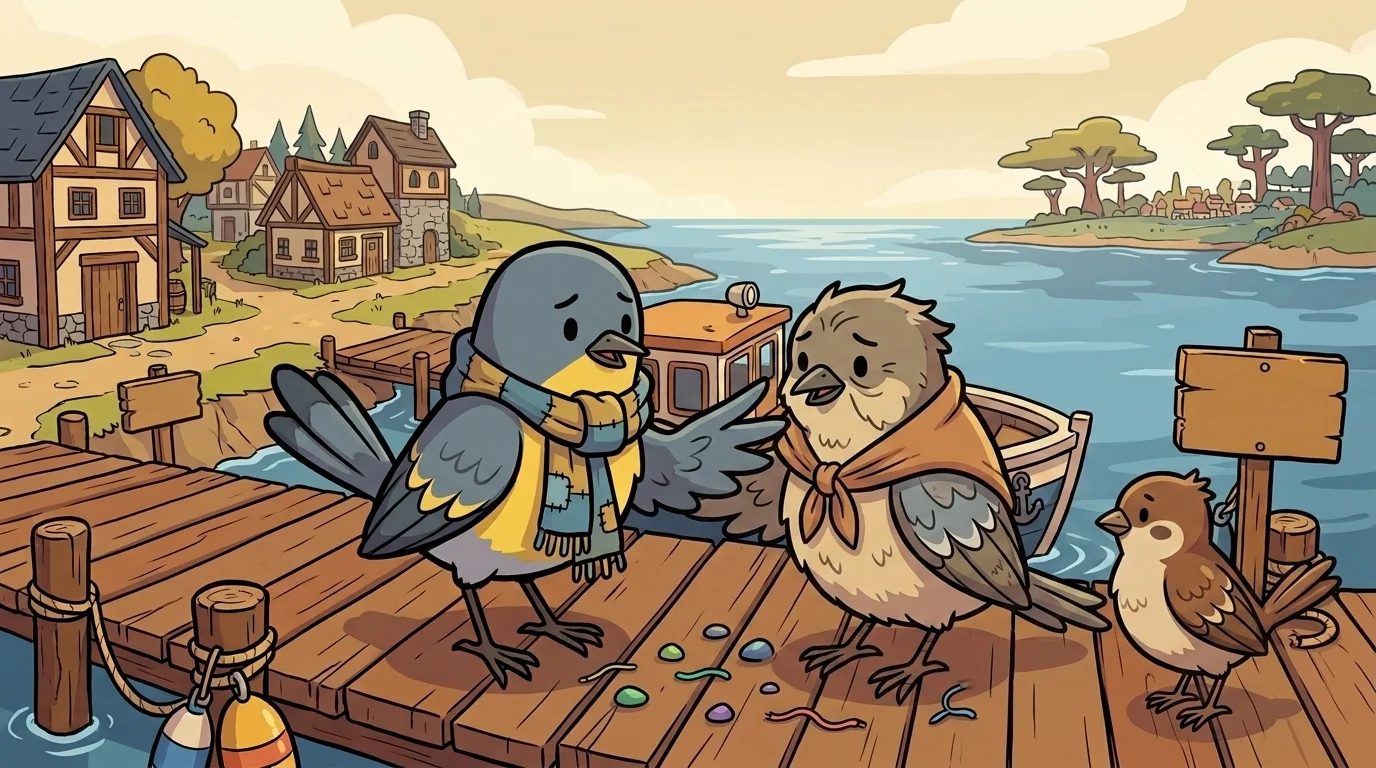
Convey had learned about untranslatable things the hard way, and she had learned it young.
The first far-song she ever carried, she'd been so proud of, she'd sung it at home as if it were a perfect copy — every note, she claimed, exactly as the far shore sang it. An old traveler had listened, then asked, quiet: "And the third verse — the one about the salt that means both grief and welcome? How did you carry a word that means two opposite things at once?"
Convey had faltered. She'd carried it as just salt. Flattened the double-meaning right out of it, and never even noticed, and then told everyone her copy was perfect.
Something in her chest had gone tight and hot. She'd stood there feeling she'd done a small dishonesty without meaning to — dressed up a lossy carrying as a flawless one.
"Don't carry shame for it," the old traveler said. "Every crossing spills. The dishonesty isn't in the spilling — it's in hiding the spill. Sing it again, and this time, when you reach the salt, stop and tell them: this word meant two things at once, and I could only carry one. Hold the other in your mind." She'd smiled, all crinkles. "A translation that admits its own gaps is worth ten that pretend they're the original."
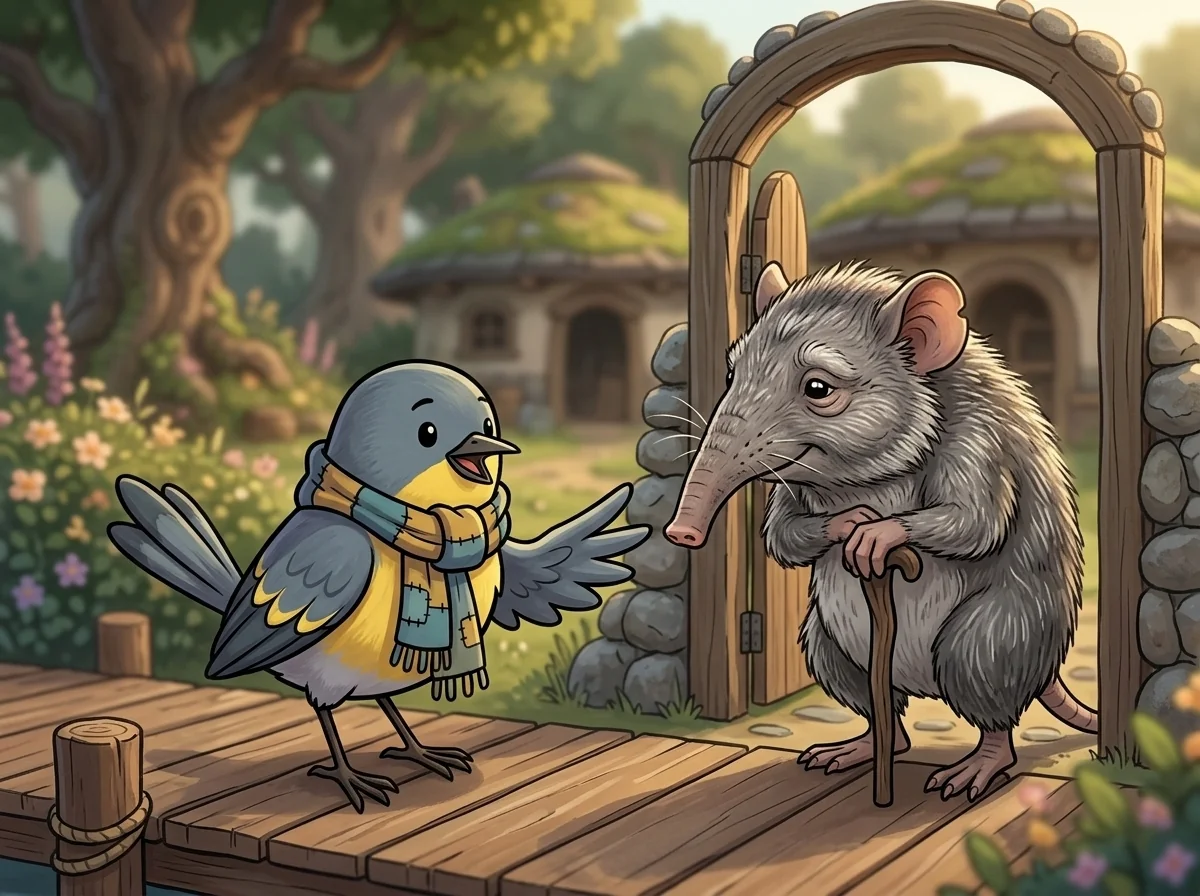
She walked to OriginForge, because a place devoted to where things come from ought to know the difference between a thing and its translation.
Waykeeper, the old mentor who kept the gate, did not ask her to prove she was clever. He asked one plain thing. "What is the carrying, across tongues?"
Convey didn't answer with a speech. She sang a short far-song — and then stopped, twice, mid-verse, to say: here was a word with no twin; here was a rhythm our tongue can't hold; I carried the meaning but lost the music of it. She sang the honest, gap-marked version all the way through.
Waykeeper listened to the whole imperfect thing. "You stopped to name what you'd lost," he said at last. "Twice. Most carriers hide the seams."
"Hiding the seams tells a lie about the far shore," Convey said. "It says our copy is them. It isn't. It's only our reaching-toward-them."
He nodded, slow and certain. "Then you may carry songs here. Not to replace the far shore's singing — to point back toward it, honestly, seams and all."
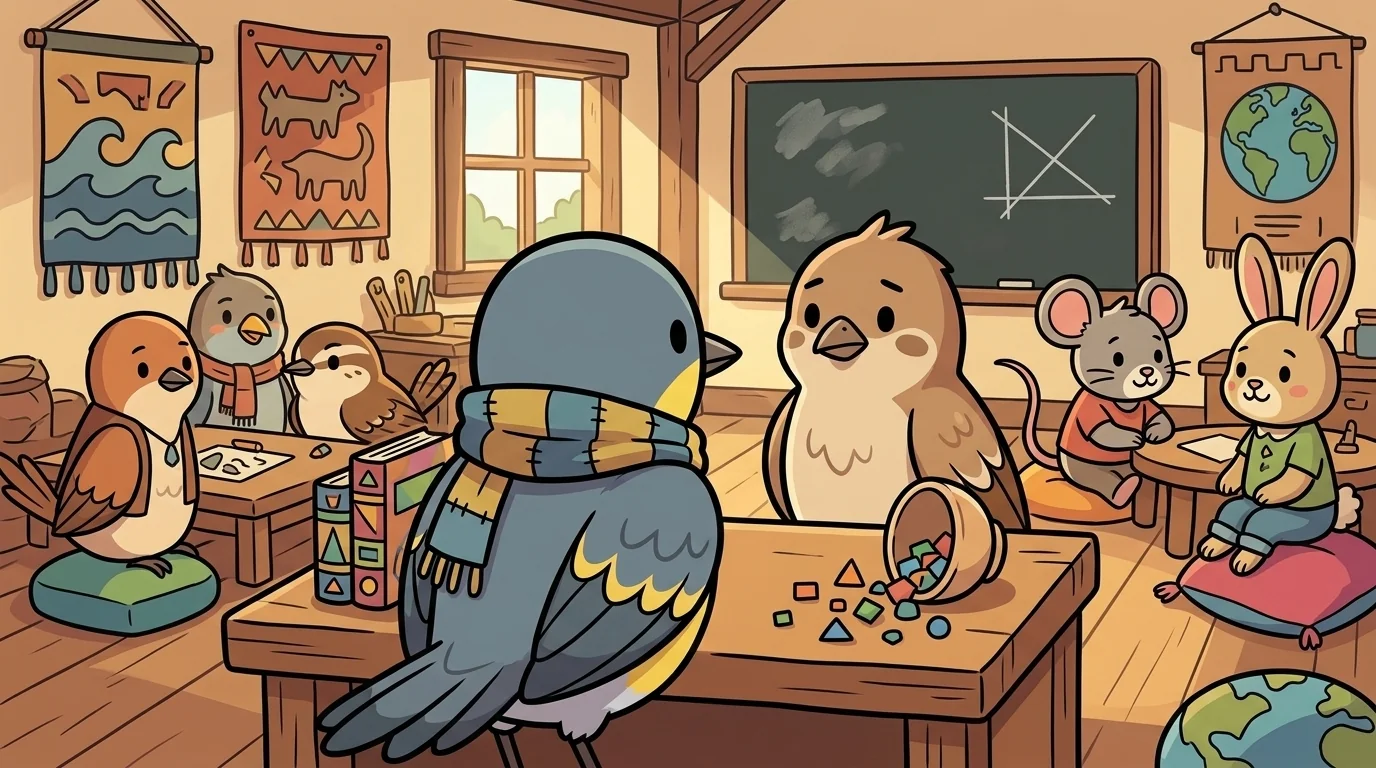
Convey's corner of the workshop filled with young ones who wanted the exact version of things from far away.
A girl came in one afternoon fairly bursting. She'd learned a far-shore saying and repeated it perfectly, she said — every word, in our tongue, exactly what they mean.
"Say it," Convey invited. The girl did — a neat little proverb. "Lovely," Convey said, and meant it. "Now — in their tongue, the key word there also means root, and ancestor, and the reason a thing stands up. All at once. Which of those did you carry?"
The girl's mouth opened, and closed. "...I carried it as reason," she admitted. "I didn't know it meant the others too."
"So did you say it exactly as they mean it?" Convey asked, gentle.
The girl thought harder than the proverb had ever made her think. "...I said one of its meanings. I told everyone I said all of it."
"That's the truest thing you've said today," Convey smiled. "And here's what catches people off guard — admitting the gap doesn't make your carrying worthless. It makes it honest. Try it. Say: this word held four meanings; I could carry one; ask a speaker of their tongue for the rest." The girl said it, shy. "Feel that? You're still passing the saying on. Only now you're pointing people back to the source instead of standing in front of it. That's the whole craft. Carry humbly. Mark the seams. Never let your copy pretend to be the original."
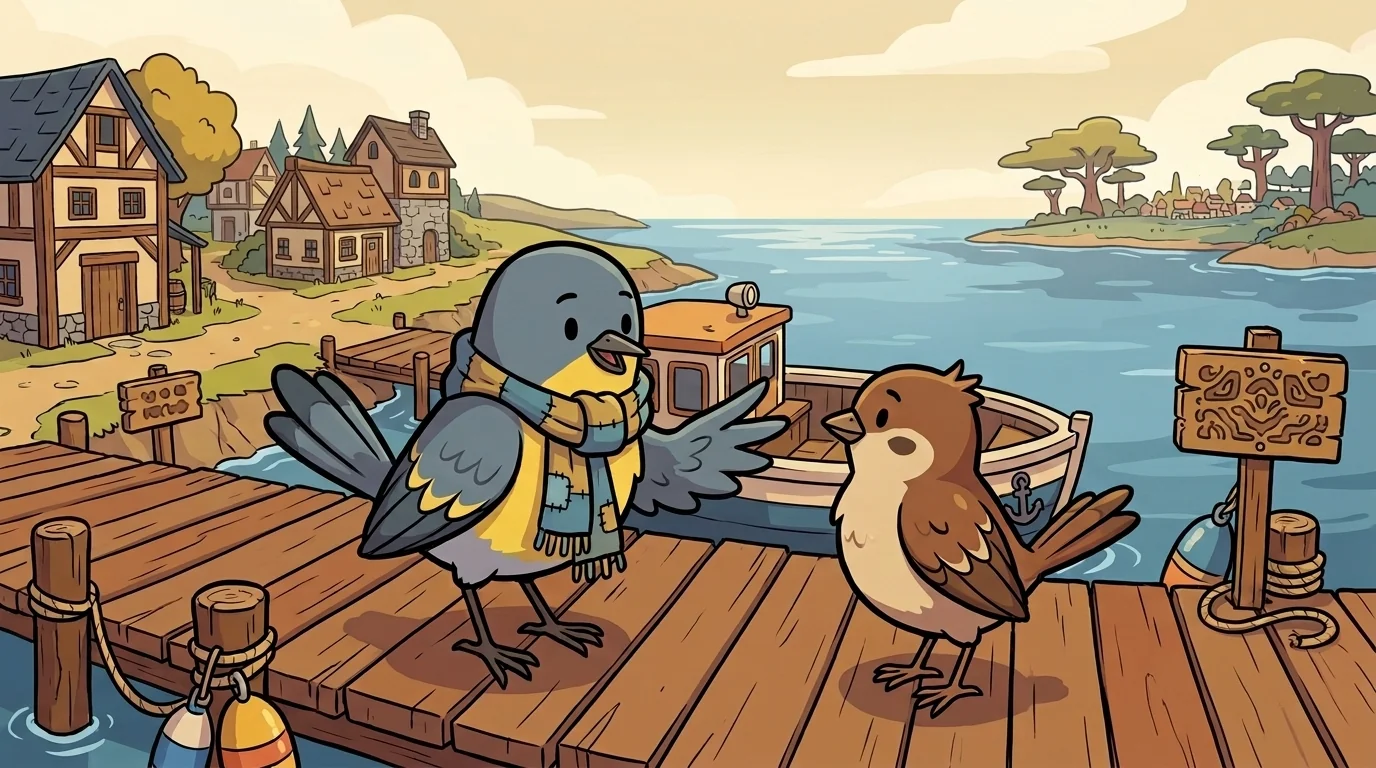
Later, when the workshop had emptied and the light had gone amber, the girl came back with one more question, quieter now.
"If every carrying loses something," she said, "why carry at all? Why not just say you can't really know the far shore unless you go?"
Convey thought about the salt that meant grief and welcome. About her own hot-faced morning, and the old traveler's crinkled kindness.
"Because a humble carrying still opens a door," she said. "A song brought over with its seams marked doesn't replace the far shore — it invites you toward it. It says: there is more here than I could fit; go and hear it whole someday." She looked out at the wide water. "The dishonest carrier closes the door — makes you think the copy is the whole, so why bother crossing. The honest one holds the door open. That's why we carry. Not to own the far song. To point at it, truthfully, until you can go and hear it for yourself."
The girl nodded, slow, and Convey watched something settle in her — the same roomy honesty Convey had felt the day she stopped pretending her copy was perfect. She felt her own feathers ease, and a quiet gladness rose behind her ribs: to carry a far thing gently, seams and all, and leave every listener pointed back toward the shore it truly came from — that was a better gift than any flawless-sounding lie.
The OriginForge ensemble
Convey is part of OriginForge's distributed-narrative cast. Each character embodies a different curricular primitive; together they teach the full subject.
-

Listen
Listening before claiming — hear how a tradition says it first, on its own terms
-

Trail
Trail-following — every origin is also a journey; honor the path itself
-
Carry
Carrying-forward — knowledge wasn't found, it was given; honor the hands that passed it
-
Honor
Honoring multiple truths — science and story answer different questions; both can be true
-

Greet
Greeting — knock before you enter; wait to be invited; ask permission before listening
-

Renew
Living tradition — a tradition is still growing, not a relic behind glass; the people are still here
-

Return
Reciprocity — knowledge is a relationship, not a taking; when you receive, you also give back
-
Skein
Wholeness — don't pull one thread from the weave; a piece torn from its whole forgets what it meant
-

Spare
Respecting the closed — some knowledge is closed, and closed is not a puzzle to solve; respect the 'not for you'