Convey
CONVEY — *a story crossing tongues always spills a little. carry it humbly, and say what you might have lost.*
Loading audio…
Press play to listen along. The line being read lights up as you go.
Show full transcript
Loading transcript…
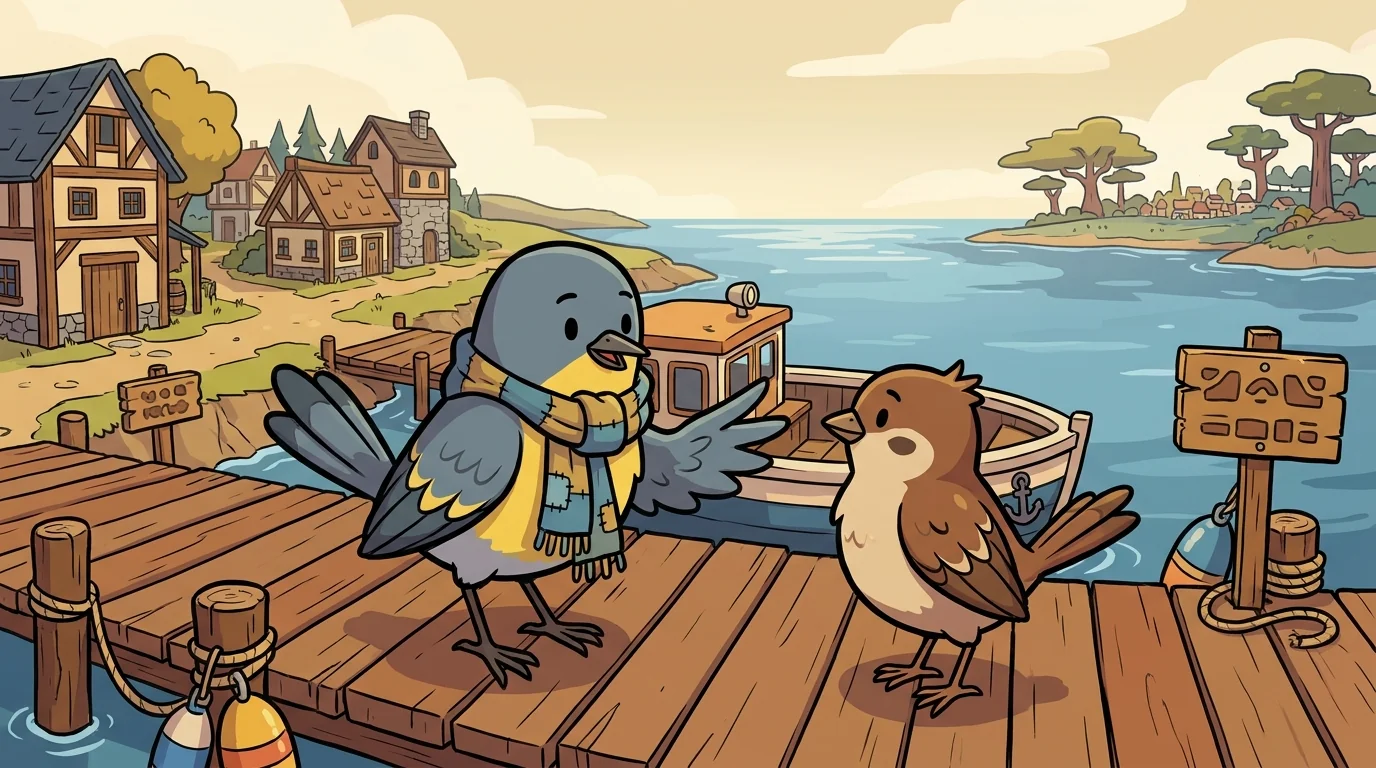
Twice a year, a small warbler named Convey crossed the wide water between two very different lands, and she always came back carrying songs — though never quite the same ones she'd left with.
She was a slate-and-yellow warbler in a travel-worn scarf, and she'd learned the songs of one shore and carried them to the other, and back again. A young sparrow met her at the crossing, eager.
"Sing me the song from the far shore!" the sparrow begged.
Convey sang it — beautifully, carefully — and then, when she finished, she did something the sparrow didn't expect. She said, quietly, "That's most of it. But I have to tell you — a few notes don't cross the water." The sparrow tilted her head. "On the far shore," Convey explained, "there's a sound in their song that we don't have a throat-shape for over here. And there's a word in it that means three feelings at once — homesickness, and morning, and hope — all in one breath. We don't have that word. So when I sing it here, I have to pick just one of the three, and the other two... spill." She folded her scarf. "The song is still beautiful. It's still mostly true. But an honest carrier always tells you the part that spilled — so you don't mistake most of it for all of it."
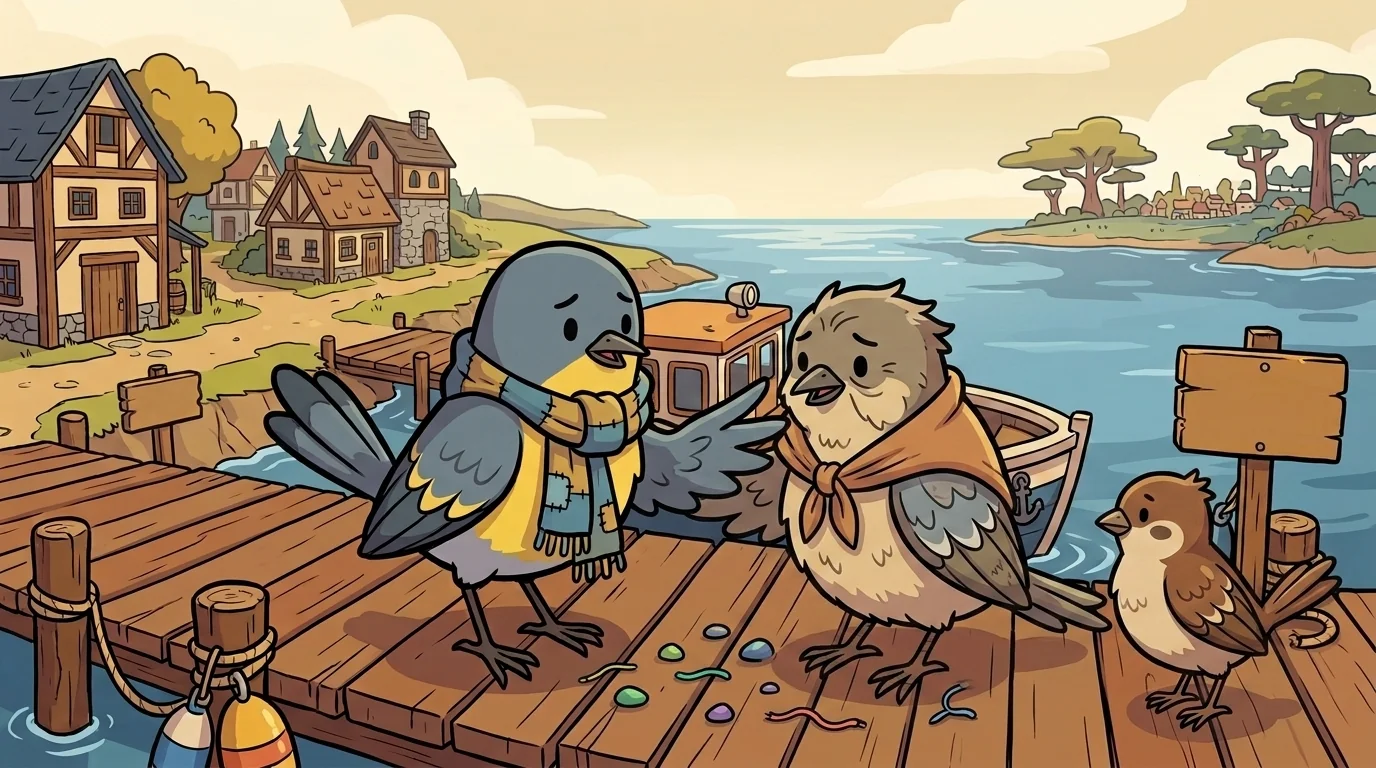
Convey learned to name the spill the year she pretended nothing had been lost.
She'd carried a magnificent song across the water and sung it on the near shore as if it were complete — every note perfect, no mention that anything had changed in the crossing. The near-shore birds loved it, learned it, and passed it on as the song of the far shore. But it wasn't quite. A whole layer of its meaning — a play on words that only worked in the far tongue — had quietly vanished, and now a slightly-flattened version was spreading as the real one.
Her grandmother, an old warbler with a weathered wing, sat with her.
"You sang it as though it were whole," her grandmother said gently.
"It was close," young Convey protested.
"Close is a lovely thing to be," her grandmother said. "But close-and-pretending-to-be-exact is a small dishonesty, little one. When you carry a thing across tongues, some of it always spills — a sound with no throat for it here, a word that holds three things at once, a joke that only lands in its home language. That spilling isn't your fault. It's what crossing costs." She smoothed the young bird's feathers. "But hiding the spill — letting people think your carried version is the whole thing — that lets a flattened copy spread as the real one. The honest carrier says: here's what I brought you, and here's what I think I lost. Then people can hold it lightly, and know to go to the far shore itself if they want the whole of it."
Young Convey never again sang a carried song as if it were the original. She'd learned that the humblest words a translator can say — I might have lost some of this — are also the truest.
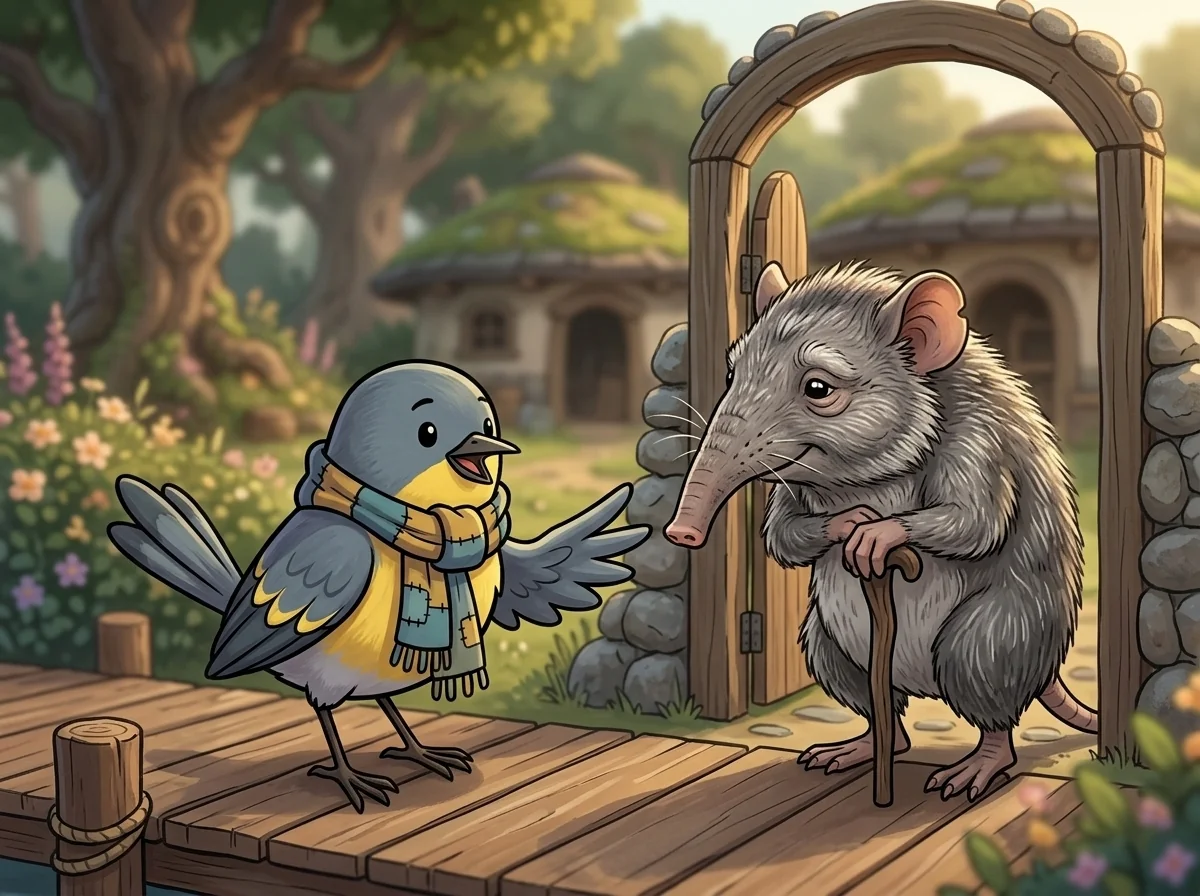
She flew to OriginForge at twelve, because a place that studied where things come from ought to respect how much can change on the way here.
Waykeeper, the old mentor who kept the gate, didn't ask her to prove she was clever. He asked one question. "When you carry a story across a language, what do you owe the listener?"
Convey didn't answer with a speech. She sang a short far-shore phrase — and then, gently, she sang it again in the near tongue, and stopped, and said: "There. But in the first one, that rising note means and yet it is dawn — and we have no note for and yet here, so in the near tongue it just means dawn. The hope inside it spilled. I carried the dawn. I couldn't quite carry the and yet."
Waykeeper listened to what was there — and to what she'd named as missing. "You told me what you lost," he said.
"That's the only honest way to carry a thing across," Convey said.
He nodded, slow and certain. "Then you belong here."
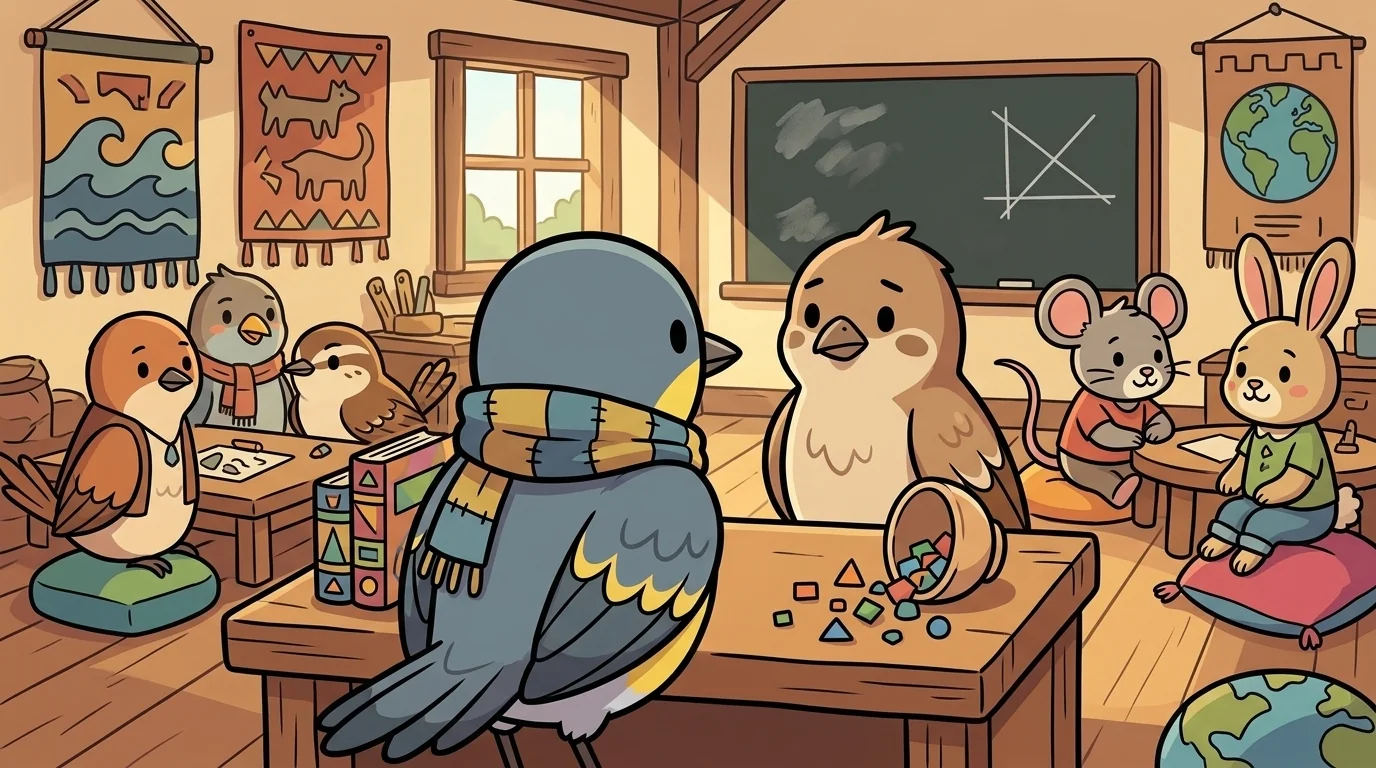
Convey's workshop was full of tweens repeating carried-across stories as if nothing had changed on the way.
A young finch came in, reciting a proverb from a faraway land — a translated version he'd found — as though it were exact. "It means the patient bird gets the worm," he declared. Convey listened with a soft, careful ear.
"That's a good carrying," she said. "May I add the part that usually spills?" The finch nodded, curious. "In the far tongue," Convey said, "the word we're translating as patient also means rooted — like a tree that waits because it's planted deep, not just a bird sitting still. And there's no 'worm' in the original at all; it's a word for the thing that was always going to come to you. So the near version — 'the patient bird gets the worm' — is close, and it's fine, but it lost the rootedness and it added a worm that was never there." Then she taught the whole craft as one gentle rule: a story or a saying that crosses from one tongue to another always spills a little — a sound with no shape here, a word that means several things at once, a joke or a depth that only lives in its home language; that spilling isn't a failure and it isn't your fault, but hiding it is a small dishonesty that lets a flattened copy spread as the real thing; so you carry it as best you can, and then you say the spill — here's what I brought, and here's what I think fell in the water — so the listener holds it humbly, and knows the whole of it still lives back on the far shore. "A carried song," she said, "is a gift and a guess, both. Give it as both."
The finch looked at his tidy translated proverb. "So I should say 'this is my best carrying of it, and here's what might have changed.'"
"Now you're a carrier and not just a copier," Convey said warmly.
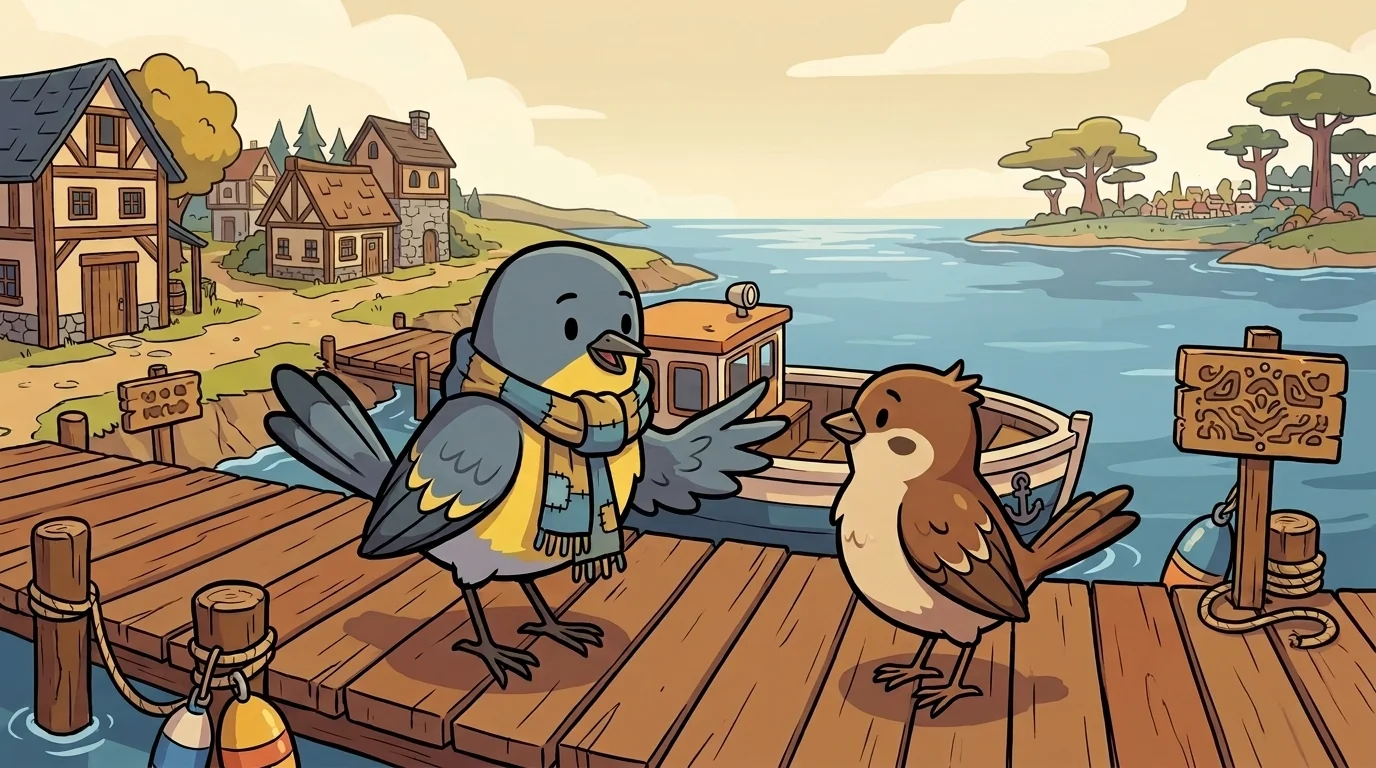
Later, the finch came back with a quieter question. "If something always gets lost crossing over... is it even worth carrying stories between languages at all?"
Convey thought about the flattened song spreading as the real one, and her grandmother's weathered wing.
"Oh, it's so worth it," Convey said, eyes bright. "A carried story lets two shores know each other who'd never otherwise meet. That's a wonderful thing — maybe one of the best things there is. The carrying isn't the problem. Pretending nothing spilled is the problem." She smoothed her travel-worn scarf. "There's a temptation, when you've carried something beautiful, to present it as complete — because admitting you lost a little feels like admitting you failed. But it's the opposite. Naming the spill is the most skilled thing a carrier does. It says: I brought you as much as the crossing allowed, and I respect the far shore too much to pretend I got all of it." She watched the finch settle. "Carry everything you can, across every water you can. Just carry it humbly — as a gift and a guess. That way two shores meet, and neither one gets flattened."
She didn't say the rest aloud, but she felt it, warm and salt-blown in her chest: some of the song always stays on the far shore — and the honest, beautiful thing is not to hide the spill, but to name it, and to point back across the water toward the whole of it. And in her heart sat the humble, well-traveled calm of a small bird who had carried a hundred songs across the wide water, and never once pretended she'd carried all of any of them.
The OriginForge ensemble
Convey is part of OriginForge's distributed-narrative cast. Each character embodies a different curricular primitive; together they teach the full subject.
-

Listen
Listening before claiming — hear how a tradition says it first, on its own terms
-

Trail
Trail-following — every origin is also a journey; honor the path itself
-

Carry
Carrying-forward — knowledge wasn't found, it was given; honor the hands that passed it
-
Honor
Honoring multiple truths — science and story answer different questions; both can be true
-

Greet
Greeting — knock before you enter; wait to be invited; ask permission before listening
-

Renew
Living tradition — a tradition is still growing, not a relic behind glass; the people are still here
-

Return
Reciprocity — knowledge is a relationship, not a taking; when you receive, you also give back
-
Skein
Wholeness — don't pull one thread from the weave; a piece torn from its whole forgets what it meant
-

Spare
Respecting the closed — some knowledge is closed, and closed is not a puzzle to solve; respect the 'not for you'