
Skein
SKEIN — don't pull one thread out of the weave; a piece torn from its whole forgets what it meant. Named directly: decontextualization, the meaning that lives in the pattern (not the isolated symbol/motif/word), and the difference between honoring a whole tradition and cherry-picking an aesthetic fragment from it.
Loading audio…
Press play to listen along. The line being read lights up as you go.
Show full transcript
Loading transcript…
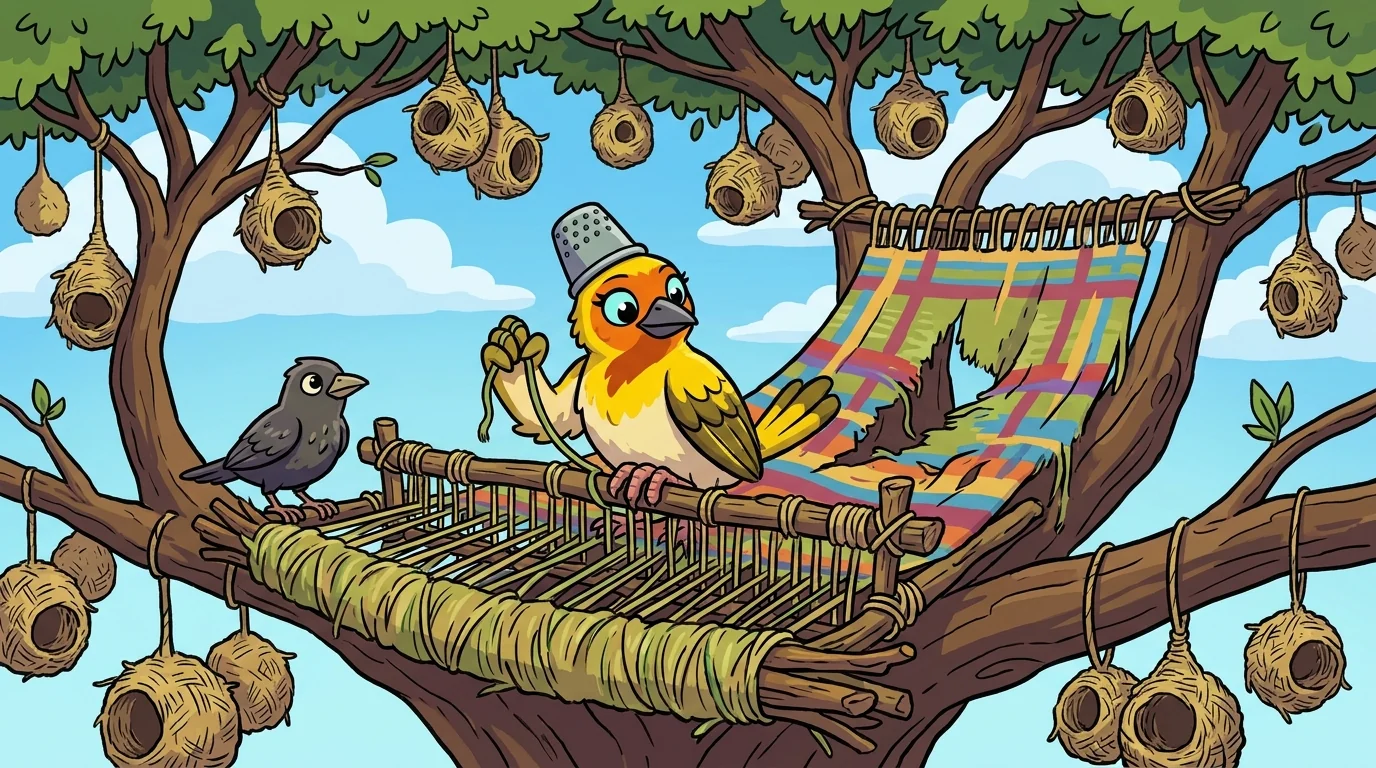
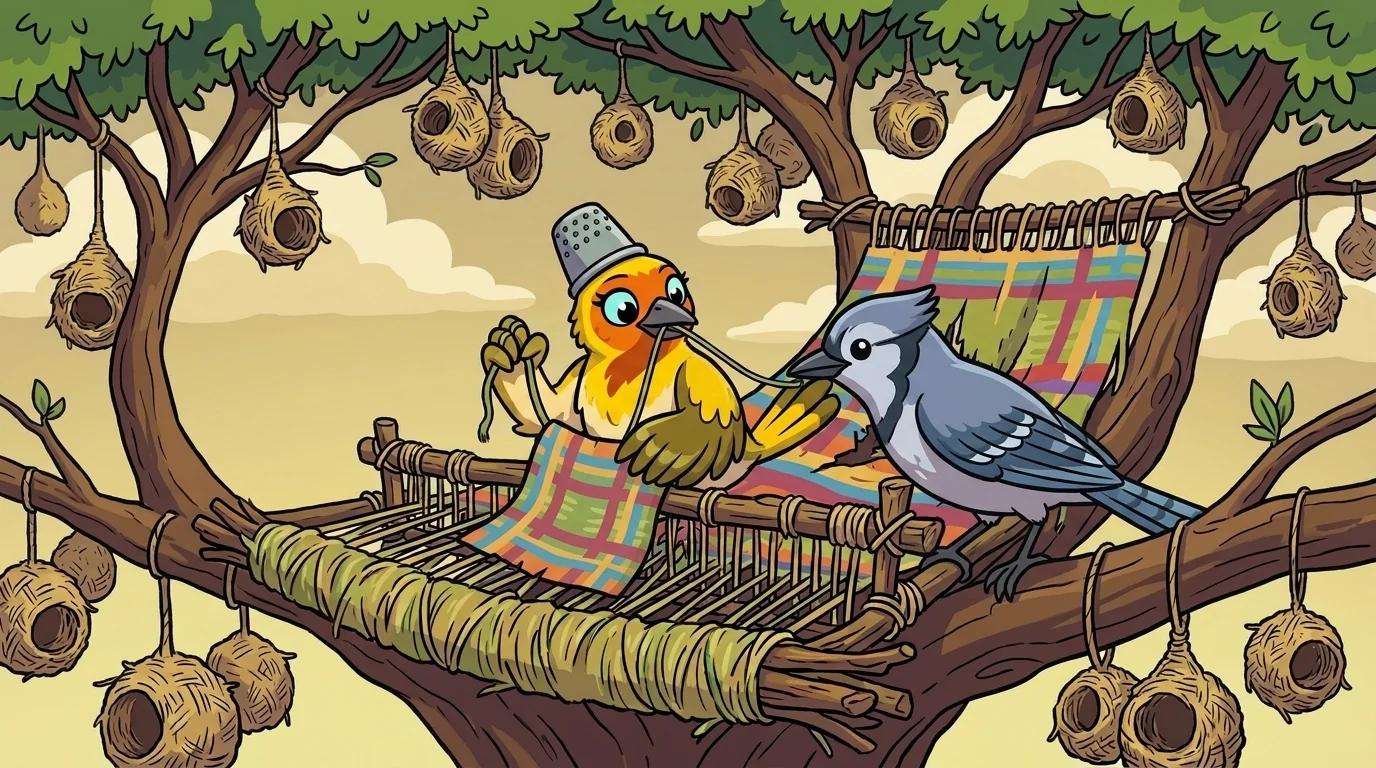
In the branches of an acacia hung the woven homes of the weaverbirds, and the most careful weaver of them all was a bright-eyed bird named Skein, in a thimble-cap.
She spent her days at a great loom of grass, watching how each strand held every other. A young starling landed beside her, eyeing one especially lovely emerald thread woven through the whole cloth. "That green one's gorgeous," the starling said. "Pull it out and give it to me? I want to wear just that."
"I could pull it," Skein said, not lifting her eyes from the loom. "But watch what you'd be taking." She loosened the emerald thread a little — and where it lifted, the pattern around it sagged: a shape came apart, a border lost its edge, a small woven figure that had meant something dissolved into loose ends. "See? On its own, that green thread is just a pretty string. In the weave, it was the river in a story — the whole cloth is a story, and that thread was one line of it." She tucked it back, and the picture snapped whole again. "Pull it out, and you don't get the river. You get a string that's forgotten it was ever a river. The meaning was never in the thread. It was in the pattern."
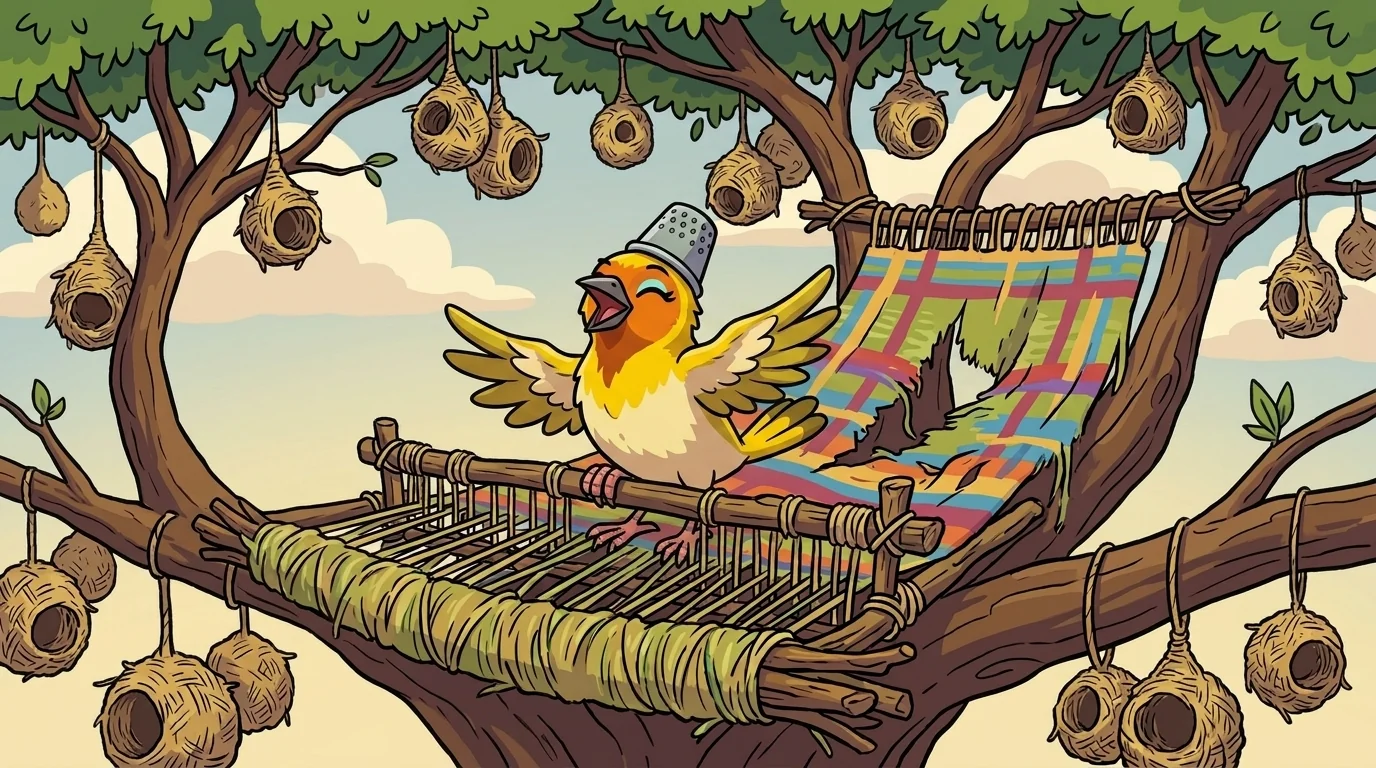
Skein had learned this the hard way, and it had embarrassed her.
She'd once admired a single motif from another weaver's cloth — a striking little diamond-shape — and she'd copied just that, the diamond alone, and stitched it onto her own cap because it looked good. She'd worn it proudly.
Then the weaver whose cloth it came from had seen it, and gone quiet, and said carefully: "In our weave, that shape only means what it means next to the others. It's part of a marriage-cloth — it sits beside two others, and together the three say something whole. Alone, on your cap, it says... nothing. Or worse, it says a thing you didn't intend, because you've taken one word out of a sentence and worn it like it was the sentence."
Something in Skein's chest had gone tight and hot. She'd worn a fragment as if it were the whole, and in doing so had turned a meaningful thing into a decoration that had forgotten its own meaning — and might even, cut loose, have said something wrong.
"Don't carry shame," the weaver had said, kindly. "You saw beauty; that's not a crime. But beauty in a weave is made of the weave. Next time you love one thread, ask what it holds up. Usually you'll find the thing you loved was never the thread at all — it was the pattern the thread was part of."
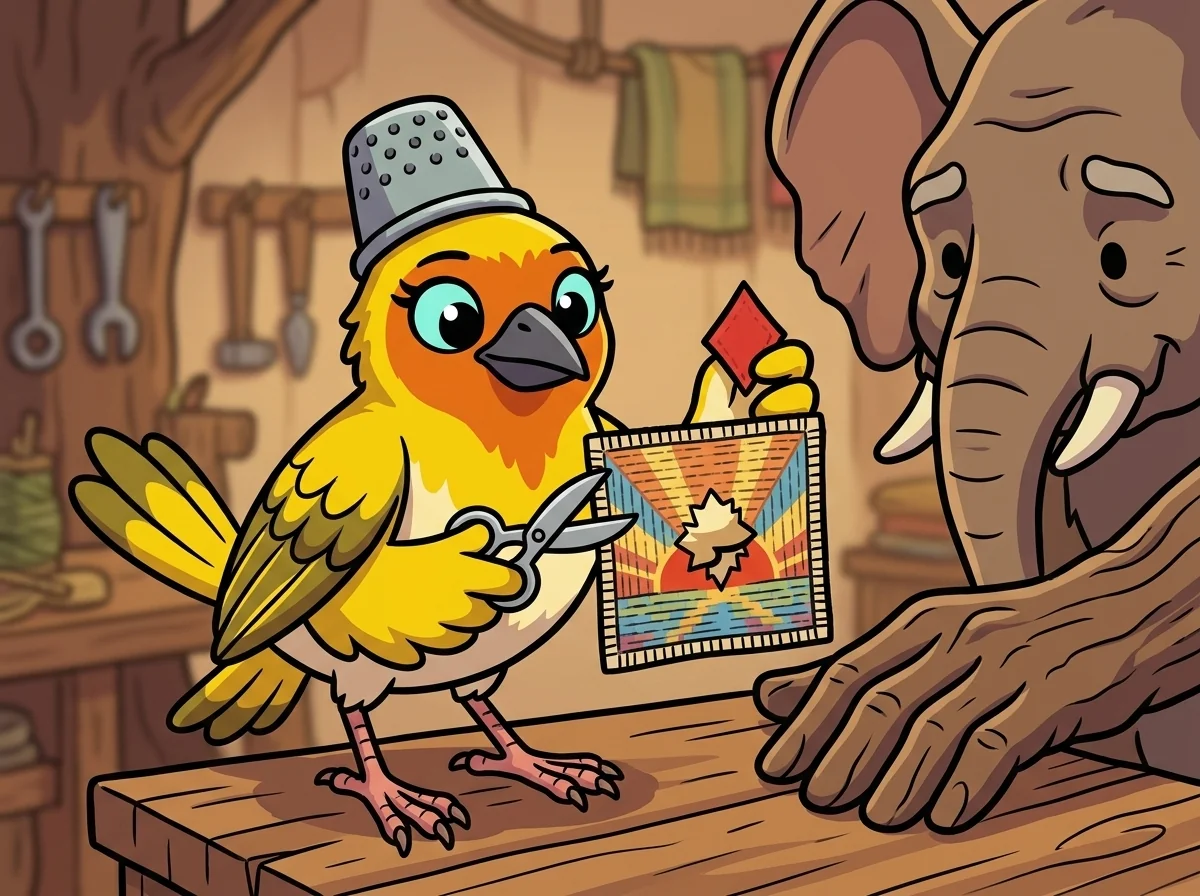
She walked to OriginForge, because a place devoted to where things come from ought to know that a piece is not the whole.
Waykeeper, the old mentor at the gate, asked one plain thing. "What is the whole?"
Skein didn't give a speech. She set a small woven square on the sill — a complete little pattern — and then, slowly, drew one thread halfway out, so the picture buckled and a shape lost its meaning. "This is what taking a piece does," she said. She wove it back; the picture healed. "And this is the whole. The meaning was never in any one strand. It lived in how they held each other." She looked at him. "When you love one thing from a people — a symbol, a motif, a phrase, a step of a dance — the honest question is what does it hold up, and what holds it up? Take it out of its weave to wear alone, and you haven't honored it. You've made it forget what it meant."
Waykeeper watched the little square heal. "You put the thread back before I could even ask," he said. "Most people are already walking off with it."
"A thread walked off alone is a thread that's forgotten its story," Skein said.
He nodded, slow and certain. "Then you'll keep the weaves whole here. Not to stop people loving the parts — to teach them the part was only ever alive in the pattern."
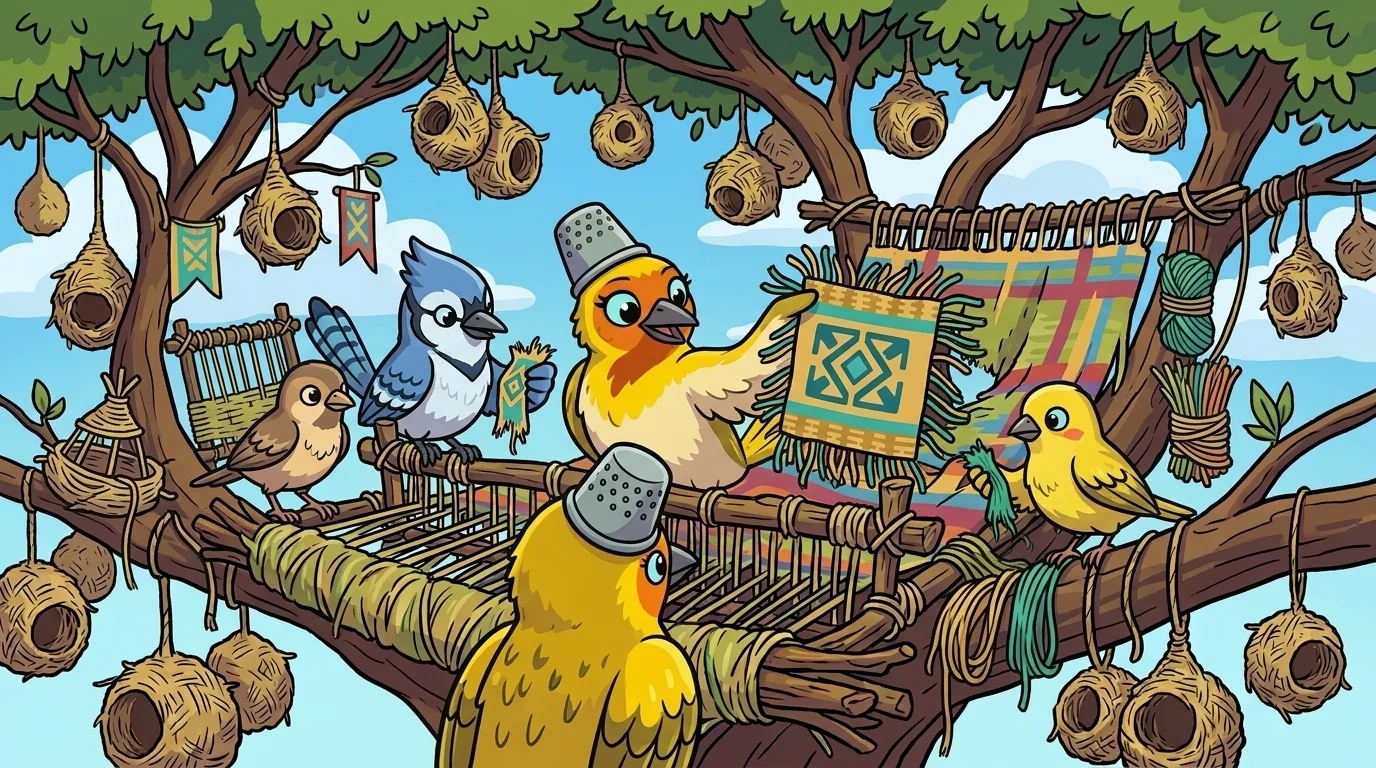
Skein's corner filled with young ones who'd fallen for one bright piece of somewhere far away.
A girl came in one afternoon delighted. She'd found a beautiful symbol from a distant people, she said, and she was going to put it on everything — her banner, her cap, her door — because it was just so pretty.
"It is pretty," Skein agreed warmly. "Tell me what it means."
The girl paused. "...I don't actually know. It just looks amazing."
"Where does it usually sit? What's around it, when the people who made it use it?"
"...I only ever saw the one symbol. On its own."
"Then here's the gentle catch," Skein said. "You've fallen in love with one thread, pulled out of a weave you never saw. It might mean something joyful. It might mean something solemn — a thing only used at funerals, say, or only by certain people at certain times. Worn on your door with no idea which, you could be shouting a word you don't understand, in a language that isn't yours." She smoothed her thimble-cap. "The fix isn't never admire anything. It's go find the weave. Learn what it holds up, what holds it up, when and by whom it's rightly used. Sometimes you'll learn it's fine to share, and now you can honor it. Sometimes you'll learn it was never a decoration at all — and you'll be glad you asked first."
The girl frowned, thinking harder than the pretty symbol had made her think. "...So loving the piece is fine. Wearing it clueless is the problem."
"That's the truest thing you've said today," Skein said. "Love the thread. Then go learn its weave. The meaning's waiting there — it was never in the thread alone."
Later, in the honey light, the girl came back, quieter.
"But if I have to learn the whole weave before I can love one part," she said, "isn't that just... a lot of rules to have fun?"
Skein thought about the diamond on her cap, and the weaver's quiet, careful voice.
"It's fewer rules than it sounds," she said, "and it's not really about rules. It's about not turning a meaningful thing into a thing that's forgotten its meaning — because that's a small loss, every time it happens, for everyone." She ran a claw along her loom. "A whole weave says something true. A thread yanked out of it says nothing, or worse, says the wrong thing loudly. Keeping the weave whole isn't a chore. It's how the meaning survives." She looked at the little healed square on the sill. "You don't honor a story by cutting out your favorite word and wearing it. You honor it by keeping the sentence whole — and learning, before you speak it, what it actually says."
The girl nodded slow, and Skein watched something settle in her — the same careful understanding Skein had found the day she learned beauty in a weave is made of the weave. She felt her own feathers ease, and a quiet gladness rose behind her ribs: to keep a pattern whole, to send a curious young one toward the meaning instead of away with a fragment — that was a small daily kindness to every weaver who'd ever knotted a story into cloth.
The OriginForge ensemble
Skein is part of OriginForge's distributed-narrative cast. Each character embodies a different curricular primitive; together they teach the full subject.
-
Listen
Listening before claiming — hear how a tradition says it first, on its own terms
-
Trail
Trail-following — every origin is also a journey; honor the path itself
-
Carry
Carrying-forward — knowledge wasn't found, it was given; honor the hands that passed it
-
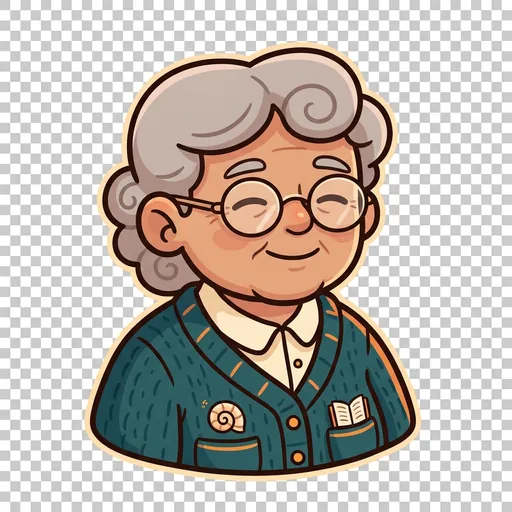
Honor
Honoring multiple truths — science and story answer different questions; both can be true
-

Greet
Greeting — knock before you enter; wait to be invited; ask permission before listening
-
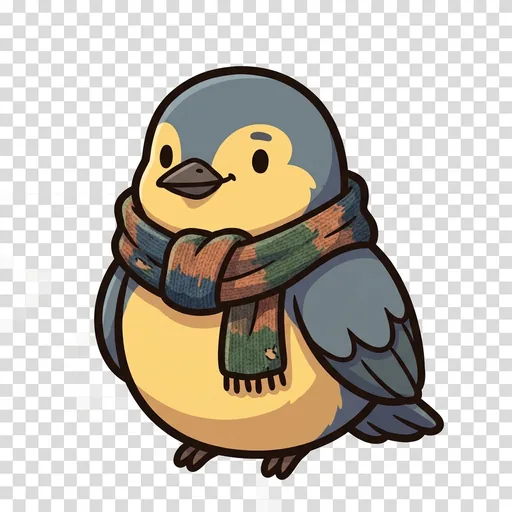
Convey
Faithful transmission — a story crossing tongues spills a little; carry it humbly, and say what you might have lost
-
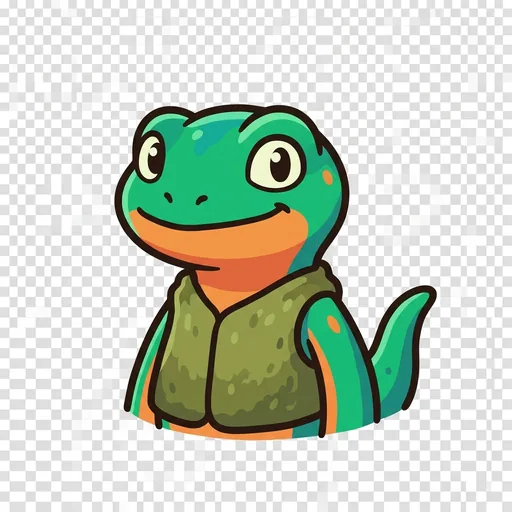
Renew
Living tradition — a tradition is still growing, not a relic behind glass; the people are still here
-
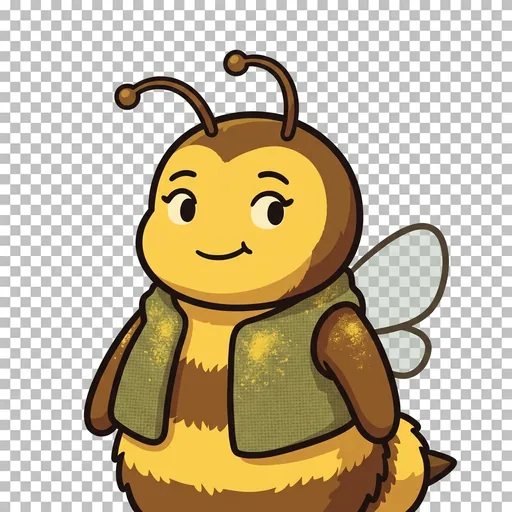
Return
Reciprocity — knowledge is a relationship, not a taking; when you receive, you also give back
-
Spare
Respecting the closed — some knowledge is closed, and closed is not a puzzle to solve; respect the 'not for you'