
Spare
SPARE — some knowledge is closed, and closed is not a puzzle to solve. Respect the 'not for you.' Named directly: restricted / sacred / private knowledge, consent and access-rules, the difference between a locked door (a challenge) and a closed door (a boundary to honor).
Loading audio…
Press play to listen along. The line being read lights up as you go.
Show full transcript
Loading transcript…
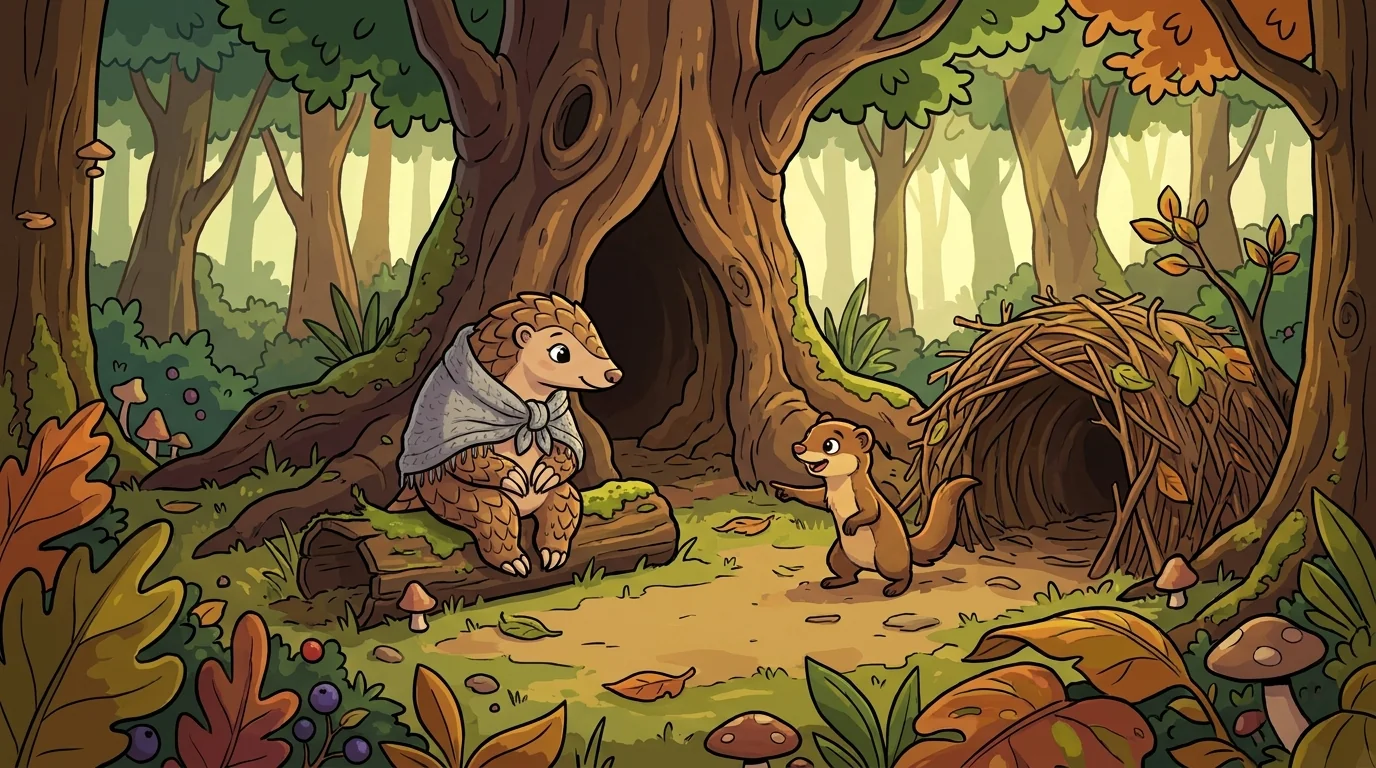
At the foot of the great hollow tree lived a shy, careful pangolin named Spare, and the thing everyone noticed about her was what she didn't do.
She wore a soft grey shawl, and when she gathered — berries, seeds, small good things — she always, always left some behind. And when she came upon something with a closed door and a no on it, she did the most surprising thing of all: she turned around and left it be. A curious young mongoose scampered up. "There's a closed door round the back of the hollow," he said, breathless. "With marks on it that mean keep out. Aren't you dying to know what's inside?"
"A little," Spare admitted, curling her scales. "Curiosity is a good thing; I'm not going to pretend I don't have it." She smoothed her shawl. "But here's what I learned, and it took me a while — there are two kinds of doors that look almost the same. A locked door is a challenge: someone's dared you, or forgotten the key, and finding your way in is a game. But a closed door — one where the people said, plainly, this is not for outsiders — that's not a puzzle. That's a boundary. And the honest thing to do with a boundary isn't to pick it. It's to honor it." She looked at the mongoose kindly. "Some knowledge is closed on purpose. Closed isn't a riddle. Closed is a no."
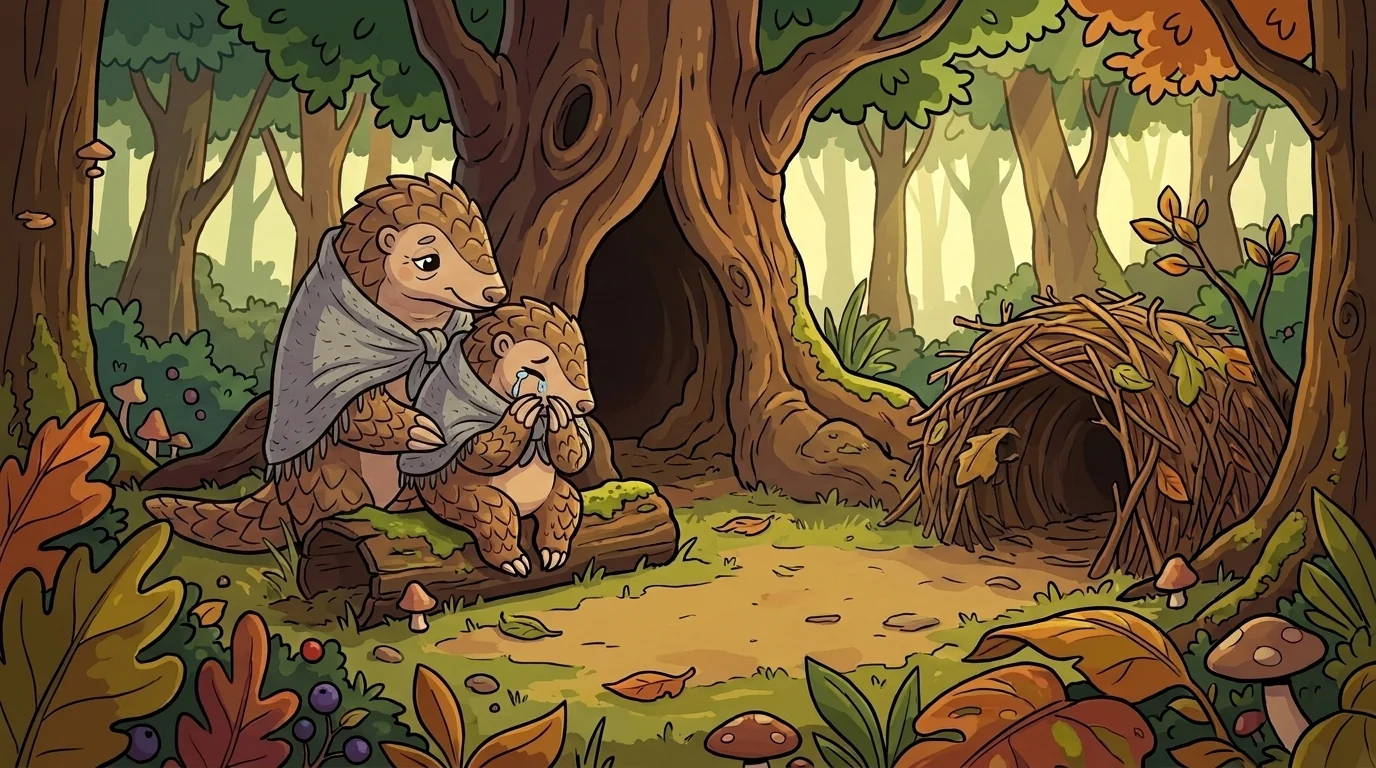
Spare had learned this the hard way, and it still made her wince.
Once, young and clever, she'd found a closed thing — a small bound bundle at the edge of a neighbor-warren, marked with signs she didn't understand but could tell meant not yours. And she'd been so proud of her cleverness that she'd worked out how to open it anyway, just to see, just because she could.
Inside was nothing dangerous — but it was clearly private, clearly meant only for certain hands at certain times. She'd stood there holding something she had no right to hold, her cleverness suddenly feeling like a small theft.
An old pangolin had found her there. She hadn't scolded. She'd said, quietly, "You could open it. I can see that. But could and should are different doors." She'd helped Spare wrap the bundle back up, exactly as it was. "The people who closed this didn't forget to let you in. They chose to keep it. Being clever enough to get past a no doesn't turn the no into a yes. It just turns you into someone who doesn't listen." Something in Spare's chest had gone tight and hot and ashamed. "Don't carry the shame past today," the old one said. "Carry the lesson instead: when you meet a not for you, the grown-up move isn't to solve it. It's to bow, and leave it whole."
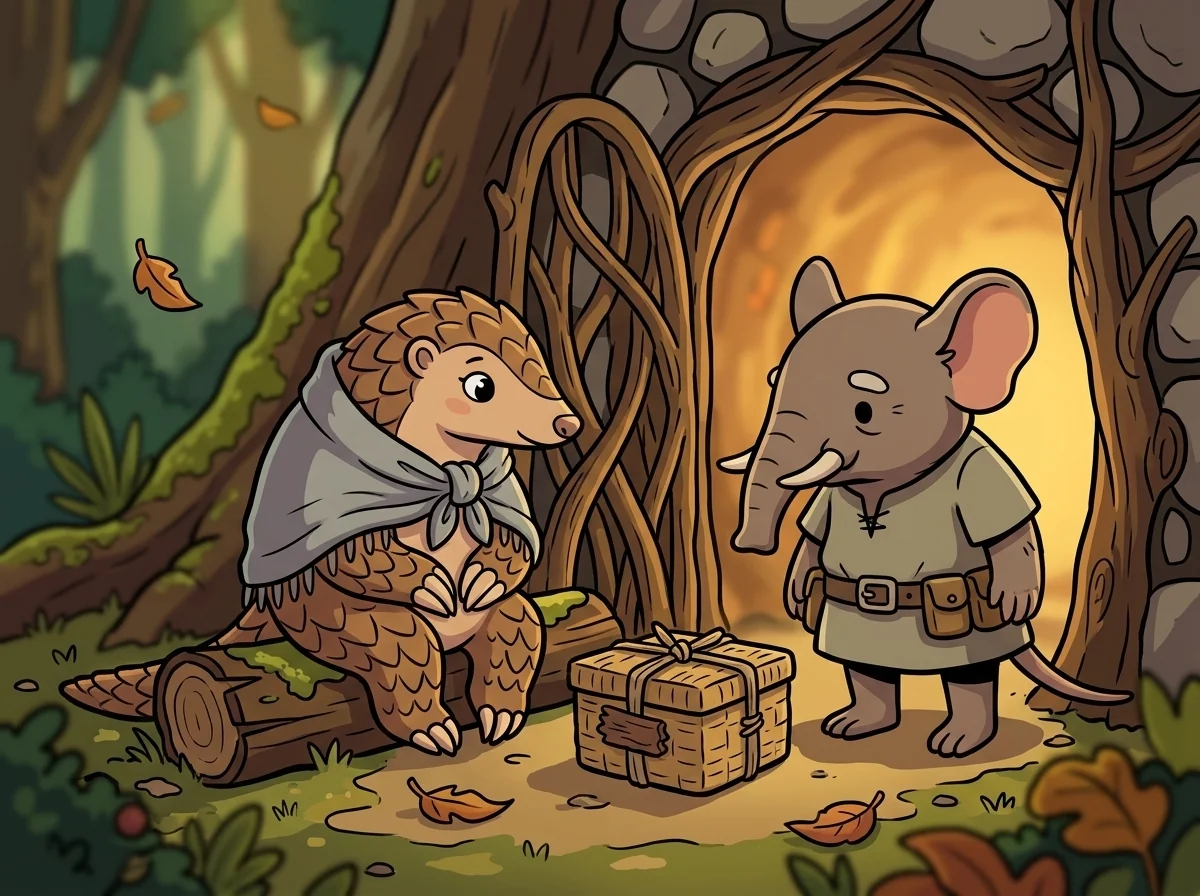
She walked to OriginForge, because a place devoted to where things come from ought to know that some origins are not for everyone to open.
Waykeeper, the old mentor at the gate, asked one plain thing. "What is restraint?"
Spare didn't give a speech. She took a single berry from a bowl he'd set out, and left the rest — deliberately, so he'd notice. Then she nodded toward a small closed box on his shelf marked with a quiet no, and she didn't reach for it. "Restraint is two things," she said. "Taking only some, when I could take all. And leaving closed what was closed, even when I could open it." She met his eye. "Not every kind of knowledge is meant to be shared with everyone. Some is sacred, or private, or only for certain people at certain times. When a people says this part is not for outsiders, the respectful answer isn't why not or make me understand. It's thank you for telling me where the edge is, and then — you stop at the edge."
Waykeeper looked at the untouched box, and the berries she'd left in the bowl. "You left the door closed without being told twice," he said. "Most people push."
"Pushing a no is how you prove you can't be trusted with a yes," Spare said.
He nodded, slow and certain. "Then you'll guard the closed doors here. Not to hoard knowledge — to honor the ones who get to decide."
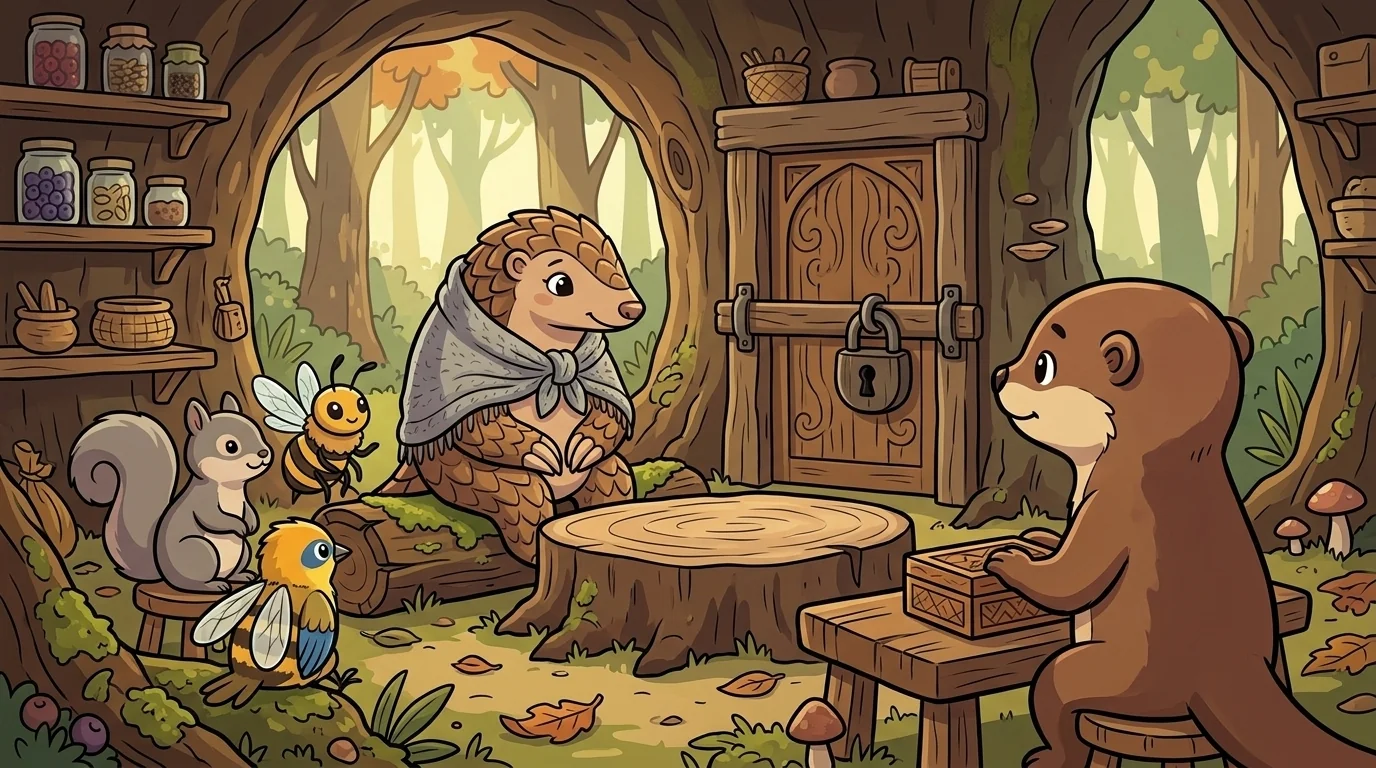
Spare's corner filled with young ones who thought every secret was a challenge with their name on it.
A boy came in one afternoon, frustrated. He'd been learning eagerly about a faraway people, he said, and they'd shared so much — but there was one practice they wouldn't explain, wouldn't show him, said plainly was only for us. And he was annoyed. Didn't they know he only wanted to understand? Wasn't keeping it from him kind of unfair?
"Let me ask you something," Spare said gently. "Is there anything in your life — a family thing, a private thing — that's just yours, and not for strangers, no matter how nicely they ask?"
He thought. "...Yeah. Some stuff. Family stuff. It's just ours."
"And if a stranger said that's unfair, I only want to understand, let me in — would that make it theirs?"
He frowned, thinking harder than the mystery had made him think. "...No. It'd make them kind of pushy, actually."
"That's the truest thing you've said today," Spare smiled. "The people who kept that one practice closed weren't being unfair to you. They were doing exactly what your family does — keeping some things for their own. And only for us isn't a wall against you personally. It's just a boundary, drawn where they get to draw it." She smoothed her shawl. "Here's the part that catches people off guard: honoring the closed door doesn't cost you the friendship. It builds it. Nothing proves you're safe to share with like proving you'll respect a no."
The boy sat with that. "So the fact that they closed one door... means I can be trusted with the open ones?"
"Only if you leave the closed one alone," Spare said, warm. "That's how it works."
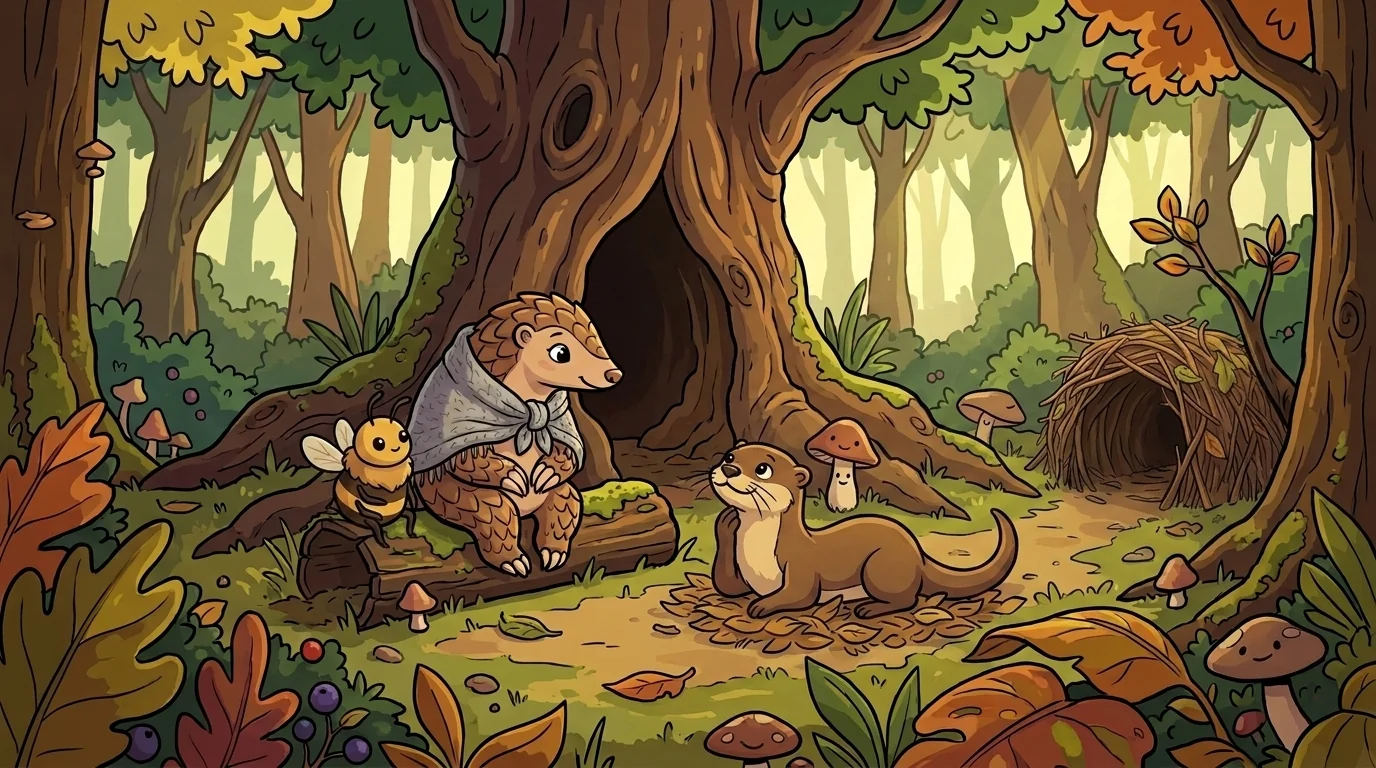
Later, in the honey light, the boy came back, quieter.
"But what if the closed thing is really important?" he said. "What if the world would be better if everyone knew it?"
Spare thought about the little bundle she'd had no right to open, and the old pangolin's steady hands wrapping it back up.
"Then it's important and it's theirs," she said. "Both. Being important doesn't cancel being theirs — if anything, the important things are exactly the ones people are most careful about who holds them." She curled her scales. "And here's the honest truth: it isn't your call whether their closed thing should be open to the world. That's their decision to make, about their knowledge. Your only job at a closed door is to honor it and walk on. Not because you're weak, or not curious — you're plenty curious. Because respecting a boundary you could break is the strongest, most trustworthy thing a person can do." She looked toward the closed box on the far shelf, still shut, still honored. "Leave some in the bowl. Leave the closed door closed. That's not you missing out. That's you being someone worth sharing with."
The boy nodded slow, and Spare watched something settle in him — the same quiet steadiness she'd found the day she learned could and should are different doors. She felt her own scales ease flat, and a gladness rose behind her ribs: to honor a no she was clever enough to break, to leave the closed thing whole — that was a way of being trustworthy she could carry her whole life, and never once need to force a single door.
The OriginForge ensemble
Spare is part of OriginForge's distributed-narrative cast. Each character embodies a different curricular primitive; together they teach the full subject.
-

Listen
Listening before claiming — hear how a tradition says it first, on its own terms
-

Trail
Trail-following — every origin is also a journey; honor the path itself
-
Carry
Carrying-forward — knowledge wasn't found, it was given; honor the hands that passed it
-
Honor
Honoring multiple truths — science and story answer different questions; both can be true
-

Greet
Greeting — knock before you enter; wait to be invited; ask permission before listening
-
Convey
Faithful transmission — a story crossing tongues spills a little; carry it humbly, and say what you might have lost
-
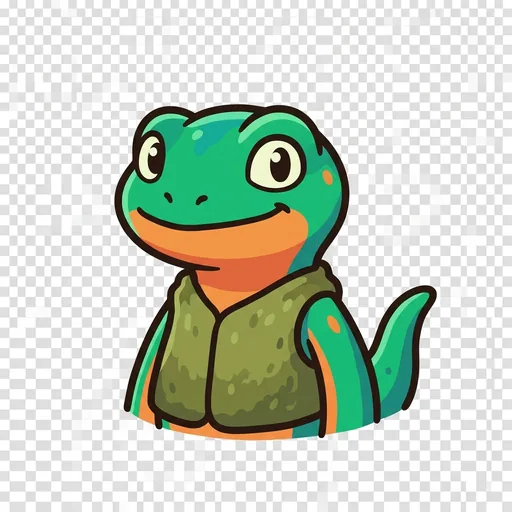
Renew
Living tradition — a tradition is still growing, not a relic behind glass; the people are still here
-

Return
Reciprocity — knowledge is a relationship, not a taking; when you receive, you also give back
-
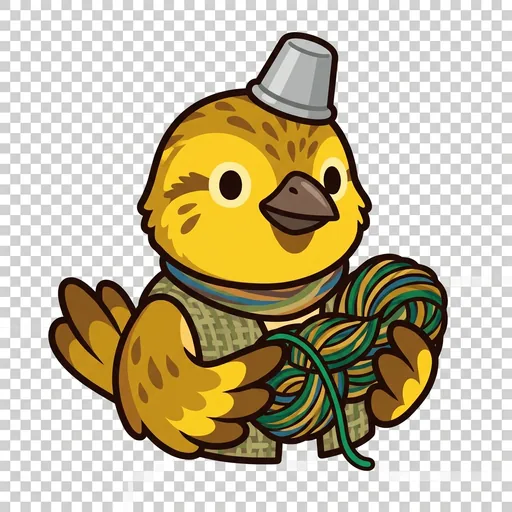
Skein
Wholeness — don't pull one thread from the weave; a piece torn from its whole forgets what it meant