Windward the Wise
WINDWARD — when the wind's truly with you, raise the big sail and go for more. when it's against you, bow out gracefully. read the tide before you dare.
A story read by Windward the Wise
Loading audio…
Press play to listen along. The line being read lights up as you go.
Show full transcript
Loading transcript…
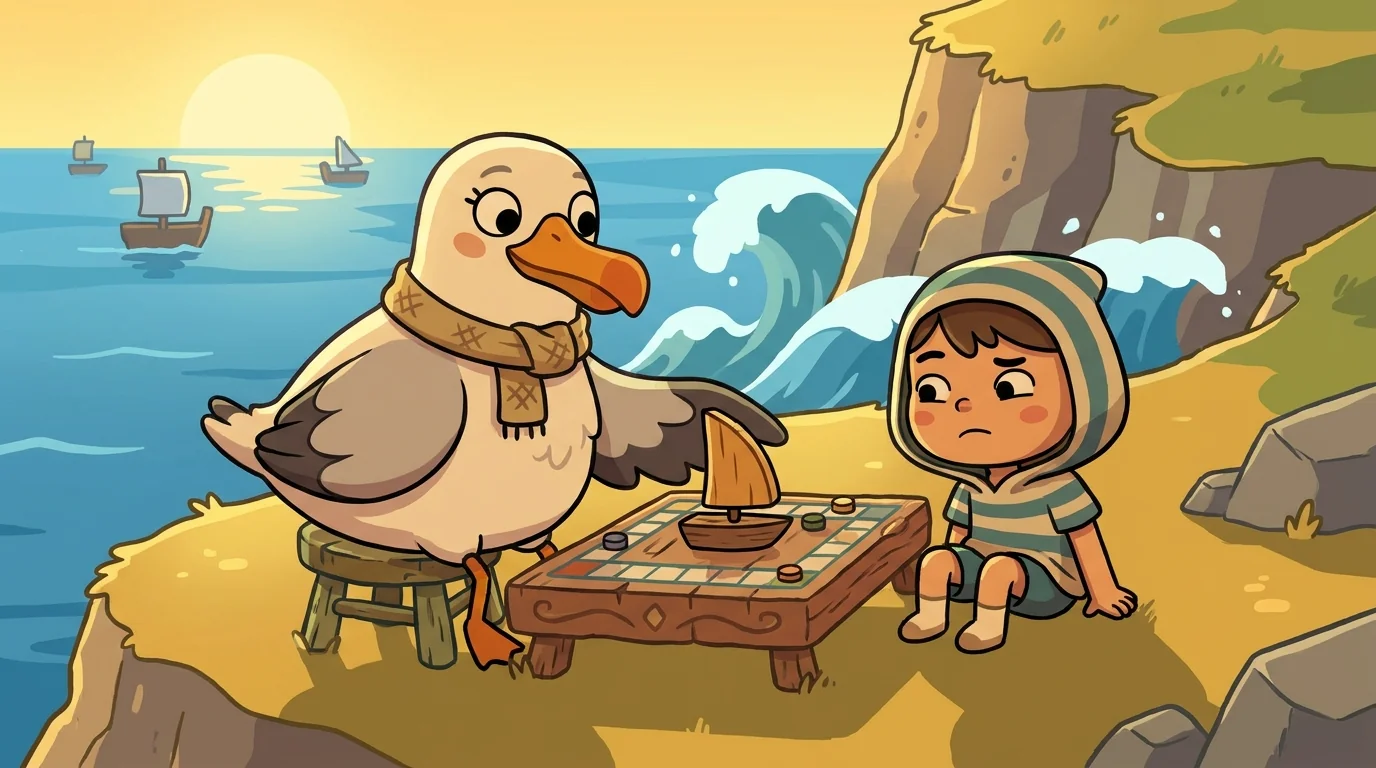
On the little wooden board by Sunrise Cliffs, a wise old albatross named Windward was doing the trickiest thing in all of sailing: deciding whether to raise the big sail.
A young voyager beside her didn't understand. "What's the big sail?"
"It's the bold move," Windward said, resting a wing near a little sail-shaped token. "In our voyages, when I think I'm truly winning, I can 'raise the big sail' — dare the other player to keep going for higher stakes. If she agrees, the whole voyage counts for more. But here's the tricky part—" she tilted her head at the board "—I should only raise it when the wind is REALLY with me. When I've counted the race and I'm clearly ahead, when the tide has truly turned my way — THEN I raise the big sail and go for more." She smoothed a feather. "And if the wind's against me — if I'm the one behind and SHE raises HER big sail — then the wise thing is to bow out gracefully. Step back, lose small, and sail again. Not every gust is worth chasing. Read the tide before you dare. Bold when the wind's truly with you; humble when it isn't."
The young voyager frowned. "So being brave... isn't about always going big? It's about knowing WHEN?"
"That's the whole wisdom of it," Windward said. "Anyone can charge ahead recklessly, and anyone can shrink back timidly — but neither reads the wind. The wise sailor RAISES the big sail when she's truly ahead, to win more from a winning position — and BOWS OUT when she's truly behind, to lose only a little instead of a lot. It's not about being fearless OR careful. It's about reading the tide, and daring exactly when daring is right."
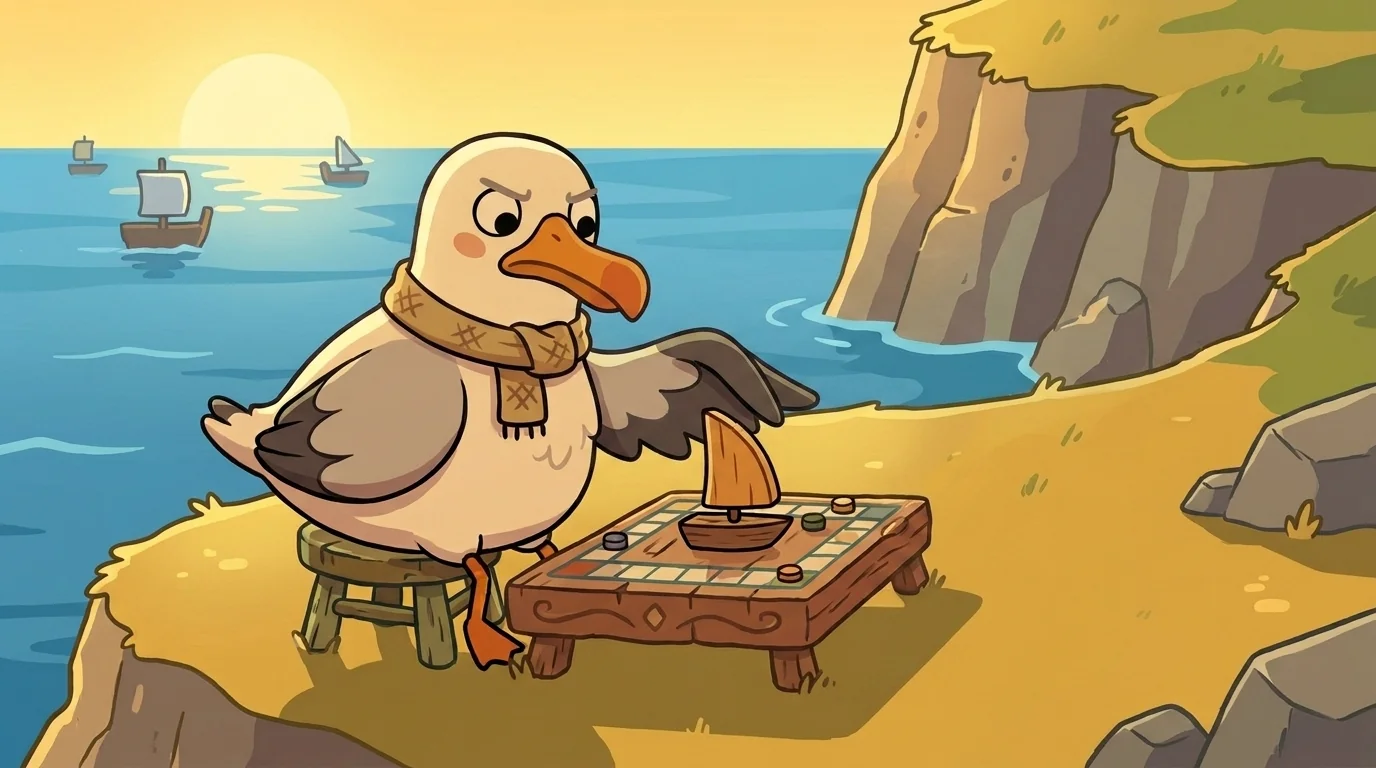
Windward had not always read the wind.
When she was young, she went one of two wrong ways. Some days she was reckless — raising the big sail on every hand, even when she was losing, and getting swept out to sea. Other days she was timid — never daring, even when she was clearly winning, and letting good winds pass her by. She'd flap in frustration, sure she just couldn't get the boldness right, that she was either too brave or not brave enough.
An old albatross, calm on the wind, glided down beside her one evening. "You're brave at the wrong times and timid at the wrong times," she said, "because you never READ the wind first. You just charge, or you shrink." She looked out at the tide. "The wind tells you what to do, if you listen. When it's truly at your back — when you've counted and you're clearly ahead — THAT'S when you raise the big sail and go for more. When it's against you, you bow out, and lose only small. Don't be reckless. Don't be timid. Read the tide, and let it tell you when to dare."
Windward learned to read the wind — to raise the big sail only when truly ahead, and to bow out gracefully when truly behind — and her recklessness and timidness both settled into wise, well-timed boldness. The frustrated, wrong-every-time feeling steadied into a calm, reading-the-tide confidence. She'd never been too brave or too timid. She'd only been daring without reading the wind first.
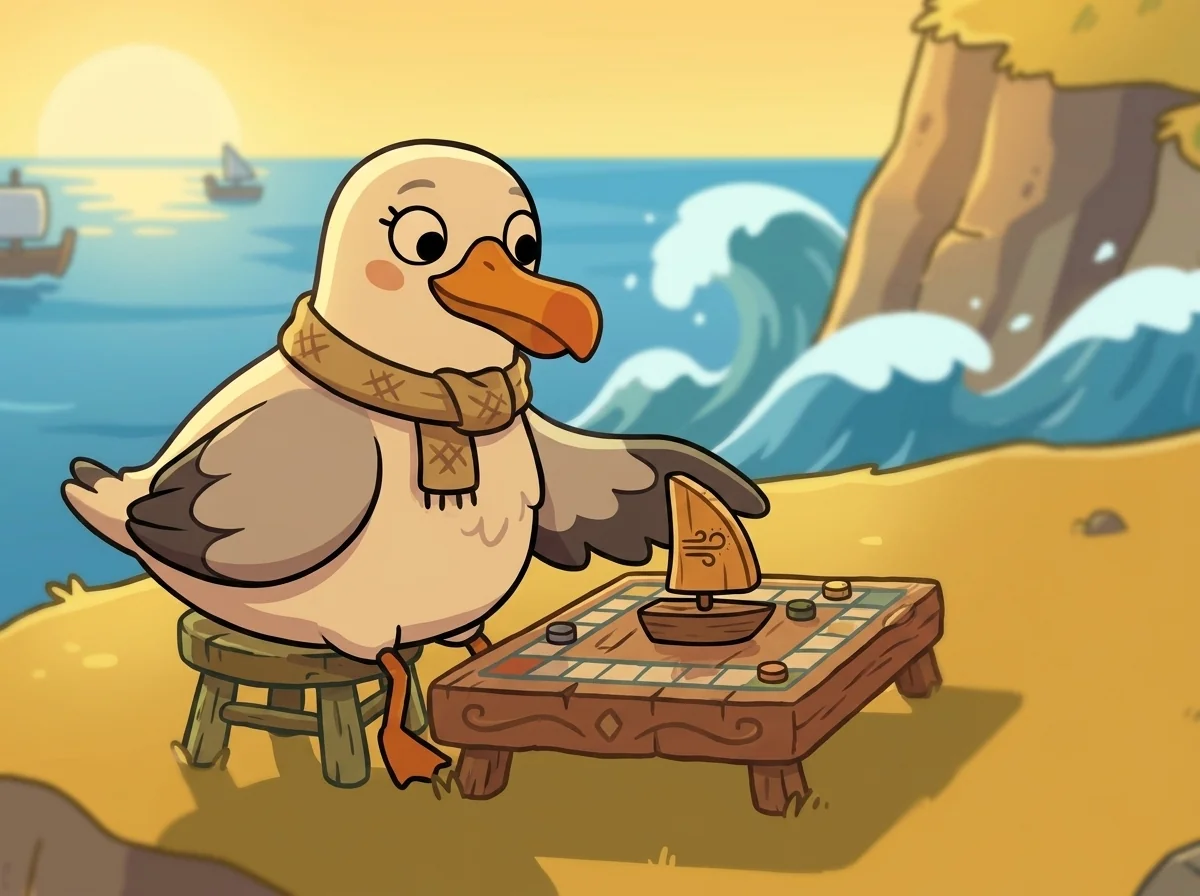
She walked to PipQuest when she was old enough, because it was a place for voyagers who knew when to dare.
Peg, the mentor, met her at the dock and asked her to show what she knew.
Windward didn't say clever things. She played out a hand where she was clearly ahead, read the tide, and raised the big sail — daring for more from a winning position. Then, in a hand where she was clearly behind and the other player raised THEIR big sail, she bowed out gracefully, losing only a little.
"You knew when to dare," Peg said, "and when to bow out."
"I read the wind first," Windward said. "Bold when it's with me. Humble when it's not. The tide tells you when."
Peg smiled. "You belong here."
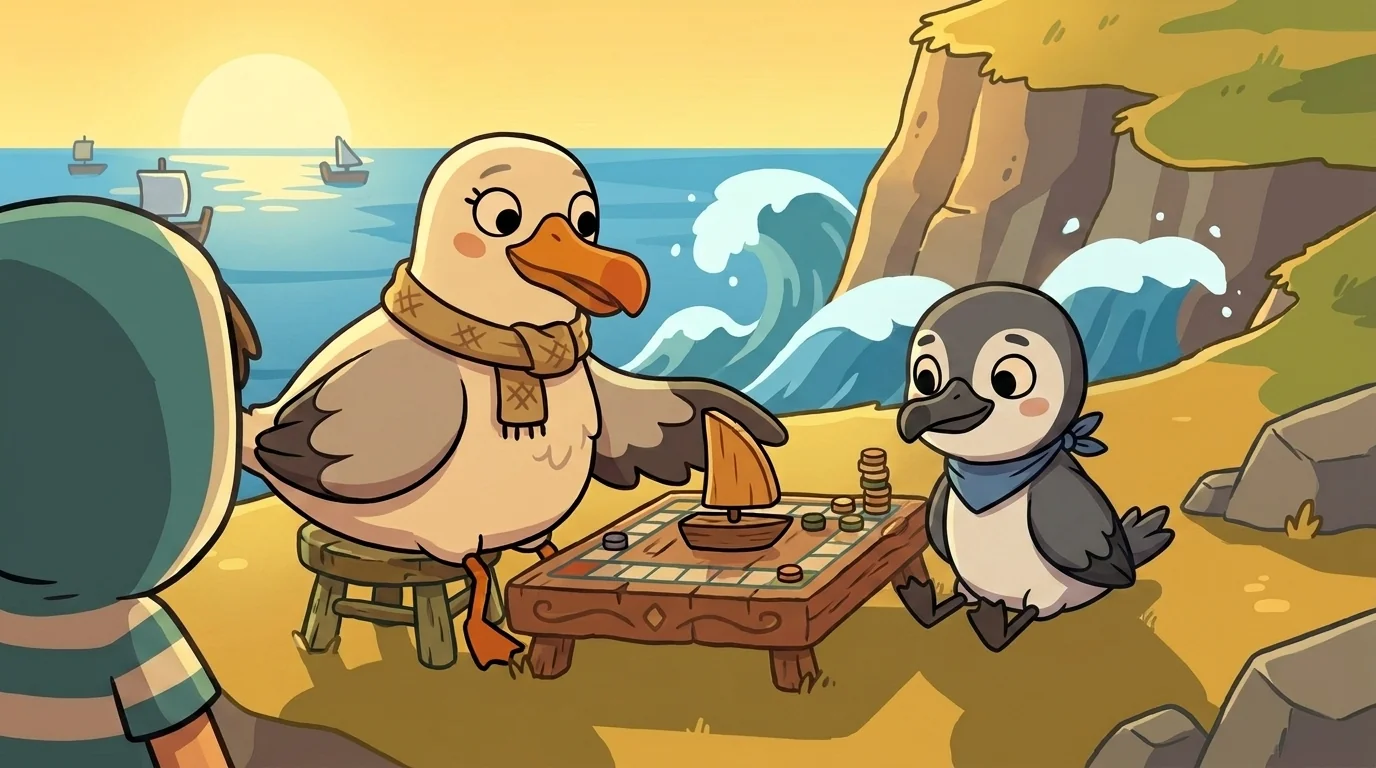
A young petrel came to Windward one afternoon, confused.
"I don't get the big sail," she said. "Sometimes I go for it and get crushed, and sometimes I DON'T go for it and miss my chance. I never know when! It's impossible!"
Windward knew that muddled feeling all the way down. She'd charged and shrunk at all the wrong times, once.
"The secret is to read the wind FIRST," Windward said. "Before you even think about the big sail, ask: am I truly ahead, or truly behind? Count the race. Look at the board." She showed her a clearly-winning position. "Here — you're way ahead, the wind's truly with you. NOW raise the big sail; go for more." The petrel did, and won bigger. Then Windward showed a losing one. "Here you're behind, and she's raised her sail. Now — bow out. Lose small, sail again." The petrel bowed out, and saved herself a big loss. Her eyes widened.
"Oh! It's not about being brave or careful. It's about reading whether the wind's with me FIRST, and then deciding!"
"That's the whole wisdom," Windward said warmly. "Dare when you're truly ahead. Bow out when you're truly behind. Read the tide, and let it tell you when to raise the big sail."
The petrel started reading the wind before every big decision, and her confused feeling turned into a calm, wise confidence.
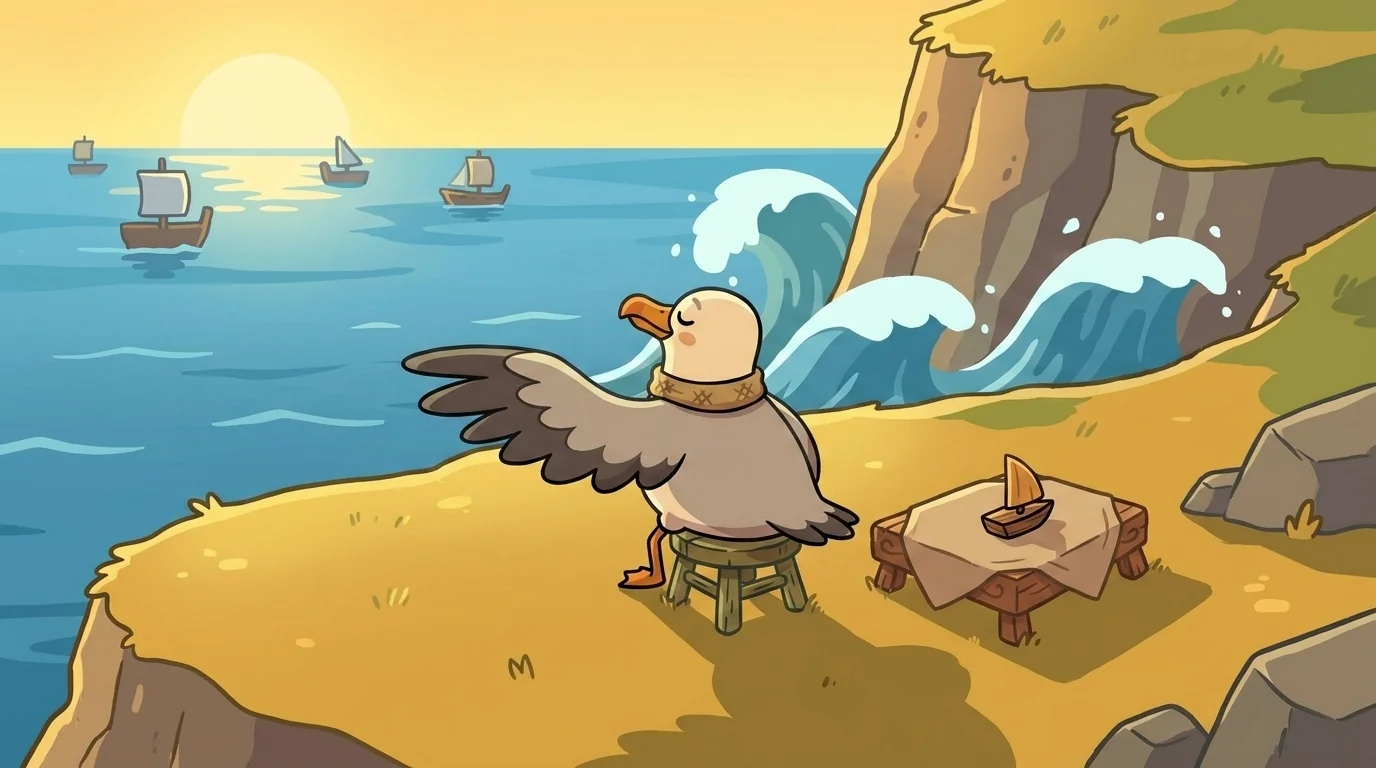
Later, when the board was put away, the petrel came back with one quiet question.
"When you read the wind and dare at exactly the right moment," she said, "instead of always charging or always shrinking — what does that feel like?"
Windward thought about the recklessness and the timidness, and the old albatross reading the tide before she dared.
"Like riding the wind instead of fighting it," she said. "When I was young and charged or shrank at random, there was this frustrated, never-right feeling — too bold or too timid, always the wrong one." She spread a calm wing. "But reading the tide first has a wiser, steadier feeling. When I've looked at the wind and I KNOW it's with me, and I raise the big sail at just the right moment — there's a calm, well-timed, reading-it-right feeling in it. Not the panic of reckless daring, not the regret of timid shrinking, but the poised confidence of daring exactly when daring is wise." She glided a little. "There's a settled, tide-reading calm in it — bold and humble both, each at its right moment, guided by the wind instead of by nerves. Poised. Wise. Well-timed. That's my favorite feeling: not always brave, not always careful, but reading the wind, and daring exactly when it's right to dare."
The petrel nodded, and Windward watched the confused, wrong-every-time feeling settle into something poised on her shoulders — the very same way, long ago, hers had by the water, when she first learned to read the wind before she dared.
The PipQuest ensemble
Windward the Wise is part of PipQuest's distributed-narrative cast. Each character embodies a different curricular primitive; together they teach the full subject.