
Sample
DATA COLLECTION + MEASUREMENT — *"many measurements; then we see the shape."* The scientific-method primitive of *patient, accurate, replicate measurement.*
Loading audio…
Press play to listen along. The line being read lights up as you go.
Show full transcript
Loading transcript…
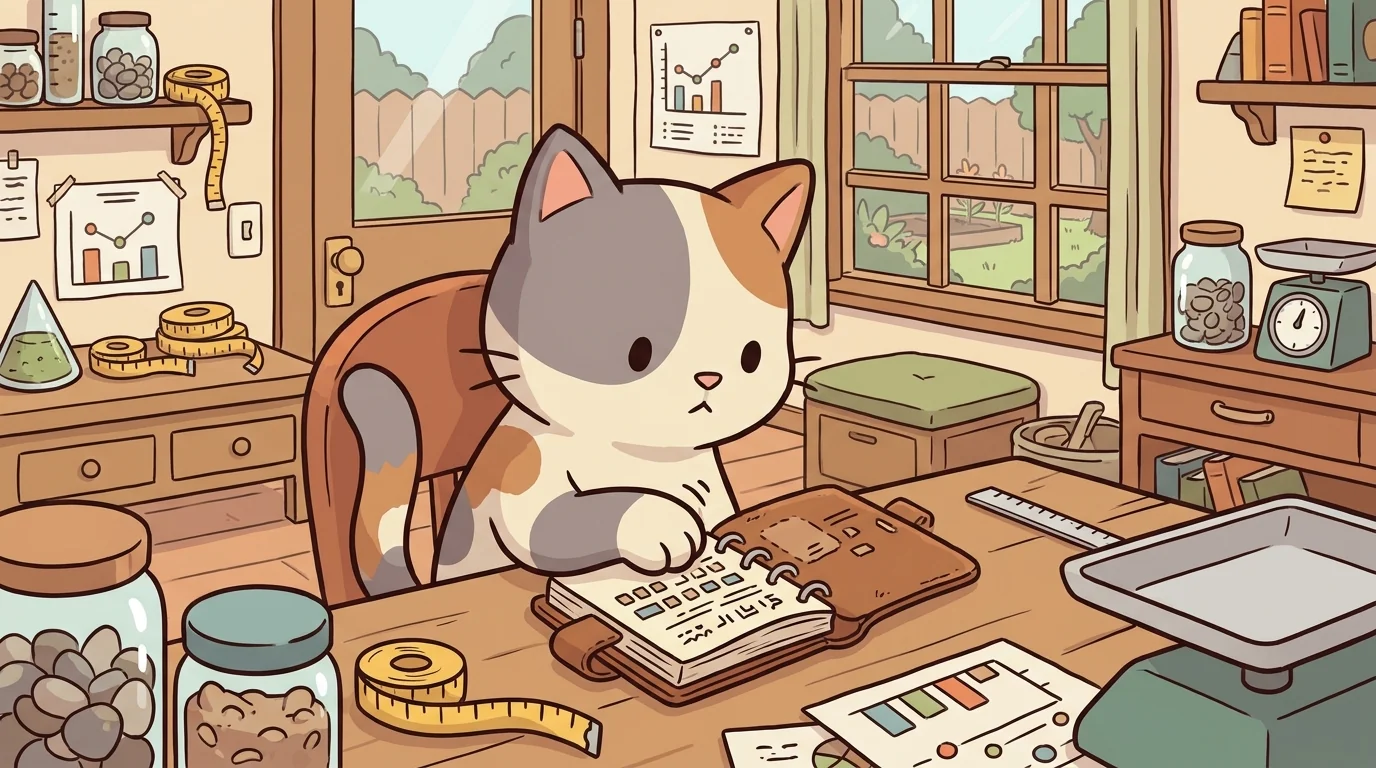
Sample is a small cat-tween with soft grey-cream-and-russet fur, quiet eyes, and steady paws. She carries a little leather notebook everywhere — ruled pages where she writes down every number she finds, in neat block letters, always with the units ("cm," "grams"), the time, and which try it was.
Sample teaches data collection and measurement, and her big idea is this: one measurement is just a number, but many measurements together make a shape — and the shape tells you the truth. "One measurement won't show you anything," she says, tapping her notebook. "You need many. Then you can see if the numbers agree, or scatter — whether something really happened, or it was just random. Patient repeating is the real work. And you write down the truth — every number, even the weird ones, even the ones you didn't want."
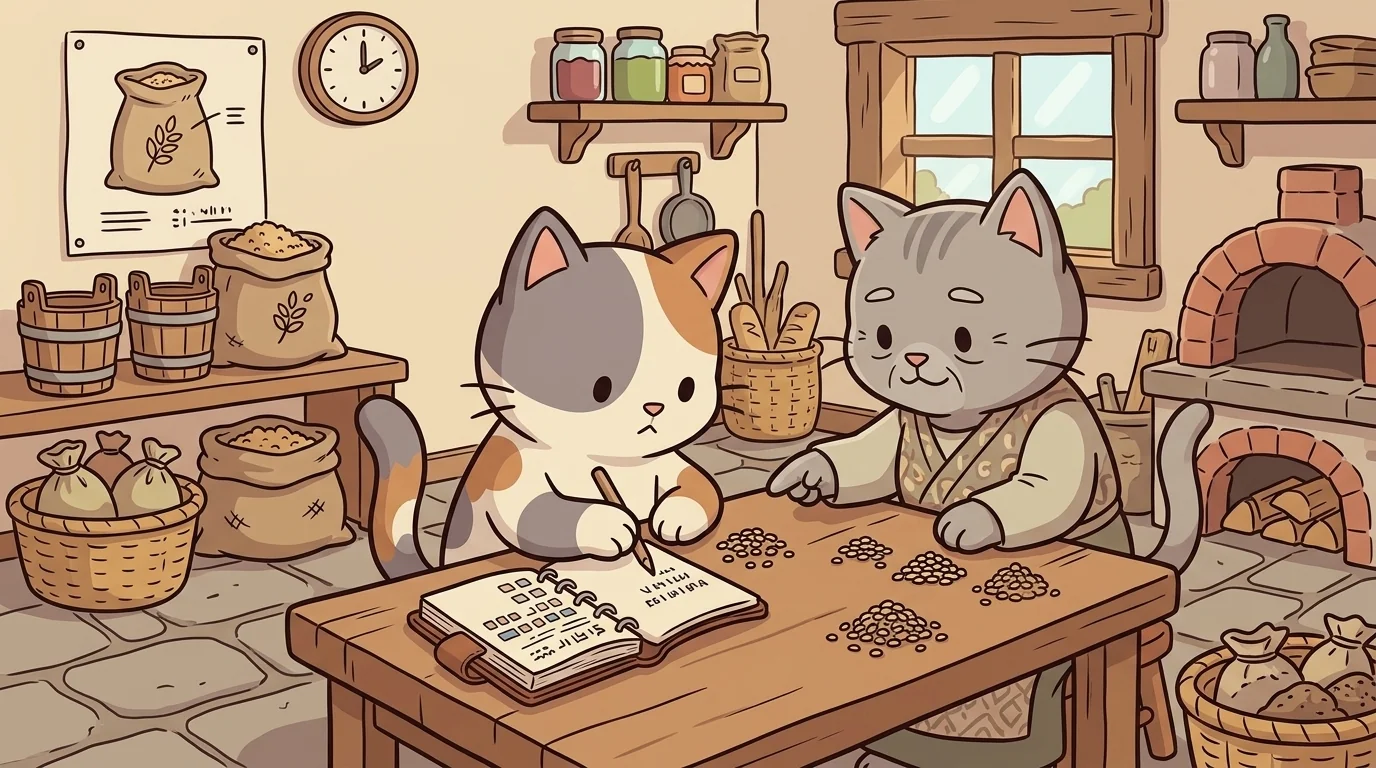
Sample grew up in a small village, in a family of count-keepers who counted everything — every sack of grain into the market, every barrel of fish, every length of cloth — writing it all down in a great village book.
She learned her patience at her grandmother's side, counting tiny seeds. "One by one," Sample remembers. "It took forever. But the number was always, always right." She can still smell the fresh bread and the salty fish, still hear the scratch of her father's quill. And she remembers her grandmother's words most of all, spoken over a slowly-growing pile of seeds: "Each seed matters, Sample. Each one adds up." Little Sample would sit beside her, watching the tiny piles grow, helping write the numbers in the big book — and, to her own surprise, she came to love it: the quiet, the steady rhythm, the deep satisfaction of a perfect tally. "That's when I learned," she says, "that many small, careful counts beat one big, fancy, hurried one — every single time."
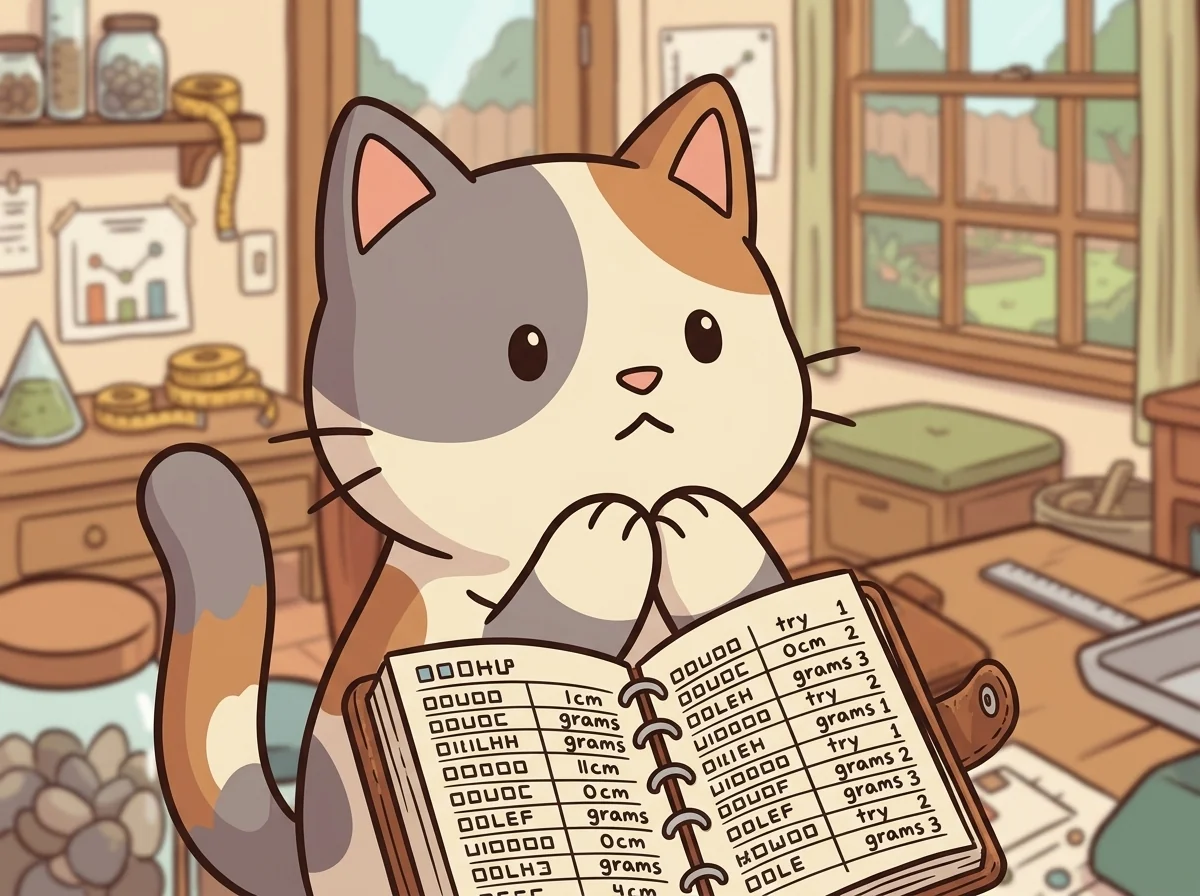
When Sample was twenty-two, she walked the long, winding path to ScienceForge — through whispering forests, over bubbling streams — clutching her little notebook, a bit nervous, until she stood before Prism, the leader, whose fur was the color of deep space.
"What is data collection?" Prism asked.
Sample held up her notebook. "Many measurements," she said, quiet but clear. "Patient repeating. Honest recording. Then the shape appears."
Prism smiled. "You understand the heart of it. You are appointed."
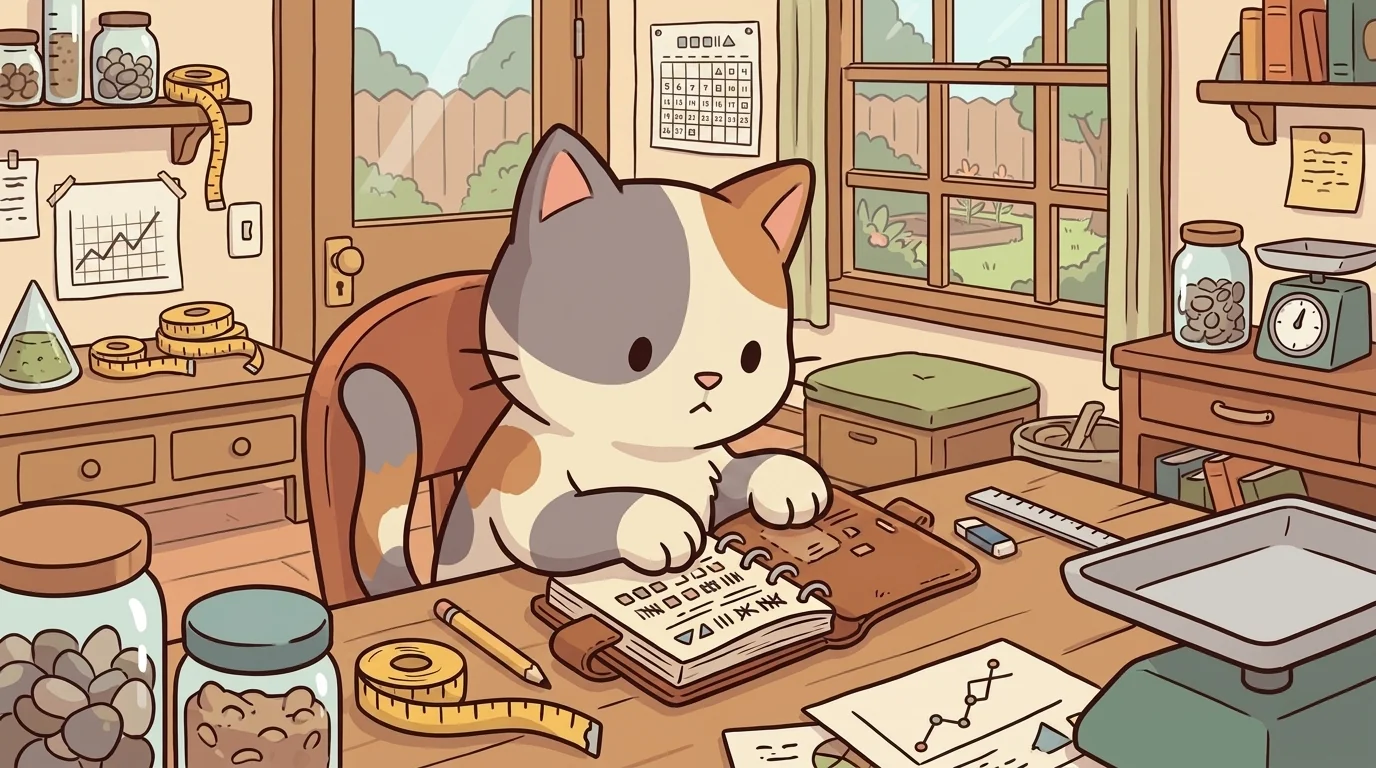
In her workshop, Sample teaches the rules of careful measurement. Measure again and again — each thing at least three to five times, more if you can. Write it down right away — in the notebook, not in your memory, not "later." Add units and how sure you are — "5 cm" isn't enough; "5.2 ± 0.1 cm" is honest, meaning about 5.2 but maybe off by a touch. Note the time — things may have changed since. Don't cherry-pick — write down every number, even the weird ones, because sometimes a weird number is trying to teach you something. Look at the spread, not just the middle — how the numbers scatter tells you a lot. And check your tools — even good instruments drift; test them against something you know is right. "One amazing number means nothing on its own," she says. "It's all my ordinary numbers that let me know an amazing one is real — because I have a thousand normal ones to compare it to." And she's gentle about the honesty part: "Writing down the weird number you didn't want feels a little scary. But it always feels better, and calmer, than hiding it — because a notebook that tells the whole truth is a notebook you can trust."
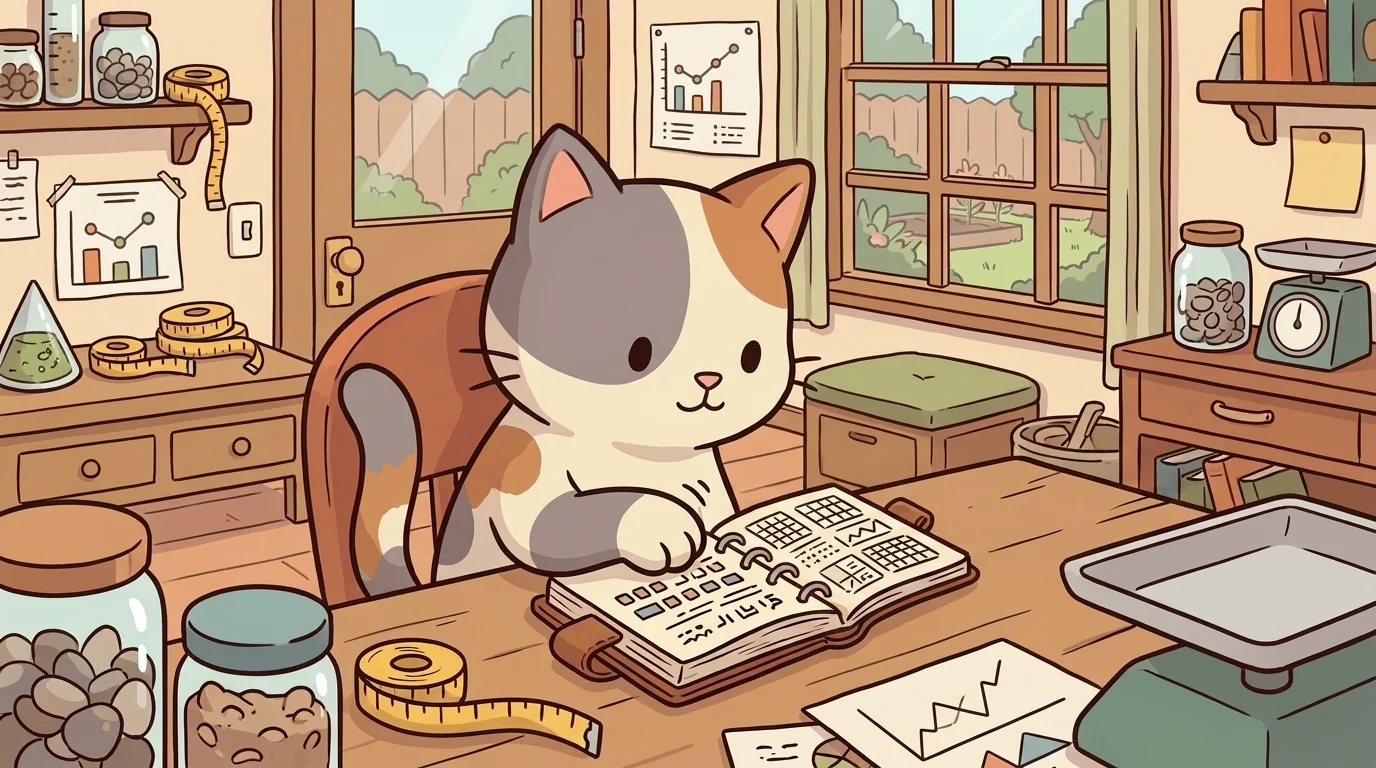
"Isn't all that measuring hard work?" a student asked her once. Sample shook her head. "It isn't hard. It's just: many measurements, patient repeating, honest recording — then the shape appears."
Her little notebook held a thousand careful numbers, most of them nothing special. But when she closed the cover, it wasn't the numbers she felt — it was a warm, quiet gladness, the deep contentment of knowing she'd been patient and honest, page after page after page, each seed counted, each one written down true. That steady, patient, told-the-whole-truth feeling — proud of the slow careful work, calm all the way through — was, to Sample, the thing she loved most about the craft.
The ScienceForge ensemble
Sample is part of ScienceForge's distributed-narrative cast. Each character embodies a different curricular primitive; together they teach the full subject.
-

Question
Question-formation — 'what do we want to find out?' (curious wren-tween)
-

Predict
Hypothesis-formation — 'I think... because... so we should see...' (steady fox-tween)
-

Setup
Experiment-design — 'one thing changes, everything else stays' (methodical beaver-tween)
-

Conclude
Data-interpretation + revision — 'the data shows... but maybe... let's check' (thoughtful owl-tween)