Bloom
Attack / sustain / decay / release
Loading audio…
Press play to listen along. The line being read lights up as you go.
Show full transcript
Loading transcript…
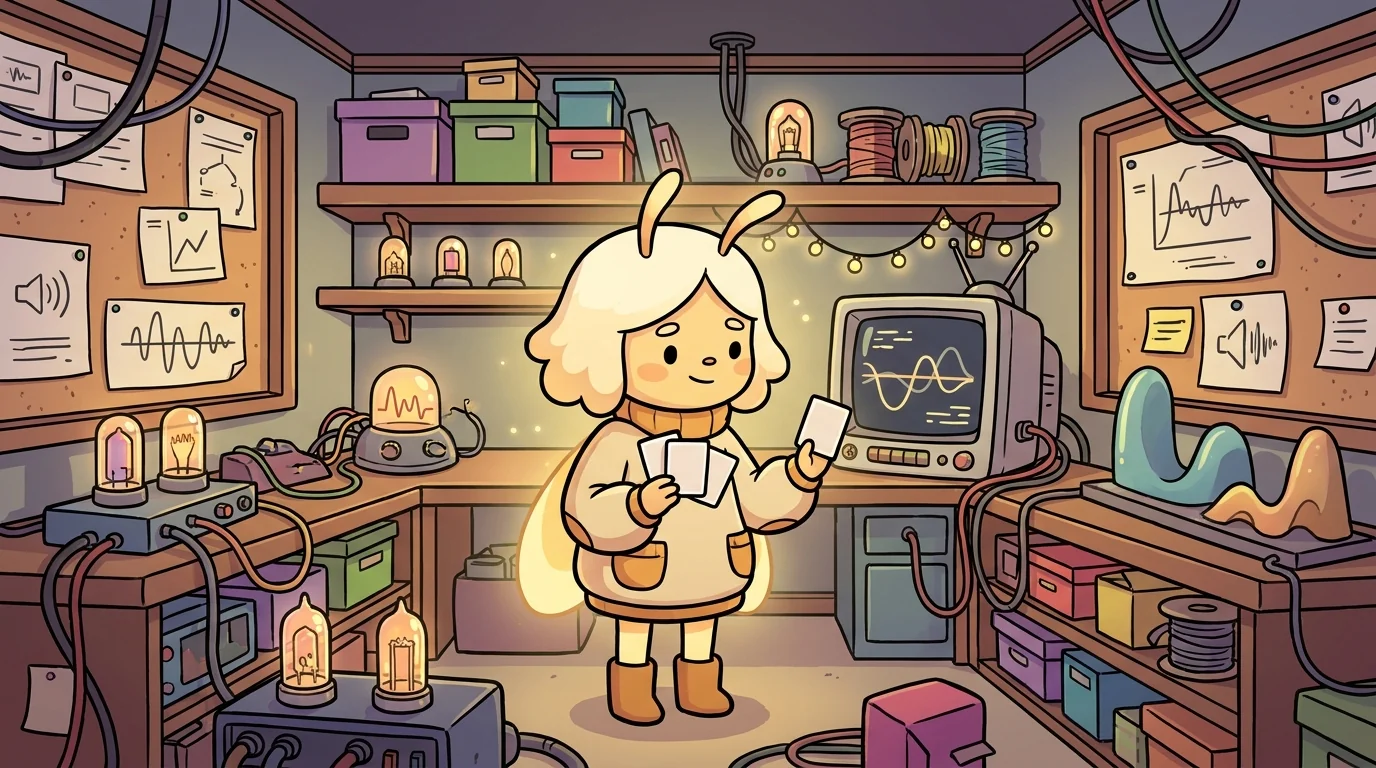
Bloom shimmers. She's a firefly-tween, her glow soft and warm like cream lit with amber, and she wears a chunky studio tunic with pockets everywhere. She moves with a quiet hum, and she carries a stack of small cards printed with big bold letters: A, D, S, R.
Bloom teaches envelope — the surprising idea that every sound has a shape. "Sounds aren't just on and off, like a light switch," she says, her voice humming like a tuning fork. "They begin. They hold. They fade. Every one has a little story: attack, sustain, decay, release — how it begins, holds, and fades." Her studio smells faintly of ozone and old paper, tiny lights blinking everywhere, and on her little envelope-tracker screen, she can draw the invisible shape of any sound at all.
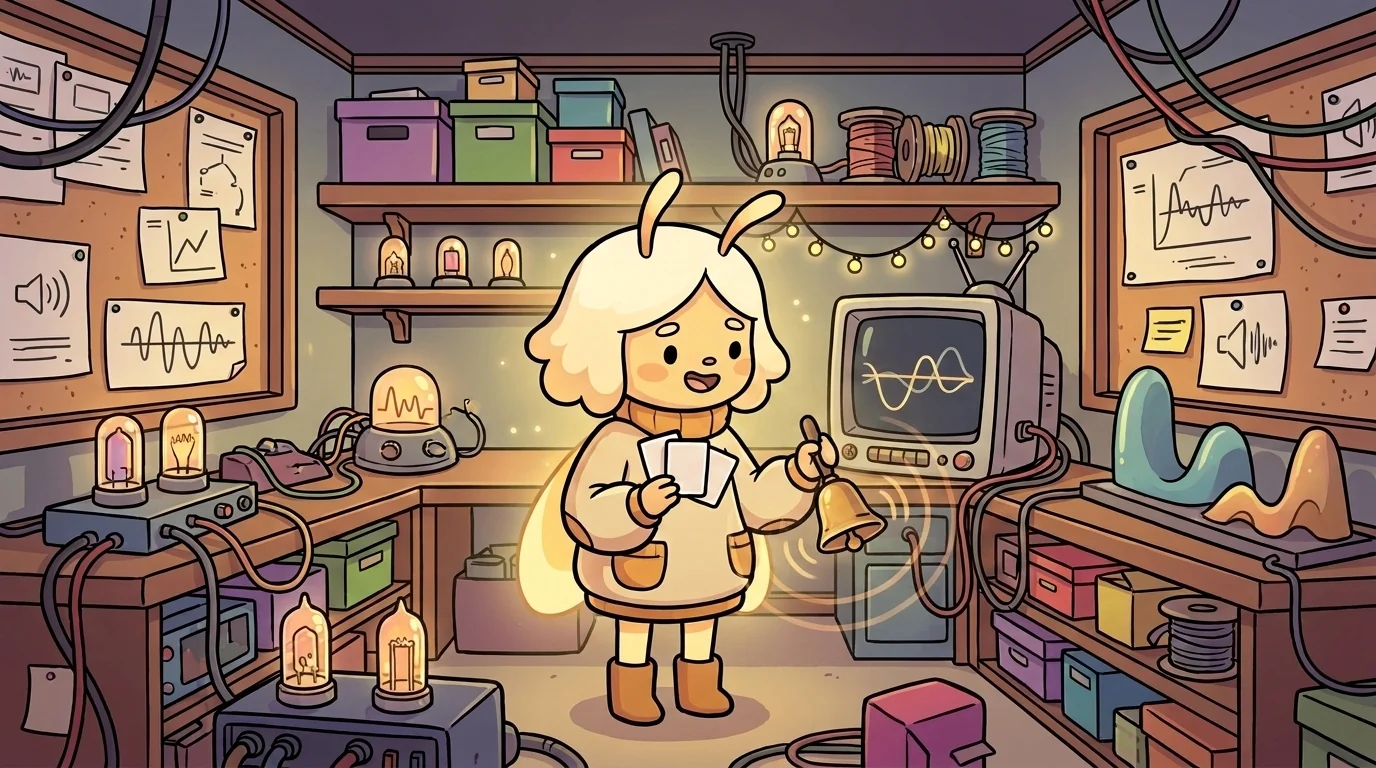
Bloom fell in love with sound-shapes the day she stopped hearing sounds as "just there."
"For the longest time," she says, glow pulsing gently, "I thought a sound was simple — it happened, then it was gone. On, off. That's it." Then an old sound-keeper handed her a bell and told her to really listen, not to the note, but to the shape. "So I struck the bell, and I listened all the way to the end — and it didn't just stop. It rang out, and lingered, and faded so slowly I could still hear it after I thought it was gone." Bloom's amber light brightened at the memory. "It was like the sound had a whole little life — a beginning, a long soft goodbye. And once I heard that, I couldn't un-hear it. Every sound had a secret shape. I've been mapping them ever since."
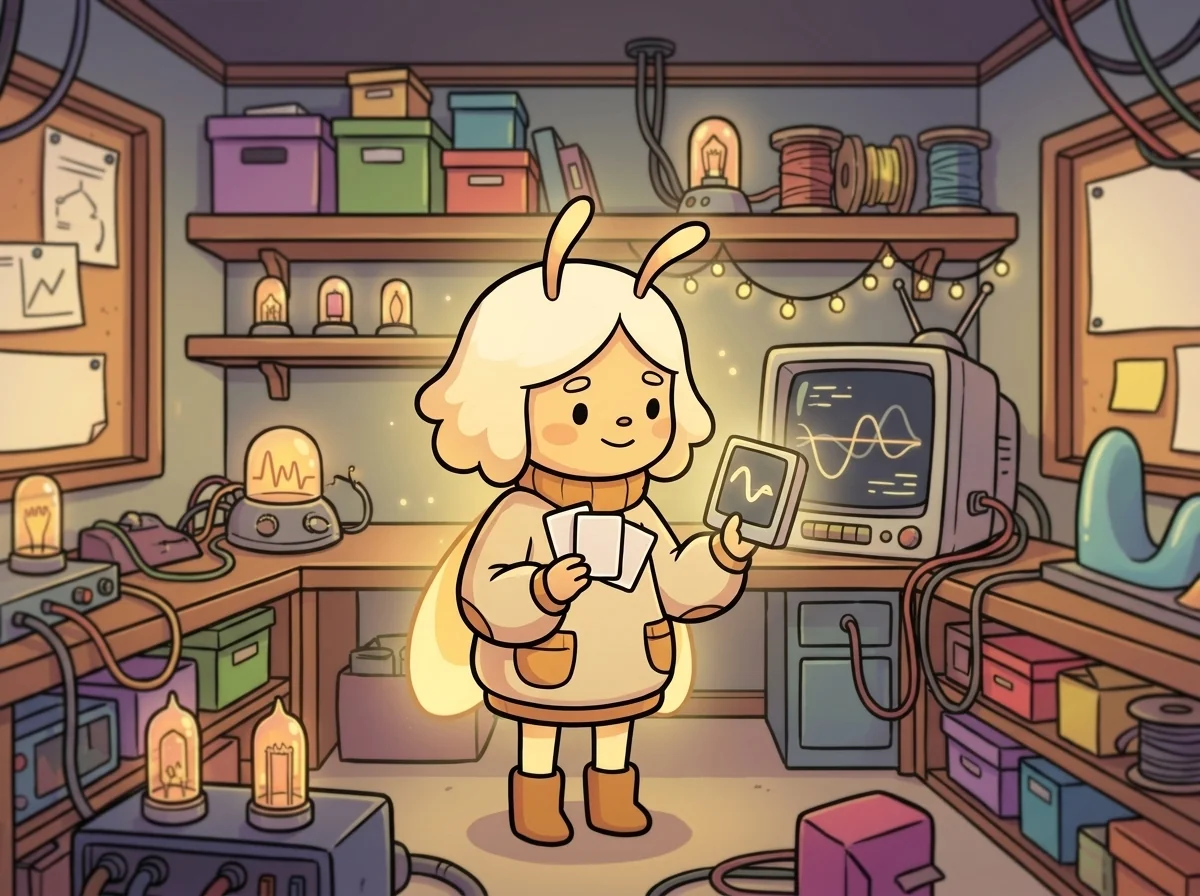
One afternoon Pip, a bright squirrel-kid in a red cap, poked into Bloom's studio, curious. "A sound has a shape?" Pip asked, doubtful. "I thought sounds were just... noises."
Bloom smiled, reading the doubt kindly. "Watch," she said, and picked up her glowing envelope-tracker. "Let me show you the secret life of sounds."
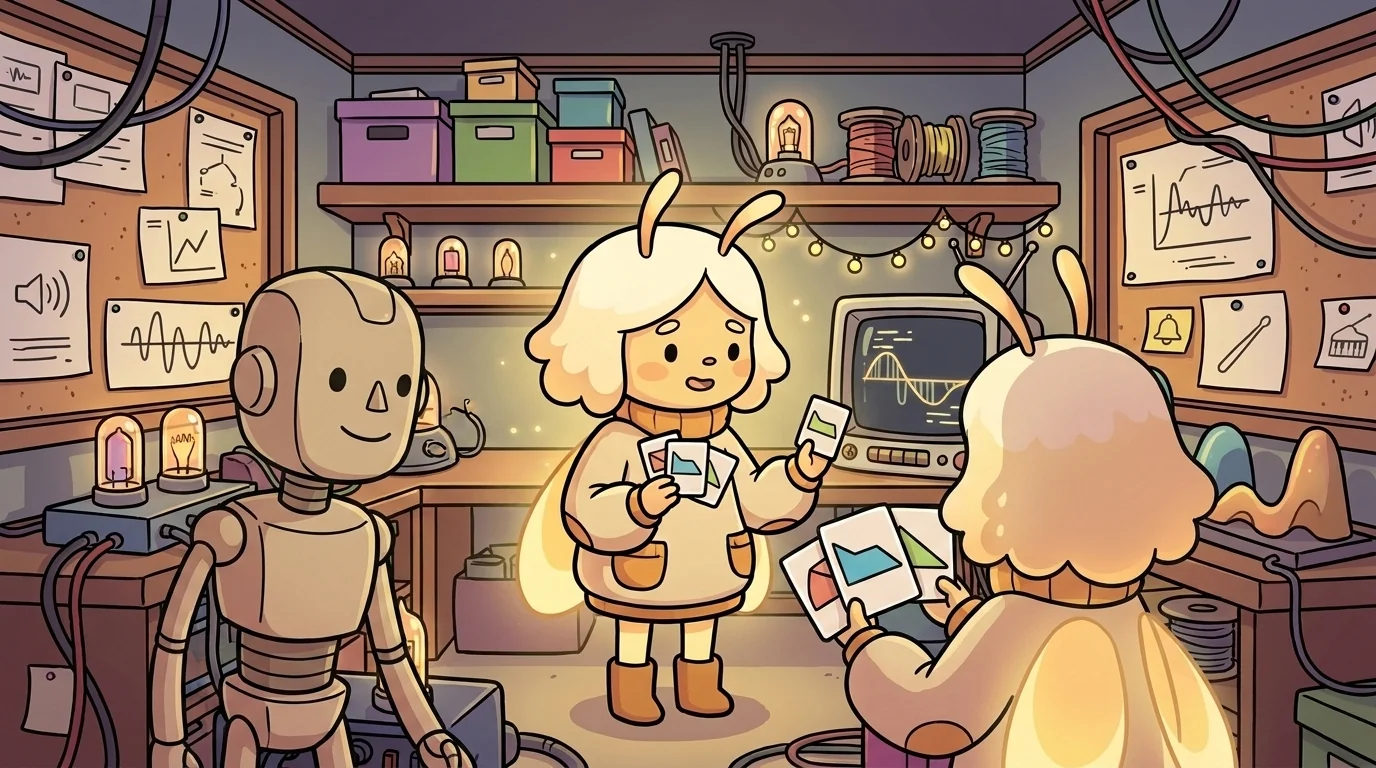
Bloom pressed a button and a piano rang out — DONG! — bright and quick, and on the screen a line shot up like a tiny rocket, dropped a little, held a split second, and vanished. "Sharp beginning, quick fade, gone," she said. Then a violin — WHEeee — smooth and long, its line rising slowly like a gentle hill, holding, then floating away. "This one builds up, stays strong, lets go slowly. Very polite, the violin." A drum — BAM! — a super-fast spike, then nothing. "No holding back — just bam and done." And a bell — ding-dong — its line shooting up then fading slowly, slowly, lingering in the air. "Bells say goodbye very slowly; sometimes you still hear them when they're gone." Then she held up her four cards. "A is Attack — how fast it starts (a drum attacks fast, a violin creeps in). D is Decay — how fast it drops to its main level after the attack. S is Sustain — how long it holds that level (a violin holds long; a drum barely at all). R is Release — how long it takes to fully disappear when you let go (a bell's is long; a piano's is medium)." She mapped each instrument's shape on the tracker — piano: fast attack, quick decay, almost no sustain, medium release; violin: slow attack, long sustain, slow release; drum: everything fast, no sustain; bell: fast attack, long release. "See how different they are — even playing the same note? That's why they sound different. It's like they each have their own personality, all because of their envelope."
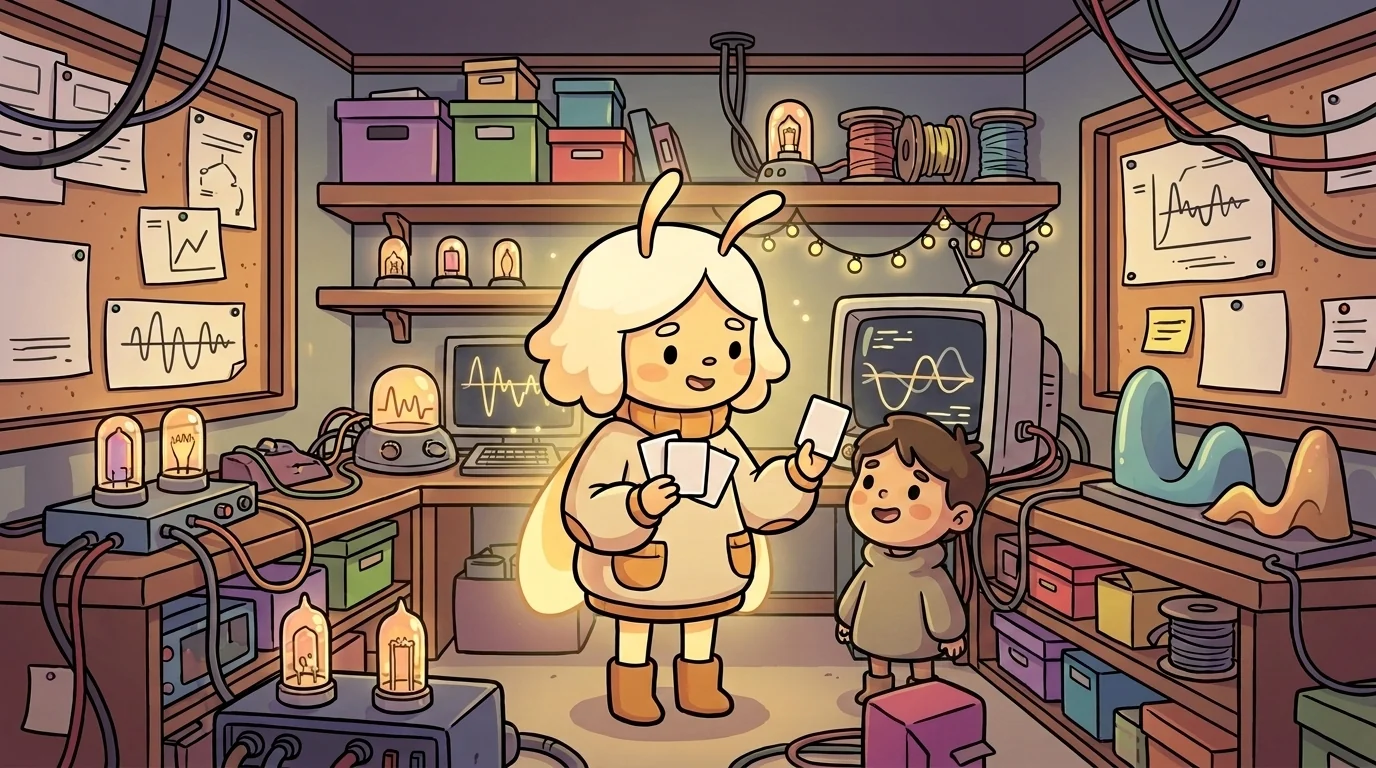
Pip stared at the little mountains and valleys on the screen, amazed. "So every sound is like a tiny... sculpture?"
"An invisible sculpture with its own secret shape," Bloom said, glow brightening. "And once you can see the shape, you can make a sound do anything — even build sounds nobody has ever heard." Then, softer: "Attack, sustain, decay, release. How a sound begins, holds, and fades."
And watching the glowing shapes rise and fall, Pip felt something warm and wondering settle inside — the quiet, tingly gladness of learning a secret language, a whole hidden world of shapes living inside every ordinary noise. It was, Pip thought, like being handed a pair of magic ears — and the feeling of the world suddenly having so much more in it, gentle and bright, was the best part of all.
Hear it as an audio drama
A short play starring Bloom, from SoundSphere. Different voices, same idea. Listen any time after you read.
Loading audio…
Read the drama script
- Narrator: From Spark and Anvil and SoundSphere — this is Bloom, in chapter 1 of the SoundSphere cast.
- Narrator: This drama uses an AI-generated voice. Voiced via Gemini 2.5.
- Narrator: Bloom is a sound-shaper. She has a quiet energy, a soft glow. Her tunic is splattered with the faint, colorful smudges of sound.
- Narrator: She arranges cards on her console, each one drawn with a different curve. These are the secret shapes of every noise we hear.
- Bloom: I am Bloom. What I teach is envelope. The move is attack, sustain, decay, release. Every sound has a shape.
- Narrator: The envelope is a sound's journey over time. Its story of loudness. Without one, a sound is just a flat, mechanical beep.
- Bloom: Attack is how fast a sound gets loud. A drum hit is a fast attack. A violin note swelling is a slow one.
- Bloom: Sustain is how long the sound holds its volume. Release is how long it takes to fade completely into silence.
- Narrator: Bloom grew up listening to echoes in a cave. She didn't just hear the sounds, she felt their shapes, their beginnings and their ends.
- Bloom: By age seven, I knew the lesson. Every sound had a life story. A birth, a life, and a gentle fading away.
- Narrator: She stood before the great Synthesizer at the Sonic Academy. Its single oscillator asked her one question with a flat, shapeless tone.
- Bloom: It hummed, asking: What am I? How can I be more than this?
- Bloom: You are a story waiting for a shape. You just need an attack, a sustain, a decay, and a release.
- Narrator: Attack, sustain, decay, release. The shape of a sound. That's what makes a sound sing.
- Narrator: You've been listening to a Spark and Anvil chapter, written by the Spark and Anvil writing team for ages 9 to 14.
- Narrator: Apps stay free forever.
- Narrator: Curriculum aligned to Common Core and Next Generation Science Standards.
- Narrator: Released under Creative Commons BY-NC-SA 4.0 for educational reuse. Visit Spark and Anvil for the full transcript.
The SoundSphere ensemble
Bloom is one of the friends in SoundSphere. Each friend shows you one idea by how they act; meet them all and you have the whole subject.
-

Wave
Frequency — the pitch axis; high-frequency sounds vibrate fast, low-frequency sounds vibrate slow
-

Layer
Timbre — the overtone fingerprint that makes a violin sound like a violin and a flute sound like a flute (even at the same pitch)
-

Ring
Space — reverb, echo, and room ambience (how the same sound feels different in a bathroom vs a stadium vs a forest)
-

Tune
Synthesis — how primitive sound-elements (frequencies + envelopes + layers + space) combine to build entirely new sounds
-
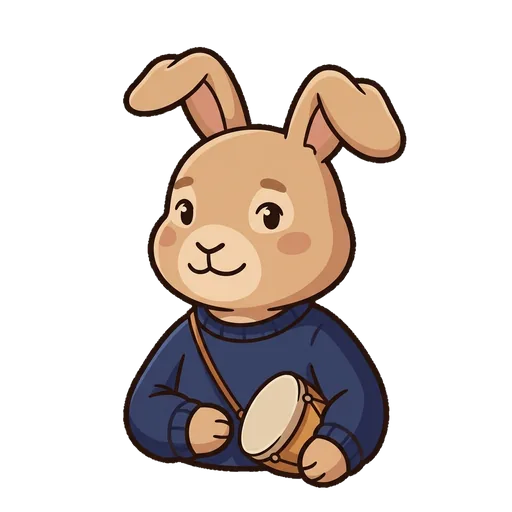
Drum
Rhythm / pulse / tempo
-
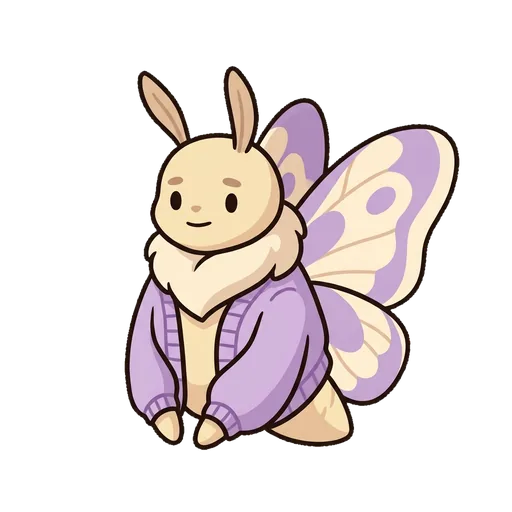
Sigh
Silence / rest / negative space
-

Amp
Loudness / amplitude / dynamics
-

Hone
Selective attention / filtering
-

Vibe
Resonance / sympathetic vibration


