Waypoint
SIGNPOSTING
Loading audio…
Press play to listen along. The line being read lights up as you go.
Show full transcript
Loading transcript…
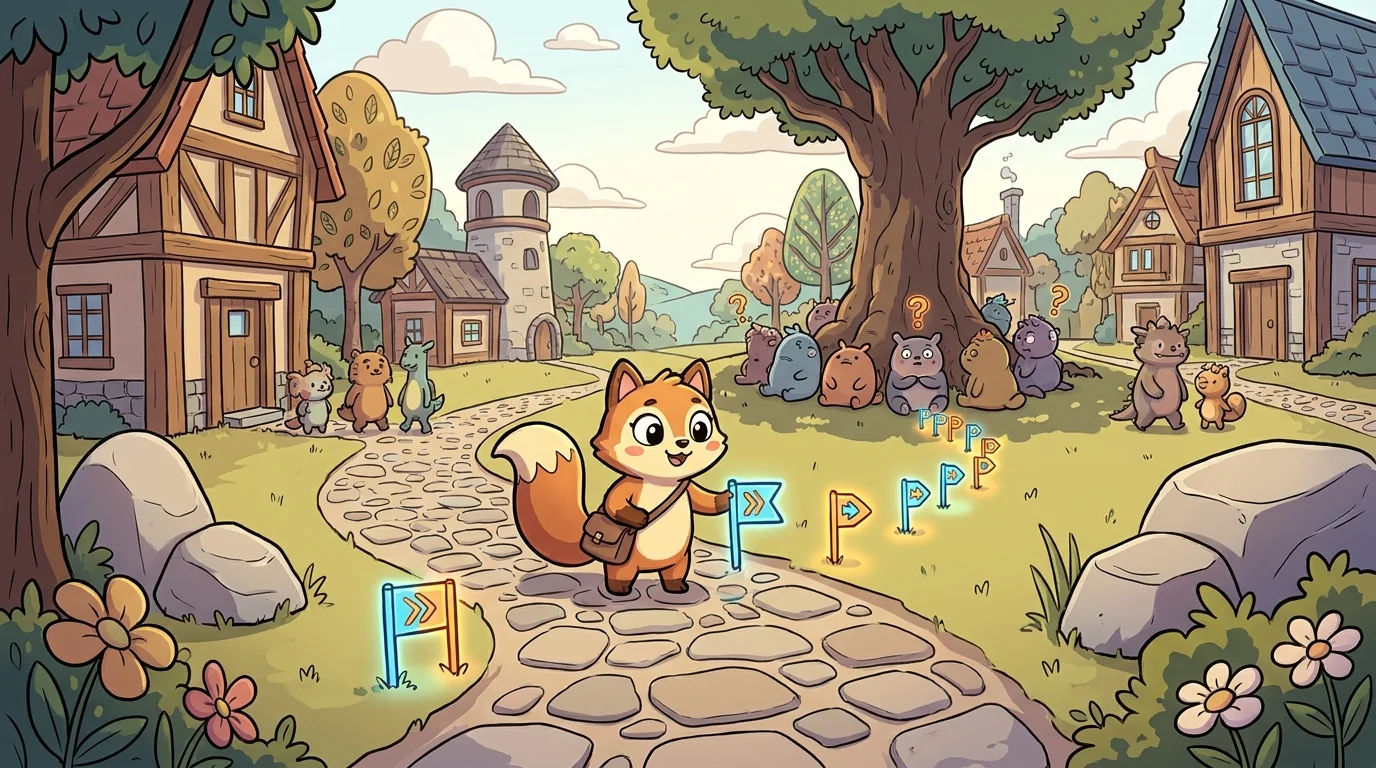
At the SpeakForge academy, where creatures learned to be understood, Waypoint was a bright-eyed creature who never went anywhere without planting little markers behind her — small spoken flags that said, in effect, you are here, and here is where we go next.
When a speaker started to wander and the listeners' eyes glazed over, Waypoint would step in and drop a marker: "First, the problem. Then, the cause. Finally, the fix." And just like that, the lost listeners had a path again. She didn't add new ideas — she laid down the trail between the ideas so nobody fell off it.
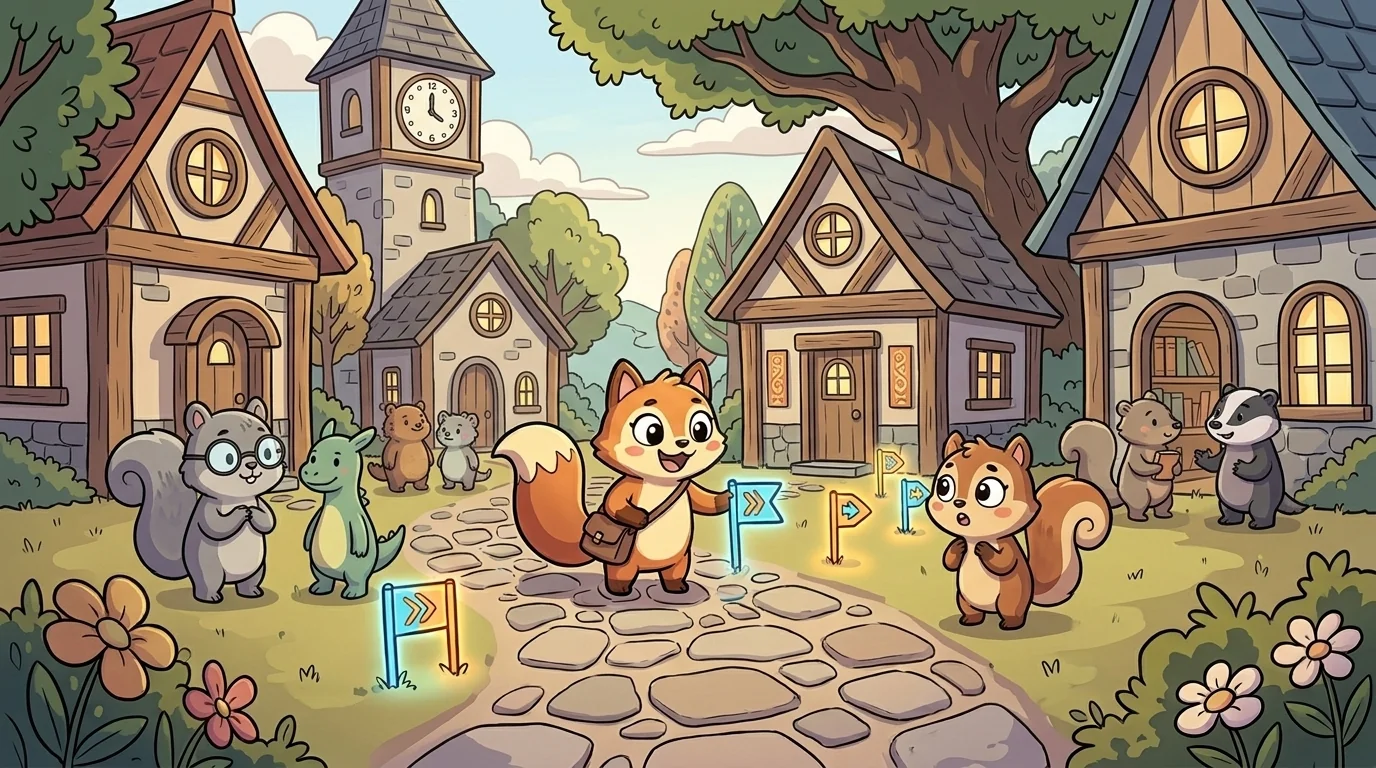
"You didn't say anything new," a young speaker said, "but suddenly I knew exactly where the talk was going!"
"That's the whole job," Waypoint said, planting an imaginary little flag in the air. "I'm Waypoint. I keep the signposting — tell them where you're going, then take them there." She walked a few steps, marking each one. "First. Next. Finally. The signpost isn't the idea. It's the path to the idea. A listener who knows where you're headed never gets lost on the way."
Resonance, the warm academy mentor, said, "Show them a talk with no markers at all."
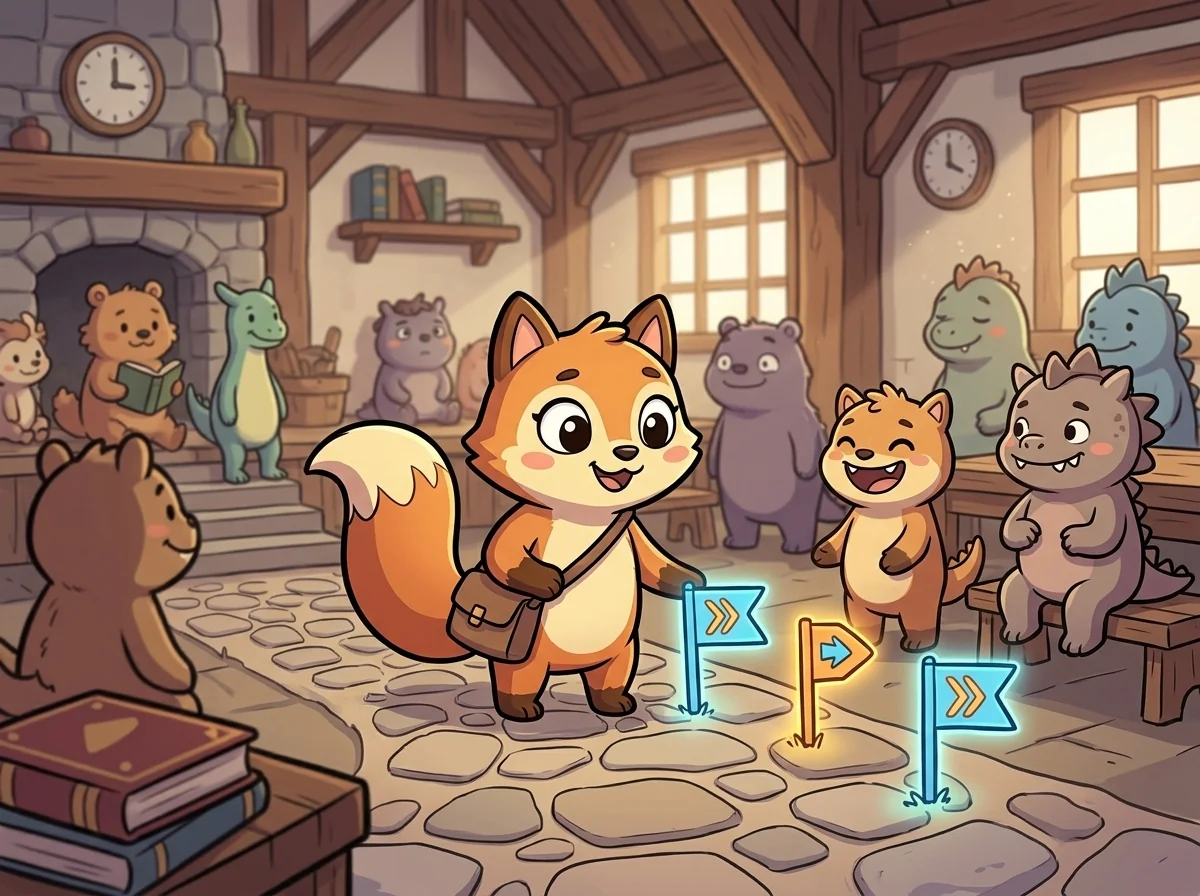
Waypoint gave a talk that was all good ideas in a heap, with no signposts: she jumped from the problem to a fix to a different problem to a fact to the first fix again. The room got that uneasy, lost look. "I have no idea where we are," a young speaker admitted.
"Right — good ideas, no path," Waypoint said. Then she gave the same ideas again, but this time she planted markers: "I'll cover three things. First… second… and last…" The room relaxed instantly; heads nodded along. "Same ideas," she said. "But now there's a trail to follow. Listeners can only stay with you if they know where 'with you' is going."
A young speaker grinned. "So I should tell people my plan BEFORE I start the parts!"
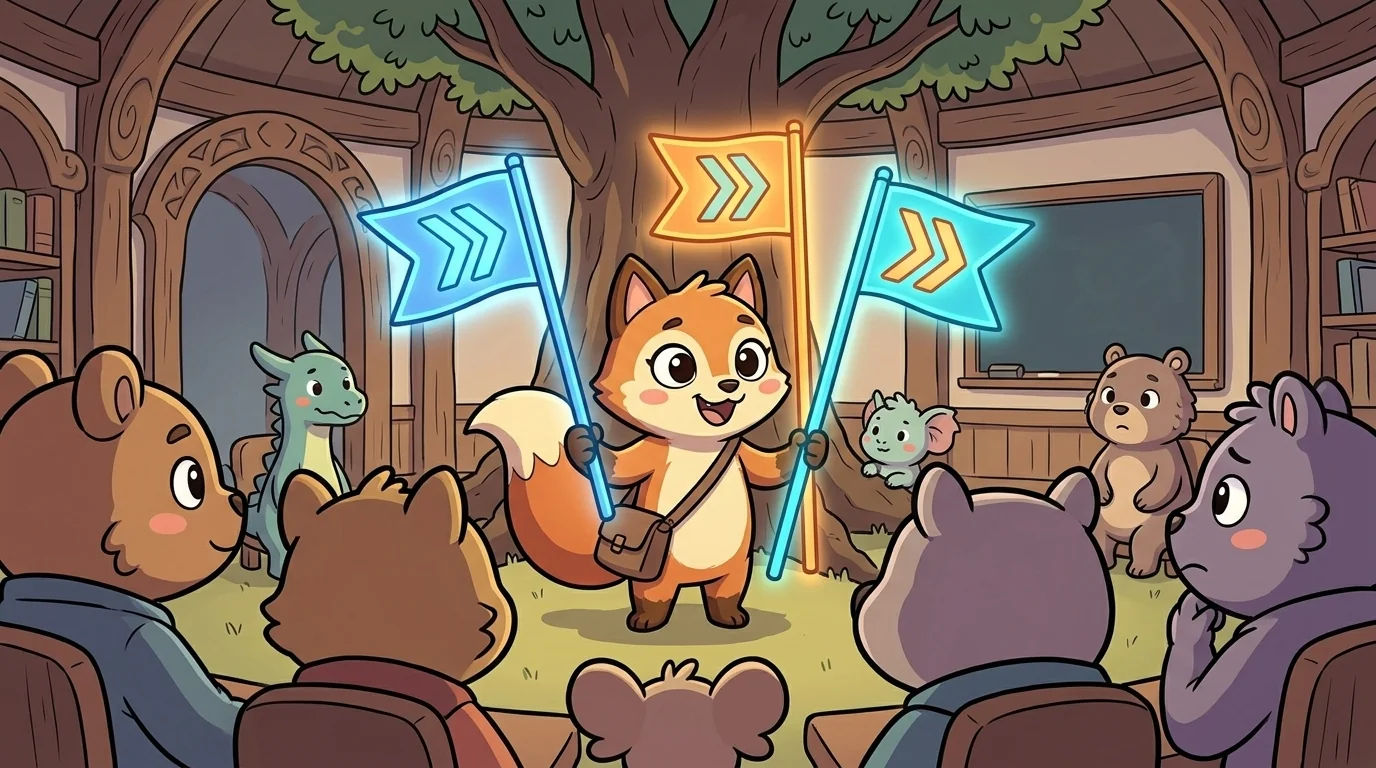
"Tell them the map, then walk the map," Waypoint said. "A promise up front — 'here are my three points' — and a little flag at each turn. That's all it takes to keep a whole room from wandering off."
Resonance asked Waypoint to teach the cast before their big group talk. "Hark can listen and Echo can read the room," Resonance said, "but if the talk has no path, even the best listeners get lost. Will you give them the trail?"
Waypoint was delighted. When she teaches, she gives one rule: "Open with your map — say how many parts there are and what they are. Then plant a marker at every turn: 'first,' 'now here's the next part,' 'and finally.' Close by looking back at the path you walked. The listener should never have to wonder where are we?"
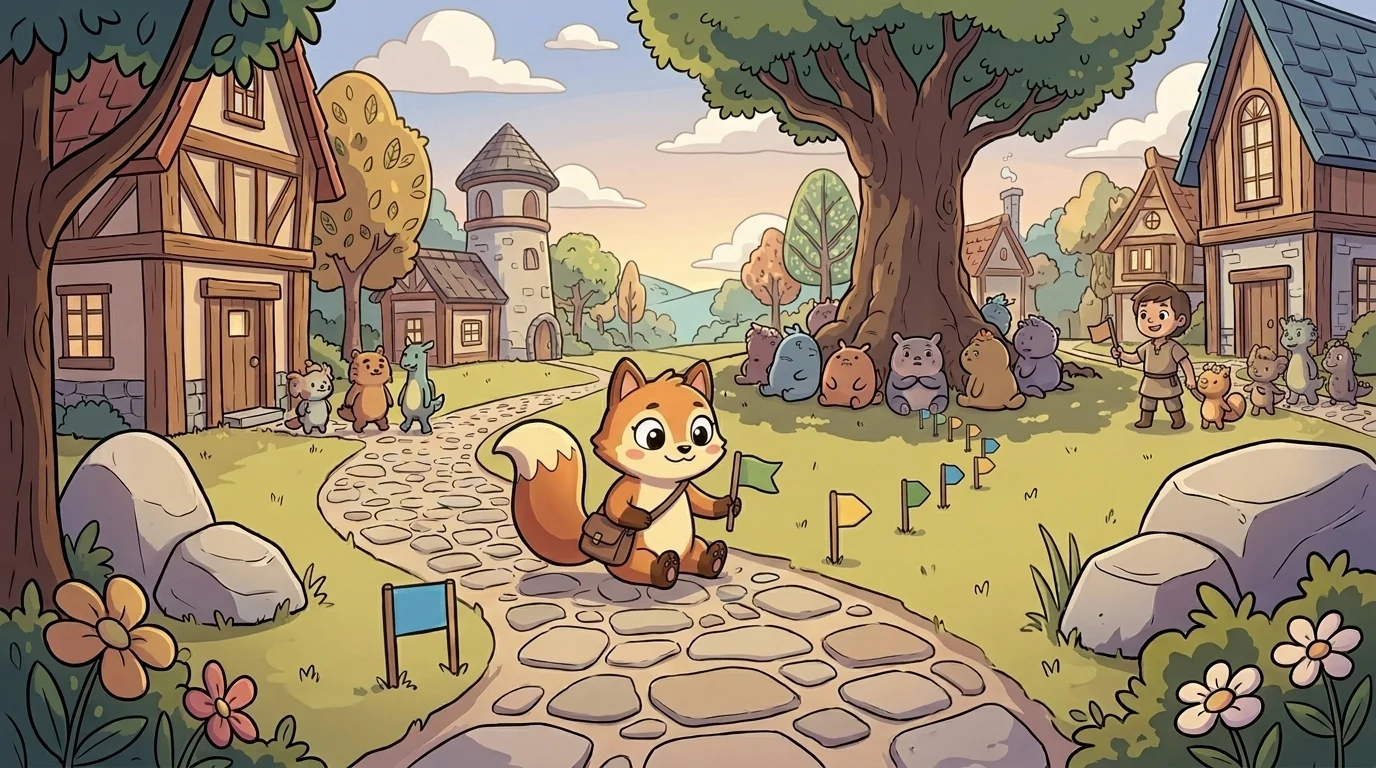
Truss was giving a tight argument but the listeners kept losing the thread between his points. Waypoint handed him three markers. Truss tried again: "I'll make one claim, give you two reasons, then tell you why it matters." Suddenly his strong argument was also a clear one. "My points were always solid," Truss said. "You just built the path between them so people could walk it."
After the rehearsal, Waypoint sat down, idly planting tiny flags in the soft grass beside her, the way she always fidgeted.
For a long time, Waypoint had carried a small, nagging doubt. The others made content — Truss made arguments, Pitch made the voice soar, Easel made the pictures. All Waypoint made was little words like "first" and "next." She'd wondered, sometimes, whether signposts were even real speaking, or just filler — empty markers around the parts that actually mattered.
But sitting in the gentle academy evening, watching a young speaker open with a clear map and lead a whole room calmly from start to finish, Waypoint felt the doubt melt into a quiet, steadying gladness. Her markers weren't filler. They were kindness — the thing that kept a listener from feeling lost and anxious, the small flags that said I've got you; here's where we go. A talk without a path leaves people stranded; a talk with one feels like being walked home. That mattered. A warm, settled calm spread through her, and she planted one more little flag, content, already mapping the path for her next talk.
Hear it as an audio drama
A short play starring Waypoint, from SpeakForge. Different voices, same idea. Listen any time after you read.
Loading audio…
Read the drama script
- Narrator: From Spark and Anvil and SpeakForge — this is Waypoint The Signpost-Setter, in chapter 1 of the SpeakForge cast.
- Narrator: This drama uses an AI-generated voice. Voiced via Gemini 2.5.
- Narrator: At the SpeakForge academy, Waypoint was a bright-eyed creature who never went anywhere without planting little markers behind her — small spoken flags that said, you are here, and here is where we go next.
- Waypoint The Signpost-Setter: When a speaker starts to wander and the listeners' eyes glaze over, I drop a marker. "First, the problem. Then, the cause. Finally, the fix." And just like that, the lost listeners have a path again.
- Narrator: She was careful about what a signpost is not.
- Waypoint The Signpost-Setter: A signpost adds no new idea. "First, next, finally" carry no content at all. They are pure path. Beginners skip them because they feel like saying nothing — but the path between ideas is what keeps a listener from falling off.
- Narrator: The Advanced reason it matters is the one thing that makes speaking different from writing.
- Waypoint The Signpost-Setter: A reader who gets lost can re-read the paragraph. A listener cannot. Your words arrive once and vanish. Lose the thread at minute two, and you're lost for the rest. So you give them the map before the journey — and you are the only map they get.
- Narrator: She taught three kinds of marker.
- Waypoint The Signpost-Setter: The preview — "I'll cover three things." The transition — "that's the what; now, the why." The recap — "so: what, why, how; that's the whole of it." Held by all three, a listener literally cannot get lost.
- Narrator: A wandering creature named Sedge had wonderful ideas no one could follow.
- Waypoint The Signpost-Setter: Your ideas are better than fine. But you never tell anyone where you're going, so every turn is a surprise, and surprises are exhausting to follow. Open with "Today, three things." Then name which one, each time you move.
- Narrator: Sedge changed nothing about his ideas, and the same ideas that had lost every room suddenly landed.
- Waypoint The Signpost-Setter: The ideas were never the problem. The path was missing. But signposts are salt, not soup — three real waypoints beat twenty empty ones.
- Narrator: Tell them where you're going, then take them there — preview, transition, recap. That is Waypoint.
- Narrator: You've been listening to a Spark and Anvil chapter, written by the Spark and Anvil writing team for ages 9 to 14.
- Narrator: Apps stay free forever.
- Narrator: Curriculum aligned to Common Core and Next Generation Science Standards.
- Narrator: Released under Creative Commons BY-NC-SA 4.0 for educational reuse. Visit Spark and Anvil for the full transcript.
The SpeakForge ensemble
Waypoint is one of the friends in SpeakForge. Each friend shows you one idea by how they act; meet them all and you have the whole subject.
-

Pose
Posture / presence / stance — 'Stand. Then speak.'
-

Pitch
Voice projection + tone variation — 'Your voice is a road. Not a wall.'
-

Hark
Active listening — 'Listen all the way through.'
-
Truss
Argument structure (claim / evidence / reasoning) — 'Claim, then proof, then why.'
-

Echo
Audience awareness + tone calibration — 'Who's listening? Speak to THEM.'
-
Easel
Visual aids / multimedia displays — show, don't just tell; one clear picture beats a hundred words (SL.5)
-

Volley
Q&A — fielding and answering questions; catch it, breathe, send it back clean (SL.1)
-

Mosaic
Building on others' ideas — synthesizing a discussion; 'you said X, and building on that…' (SL.1c-d)
-

Usher
Turn-taking & discussion norms — everyone gets a seat at the talk; make room for the quiet voice (SL.1b)