Gate
THE BLOCK — *the star has no captures; you can never remove a rival's peg. The one defensive move is to OCCUPY a key landing square so a rival's jump-chain breaks — a hop needs an empty space to land in, so filling that space with your own peg quietly closes the door on their ladder. Reading which single square holds a rival's whole route together is how one peg does the work of a wall.*
Loading audio…
Press play to listen along. The line being read lights up as you go.
Show full transcript
Loading transcript…
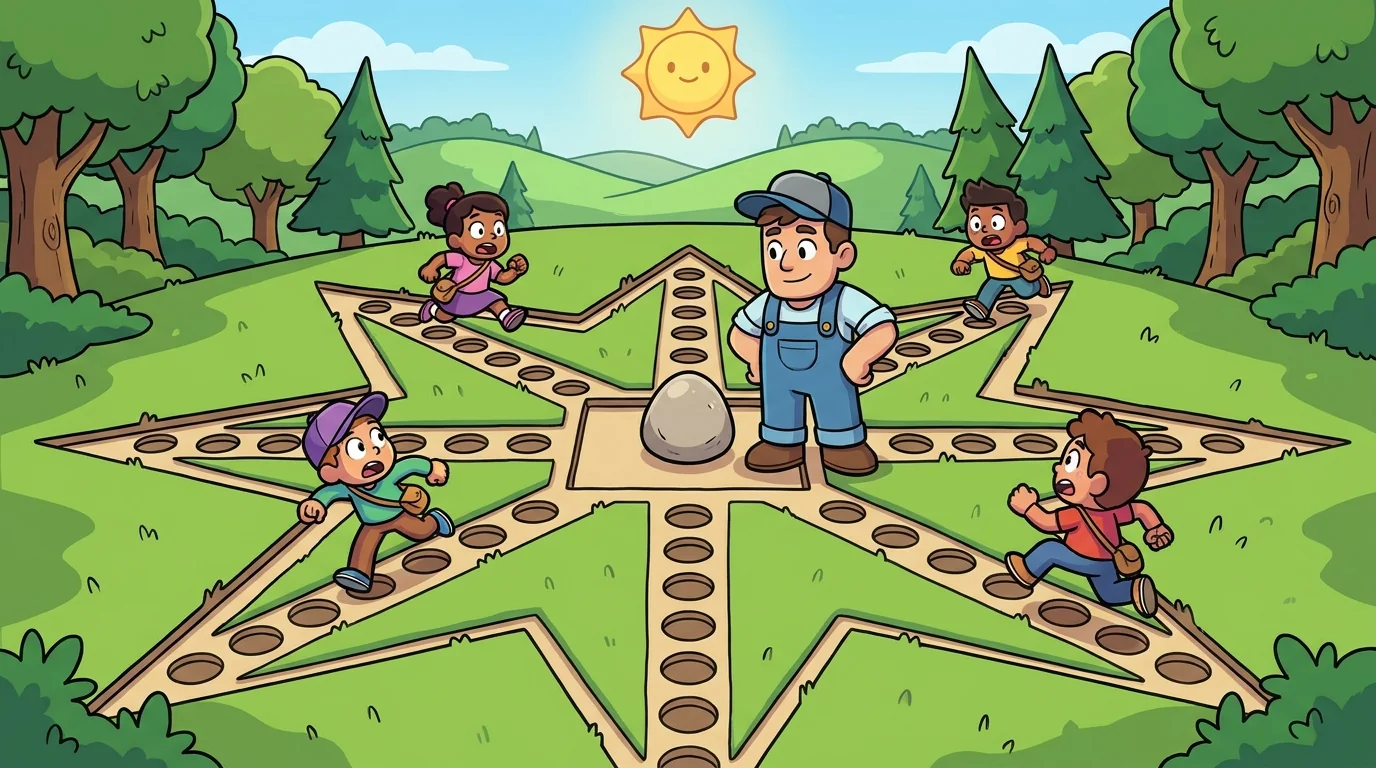
Gate almost never moved fast, and that was the whole point. While the racers bounded across the star, Gate would drift one peg into a single empty square and then just... stand there, calm as a stone in a stream. A rival lined up a beautiful jump-chain, reached for it — and stopped, because the space their ladder needed to land in was suddenly full. Gate's peg sat right in it. "I didn't take anything from you," Gate would say pleasantly. "There's no taking on this board. I just closed the one door your whole route was leaning on."
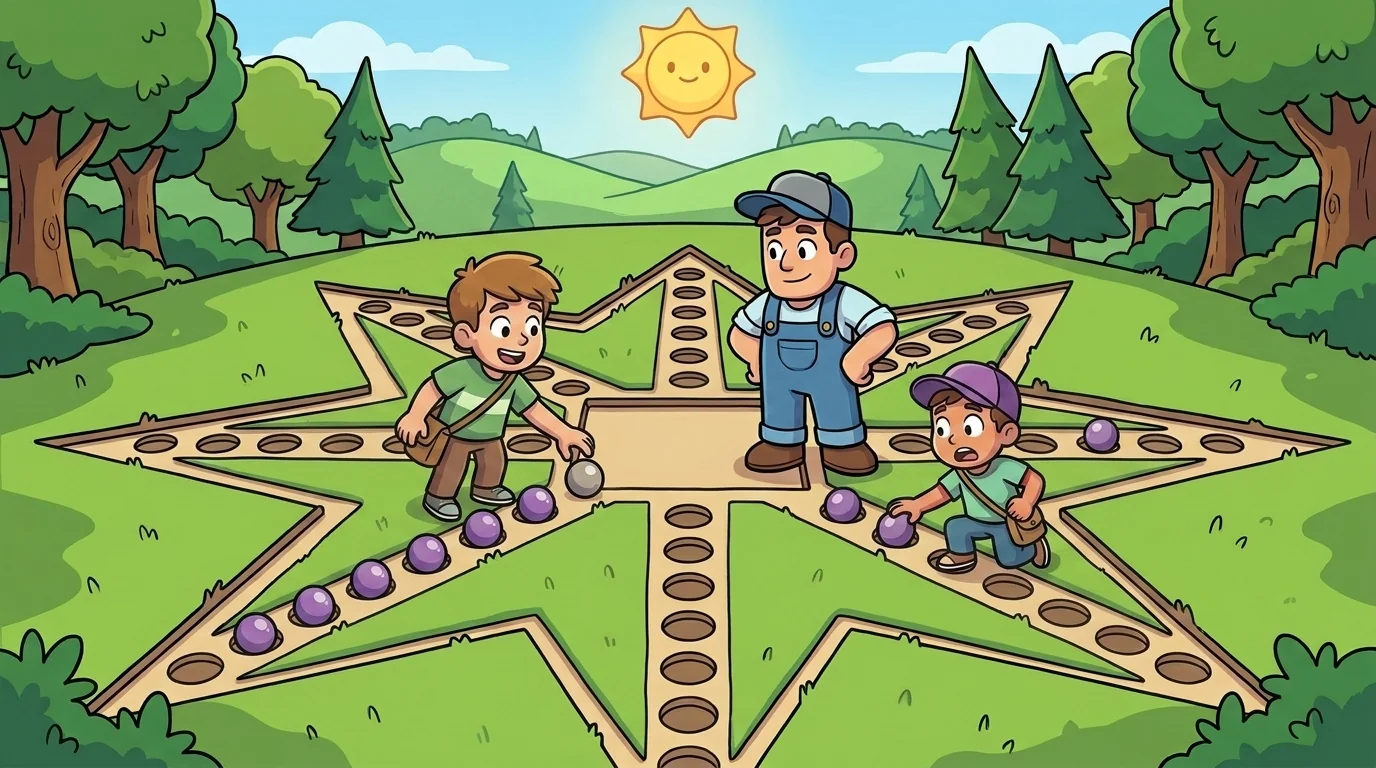
Gate used to feel useless. In every other game the other kids played, you could knock a piece off, snatch a card, capture something — and here, on the star, you couldn't touch a rival's peg at all. "So what's the point of defense?" Gate had asked, close to giving up. "If I can't take anything, I can't stop anyone." It felt like being handed a game with the fighting removed.
Cairn, the pathfinding coach, heard this and sat down across the board. "Watch where your rival is going, not what they have," Cairn said, and traced a long ladder a racer was building. "Every hop in that chain needs one thing — an empty place to land. Take away one of those empty places, near the start, and the whole ladder collapses. You don't need to remove their peg. You need to stand where they were about to." Gate moved one marble into the gap. The rival's grand route simply... came apart. Gate stared. It wasn't nothing at all. It was quiet, and it was patient, and it worked. The uselessness lifted, and in its place came a settled kind of strength: I hold ground.
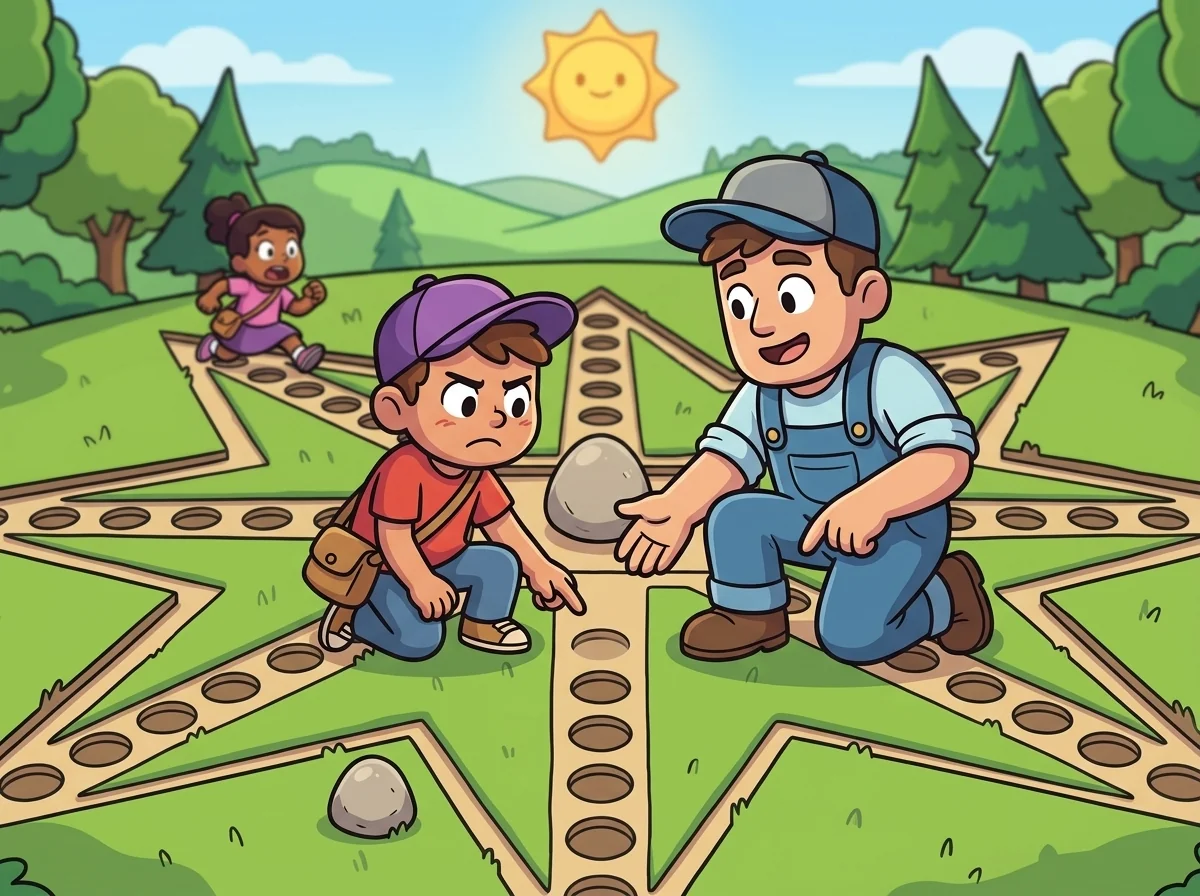
A boy named Idris came to Gate frustrated and a little ashamed. "Everyone else is zooming and I'm just slow," he said. "I never win the race." Gate didn't tell him to race harder. "Not everybody's job is to be fastest," Gate said. "Some turns, the strongest move on the whole board is to stand in the right doorway. Show me the rival who's ahead." Idris pointed. Gate traced the leader's next big chain and tapped one empty square near its base. "If your peg is there, what happens to that ladder?"
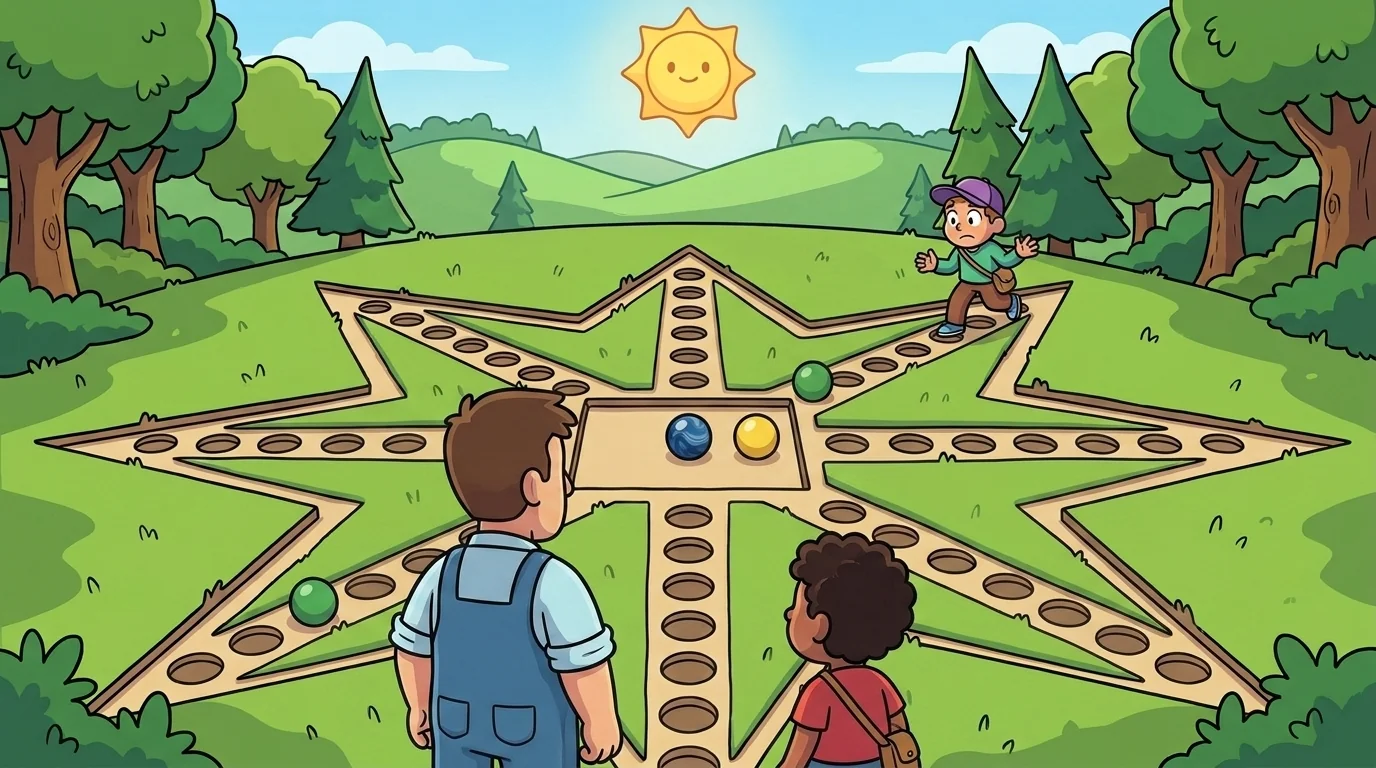
Idris thought about it. "They... can't land. The chain breaks." "The chain breaks," Gate agreed. "You didn't lose a turn — you took theirs." Idris moved his marble into the square, and on the next turn the leader reached for the leap, found the door shut, and had to shuffle a single sad space instead. Idris let out a startled breath, half a laugh. He'd changed the whole game without hopping anywhere at all. They played it out; twice more Idris read where a rival's route needed an empty space and quietly filled it, and the racers kept crashing into his calm. He wasn't slow, it turned out. He was steady — and steady, placed in exactly the right spot, was its own kind of power.
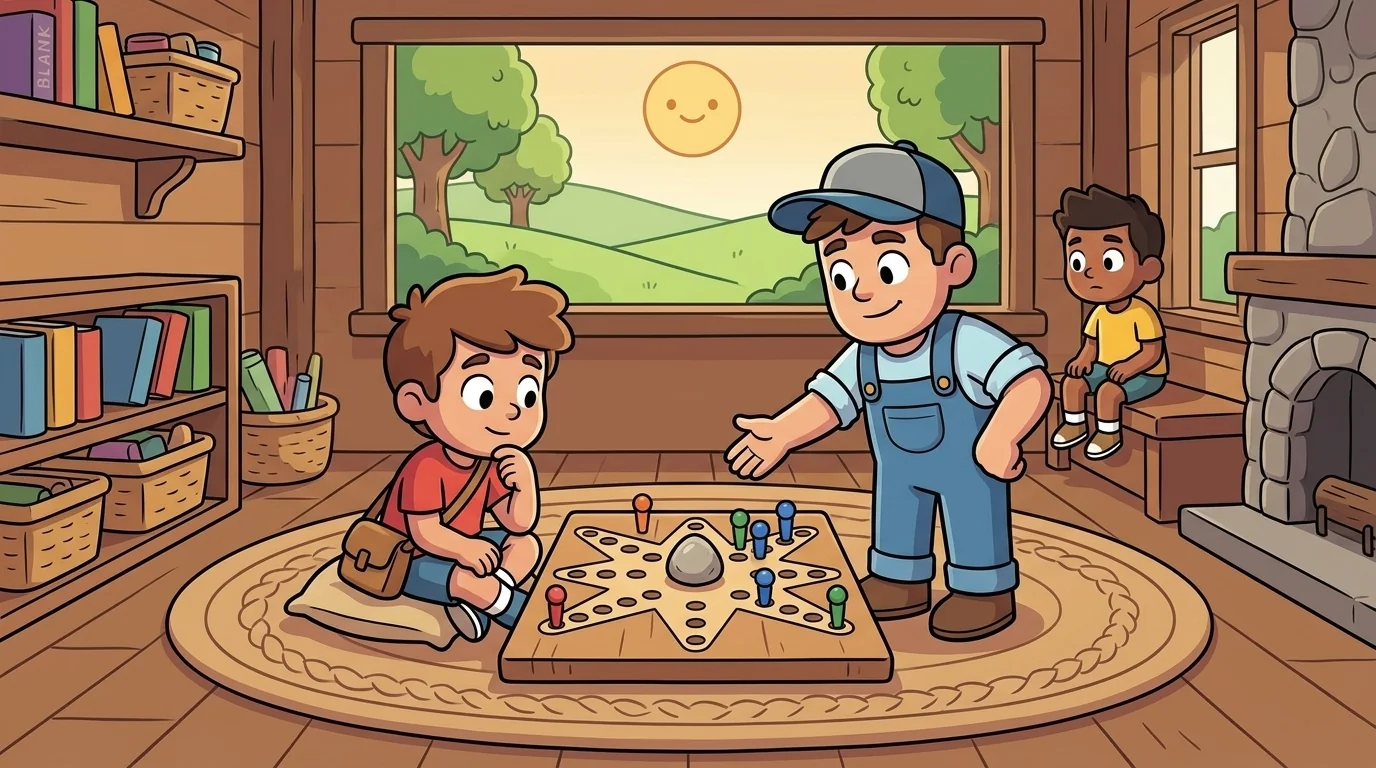
"You found it," Gate told him afterward. "On this star nobody gets captured, so the only defense is position — being where their plan was about to be. One peg in the right doorway is worth more than five wild hops." Idris nodded slowly, looking at the board differently now, seeing not just his own path but the spaces the others leaned on. Cairn watched from across the room and said nothing, because nothing needed saying: a kid who'd felt useless for not being fast had just discovered he could be the wall. "Say it when a rival's ladder is forming," Gate told him. "I don't capture anything — I just stand in the one empty spot their ladder needs, and their long leap has nowhere to land."
The LeapTale ensemble
Gate is part of LeapTale's distributed-narrative cast. Each character embodies a different curricular primitive; together they teach the full subject.
-

Bounder
The Ladder-Chainer — links several hops into ONE long move, always finding the longest efficient multi-hop route across the star (jump-chain / laddering)
-

Kern
The Centre-Keeper — occupies the central hexagon where the most jump-lines cross, keeping the most options open (centre control)
-

Overleap
The Long-Jumper — reaches the gapped, longer hop the ordinary jump can't, clearing distance in a single leap (the long / gapped jump)
-

Sidra
The Lane-Opener — plays the classic sideways-developing first moves that open the fastest lanes out of the home point (the opening)
-

Caboose
The Straggler-Minder — never strands the last peg, because you only win when ALL ten reach home and the last one is hardest (leave no peg behind)
-

Pacer
The Race-Counter — counts who reaches home first and spends every single move advancing, never idling (tempo / parity)
-

Snugg
The Back-Filler — tucks pegs into the BACK of the target point first so incoming pegs are never blocked by ones already home (home-fill order)
-
Trellis
The Bridge-Layer — places a peg NOW to enable a long chain LATER, setting up the ladder several turns ahead (deferred planning)
-

Coattail
The Line-Rider — hops over ANYONE's pegs, yours or the opponent's, riding a rival's line as free stepping-stones (the shared ladder / opportunism)