Redd
A MISS IS A RE-TRY - *when you get something wrong, it is not a fail; it just means you get to try again, and trying again is how you learn.*
Loading audio…
Press play to listen along. The line being read lights up as you go.
Show full transcript
Loading transcript…
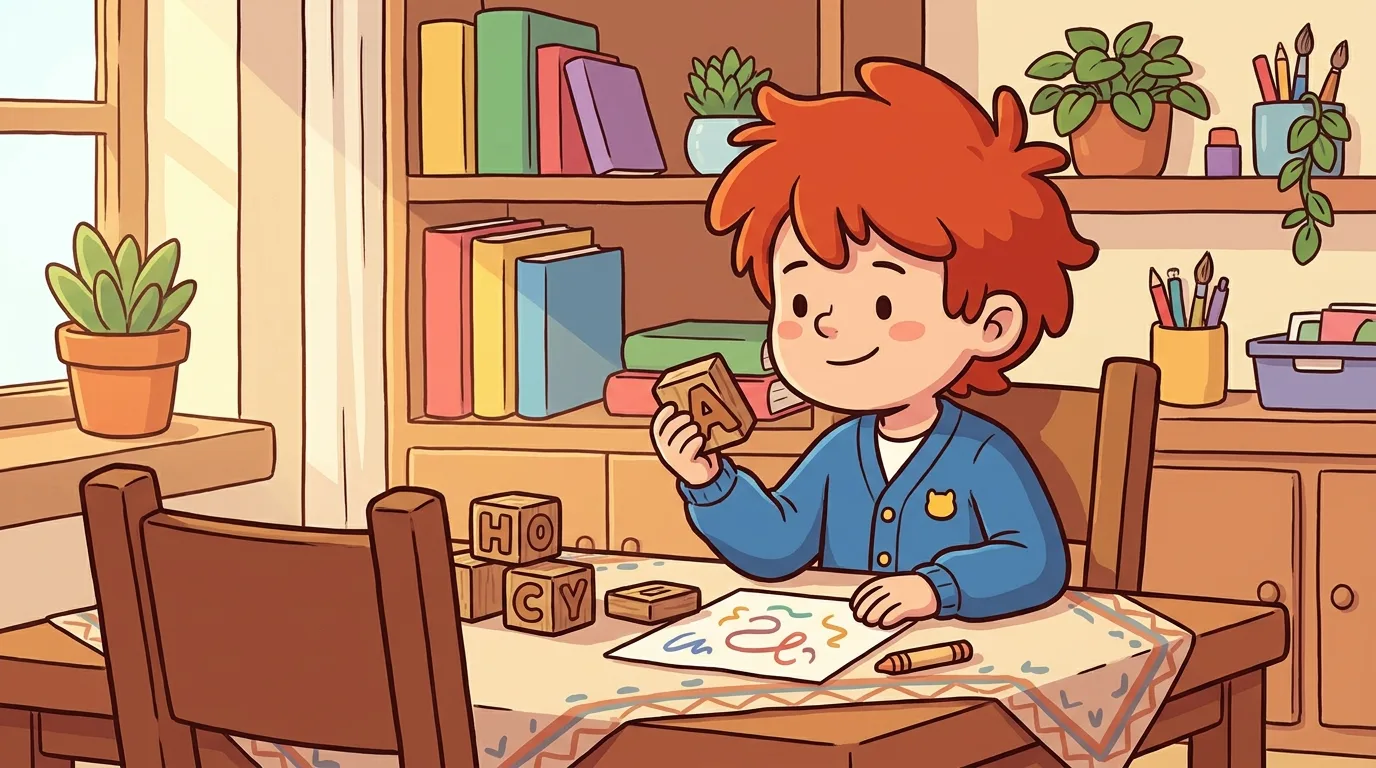
Redd has bright red, messy hair that sticks up no matter how much he brushes it, and a blue cardigan with a little yellow badge. He holds a wooden letter block, turning it over and over. Redd is the SprintPal who misses things. And he doesn't mind one bit.
Today he is spelling "because." He writes it: b-e-c-o-s.
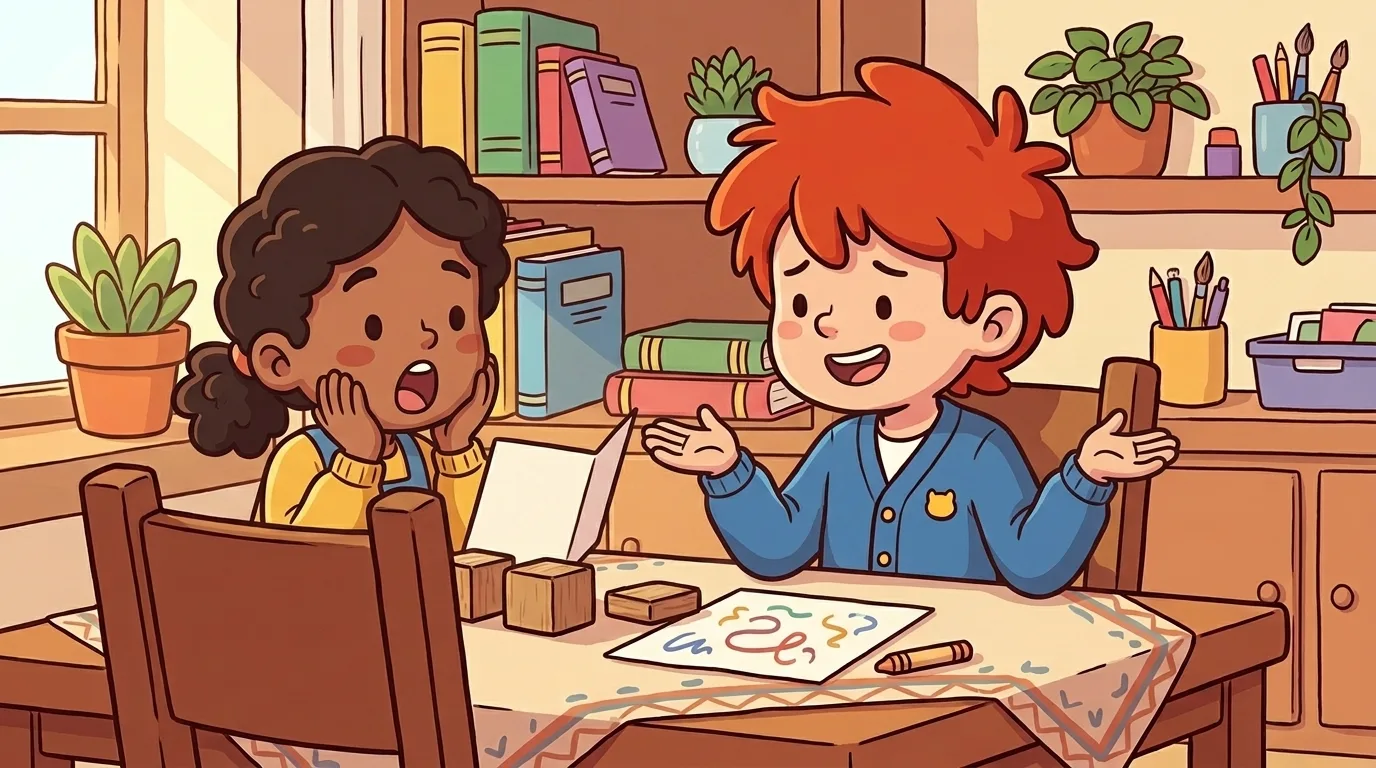
He checks the card. It's not right.
Across the table, a girl named Suki gasps. "Oh no, Redd! You got it wrong!"
Redd shrugs and smiles. "I didn't get it wrong. I got a re-try."
"A what?"
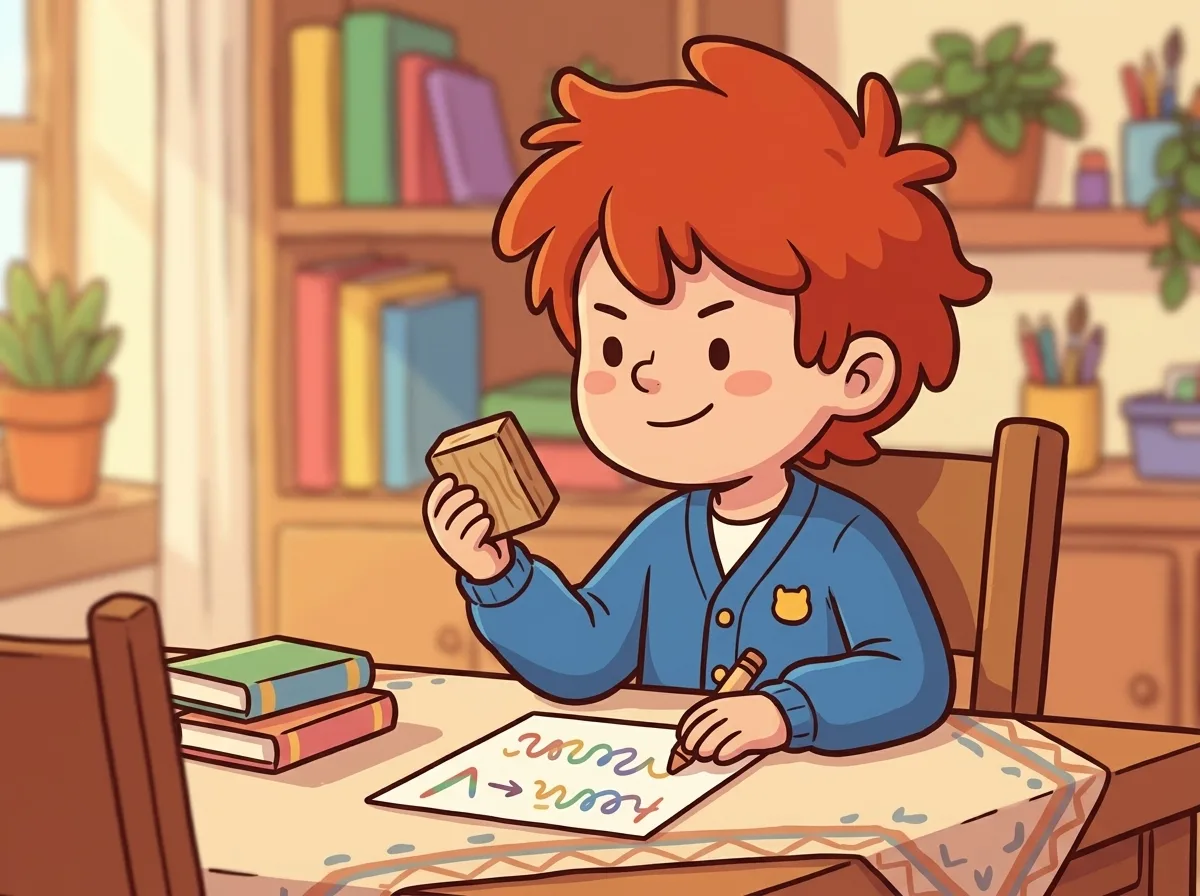
"A re-try," says Redd. "A miss isn't a fail. It just means I get to go again. Look." He studies the card slowly. "Oh! It's a-u-s-e at the end, not o-s. Sneaky." He writes it again: b-e-c-a-u-s-e.
This time it's right.
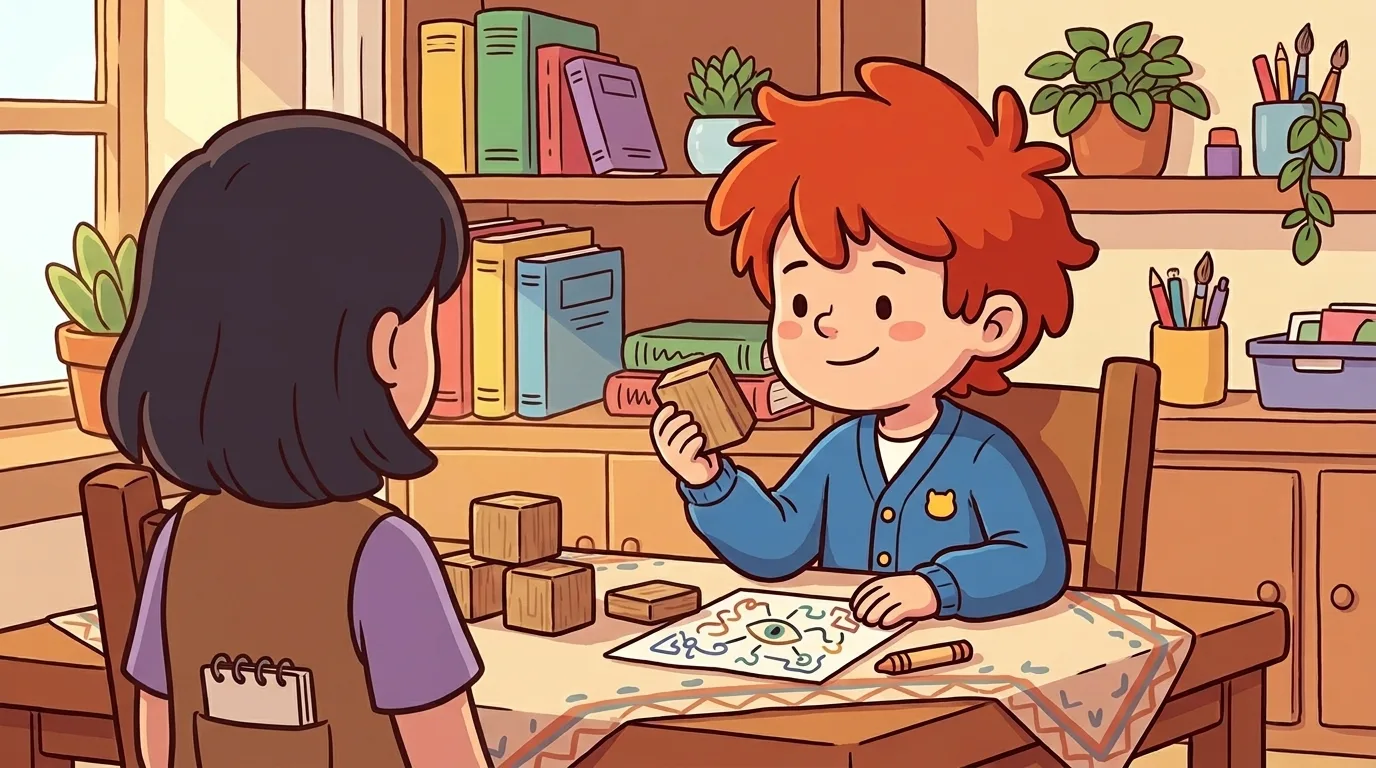
"See?" says Redd. "If I'd never missed, I'd never have noticed the sneaky part. Now I'll remember it."
Suki thinks about the times she got things wrong and felt her cheeks go hot. "But doesn't it feel bad?"
"A little, for one second," Redd admits. "Then I just say, 'Re-try!' and it turns into a puzzle instead. Puzzles are fun. And nobody here is counting the misses. There are no scores. There's only going again."
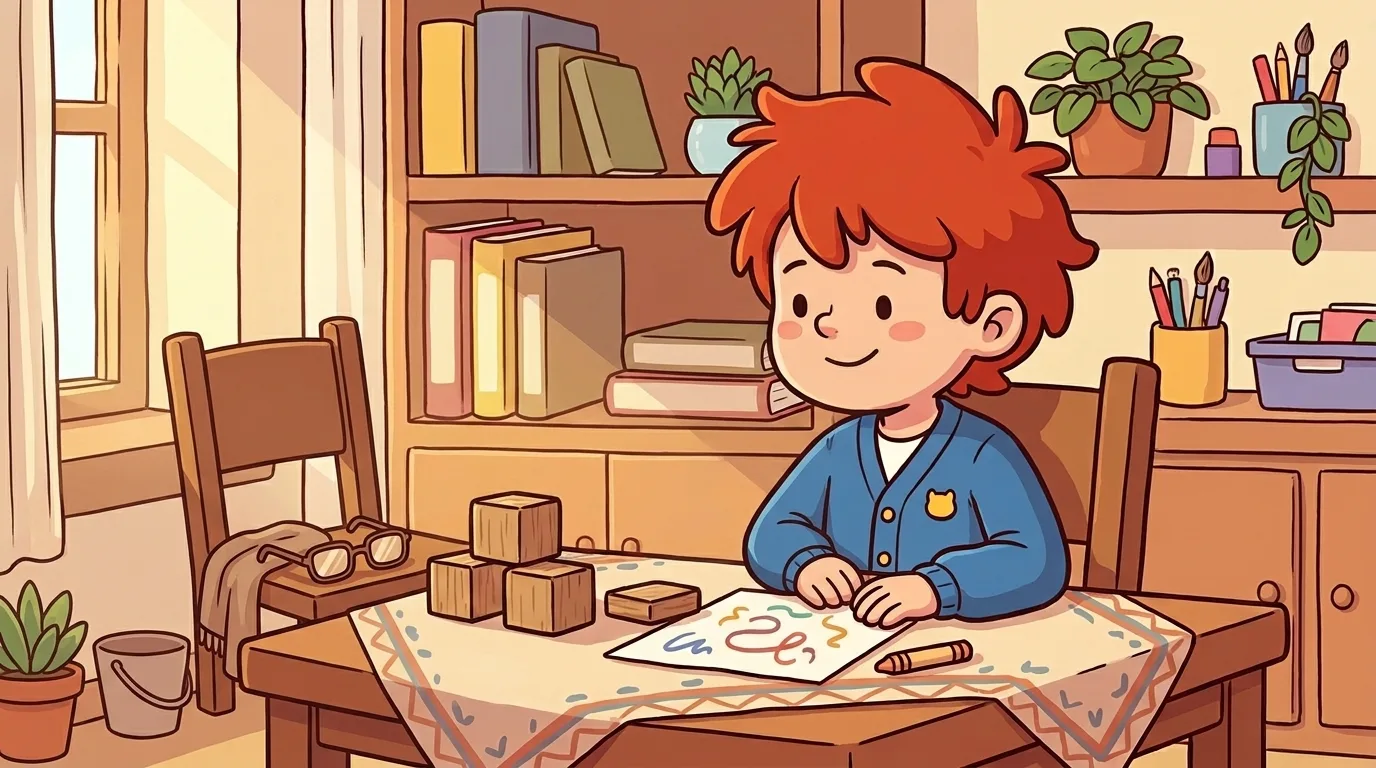
That's Redd's brave idea.
A miss is a re-try, never a fail - you can always go again.
A grown-up can play too! Pick something a bit tricky, like a cartwheel, a tongue-twister or a hard word. Each time either of you misses, shout "Re-try!" together and have another go. Notice how the shout changes the feeling.
By the end of his sprint, Redd has had four re-tries. Four! And each one taught him something. He puts his letter block down, feeling light and proud. Getting it right the first time is nice. But learning from a miss? That, Redd thinks, is even better.
The SprintPals ensemble
Redd is part of SprintPals's distributed-narrative cast. Each character embodies a different curricular primitive; together they teach the full subject.
-

Marlo
(Guide) the study-coach who ASKS, never hands the answer — the own-words prompt is a retrieval cue, not a grade (answer-withholding)
-
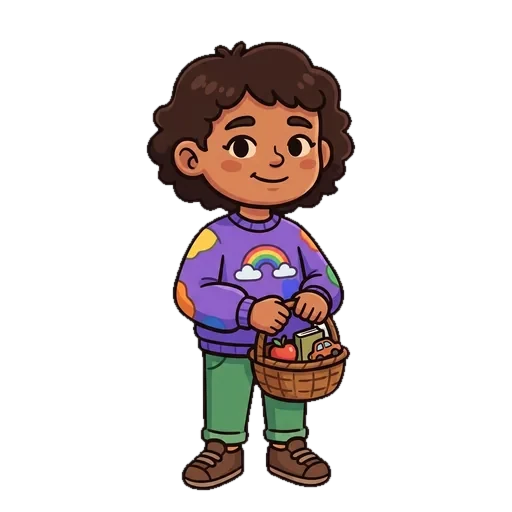
Pippa
Chooses just a few tiny things for today — you get to pick, it is never an assigned queue (agency / chosen-minimums)
-

Zoom
Starts the honest sprint and settles in — do your few things, no rush, no timer-to-fail (the honest sprint)
-
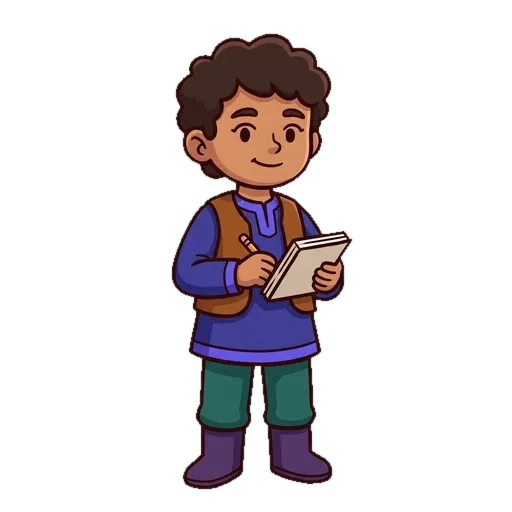
Sayla
Says each idea back in her own words before it counts — the Own-Words gate (retrieval-in-your-own-words)
-

Nessa
Stops when she is done and enjoys the time she earned — the list has a bottom (stop-when-done / the earned rest)