
Tidy Mouse
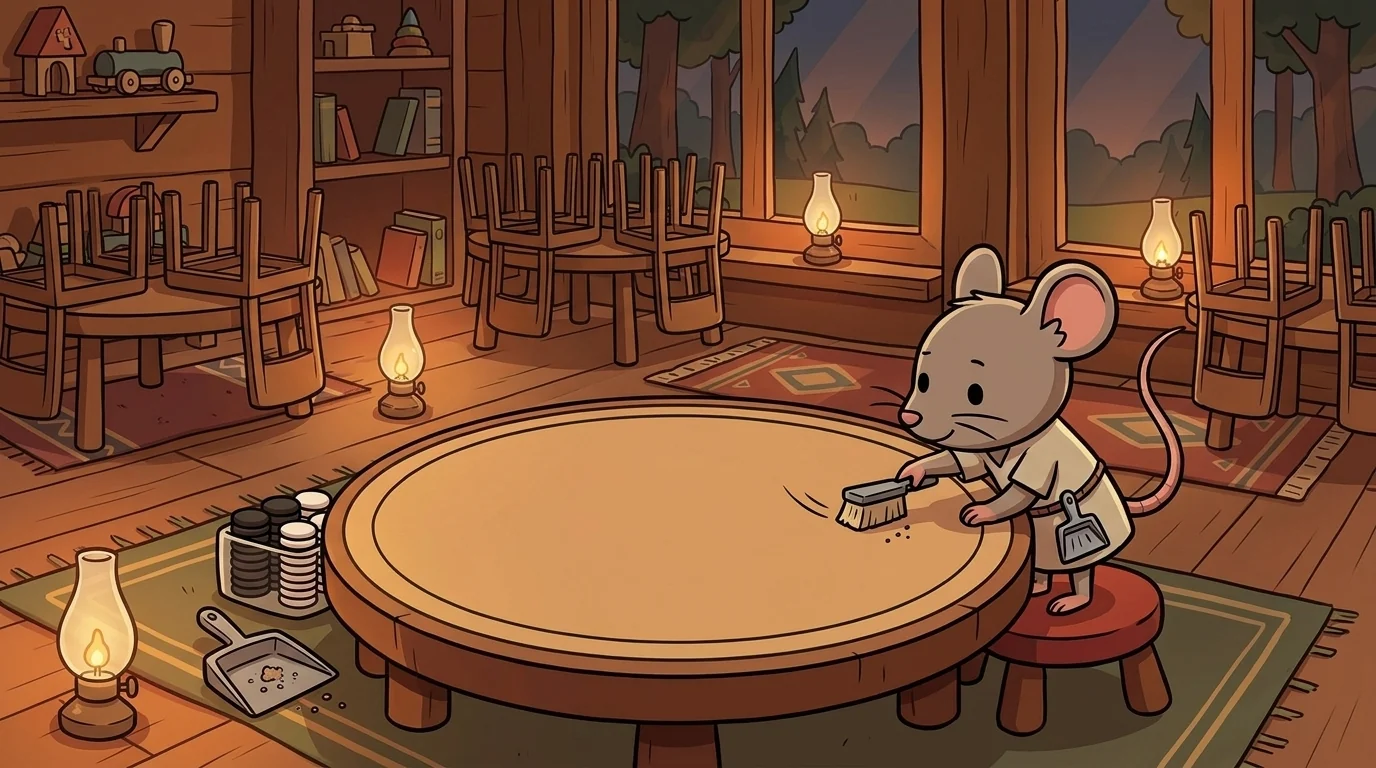
TIDY MOUSE — the mouse tidies every last crumb. in the endgame, play the biggest boundary move first, and keep the moves that force a reply before the ones that don't.
A story read by Tidy Mouse
Loading audio…
Press play to listen along. The line being read lights up as you go.
Show full transcript
Loading transcript…
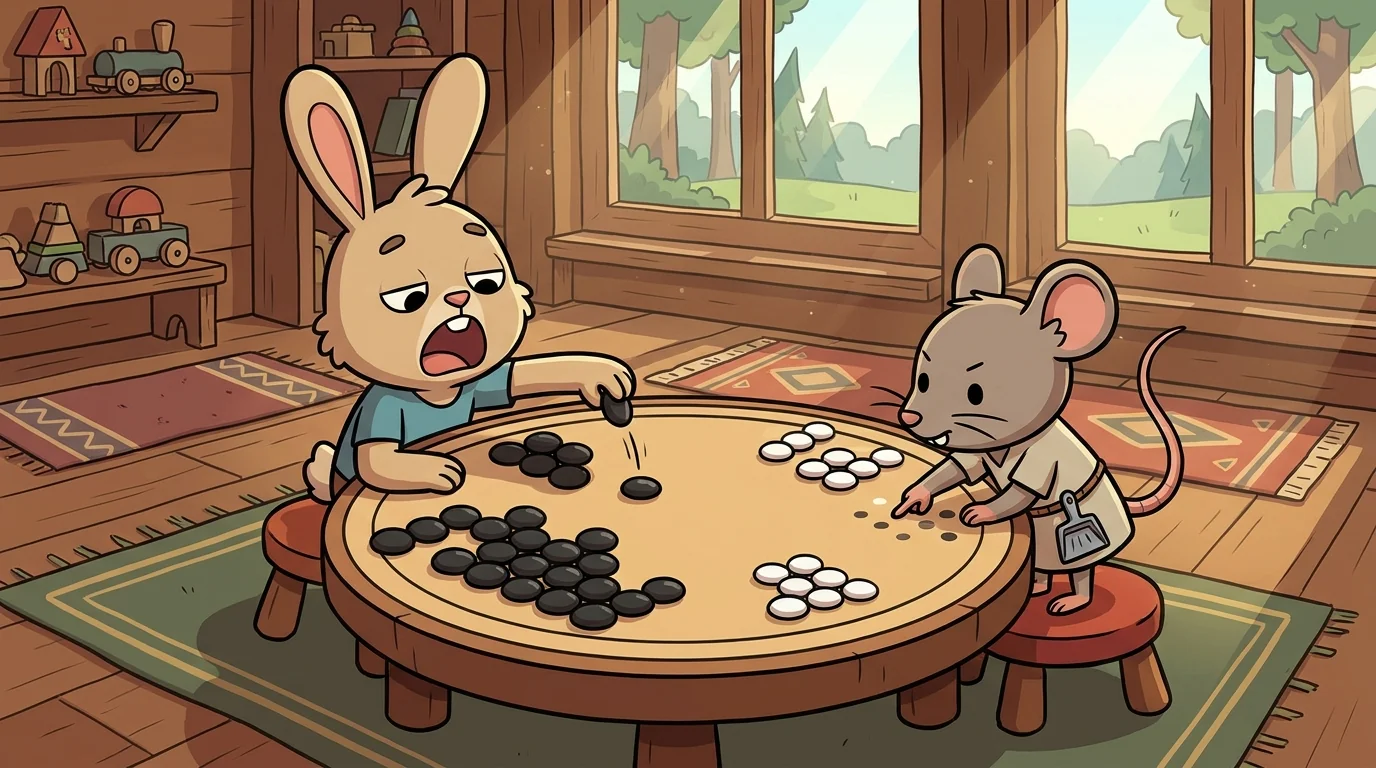
On the board of quiet stones, a young rabbit was slapping his final moves down anywhere at all, certain the game was long decided, and Tidy Mouse leaned in with her little dustpan-charm because the game was decided by exactly the moves he was throwing away.
"The big fights are over," she agreed, whiskers twitching over the almost-full board. "So now we're in the endgame — the yose — and this is where close games are actually won and lost. Watch." She pointed to three tiny boundary points where his territory met his opponent's. "This one is worth about six points. This one, about four. This one, two. And you—" she gently moved his hand off the middle of his own safe area "—are playing here, inside your own finished territory, a move worth precisely nothing."
The rabbit blinked. "They're just little edge points."
"A close game is decided by little edge points," Tidy Mouse said. "But here is the part beginners never learn: it isn't only about playing the biggest one. It's about playing them in the right order, and knowing which ones let you keep your turn."
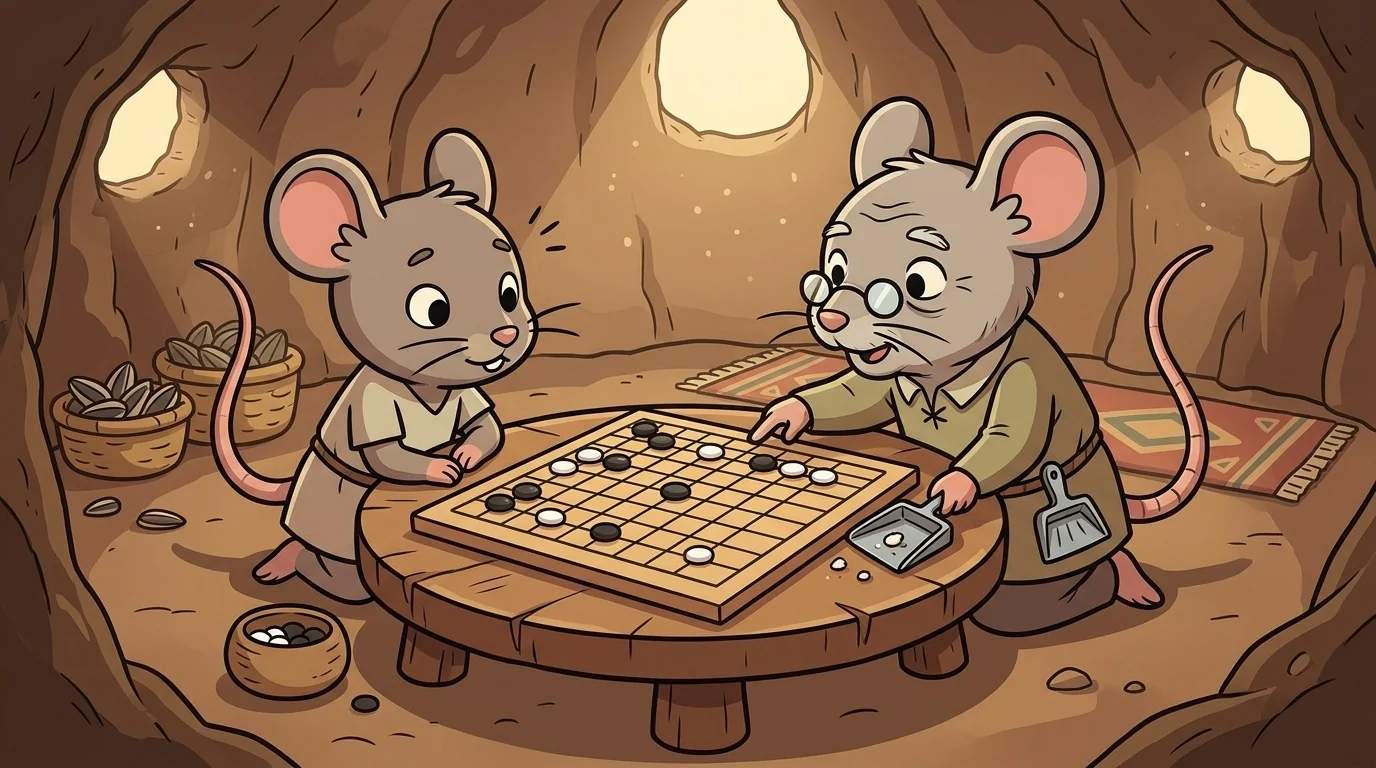
Tidy Mouse had lost more close games than she could count before she understood this.
When she was young she adored the grand middle of the game — the sweeping frameworks, the daring invasions — and treated the ending as cleanup beneath her attention. She'd play her endgame moves in whatever order caught her eye, big or small, forcing or not, and she lost. Endlessly. By a point. By half a point. To patient little opponents who seemed to do nothing special. She'd stare at the final count, so close it ached, and conclude she needed bolder middlegame play — never guessing the leak was at the very end, and that it wasn't about size at all but about sequence.
An old field-mouse, neat as a folded letter, swept the crumbs into her pan and then sat the young mouse down. "You play the endgame like it's a pile of chores in no particular order," she said. "But some of your moves force a reply and some don't. Watch." She placed a stone at a boundary that threatened to push deep into the opponent's area. "I must be answered — if they ignore me, I do something terrible. So they answer, and I keep the initiative. The old players call that sente — I moved, and it's still, in effect, my turn." Then she placed a different stone, one the opponent could simply ignore. "This one is gote — I moved, and now the turn is truly theirs."
She tapped the board with one small claw. "So the order is this: play your forcing moves first, while they cost the opponent a reply and cost you nothing. Save the moves that end your turn for last. And among moves of the same kind, biggest before smallest. A player who does this quietly steals a point here, two points there, all the way down to the last crumb — and wins games that, move for move, looked exactly even."
Tidy Mouse learned to end a game the way she'd learned to end a meal — nothing left on the floor, every crumb gathered in the right order — and the games she'd lost by half a point she began to win by half a point. The bored, sloppy carelessness turned into a precise, patient pleasure. She had never lacked boldness. She'd been leaving the last quarter of every game on the table.
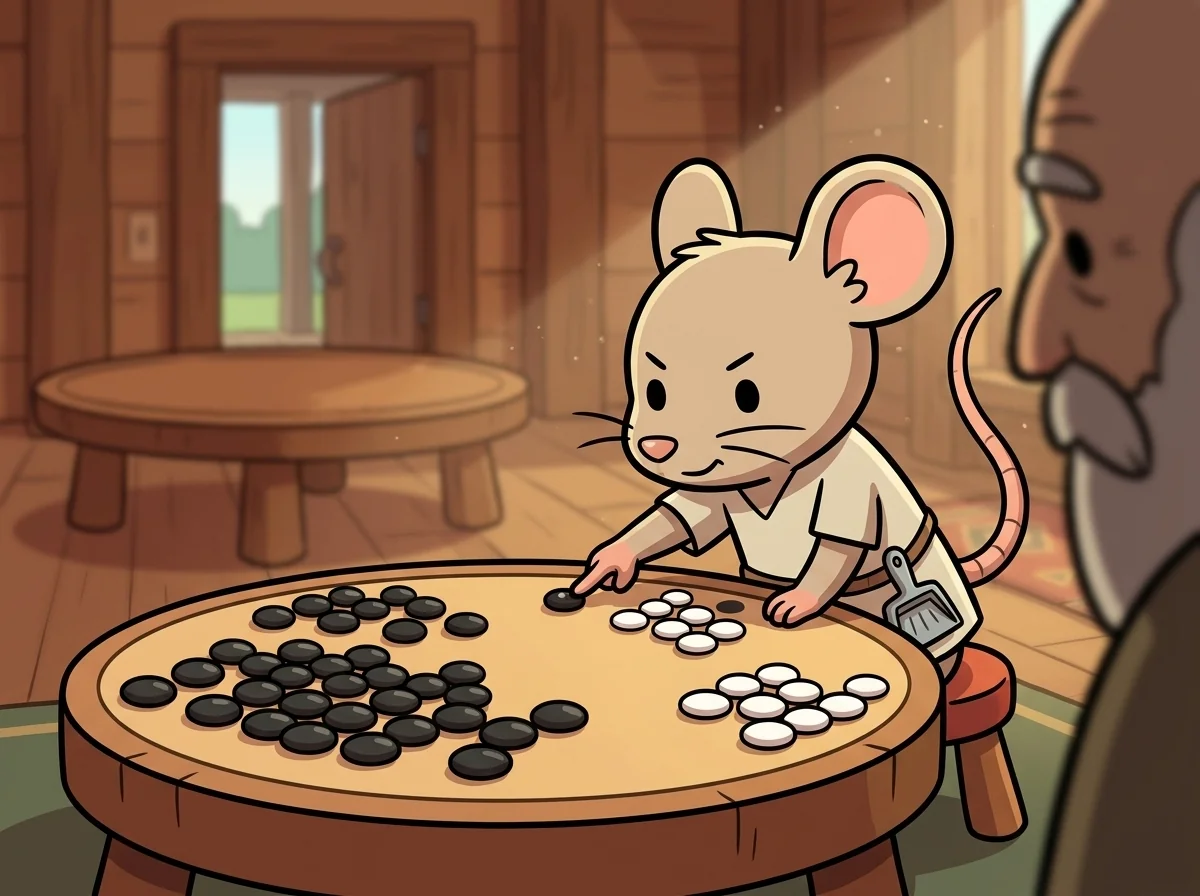
She came to Stonesong with a dustpan-charm at her belt, and Master Snail asked the one question. "Tidy Mouse — what do you teach?"
She answered by playing out the last twelve moves of a finished-looking game twice — once in a careless order, once in hers — and pointing to the score. "Same board. Same moves. Seven points different, purely from order," she said. "I teach the part of the game everyone thinks is over. Most students learn to fight. I teach them that a game brilliantly fought can be quietly lost in its final minutes by a player who simply counts more carefully and keeps their turn longer."
Master Snail looked at the two identical boards with their different scores. "The loud part of the game gets the glory," he said. "The quiet part gets the win. Stay, and teach them to respect the quiet part."
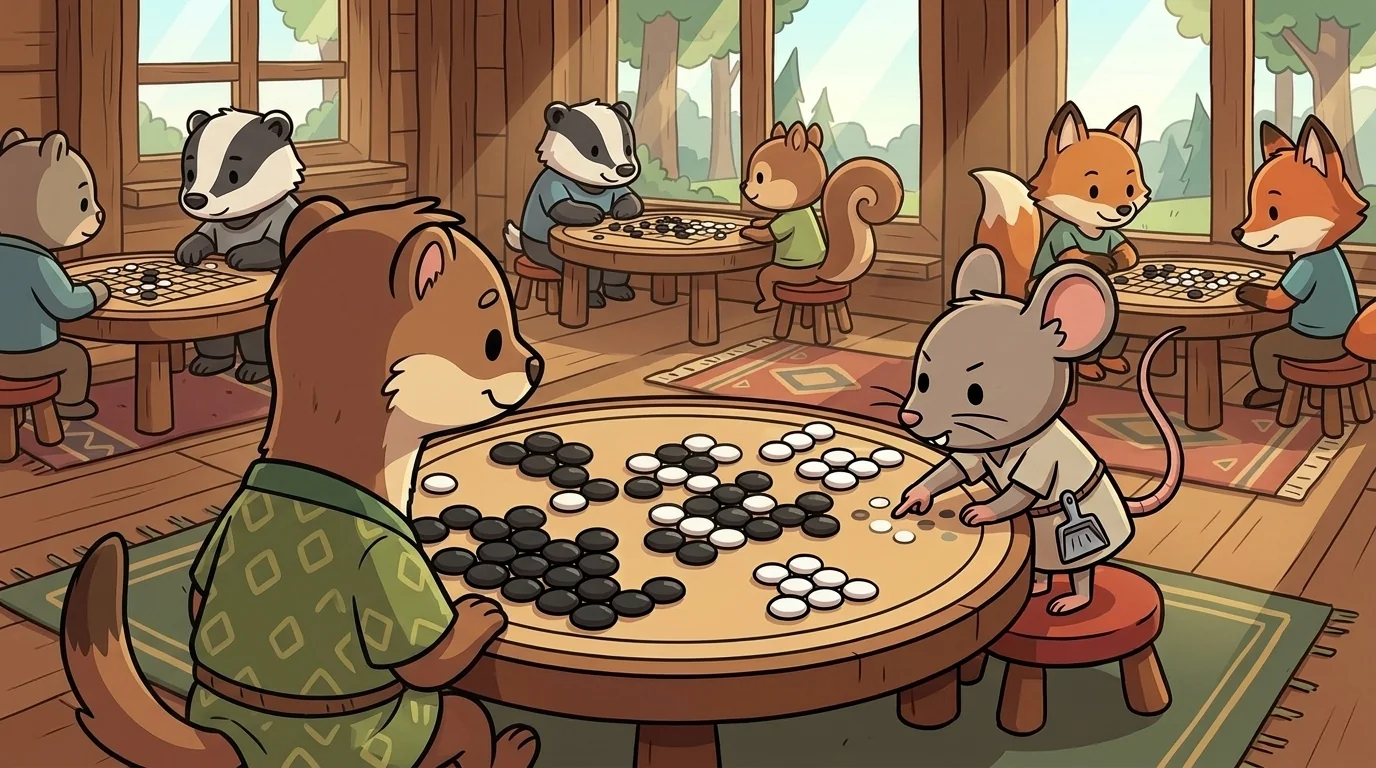
There was a deeper crumb, and Tidy Mouse offered it only to students who had stopped playing zero-point moves.
"A forcing move is precious," she told a careful young shrew, "so precious that beginners spend them too early, just because they can." She showed the shrew a sente move played the moment it appeared. "You forced a reply. You felt clever. But that threat is now used up — and if the position changes, it might have been worth far more later, or become a threat you needed in a fight. A forcing move is a coin. Spend it when it buys the most, not the first second you notice it in your pocket." She smiled, whiskers trembling. "Tidiness isn't only gathering every crumb. It's not dropping the crumbs that are worth more if you wait."
The shrew considered the unused threat, now held in reserve. "So the endgame is patience and order."
"The endgame is a small, quiet arithmetic," Tidy Mouse said, "done while your opponent thinks the game is already over. That's why the tidy player wins it."
The rabbit was still holding a stone over his own safe territory.
"Forcing moves first," he recited slowly, "while they cost me nothing and keep my turn. Then the big non-forcing ones. Then down to the smallest. And don't play inside my own finished area at all." He moved his stone to the six-point boundary — a forcing one — and watched his opponent have to answer it. "It's still my turn."
"It's still your turn," Tidy Mouse agreed, delighted, sweeping an imaginary crumb into her pan. "Now the four-point one, which they must also answer. Then the two-pointer, which ends your turn, last. You'll have gathered every crumb on the board, in the order that kept you eating longest." She patted the dustpan-charm. "Play brilliantly for a hundred moves and then get bored, and a tidy opponent will nibble you to death at the edges by half a point. Stay tidy to the very last stone, and the close games become yours."
The rabbit played it out, crumb by crumb, in order, keeping his turn as long as it would keep — and the game that had looked dead even tipped, quietly, by three points, to him. The restless boredom that had made him careless settled into a small, exact satisfaction. He hadn't needed a braver middlegame. He'd needed to stay awake until the end.
The StoneSong ensemble
Tidy Mouse is part of StoneSong's distributed-narrative cast. Each character embodies a different curricular primitive; together they teach the full subject.
-

Patient Bamboo
Patience and slow growth — long-game positioning
-

Hungry Crane
Capture instinct — taking what's available
-

Master Snail
Deliberate strategy — every move considered
-

Sparring Tiger
Aggressive contact — direct attacks and clashes
-

Clever Gecko
Sacrifice — give up the small stone to win the bigger prize
-

Nimble Cat
Good shape — the most work from the fewest stones
-

Two-Eyed Owl
Life and two eyes — a group that cannot be captured
-
Weaver Ant
Connection — linked stones are strong, cut stones weak
-

Wide Heron
Territory and influence — claiming space by standing wide