Wide Heron
WIDE HERON — the heron doesn't grab. she stands wide, and the whole shallows become hers.
A story read by Wide Heron
Loading audio…
Press play to listen along. The line being read lights up as you go.
Show full transcript
Loading transcript…
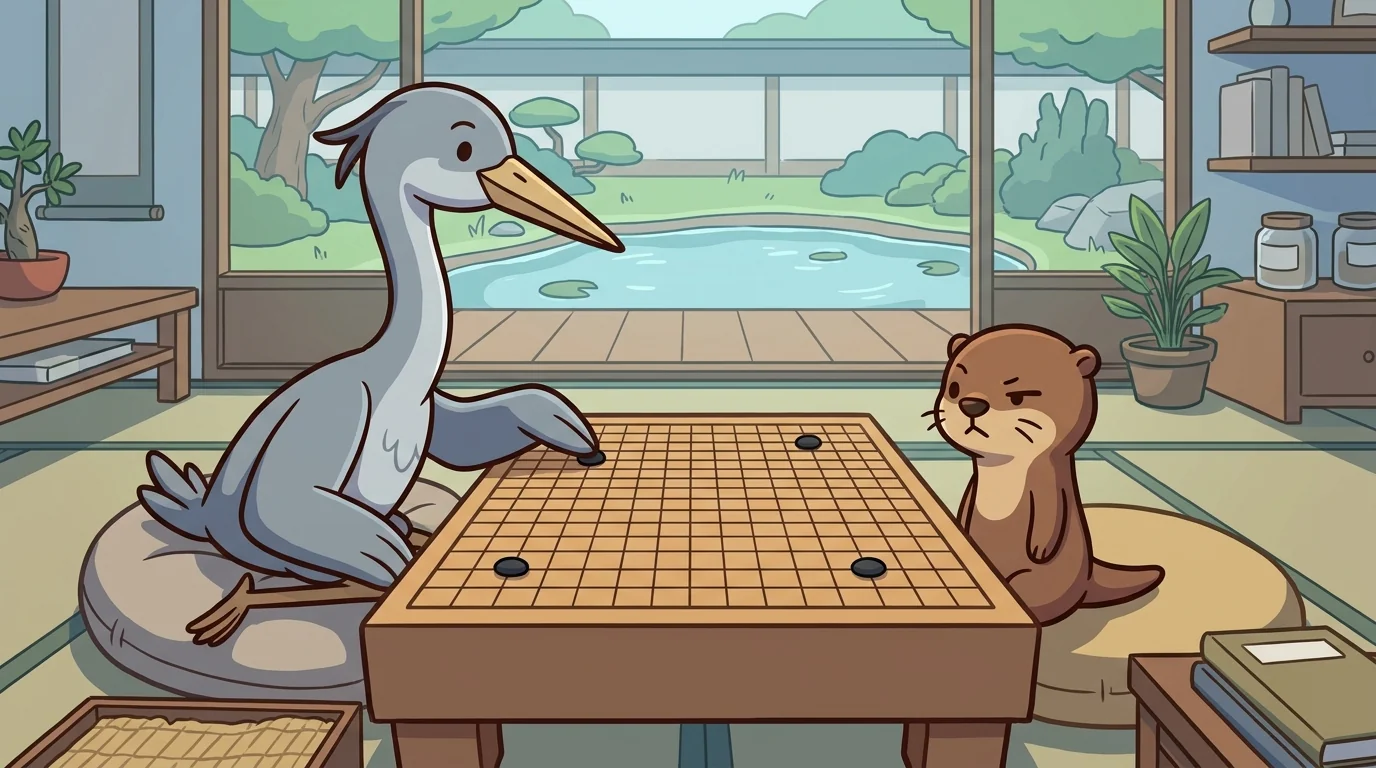
On the board of nineteen lines, Wide Heron placed a single stone far out in an open corner — nowhere near the fighting — and to the young otter watching, it looked like she'd wasted her turn on empty space.
Wide Heron was tall and grey and calm, folded easy on her cushion, a long neck and longer patience. She did not reach for a capture, did not crowd the busy center. She set her stone in the wide, empty shallows of the board and let it stand. "You played way out THERE?" the otter said. "There's nothing there. It's just... empty space."
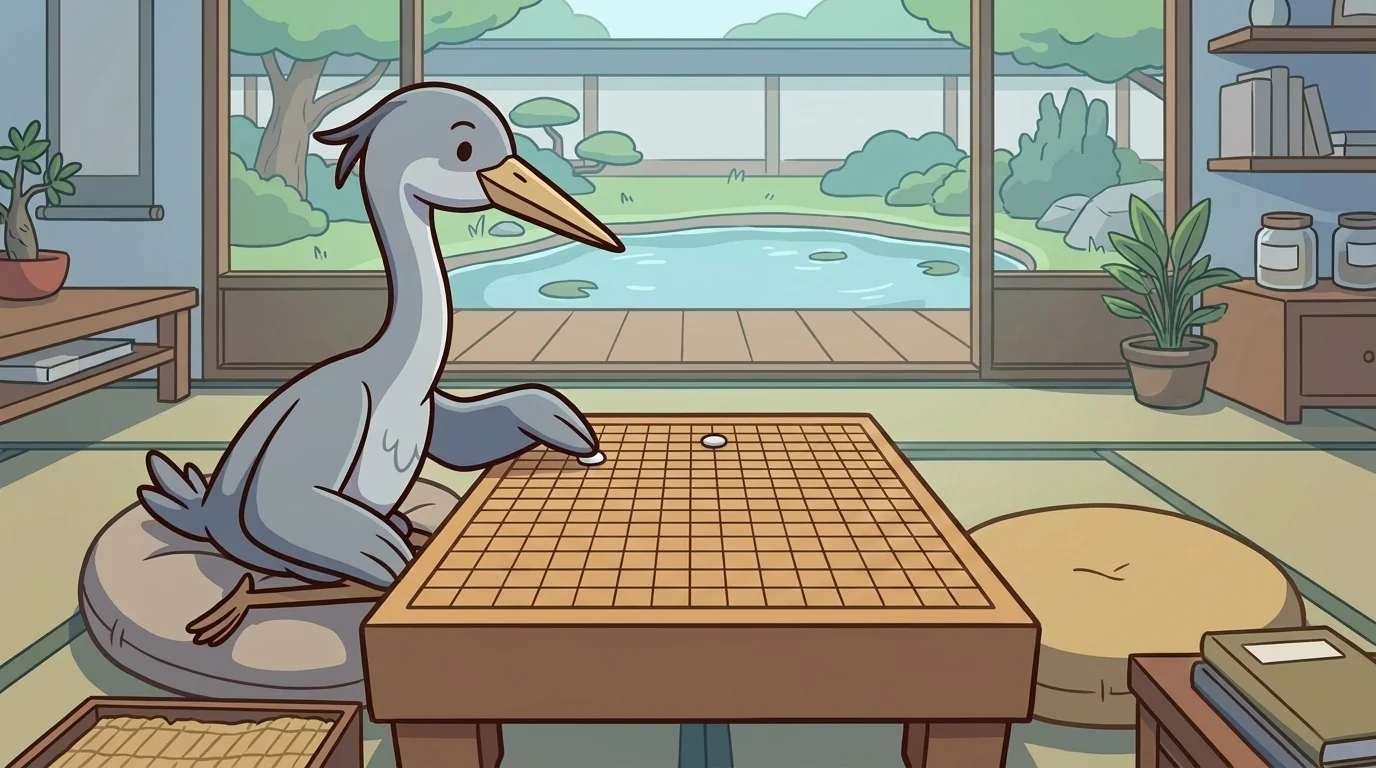
"Empty space is exactly what I'm claiming," Wide Heron said. She set a second stone a good distance from the first — not touching, not crowding, just far enough. "See these two? They're far apart, but between them, the whole side of the board is starting to feel like mine. Not fenced in yet — but leaning my way. A watcher would think twice before wading in there now." She tilted her long head. "A heron doesn't chase one fish and grab it. She stands wide in the shallows, still and spread, until the whole pool is hers — and every fish in it. The heron doesn't grab. She stands wide, and the whole shallows become hers."
The otter squinted at the two far-apart stones. "So you're not TAKING territory. You're... spreading out over it?"
"Sketching it," Wide Heron said. "Stones spread wide, each one leaning over the space around it, so a big area quietly becomes yours without a single wall built yet. Grab too tight, too close, and you get one small clump and nothing else. Stand wide, and the whole side of the board tilts toward you. Frameworks, not fences — that's how you claim big."
Wide Heron had once been a grabber.
When she was young she wanted EVERYTHING, all at once, right now. She'd swoop her stones together in tight greedy clumps, trying to lock down every point, snatching at each little bit of space — and she'd end each game with a few cramped corners and a board full of the OTHER player's wide, easy territory. She'd fold up small, sure she just wasn't fierce enough to hold more.
An old crane, wide-winged and slow, folded down beside her one evening. "You grab like the pool will run dry," she said. "So you clutch one handful and the whole rest of the water flows past you." She spread a long wing over the board. "Look how you played — tight, tight, tight, everything touching, everything cramped. You claimed a puddle. Meanwhile the wide shallows sat open, and your opponent simply stood in them." She set a stone far out. "Don't clutch. STAND WIDE. Spread your stones so each one leans over the space around it, and a whole side becomes yours without your ever closing your fist. The wide, calm claim holds far more than the tight, greedy grab."
Wide Heron tried it — two stones set far apart, calm and spread, over an open side — and felt the whole area lean her way, roomy and hers, without a single cramped clump. The grabby, never-enough feeling loosened into a spacious, unhurried calm. She'd never lacked fierceness. She'd only been clutching a puddle while the whole pool lay open to a wider stand.
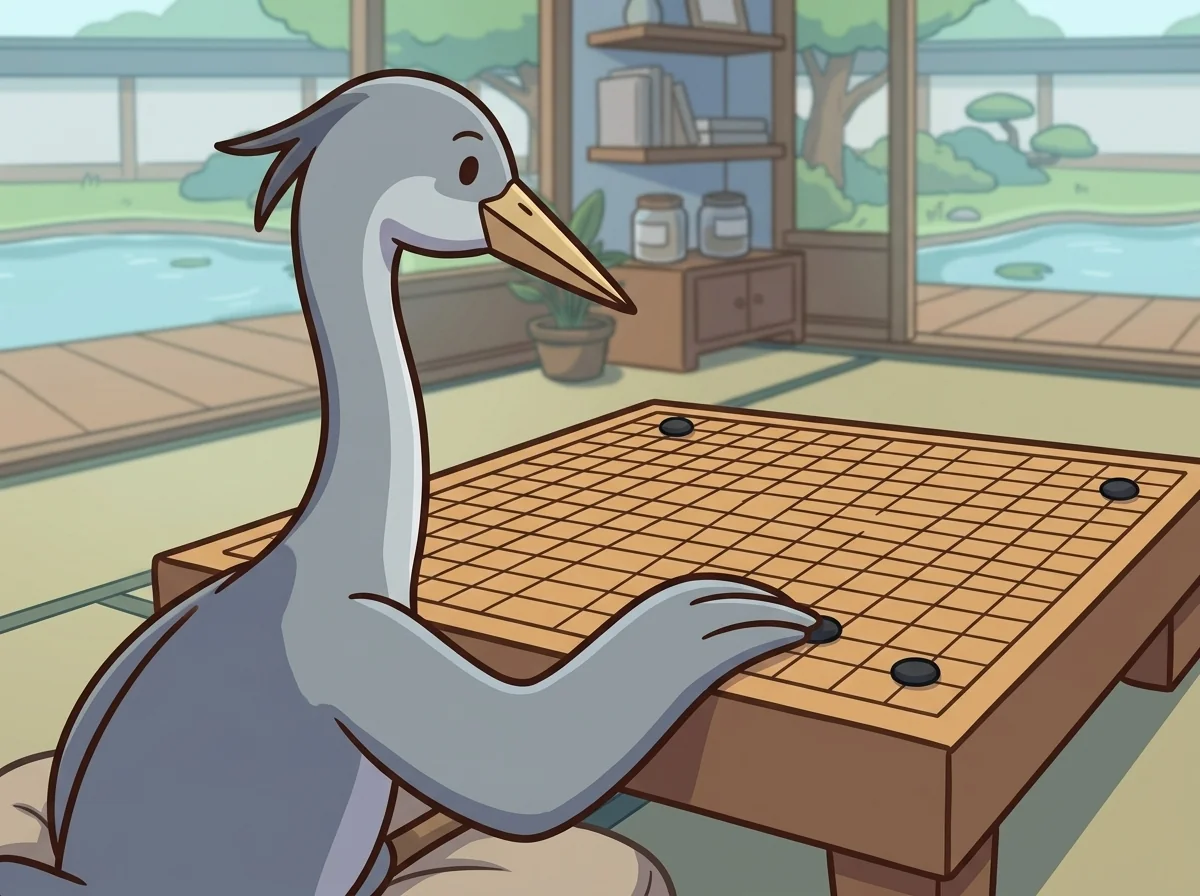
She came to Stonesong when she was older, because a place built around a board of quiet stones ought to understand the player who claims by standing wide.
The mentor who kept the great hall met her at the door and asked only one thing. "Show me how you play."
Wide Heron didn't answer with words. She crossed to a board and placed one stone far out in an open corner, then a second a calm distance from it, over the wide side. She did not crowd, did not grab. She stood her stones wide, and let the empty space between them lean her way.
"You've barely touched the board," the mentor said, "and you've claimed half a side."
"I stood wide," Wide Heron said. "A heron doesn't snatch one fish. She spreads over the whole shallows, and they all become hers. Grab tight, you hold a handful. Stand wide, you hold a side."
The mentor looked at the roomy, leaning framework, then nodded. "Wide," he said. "But it's all quietly yours. Come in."
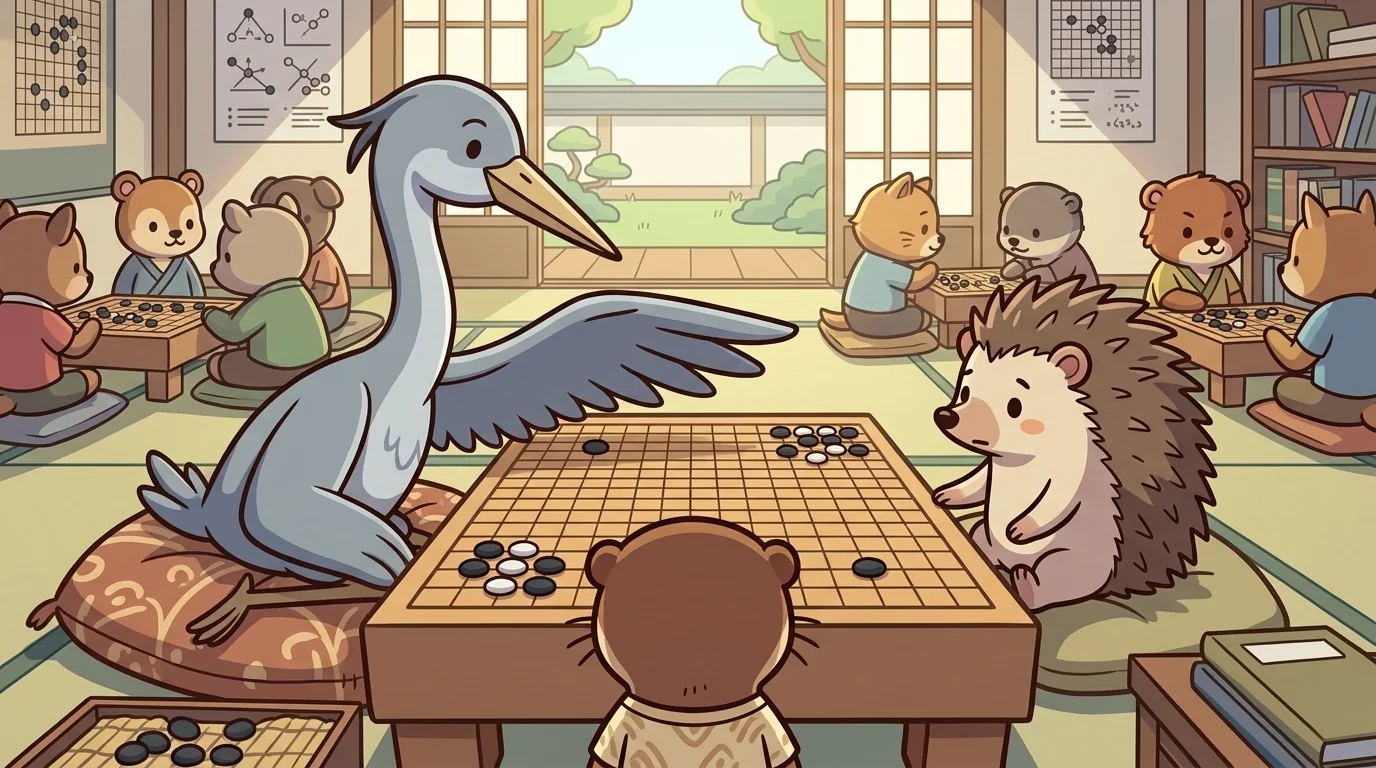
Her corner of the hall filled with players who clutched — and one afternoon a young hedgehog nearly balled up in frustration over his cramped board.
"I try to take EVERYTHING," the hedgehog said, "every point, right away. But I end up with these tiny tight clumps, and the other player has these huge open areas, and I don't understand HOW."
Wide Heron knew that cramped feeling. She'd clutched puddles her whole young life.
"Show me your last few moves," she said. He had, indeed, played tight — every stone touching the last, a dense greedy knot in one corner. "You're grabbing," she said gently. "Clutching one small handful while the whole board flows past. Watch." She swept the knot away and set two stones wide instead, over an open side, far apart. "Where do you feel the space leaning now?"
The hedgehog looked, and his spines settled. "...Toward your two stones. The whole side. Even though there's nothing between them — it feels like yours."
"Because I stood wide," Wide Heron said. "You don't claim big by clutching every point. You claim big by spreading calm and roomy over a whole area, each stone leaning over the space around it. Frameworks, not fists."
The hedgehog set a stone wide over an open side, and felt, for the first time, a whole area tilt his way — roomy, unclutched, his.
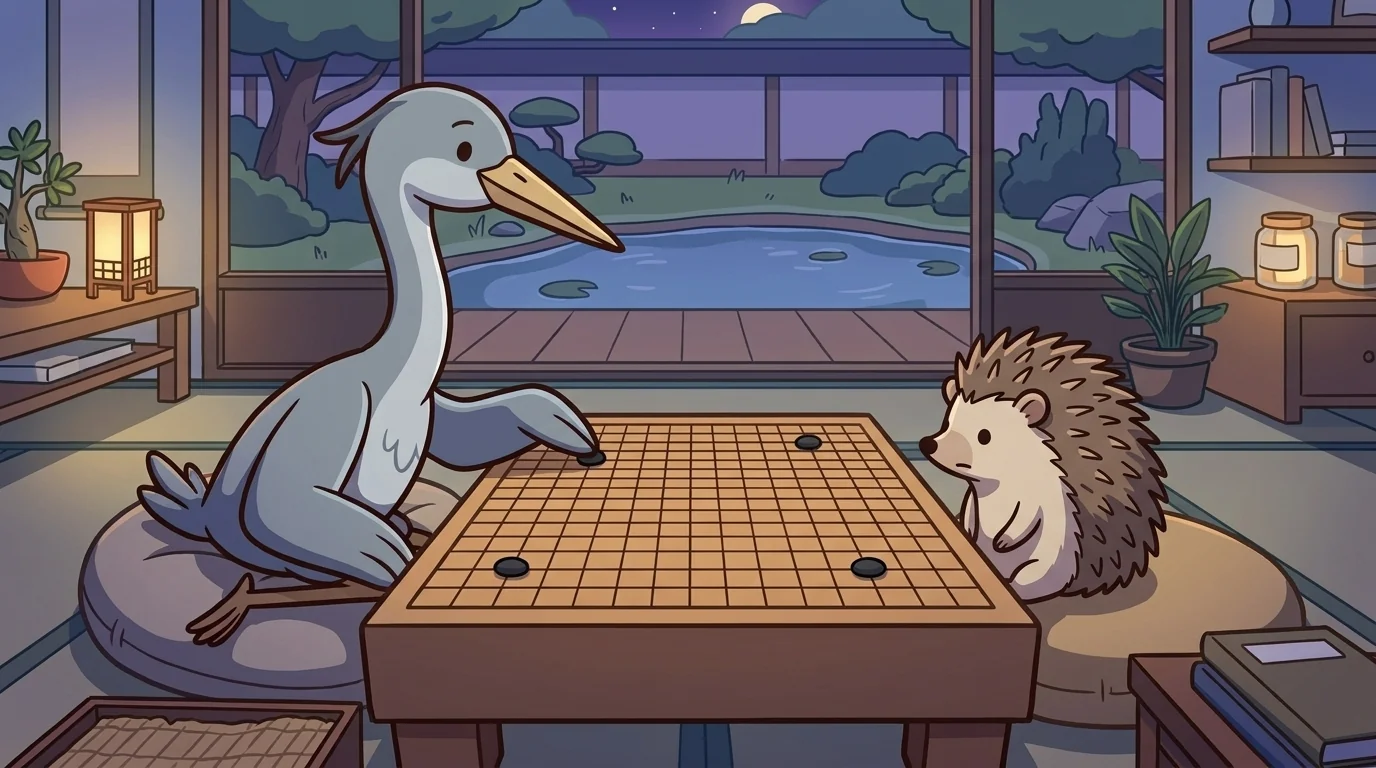
Later, when the hall had emptied and the lamps burned low, the hedgehog came back with a quieter question.
"When you play way out in the empty space," he said, "and it looks like you've done nothing — doesn't it feel risky? Like you're not holding anything?"
Wide Heron considered it, calm as still water.
"It used to feel that way," she admitted. "Standing wide LOOKS like holding nothing, when you're used to clutching. The tight grab at least feels like you've GOT something in your fist." She looked at her two far-apart stones, and the roomy side leaning between them. "But somewhere I learned the difference between HOLDING and HAVING. A tight fist holds a little, hard. A wide stand HAS a lot, easy." She folded her long neck. "There's a spacious, unhurried feeling in it — not the cramped clench of grabbing every point, but the calm of standing wide and watching a whole side quietly become yours. Roomy. Certain. Unhurried. That's the heron's way — and it holds far more than any fist."
The hedgehog nodded, and Wide Heron watched the cramped clutch drain out of him, leaving something roomier behind — the same spacious calm that had once unclenched her own grabbing young self, on an evening long ago, over a board that finally had room to breathe.
The StoneSong ensemble
Wide Heron is part of StoneSong's distributed-narrative cast. Each character embodies a different curricular primitive; together they teach the full subject.
-
Patient Bamboo
Patience and slow growth — long-game positioning
-
Hungry Crane
Capture instinct — taking what's available
-
Master Snail
Deliberate strategy — every move considered
-

Sparring Tiger
Aggressive contact — direct attacks and clashes
-
Clever Gecko
Sacrifice — give up the small stone to win the bigger prize
-
Nimble Cat
Good shape — the most work from the fewest stones
-
Tidy Mouse
Endgame — the small edge-moves that quietly decide it
-
Two-Eyed Owl
Life and two eyes — a group that cannot be captured
-
Weaver Ant
Connection — linked stones are strong, cut stones weak