
Wide Heron
WIDE HERON — the heron doesn't grab; she stands wide, and the whole shallows become hers. a framework is not a fence — it is influence, cashed into territory only when the time is right.
A story read by Wide Heron
Loading audio…
Press play to listen along. The line being read lights up as you go.
Show full transcript
Loading transcript…

On the board of nineteen lines, Wide Heron set a single stone far out in an empty corner, nowhere near any fighting, and to the young otter watching it looked like a wasted turn — which gave her exactly the opening she wanted to teach.
"You think I claimed nothing," she said, tall and grey and unhurried, folded easy on her cushion. "But I didn't claim territory. I claimed influence." She set a second stone a calm distance from the first — not touching, not crowding. "See these two, far apart? Between them, the whole side of the board now leans my way. It isn't fenced. Nobody's counted it. But an opponent would think twice before wading in there, and every stone I add makes the lean stronger. The old players call this a moyo — a framework. It is potential, not property. Not yet."
The otter squinted. "So it's not really yours."
"Not yet — and that's the skill," Wide Heron said. "A beginner tries to fence territory early, stone by touching stone, and ends with one small sure corner while the board's real estate goes elsewhere. I build a wide, loose framework of influence first — and then, later, when my opponent invades or reduces it, I cash the influence into territory by attacking their weak invading stones with all the strength my framework already gave me. The heron doesn't grab one fish. She stands wide in the shallows until the whole pool — and every fish in it — is hers."
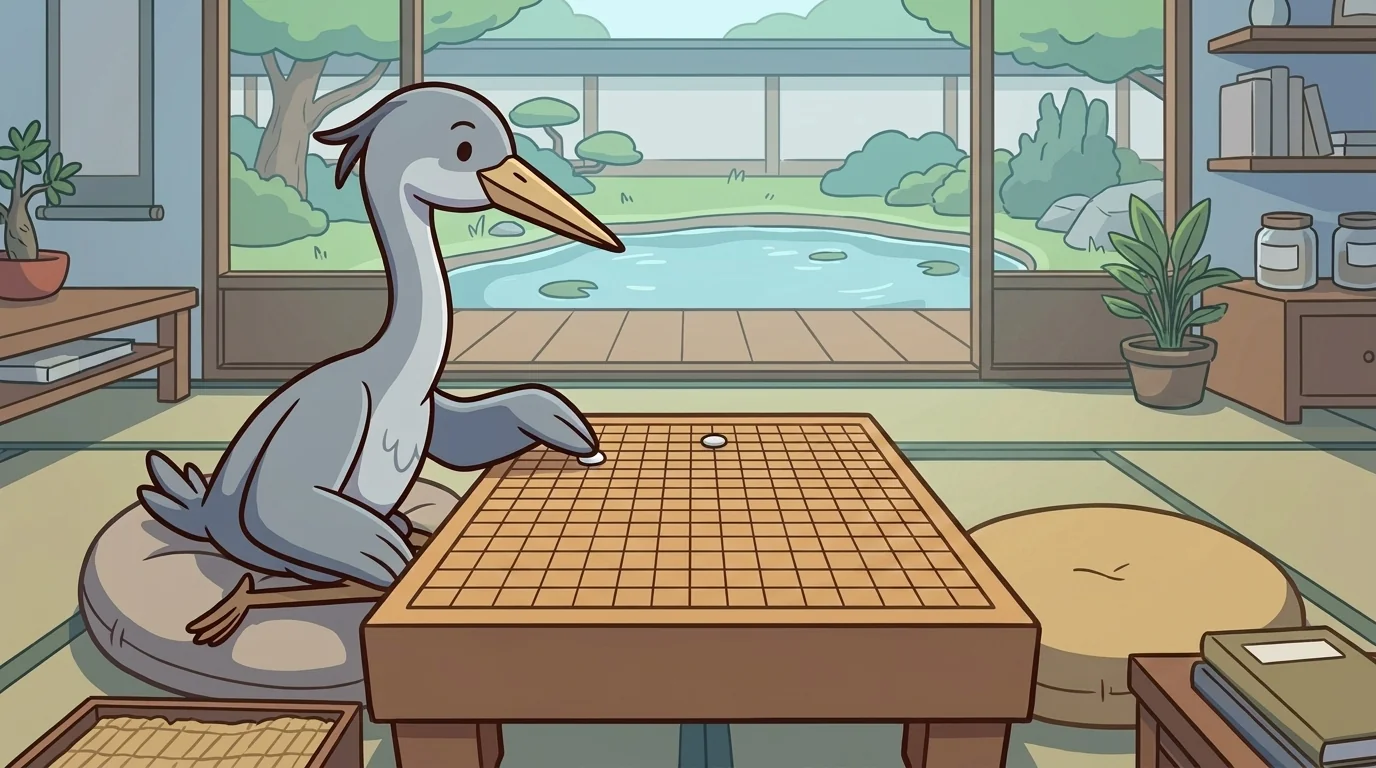
Wide Heron had once grabbed at everything, and ended every game with a puddle.
When she was young she wanted it all, immediately. She swept her stones into tight, greedy clumps on the third line and below, fencing off little sure corners, snatching each point as though the board would run dry. And it worked, a little, and then it lost — because while she locked down her cramped handfuls, her opponents stood their stones wide and calm across the open middle and outer lines, and by the end their loose, spacious frameworks had ripened into territory three times the size of her fenced puddles. She'd fold up small and conclude she simply hadn't fenced hard enough.
An old crane, wide-winged and slow, folded down beside her one dusk. "You clutch like the pool is draining," she said. "So you hold one handful and the whole rest of the water flows past." She spread a long wing over the board. "There is a balance you've never felt. The third line makes territory — low, sure, small. The fourth line makes influence — high, loose, large, and uncertain until you make it real. Play only the third line and you win a guaranteed puddle. Play only the fourth and you build a magnificent framework that turns into nothing if you can't defend it." She set a stone out wide, on the fourth line. "The craft is the balance. Stand wide enough to claim big — but stay grounded enough to keep it. And know that a framework is a promise, not a possession. Its whole value is what it lets you do to an opponent foolish enough to walk in."
Wide Heron learned to stand wide and stay grounded — to build influence and then cash it by punishing invasions — and the puddles she'd been winning turned into whole sides of the board. The grabby, never-enough clutch loosened into a spacious, patient calm. She had never lacked fierceness. She'd only been fencing puddles while the pool lay open to a wider stand.
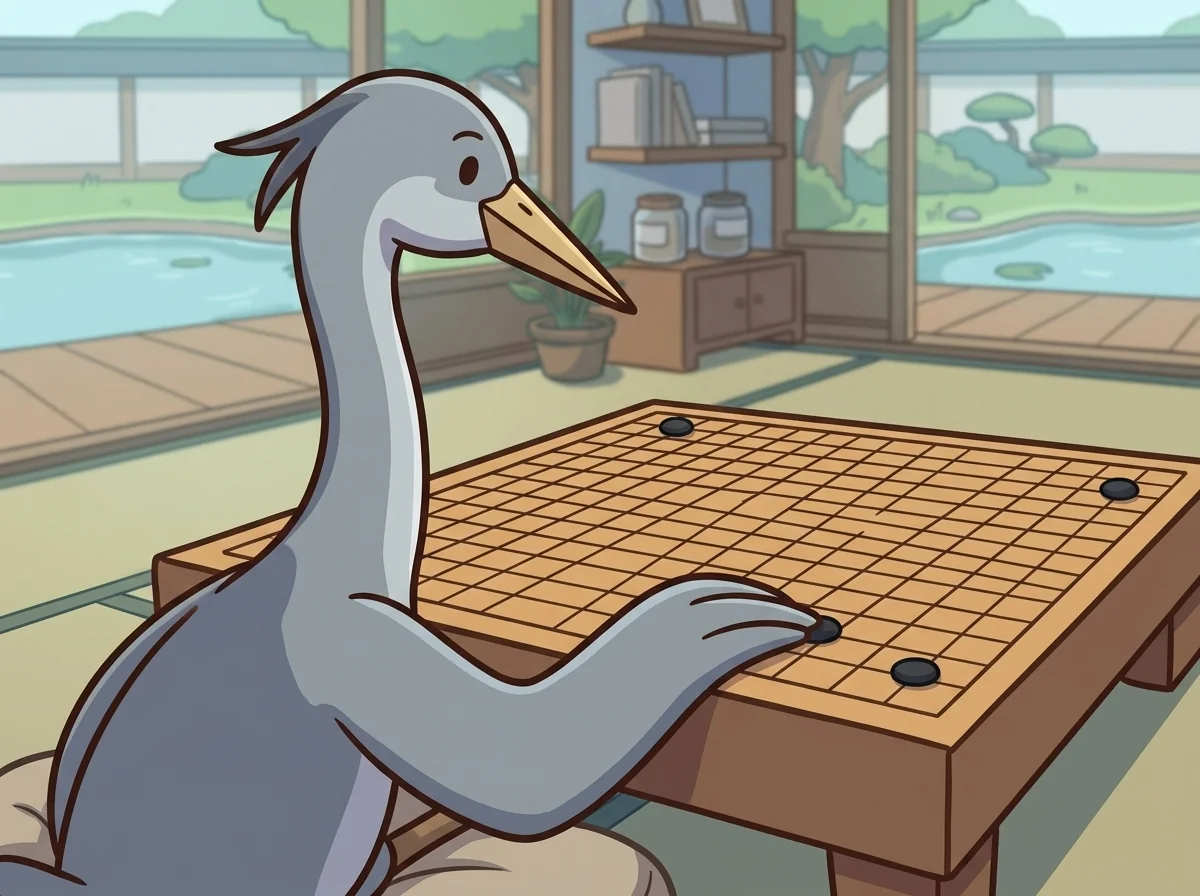
She came to Stonesong tall and grey, and Master Snail asked the one question. "Wide Heron — what do you teach?"
She answered by placing two stones far apart over an open side and letting the whole area lean her way, then playing out what happened when an opponent invaded — how her framework's influence turned the invader into a hunted, weak group she could chase for profit. "I teach that space can be claimed before it is fenced," she said. "Most students grab sure little corners. I teach them to build wide frameworks of influence and then cash that influence when the moment comes — and to feel the balance between the safe low line and the big high one. A grab holds a puddle. A wide stand holds a pool."
Master Snail looked at the loose, powerful framework leaning across half the board. "Influence is the hardest thing for a young player to trust," he said, "because it isn't points yet. Teach them patience with potential. Stay."

There is a danger in the wide stand, and Wide Heron warned every student who fell in love with frameworks.
"A framework is only ever a promise," she told an eager young marten who had built the grandest moyo the hall had seen and begun treating it as won. "And a promise the enemy can break. If your framework grows too big and too thin, an opponent will dive right into the middle of it, make a small living group there, and your beautiful pool drains around their little stone." She showed the marten the two ways to answer an invasion — kill it outright, or, more often, let it live small while you wall it in and turn the influence of your chasing into solid territory elsewhere. "Do not fall in love with the size of your framework. Fall in love with what you can do to whoever walks into it. A framework you can't defend is just a large, expensive rumour."
The marten looked at the vast moyo, and for the first time saw it as a promissory note rather than a treasure chest. "So the framework isn't the point. What I do when they invade is the point."
"The stand is the setup," Wide Heron said. "The profit comes when they test it and you make them pay. Build wide — then be ready to collect."
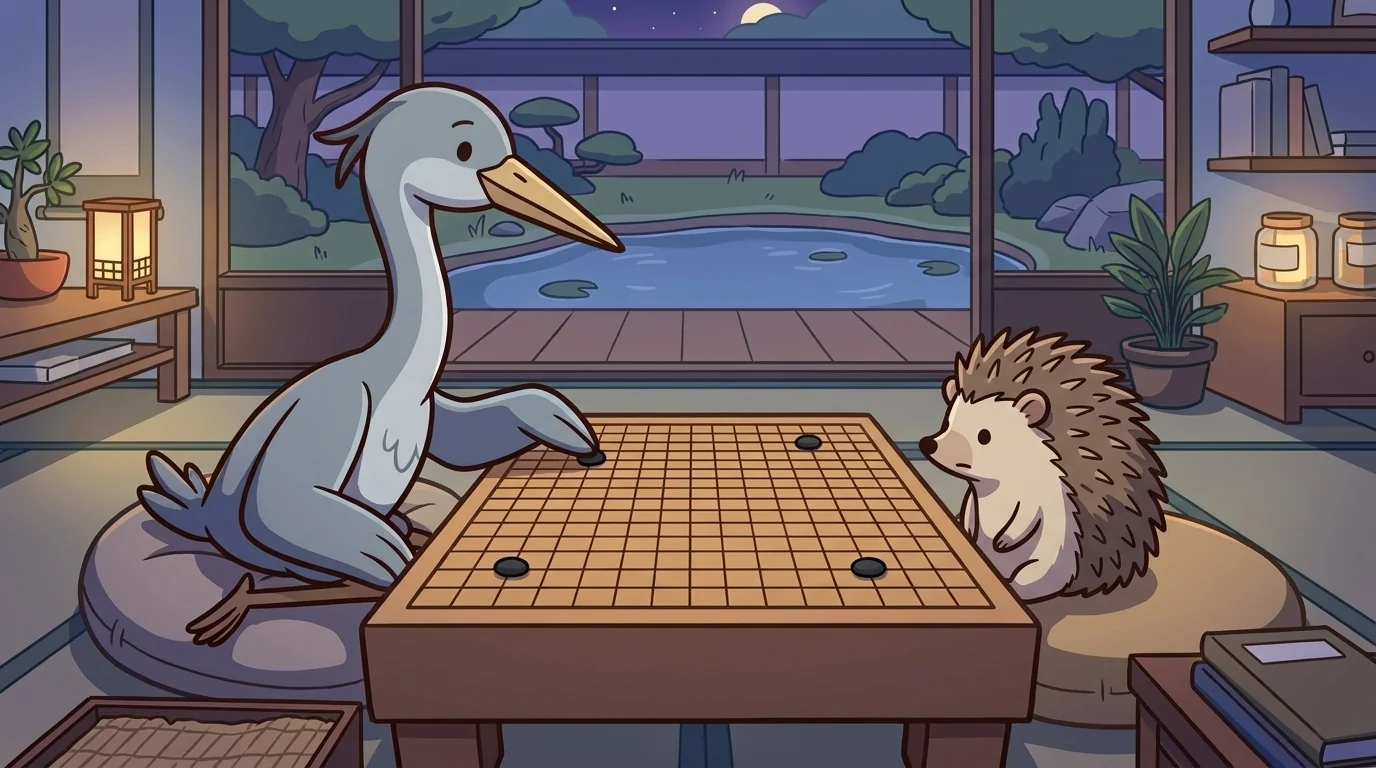
The otter was still staring at the two far-apart stones.
"Influence, not territory," she said slowly. "A lean, not a fence. And I cash it in later, by punishing whoever invades." She added a third stone that deepened the framework's lean without crowding it, and felt the whole side of the board tilt quietly toward her. "It feels like I own less than if I'd fenced a corner. But I'm leaning over so much more."
"You're leaning over the whole pool," Wide Heron said, folding her long neck. "Grab, and you get a handful and a wet nose. Stand wide, stay grounded, and be ready to collect when they wade in — and the whole shallows become yours, and every fish in them." She tilted her head. "You never lacked fierceness, little otter. You only clutched a puddle while the pool lay open."
The otter looked at the framework leaning across a whole side of the board — not fenced, not counted, but unmistakably hers-in-waiting — and the grabby, never-enough feeling opened into something roomy and unhurried and patient. She hadn't needed to grab harder. She'd needed to stand wide, and wait to collect.
The StoneSong ensemble
Wide Heron is part of StoneSong's distributed-narrative cast. Each character embodies a different curricular primitive; together they teach the full subject.
-

Patient Bamboo
Patience and slow growth — long-game positioning
-

Hungry Crane
Capture instinct — taking what's available
-

Master Snail
Deliberate strategy — every move considered
-

Sparring Tiger
Aggressive contact — direct attacks and clashes
-

Clever Gecko
Sacrifice — give up the small stone to win the bigger prize
-

Nimble Cat
Good shape — the most work from the fewest stones
-

Tidy Mouse
Endgame — the small edge-moves that quietly decide it
-

Two-Eyed Owl
Life and two eyes — a group that cannot be captured
-
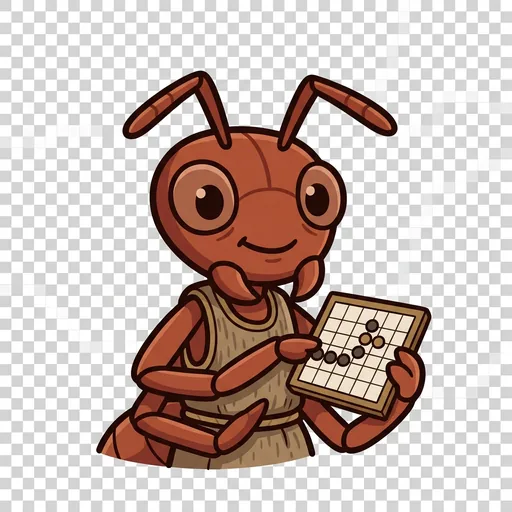
Weaver Ant
Connection — linked stones are strong, cut stones weak