
Portage
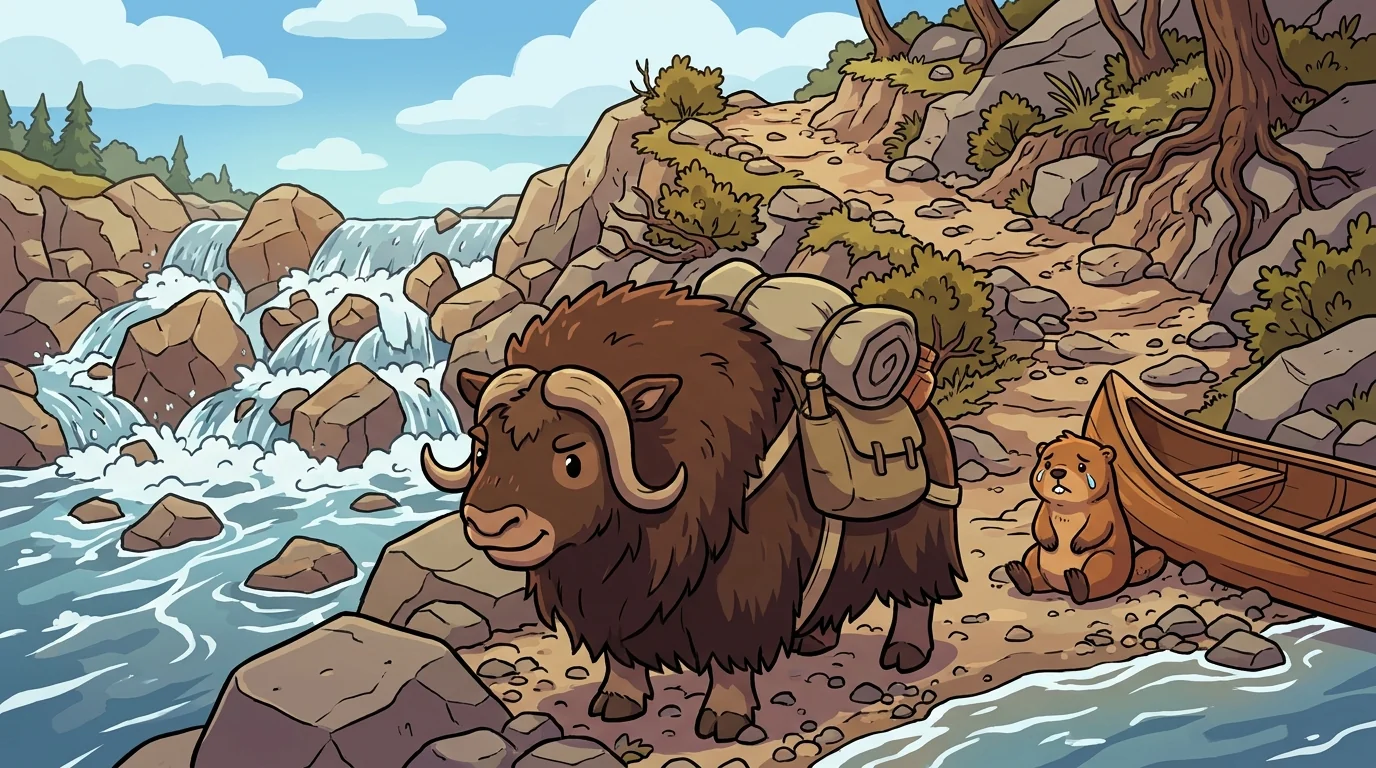
PORTAGE — when the smooth road runs out, you don't stop; you shoulder the load and carry it the hard stretch yourself.
Listen along — Portage
Loading audio…
Press play to listen along. The line being read lights up as you go.
Show full transcript
Loading transcript…
Chapter 6 — Portage and the Hard Stretch Between Waters
Portage had brought the older students to the rocky place where the training river broke into rapids too rough to float, and she stood there shaggy and strong and patient, a great musk ox with a coiled carrying-strap over one shoulder. “You know my move,” she said. “When the smooth road runs out, you don’t stop — you shoulder the load and carry the hard stretch yourself. Today I’ll show you it’s not just my stubbornness. It’s one of the oldest arts of travel, and it has a shape you can learn.”
She pointed upstream to where the calm water ended in white chaos, then downstream to where it went smooth again past the rocks. “A portage is exactly this: the overland carry between two navigable waters. For thousands of years, wherever a river turned unrunnable — rapids, waterfalls, a stretch too shallow — travelers didn’t quit and they didn’t try to fight the white water. They lifted their boat and their whole load onto their backs and walked it to where the river was kind again. Whole trade networks ran on portages. The great canoe routes of the north were really chains of waterways stitched together by these carries. The hard stretch wasn’t a flaw in the route. It was the route — the part no paddle could do for you.”
A lean pine marten named Rill eyed the broken ground. “But it looks impossible. Look how far it is.”
“It looks impossible because you’re measuring the whole thing at once,” Portage said. “The travelers who did this for a living never did. They measured a portage in poses — a pose was one short carry, from wherever you set the load down to the next resting spot, then back for the rest of it. A long portage was ‘eight poses,’ ‘twelve poses’ — never one impossible haul, always a countable string of possible ones. That’s the secret hidden inside the stubbornness: you don’t carry the hard stretch. You carry this pose. Then you rest. Then the next. The impossible thing is only ever a line of possible things, laid end to end.”
Portage had learned it as a truth about herself before she ever knew the word. The first time her own easy road ran out — a smooth path ending abruptly in steep, broken country — she’d sat down and given up, certain that when a way got hard it meant she’d taken a wrong turn, that hardness was a sign to quit, that she simply wasn’t made for the difficult parts. It was her mother, a great shaggy ox who had crossed hard country all her life, who lay down beside her and said, “You think the hard part means you failed. It doesn’t. Every journey worth taking has a stretch with no easy road — a place where you just have to carry it yourself for a while. The hard stretch isn’t a wrong turn. It’s the middle of the right one.” Her mother had shouldered part of the load, and Portage had put her head down, taken one step onto the broken ground, then another — and the possible steps had added up, and the far ridge had come closer, and the given-up feeling had turned, step by step, into a steady, stubborn strength.
“So when your smooth water runs out — and on any real journey it will,” Portage finished, settling the strap across her broad back, “don’t read the rapids as proof you’re lost, and don’t throw yourself at the white water to prove you’re brave. Find the carry. Break it into poses. Take the first one, set the load down, breathe, and take the next. The hard stretch is where most travelers turn back — which is exactly why the ones who learn to carry it get to see the country on the far side, the country the quitters never reach. You don’t go around the hard part and you don’t quit at it. You carry it through, one pose at a time.”
The TerraVoyage ensemble
Portage is part of TerraVoyage's distributed-narrative cast. Each character embodies a different curricular primitive; together they teach the full subject.
-
Roam
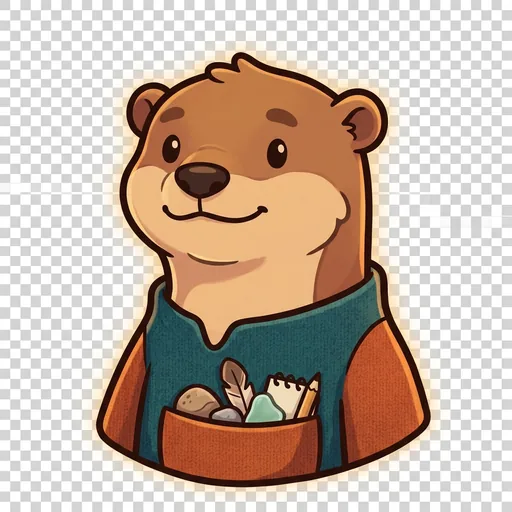
Open exploration + curiosity — the otter-tween with pocket-tunic full of found things who teaches that curiosity-without-destination is a valid mode ('curious feet learn more than busy feet')
-
Trek
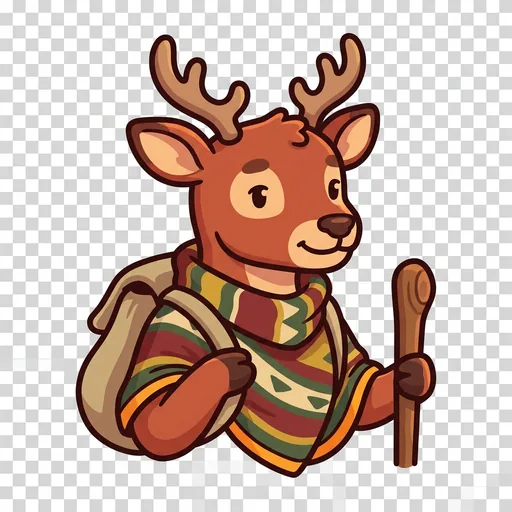
Movement + migration — the red-deer-tween in polysemic wool wrap with pack-and-walking-stick who dignifies all journey-reasons equally — seasons / scarcity / opportunity / safety / curiosity ('some journeys are choice; some are not; every traveler deserves welcome')
-
Origin
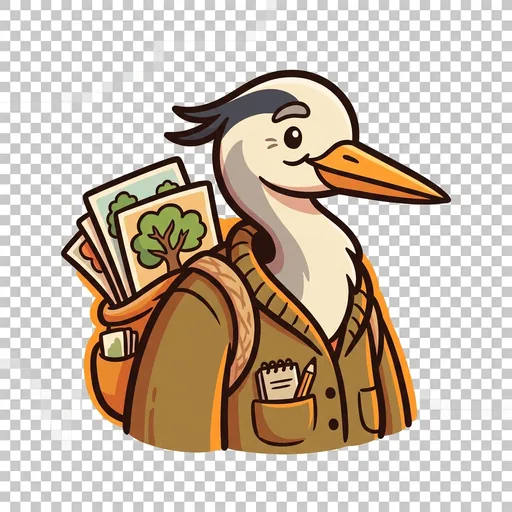
Cultural-heritage anchor — the heron-elder with bundle of family-trees and oral-history-cards who teaches that 'discovery' is a colonial word and every place has been home for someone, often for millennia ('before you visit, learn whose home this is; before you name, learn what it's already called')
-
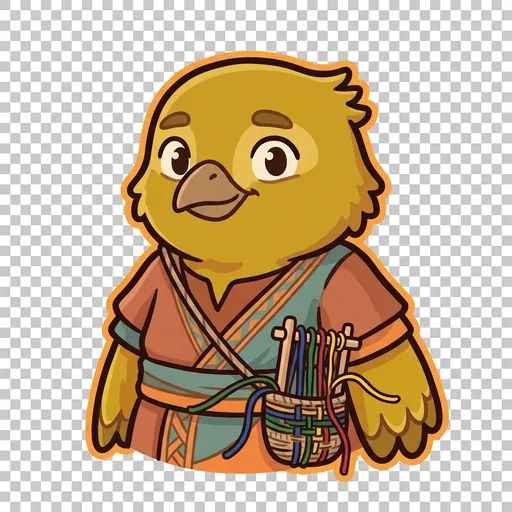
Braid
Cultural exchange — the weaverbird-tween with small loom-pouch whose threads-from-many-places stay distinct AND together; teaches anti-appropriation, exchange-not-extraction ('threads from many places — each keeps its color; together they make something new — together, not apart')
-
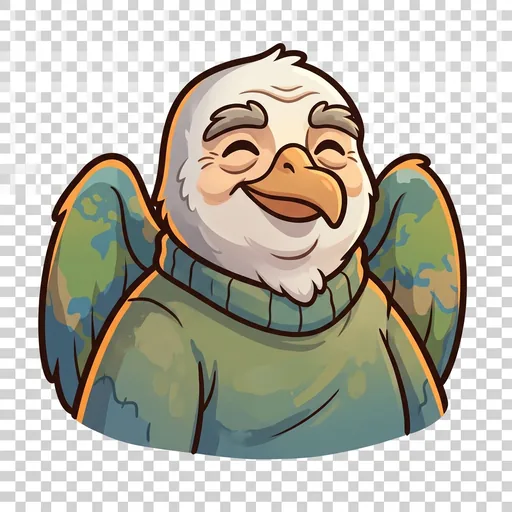
Reach
Planetary scale + interconnection — the albatross-elder with continent-patterned wings who teaches Earth-as-one-system, climate-justice, environmental-equity framing ('far is closer than you think; everywhere is somewhere's neighbor')
-
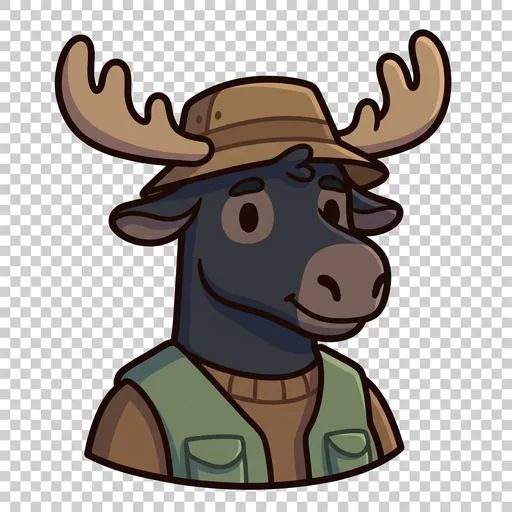
Ford
Safe crossing — don't force the crossing at the loudest place; find where the way in is safe, and enter as a guest
-
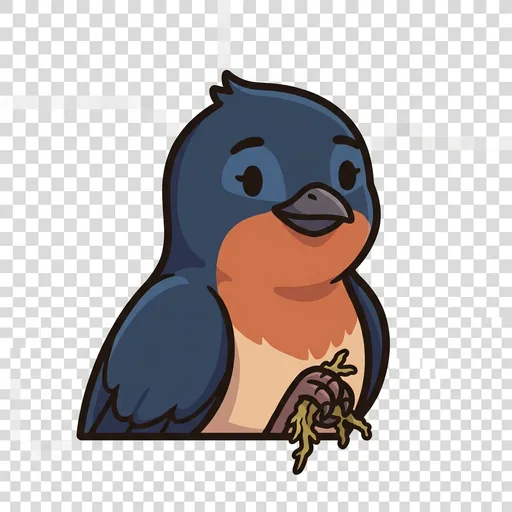
Haven
Shelter & reciprocity — a traveler needs rest, and gives it; the road is kinder when we shelter each other
-
Lodestar
Wayfinding — the land and sky have always shown the way to anyone willing to read them; traditional knowledge passed down
-
Stow
Pack light, leave no trace — carry only what you truly need, and leave a place as whole as you found it