Ford
FORD — don't force the crossing at the loudest place. find where the way in is safe, and enter as a guest.
Loading audio…
Press play to listen along. The line being read lights up as you go.
Show full transcript
Loading transcript…
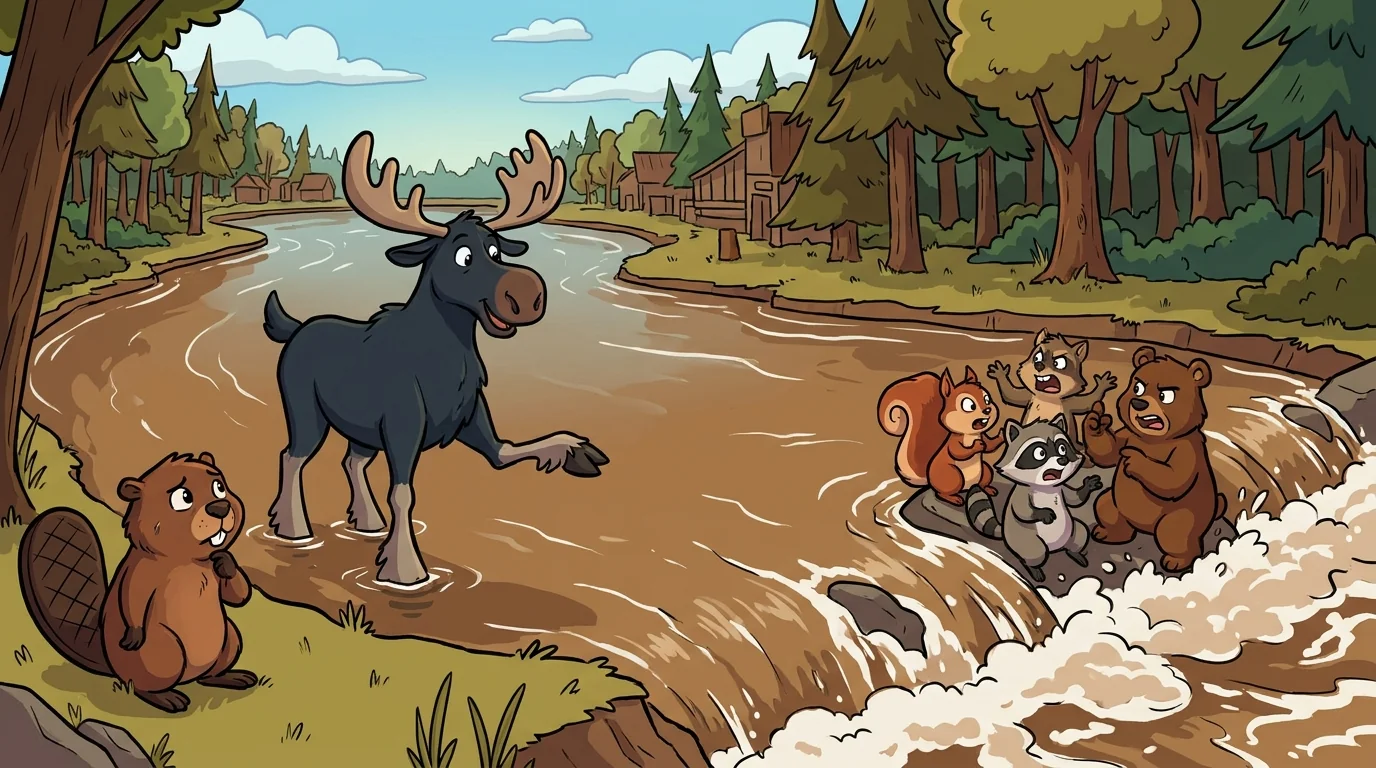
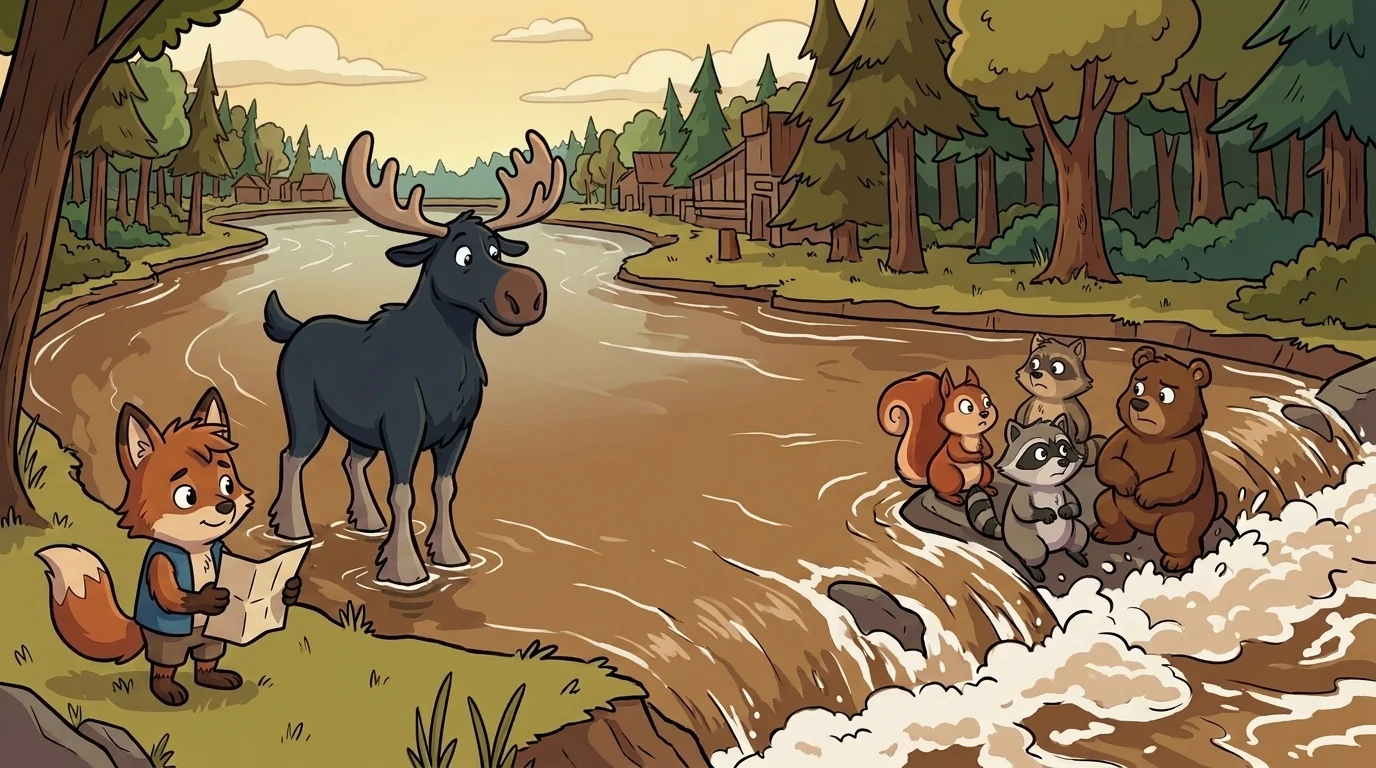
At the wide brown river that edged the forest-town, while other travelers stood at the roaring rapids arguing about how to bull their way through, a great gentle moose stood quietly a little way downstream, studying the water.
Ford was tall and dark and calm, with wide splayed hooves made for wading. She was not looking at the loud, dramatic rapids where everyone else had gathered. She was looking for the quiet place — where the river spread wide and shallow and slow, where the crossing was safe. "Everyone crowds the rapids," she said to a nervous young beaver, "because they're the obvious spot. Loud. Impressive. And dangerous — the current there could sweep you off your feet." She waded a few steps into the calm shallows she'd found. "But a river always has a gentler place, if you take the time to look. A ford. Where you can cross without fighting the water, and without harm."
The beaver watched her step surely across the shallow stretch. "So don't cross where it's loudest."
"Don't force the crossing at the loudest place," Ford agreed. "Find where the way in is safe." Then, halfway across, she paused and said something gentler still. "And this isn't only about rivers. Whenever you come into a new place — a new town, a new home, a place that's someone else's — don't barge in the loud way, taking up all the room. Find the calm way in. Ask. Wait to be welcomed. Enter as a guest, not as a flood."
Ford had learned about crossings when she was small.
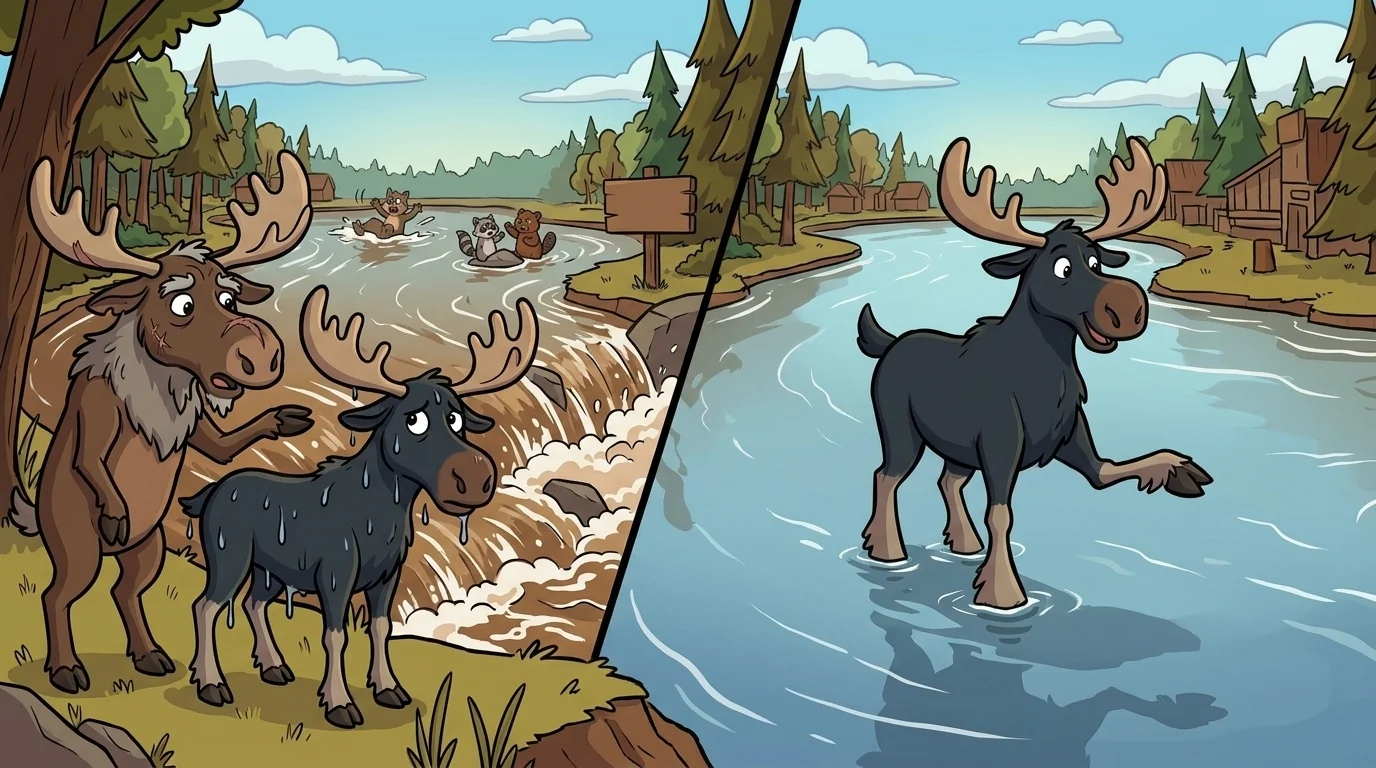
The first time she faced a big river alone, she did what looked brave: she charged straight into the loudest, fastest water, sure that the bold way was the right way. The current knocked her flat, spun her, and dumped her, soaked and shaking, far downstream. She crawled out certain that crossing was just dangerous, and that she wasn't strong enough for it.
Her grandfather, an old moose scarred from many rivers, found her dripping on the bank. "You crossed where the river was shouting," he said gently. "The shouting places are where a river is strongest — that's WHY they're loud. Strength isn't charging the loud water. It's having the patience to walk downstream and find the quiet ford." He nodded along the bank. "Every river has one. So does every new place. The gentle way in is almost never the loud, obvious one."
Ford walked downstream with him, and there it was — a wide, calm shallows where the water barely tugged at her legs. She crossed it easily, safely, unharmed. The knocked-flat, not-strong-enough feeling steadied into a calm, sure confidence. Crossing had never been about forcing the loud water. It was about the patience to find the gentle way.
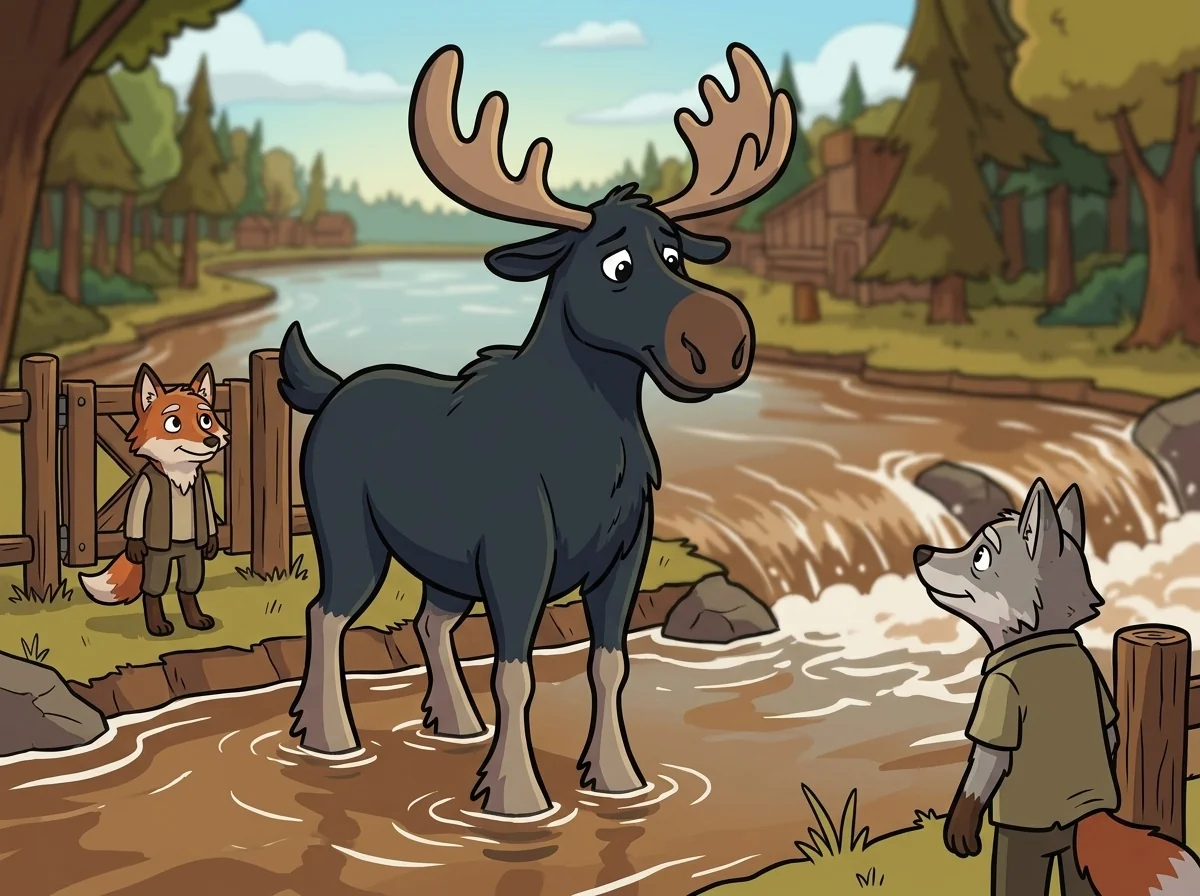
Ford came to Terravoyage at twelve, wading, because a place that studied travel ought to understand how a traveler enters a new place.
At the gate stood Trailmaster Theo, the old fox. He didn't ask her to boast of the rivers she'd conquered. He asked one thing. "How do you cross into a place that isn't yours?"
Ford thought of the quiet ford, and her grandfather scarred from loud water. "Gently, and downstream of the noise," she said. "I don't force the loud, obvious way — I look for the calm crossing, where I can enter without harming the water or myself. And when the place belongs to someone, I enter as a guest — asking, waiting to be welcomed, taking up no more room than I'm offered."
Theo looked at her for a long moment. "Most travelers charge the rapids and call it courage," he said. "You find the ford and call it respect." He stepped aside from the gate. "You'll do fine here."
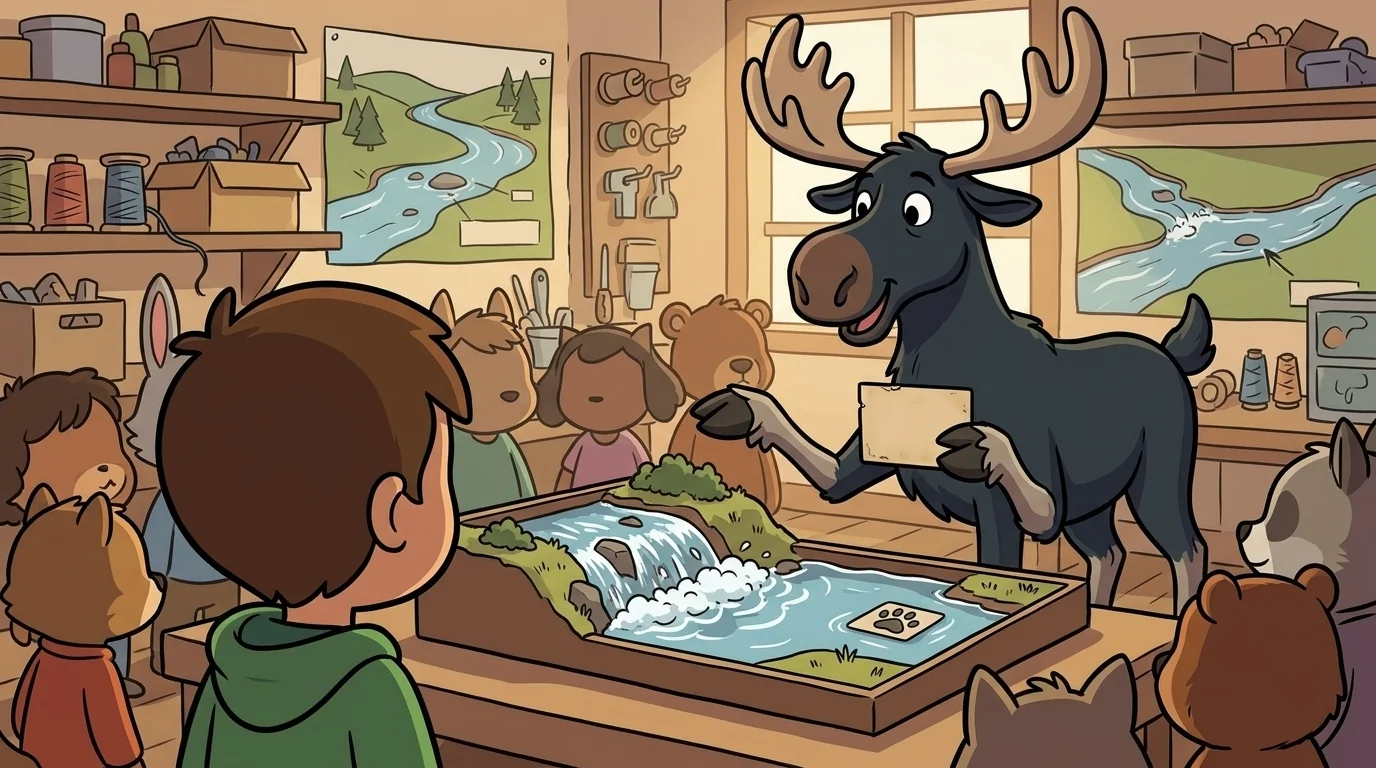
Ford's workshop filled with children eager to go everywhere.
One boy arrived all bluster. "When I get to a new place," he declared, "I just march right in and make myself at home. Own the room. That's confidence!"
"Let's try a crossing first," Ford said. She led him to a model river with a roaring rapids and a quiet ford. "Cross at the loud place." He charged in and was, in the game, swept off his feet. "Now — downstream." He grumbled, walked down, found the calm shallows, and crossed easily. Then Ford pulled a small worn card and read it soft: "Whose place am I entering, and how would a welcome guest come in?" "It's the same with people and places," she said. "Marching in loud and owning the room isn't confidence — it's a flood. It knocks things over. A guest comes in gently, asks, waits to be welcomed, and lets the place stay the place."
The boy thought about it, his bluster fading into something quieter. "So the calm way in isn't weaker. It's... kinder. And it actually works better."
"That's the whole crossing," Ford said.
Later, when the workshop had emptied, the boy came back, calmer than he'd arrived.
"How do you find the gentle way in," he asked, "when a place is brand new and you don't know it at all?"
Ford thought of walking downstream with her grandfather, past the shouting water to the quiet ford.
"You slow down, and you look, and you ask," she said. "The loud, obvious entrance is almost never the right one — it's just the first one you see. Walk a little. Watch how the place moves. Notice whose home it is. And come in where you're welcome, gently, taking only the room you're given." She waded a slow step in the model shallows. "You'll always find a ford, if you have the patience to look for it — and the humility to enter as a guest instead of a flood."
The boy nodded, his bluster gone soft and thoughtful, and Ford watched the forcing, own-the-room feeling ease off him — replaced by a calm, sure steadiness, the warm gladness of a young traveler who has learned that the strongest way into any new place is the gentlest one, entered as a grateful guest.
The TerraVoyage ensemble
Ford is part of TerraVoyage's distributed-narrative cast. Each character embodies a different curricular primitive; together they teach the full subject.
-
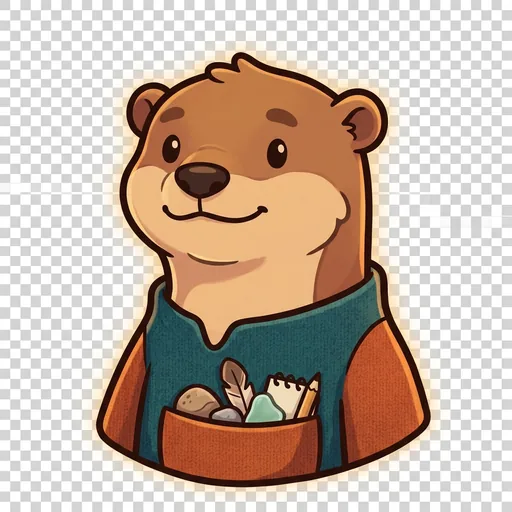
Roam
Open exploration + curiosity — the otter-tween with pocket-tunic full of found things who teaches that curiosity-without-destination is a valid mode ('curious feet learn more than busy feet')
-
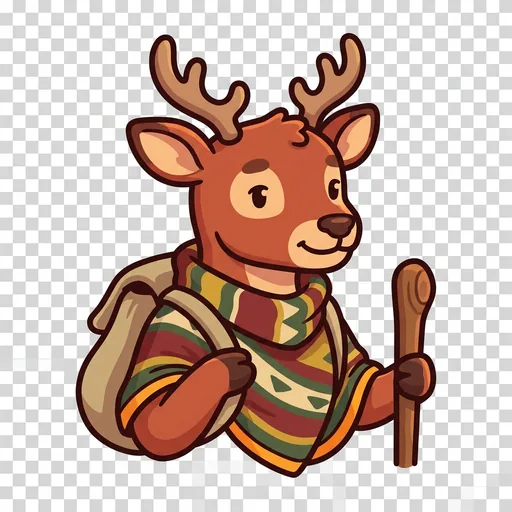
Trek
Movement + migration — the red-deer-tween in polysemic wool wrap with pack-and-walking-stick who dignifies all journey-reasons equally — seasons / scarcity / opportunity / safety / curiosity ('some journeys are choice; some are not; every traveler deserves welcome')
-
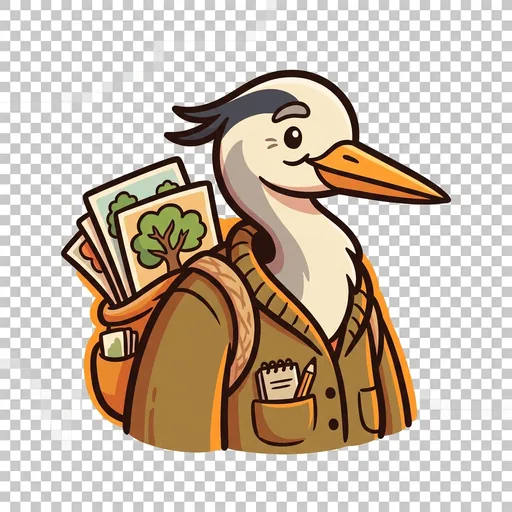
Origin
Cultural-heritage anchor — the heron-elder with bundle of family-trees and oral-history-cards who teaches that 'discovery' is a colonial word and every place has been home for someone, often for millennia ('before you visit, learn whose home this is; before you name, learn what it's already called')
-
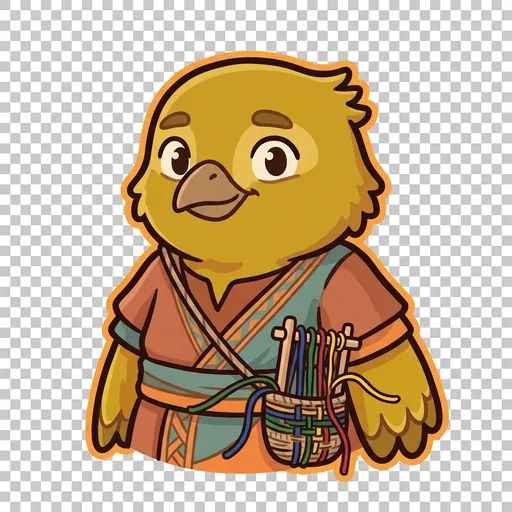
Braid
Cultural exchange — the weaverbird-tween with small loom-pouch whose threads-from-many-places stay distinct AND together; teaches anti-appropriation, exchange-not-extraction ('threads from many places — each keeps its color; together they make something new — together, not apart')
-
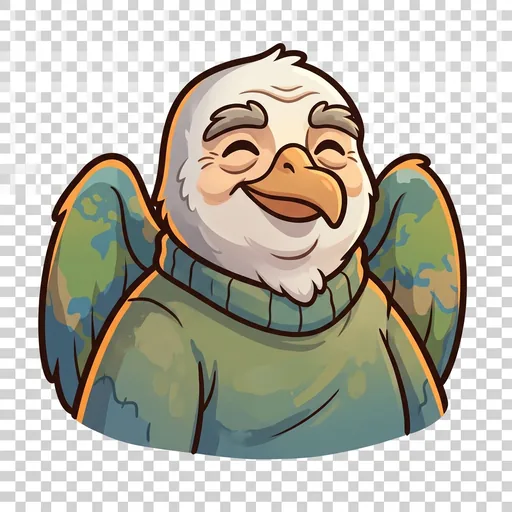
Reach
Planetary scale + interconnection — the albatross-elder with continent-patterned wings who teaches Earth-as-one-system, climate-justice, environmental-equity framing ('far is closer than you think; everywhere is somewhere's neighbor')
-
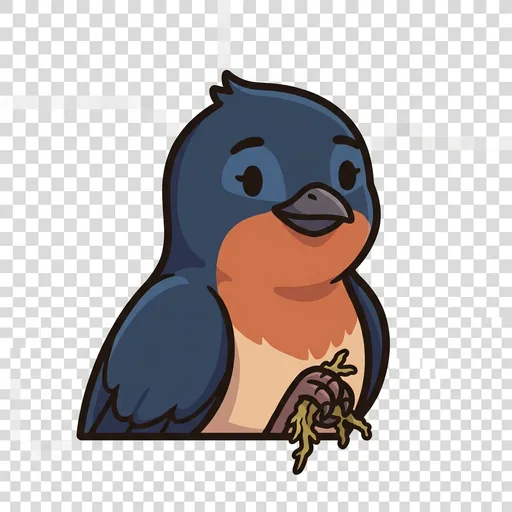
Haven
Shelter & reciprocity — a traveler needs rest, and gives it; the road is kinder when we shelter each other
-
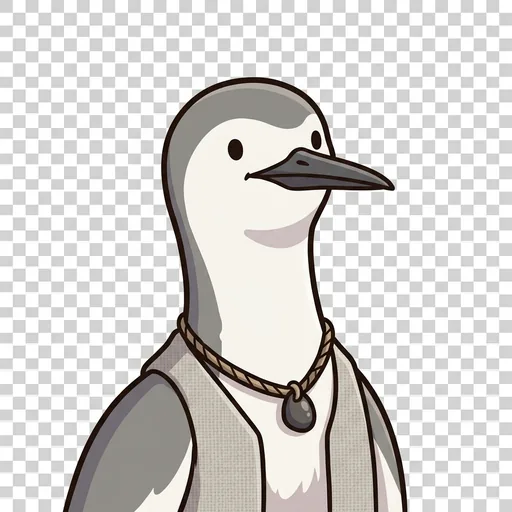
Lodestar
Wayfinding — the land and sky have always shown the way to anyone willing to read them; traditional knowledge passed down
-
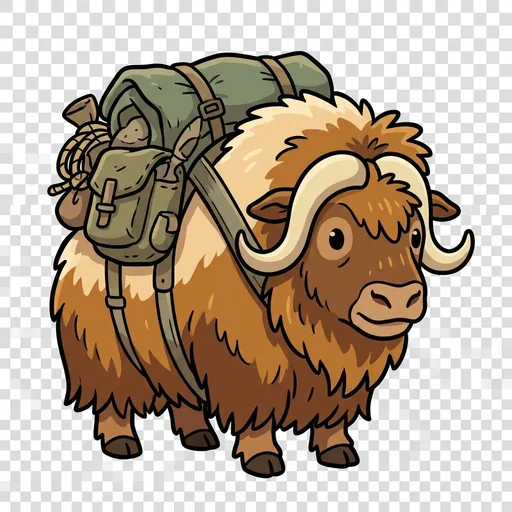
Portage
Perseverance — when the smooth road runs out, you shoulder the load and carry it the hard stretch yourself
-
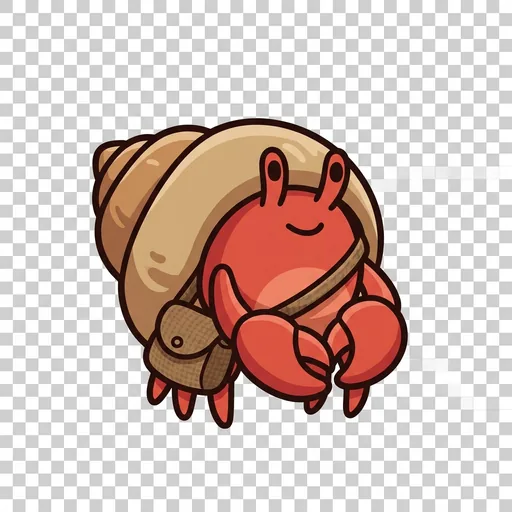
Stow
Pack light, leave no trace — carry only what you truly need, and leave a place as whole as you found it